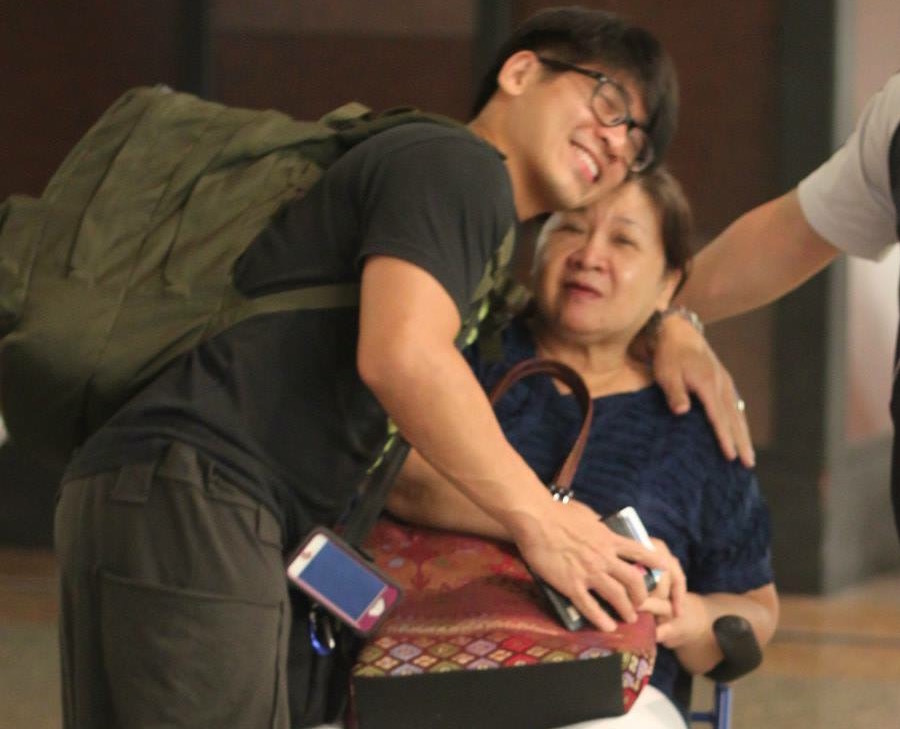
A year and approximately 2 months ago, the World Health Organisation declared the then emerging COVID-19 situation a pandemic. How has that affected the lives of our interviewees since? We asked them.
Jessica, who has Crohn’s Disease: I lost my home of 14 years, almost became homeless. We lost everything cause of the pandemic in 2020.
Caren Robinson, who survived a major traffic accident: It has made things much tougher financially as my husband lost both of his jobs for several months. It has made me apprehensive about leaving the home due to my autoimmune disorders. My kids have been doing online school since Spring of 2020 and they are home all the time now. This has been hard on all of us. It has completely messed up my routine and has forced me to adjust how I do everything in the household.
On the other side of it, it has been a mixed blessing because I have a lot more time with my husband and my kids now in a time when I am aware of it. I feel that surviving a Polytrauma and Brain Injury has prepared me to get through a Pandemic virtually unscathed mentally. I believe it is because I am already used to isolation, losing contact with friends, losing a job, and all the changes that people around the world are now experiencing. I am hoping that the Pandemic experience will make Healthcare providers and society in general a bit more sensitive and able to somewhat understand people who have invisible injuries, and limitations they cannot control.
Pamela Ellis, who survived an ectopic pregnancy: Because of Covid, I had to do the ultrasound, hear my baby’s heartbeat, go through the surgery, and recovery at the hospital all by myself which was scary. It was the first time I ever had surgery so doing it alone was awful. For my day-to-day life, I’m fairly introverted and reclusive already so the social aspect hasn’t affected me too much. I do miss taking the kids to the museums and parks around the area. We have stayed away from large gatherings this entire time. My oldest son is high risk so we don’t want to take chances. We also don’t see our loved ones as often as we would like. The kids have been doing online schooling and they absolutely hate it. I do too. LOL. They miss their school friends. Other than that we have been very lucky. My husband is an essential worker so everything has stayed the same for us other than the kids’ schooling and doing fun activities outside of the home. Money isn’t as abundant as it used to be either.
Tiffani “Oling” Lim, esports professional: It honestly hasn’t made much of an impact since I rarely leave the house in the first place, I can’t bear to be apart from my gaming rig/home office, and I’ve always been a bit of a germaphobe anyway. Only difference is that I’ve had to stay in Singapore for most parts of 2020 and I think that’s the longest I’ve gone without seeing my mom. It’s made me realize how much I’ve taken travelling freely for granted in the past.
Jack, who moved from China to Cambodia in the thick of the COVID-19 pandemic: My wife and I have always been homebodies. It has made us appreciate our lifestyle much more. We are content with staying home and slowly exploring the city of Phnom Penh and Cambodia. We are moving at a pace that I’m much more comfortable with.
Dr Bob Rich, author of many books: I am very fortunate. Australia, my country, has done well in minimising damage from the dreaded bug. Social distancing and masks haven’t bothered me any. Being a loner, I haven’t found lockdowns to have caused me any grief. Probably the major change is that I have been attending 2 or 3 times as many meetings as previously. You see, being an environmentalist, I minimise car use, so often in my life I have declined to attend a meeting. Now, everything is online, or at least there is an online option.
Oh, why the meetings? Other people have a terrible habit. Whenever I express interest in a group, they twist my arm to go on the committee. So, I belong to a political party (Australian Greens) where I have 3 or 4 official roles at any one time. I work with a refugee organisation, belong to a cooperative, help to save the local environment of my little town, and belong to a wonderful group who help people down on their luck. Then there are the many groups over the internet….
The only real negative effect of the pandemic on me is because I have too much empathy. OK, I’ve been safe, but I feel the pain of those who have suffered, in one or more of many ways. I know many such people, but since I consider all of humanity my family, there is a risk that I’ll cry for them all. So, I need to use my Buddhist tools flat out to stay sane.
Choo Bin Yong, game designer who runs solo: I think there is both positive and negative changes. On the positive side, my mobile games have gotten more downloads and exposure. On the negative side, I feel more restricted as in not able to go out as much as before.
Sy, founder of LUCK-IT: I really miss travel, concerts, events, commercial karaoke, dining with large groups of people, people-watching, being able to get in and out of buildings conveniently, being able to be out without being paranoid about touching surfaces, fresh air against my cheeks and of course being able to enjoy the services of certain businesses before they closed down… but at the same time there have also been opportunities that a person in my situation would never have been able to get without a pandemic, so I would say this has been a very emotionally confusing time.
Joan, a minimalist: It taught me to be more deliberate in living a focused life and to enjoy my own company a little bit more.
The Amateur Trader, self-employed occasional trader: Put my 2020 experience to good use and may that help me be mIt showed me, based on the pivoting that I did, that it is actually possible to make a reasonable living without doing my previous job. To an extent, I didn’t miss my previous job that much too, as much as I liked it a lot.
What about you? What did you go through during the COVID-19 pandemic? Tell us in the comment box below and we’ll add it to the list. More questions for you to answer in The Wisdom of Crowds series here.
Want to be featured too? Say hi in the comment box below or tell us here. If you found this article useful:
Jack, who we interviewed about being in Guangzhou during the early days of the COVID-19 epidemic in China, moved to Cambodia during the thick of the COVID-19 pandemic and for the past 6 months has been enjoying its historical sights without being overwhelmed by fellow tourists. With all the travel restrictions and strict criteria presently going on, we had to ask him how he made it happen.
“We were fortunate enough to be offered jobs here in Cambodia.”
Q: Hi Jack, welcome back to LUCK-IT! The last time we spoke with you you were living in China, and now you’re in Cambodia. Why did that happen?
A: My wife and I teach in international schools. We’ve lived in several countries over the past 25 years mostly in Far East Asia with one foray into Africa. China won’t issue work visas to men over 60, and I turned 60 last year, so we had to leave.
What about Cambodia makes you want to live there during COVID-19?
Since we’re teachers, we go to where the next job is. We went to a job fair in Bangkok a year ago just before #COVID19 hit the scene during our Chinese New Year break. We were fortunate enough to be offered jobs here in Cambodia. As soon as we got back to China, though, the #COVID19 news began breaking, and we didn’t return to school until March or April of last year.
How then did you manage to move from China to Cambodia amidst COVID-19 border restrictions? What challenges did you face when doing so and how did you overcome those?
Because of the border and travel restrictions, it was not clear whether we would be able to travel at all. We know many teachers who had taken jobs but were unable to travel to start them.
There were a couple of issues that we faced due to #COVID19: (1) We didn’t have to report to our new jobs until 1 August 2020, but our school in China cancelled our work visas two weeks after the close of school, which meant that we had to depart by that time. Because of #COVID19, they relented and didn’t cancel our visas until we were able to leave. They also allowed us to stay in our apartments until then also. Similarly, the school we were traveling to allowed us to arrive any time before August. They would provide accommodations and arrange for our visas. (2) Many countries had closed their borders, so travel was quite difficult. Flights were irregular and frequently cancelled, so up until May, it wasn’t clear that we would be able to do anything other than return to Canada. For many teachers, this was the only option. Many could not travel on to the jobs they were contracted for. (3) Cambodia was different, though. They had not closed their borders completely. They had strict requirements for entry, though: (a) You had to have a negative #COVID19 test within three days before arrival. (b) You had to pay a $3,000.00 (US) deposit upon arrival to be repaid after completing a two-week quarantine. (c) You had to demonstrate that you had a minimum of $50,000.00 (US) coverage in health insurance. And (d) you had to complete a two-week quarantine. Luckily, you could complete it in your own accommodations as long as no one on your flight had a positive #COVID19 test after their arrival in Cambodia. We are a family of three, so that meant we had to have a $9,000.00 (US) deposit available upon arrival. You could charge it to a credit card, but our school paid our deposit for us.
We are a family of three, so that meant we had to have a $9,000.00 (US) deposit available upon arrival. You could charge it to a credit card, but our school paid our deposit for us.
Which 3 people or objects were most helpful when you were doing the above?
There were many people who were very helpful as we went through making our travel arrangements and arrived in Cambodia. First, there was a travel agent in Guangzhou who made the arrangements for our #COVID19 test certification. They provided a guide to walk us through the process at the only hospital that would provide an English-language certificate. Second, there were the people from the school who met us at the gate and walked us through our arrival and navigating the deposit and having our #COVID19 certificates verified and our insurance verified. And third, there were the unfortunate people who had to give our daughter her #COVID19 test upon our arrival.
Our daughter is autistic, but she is quite high functioning and able to manage most situations. She does have several heightened sensory sensitivities to noise, pain, and busy visual spaces. She wears sound-cancelling headphones any time we’re outside of the house. She doesn’t like being in noisy crowded places and she definitely didn’t like the nasal swab of the #COVID19 test.
In China, they only did a throat swab. In Cambodia, they not only did the nasal swab, but they did both nostrils and the throat. They wouldn’t let us go together as a family, either. We had to go individually. Our daughter is 15 years old, so they thought she would be able to manage, I guess. I went first, and immediately went to find her after completing my test knowing that it would be a trial for her.
By the time I found her, she was standing off to the side by herself refusing to let the testing fellow near her and refusing to cooperate at all. She was weeping and rocking and pacing and vocally insisting that she wasn’t going to do the nasal swabs. I was surprised that she had allowed them to do the throat swab before I got there.
Of course, there wasn’t much space and there was a crowd of curious onlookers gawking, a crowd of testing personal coming to see what the commotion was, and several security personnel, too. My wife and I were able to get her to calm down a bit, and we were able to get the testing fellow to understand that it was going to be difficult to get her to test.
“This is the drawing that my daughter made of her experience getting the #COVID19 test at the airport.”
Regulations were regulations, though, and no one could get in without the tests. Our helpful translators and guides had not been allowed to accompany us into this area. It really looked like we might not be able to enter the country after all. But, the good man there brought out the child-sized swab and showed her how much smaller it was. He got her to try it. She didn’t tolerate it in her nasal cavity for very long. I don’t think he made it to the back of the cavity, either. It was in and out, and he only did one nostril.
I will always be grateful for his understanding and kindness. As we left I looked around at the staff. Some of them were shaken and a bit ashy looking. She made quite a scene.
Which place was most helpful?
Our employer was the most helpful place. The school provided so much support for our transition. They allowed us to arrive early and straight from China. They met us at the airport, and then after our overnight stay at the quarantine hotel where we had to wait for our #COVID19 test results. They provided groceries and information about the city. Really, everything that we would need to feel comfortable and get to know our new home.
What was the COVID-19 situation in China like when you left and what was the situation like in Cambodia when you arrived?
When we left China, it was clear that China had contained the virus and there were fewer cases. They had loosened some of their border restrictions with Hong Kong and for travel within the country and the city of Guangzhou.
As #COVID19 cases subsided in China and community transmission declined, there was a fear of foreigners who were blamed for bringing more infections into China. The problem was that most imported cases came from Chinese nationals returning from foreign travel. There were very few spread by foreigners, but that is a typical response to foreigners around the world.
Cambodia has very few cases and in July when we arrived, there were even fewer. Literally only a few hundred. At one time there were no active cases. There are travellers who have brought infections into the country, though. And, there have been several mini-outbreaks.
One of the worst ones occurred in the fall. The Foreign Minister of Hungary had led a large delegation on a visit. Upon his return to Hungary, he tested positive. They immediately began contact tracing and realized that there were more than 900 possible contacts, so they closed the schools and locked down most of Phnom Penh.
Since then there have been one or two new cases in the country. They close down shopping centers and markets depending on where the infected person had been. They are very thorough in their contact tracing as well.
“Ta Prohm, the temple where Angelina Jolie’s Tomb Raider was filmed near Angkor Wat.”
Recently, they’ve eased restrictions at the school allowing for expanded bubbles of students to increase interactions.
One of my thoughts is that the government realized how vulnerable their healthcare system is and what would happen if they allowed it to be overwhelmed, so they started out very strict a year ago. They were able to prevent too many infections from entering the country over the past year and contained any outbreaks quickly and efficiently to limit or prevent community spread.
What policies are there in Cambodia to keep the spread of COVID-19 down? How does this compare to the COVID-19-related restrictions in China?
I think that the collectivist societies of Far East Asia, in general, have some advantages over the individualist societies of Western Europe and North America. People are more oriented to doing what is necessary to protect the group and will be more cooperative with government instructions.
That said, I think, it also helps that there is still a deep culture of authoritarian government here. Cambodia was ruled by a king for much of its history and then the government was taken over by authoritarian rulers in the ’70’s, ’80’s, and ’90’s. Now, the Prime Minister is almost revered. His word is law. The focus on the press is on Prime Minister Hen Sen. Whatever actions the government takes or recommendations it makes, are reported through him.
Shortly after school started in August, there was a national week-long holiday. It was Khmer new year. They moved it to August because they had cancelled it last March (I think it was in March) to help limit the spread of #COVID19.
“A selfie from a rooftop pool overlooking the Mighty Mekong River on a chilly day in December in Phnom Penh.”
All of these factors combined help make the mitigation efforts very effective.
What did you learn from moving to Cambodia that you didn’t know before?
Cambodia has been a crossroads for much of its history. It has linked the areas that surround it together, so you can see it in the faces of its people. There are physical traits more commonly associated with Malaysia and Indonesia, India and Thailand, China and Viet Nam. And, because of French colonization and the struggle for independence, you can see people with more Western features, too. All people are accepted, though… as far as I can tell.
Also, the generation of the Pol Pot genocide is noticeably limited. The Khmer Rouge era was so traumatic that it seems to have bound the nation together in their effort to recover and overcome the hardships it imposed. Everything from mourning the vast number of dead, to coping with landmines, to redeveloping the cities and economy.
Now, they are struggling to cope with an economy devoid of tourists. One way they do that, though, is by promoting internal native tourism. Cambodians are traveling the country. It is nice to visit Angkor Wat and the areas around Sihanoukville without the overwhelming numbers of tourists.
What advice do you have for those thinking of moving to a new country during this period too?
Do your homework. You’ve got to know the entry regulations for the country you’re visiting and the status of the pandemic there. And, with the new more contagious strains of the virus out there, double mask. Until the world achieves herd immunity, we are all going to be vulnerable to outbreaks of #COVID19. Use an abundance of caution, respect local efforts to mitigate the pandemic, and be careful.
One of the silver linings is that we are traveling much more slowly. With the necessity of a two-week quarantine upon arrival, you either are planning on staying longer, to make your month of quarantine worth it—remember you have two weeks to do upon your return home—and limiting your travel to one country. Or, if you are vacationing within a country, you can spend more time getting to know the place you live.
Lastly, you’re from the USA, so what are your thoughts on the COVID-19 situation there at the moment? Would you be going back to visit any time soon?
I think the situation in the US is absolute madness. That anyone would accept a government that has stood by and allowed over 400,000 of its citizens to die needlessly and painfully is nothing short of madness. It demonstrates the absolute power of cognitive dissonance and motivated reasoning to alter perceptions, cognitions, behaviors and endanger society itself.
Being 60 and not having lived in the US for the last 25 years, I have few ties left. Also, since my wife is Canadian, and since she actually has living family she’s close to, we visit Canada far more than the US. There really is very little reason for me to go back.
Jack is presently learning Khmer from books and online courses. He is also training for a marathon and working on expanding the readership of his blog through improved SEO and networking. You can find out more about him at his blog, The Psy of Life (“a political psychology blog that focuses mostly on the US”), on Twitter, or ask him anything using the comment box below.
As we come to the end of 2020, it’s time again to collect and share the sentiments of this year’s readers and interviewees in our series, The Wisdom of Crowds. To start, here’s a question about favourite people. Here are our interviewees’ and interviewers’ choices. What about you? Who is your all-time favourite person? Let us know your favourite in the comments box below.
Q: Who is your all-time favourite person and why?
Choo Bin Yong, game designer who runs solo: Hayao Miyazaki. I feel inspired by his passion and drive to keep creating works throughout his life.
Kauai, 2020 LUCK-IT Interviewer: Stephen Chow. He is a legend of 90s comedy. The movies he made were very influential not only because they were entertaining but also because they told the stories of Hongkongers of that era.
Siddharth Mazumdar, 17-year-old inventor: John Locke. He constructed a basis for civil society which ensures the rights we enjoy today, which allow us to be free, and empowers us to help others.
Jason Koh, dungeon master: I’ve always been impressed by the decisiveness, tenacity and vision of Lee Kuan Yew. It wouldn’t be surprising at all to say I’m a bit of a fan.
Kinge, who quit social media: Neville Goddard. In my search for meaning of life, I found myself reading content from many great minds and writers such as Napoleon Hill, Aristotle, Earnest Holmes, Earl Nightingale, James Allen, Jim Rohn, Tesla among others but there is something about Neville’s teachings and writings. They teach you who you are, the real you within, how to use your imagination and observe reality with a new set of eyes leading to self-discovery that changed my life. As Marcel Proust says, “The real voyage of discovery consists not in seeking new landscapes, but in having new eyes.”
Joan, a minimalist: Maynard James Keenan. Many non-TOOL fans would say he’s just a pseudo intellectual, but hey, he makes great music. I also enjoy how all 3 of his bands do represent the 3 broad scopes of the human existence—mind, body, spirit. Overall, I am always very intrigued by individuals who are pretty much unconventional.
Cedric, child-free by choice: My partner, Joan, because she is firmly child-free!
Cho Jun Ming, N-Level student and film-maker who lost his father early: My father. Because he’s a very patient, calm-minded man and whenever he faced any obstacles, he would take it up himself and not let his emotions control him or affect his family. As a kidney dialysis patient who had undergone dialysis for over 20 years, he didn’t mention pain nor did he ever want to give up. He persevered so I really like his resilience, calm and patience.
Victor Fernando R. Ocampo, speculative fiction author: My wife, Patricia who is my sounding board and idea-generator as well as always, my first (and most vicious) editor.
Leanne, popular Instagrammer: My beloved grandpa. He just is.
Norsham Mohd, a former Muslim: I like to say my husband. I still love and adore him after more than 20 years of marriage and 13 years of courtship. He’s been there for me most of the time. There is so much I still need to learn about him.
Sean Munger, a former Atheist: My husband, because I love him.
Ms Lena Lok, founder of an art school: My mother-in-law! She’s an amazing woman who’s still very active for her age. She embraces life by pursuing a variety of activities—hiking, sewing, knitting, cooking, baking, floral arrangements and even volunteers her time with different communities. She’s a great role model for active ageing, haha!
Oliver Chong, a theatre practitioner who has schizophrenia: My dad. He gave me his life.
Dr Bob Rich, author of 18 books: Sylvia Kryz. She is an 84-year-old lady who was born inside my computer, and wrote the novel, “Hit and Run”. I’d really, really love to be like Aunt Sylvia. Why? Read the first chapter, which is on the page I linked to.
Simon Templar, retired US Marine: Jesus Christ. He came to Earth to save.
Sy, who runs LUCK-IT: I actually have a large collection of vastly different favourite people who inspire and educate me in vastly different ways. If I had to single out one helpful one here though, it’d probably be Buddha for his philosophies on inter-relatedness (everything is cause and effect), suffering (stop greed, anger and ignorance to stop suffering) and understanding the nature of things. I’m not even Buddhist (I identify as agnostic) but those simple philosophies have been quite helpful and effective for decision-making purposes enough times throughout my life for me to rather like the guy.
Tony, 80-year-old blogger: I can’t think of a single all time favorite person. I admire anyone of any age who lives an intelligent life and does positive life-oriented acts. As a writer I have favorite authors, but won’t single out just one. I do love Beethoven’s music. I guess I admire him the most.
When Cho Jun Ming was 19, his 54-year-old father was diagnosed with heart issues. Because his father was a kidney dialysis patient and could not undergo operations, he was sent to the ICU where he passed on just 2 months later. We asked Jun Ming how he coped with losing his dad before age 20, and learned from him all the things he wished he had done with his father when he had the chance.
“After the funeral, I fell into a severe depression and had to seek psychiatrists and psychologists. ”
Q: Hi Jun Ming, welcome back and thank you for sharing yet another part of your story. How did you find out your dad had passed away? What were you doing right before that and what did you do right after that?
A: At first, I received a call from my dad saying that he needs to go to the hospital but I was playing Xbox at my Poly [Polytechnic—an alternative to university in Singapore] friend’s house and didn’t bother. That was in the afternoon. That night, after my dad admitted himself into the hospital, I received a call from the doctors asking me to go to the hospital because he was like a time-bomb that could pass on at any time due to his heart condition. Immediately after that, I went straight to the hospital and from then on, accompanied my dad every day for 1-2 months before he passed on.
The day he passed, I was actually studying before going to visit my dad. And when I did I spoke with him, but when I went home I received a call from the hospital saying to rush down so I rushed down and saw that the machines were starting to beep slowly and he passed away in front of me.
What did it feel like when you first heard the news? What about at the funeral and in the days after?
I hated everything that existed. And I blamed everything and everyone—the doctors, God, everything except for myself. After the funeral, I fell into a severe depression and had to seek psychiatrists and psychologists.
How long did it take you to get over the grief of losing your dad? What helped most?
It’s been 4 years. I’m now still undergoing treatment with psychiatrists and psychologists because I was told that some of the memories and the trauma that I had when I saw how my dad had passed on are being blocked in my mind. I can’t get over the grief even now though it’s been better with time. What helped most is making films because as long as I keep making films, I won’t think about it.
One of the awards Jun Ming has since won.
Which place in Singapore helped the most?
Changi Airport. Sometimes when I feel lonely I’ll go to the airport and sit down and watch the planes fly, and watch families hugging each other and watch how people cry, smile and laugh with tears of joy. It brings me warm feelings.
How did your life change after your dad’s death? And how did your dad’s death change you?
I became less energetic and more negative and more paranoid about life. And soon I got much support from my friends and eventually turned to be better. Right now, I’m still recovering. My dad’s death gave me a wake up call. It boosts me and motivate me to do something better but of course I would rather he be alive.
If you could go back and replay the time you had with your dad all over again, what would you do differently?
I would eat dinner with him every day. I would talk to him and update him about what I’m doing. And also I would try to understand him and try to learn from his mentality as a person because he’s very mature, very calm and very patient—and that’s what I need. I would like to ask him to teach me things that I do not know and give me advice.
A recent photograph of Jun Ming.
What is it like being a young man without a father?
I think it’s very sad because sometimes I see my friends going back home and see their fathers and mother together and I feel that I just lost part of myself.
Which 3 objects/people can you presently not live without and why?
My phone. My mother. And my relatives. Because they are all my closest people and objects right now and I know I have the time to cherish them so I will not waste any moment.
Jun Ming and his important object: his phone.
What do you wish your father had done more of while he was still alive?
I wish he would have told me things he would have wanted because whenever I made mistakes he would just let me fall down by myself and never really scold me or beat me up because he wanted me to learn by myself. But because I was young, I didn’t know what he was trying to do until I grew up and reflected and realised… oh, I see. So I wish he would have scolded me and beat me.
What advice do you have for those who have only just lost their fathers?
There will always be people who are worse off than you. I have a friend who doesn’t have family. I have even friends who have parents but both are mute. So think about those in a very bad situation and try to know that you’re not always alone. And that you have the ability to bring joy to people and to yourself.
Lastly, what is the biggest lesson your dad ever taught you?
He taught me to be calm at all times. No matter if the sky is falling down, just remain calm. When you’re calm you’re able to see perspectives and things not many people can see.
Jun Ming presently makes films about societal issues and gives talks to people who are facing set backs in their lives. “It’s all about creating a positive impact on people in whatever ways I can through using both my backstory and my passion.” You can find out more about his films at his Facebook page or ask him about grief and recovery using the comment box below.
More interviews with people who have been through grief or other physical or mental hardships. available here.
Photographs courtesy and copyright of Cho Jun Ming. Interviewer: Sy Sponsor or support The Strong series here. Want to be featured too? Tell us here. If you found this article useful:
Dinosaur is a Hong Kong citizen with a mum from a small village inside the Hubei province of China. She and her family went back to Hubei before the Chinese Lunar New Year, only to find themselves fleeing 2 days later—just hours before Hubei went into formal lock down because of the COVID-19 outbreak. This is her story.
“We left immediately after receiving the phone call (around 1 a.m.).”
Q: Hi Dinosaur, thanks for coming on to talk about your experience! When did you first hear about the 2019-nCoV / COVID-19 coronavirus and what did you think of it then?
A: I knew there was such a virus in Dec 2019, it was called Wuhan Pneumonia at that time. I didn’t realise it would be that serious in January.
Why and when did you choose to go to Hubei? Which part did you go to?
My mum is from Hubei so we went to Hubei for the Lunar New Year. Since the high-speed train ticket was sold out while the air ticket was too expensive, we decided to drive to Yichang, a city in Hubei province. We left Hong Kong on 22 Jan and arrived Yichang the next day, 23 Jan.
As I remember, the government announced on 22 Jan: “Wuhan (another city in Hubei) would be in lock down from 23 Jan, public transport would be unavailable in Hubei from 25 Jan”. If you guys decided to travel by plane instead of car, you guys might be trapped in Hubei, is that right? Which airport would it be if you chose to take a plane?
If we took the plane or high-speed rail we definitely would be trapped in there. I think I am so lucky this time. If we chose to take a plane, we would probably fly from Shenzhen to Yichang. The public transportation including train and plane were all unavailable in Hubei from 25 Jan.
When did you become more concerned about the virus?
I started to worry before the trip and I tried to ask my family not to go back [to Yichang]. However, they didn’t show much concern. Anyway, I went with them even though I was not willing to go. We arrived at Yichang on 23 Jan and [right away] heard that Wuhan would be lock down. I became more and more nervous on 24 Jan because there was rumour saying the whole Hubei would be in lockdown as well. My family members started to become a bit tense at this point.
The scene Dinosaur saw while fleeing Hubei in the wee hours of the morning.
What made you decide to leave Hubei? How many people in Hubei were infected and dead at that point?
On 24 Jan, there was a rumour saying that the whole of Hubei would be in lock down the next day. However, we stayed on at our relative’s home because we were not sure if the rumour was true. We visited relatives in a village and prepared for the Lunar New Year.
Suddenly, at 1am on 25 Jan, we received an urgent call from one of our relatives working for the government and were told that the rumour was true. He told us to leave as soon as possible at because the lock down would be effective from 6am, 25 Jan!!!
Understanding we were running out of time, my brother, dad and I packed luggage immediately. We were afraid there would be no more chance to leave if we didn’t go now. However, my mum decided to stay because she believed the village we stayed at was not located at the city centre, thus safe.
At that time, there were about several hundred people [reportedly] infected, but my relatives were terrified because they believed the actual number would be much bigger than this. However, they were confident and believed the government would be able to solve the problem. Most of the people in Yichang were feeling doom and gloom with certain level of fear. However, nobody wore masks there.
How difficult was it to cross the border of Hubei? How did you make it? Did you face any trouble at any point for having come from Hubei?
We left immediately after receiving the phone call (around 1 a.m.). It was very tiring to drive past midnight but we were highly cautious. The weather was bad and visibility was quite low. Traffic was not heavy but obviously more than usual after midnight. I looked out of the window and realised there were cars from Wuhan (could be identified by car license plates) occasionally. The air was so cold on a Hubei winter morning, nobody spoke a word because of stress. It was so quiet that I could sense the smell of the dead. After 4 hours drive, we were less stressed because we crossed the Hubei border before the lock down. We were grateful for this but worried about mum on the contrary.
Immediately after entering Hunan, we were stopped by police on a highway, they asked us where we were from, we told them we drove from Hubei to here, but since our car license plate was a Hong Kong one, the police let us go after checking our body temperature. I realised that more and more people wore masks in other provinces. However, only very few people wore a mask when I was in Hubei.
The view from the car window when daylight broke.
I heard from the newspaper that some of the Wuhan people who escaped from home were later found astray outside because no hotel would accept them and the police might stop them. Why was it this easy for you to make it out?
I am not sure how they treated the cars with Wuhan license plates. Since we crossed the border before the Hubei lock down, our car could pass the checking points easily. (Hubei lock down was at 6am, 25 Jan, while Wuhan’s was at 10am, 23 Jan). Some cars next to us with Hubei license plates were stopped by police with more strict checking, but they were released if the police thought they met certain checking requirements.
More from others affected financially by COVID-19 coming next week. Follow the latest in our COVID-19 Diaries series here.
If you’re in a country that has been affected by the novel coronavirus and would like to share information about the situation where you’re at, do get in touch with us here.
Photographs courtesy and copyright of Dinosaur. Interviewer: Kauai Sponsor or support the COVID-19 Diaries series here. If you found this article useful:
Last week, we asked our interviewees from this year about the best things their fathers taught them. This week, let’s take a look at the wisdom of the other parent, the mother, and what our interviewees have learned from theirs.
“She gave me the backbone that I have, and the education that has benefited me to this date.”
Q: What is the best thing your mother ever taught you?
Juliana, who made it through 4 years of topical steroid withdrawal: Take it as they come! There’s no use running away from problems. That woman has some wisdom!
Elizabeth Seah, who has been cosplaying for 24 years: Too many to list!
Elizabeth in 2018, doing a cosplay makeup demo at GameFest in Singapore.
Marianah Arshad, who stuck by the same boss for 12 years: To not only pray for what I want, but what’s best for me.
Dr. Y, who did poorly all through school but ended up as a dentist with his own practice: Serve people unconditionally.
Russell Pensyl, who is an interactive media artist: Get out of bed early and get to work. Never allow oneself to let one’s emotions get the better of oneself.
Rishi Israni, who married and built a million-dollar business with the inventor of the Rotimatic: Work really hard, but don’t ever care about the results. Because that’s not in your hands.
Kelvin Seah, who is a stay-at-home dad: To forgive and reconcile broken relationships as much as possible
Jeshua Soh, who dropped out of school, started a business at age 19 and started another business in Myanmar: Things may not always be as they appear to be.
Sheeba Majmudar, who has been a nutritionist for 12 years: That you don’t need to have paper titles to genuinely help people, just heart.
HT, who made and sells Spiderman web shooters: How to be kind, patient and lend a listening ear.
Yen-Lu Chow, who lost his son to suicide: She gave me the backbone that I have, and the education that has benefited me to this date.
Yen-Lu with kids of Singapore Creations—which provides young people with a supportive platform where they can be creative and grow as people—of which he is co-founder and chairman, at the non-profit’s inaugural production.
Petrina Ng, who quit her 14-year teaching career to become a wedding photographer: She taught me tenacity through her own actions and how working smart and hard pays off.
Nur Syahidah Alim, who is a paralympian and world champion in archery: My mother taught me to fight back and prove to people that I can live independently as abled persons do.
Gwern Khoo, who is a Michelin Bib Gourmand certified hawker: Her constant reminder: “Do not lie, steal or cheat.”
Evelyn Eng-Lim, who built her own retirement farm: She accepts us for what we are and is non-judgemental.
Sy, who founded LUCK-IT and interviewed all the above people: Through watching her, I learned that what you do says way more than what you say, always.
Pranoti Nagarkar, who invented the Rotimatic: The concept of God. It’s not the concept of God that most religions teach. She was the one who made us think—who do you really think God is? She made us contemplate the concept of God—that it could be in nature, a Creator, doesn’t have to be a certain figure head—and that inherently taught us to question everything.
What’s the best thing YOUR mother ever taught you? Let us know in the comment box below and we’ll add your answer to this list!
Photographs courtesy and copyright of those featured. Interviewer: Sy If you found this article useful:
As we wind down to the end of the year, let’s take 2 weeks to consider the influence of the earliest important people in our lives—our parents. What survival skills have our interviewees this year learned from their parents? We asked them, and found out.
“To listen to my mother, and to keep my promises.”
Q: What is the best thing your father ever taught you?
HT, who made and sells Spiderman web shooters: Nothing can stop you if you set your mind to it.
HeroTech’s workbench: various web shooters in different stages of construction; tools and materials used to make web shooters; packing and shipping materials used to ship web shooter orders.
Elizabeth Seah, who has been cosplaying for 24 years: 孙子兵法 aka The Art of War.
Jeshua Soh, who dropped out of school, started a business at age 19 and started another business in Myanmar: Do something useful and do what you love.
Kelvin Seah, who is a stay-at-home dad: To save for a rainy day.
Sheeba Majmudar, who has been a nutritionist for 12 years: To always question everything and not follow blindly.
Sheeba winning an award for ‘Best Brands’ in 2016.
Russell Pensyl, who is an interactive media artist: To listen to my mother, and to keep my promises.
Pranoti Nagarkar, who invented the Rotimatic: That you create your own destiny with hard work and there is no substitute for hard work. And also that you don’t look down on anybody or up to anybody. And if you’re in a situation where you’re feeling sad or pitiful about your own situation, always look to people who have worse issues than you, who don’t have a house to live in while you’re complaining about not having a room.
Dr. Y, who did poorly all through school but ended up as a dentist with his own practice: How to play badminton when I was young.
Juliana, who made it through 4 years of topical steroid withdrawal: It’s okay to do badly for this test, just try harder next time. He taught me to look at failures positively, and it has served me well so far.
Before Juliana went into withdrawal. “21 years old.”
Yen-Lu Chow, who lost his son to suicide: My father was a humble man. Humility. His bilingual skills (in English and Chinese) as a professional translator also gave me early groundings.
Gwern Khoo, who is a Michelin Bib Gourmand certified hawker: His work ethics and quest for excellence.
Evelyn Eng-Lim, who built her own retirement farm: Daring to venture afar in business and telling us about successful entrepreneurs of the 50s and 60s. Never to look down on people because of their appearance.
Sy, who runs LUCK-IT and interviewed all the people featured in this article: Through watching him, I learned that truth is never absolute. Just because one person insists something is true does not mean it is.
Rishi Israni, who married and built a million-dollar business with the inventor of the Rotimatic: He taught me that one must pick a goal in life that cannot be fulfilled until you’re dead. You should pick a goal that you just cannot fulfil—that will take you your entire life. And don’t set a small goal, set a big goal, because in striving towards that is where you get true enjoyment, true fulfilment. Also he has a ‘take it easy policy’. Never be too serious about anything in life.
LUCK-IT reader, ST: Keep your nose to the grindstone at all times. Someone, someday will take notice and lift you out of poverty.
LUCK-IT reader, KINDNESS: Hope is the companion of power, and mother of success; for who so hopes strongly has within him the gift of miracles. —Samuel Smiles
Next week, we’ll share what these individuals learned from their mothers. In the meantime, what’s the best thing YOUR father ever taught you? Let us know in the comment box below and we’ll add it to this list!
Photographs courtesy and copyright of those featured. Interviewer: Sy If you found this article useful:
This Christmas, instead of cluttering the homes of your loved ones with items they might not want or need, why not consider doing something nice for them instead? To give you some ideas, we’ve compiled a list of the best things our interviewees have ever had done for them and—surprise, surprise: only one of these cost money!
“Welcomed me into their home and shared their minds and wisdom with me.”
Q: What is the most helpful thing anyone has ever done for you?
Kelvin Seah, who is a stay-at-home dad: Too many to single out just any, but the numerous occasions in the past when friends/family took the effort and time to spend on/with me, e.g. a kind word, a shoulder to cry on, etc, certainly comes to mind.
Dr. Y, who did poorly all through school but ended up as a dentist with his own practice: Be a good listener in the middle of my family troubles without making judgements.
Dr. Y in recent years, teaching oral hygiene to a class of children in a remote village located at a no man’s land between Thailand and Myanmar.
Yen-Lu Chow, who lost his son to suicide: They listen to you deeply—and they are there for you when you need them most.
Derek Seong, who lost a mum abruptly to illness: My wife giving me twins.
Evelyn Eng-Lim, who built her own retirement farm: My brother’s friend who came to my aid at a Hong Kong hospital to look after my seriously ill brother. This allowed me to return to Singapore for a week to be with my husband.
Jeshua Soh, who dropped out of school, started a business at age 19 and started another business in Myanmar: Let me stay in their house and bring me around their city.
Christine Yong, who got the perfect score of 45 at the IB exams: Mutual quizzing and collaborative note-making before a big examination.
Dreaming Asa, who cosplays girl characters despite identifying as male: Helping me to spot mistakes whenever I dress up. Things like messy hair or a crumpled shirt.
Elizabeth Seah, who has been cosplaying for 24 years: Helping me out when my hands are full or when I’m in a big costume. It’s so hard to move around sometimes! It may mean little, but it means so much to me~ I really appreciate those little acts of kindness given.
Nur Syahidah Alim, who is a world champion in archery: As the archery range does not have storage facilities, I usually have to call for a Grab to travel from my home to the venue and back. One time, a Grab driver offered his help to carry my heavy equipment to my doorstep. I greatly appreciated his kind gesture.
Juliana, who made it through 4 years of topical steroid withdrawal: Accept me for who I am when I wasn’t able to accept myself. That gave me something to hold on to.
Hui Ling, who won a Young Artist Award: Allowing me the space to understand how to be me, and thus how I can be a useful person in my existence.
Hui Ling in 2015, after winning the Young Artist Award, out with the community on a Sunday, doing a Forum Theatre show.
Kamil Haque, Acting Instructor and Founder of the Haque Centre of Acting & Creativity: Allowed me the space to fail and gave me the permission and the skills to get up and try again and better.
Gwern Khoo, who is a Michelin Bib Gourmand certified hawker: Being able to trust and count on my group of close friends.
Pranoti Nagarkar, who invented the Rotimatic: I think the support system I have from my family and the people around, like friends and family. Most helpful would be, right now, helping me through the early weeks of having a newborn baby. My mum was here, she was with me the whole time—that was really helpful. I wouldn’t have been able to go through it without her. Violet too, who is our helper.
For Zimplistic… Helpful is somebody who does it without any greed or expectation of output, right? So from that point of view, I think there have been many people who have come along the way and given us advice at the right time or connected us to the right people and there have been many so they’re very hard to name.
Jack Chua, who started a video production business with $10,000: My father’s quiet support of me. He has never been one to complain about my business or look down on it. In fact, it is a source of pride that I am doing something that I like yet able to provide for my family.
Petrina Ng, who quit her 14-year teaching career to become a wedding photographer: Recently, a really good friend-mentor of mine (when I was teaching) apologised to me because she said that it probably broke me when I started leading a department due to her recommendations. On the contrary, I think it pushed me to my potential and I realised how much I could really do and I began to reflect more and understand myself better. So I think that was one of the most helpful things anyone has done for me.
Sheeba Majmudar, who has been a nutritionist for 12 years: Taught me how to fish instead of just feeding me fish.
Russell Pensyl, who is an interactive media artist: One of my teachers encouraged me to keep pushing the work even if I destroyed the piece. Then he forced me to recreate the project to solve the problems I created.
Loh Teck Yong, who is a security guard and author: My father gave me a huge portion of the money I needed to self-publish my book.
Rishi Israni, who married and built a million-dollar business with the inventor of the Rotimatic: Recommended a book. Many books. One is called ‘The Untethered Soul’. And once a random stranger sat beside me and said–I don’t even remember the context–lack of confidence is not justified. And it just stuck in my head.
Daphne Chua, who quadrupled the number of friends in her life in a single decade and is a prison minister: To pray for my needs and to show genuine concern and care.
Liew Tong Leng, who won over 200 photography contests before age 50: Being my mentor in photography.
The last photograph Liew won a competition with—at the SAFRA members’ annual photo competition. (As of Apr 2019)
HT, who made and sells Spiderman web shooters: Told me to aim higher.
Sy, who founded LUCK-IT and interviewed all the above people: Welcomed me into their home and shared their minds and wisdom with me.
Wing*, who was once a Hong Kong protester: Can’t remember.
What is the most helpful thing anyone has ever done for YOU? Share your answer in the comment box below and we’ll add it to this list!
Photographs courtesy and copyright of those featured. Interviewer: Sy If you found this article useful:
At age 20, Rishi Israni met a girl at a cooking event in University and fell in love. 4 years later, they got married and eventually began working together on a business that would go on to make millions of dollars with its flagship household product—the Rotimatic. We pulled him aside to ask for his advice on doing big business with life partners.
“The first time we met, we chatted for about 5 to 6 hours, and then I said, “I’m going down to the vending machine to get a Coke, do you want to join me?” And she joined me.”
Q: Hi Rishi! Thank you so much for making the time to be here! Okay so tell us, how did you meet your wife and what did you think of her when you first set eyes on her?
A: She was the roommate of a friend I was on a committee with. I saw her a few times and she always came across as somebody who had a lot of zeal for life. Like I still remember her smile when I close my eyes—those moments I clearly remember. It just started like “oh, here’s another human soul who is very bright” and luckily, because of her roommate, I got to interact with her. We were trying to organise a large function, trying to cook for close to about 150 people for the first time ever, and her roommate was supposed to turn up but she was not well so Pranoti turned up. That’s how we got to know each other.
How long did it take for you to ask her out on a date? What about her made you want to ask her out on a date and how did you actually do the asking?
There was really no date per se. I remember the first time we met, we chatted for about 5 to 6 hours, and then I said, “I’m going down to the vending machine to get a Coke, do you want to join me?” And she joined me and we talked again for the entire night. So I think from the day we met, the first date was I think a week after, and within the next few days, we sort of knew that we were going to get married to each other. So it was like a whirlwind romance of sorts.
Rishi Israni is co-founder of Zimplistic, the company that produces the Rotimatic.
How did the first date go? Did you think then you would want to marry her and start a business with her?
Well, marriage, yes, certainly did cross my mind. But business, in the first date this was not something I thought of at all. The thing that attracted me to her was that she’d always been an engineer who wanted to solve problems. And she always used her own mind rather than just subscribing to the general narrative. She always understood that whatever the general narrative was, wasn’t always correct or doesn’t apply to you as is. So that is the thing I still find very attractive: she thinks on her own and has her own point of view.
How and why did you eventually propose?
There was no proposal. I like to believe that she is the one who proposed while she likes to believe I proposed, but actually, none of us proposed. And nobody ever asked, “Would you marry me?”—it was assumed. The bond, the chemistry was just so strong that we just assumed that we were going to get married at some point. Then, parents came into the picture.
I had graduated, I was working, and she hadn’t even graduated and we had started thinking where she would live after she graduated, would she live with friends, etc? Parents intervened and said she is graduating, she’s going to move out of university so you’re going to get married. And I asked myself, do I have a reason to not get married? And it was the same—getting married or not getting married, it was the same thing. So, we were all right and we just got married.
Was doing business together ever on your mind at that point?
Oh yes, absolutely. I always wanted to start a company. Pranoti always wanted to change the world and do something, but her articulation was never to start a company. But I wanted to start a company and build a business, and that had been the case right through university and even when I was growing up. I knew I didn’t want to work for somebody. So right out of university, for a year I was trying to find something, I couldn’t find anything, so I took up a job for a year and a half. That job, I quit 3 or 4 times. And I went back to the same job. I would go out, and I would get scared or realise it wouldn’t work or I do not have the money or the correct understanding—initial whims can be misdirected—and I would go back. Finally, after the fourth time, my boss said, “Look Rishi, don’t do this again. This is the last time.”
I never thought I’d ever work with Pranoti because our fields are so different. I am a software guy, she’s a mechanical engineer, and in the initial days, I was just interested in software. My first company was called tenCube, I started it with a few of my friends from NUS [National University of Singapore], and I sold that company in 2010. Zimplistic started in 2008 so I didn’t start Zimplistic. After I sold the company, Pranoti wanted me to come over, and there was a lot of negotiation because I was in a very difficult situation. In an acquisition you have some sort of commitment to your acquirer, to the team, to the company and to the product, so if you leave earlier on it’s not great. I was torn. Pranoti was also reaching the stage where Zimplistic was getting too big and it required software leadership, so I took the big decision and joined Zimplistic.
So how did the idea to do business together come about? Was it you or she who proposed to do so?
So when Pranoti decides on something, she will just get it. She is that determined. She knows how to convince and persuade one. She must have convinced me for a few months to join her. I was busy with my company, she was working on Rotimatic, we would talk about things but just on a very macro level because it was a different world and I was very busy. Once I sold my company, Zimplistic was running out of money, she was trying to raise money and I was trying to help out as an outsider, and I think that is when she and I realised, I must jump in, or it will get much harder. It was a very complex problem she was trying to solve.
How did you figure out how to work together? Did you have any major problems along the way and if so, how did you resolve those problems?
In the beginning, it was very difficult. I came in and I wanted to work on different challenges in my own way, from the way project management is done to different tools—the software industry is more tool-centric, the mechanical world is not as tool-centric, and now I realise why. Also, in the first year, she would mention, “This is my baby, you don’t really understand my world yet!” And I used to be a little more brash and arrogant like, “Oh? I have more experience in a start-up!” I think it took us one year to understand each other. But, I think the disagreements were momentary because we had respect for each other and different skill sets along with different strengths. Both of us took the time to understand each other.
What are the best parts about running a business together with your wife though?
There are many, many, many good parts. At the end of the day, what really matters is striking that work life balance and being able to spend time with the people you love. And running a business together, you get to be with the person you like or love all the time. So that’s phenomenal. The other thing is, when you are going through your ups and downs, they understand why. Some negatives also exist like that both partners may be going through some problems at the same time—so that’s another challenge you need to learn how to handle.
How different are your routines now that you’re working on a business together, as compared to before when you both had separate jobs?
I think when we both had separate jobs, we didn’t even have kids, so it was slightly different. We would see each other much later, many times after dinner, and I was also working till much later. Now, it is very different. Sometimes we catch up during the day for lunch and we get to manage our kids better—we go home early, spend time with the kids—so basically the juggling of work is much easier. So I feel, as a father, and Pranoti as a mother, we spend more time with our kids than most people with jobs. So this is a phenomenal outcome.
What about weekends? Have those changed, and if so, how?
Weekends haven’t changed much. They remain more or less the same. It is just that now you have somebody else to talk to about the same problems and the same challenges and it’s actually more exciting. I feel that most couples don’t have many things to connect at an intellectual level. They might be romantically connected, but intellectually, sometimes, they don’t have common interests. And now that Zimplistic and product innovation are our interests, they keep us much closer together.
What advice do you have for couples hoping to start and run a business together?
I say this to many people–what most people don’t look at is that co-founders, they are also a couple in a way. By the end of it, they go through so much ups and downs, they end up having a very strong bond. And sometimes, if you look at the start-up world, there’s a lot of falling out amongst co-founders. They go through the same cycles so you should just regard your spouse with an objectivity. Know that the ups and downs, they are not just because of your spouse—it would be exactly the same if they were somebody else and not your spouse. For your spouse, the silver lining is, if you have a strong bond, you will definitely sort it out and get over it. Sometimes with a co-founder, you just can never bridge that gap. My only advice would be that one must know and be able to assess whether the bond is really strong or not. If so, it’s an enriching experience. Otherwise it can pull you further apart.
Can you map out a recommended plan of action for the above couples to follow?
A tactic that has worked for us is, ideally, have complimentary skills. That’s the best. If both partners have the same skills, then it’s going to be much harder. It’s the same with a co-founder. When both people want to do the same things, the difference of opinion is too much and it’s much harder. Sometimes people start with a spouse because it’s the easy way out. Like, oh I can’t find anybody else, let me start with my spouse because working with her would be cheap, free labour, right? It shouldn’t be one of those reasons at all. That’s very hard to sustain and you lose respect over time if your spouse is not capable.
I think one thing you should not do is get yourself into a situation where you end up losing respect because you didn’t think it through. For example, if you get your spouse to do business development but they are not the sort who can do it and they don’t want to do it, but are just doing it because they want to help out a little bit. Most couples are not very honest with each other but if two people can be absolutely honest with each other, that is a very strong foundation to start on. Otherwise it can derail your family life.
How did growing a business with your wife change you as a person? What do you know now that you didn’t before?
Pranoti has always had a more balanced perspective. I’m a bit more of an extremist. I think that is where it’s really helped me. Most people get swayed by either their greed or fear, and they can’t handle them. Pranoti has taught me balance. I have a tattoo on my hand that says ‘Play The Game’ and it’s about always making sure you know that all you can do is just try very hard. Not every time things work out but that’s part of the game; it’s okay, you’ve tried hard. So Pranoti keeps that perspective and even Zimplistic alive. If you see her around me, she’s always the more chirpier and happier one. I’m a little bit more serious.
If you could go back and replay your entire journey of starting and growing a business with your wife all over again, what would you do differently?
I would be less stressed about things.
What were you like as a child? What about as a teenager and young adult? How did you change at every decade? Or did you not change?
I think I’ve changed a lot. As a teenager, I always felt like I understood things at least a year later than I should have understood them. Like whatever was taught in Primary 3, I would only understand in Primary 4. It took me one year longer than everybody else because I would just go deeper and deeper and deeper into my head and I would just keep talking to myself and try to figure things out by myself. Slowly, over time, I realised most people don’t go so deep and they are more happy with a quick, simple answer. The other thing I realised in my later years was that I was very careless about sustained discipline work. I always thought I could just study at the last minute and do okay. And the truth is, I always did okay. But I only realised later that that okay was not okay. Because I really enjoyed my subjects; whatever I studied, I really liked those subjects. But studying at the last minute, I didn’t get all the knowledge I needed. I realised if you do things properly, compound interest has merit when it comes to knowledge accumulation. And it makes a huge difference.
At every decade, I realise more that almost every human being is the same. I actually believe that people are not different. They all have the same fears, they have the same aspirations, people are just the same. So it just helps me connect with human beings better and be more comfortable because we’re the same, so there’s nothing to hide or either be arrogant about or be ashamed about.
Rishi and his wife, Pranoti Nagarkar, who we interviewed last week.
Which event in your life made you who you are? Why do you think so?
There was this one very, very big event… So computer science has always been a very old lover of mine, I’ve always enjoyed computer science, always loved it, and I was also extremely undisciplined. For example in NUS, they had these mid-term exams and I would either just not go for them or not study for them because I came from the thinking that only the final exams matter—that’s what the education I came from taught. And I knew in my heart that everybody would do the past year papers before the exams and I thought, you know, why should I do the past year papers? I thought it would be cheating by doing the past year papers. It’s a stupid thought, thinking back now, but I thought it wasn’t really the right thing to do so I never really did very well. I did not end up getting honours and that was the turning point because I realised it doesn’t really matter how much you like something, it doesn’t really matter how good you are at something, sometimes you have to work within the system. You can’t always beat the system.
Which 3 objects/people in your life can you presently not live without and why?
I think people would be my son (I should say sons but my newborn is too new, we are yet to get close), my wife and my family. Objects would be my computer.
Of all the objects you bought in the past year, which has been most useful? Why?
All objects are useless. I think the one object that has been most useful, that I buy every 1-2 years is my Kindle. I have 3 or 4; I keep one in every place. One in the office, one in my bedroom, one of the other bedrooms, because I like to read every now and when I feel like reading I don’t want to be in a situation where oh, I left it in the office or it is in the other room with my son who may be sleeping or my wife is in there, so it’s just good to have a few.
Which place in Singapore is your favourite? Why?
I have very, very fond memories of NUS and the west of Singapore. All my life has been just here—my first company, my second company, my education; from NUS to Block 71 to Science Park 1, Science Park 2… This part of Singapore, I have a lot of memories.
Which person do you wish LUCK-IT would interview for you to learn from? Why?
There is this guy, Chade-Meng Tan who is running something called Search Inside Yourself. This guy is a Google employee and he now talks about—and the name probably gives it away—how you can get to know yourself better. I think few people realise most successful people, the people you look up to, are also very wise. Sometimes you hear what they say and it’s like oh my god, this guy sort of understands how all of humanity works and just because of that understanding, he can solve problems better than everybody else. So I think this guy understands. He’s also taken the steps to get others to dig deeper and understand themselves.
The other guy, I don’t know his name, is a young, charismatic, dynamic guy who heads EDB [Economic Development Board of Singapore]. Even though he’s in the system which is so traditional, public sector, old school, he has maintained his identity and his perspective, so I find that commendable. Because it’s easy for the system to beat somebody into compliance, and if you get beaten into compliance then you don’t really think different, you don’t really think out of the box, you do what’s always been done before, whether right or wrong, it doesn’t matter. But some challenge the status quo.
What’s the worst advice you’ve been given, or have heard people giving? And what’s the best?
I think all advice is useless. I think when advice is given, most people lose the context of the advice. No two contexts are the same so everybody should–and this is also advice so this is also useless–take everybody else’s advice with a heap of salt.
The advice I found to be most useful is a quote by Steve Jobs who said, “Everything around you that you call life was made up by people that were no smarter than you.” Hence, we are capable of change. As a young child, you start your life in a situation where you think you don’t know enough, and you think others know better than you and that’s your existence for the longest time, or at least for the 15-16 years you’re in school. But it doesn’t switch for many people when they grow older. So I think that’s one of the best advice that I’ve heard. I don’t know if I have implemented it, but I find it to be the most wise advice.
Lastly, is building a business as a married couple something you would recommend?
I would recommend it. But again, like with all advice, it’s a very complex piece of advice. Because Pranoti and I are not a traditional marriage couple. We are more friends than a married couple so if there is no strong friendship and no strong bond within a marriage, which does happen quite often, then one must be very, very careful. But if there is, then it can be a very, very wonderful experience.
Rishi is presently working on taking the Rotimatic to more markets, especially India. You can find out the latest in Rotimatic’s developments at rotimatic.com or ask him and his wife about inventions and running businesses using the comment box below. For the super, super enthusiasts of the Rotimatic, their doors are always open for you to walk in and chat with them.
Photographs courtesy and copyright of Rishi Israni. Interviewer: Sy If you found this article useful:
In June this year, we interviewed a protester from Hong Kong after she’d been caught in the most violent protest of that time, when tear gas and rubber bullets had been unleashed on civilians by the police. Since then, the violence in Hong Kong has escalated, with the police using live ammunition and water cannons on protesters, and the protesters in turn barricading streets, disabling public transportation and setting buildings on fire. We checked in on her to see how she’s doing.
“My mum is very scared.”
Q: Hi Wing* (*not her real name), nice to see you’re okay. How’s the protest situation in Hong Kong been since the last time we spoke?
A: Protesters have been getting more violent recently because the police have been using real bullets to shoot protesters. Molotov cocktails and fire are now used in weekly protests. People even tried to assassinate the police. On the day Carrie Lam [Chief Executive of Hong Kong] announced the emergency law, there were massive destructions including burning of MTR [Mass Transit Railway] stations, burning the trains, burning the railway in New Territories, burning the Bank of China…
People protest every weekend now. Sometimes, people also protest on weekdays if there are special situations like suspicious dead bodies being found.
The scene in Hong Kong, July 2019.
The last time we spoke, you said you were satisfied with the suspension of the extradition bill and would not be participating in any more protests—did that change in the weeks after?
Um, I no longer go to protest, but when the government implemented the anti-mask law, I thought it unreasonable. Schools even asked kids not to wear facial masks when sick. I think the government just wanted to make people more angry. They did it on purpose.
Public transportation has been disrupted by both protesters and riot police, traffic blocked by both barricades and fire, so how do people in Hong Kong get around these days? How have you been getting around?
People like to use the bus nowadays, and avoid taking the MTR. Because in August, police closed off one MTR station suddenly and asked the press to leave, then beat random passengers including disabled old people in wheelchairs.
But I still take both the MTR and bus, and sometimes drive. I enjoy hanging out. Indeed, streets are empty with no noisy tourists. I still go out during weekends but will go home before night. The police are more violent at night. Sometimes they just catch young people randomly. They also throw tear gas randomly. I am most scared of the tear gas because it has been everywhere in Hong Kong now. It is toxic to the human body and we cannot avoid it.
Shops have been closed for protests and because of related vandalism, and many shop owners have reported a decline in business. Has there been any consensus as to how businesses are going to be able to stay afloat if this situation continues for a long time?
Only the pro-China chain shops have been destructed. Those affected shops mostly make money from Chinese tourists. Over-tourism led to high rents. They better think of other businesses to do. I hope there will be business transformation for Hong Kong in the future.
Police fire a gun at protesters for the first time, August 2019.
How has daily life for the average person been affected by the protests? How often do people still go out for fun these days?
My mum is very scared, and she always asks me not to go to crowded places. She seldom goes out but I think she has over-reacted. Young people and people of my age still go out for fun. We just avoid going to places like the Legislative Council building and government buildings.
Has there been any concern that food and supplies will run out or become inflated in price if the protests persist? Have people been stock-piling at home in case of emergencies? Have you?
No way. Unless food is not allowed to be imported into Hong Kong.
The stock-piling thing only happened once. It was the day Carrie Lam implemented the anti-mask law under emergency conditions. People lined up in the supermarket because they thought the supermarket wouldn’t open the next day. They were right. Supermarkets really didn’t open the next day but restaurants remained open. So I just went to have lunch in a restaurant because I didn’t prepare for that.
Hong Kong protesters destroy China’s national flag, September 2019.
What about public services like law enforcement and the fire brigade? Are they still up and running like normal? If you called the police because of, say, a burglary or murder situation during a major protest, would the police be available, and willing, to assist you?
Public services are still running but if there is a burglary, I wouldn’t call the police because I don’t think it will help.
If somebody beat me up during a protest, I surely wouldn’t call the police for help. The police catch protesters, regardless of whether they have been beaten by triad members or have beaten people. Once, one taxi driver hit protesters, causing several injuries. The police only caught the protesters hit by the taxi and prosecuted them, while the taxi driver was rewarded.
How safe is Hong Kong for tourists right now? Would you recommend tourists come to Hong Kong anyway since flight and hotel prices are at a low?
Unless you have frontline war experience, I don’t think you should come. We local people understand where is safe and where is not because we read updates from local channels quite often. Tourists love to go to Central, Admiralty, Tsim Sha Tsui—places which, I think, are extremely dangerous.
Shops and the MTR have also been closing very early ever since the emergency law was enacted. Most shopping malls and shops close before 9pm on weekdays. For weekends, if there is a protest, shops are all closed in the area.
What in Hong Kong has not been affected by the protests?
People still need to go to work.
Lastly, is there anything you would like the world to know about the situation in Hong Kong, while you still can, in case the proposed ban on the internet as suggested by a member of Hong Kong’s executive council does come into effect?
Hong Kong people just ask for justice, like not allowing policemen to beat and kill people randomly. People cannot be extradited to China. I don’t understand why the government doesn’t listen and even asks the police to beat people more. What I see now is: the more the government suppresses, the more violent the protesters are.
20th straight weekend of protests, October 2019.
Wing is presently working on cooking and running because those things make her feel relaxed. (“Reading the news every day makes Hong Kong people tense.”) She hopes to see ‘One Country, Two Systems’—the arrangement that grants Hong Kong autonomy from China until 2047—continue. To send her words of encouragement or share your thoughts on the present situation in Hong Kong, you may use the comment box below.
Kelvin Seah’s second child was diagnosed with autism when almost 7, while coming to the end of pre-school and on the verge of transitioning into primary school. We asked Kelvin how his family adapted and changed to accommodate the new reality they had been confronted with.
“Those who choose to deny and refuse to upend their lives to adjust to these changes are short-changing their kid’s future!”
Q: Hi Kelvin! Thank you for coming on to share your experiences a second time. First off, can you tell us a little about how your son was diagnosed with Autism Spectrum Disorder (ASD)? What led to his diagnosis?
A: My son Caleb was born in January 2011. He wasn’t the easiest of babies to care for, especially during his first year. He had acid reflux for most of that year which meant he neither ate nor drank well. He also cried a lot and didn’t sleep well, which meant that his parents didn’t either! He often had breath-holding spells when he cried too much, and sometimes his face would turn blue as a result. It would often appear like he had fainted! When he was 5 months old, he actually had a mini “fit” and fainted while we were shopping at Marina Square, and we had to rush him to KK Hospital where he then stayed for four nights, subjected to various tests to ascertain the cause. None were found.
Looking back, these incidents invariably set us up to expect the unexpected with this child. And he didn’t disappoint! He was developmentally slower compared to his older sibling when he was a toddler. He wasn’t very verbal right up to age 2 and he also took longer to master walking. At around 2, he developed a fixation with spinning objects incessantly, especially round ones. He also continued to drool and wet his bed well into his pre-school years, and so a bib (plus a diaper every night) is still part and parcel of his “gear” today so to speak!
Kelvin’s son, Caleb, before his diagnosis, when at his grandparents’.
Did the doctors who diagnosed your son give you a crash course in how to raise a child with autism, or did you learn most of what you know now on your own?
No such crash course exists in Singapore. It’s essentially a diagnosis that is pronounced by clinical/child psychologists, not doctors. Though they can offer general advice and schedule periodic (annually or bi-annually) follow-up appointments to track a child’s progress, the responsibility of identifying and using suitable intervention techniques on a day-to-day basis must still fall squarely on the shoulders of parents like myself. That is the reality, simply because since every special needs child is unique, there isn’t a one-size-fits-all technique or crash course to suit every parent and/or child. Since parents are the ones in closest contact with their kids, it stands to reason that parents play the biggest role in helping their kids with special needs.
What do you know now about autism that you didn’t know before?
I didn’t have much knowledge about autism prior to having Caleb’s diagnosis. But once his diagnosis was confirmed, my wife and I started to research actively. Of course we also had to go through a “grieving process”, individually and as a couple. This is because when one has a special needs child, the initial reaction is always one of shock and disbelief, followed by sorrow and oftentimes denial. In worst case scenarios, there’s blaming and quarrels over how best to proceed. With autism, major life adjustments will need to be negotiated, including what specific and immediate help the child will need to manage his special needs, what schools or therapies he should attend, how our lifestyles will need to be adjusted to accommodate the child better, etc. The list is just too long to itemise here, but safe to say that parents with new/recent diagnosis of this nature must be mentally and emotionally prepared to deal with the huge change and upheaval to their lives.
Those who choose to deny and refuse to upend their lives to adjust to these changes are short-changing their kid’s future! This is because, early and intentional intervention has so far proven to be the best safeguard against real life challenges for special needs kids growing up into adulthood and the real world.
How did life change after your son was diagnosed with autism? Were there activities you and the rest of your family stopped doing because of his diagnosis? Were there any activities you picked up?
As said earlier, lots of things had to be re-looked at, from education to day-by-day intervention and activities. While we still do stuff like most families, i.e. go shopping, sight-seeing, taking part in outdoor play or events that are family-friendly (like SSO [Singapore Symphony Orchestra] performances at the Botanic Gardens or family fiestas and carnivals), we also have to carve out time for (speech, occupational, etc) therapy appointments and sessions. We also do stuff at home that helps with his motor skills development and drooling, on top of the usual school homework and other school-related stuff like packing bags for occasional field trips, signing approval forms for this and that, etc.
Did your plans or hopes for your son’s future change?
To a large extent, his diagnosis did make it very clear to us that Caleb will need more help growing up in a society where people with special needs form a minority (although that is gradually changing as there’s now an upward trend with more people young and old being diagnosed with special needs). Things that the majority in society take for granted like how to earn a living, find a life partner, etc will now require more planning and thought for us, since his life journey won’t exactly be typical in light of his special circumstances. Also, the ultimate worry is as to whether he’s able to continue on to live an independent and fruitful life when his parents are dead and buried. These are unavoidable realities that we agonise over and will continue to agonise over in the years ahead.
Kelvin and Caleb shortly after Caleb’s diagnosis, when on the way to a school field trip.
What is a regular day for your autistic child like?
During school term time, mornings will be spent in school. Then it’s back home by half past one for lunch followed by a bath and some self-play time. This will then be followed by homework (if none from school, then my wife and I will usually prepare some simple English, Math or drawing exercises for him), and home occupational therapy (OT) time. OT at home will usually take the form of arm muscle strengthening exercises like “wheelbarrows”, as well as fine motor skill activities like inserting coins into a piggy bank with a tiny opening. There will also be outdoor frisbee and football play time if the weather is good before dinner and a half-hour TV time. Post dinner will be followed by baths, clearing up the room of messy toys before settling down for some reading time before he goes to bed.
What do you regularly do to help him grow and thrive?
Whenever we can, we encourage him to read and learn new things, through books and exposure to outdoor events or indoor stage performances of different kinds. These help open up his world to new sensations and experiences that will hopefully expand his capacity to embrace diversity and not stick merely to the few things he likes, as it’s typical for most kids with autism (as in they only like a few things). We also don’t agree with giving our kids (including my son with autism) too much screen time as we subscribe to research that proves over-exposure to screens daily alters the brain structure negatively.
Which three toys/books/shows/educational materials does he enjoy the most, and what is it about them he enjoys?
Caleb loves Awbie (an iPad-enabled coding game from the Osmo series), his Duplo set of construction pieces as well as his collection of cooking and superhero toys. He loves the colourful images on the iPad screen that respond when he assembles the code pieces, and the opportunity to build skyscrapers and be a pretend chef or superhero. Other than Awbie (which we restrict him to playing for just 30mins once a week), the rest he gets to play for up to an hour nearly everyday when he has his own play time.
Which three toys/books/shows/educational materials does he want nothing to do with, and what is it about them he dislikes?
He dislikes long-form reading materials with minimal or no pictures. He’s not fond of balloons as he’s always afraid they might suddenly burst (he’s sensitive to sudden loud sounds). He also doesn’t take well to live shows/films that have large crowds, loud sounds and pyrotechnics (like live band concerts), or darker themes and treatment (like “Kubo and The Two Strings”) .
Caleb’s Duplo construct with a toy frying pan.
Which place in Singapore does he enjoy the most, and why? And which place does he dislike the most?
He loves the downtown skyline, especially that of Marina Bay Sands and the office buildings at Raffles Place. His favourite vantage point to watch these would be at the promenade beside Esplanade—Theatres on the Bay. He likes unique architecture and their shapes and silhouettes/lines.
What is a bad day for your autistic child like and what do you usually do to help him (and yourself) get through those difficult moments?
That would be any day he throws a tantrum or has a meltdown because he didn’t get what he wanted. No different from other kids I suppose, but with him, it can take a lot longer than most to calm down. I remember one Saturday afternoon his tantrum was so bad we had to physically restrain him. And as he grows bigger, that can prove a huge challenge! But thankfully he doesn’t really have many such days and generally once he calms down, he’s alright. The key to managing is to stay with him throughout the tantrum or meltdown to ensure he doesn’t accidentally harm himself by tripping over, or banging into furniture.
What about a good day? What is that like for him (and yourself) and what, from your experience, usually enables that to happen?
When he gets plenty of time to do the things he loves. That usually comes as a “reward” after he’s done what he’s supposed to do like homework, etc. Of course the “rewarding method” doesn’t always work, and it shouldn’t be the only way kids get to do what they want. Cos after a while, it becomes too “forced” and doesn’t really help the child see that doing stuff like homework and occupational therapies is also worthwhile and deserving of their time.
What do you wish more neurotypical adults knew about children with autism?
Many times co-morbidity exists in children with autism. That means that apart from autism, they will also have other conditions and challenges such as attention deficit, stimming (i.e. wildly flapping their arms), and acute sensibilities related to one or more of the 5 senses. In my son’s case, sounds and noises in the background can be too loud for his hearing to bear e.g. fireworks, thunder, furniture/construction drilling or hand-dryers being used in public toilets. So it’s important for any adult to know that if you have met a kid with autism, that’s just one kid you’ve met. He/she doesn’t represent all kids with autism cos no one kid’s autism traits are exactly like another’s, so don’t generalise even though you might be tempted to.
But perhaps top of the list for me as to what adults should know is that autism is a life-long and invisible disability. There are a few schools of thought which assert that autism is “curable” but insufficient evidence exists to support such claims. Neurotypical adults need to pause for a minute each time they encounter “odd” behaviours displayed in public by seemingly “normal-looking” kids or adults, and ask themselves before reacting if this person might have autism or some similar disability. That might explain any meltdowns or temper tantrums displayed. Try to show understanding or offer to help if possible.
Caleb with grandma, viewing the Marina Bay Sands building in Singapore.
But most of all, don’t stare in disapproval or disparage the parents/caregivers for failing to discipline the kid or the adult for his/her own inability to self-regulate. They’re doing the best they can, and the last thing we should do is cast judgment without knowing the full context of what’s really going on. This is counter-intuitive unfortunately, as human nature (especially in many parts of Asia with our more reserved and conservative history and disposition) is, by default, judgmental. But it begins with awareness, which when exercised long enough, can lead one to be more accepting and ultimately more inclusive.
Following from the earlier point, we as a society need to acknowledge, accept and even embrace the reality that people come in all shapes and sizes, and that “different” doesn’t always mean “less”. I like what A.J. Liebling once said: “Cynicism is often the shamefaced product of inexperience”. Everyone should step out of their comfort zone once in a while to experience and encounter people different from us. Everyone should show a little kindness, a little empathy and a little helpfulness more often. All these can go a long way to help make special needs and disabled kids/adults feel included. They too can positively contribute to society if given half a chance so let’s give these special folks that chance!
What do you wish more neurotypical children knew about children with autism?
That having a friend in school who acts or behaves differently from the rest is no reason to make fun of or bully that kid. These “special” kids just have different ways of interacting with the world, and if we just take a bit of trouble to understand and accept them (and render help if needed), we may be rewarded with a really fun playmate, and a precious/loyal friend for life.
What’s the best advice you’ve been given with regards to parenting a child with autism, and what is the worst?
Best: The best one I heard recently is that when it comes to choosing a school to best help the child learn, the question isn’t whether that should be a mainstream or special needs school. Rather, the question should be which learning environment at the point of consideration is the one this child will best learn and develop in.
Another advice that proved really helpful was taking deep breaths during tense moments. When things with my kid go out of hand, that’s the time to take several deep breaths, counting slowly to 10 each time. I’ve tried it, and it really does help “bring down the blood pressure”!
Worst: Any of the following useless advice (or similar) that essentially says: “Oh your kid’ll be alright…”, with no clear explanation as to how this person knows that for a fact. Or “…everything will work out fine”, without defining what that “work out fine” looks like. Or “don’t worry too much”, even though we all know that suppressing and ignoring any genuine feeling is rarely helpful in the long run (actually, in my humble opinion, worrying isn’t a bad thing if it leads to concrete and fruitful action that will help a child). In short, any advice given superfluously because the speaker actually wants to cover up his/her embarrassment of not being genuinely interested or lacking knowledge about what to do is just plain unhelpful. Better just to listen attentively, and say nothing.
Caleb now, at Fort Canning Park.
Lastly, what advice do you have for parents whose child has only just been diagnosed with autism?
Grieving is a given. And since grieving is an absolutely necessary, normal and often iterative/non-linear process (you will invariably oscillate over time between grief and action), don’t resist it. I’m speaking especially to fathers, who typically bottle up their grief, sometimes without even realising it! It’s more than okay (and I dare say even critical) to embrace the grief and to weep. It will help you move along in the process towards affirmative action that will help your child have as meaningful and fruitful a life as possible.
Begin to increase your engagement with your child, and prioritise your daily time to include either more quality and quantity time spent with him/her, or more time to investigate/research more about his/her condition, and what possible intervention methods can help. And of course to apportion time to intervene; don’t just leave it to therapists, domestic helpers or teachers! Know that there’re no short cuts and cookie-cutter methods that will work, but the committed involvement of a parent is the most important ingredient. This is because every intervention method must be tweaked to suit your child, as no two autism children have exactly the same symptoms. Hence, never “outsource” everything to “experts” because the parent is the true expert of his/her own child and his/her needs.
Very important: treasure your child as a special gift from God, and love him/her unconditionally, no matter how things pan out in his/her life journey, and no matter what relatives, friends and society say, especially if what they say is negative and unhelpful. Along the way, rope in the neurotypical sibling too (if there’s one or more), and let him/her know that you love them just as much too, and how their role as a support and fellow caregiver to the special need sibling is very important for the family to enjoy many good years together. The neurotypical sibling, who isn’t envious but feels secure in knowing that his/her needs are also being well cared for by the parents, can prove a formidable ally in helping your special needs kid develop well.
But most of all, don’t lose the marriage! Both parents need to stay united in this journey, and to take time away regularly to connect in order to keep the sanity and sanctity of the marriage intact. Your marriage is a non-negotiable anchor your child needs every step of the way. Take time to “date” each other regularly too, but also take time to do stuff individually that you love (self-care), so you can return to helping your child with a rested mind and renewed resolve and rigour.
Kelvin is now a full-time stay-home dad who lectures part-time occasionally and is working on more intervention sessions in the form of art and music therapy for his son. You may follow up on his son’s progress at his blog, kelvinsmusings.home.blog or share your own experience with raising autistic children using the comment box below.
At age 36, Derek Seong found out his mother had early-stage breast cancer. Barely two months later, she was gone, but not because of the cancer. We had a chat with the now 39-year-old, still grieving Artistic Director to find out what went wrong with his mother’s treatment process and how he managed to make it through those difficult days.
“Not even the doctors, whom we trusted, were able to provide us with a good reason for how and why my mum suddenly got infected by a virus and died within 48 hours of being admitted to hospital.”
Q: Hi Derek, thanks for coming on to share your story. You said your mum had cancer before she died? What form of cancer did she have? Can you tell us what you know about it now?
A: My mother was diagnosed with early-stage cancer after an ultrasound scan and biopsy had been done on her right breast. Confirmation of Stage 1 cancer on her right breast was made after a CT Scan and nuclear x-ray.
How did your mum discover she had cancer? Were there any signs and symptoms of the disease beforehand?
She felt uncomfortable and had small lumps around her breast area. There wasn’t much pain, just discomfort.
How did your mum decide which treatment options to go with? What part did you or the rest of your family play in those decisions?
There wasn’t much hesitation. We prayed for it not to be breast cancer and sought an appointment with the hospital straight away for a check-up. We often meet for family dinners so my siblings and I recommended she go straight for a check-up.
Did the treatments work? Which form of treatment worked the best, and which didn’t work?
Removal of her right breast was done at Khoo Teck Puat Hospital by Dr Germaine Xu. Further tests showed no spread of cancer cells to lymph or other body parts. The only treatment which turned out to be fatal was the side effect of chemotherapy.
What was your routine like when your mum was battling cancer?
It was during the CNY [Chinese New Year] period. But we took it positively, knowing that the cancer was only at an early stage. My wife was expecting twins, hence I had to juggle my schedule between work, mum’s appointments, wife’s appointments and others. It was tough, but I managed to handle it.
“Mum’s 60 years in 2010.”
What was your routine in the weeks following her demise?
It was madness. My jobs require me to smile and provide entertainment to commercial clients. When I’m teaching, I have to maintain the right attitude. I had no time to be upset and I really needed to stay as and be the pillar of the family. And my wife was days to being due.
How did you spend your weekends when she was still battling cancer, and later in the weeks after she passed on?
I spent 8-12 hours teaching and doing rehearsals during the weekends. I was usually around, with my mum, during weekdays and at dinner time during the weekends. [Later on,] I was busy with clearing and packing my mum’s stuff. At the same time, setting up my baby room and busy with preparing to receive my twins. The mix of emotions almost got me crazy.
How long after her death was it before you felt like you were able to function ‘normally’ again?
I’m still not functioning normally. I doubt I will ever be.
How long after her death was it before you felt like you were no longer grieving or intensely sad about her passing?
I am still grieving. It was only recently that I’m not that intensely sad. My mum’s case is still not justified. I can’t be peaceful till then.
Derek (middle) and family at his wedding in 2011.
What advice do you have for people whose parents have been diagnosed with cancer?
Seek the best, correct method of treatment. Have a proper discussion, research and seek proper advice from experts and families who have gone through those processes. One should have several considerations before seeking “Doctors” for treatment. Some parents may be too old to handle treatment. Might as well let them enjoy themselves and fulfil the dreams they always desired for.
Can you map out a recommended path for people whose parents have only just been diagnosed with cancer to follow?
1 – Identify the illness and do your own research. 2 – Seek advice from friends/relatives who have good knowledge about that particular cancer before going straight to doctors. 3 – Take into consideration the age of your parents. Can they handle the medicines, side effects, etc? 4 – Always listen to a second opinion and do not be embarrassed about asking questions. It’s the life of your parents we are talking about. 5 – Seeking treatments, or not, from a hospital is as good as taking a gamble. Take calculated risk. Choose the lower risk.
What are the key things/people/situations that enabled you to get through the uncertainties and difficulties during your mum’s fight with cancer, in your opinion?
The bonding of our family and the support from my friends, wife and even my clients. I consider myself “lucky” in the sense that through my years of hardship growing up, I had become a very strong-minded person who wouldn’t submit to defeats and failure easily. I pick myself up without the need for encouragement by others.
Secondly, I’m the eldest son. Not the eldest child but being the man of the house, I ought to be strong and be able to provide encouragement and strength for my family.
How did seeing what your mum went through and losing her at the end of it all change you as a person? Or did it not change you? Why?
My mum’s departure was very sudden. Not even the doctors, whom we trusted, were able to provide us with a good reason for how and why my mum suddenly got infected by a virus and died within 48 hours of being admitted to hospital. Her initial report stated death due to unnatural causes. We are still having a case with the hospital by the way.
And with these, her departure was a big blow to me and my family. All these years, I had been working so hard to provide her with a good, relaxing life. She was the reason why I had been constantly improving. I don’t have much friends to share my thoughts; besides my wife, she was my next listening ear. I would call and chat with her in between all my breaks or while I was driving.
I felt like an orphan, lost and lonely (my father left us for another family long, long ago), thinking ‘what should I do then’ and ‘why do I still need to work hard’? But of course, I still have many reasons to continue fighting. I have my wife, my twins and my siblings to take care of.
I have become even stronger than before and value family bonding even more, which [I have expressed], over the years, through doing talks, shows and conducting classes with youngsters about cancer awareness and the importance of having good family relationships.
Derek (left) with his mum when he went away for his very first overseas project in 2015.
If you could go back and replay the time you had with your mum all over again, what would you do differently?
With regards to myself, I would have made sure I never made her worried. I would rather earn lesser money but spend all my time with her. Even though we were always together, I still feel it hadn’t been enough. And I will not have sent her for chemotherapy.
I want to see her grow old, with white hair, and I want to feed her when she can’t [feed herself] and I want to carry her when she can’t walk. Like what she did for me when I was a child.
What was your mum’s role in your life when you were a child? What about when you were a teenager and later a young adult? How did her role in your life change at every decade? Or did it not change?
She was my everything. I loved her from a young age. Although we were very poor, I never felt sad. I was happy and I felt that I had more than what I deserved.
My father is a very bad person. She had to take care of the five of us all by herself. Her life was miserable—she was adopted and she worked very hard to feed us and nurture us because our father didn’t care, and even beat her. Yet my mum was very forgiving—always reminding us not to hate our father.
She’s my angel, the kindest soul, and she is a person I wouldn’t do anything to hurt. [Because of her], I told myself to be a good person, kind and be helpful to others. She never stopped me from doing anything I liked. All these factors resulted in my success, the stories I have to tell and my character. Without my mum, I’m nothing.
Which major event in your mum’s life made her who she is, in your opinion? Why do you think so?
Maybe because she was not given much from a young age, she was happy with all that she earned and she was happy to share what she had with others. Because she had little, she valued everything, [and always] remembered and appreciated all those who aided her. And of course, having an useless husband, she had to be strong.
Which 3 objects/people in your life can you presently not live without and why?
My siblings. My wife and kids. My students. They are the only reasons I have now to work and stay alive.
Of all the objects you bought when caring for your mum when she was dealing with cancer, which was the most useful? Why?
I wouldn’t consider it a ‘bought’; it was more of guiding her to use the voice record [function on her phone], [teaching her to] take videos to share, use Facetime and [engage in] gaming—which brought her closer to her grandchildren. And she was happy seeing us via Facetime instead of [merely as] voices when we were not with her.
My wife even taught her Facebook, which she became a big fan of and started making/finding friends.
Derek’s last photo with his mother. Taken in 2016.
Which person do you wish LUCK-IT would interview for you to learn from? Why?
Those doctors who are responsible for her death and someone who can seek justice for us.
Lastly, what is the worst advice you’ve been given, or have heard people giving, with regards to cancer? And what’s the best?
The worst advice I was given was telling people to trust doctors “completely”. The best was to seek different opinions first before jumping into conclusions.
Derek is presently constantly busy with teaching at the dance company he is Artistic Director of, and also with all aspects of the new events company he has only just started. You may chat with him about the above topic using the comment box below, or by reaching out to him on his website, www.dancescapesg.weebly.com.
Photographs courtesy and copyright of Derek Seong. Interviewer: Sy If you found this article useful: