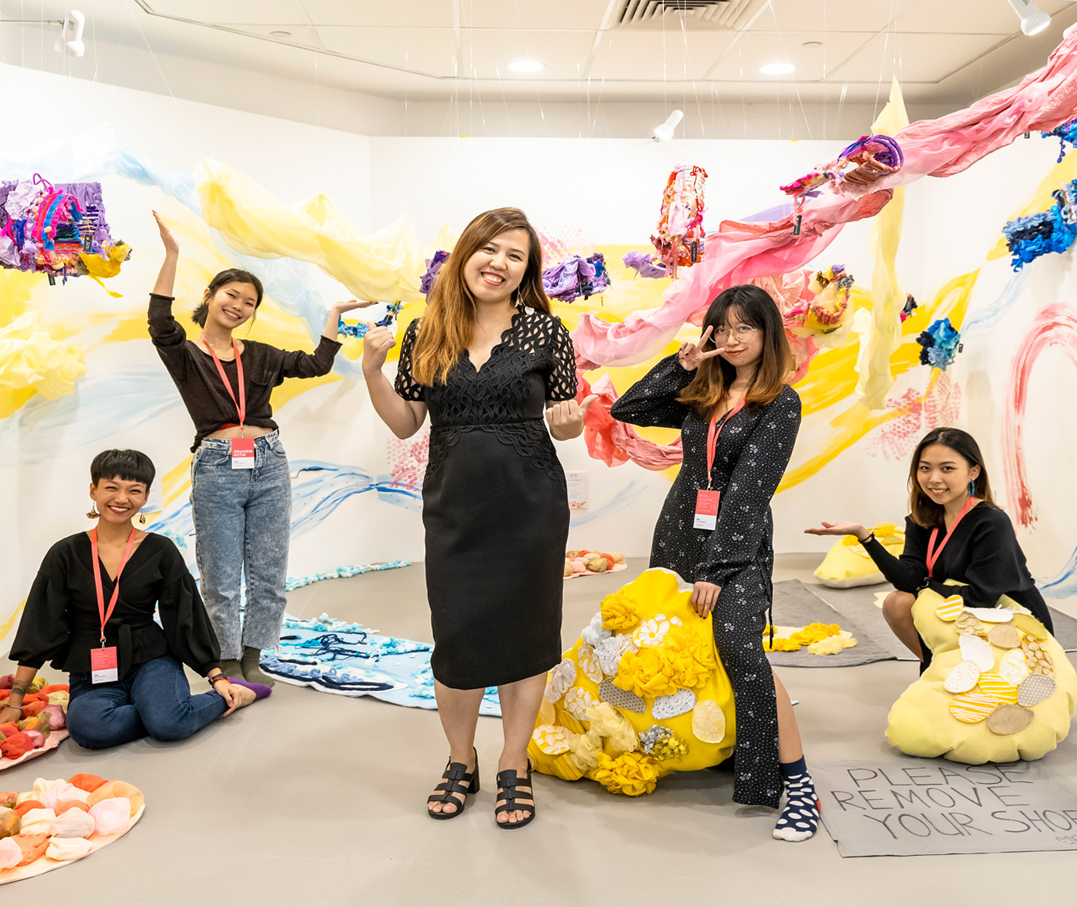
Ms Lena Lok was a fresh graduate aged 24 with $80 in her bank account when she first decided to start her own art school business–Amazing Art Shuttle in Singapore. Today, she owns 2 brands, having started her second art school brand–Art Wonderland–at age 31. We asked her for tips on how you can do the same.
“I spend a lot of time in my art studio—I’m almost there everyday including the weekends.”
Q: Hi Lena, thank you so much for coming here to chat with us. To start, could you tell us a little about your art schools, The Amazing Art Shuttle and Art Wonderland? What services do they offer and who are they for?
A: To start off, both The Amazing Art Shuttle and Art Wonderland were founded out of a desire to create quality art education programmes for Singaporeans. Amazing Art Shuttle was started in 2009 as I felt that there was limited art education options available in the heartlands. Amazing Art Shuttle has a literal meaning—we basically shuttle to all corners of Singapore, bringing our art programmes. Today, Amazing Art Shuttle focuses on B2B (business to business) solutions—we count art museums and government institutions as our clients and assist them with the formulation of Art curriculums and programmes. Art Wonderland on the other hand was started in 2017 to focus on our own internal art classes and programmes (B2C). We wanted to create a space that would encourage and invite children to explore new art ideas and techniques. Today, Art Wonderland has branched out into creating immersive and tactile art installations for young children.
Why did you decide to open and run art schools for a living? And how do you feel about that decision now that you’ve been doing this for over a decade?
Back in 2009 (the year Amazing Art Shuttle was formed) there was not much art outreach programmes available. Nowadays you see all sorts of art events everywhere, even in shopping malls. But back then, Singapore was still very new to the ideas of parent-child art bonding programmes and creating community collaborative artworks. I saw that gap and really wanted to use my art knowledge and experience to serve the community and that led me to start AAS. It is important for a business to always innovate and grow and that is also why I still love doing what I am doing; I get to suggest and spearhead many new projects and collaborations. It is a gift to be able to enjoy what you are doing for a living.
What certifications or skills does a person need to run an art school or teach art at your schools? What type of person do you feel is best suited for such a career?
Children are very well educated these days. They can seek out knowledge and information easily through the use of the internet. There are many Art DIY videos and tutorials on YouTube, hence Art Teachers these days need to be able to offer students something more than just creating copies of the same artwork. We tell our teachers that their job here is to teach them to be independent art makers, so they should see themselves as art directors. Thus all our teachers need to be familiar with most art mediums to be able to better guide the students. We require all our art teachers to have a formal art education such as a diploma or degree from an art school. We did make an exception for one of our former teachers as he was skillful in art and passionate about teaching. I feel that passion and responsibility is just as important as certification.
What is your weekly routine like as an art school owner?
I spend a lot of time in my art studio—I’m almost there everyday including the weekends. My time during weekdays are usually spent with my team in brainstorming for art curriculum, creating new marketing strategies and planning new art events/outreach with them. Weekends are spent teaching students and any in between time are used to clear paper work. I do however try to knock off on time everyday so that I can spend time with my family.
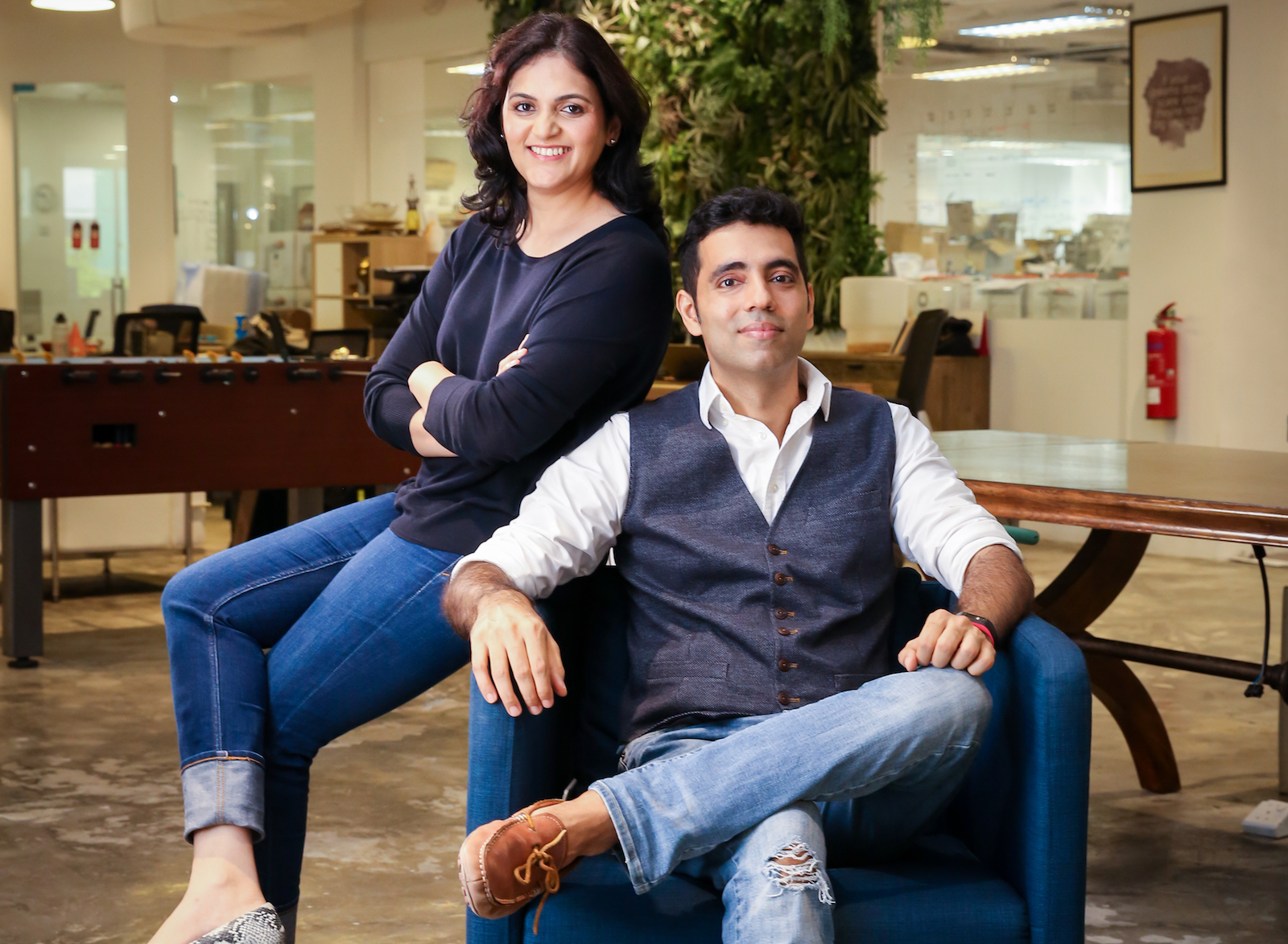
This is Miss Lena Lok.
Which 3 people or things are presently most important to you?
When I was in my twenties and trying to establish the business, I worked very hard and was literally running around all corners of Singapore. Because of that, I almost went into early labour when I was pregnant with my first child. I had to stop all work immediately and went on bed rest for almost 2 months. That whole incident made me realise what really matters the most to me in my life—my family. My husband and two children rank the highest! But my business is like my oldest child and will always be in my mind too.
For your students and their parents, what do they get out of getting involved in art classes? What are the benefits of exposing children to proper art training at an early age?
There are many places teaching children how to draw. But what they do not teach is how they can be observant about their surroundings and to see the world in different perspectives. We encourage our students to spend time discovering the world around them and to notice small little details such as the lines, shapes, colours, textures, smell, sounds around them. Art classes when taught properly can teach children to be more observant and appreciative of the world around them and to form their own thoughts and opinions. The practical benefit of art classes would of course be improved dexterity and motor skills.
What advice do you have for parents hoping for their children to be creative wizards in the future?
Do spend time talking to your children. Possessing critical thinking is just as important as artistic skills for young artists. Spend time doing inquiry-based discussions with them; this will help them form their own thoughts and opinions (traits important for artists).
What advice do you have for kids hoping to be really good at art?
It is more important to have passion and perseverance than to be naturally gifted in art. You need to enjoy doing art to become better in it. Time will hone all skills, but passion is harder to develop.
Lastly, what advice do you have for those hoping to open and run art schools similar to the Amazing Art Shuttle and Art Wonderland too?
Always try to remember what it was like for you as a child learning art; try to look at their world through their eyes. And a question I would pose to would-be art school founders—How can you contribute to Singapore’s art scene with your school and make a difference?
Lena is presently working on expanding her companies so that she will be able to provide quality employment for art school graduates in Singapore (“the sad truth is that there are not much relevant art jobs available for Singaporean art school graduates”). You can find her at the Art Wonderland studio at 37 Middle Road, #03-00 within the Bugis/City Hall region of Singapore, on Facebook and Instagram, or ask her anything using the comment box below.
More interviews with those who’ve created businesses from scratch here.
Photograph copyright of Lena Lok. Interviewer: Sy Want to be featured too? Tell us here. If you found this article useful:
In our final part of 2020’s The Wisdom of Crowds series and just in time for Christmas, we take a look at the objects this year’s interviewees and interviewers find most useful. What about yours? Which object has helped you the most? Leave your recommendations in the comment box below!
Q: Which is the most useful object you’ve ever owned and why?
Siddharth Mazumdar, 17-year-old inventor: My Philips Beard Trimmer, rather nice to trim the beard rather than shave it all off.
Yip Yew Chong, a muralist: Perception of useful objects change through time, nothing in particular I favour. But if you mean relating to my most recent ventures, the iPad with the Procreate software helped me kick-start my digital drawing adventures in 2018.
Cho Jun Ming, N-Level student and film-maker who lost his father early: My phone. Because with a phone you can do anything you want or that you can realistically think of. For example, with an internet phone you get to use Google, you get to learn things, you get to interact with people, create videos, do all sorts of things so I think a phone is the most useful. To me. Besides money.
Victor Fernando R. Ocampo, speculative fiction author: My phone to survive in modern society, as well as a notebook and a 2B pencil to escape it.
Kauai, 2020 LUCK-IT Interviewer: iPhone! Just can’t get rid of it. It makes life much more convenient.
Desti, adult colouring book designer The laptop is definitely the most useful object; I get lots of use from it, you can do anything from work to communication to leisure on it.
Choo Bin Yong, game designer who runs solo: My desktop computer is probably my most useful object I own. I have been using a computer to do all of my works so it’s something very important to me.
Cedric, child-free by choice: Probably my computer—I make music and browse Reddit on it.
Leanne, popular Instagrammer: Mobile phone. Doesn’t sound like a poetic answer but it is what it is haha! It’s very functional and does almost everything. Or maybe a perfume. Besides improving well-being, it makes the first and the last impression.
Tony, 80-year-old blogger: My smartphone is certainly the most useful object I have ever owned. It’s like science fiction. If I am going to ride my bike, I check the radar on my phone to see that there are no storms coming. I get phone calls on it, send/receive emails, follow the stock market, take pictures. Remember, I was nine years old in 1949. We got the first tv in the neighborhood. It broadcast three hours a day and we had people over every night to see it. That is an amazing contrast to experience in one life.
Joan, a minimalist: Many things I own are useful otherwise I won’t be owning them. However, I must say the 3 most life-changing things I’ve owned are: 1. Menstrual cup: I know they are expensive but in turn, mine has lasted me over 5 years. I have not turned back since. I have super heavy periods and this cup has cut down my waste and expenses on buying disposable pads. 2. Kettlebell: Ever since I was diagnosed with TMD (temporomandibular disorder), I had to cut down on lifting weights to only 5KG in total. My fitness took a real hit. I now own a gym mat, an exercise band and a 6kg kettlebell. These 3 items are really versatile, portable and help me to keep as much muscle as I can afford to build right now. 3. Handheld Glass Massager: Came as a free item from Sephora. However, it really helps to get the pesky knots out of my shoulder and jaw. Haven’t had a locked jaw episode since I added daily self-massages into my routine.
Ms Lena Lok, founder of an art school: I have a Wacom Tablet that has been with me since I was 19 years old! The tablet is now 14 years old and still works very well. It has helped me design and illustrate many things including my two companies’ logos and marketing materials, my wedding invitation card, my book ‘ABCs of Singapore’ (written by my twin sister Lydia Lok) and even a Christmas packaging for Doki Doki- a fruit juice company. If only all electronic products can last as long, haha.
Simon Templar, retired US Marine: A Leatherman tool (made in USA).
Jason Koh, dungeon master: Probably all the notebooks in life. I always have one lying around to scribble fresh ideas in.
Kinge, who quit social media: A mountain bike. I learnt many virtues such as patience and gratitude waiting to own one but most importantly are the fond treasured memories of my parents that I strive to keep alive every day.
Dr Bob Rich, author of 18 books: Little Bob. He is not exactly an object, nor a person, but a sort of a leprechaun that lives inside my head. You can inspect him here.
Norsham Mohd, a former Muslim: Most useful object: A gold pendent given to me by a patient. I was a hospice volunteer nurse with the Singapore Hospice Society. This girl had been under my care from the day she was diagnosed till her last breath. It was a journey I went through with her… from the day she said she was afraid till the day she said, “I am ready to go.” After her death, her brother gave me a pendent. Said it was instructed by his late sister to give the pendent to me as a memory with an inscription at the back: ‘Love from XXXX’.
Sean Munger, a former Atheist: That’s hard to answer because I don’t really think of the world in terms of material possessions. I’ve had the same pair of shoes for 3 years and they haven’t worn out, does that count?
Sy, who runs LUCK-IT: A yearly journal in which I jot down everything I do every day and lessons I learn along the way. Before I began journalling daily, life felt like just a fuzz of days with no solidified destination—you come up with goals, you forget them, you operate on pure instinct. Having goals and progress written down on paper really helps me see the bigger picture of what my life is about, not just now but years down the road, and helps me understand better what I should be doing next to make the most of this life.
Sabine Halm worked as a lacemaker for 12 years in Saint-Sulpice-les-Feuilles, France, practicing the highly prized trade her family has been engaged in since the beginning of the 18th century. The trade had been making a comeback in the fashion industry in recent years… that is, until COVID-19 happened. We checked out how she’s been coping since.
“We will come out of confinement with new creations to present!”
Q: How are you living these last weeks of confinement in the heart of the Limousin countryside? Has it changed the way you live every day?
A: The confinement has been disastrous for our art workshop! We were counting on the first sunny days, but the crisis hit us very hard instead. Trade shows and markets got canceled, suppliers closed, workshops-shops closed, courses and more courses got canceled… all for an extended period and an indefinite period. We lived through this confinement filled with questions, doubts, suddenly taken aback about the survival of our workshop. However, we remain confident about the future!
This “closure” allows us to rework projects that have been in the background for lack of time. We are rethinking all of our designs, the design of our patterns, and taking totally new turns! We will come out of confinement with new creations to present!
What makes your lace-making technique unique? And how did you acquire it?
It is the only lace that is executed using “knots”. My great-great-great-grandmother was already making this lace with knots. I didn’t know her, of course, so I had to relearn on my own. This know-how has existed for several centuries in our heritage! Very beautiful old works refer to them. They transport me “elsewhere” by leafing through them. It is like a mystical force which escapes me a little, but which remains obvious for me!
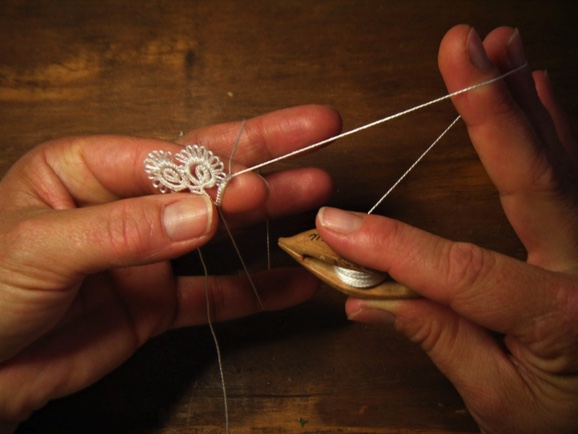
Sabine’s laces.
What are your projects in the coming year?
We’ve been turning to crowdfunding for several of our recent creations, doing presales, if you want! Ulule [a crowdfunding platform] allows us to continue to produce as best as possible, not to hibernate, to wake up in great shape! And we thus recreate a cash flow to pay our suppliers.
For the rest, we can’t wait to reopen our shop and resume our lessons. Many creations are coming, modern or old adornments, which will have to be made known and disseminated.
You’ve mastered the 4.0 tools (LinkedIn, Facebook, Instagram, Ulule, etc). How do they benefit you and how do you use them?
The “4.0” tools are those of our generation. They talk to a lot, allow great encounters, give us very wide means of dissemination and are all adapted to our needs as craftsmen of the 21st century! “Artisans of art 4.0” (laughs)
Our vision of things for the next six months remains mixed: France is seen abroad as the “Country of Crafts”, and yet, even in normal times, our professions can be discredited, even considered obsolete or superfluous. Yet we too participate greatly in the economy of the country! Our jobs and, especially the human beings who “hide” behind them, are stuck in the heart of what makes the French genius!
What are your projects for the end of this year?
I will be exhibiting sculptures at the Carrousel du Louvre as part of the International Cultural Heritage Fair in October. I make my sculptures using a mixture of the three skills that I have learned: spinning, embroidery and lace. I combined them to arrive at the result of the technique for my sculptures.
One of Sabine’s lace sculptures.
You can find out more about Sabine’s laces at her website, www.madrigalb.comand information on the International Cultural Heritage Fair here.
More interviews with people affected by COVID-19 here.
Photographs courtesy and copyright of François Beauxis-Aussalet Interviewer: François Beauxis-Aussalet Want to be featured too? Tell us here. If you found this article useful:
When COVID-19 began, Ryan was a military and legislative affairs programs coordinator with a regional Chamber of Commerce, working on a study into populism in America. Within months, he was furloughed, and not too long ago, he ended up getting laid off. We had a chat with him to understand how that experience has been like.
“When my CEO told me, my heart was racing. I’d never lost a job before.”
Q: Hi Ryan, thanks for being here! To start, can you tell us when you first heard about COVID-19 and what you thought of it then?
A: I cannot recall when I first heard of the virus. I follow the news closely. So many other things were happening in America whenever the word “coronavirus” was first used. The virus started spreading in America during Donald Trump’s impeachment trial, so I believe many of us were preoccupied. At the same time, I began seeing memes about the coronavirus and Corona beer. People were joking about it, and I don’t think any of us believed it would spread throughout America as rapidly as it did.
When did you really start to worry about COVID-19 and what did you do in response to that?
I was working on political programs at the time. I remember getting a phone call from a Fortune 500 company. They decided to withdraw $50,000 support because it required their executives to go to large political events with thousands of people. If their employees got sick after attending, the company could be held liable. At first, I believed they were overreacting. And $50,000 is a lot of money to lose. But that was the first moment I realized America was in big trouble.
One good thing about being furloughed and losing your job is the amount of time I can now dedicate to reading.
Can you tell us how you ended up getting furloughed, and what you thought of it then?
As I mentioned, I was working on political programs that resulted in large gatherings. As soon as our Governor gave the lockdown order, I knew we could not have events. I was furloughed a month later in April. It was kind of nice. I went on America’s unemployment CARES package, and I got paid to stay home and watch Netflix. I read constantly. I finished almost 50 books between April and August.
How then did you end up getting laid off? And what did you do right after that?
I was supposed to go back to work on August 1. A week before that, my company’s CEO called me directly and said that I would be laid off because we could no longer do political programs. I sort of expected this because our income from political programs had dropped to zero dollars. Still, when my CEO told me, my heart was racing. I’d never lost a job before. The next day, I went in to clean out my desk. I still accidentally left my Dolly Parton coffee mug there, and I really wished I hadn’t. I love that mug!
When furloughed, did you prepare for the instance you might end up losing your job or trust, like many, that all will return to normalcy soon enough? Why did you feel that way?
I’m a political scientist, and one of my areas of expertise is populism in America. Many Americans do not trust the government or experts. Therefore, I knew that Americans would struggle to accept the experts’ advice to stay home, close down businesses, and wear masks. And because we struggle with that, I would probably not go back to work soon. I started applying for new jobs in June, more than a month before I was laid off. Searching for a job right now is very difficult.
How different is being laid off from being furloughed, from your experience? And how do you feel about the choices you made when furloughed, now that that status has been changed?
There is only one difference: While furloughed, your business promises you will return to work (even if it is a promise that ultimately falls through the cracks). I had some hope. Now the hope is gone. I am not sure I could do many things differently due to coronavirus restrictions. On the other hand, I’ve always wanted to expand my knowledge of coding languages, which is very beneficial to have during a job search. Maybe instead of reading so many books, it would have been better to expand my resumé.
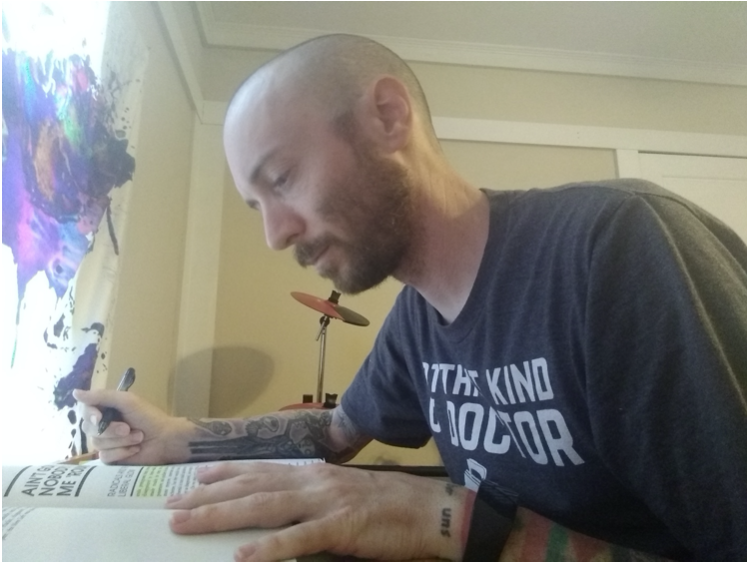
This desk is my new office. I spend hours here each day, researching companies and jobs and writing cover letters.
How long do you think you will be able to survive without a job? What options will you have if a new job doesn’t come along anytime soon?
I should have enough money in savings to last me six to eight months. I’m also getting unemployment income, which can stretch this timeline even longer. Still, I don’t want to be unemployed anymore. Eventually, I will find something. I delivered pizzas during graduate school. That was good money, believe it or not. I don’t mind doing it again. People pay delivery drivers to sit in their cars and listen to music!
Do you think a new job will be coming along soon? Why so?
I have had a couple of interviews already. I also applied for a job today that made my heart flutter with joy! Still, I do not have a lot of reason to assume I’ll be earning a paycheck anytime soon. Who knows? Maybe my phone will ring with good news today!
Which 3 objects or people are presently most useful to you?
I play the drums in a blues band with four other people. We practice once a week. I have a large basement, and it is easy to get us all down there and maintain physical distance. When I’m with them playing music, I don’t have any anxiety. Although the stress is still there, the band helps me not focus on it so much. And that is tremendously useful.
Which place was most helpful?
I walk 10,000 steps at least each morning before I start the day. It takes me one and a half hours. I walk along the Lafayette River and listen to audiobooks or music. The river is very peaceful and beautiful. Simply being near the river makes me feel better about everything.
Every morning, I walk along the Lafayette River. This bridge connects the urban university area of Norfolk, Virginia to the suburbs across the water.
Did you ever imagine you would be having to deal with a situation such as this? If you could go back in time to January 2020, what would you do differently?
I think many of us watch post-apocalyptic movies and TV shows, and we like to daydream about what it would be like to live through that. Still, I never expected something similar to happen (albeit with fewer zombies). I don’t think I would like to go back in time to January 2020. It was too late by then to prepare any differently or to stop the virus. I would just have to ride the whole thing out again.
If you could go back a whole decade, what would you do differently?
But if I could go back a decade? I might have bigger things to worry about. Ten years ago, I lived in Beirut, Lebanon, and the Syrian Civil War was just about to start across the border. In a few years, almost everyone in that country would be killed in the fighting or displaced. I would be too focused on trying to stop the bloodshed. I might not worry about a virus that won’t exist for another ten years. The Syrian people suffered so much during that war.
How do you think COVID-19 will affect your long-term career option and living conditions?
Before the subprime mortgage crisis (2007 – 2010), Americans found good jobs with college degrees. During the crisis, everyone got knocked down a notch. Mid-level associates settled for entry-level employment at half the salary, making it difficult for college graduates to compete for those jobs. I believe everyone will get knocked down another notch. Luckily, I have a doctorate and decent experience, but some jobs I apply to ask only for a bachelor’s degree. There are very few positions for my level out there right now. If I am willing to accept a low salary, it will be even harder for college grads to compete. Something will have to change soon.
What do you think 2021 will look like for yourself and everybody else?
In a perfect world, epidemiologists, virologists, and other medical scientists worldwide develop a cheap, safe, and effective COVID-19 vaccine, which stops the virus from spreading in weeks. At that point, people all over the world will slowly emerge from the “new normal.” If we can get that vaccine, 2021 is going to be a strange but exciting year. We will all be a little timid and traumatized, and we might not feel safe giving out hugs, but there will be a giant weight lifted from our shoulders.
Lastly, what do you know now that you never knew before?
I now know at least a little about gardening.
Ryan is presently working on finding new employment while simultaneously developing 2 books—one about 1990s protest music and the other, a fictional novel. You can find out more about his progress at his website, www.ryanmnixon.com, or chat with him about life and circumstances using the comment box below.
More interviews with people affected by COVID-19 here.
Photographs courtesy and copyright of Ryan. Interviewer: Sy Want to be featured too? Tell us here. If you found this article useful:
Nicholas Chee is a 41-year-old consultant, film executive producer and and film festival co-director who is based in Singapore and Kaohsiung, Taiwan. He told us how the COVID-19 crisis has made him reassess his opinion of his business, and why he might decide to go into retirement earlier than planned because of it.
“I always knew that as some point “shit will hit the fan” the way our global economy was heading. But never thought it would take a Coronavirus to actually be the catalyst.”
Q: Hi Nicholas, thanks for being here! When did you first hear about the COVID-19 / 2019-nCoV coronavirus and what did you think of it then?
A: Hello Sara, thank you for having me. I first read about the COVID-19 sometime in the 3rd week of January 2020 and I didn’t have a good feeling about it so I even skipped my usual extended family reunion during CNY [Chinese New Year]. Now that we are 1 month into DORSCON [Disease Outbreak Response System Condition] orange, I was hoping for some clarity but with the global spread starting, I think we are heading for even rougher seas ahead till the end of the year.
How concerned are you now? How many people do you personally know who’ve been afflicted with the coronavirus or who have been served quarantine or leave of absence orders?
TBH, I am very concerned about it especially so when I haven’t been able to go back to Kaohsiung (where I’ve been based since 2019) for 2 months already. So far I don’t know anyone in my first degree who has been infected or quarantined.
How many cases are there in Singapore at the moment of this interview? How concerned is Singapore at this point?
We are currently at 150 infected with 90 recovered according to CNA [Channel NewsAsia]. Well, we are at DORSCON Orange, 1 level below Red but I’m glad we have no deaths so far.
The stash of 4 masks given to every household in Singapore by the Singapore government.
For the benefit of our overseas readers, can you explain how the majority of the confirmed cases in Singapore got infected?
I believe our “Patient 0” was a tourist from Wuhan, the epicentre of the epidemic.
You’re a business owner in Singapore, so how has this coronavirus outbreak impacted your business thus far?
I run a video production company and it’s been very very challenging with projects being cancelled or postponed indefinitely but my friends in the Event and Live Entertainment sectors have it worse.
What do you foresee happening to your business and other businesses around Singapore if the outbreak does get worse or persists for more than 6 months?
TBH, if this situation prolongs and market confidence doesn’t come back—we might have to close shop for good.
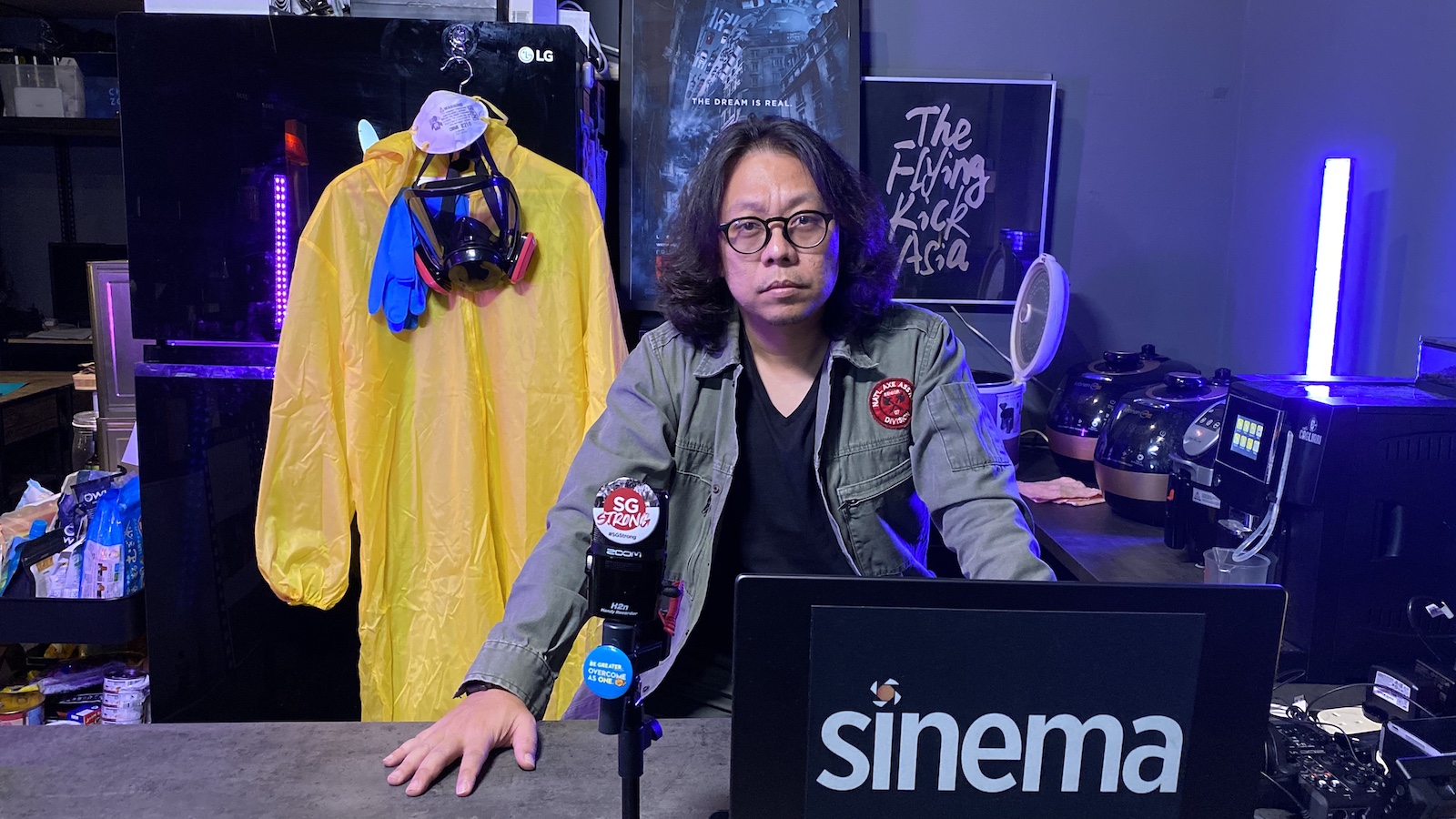
Nicholas in his office.
What are your plans if that were to happen?
I already have my retirement plans planned out. It was supposed to be 3 years from now when I turn 45—and the plan was to retire in Kaohsiung with a little small farm and live off-grid. It might just happen sooner then. [Interviewer note: Whoa, nice! Do teach us how too.]
Did you ever expect or plan for a situation like this 2019-2020 novel coronavirus outbreak?
I always knew that as some point “shit will hit the fan” the way our global economy was heading. But never thought it would take a Coronavirus to actually be the catalyst—was expecting more of a WW3 scenario TBH.
How will being put on quarantine, Leave Of Absence (LOA), or contracting the virus affect your financial situation?
This would be a tough one—personally I do have sufficient savings but for the business, it’s a different story altogether.
Do you think anybody or any organisation—government or private—will be helping you out if the economy continues to tank?
I believe that our G. has been very quick to react with rescue measures—but how that can last is anybody’s guess.
Nicholas’ COVID-19 preparations.
What do you think can or should be done to help affected businesses tide through this epidemic?
This is a good time for businesses to reassess their viability and perhaps a good opportunity to radically innovate or even pivot for the future.
What have you learned from this coronavirus outbreak that you didn’t know before?
How insignificant and irrelevant we and our work (as creatives) really are—what matters most is how we treat each other as fellow human beings.
Is there anything you regret not doing earlier?
I did manage to get my toilet paper stash eventually so all is good now.
Which 3 items or people are most useful for you right now?
My iPhone (with internet connectivity), my Multitool and a water bottle with a built-in filtration system.
Lastly, is there any business you know of that is doing better than usual because of the COVID-19 outbreak?
Next week, we’ll move on to other continents to find out how the virus has spread to other countries. Follow the latest in our COVID-19 Diaries series here.
If you’re in a country that has been affected by the novel coronavirus and would like to share information about the situation where you’re at, do get in touch with us here.
Photographs courtesy and copyright of Nicholas Chee. Interviewer: Sy Sponsor or support the COVID-19 Diaries series here. If you found this article useful:
Juliana, who we interviewed last year for getting through 4 years of topical steroid withdrawal, is a sales and operations executive living in Hong Kong with 2 family members and 3 dogs, 919km away from Wuhan. She told us how the COVID-19 epidemic caused her to lose her primary source of income and explained why the people of Hong Kong have been hoarding toilet paper.
“There are no apparent clusters, because it’s basically everywhere now.”
Q: Hi Juliana, thanks for connecting with us all the way from Hong Kong! When did you first hear about the 2019-nCoV / COVID-19 coronavirus and what did you think of it then?
A: I heard in the second week of January. They were rumours at first. I was just observing people talk about it. Some are extremely fearful, while some couldn’t be bothered. A lot were mocking the government’s response to the news. It was entertaining I’d say. Personally, I didn’t think it was going to be that serious.
How concerned are you and the rest of Hong Kong now? Do you personally know anyone who’s been infected by the novel coronavirus?
I’m not that concerned for myself, because I take the precautions like wearing a mask, washing my hands, and staying away from crowded places. The rest of Hong Kong right now has settled after the initial mask-hoarding weeks. Most people have access to face masks now, and they are all very hygienic all of a sudden. Fortunately, I do not personally know anyone who’s been affected.
How many cases are there in Hong Kong at the moment of this interview? And how did most of the cases in Hong Kong get infected? Are there any notable clusters?
There are 101 cases as of 3 Mar 2020. Most of them got infected by having travelled to China. And then there were meal gatherings that propagated the spread. Lately, there was a family of 19 having a family gathering, and 9 got diagnosed with the virus after that meal. There are no apparent clusters, because it’s basically everywhere now.
“Scene at a local supermarket during the first week of February after people heard there are limited supplies of rice.”
When SARS happened 17 years ago, Hong Kong had 1755 people infected vs Singapore’s 238. Yet this time round, Singapore has had more confirmed cases than Hong Kong for many days running. Why do you think this is the case?
Firstly, the COVID-19 is more contagious than SARS. Singapore did not force their people to take necessary precautions. I remember in the beginning of February, most of Hong Kong were already wearing masks and practicing hand washing rituals. Friends and family in Singapore told me they have no masks due to limited supplies, and the government told them NOT to wear masks? If we only relied on the sick to wear a mask to limit the spread of the virus, this will be kind of what has happened in Singapore.
How has the government of Hong Kong been dealing with the COVID-19 outbreak thus far? Where do you think they did well and what can they do better?
The Hong Kong government closed certain borders connected to China, and imposed a compulsory 14 days quarantine. They did well in the sense that they tried to keep the door open to people in need of medical treatment, and they can do better by closing the borders and implementing the quarantine a lot earlier. How can you try to take care of others when you don’t even have enough supplies for the medical team, and local patients?
Is there anything you know about the situation within China or in Hong Kong that has not been mentioned, or has been misrepresented, by news agencies outside of China?
This I do not know. I realise most foreign press talk mostly about their own country’s situation. As for the situation within China, I only hear of it through the newspaper, which may already be misrepresented.
“Empty streets in Sheung Wan, normally dotted with people.”
What is the status of food, water and supplies like masks and toilet paper in stores in Hong Kong right now? And why are people stock-piling toilet paper, of all things?
Supplies for all the necessities are steadying since it’s been 1 month after the Chinese New Year break and most factories are back in operation. People were stock-piling toilet paper because the older folks heard rumours about a lack of supply for toilet paper as it’s a raw material in the mask-making process. When people think supply is going to dwindle, they hoard. You know old folks are really gullible, although they have a lot more experience and wisdom in them? If it’s on the internet or whatsapp, it must be true!
How has COVID-19 affected your life?
In so many ways. I have to wear a mask 12 hours a day, stop hanging out (it’s been 1.5 months since I last had a happy Friday night out!), family gatherings got cancelled, got extra day offs at work because we can’t work from home so our company let us have one more day to stay at home. A lot of brands are having sales now, and I got laid off at work because retail business is so bad.
What will you do if you or any one of the members of your family develops symptoms of the virus? What do the officials in Hong Kong recommend you do?
Self-quarantine and see a doctor.
What will you do if the COVID-19 situation in Hong Kong takes a turn for the worse? Have you prepared in any way for the situation taking a turn for the worse?
Probably go on a holiday somewhere else. Since the job market is really bad right now, might as well take a break. I can’t say I’m prepared, but I’ll just stick it out together with my family.
“Going everywhere with a surgical face mask. Wearing it for 12 hours during a work day, even within the office.”
Which 3 items or people are most useful for you right now?
Surgical face masks, hand wash, and iso-propyl alcohol.
Is there anything you regret not doing earlier?
Fortunately for me, I lived a very full life before this virus happened. I’m glad I got to do all those, and I can’t wait to explore more of Hong Kong once this situation is under control!
Lastly, what have you learned from this novel coronavirus outbreak that you didn’t know before?
That the average Hong Kong citizen has more common sense than the government, and they are all very well prepared to face this coronavirus. I have to say, if there is another contagious respiratory disease hitting the different cities, Hong Kong is probably one of the safer cities to be in because everyone protects themselves. If everyone else wears a mask and you don’t, you’re safe.
Juliana is presently working on a side gig, building a brand she envisioned but hopes to get a day job at L’Oreal or Estee Lauder too someday. She no longer blogs (“My blogs are all kinda dead now ahahaha!”) but you may still converse with her here using the contact box below.
Tomorrow, we chat with a businessman from Singapore to find out how the novel coronavirus has affected him. Follow the latest in our COVID-19 Diaries series here.
If you’re in a country that has been affected by the novel coronavirus and would like to share information about the situation where you’re at, do get in touch with us here.
Mag is a Chinese citizen, living in Zhongshan in the Guangdong province of China, 1088km from Wuhan. We had a chat with her to find out about the coronavirus situation in Zhongshan and was surprised to find her more busy with work than usual.
“Business has even gotten better now because people are more aware of health issues. I am even more busy than usual, working from Monday to Sunday non-stop.”
Q: Hi Mag, where do you live? How long have you been staying home since the novel coronavirus outbreak started?
A: I live in Zhongshan, a city in Guangdong. I can’t remember when we began staying home. It was probably during the Chinese Lunar New Year (25 Jan). We had bought a lot of food for the new year so we just stayed home. However, I went to the supermarket once on 15 Feb because we were running out of food.
How many cases of COVID-19 have been confirmed in your city? What measures have been taken in your city to avoid further outbreaks?
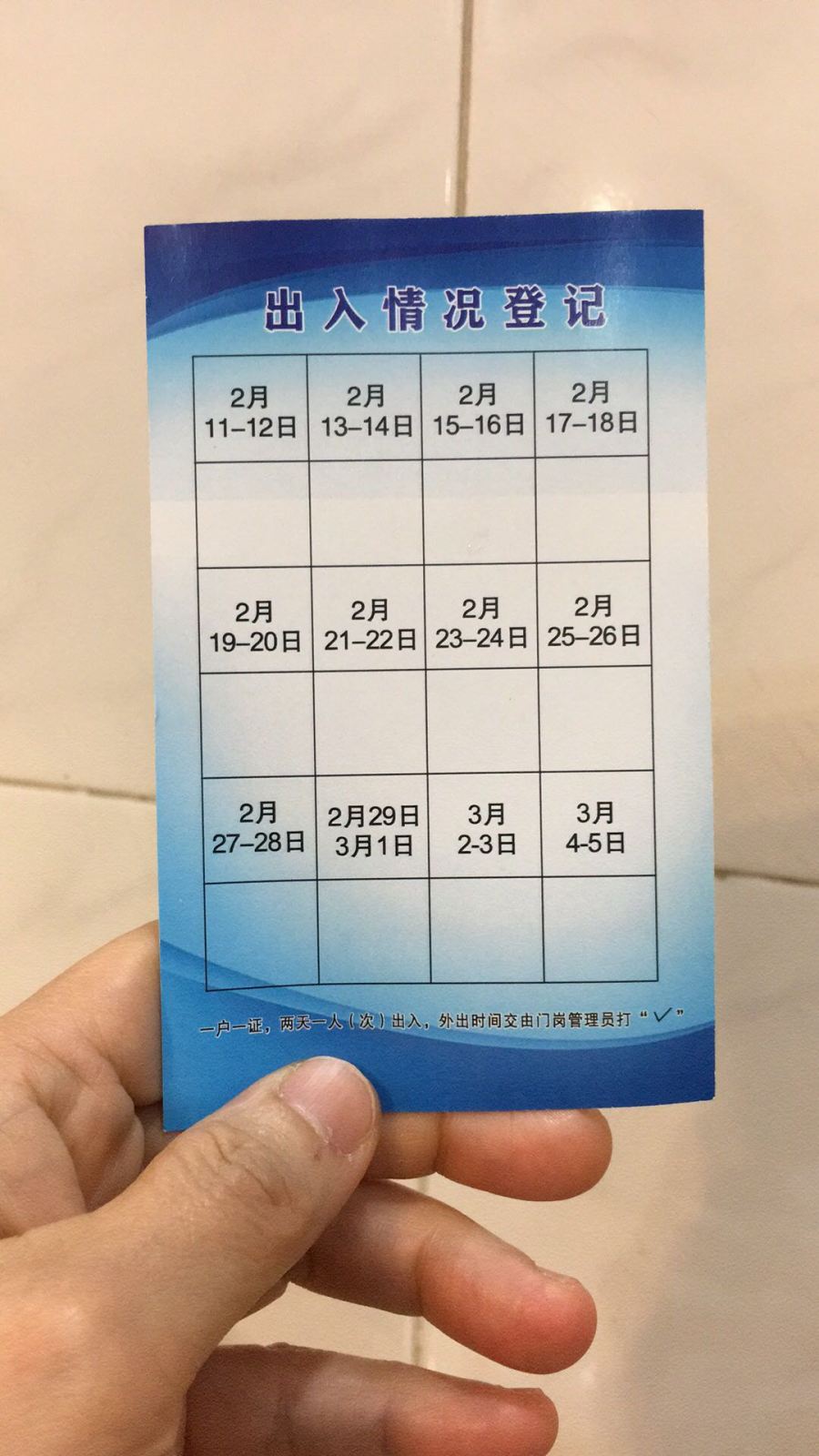
There are 62 confirmed cases here. Since 5 Feb, the city implemented a series of measures to restrict the mobility of people. For example, a lot of facilities such as cinemas/karaoke joints/online game centers were forced to close. People are not allow to go out if they do not wear a mask. Besides, only one family member can represent the family to go out to source for food and supplies, once every 2 days. Every time you go out of a certain area, you need to show a pass to the guard and the record would be logged.
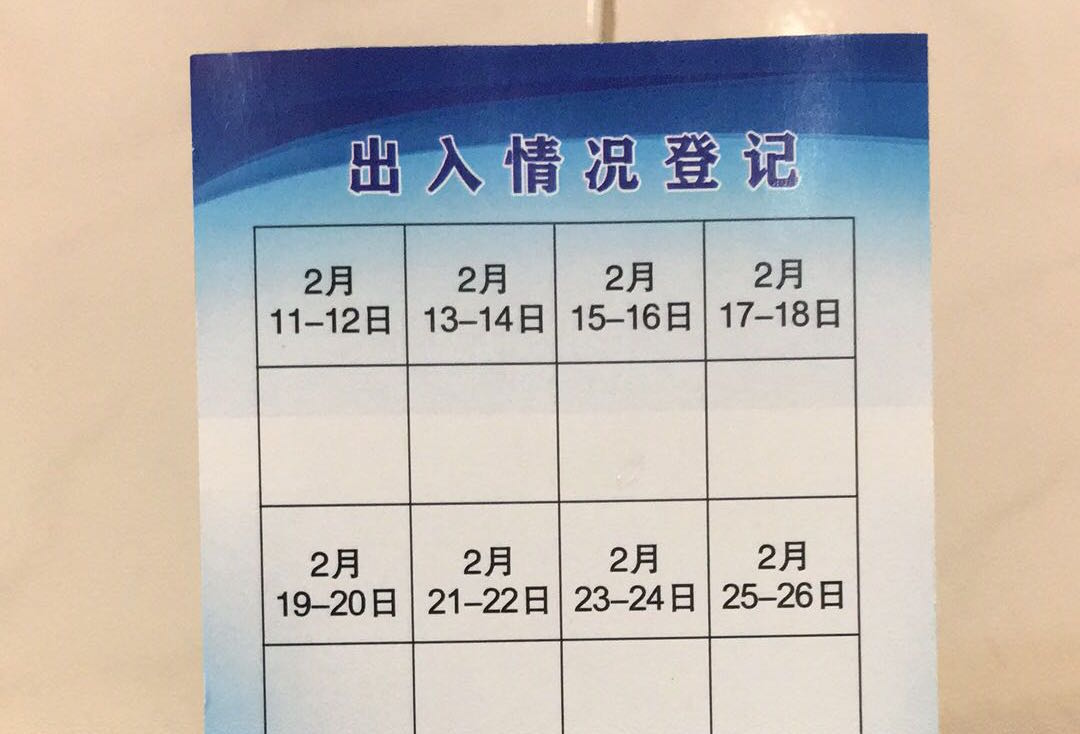
The pass required for going in and out of the villages in Zhongshan.
Who are these guards? Who gets selected to be guards?
For villages, normally it would be the committee members in the village who would be assigned the job to control people going in and out of the area. For small communities in the city, the job would be carried out by volunteers. The main roads or highways are guarded by the police.
Can you briefly describe how it was like the last time you went to a supermarket?
It was quite crowded at the supermarket. Everyone wore a mask. The most popular thing was rice. Everyone bought at least two bags of rice and one full cart of other stuff.
The back of the pass required for going in and out of the villages in Zhongshan. Exit records will be logged at the back of the pass.
What do you do at home these days?
Since I work for an insurance company, I can work at home with the computer. Business has even gotten better now because people are more aware of health issues. I am even more busy than usual, working from Monday to Sunday non-stop.
When will you physically return to work?
There is no announcement from my company yet. Hopefully we can make it in March.
Tomorrow, we’ll chat with an expat in another part of China’s Guangdong province to find out how similar his situation might be over there. Follow the latest in our COVID-19 Diaries series here.
If you’re in China right now or have been affected by the novel coronavirus and would like to share information about the situation where you’re at, do get in touch with us here.
Photographs courtesy and copyright of Mag. Interviewer: Kauai Sponsor or support the COVID-19 Diaries series here. If you found this article useful:
The Amateur Trader, who prefers to be known only by his online handle, is a self-employed person based in Singapore and is presently supporting 2 babies, a wife, a flat and a car on a single income. We had a chat with him to find out how the COVID-19 might affect his financial situation over the next few months and got some unexpected answers.
“The stupid person will ask how much this is going to cost me. The smarter person will ask how much I can earn from this.”
Q: Hi The Amateur Trader, thanks for coming on to share your perspective. When did you first hear about the 2019-nCoV / COVID-19 coronavirus and what did you think of it then?
A: I heard about it in Jan. The first thing that came to mind is concern because my family is in the medical and healthcare sector and also, my wife was due to give birth so I was imagining the logistical issues it could create.
But I also reminded myself, that a crisis in general (not specifically of this scale), also presents opportunities to profit, as I have seen before.
How concerned are you now? How many people do you personally know who’ve been affected by the coronavirus?
I am concerned for my kids. Of course my family is personally affected too, being in healthcare. But in the financial markets (and I speak with regards to stocks), trends are emerging and if you are systematic and nimble about it, it does present opportunities to profit. So financially at least, that’s not so bad.
You identify as self-employed. Can you explain what that means and describe how you earn a living?
I am working towards multiple income streams to earn a living. Stock investing and Options Trading is just one of the means.
How has COVID-19 affected the above? How badly have your regular sources of income been disrupted?
It has affected sources of income of course. It’s bad… but because I am working towards having multiple streams, I know it could be worse. Currently, as of Feb 2020, the most regular source has so far been the stock market.
What have you been doing to stay afloat?
Specifically with regards to stocks. I am going shorter than I normally would. Locking in profit as income and capital consolidation (to prepare for the next positions I take) became a priority.
For how long do you think you can survive—financially and physically—if things continue as they are now or get worse? Had you ever planned for such a situation?
I have planned for such a situation. It’s the disease of being self-employed, where you know not every day is Sunday. Financially, as long as there’s a stock market performing the way it has been in the last quarter, there’s potential financially.
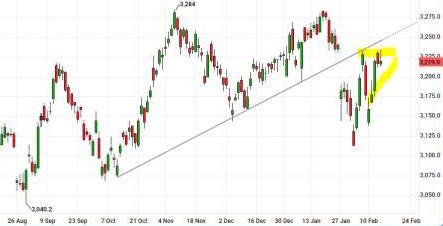
A chart shared by The Amateur Trader.
What do you plan to do if COVID-19 brings the Singapore economy to a standstill for more than 6 months?
I am more heavily vested in the American stock market than Singapore, so as far as financially and stock market wise, so it doesn’t make much of a difference to me.
Honestly, it is my opinion that COVID-19 is less of an issue (in terms of stock and financial markets) than other geopolitical issues, especially the American Presidential 2020 Election in November.
Do you think anybody or any organisation—government or private—will be helping you out if the economy continues to tank?
No.
How will being put on quarantine, Leave Of Absence (LOA), or contracting the virus affect your financial situation?
It would affect my family having 2 babies. But financially, it may be better since I would have more time to monitor the stock market if I wish to do short plays.
Which 3 items or people are most useful for you right now?
My trading platform and stock market charts.
Lastly, what have you learned from this coronavirus outbreak that you didn’t know before?
The stupid person will ask how much this (the coronavirus) is going to cost me. The smarter person will ask how much I can earn from this (coronavirus). Which one do you want to be?
Remember that the best opportunities to make profit lies when the whole world ‘seems like it’s coming to an end’.
My idea of fun is reading earnings reports and looking at stock charts so when this virus happened, one of the things I did was to pull out charts of the stock markets during SARS so I had a reference of how the market could move.
I also did that in early Jan. The US fired missiles into Iran; I pulled up the stock market charts of the Afghanistan war in case the situation escalated.
I have learnt to always remember that there is an opportunity.
*Disclaimer: The above opinions are The Amateur Trader’s own on the day he completed this interview and should not be considered as specific investment advice. The risk of loss in trading the stock market can be substantial. Readers must consider all risk factors before trading.
The Amateur Trader is presently working to be a better stock investor/trader by remembering always that “the pain of discipline is always less than the pain of regret…” (his words). You can get more of his wisdom on his Facebook page or share your thoughts and questions with him using the comment box below.
More interviews with those affected by COVID-19 in Singapore and other parts of the world to come. Follow the latest in our COVID-19 Diaries series here.
If you’re in China right now or have been affected by the novel coronavirus and would like to share information about the situation where you’re at, do get in touch with us here.
Photographs courtesy and copyright of The Amateur Trader. Interviewer: Sy Sponsor or support the COVID-19 Diaries series here. If you found this article useful:
Now that we’re coming close to the end of this decade, let’s take a few weeks to look at the other answers we’ve collected all through 2019: One of our interviewees, Bryan Yong, a young man who worked as a relief teacher while waiting to start his career as a pilot, asked for advice on saving for the future. Here’s what our other interviewees suggested he do.
“Secure yourself with the basics. And beyond that, you go for it, take a big bet.”
Q: What advice do you have for young adults with regards to saving for the future?
Russell Pensyl, who is an interactive media artist: The real solutions will be found, not by complaining about how the world and how society is, but by looking for a solution to a small problem. Small solutions build into big design.
Petrina Ng, who quit her 14-year teaching career to become a wedding photographer: Little by little goes a long way.
Elizabeth Seah, who has been cosplaying for 24 years: Make reasonable plans, start working towards it, stick by it! Try 40(saving)-60(expenses) for a start and slowly work towards 50-50, then 60-40/70-30. No point fixing a goal if you can’t follow through and feeling discouraged when you can’t produce results.
Nur Syahidah Alim, who is a world champion in archery: Be mindful about your daily and monthly expenditure. If you like going cashless, set a daily limit on your cards. Alternatively, I use a YouTrip card (which I use during my travels for competitions) to help manage my daily budget. In addition, explore investments with your local bank. Get in touch with your personal banker to explore various investment plans that suit your needs and level of comfort.
Syahidah’s first debut at the Asian Para Games 2018 in Jakarta, Indonesia. “Singapore was ranked 5th place. I was leading the Singapore Contingent as the flag-bearer. This is also the period where I was nominated into the Asian Paralympic Committee Athletes’ Commission.” Photo credit: Fiona Hakim / Sport Singapore
Kelvin Seah, who is a stay-at-home dad: To think carefully before making any purchase and ask if what you want to buy is a genuine ‘need’ or a fleeting ‘want’. To consider investing in things that will last, things that truly matter in the long-term.
Jeshua Soh, who dropped out of school, started a business at age 19 and started another business in Myanmar: Saving is good, investment is better and hoarding is dangerous.
Gwern Khoo, who is a Michelin Bib Gourmand certified hawker: Start saving and investing as early as possible.
Sheeba Majmudar, who has been a nutritionist for 12 years: Invest in your health and that way you will save more!
Loh Teck Yong, who is a security guard and author: Don’t get a credit card.
Rishi Israni, who married and built a million-dollar business with the inventor of the Rotimatic: I’m going to quote my father: Save at least 50%. Because at the end of it, the trash you buy doesn’t really make you happy. So it’s a waste of everything.
Evelyn Eng-Lim, who built her own retirement farm: One must save enough to see through retirement days for basic needs and personal insurance. This can be relatively easy if one lives an environmentally healthy lifestyle which will not require too much personal expenses.
Evelyn when working on her farm.
Pranoti Nagarkar, who invented the Rotimatic: I think it’s important to secure yourself with the basics. And beyond that, you go for it, take a big bet. There’s always the need to have a security blanket so start by asking yourself, what’s the worst that can happen? If the worst is manageable then you can really go for the big leap.
Sy, who runs LUCK-IT and interviewed all the above people: Make your money make money for you.
What advice do YOU have with regards to saving for the future? Drop your answer into the comment box below and we’ll add it to this list!
Photographs courtesy and copyright of those featured. Interviewer: Sy If you found this article useful:
At age 20, Rishi Israni met a girl at a cooking event in University and fell in love. 4 years later, they got married and eventually began working together on a business that would go on to make millions of dollars with its flagship household product—the Rotimatic. We pulled him aside to ask for his advice on doing big business with life partners.
“The first time we met, we chatted for about 5 to 6 hours, and then I said, “I’m going down to the vending machine to get a Coke, do you want to join me?” And she joined me.”
Q: Hi Rishi! Thank you so much for making the time to be here! Okay so tell us, how did you meet your wife and what did you think of her when you first set eyes on her?
A: She was the roommate of a friend I was on a committee with. I saw her a few times and she always came across as somebody who had a lot of zeal for life. Like I still remember her smile when I close my eyes—those moments I clearly remember. It just started like “oh, here’s another human soul who is very bright” and luckily, because of her roommate, I got to interact with her. We were trying to organise a large function, trying to cook for close to about 150 people for the first time ever, and her roommate was supposed to turn up but she was not well so Pranoti turned up. That’s how we got to know each other.
How long did it take for you to ask her out on a date? What about her made you want to ask her out on a date and how did you actually do the asking?
There was really no date per se. I remember the first time we met, we chatted for about 5 to 6 hours, and then I said, “I’m going down to the vending machine to get a Coke, do you want to join me?” And she joined me and we talked again for the entire night. So I think from the day we met, the first date was I think a week after, and within the next few days, we sort of knew that we were going to get married to each other. So it was like a whirlwind romance of sorts.
Rishi Israni is co-founder of Zimplistic, the company that produces the Rotimatic.
How did the first date go? Did you think then you would want to marry her and start a business with her?
Well, marriage, yes, certainly did cross my mind. But business, in the first date this was not something I thought of at all. The thing that attracted me to her was that she’d always been an engineer who wanted to solve problems. And she always used her own mind rather than just subscribing to the general narrative. She always understood that whatever the general narrative was, wasn’t always correct or doesn’t apply to you as is. So that is the thing I still find very attractive: she thinks on her own and has her own point of view.
How and why did you eventually propose?
There was no proposal. I like to believe that she is the one who proposed while she likes to believe I proposed, but actually, none of us proposed. And nobody ever asked, “Would you marry me?”—it was assumed. The bond, the chemistry was just so strong that we just assumed that we were going to get married at some point. Then, parents came into the picture.
I had graduated, I was working, and she hadn’t even graduated and we had started thinking where she would live after she graduated, would she live with friends, etc? Parents intervened and said she is graduating, she’s going to move out of university so you’re going to get married. And I asked myself, do I have a reason to not get married? And it was the same—getting married or not getting married, it was the same thing. So, we were all right and we just got married.
Was doing business together ever on your mind at that point?
Oh yes, absolutely. I always wanted to start a company. Pranoti always wanted to change the world and do something, but her articulation was never to start a company. But I wanted to start a company and build a business, and that had been the case right through university and even when I was growing up. I knew I didn’t want to work for somebody. So right out of university, for a year I was trying to find something, I couldn’t find anything, so I took up a job for a year and a half. That job, I quit 3 or 4 times. And I went back to the same job. I would go out, and I would get scared or realise it wouldn’t work or I do not have the money or the correct understanding—initial whims can be misdirected—and I would go back. Finally, after the fourth time, my boss said, “Look Rishi, don’t do this again. This is the last time.”
I never thought I’d ever work with Pranoti because our fields are so different. I am a software guy, she’s a mechanical engineer, and in the initial days, I was just interested in software. My first company was called tenCube, I started it with a few of my friends from NUS [National University of Singapore], and I sold that company in 2010. Zimplistic started in 2008 so I didn’t start Zimplistic. After I sold the company, Pranoti wanted me to come over, and there was a lot of negotiation because I was in a very difficult situation. In an acquisition you have some sort of commitment to your acquirer, to the team, to the company and to the product, so if you leave earlier on it’s not great. I was torn. Pranoti was also reaching the stage where Zimplistic was getting too big and it required software leadership, so I took the big decision and joined Zimplistic.
So how did the idea to do business together come about? Was it you or she who proposed to do so?
So when Pranoti decides on something, she will just get it. She is that determined. She knows how to convince and persuade one. She must have convinced me for a few months to join her. I was busy with my company, she was working on Rotimatic, we would talk about things but just on a very macro level because it was a different world and I was very busy. Once I sold my company, Zimplistic was running out of money, she was trying to raise money and I was trying to help out as an outsider, and I think that is when she and I realised, I must jump in, or it will get much harder. It was a very complex problem she was trying to solve.
How did you figure out how to work together? Did you have any major problems along the way and if so, how did you resolve those problems?
In the beginning, it was very difficult. I came in and I wanted to work on different challenges in my own way, from the way project management is done to different tools—the software industry is more tool-centric, the mechanical world is not as tool-centric, and now I realise why. Also, in the first year, she would mention, “This is my baby, you don’t really understand my world yet!” And I used to be a little more brash and arrogant like, “Oh? I have more experience in a start-up!” I think it took us one year to understand each other. But, I think the disagreements were momentary because we had respect for each other and different skill sets along with different strengths. Both of us took the time to understand each other.
What are the best parts about running a business together with your wife though?
There are many, many, many good parts. At the end of the day, what really matters is striking that work life balance and being able to spend time with the people you love. And running a business together, you get to be with the person you like or love all the time. So that’s phenomenal. The other thing is, when you are going through your ups and downs, they understand why. Some negatives also exist like that both partners may be going through some problems at the same time—so that’s another challenge you need to learn how to handle.
How different are your routines now that you’re working on a business together, as compared to before when you both had separate jobs?
I think when we both had separate jobs, we didn’t even have kids, so it was slightly different. We would see each other much later, many times after dinner, and I was also working till much later. Now, it is very different. Sometimes we catch up during the day for lunch and we get to manage our kids better—we go home early, spend time with the kids—so basically the juggling of work is much easier. So I feel, as a father, and Pranoti as a mother, we spend more time with our kids than most people with jobs. So this is a phenomenal outcome.
What about weekends? Have those changed, and if so, how?
Weekends haven’t changed much. They remain more or less the same. It is just that now you have somebody else to talk to about the same problems and the same challenges and it’s actually more exciting. I feel that most couples don’t have many things to connect at an intellectual level. They might be romantically connected, but intellectually, sometimes, they don’t have common interests. And now that Zimplistic and product innovation are our interests, they keep us much closer together.
What advice do you have for couples hoping to start and run a business together?
I say this to many people–what most people don’t look at is that co-founders, they are also a couple in a way. By the end of it, they go through so much ups and downs, they end up having a very strong bond. And sometimes, if you look at the start-up world, there’s a lot of falling out amongst co-founders. They go through the same cycles so you should just regard your spouse with an objectivity. Know that the ups and downs, they are not just because of your spouse—it would be exactly the same if they were somebody else and not your spouse. For your spouse, the silver lining is, if you have a strong bond, you will definitely sort it out and get over it. Sometimes with a co-founder, you just can never bridge that gap. My only advice would be that one must know and be able to assess whether the bond is really strong or not. If so, it’s an enriching experience. Otherwise it can pull you further apart.
Can you map out a recommended plan of action for the above couples to follow?
A tactic that has worked for us is, ideally, have complimentary skills. That’s the best. If both partners have the same skills, then it’s going to be much harder. It’s the same with a co-founder. When both people want to do the same things, the difference of opinion is too much and it’s much harder. Sometimes people start with a spouse because it’s the easy way out. Like, oh I can’t find anybody else, let me start with my spouse because working with her would be cheap, free labour, right? It shouldn’t be one of those reasons at all. That’s very hard to sustain and you lose respect over time if your spouse is not capable.
I think one thing you should not do is get yourself into a situation where you end up losing respect because you didn’t think it through. For example, if you get your spouse to do business development but they are not the sort who can do it and they don’t want to do it, but are just doing it because they want to help out a little bit. Most couples are not very honest with each other but if two people can be absolutely honest with each other, that is a very strong foundation to start on. Otherwise it can derail your family life.
How did growing a business with your wife change you as a person? What do you know now that you didn’t before?
Pranoti has always had a more balanced perspective. I’m a bit more of an extremist. I think that is where it’s really helped me. Most people get swayed by either their greed or fear, and they can’t handle them. Pranoti has taught me balance. I have a tattoo on my hand that says ‘Play The Game’ and it’s about always making sure you know that all you can do is just try very hard. Not every time things work out but that’s part of the game; it’s okay, you’ve tried hard. So Pranoti keeps that perspective and even Zimplistic alive. If you see her around me, she’s always the more chirpier and happier one. I’m a little bit more serious.
If you could go back and replay your entire journey of starting and growing a business with your wife all over again, what would you do differently?
I would be less stressed about things.
What were you like as a child? What about as a teenager and young adult? How did you change at every decade? Or did you not change?
I think I’ve changed a lot. As a teenager, I always felt like I understood things at least a year later than I should have understood them. Like whatever was taught in Primary 3, I would only understand in Primary 4. It took me one year longer than everybody else because I would just go deeper and deeper and deeper into my head and I would just keep talking to myself and try to figure things out by myself. Slowly, over time, I realised most people don’t go so deep and they are more happy with a quick, simple answer. The other thing I realised in my later years was that I was very careless about sustained discipline work. I always thought I could just study at the last minute and do okay. And the truth is, I always did okay. But I only realised later that that okay was not okay. Because I really enjoyed my subjects; whatever I studied, I really liked those subjects. But studying at the last minute, I didn’t get all the knowledge I needed. I realised if you do things properly, compound interest has merit when it comes to knowledge accumulation. And it makes a huge difference.
At every decade, I realise more that almost every human being is the same. I actually believe that people are not different. They all have the same fears, they have the same aspirations, people are just the same. So it just helps me connect with human beings better and be more comfortable because we’re the same, so there’s nothing to hide or either be arrogant about or be ashamed about.
Rishi and his wife, Pranoti Nagarkar, who we interviewed last week.
Which event in your life made you who you are? Why do you think so?
There was this one very, very big event… So computer science has always been a very old lover of mine, I’ve always enjoyed computer science, always loved it, and I was also extremely undisciplined. For example in NUS, they had these mid-term exams and I would either just not go for them or not study for them because I came from the thinking that only the final exams matter—that’s what the education I came from taught. And I knew in my heart that everybody would do the past year papers before the exams and I thought, you know, why should I do the past year papers? I thought it would be cheating by doing the past year papers. It’s a stupid thought, thinking back now, but I thought it wasn’t really the right thing to do so I never really did very well. I did not end up getting honours and that was the turning point because I realised it doesn’t really matter how much you like something, it doesn’t really matter how good you are at something, sometimes you have to work within the system. You can’t always beat the system.
Which 3 objects/people in your life can you presently not live without and why?
I think people would be my son (I should say sons but my newborn is too new, we are yet to get close), my wife and my family. Objects would be my computer.
Of all the objects you bought in the past year, which has been most useful? Why?
All objects are useless. I think the one object that has been most useful, that I buy every 1-2 years is my Kindle. I have 3 or 4; I keep one in every place. One in the office, one in my bedroom, one of the other bedrooms, because I like to read every now and when I feel like reading I don’t want to be in a situation where oh, I left it in the office or it is in the other room with my son who may be sleeping or my wife is in there, so it’s just good to have a few.
Which place in Singapore is your favourite? Why?
I have very, very fond memories of NUS and the west of Singapore. All my life has been just here—my first company, my second company, my education; from NUS to Block 71 to Science Park 1, Science Park 2… This part of Singapore, I have a lot of memories.
Which person do you wish LUCK-IT would interview for you to learn from? Why?
There is this guy, Chade-Meng Tan who is running something called Search Inside Yourself. This guy is a Google employee and he now talks about—and the name probably gives it away—how you can get to know yourself better. I think few people realise most successful people, the people you look up to, are also very wise. Sometimes you hear what they say and it’s like oh my god, this guy sort of understands how all of humanity works and just because of that understanding, he can solve problems better than everybody else. So I think this guy understands. He’s also taken the steps to get others to dig deeper and understand themselves.
The other guy, I don’t know his name, is a young, charismatic, dynamic guy who heads EDB [Economic Development Board of Singapore]. Even though he’s in the system which is so traditional, public sector, old school, he has maintained his identity and his perspective, so I find that commendable. Because it’s easy for the system to beat somebody into compliance, and if you get beaten into compliance then you don’t really think different, you don’t really think out of the box, you do what’s always been done before, whether right or wrong, it doesn’t matter. But some challenge the status quo.
What’s the worst advice you’ve been given, or have heard people giving? And what’s the best?
I think all advice is useless. I think when advice is given, most people lose the context of the advice. No two contexts are the same so everybody should–and this is also advice so this is also useless–take everybody else’s advice with a heap of salt.
The advice I found to be most useful is a quote by Steve Jobs who said, “Everything around you that you call life was made up by people that were no smarter than you.” Hence, we are capable of change. As a young child, you start your life in a situation where you think you don’t know enough, and you think others know better than you and that’s your existence for the longest time, or at least for the 15-16 years you’re in school. But it doesn’t switch for many people when they grow older. So I think that’s one of the best advice that I’ve heard. I don’t know if I have implemented it, but I find it to be the most wise advice.
Lastly, is building a business as a married couple something you would recommend?
I would recommend it. But again, like with all advice, it’s a very complex piece of advice. Because Pranoti and I are not a traditional marriage couple. We are more friends than a married couple so if there is no strong friendship and no strong bond within a marriage, which does happen quite often, then one must be very, very careful. But if there is, then it can be a very, very wonderful experience.
Rishi is presently working on taking the Rotimatic to more markets, especially India. You can find out the latest in Rotimatic’s developments at rotimatic.com or ask him and his wife about inventions and running businesses using the comment box below. For the super, super enthusiasts of the Rotimatic, their doors are always open for you to walk in and chat with them.
Photographs courtesy and copyright of Rishi Israni. Interviewer: Sy If you found this article useful:
At age 55, when their peers were thinking about retirement, Evelyn Eng-Lim and her husband bought a farm at the edge of a city. It took them 6 months to grow their first vegetables and more than 5 years to break even, but their farm home has been thriving for almost 2 decades since. We asked the now 75-year-old how they did it.
“Now I had control over what I ate!”
Q: Hi Farmer Evelyn! What made you and Farmer Tian Soo want to start a farm and live in it as a retirement home? What was going on in your life when you made that decision?
A: When my husband & I decided to start our farm, it wasn’t for retirement. We were rather at a crossroad of our lives.
It all started in 1984, when I volunteered for the Malayan Nature Society (Singapore Branch), which later became Nature Society Singapore (NSS). For 15 years, the society was my full-time job as I operated and managed its office.
During those years as a volunteer, I read of numerous cases of pesticide contamination of imported vegetables which the Agri-Food and Veterinary Authority of Singapore (AVA, now known as Singapore Food Agency, SFA) had rejected because pesticide residues had exceeded the allowed limits.
As a vegetarian, those cases shocked me because I did not have full control over what I ate!
Evelyn, before she had a farm.
I realised I had to take action, in pursuit of a self-sufficient and sustainable lifestyle, by growing my own vegetables, rearing my own chickens and making my own compost. As a result of this self-sufficient and sustainable lifestyle, I would also reduce the greenhouse effect and do my part to combat climate change. How exhilarating!
I understand you now grow your greens organically—without chemicals and pesticides. Why so?
Synthetic man-made chemicals in the form of fertiliser and pesticides are not in a bio-chemical structural form so they are like foreign invaders into our biological entity. Organic matters and living organisms like insects, bacteria, fungi, earthworms exist in all healthy soil. When humans apply synthetic fertilisers, weedicides and insecticides, these soil organisms get ‘sick’ and slowly die, leaving the soil dead.
Soil organisms in their natural cycle of life and death are providing nutrients back to the soil which can nourish plants. Plants provide animals with food and in return, animals help in pollination or dispersal of seeds. All living things are interconnected through the Food Web. We should not decimate so called “pests” to produce food. “Pests” such as caterpillars are food for some birds and insects that may help in pollination and seed dispersal. Eventually, caterpillars become butterflies which are efficient pollinators. Without these pollinators, there will be no fruits and vegetables for consumption.
Humans tend to forget that we are part of the Food Web. Out of ignorance, commercial farmers produce vegetables laced with synthetic chemicals which are now known to mimic human hormones, upsetting the delicate balance in our bodies. Some scientists even believe that these exposures could be one of the causes of cancer, diabetes and allergies, which are so prevalent even in young people.
How then did you manage to acquire farmland in Singapore when the country is mostly all city?
In 1995, I called the AVA and was informed that tenders for farmland were regularly conducted in the newspaper. While we waited for the farmland tenders, I grew some vegetables in a common area at my condominium and at the same time, the AVA’s farmland regulations also evolved to allow the building of a home on farmland. This was a new clause which further appealed to me. Now I can live and immerse in nature. Perfect!
The Neo Tiew area was one of our prospective sites to tender but the frequent bombastic sounds of fighter jets from the nearby Sungai Tengah Military Airport was a major concern for us. There were other tender options at that time but they were mostly for shorter periods, versus Neo Tiew’s 20-year lease. Another option would be to operate in Malaysia but with Singapore as our home.
Having weighed our options carefully, we decided to proceed with the Neo Tiew area. So in 1999, we took possession of farm parcel 41, Neo Tiew Road and I resigned from all posts with NSS.
How did you build and set up your new farm and home? Can you share your entire process?
Our philosophy was to only clear when we needed to plant or build.
1–Pond Excavation:
The first task was to excavate a seven meter deep pond to hold rain water for farm irrigation. As we had heard stories of some contractors and site owners profiting from the burial of construction and non-biodegradable waste, we had to be there to closely monitor the excavation process to avoid that from happening on our leased land. We can’t afford any pollution here.
2–Compost Production:
Compost is crucial for our soil because being in an equatorial climate, Singapore land has very little top soil due to intense plant growth all year round. I first learnt about bio-dynamic composting from Mr. Peter Proctor, a consultant from New Zealand.
In March 2000, we set up our tractor and a chipper and we were able to source for free carbon-rich tree waste from the nearby area. We then had to source for nitrogenous waste like cow poo, soya bean waste and rejected mung bean. In the beginning, it was just me and my husband working in the hot sun as I chipped away the free tree waste while he drove the tractor to move the chippings and nitrogenous waste and mix them into heaps of compost neatly arranged in rows.
Compost made from urban bio-degradable waste helps replenish the fertility of the soil. This makes agriculture more sustainable instead of using short term synthetic fertilisers which cannot sustain other living organisms in the soil. Long term use of synthetic chemicals produces dead soils. After 4 months of daily compost production, we were ready to clear some land for planting.
Evelyn and husband Lim Tian Soo, when GreenCircle Eco-Farm first opened for business.
3–Land Clearing and Planting:
Our plot of land was densely covered in wild vegetation, mainly elephant grass. We had to use our tractor to clear them which later became additional compost material. However, we had to use our tractor sparingly as the tractor would compact the soil in its path.
Providence brought us a worker who specialised in making raised planting beds. In the meantime, we sought advice from a Malaysian agriculture consultant, who was aligned with our organic farming philosophy. He helped to kickstart the operation of planting long beans, corn, lady’s finger, cucumber, sweet potatoes and tapioca.
Our clearing and planting process was executed in stages as I did not want to bare the soil to heat or rain, which would kill off soil organisms or wash away nutrients hidden in the soil. As we progressed, I hired two temporary workers to plant more beds and lay irrigation pipes under my husband’s supervision.
4–Infrastructure:
While all of the above were in progress, my husband was also busy executing the farm’s infrastructure plans, overseeing the building of our office, visitors’ hall, workers’ quarters and our residence with an engineer and contractor.
By 2000, year end, these structures were ready and we had planted about one fifth of our plot. It was time to generate some income.
5–Operation:
As the farm’s initial operation stabilised, we needed income to offset our operating costs. We first sold our organic produce to relatives and friends by private delivery. Our workers harvested according to what was ordered, packed them with minimal packaging materials and private deliveries were scheduled as early as possible to ensure freshness upon reaching our customer’s doorstep.
During the internet growth phase in 2001, when information exchange wasn’t as readily available on the internet yet, my husband attended a website development course and built our website for our marketing and promotion purposes. As a result, our sales volume increased so he purchased a van and delivered the vegetables commercially. At the same time, we gained more attention from the media and the public. Schools and corporate clients were enquiring about farm tours so I seized the opportunity to design informative educational tours, which became one of the most important aspect of our farm. I am most passionate about using our farm as a platform to raise awareness on sustainability and environmental issues.
By 2005, my husband and I were still without salaries but our farm had broken even. Instead, we were remunerated by the presence of the wildlife: birds, bees, butterflies, squirrels, garden lizards and the wide variety of chemical-free vegetables and fruits for our own consumption. This was what we had envisioned, a self-sufficient and sustainable lifestyle.
Now I had control over what I ate!
What about farming techniques and processes? Where did you learn those from?
We learnt some of it from Peter Proctor and our Malaysian consultant but a lot of it was self-taught and through a series of “trial and error”.
What is your routine like now that you’re a farmer? What do you do on weekdays and what do you do on weekends?
During 2005 to 2010, a typical day for us was:
7am—Check crops (>100 varieties).
Most workers only had experience in planting rice and growing vegetables in the conventional way by using lots of synthetic pesticides and fertilisers. They often wondered why I would forbid the use of pesticides to eradicate pests. Hence I had to educate and change their mindset and supervise them on how to care for the plants, to increase efficiency of their assigned tasks such as weeding, planting and harvesting.
1pm—Lunch break.
2:20pm—Continue work on the farm and supervision.
As if that was not challenging enough, residue building debris from the mid-1980s was littered under the surface of our plot. The debris was supposed to be carted away but instead they had been unscrupulously buried and old foundations were not dug up. It was discouraging for us, when tilling in the hot sun, to find these residue debris. We also had to dig out historic mortar using only a straight steel rod to check for deeply embedded ones. When I wasn’t around, our workers turned a blind eye, resulting in the poor growth of deeply rooted vegetables and fruit trees.
Things around the farm started to improve after 2010. I was more experienced and our workers were more efficient. I spent less time in the field and more time in the office, responding to customer feedback and queries; hosting group tours for kids, students and the elderly.
By 2015, competition had intensified and I had to increase our marketing efforts by promoting our group tours. A typical day for us now still starts at 7am with 3 foreign workers reporting to me and telling me what they planned to do for the day. Farming and housekeeping tasks are then assigned on a priority basis based on weather conditions and the efficient use of our resources.
To some, weekends may be a time for rest but since we live within our farm, we are never fully rested as there are endless tasks at hand and improvements to be made. However, we do enjoy a good meal and a movie occasionally to unwind. My husband loves listening to music and golf while I am an avid supporter of local theatre and stage productions.
Do you think it’s important for Singapore to have its own farms?
It is very important! Singapore must have its own farms so that our citizens and younger generations can obtain an understanding of the farming process, which results in what goes into our diet. We must create little food forests for healthy and efficient growing of food to promote sustainable farming.
Although it is almost impossible for Singapore to be fully self-sufficient in farming due to our limited land mass, we can still create sustainable farms in Singapore to be used as farm models for other regional farms where we import food from.
Evelyn giving a talk at her farm.
What do you hope to achieve when you conduct tours on your farm?
In 2015, we actively marketed our informative educational group tours to schools, universities and corporations. Our primary objective was to educate each participant to not fear nature because all living things are interconnected and we depend on each other for our survival.
During our group tours, participants learn:
a—To SHARE food with insects and animals: nothing wrong with eating vegetables with holes.
b—Why a 50% plant based diet is important for their health and why walking under the sun for half an hour is healthy.
We particularly like to influence the preschoolers in their early formative years (we try our best to do it in a fun, creative and activity based way).
Evelyn’s farm, Green Circle Eco-Farm (www.greencircle.com.sg), presently conducts cooking and farming courses and provides farming consultation, on top of selling vegetables and running group tours. Next week, we’ll have another chat with Evelyn about the challenges of being a organic farmer and what she’s learned from dealing with those. See you then!
Photographs courtesy and copyright of Evelyn Eng-Lim. Interviewer: Sy If you found this article useful:
Jack Chua was 30 years of age when he decided to leave the difficulties of employment to start his own video production business with the $10,000 he had saved up. Nine years on, he looks back on his difficulties with building a business with only $10,000, while starting a family along the way, and lets us in on how he’s managed to thrive.
“The first year was tough! Every day was spent worrying about ongoing projects, trying to find new clients and on top of that, having a partner who left just when the going got tough.”
Q: Hi Jack! Why did you decide to set up a video production business? And why did you choose to use $10,000 to start it?
A: While working for other bosses in my previous jobs, I realised most Singaporean bosses are unable to pay decently without exploiting their employees’ time and skills. I could not reconcile the two worlds—where I would put in a lot of effort in my work and yet not be rewarded monetarily or in terms of career advancement. I’ve had nasty encounters with ex-employers who could not understand we all have family commitments that precede their businesses; but it’s just me, I presume.
I did not choose to start with $10,000! The amount was whatever savings I had accumulated over my working life and I tried to start the business from there.
The entrance to Jack’s very first self-owned office.
What were your early days of doing business like? How did you get jobs? Did you think you would succeed or fail? Or did you have no idea what to expect?
The first year was tough! Every day was spent worrying about ongoing projects, trying to find new clients and on top of that, having a partner who left just when the going got tough. Honestly, I gave myself 2 years once my ex-partner left. That was the time-frame I gave myself as I believed the money would run out by then.
How long did it take for you to get to a point where you had a steady stream of jobs? Did you have any big setbacks or wins along the way?
Until today, I still do not believe in the steady stream of jobs that many people would expect. We are not in the engineering or research fields where we have the luxury of signing long-term contracts. We have, so far, been blessed with contracts from different clients. Some are still around and have become good friends of ours, while some have faded into obscurity.
I gauge wins or setbacks based on my relationship with the client. A client who does not have a huge budget but is easy to work with is always a win for us.
How did you finally earn back your $10,000? What was the turning point that made that happen?
It took awhile. We spent some on giving ourselves a small salary and also computers for our day-to-day work. We didn’t have a ‘miracle’. Each day we were counting our blessings and also trying to balance the books.
What was your routine like in the months/weeks/days that led to the turning point you mentioned above?
We usually spend our days getting work done by a reasonable time during the day and believe that we should have our own personal time after work. That is still our day-to-day routine.
A wall inside Jack’s very first office.
Now that your business is more established, has your routine changed? If so, how?
We are more confident of managing our time and clients’ expectations. And it has calmed much of the nerves we had initially. We now spend more time balancing work and home life.
How do you presently spend your weekends?
Right now, most of my weekends are spent with my baby girl. Bringing her out on trips and also just spending time at home with her.
What advice do you have for someone thinking of starting a business with just $10,000?
It would be a good idea to first consider if $10,000 is enough to start the business in the first place.
Can you map out a recommended path for people who want to start a business with $10,000 to follow?
Make sure you are mentally in this all the way until the end. If you are in it for fun or [running it] just [as] a side project, the money will soon run out before you know it.
What are the key things/people/situations that enabled you to start a business with just $10,000, in your opinion?
Financial prudence and also having good relationships with colleagues from my previous workplaces really helped as my earliest clients were actually the ex-colleagues I had a good time working with.
How did successfully starting a business with only $10,000 change you as a person? Or did it not change you?
My very first idea that this would be easy evaporated immediately after seeing the other facets of owning my own small business. I had to mature faster than my friends who had just started their careers.
The inside of Jack’s second office.
If you could go back and start your business from scratch all over again, what would you do differently?
Finding better partners! I am very blessed to have my wife as my [present] partner as she has been the bedrock of our business ever since our ex-partner left. A good partner lifts you up and brings something to the business that you are unable to.
What were you like as a child? What about as a teenager and young adult? How did you change at every decade? Or did you not change?
My childhood was uneventful. We did not live in luxury nor was I pampered. At each stage of my life, I had my eyes opened bit by bit through friends or events in my life.
Which major event in your life has made you who you are, in your opinion? Why do you think so?
I remember at one of my previous workplaces—I had left NS [National Service; compulsory military conscription for all male Singaporean citizens] not long ago and just started my working life—during a disagreement with one of my seniors, another colleague jumped in to defend me. After that, I got a scolding from that colleague! He said he did not understand why I did not stand up for myself to my senior, that if I did not stand up for what I did right, who would do that for me in future? That really got me thinking about working and being more careful about my own work and also standing my ground if I am right.
Which 3 objects/people in your life can you presently not live without and why?
Of all the objects you bought in the past year, which has most positively impacted your life? Why?
We just got a car. That really helped in our work and also with family time. We were always tired after long shoots or bringing the baby out, but the car made things easier for us.
Which person do you wish Luck-it would interview for you to learn from? Why?
Sim Wong Hoo of Creative. I believe he is the most understated local business owner from whom I would have much to learn from.
Jack (second from left, with face blocked) and crew shooting a video series for Marina Bay Sands.
Lastly, what’s the worst advice you’ve been given, or have heard people giving, with regards to doing business? And what’s the best?
I wouldn’t dare to give advice to people thinking of doing their own business. Neither have I given much consideration to other people’s opinion of how I do my own business.
Jack is presently working on the year-long internal project he has been doing with Marina Bay Sands but believes himself to be primarily a husband and father, in that order, before being a business owner. Interested parties may check out Konclave’s website, social media pages and YouTube page to find out more about his latest projects, or just ring him on the phone. He is willing to answer questions about starting video businesses (“But only if they’re serious about taking advice from an almost 40-year-old. Haha.”) so feel free to drop your questions and own experiences with bootstrapping a business in the comment box below.
The above interview is sponsored by:
Photographs courtesy and copyright of Jack Chua. Interviewer: Sy If you found this article useful: