• Why I Stuck With The Same Boss For 12 Years - Marianah Arshad Singapore Aidilic soaps products employee boss

    Why I Stuck With The Same Boss For 12 Years

    Marianah Arshad was employed by her former boss at age 26 and stayed with her till age 38, choosing to work under her through three rounds of organisational changes—when she could have easily switched bosses like many of her colleagues did—and even when her boss left to start her own company. Since this is so rare these days, we decided to find out what it was about her boss that made her stay, and, more intriguingly, why Marianah too eventually moved on.

    “Working for a boss who maintains a moral compass was very important to me.”

    Q: Hi Marianah! First off, can you tell us a little about the boss you spent 12 whole years working with? How did you end up working under him/her?

    A: I had been freelancing for about 7 years or so in production then. I was in my mid-20s and was honestly getting exhausted from the long production hours and unreliable paymasters. My boss was a Senior VP then who had been newly appointed as head of a new department in the company so she was recruiting a team.

    During my interview, I remember telling her very little of my production experiences. Instead, she gave me scenarios of potential work problems and asked how I would resolve them. I got the job a week later and I ended up working with her for 12 years.

    How did your jobscope and position change throughout the years under her management? And did her jobscope and position change as well? If so, how?

    There were no major changes in my jobscope or position honestly. Fundamentally, I was doing the same job—which was to manage productions. But each project came with its own set of challenges. For example, prior to working with her, I had no clue how to execute or manage productions overseas but that was what I had to learn to do for the first 3 years on the job.

    For my boss, her jobscope and positions changed over the years as the department went through several restructuring changes. With each change, new challenges followed. In the 12 years there, we produced award-winning documentaries, dramas, info-eds, talkshows, corporate videos, content for ministries, ‘live’ programs, and 5 seasons of a children’s show which was my last project working with her.


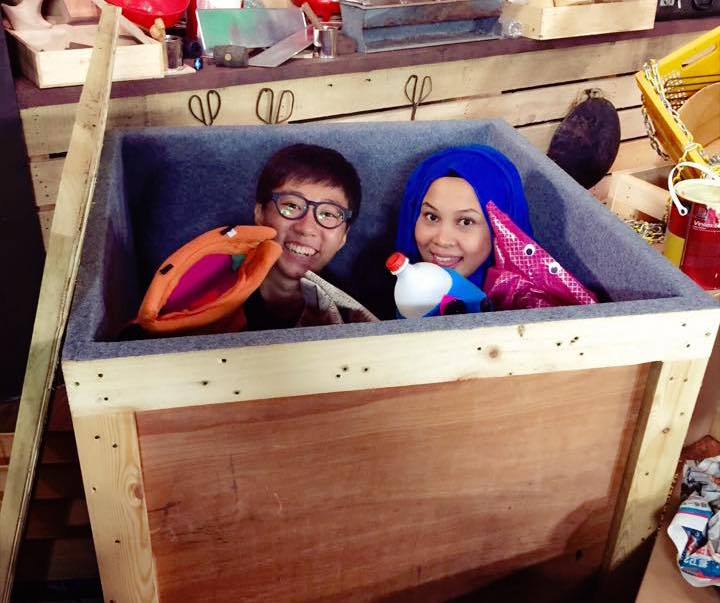
    Marianah (with tudung) on an overseas work trip with colleagues and other Asian broadcasters.
    Marianah (with tudung) on an overseas work trip with colleagues and other Asian broadcasters.


    Why did you stick with the same boss throughout all the above changes? Was there something working under her provided that you could not find elsewhere?

    She emphasised the importance of having strong moral principles constantly, i.e. you must always do the right thing, even if it means you may not be totally happy with the outcome. So if you can excel in a task by cheating your way through instead of honestly working on it, you’ll be out of her books if she finds out hahah. But working for a boss who maintains a moral compass was very important to me. She was a boss who gave credit where credit was due, so if you work honest and hard, you will get rewarded. Over the years, I had seen her fight for rewards and promotions for deserving staff. She was also genuinely concerned about your professional and personal development. So those were some of the reasons why I stayed as long as I did.

    Why did you eventually leave though?

    My passion for production work was dying. I had been in the line for almost 20 years and I had other interests that I had been unable to pursue earlier. As I was approaching my late-30s, I started thinking if I do not take the leap to pursue them soon, I never will. So I left.

    What was your work routine like when you were working under the boss you spent 12 years working for?

    My work was mostly regular hours, except when we had multiple productions and that was when things got really stressful and crazy. We’d have a few months of lull periods, and a few months of long hours.

    What about your routine in the hours when you were not supposed to be at work? What was that like with the boss you worked 12 years for?

    Of course there were times when I had to answer work messages or emails after work hours or even on holidays, but that’s the nature of the production work I was doing—it was something that’s expected of the job I signed up for. But they were hardly disruptive to my personal space and time, and even when/if they were at any time, I would just honestly say that I could not attend to it immediately.
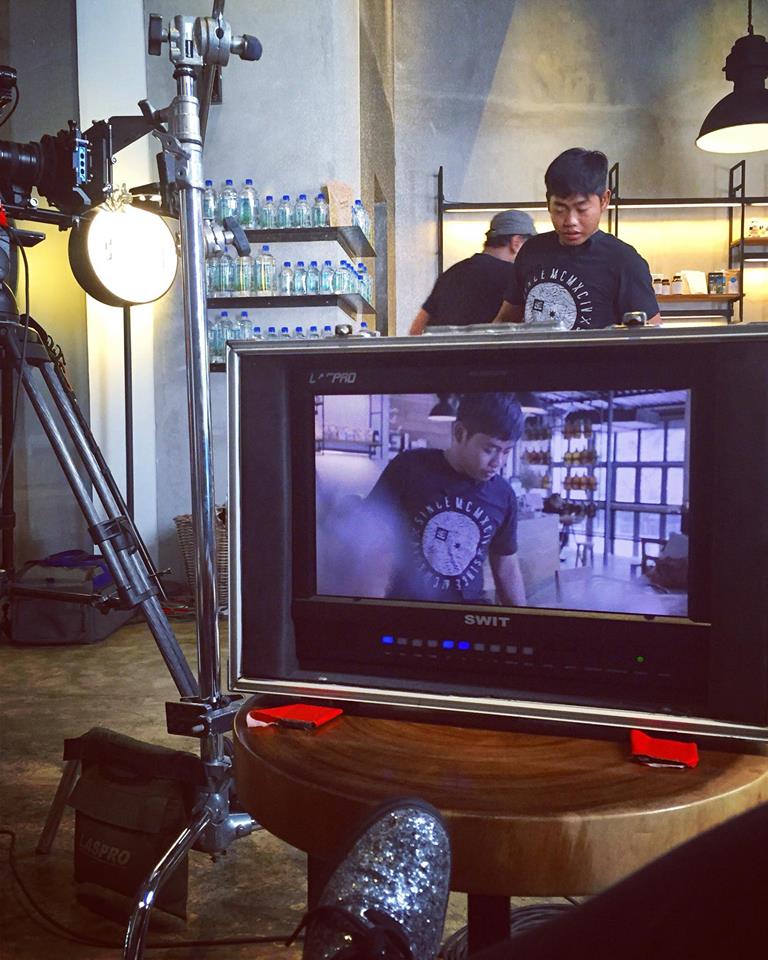
    Marianah’s view when at work. Taken during an overseas shoot.
    Marianah’s view when at work. Taken during an overseas shoot.

    How were weekends like?

    Weekends were mostly my personal time, except, again, if we were on production.

    What advice do you have for someone thinking of staying with the same boss for more than ten years and what advice do you have for bosses wanting to keep their staff for more than ten years?

    I don’t think anyone will set themselves up to work for the same boss for a long time, in fact I didn’t think anyone would. For me, it just so happened I found a boss who could see the value I could bring to the table, and she appreciated that value by treating and compensating me fairly.

    What are the key things/people/situations that made you stick with the same boss for more than ten years, in your opinion?

    To be honest, there were many. I was always given opportunities to explore new things so I never felt that I was stuck in a rut. For example, my main job was managing budgets and resources—it was a very logistical role—but I like dipping my hands in creative work and have a knack for it. She saw this and opened up new things for me to try. She was also an ‘accessible’ boss. I could just walk into her room when I needed to clarify or suggest anything and she would always hear me out.

    How did staying with the same boss for so long impact your life, in your opinion?

    My boss was an intense, creative person. She had a ‘nothing is impossible’ attitude so our team would be finding all sorts of ways to make her ideas and concepts work. This had somehow forced and trained us to come up with innovative ways of doing things and solving problems, and this mentality has rubbed off on me personally. As I face new challenges now, I always find myself thinking, “I’ll find a way to do this. There has to be a way.”

    Marianah with the team and crew of the last TV production she worked on before leaving her boss of 12 years.
    Marianah with the team and crew of the last TV production she worked on before leaving her boss of 12 years.

    If you could go back and replay your entire career all over again, what would you do differently?

    I would have saved more money! Haha! But career wise, I wouldn’t change a thing. I had worked with many different bosses previously but the 12 years working with her was the highlight of my career. I got to travel extensively in the first few years on the job, met so many amazing people, and I had so many amazing experiences that I would cherish for a long, long time.

    Which 3 objects/people in your life can you presently not live without and why?

    My husband, my mother, and an internet connection. The first two are my pillars of strength. The third one is a luxury I cannot live without.

    Of all the objects you bought in the past year, which has been most useful? Why?

    My laptop. It has helped me start my own business and has been the source of all the information I need to run it.

    What is the worst advice you’ve been given, or have heard people giving, with regards to people management? And what’s the best?

    Worst advice—“Don’t play nice, they’ll walk all over you.” Personally, I find that it’s important to try and be nice, but firm, when you manage people. I find that most people tend to cooperate at work and go the extra mile this way. Plus, it just creates a pleasant environment. I don’t know if I just happen to be a lucky one.

    Best advice—“Always do the right thing, because it’s you who will have to live with your conscience.” I’d like to keep mine as clear as possible.

    Marianah is presently an entrepreneur and founder of Aidilic—a natural skincare brand.
    After leaving her boss of 12 years, Marianah founded Aidilic—a natural skincare brand.  

    Marianah is presently running a small natural skincare online business while simultaneously working towards a diploma in Natural Skincare Formulations. Her goal is to someday run workshops for folks who would like to make natural skincare products at home with better ingredients than store-bought ones. You can see her progress on her website, www.aidilic.com, or chat with her about good bosses and bad bosses using the comment box below.

    Interviewer Note:
    Full disclosure—I once worked under Marianah’s boss too, though not for a heroic 12 years like her, only for 3. Now that Marianah has mentioned it though, I’m noticing (for the first time) that that boss’s ‘nothing is impossible’ attitude must have rubbed off on me too, which is probably how I ended up creating and running LUCK-IT today. I now think bosses impact the world and human lives way more than they notice. That, I think, is what a boss should really be aware of when deciding how they want to rule. 😉

    Photographs courtesy and copyright of Marianah Arshad. Interviewer: Sy
    If you found this article useful:


  • How I Coped With Losing A Son To Suicide, And What I Learned From It - Yen-Lu Chow Singapore Over The Rainbow

    How I Coped With Losing A Son To Suicide, And What I Learned From It

    At 51 years of age, Yen-Lu Chow was an entrepreneur and an angel investor… then he lost his son to suicide. Now 61 and on an ongoing journey to heal himself and the world, this social innovator, philanthropist, advisor, mentor, and seeker of Truth shares with LUCK-IT memories of his son, Lawrance, and all the lessons he’s gleaned from grief, suffering, re-calibrating and recovery.

    “I had a tough time getting out of the house. I didn’t shave for months.”

    Q: Hi Yen-Lu, thank you for agreeing to share your story with us. How did you find out your son had passed away? What were you doing right before that and what did you do right after that?

    A: We got a call from Murdoch University in Perth, Australia where our son was attending school—from the Director of International Student Affairs. It was late in the evening—almost 10:30pm. My wife and I had just returned home from tennis (we used to play a lot of tennis together as a family).

    How did you feel when you first heard the news? What about at the funeral and in the days after that?

    It was a parent’s worst nightmare. After receiving the call from school, and having to take the overnight flight from Singapore to Perth, Australia, it was the longest flight ever. It felt like eternity. We were hoping somehow that the police, the school, God, had made a mistake—hoping that it wasn’t him. We had to go to the police coroner’s office to identify him. We came face to face with our dreaded fate. Our hearts were broken into a million pieces.

    The days and weeks and months after were the most difficult times of our lives. We were thrown into the deepest and darkest abyss—worse than hell. We were in purgatory.


    Yen-Lu’s son, Lawrance (extreme right), with Murdoch University teammates when they won Gold at the Pan Austria Tennis Competition, in the year he passed away.
    Yen-Lu’s son, Lawrance (extreme right), with Murdoch University teammates when they won Gold at the Pan Austria Tennis Competition, in the year he passed away.

    You’ve said in other interviews that the days after your son’s death was the darkest time for both you and your wife—can you share how long those dark days lasted? How long did it take you, after his death, to be able to see the littlest bit of light again?

    The first 6 months to a year was very, very tough.

    What was the turning point/life-changing course of action that helped you see that little bit of light again, you think?

    Fairly early on, we realised that perhaps we are not alone—that he was not alone—that there are likely many other young people who have suffered or are suffering from depression or other forms of mental health issues. And we wanted to do something about it. This was that first glimmer of light—it provided a path to move us forward. So rather than focusing on our own grief, pain, sorrow, and suffering, we decided that we would instead try to focus on others’ pain and suffering—and to alleviate their suffering. This was the beginning of our transformation. And this was what our son would have wanted.

    What was your routine like during those darkest days?

    I had a tough time getting out of the house. I didn’t shave for months. I was wearing my son’s shirts a lot during that time. I still do to some extent.

    I also spent a lot of time trying to remember him—all the good things about him and the good times we had as a family, writing a tribute to him with scenic pictures of the family traveling together, a memorial video, etc, also seeking help from friends and healers.

    What about now? What is your present routine like?

    I spend most of my time these days working on my family foundation—I’ve founded/co-founded a number of nonprofit social initiatives (Akaraka, Over-The-Rainbow, Singapore Creations, YSI SEA, Asia Institute of Mentoring, Made of Brilliance, etc) to help other kids, young people and their families.

    Yen-Lu and son, Lawrance, vacationing in Mexico in 1993.
    Yen-Lu and son, Lawrance, vacationing in Mexico in 1993.

    How do you presently spend your weekends?

    I do a lot of reading and spending time with friends. We also hold a lot of our workshops, talks and events on weekends—to bring more well-being and hope to others.

    What advice do you have for parents who’ve only just lost their child to suicide?

    We came across many and have supported many parents on this journey of grieving and recovery.

    They need emotional and social support and we try to be there for them. Letting them know that it’s going to be a long journey back—to take time to grieve—also letting them know that things will get better, that the sun will rise again—but will take time—that they need to take care of themselves and the rest of the family first. More importantly, to know that their child will always be with them. We carry our son in our heart.

    Yen-Lu and son at the Singapore Botanical Gardens in 1998.
    Yen-Lu and son at the Singapore Botanical Gardens in 1998.

    Can you map out a recommended path to coping for parents who’ve only just lost a child to suicide to follow?

    What was crucial for our coping and recovery: Rather than heaping blame on ourselves and on each other—to ponder what should have been and what might have been—how we could have done things differently—regrets—which were easy to do during those dark times—and which would have brought us to an even darker place—we decided to support each other—and to focus our attention to help others. This was key for us to begin the healing process.

    It’s also been an ongoing journey to search for new meaning and purpose in life. These days it is manifested largely through the work of our family foundation and many other social initiatives I get involved in—to discover our true self—to connect to our Higher Self—and to find our common humanity.

    What key things/people/situations enabled you to get through losing a child to suicide, in your opinion?

    Unconditional support of friends and family is crucial. Also see above.

    How did seeing all that your son went through and losing him at the end of it all change you as a person? Or did it not change you? Why?

    Life is precious—yet fragile. Life is short. We have to be grateful for all the gifts that we’ve been given in life.

    If you could go back and replay the time you had with your son all over again, what would you do differently?

    I think I would tell him I love him a lot more often.

    Yen-Lu and family in Taiwan in 2007.
    Yen-Lu and family in Taiwan in 2007.

    What was your son like as a child? What about as a teenager and later a young adult? How did he change at every decade? Or did he not change?

    When our son was alive (he was ill at the time), he once told us: “Wouldn’t it be nice if we could make a difference in someone’s life?”

    His life, his passing, his legacy became our inspiration, and the genesis for our family foundation and Over-The-Rainbow.

    He was a shy but a great kid—and as perfect a son as any parent could wish for. He has the most wonderful hobbies, and the most kind and gentle personality.

    He was an avid reader starting at a young age; he loved being read to as a young child, especially at bedtime. He loved animals as well. Lawrance was born with music in his veins: he started piano lessons at a tender age of 5 ½ years, and after years of practice—became quite a proficient pianist; he sang in a children’s choir that performed in public during Christmas holidays; as a pre-teen he picked up clarinet, and thru his interest and dedication, he was selected and performed as the first-chair clarinet for the school concert band, at the Singapore American School; in later years, he taught himself acoustic guitar, and was able to play some pops and other selected tunes. He owned two iPods and an iPod Shuffle, and literally took his music with him everywhere. He also loves sharing music with others, and with his guitar.

    He also got into sports at a young age: he started learning baseball when he was 4 or 5 years, playing catch with Dad. He grew up with baseball, playing T-ball later on in the little league. He also played basketball, with dad initially, and then participated in the youth basketball leagues. He enjoyed playing American football with Dad. Later on as a teenager, he caught on to tennis and went on to play for the varsity team at SAS, varsity team at Fordham University, and was on the Murdoch University tennis team that won the gold medal at the 2009 Pan-Australia Uni-Game competition. And due to Mom’s strong influence and passion for yoga, he picked up yoga in the last couple of years. He started practicing yoga quite regularly.

    Which event in your son’s life set in motion his struggle with depression, you think? Or was that brought about by more than just a single event?

    It’s both nature and nurture. I don’t talk about this much—but my Mom had severe depression when she was raising us. It’s just in those days, no one talked about it. She had to live with it her entire life. I also experienced depression as a young man that went well into adulthood.

    The stress of growing as a teenager and later academic stress were other triggers.

    Which 3 objects/people could you not live without right after losing your son? Why?

    Not sure how to answer this question. I look at life very differently these days. Nothing’s permanent—everything’s temporary—life is change.

    Yen-Lu with kids of Singapore Creations—which provides young people with a supportive platform where they can be creative and grow as people—of which he is co-founder and chairman, at the non-profit’s inaugural production.
    Yen-Lu with kids of Singapore Creations—which provides young people with a supportive platform where they can be creative and grow as people—of which he is co-founder and chairman, at the non-profit’s inaugural production.

    Of all the objects you bought/received when trying to cope with losing your son, which was the most useful? Why?

    I rely on my music a lot. I always have.

    What is the worst advice you’ve been given, or have heard people giving, with regards to coping with the loss of a child? And what’s the best?

    They think you should “get over it”—but no one ever “gets over” the loss of a child. Late Elizabeth Edwards, an American attorney and health care activist shared so beautifully :

    ” If you know someone who has lost a child and you are afraid to mention them because you might make them sad by reminding them that they died—you’re not reminding them.

    They didn’t forget they died.

    What you’re reminding them of is that you remembered that they lived, and that is a great gift.

    Yen-Lu with participants at the "Screwed Up Moment" event—which focused on sharing failure, not achievements, jointly organised by Over-The-Rainbow and the Happiness Initiative.
    Yen-Lu with participants at the “Screwed Up Moment” event—which focused on sharing failure, not achievements, jointly organised by Over-The-Rainbow and the Happiness Initiative.

    Yen-Lu now spends most of his days working on several social initiatives (Over-The-Rainbow, Singapore Creations, Young Sustainable Impact SEA, Asia Institute of Mentoring, Made of Brilliance, Climate Conversations, etc) to benefit society. You can find him online in a lot of places (“I’m very active in the social space and also in tech circles.”) or drop him a question using the comment box below.

    Photographs courtesy and copyright of Yen-Lu Chow. Interviewer: Sy
    If you found this article useful:

  • How I Coped When My Mum Died When I Was 21 - Jasmine Chen Singapore Director Producer E-commerce

    How I Coped When My Mum Died When I Was 21

    At 21 years of age, when just a student in polytechnic, Jasmine Chen received an unexpected call that changed her life forever. Her mum had passed away. Abruptly too. Nine years later, she shares her story of getting through grief at a young age and tells us how it honestly feels to have to continue on without a mum in the years afterward.

    “You know, you will never get over it but, you know, you will definitely learn to cope with it.”

    Q: How did you find out your mum had passed away? What were you doing right before that and what did you do right after that?

    A: I was at the salon cutting hair and I received a call from my brother. I rushed home after that.


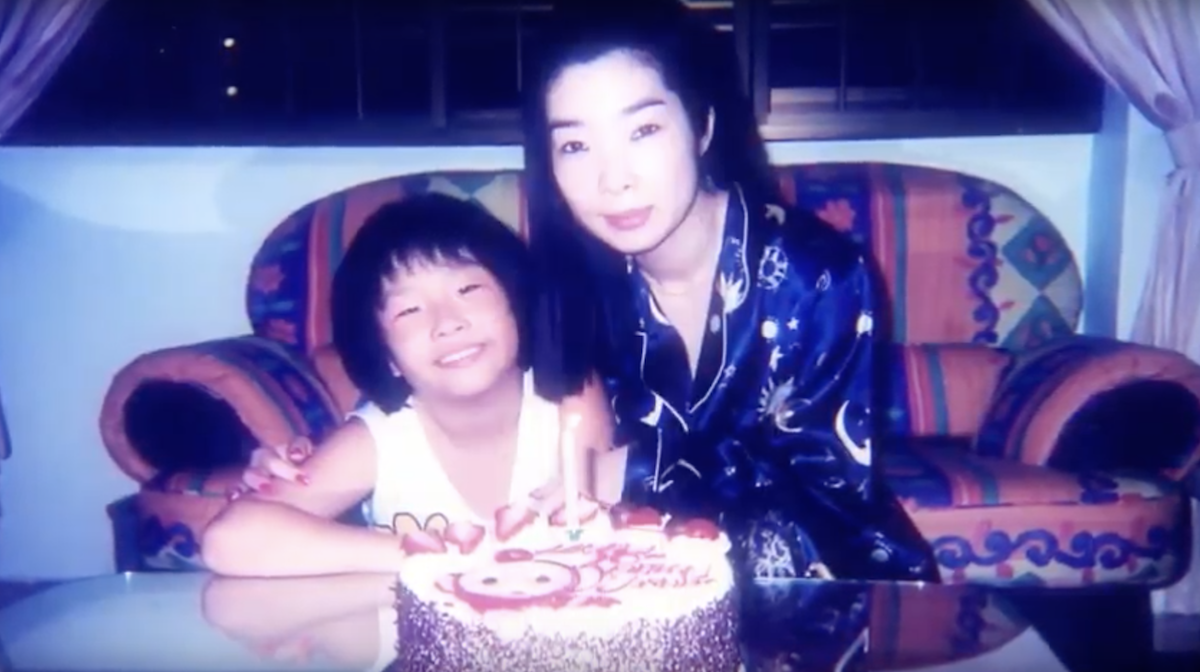
    Jasmine as a child, with her mum.
    Jasmine as a child, with her mum.

    What did it feel like when you first heard the news? What about at the funeral and in the days after?

    I don’t know. It’s like I didn’t believe it at first. I wasn’t crying when I was on the way home. So many things were running through my mind. Like thinking if it’s all real. But right after I reached home, I saw my family crying… and then it really hit me. I broke down after that.

    During the funeral, it still felt like the fact that she’s gone hadn’t really set in yet. We were busy with the funeral, friends and family came, but once it was over, I would just cry and ask why.


    How long did it take you to get over the grief of losing your mother? Was that longer or shorter than you expected, or are you still somewhat sad?

    I can’t remember how long I took to get over the grief. I don’t think you really ‘get over’? As days go by, you just learn how to cope better. Of course, I will still think of her every now and then and I miss her. Sometimes, I will just think how great if we could do this or do that together. But hey, it’s okay, she will always be in my heart.

    Have you gotten over your mum’s death? If yes, what was the turning point that helped you get over her? If no, why not?

    It has been a while. Yes, I’ve gotten over it. There’s no specific turning point. I just look forward. Happy or sad, life goes on. Why not live every day happily, right? Friends’ support is important too. I’m really thankful to friends who stick around and gave their support.

    Teenage Jasmine and mum.
    Teenage Jasmine and mum.

    What advice do you have for someone who’s just lost a mum?

    “Remember that she wants you to be happy too.”

    It’s sad. Very, very sad. And it takes time to get better. How? You know, you will never get over it but, you know, you will definitely learn to cope with it. Why do I say that you will never get over it? Because you know that she will always be in your heart. Just remember that she wants you to be happy too. So take your time to look forward and be happy.

    Can you map out a recommended path to healing for people who’ve only just lost their mums to follow?

    There’s no recommended path. This is what I did: Surround yourself with people you love and keep yourself busy doing things you like. Or do whatever that can make you feel better. It’s hard but you will get better.

    How did losing your mum change you as a person? Or did it not change you?

    I mean, it didn’t really change me. I had no choice but to learn how to be an adult. I was in a single parent family, living with my grandparents. I was only 21-years-old. I had to learn how to pay bills and how to take care of my younger brother, who is 6 years younger, and my grandparents. So I guess I had to ‘grow up’ faster than I had to be?

    If you could go back and replay the time you had with your mum all over again, what would you do differently?

    I would probably spend more time with her. Like travelling together?

    A tattoo Jasmine got an artist to design for her, concept being her and her mother going on an adventure around the world.
    A tattoo Jasmine got an artist to design for her, concept being her and her mother going on an adventure around the world.

    Which major event in your life has made you who you are, in your opinion? Why do you think so?

    There’s no major event… you just learn and grow with whatever you’ve been through. Good or bad.

    Which 3 objects/people in your life can you presently not live without and why?

    My grandmother! She has been the one taking care of us since young.

    Jasmine now, grown up but forever 21.
    Jasmine now, grown up but forever 21.

    Jasmine is presently a Producer/Director who insists she will never stop being 21-years-old. She is presently working on setting up an e-commerce site and will give us the link when she launches it in the coming two or three months.

    Photographs courtesy and copyright of Jasmine Chen. Interviewer: Sy
    If you found this article useful:


  • How I Quadrupled The Number Of Friends In My Life

    When pondering her own funeral wake at age 45, Daphne Chua realised she would have less than two handfuls of people in attendance. Ten years on however, she had 50 people turning up for her 55th birthday party. She tells LUCK-IT how and why she increased the number of friends in her life so significantly in a single decade.

    “A pastor mentioned that a person would have about a hundred friends at his/her funeral wake. I pondered and realised I wouldn’t even have 10 friends at mine.”

    Q: When did you suddenly realise you had very few friends? What made you suddenly feel that way? And why did you decide to do something about it?

    A: During one Sunday service, a pastor mentioned that a person would have about a hundred friends at his/her funeral wake. I pondered and realised I wouldn’t even have 10 friends at mine. I started to imagine my lonesome and quiet funeral wake… 

    How did you start making friends again? What did you do and how did it feel for you to have to do it?

    I started to take an interest in people I came into contact with. Previously, I treated everyone as an acquaintance and did not see the need to keep a long friendship. In my mind, people come and go and I did not make any effort to keep in contact with anyone. 


    Daphne (middle) with the four friends who celebrated her 50th birthday with her.
    Daphne (middle) with the four friends who celebrated her 50th birthday with her.

    How long did it take for you to go from having less than ten friends who would show up for you to having 50 friends who would do just that? Did you have any setbacks or wins along the way?

    It is now a good ten years from then. There wasn’t any setback. I took a genuine interest in people without any expectations. 

    What do you think is the most significant course of action you took that enabled you to make more friends? Why did it work?

    Making time for others. Being pro-active to telephone or WhatsApp others to stay in touch. It was my attitude that made the difference. Previously, I could not be bothered and friendship did not have a place in my heart. 

    What was your routine like in the months/weeks/days during which you were rebuilding your pool of friends?

    There isn’t a fixed routine. I started to engage others in coffee sessions and meals. 

    Now that you have more friends, what is your current routine like?

    I still engage others in coffee sessions and meals and even organise baking sessions in my home once a month. 

    How do you presently spend your weekends?

    Weekends are mainly spent with family. Sunday is church and coffee time with church members. 

    Daphne at 54, with friends she made from a mission trip.
    Daphne at 54, with friends she made from a mission trip.

    What advice do you have for someone who is hoping to start having more friends too?

    To accept others for what they are, not be judgemental and have a genuine interest in their well-being.

    Can you map out a recommend path for people who want to have more friends to follow?

    List out your friends and schedule regular contacts either by just texting or meeting up. 

    What are the key things/people/situations that enabled you to have many friends again, in your opinion? Who/What do you believe you never would have been able to make many new friends without?

    I used to believe no one is genuinely interested in me and I do not trust people enough to want to share my life and my experiences. Being genuine and willing to share encourages more open sharing. 

    How did having more friends again change you as a person? Or did it not change you?

    Widened my perspective of things. Helped me to be more accepting of others and also to be generous towards others in terms of time/resources.

    “I have lost many good friends by not staying in touch.”

    If you could go back and replay the way you dealt with friendships throughout your life, what would you do differently?

    I would have done what I’ve been doing in the last ten years: keeping in touch with people who mattered. I have lost many good friends by not staying in touch.

    What were you like as a child? What about as a teenager and young adult? How did you change at every decade? Or did you not change?

    Outwardly extroverted, inwardly introverted child, teenager and young adult. The drastic change was after I attended church and found genuine friendships amongst church friends. I started to trust people and love the people around me. 

    Which major event in your life has made you who you are, in your opinion? Why do you think so?

    It was church and the realisation of who I am on this earth and my purpose here. 

    Which 3 objects/people in your life can you presently not live without and why?

    My family. My friends. My church community. 

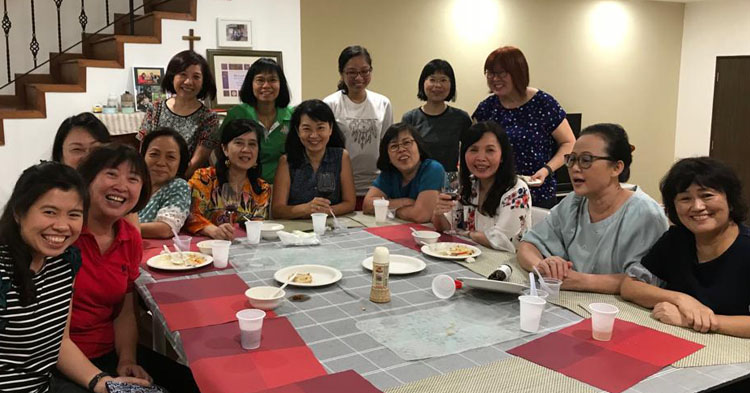
    One of the many groups of friends Daphne now has, having dinner at her home.
    One of the many groups of friends Daphne now has, having dinner at her home.

    Of all the objects you bought when trying to make more friends, which object enabled you to make the most new friends?

    Meals and coffee.

    What is the worst advice you’ve been given, or have heard people giving, with regards to friendships? And what’s the best?

    None… I did not seek advice nor have I attempted to give anyone any advice.

    Daphne is presently a realtor and open to answering questions about friendships. If you have a question about friendship for her, drop them in the comment box below.

    Other Answers by Daphne Chua:
    What I Learned From Doing Prison Ministry, And Why I Do It

    Photographs courtesy and copyright of Daphne Chua. Interviewer: Sy
    If you found this article useful: