• How I Wrote And Published 18 Books

    At age 37, when stuck in hospital, Dr Bob Rich began typing out a large body of text that would eventually become his very first book. In the 40 years since then, he has written and gotten published a total of 18 books, and is still working on his 19th. We asked him how and why he does it.

    “Writing is like cooking. A novice cook had better stick exactly to the recipe, or court disaster. With experience, it’s possible to vary ingredients to suit what’s in season, and what’s in the pantry.”

    Q: Hi Bob, thank you for coming back here to share more of your personal adventures! Let’s talk about your life as an author this time. Why did you decide to pursue writing books? 

    A: It’s more the writing pursuing me than the other way. Most people watch TV. I haven’t had one of those since 1975. Instead, I watch the stories inside. It’s more fun. Here is what I say about writing:

    “A writer is not just a person who writes. Almost anybody can write, which is why publishers are drowning in a flood of manuscripts that no one wants to read. But a writer must write. I can no more give up writing than I can do without breathing. It is something I do all the time. Working at one of my many jobs, talking with a friend, whatever I am doing, I am also observing life and translating it into words. I look at the expression on a face, the movement of a hand, a flower, the scenery, on joy and suffering and squalor and magnificence, and all of it is stored away, to emerge some time later. Everything is ammunition for the machine gun of my imagination. It will become part of some work or another, perhaps a long time later, transformed and hidden and combined with other experiences.”

    How did you get started with your first book and how long did it take you to finish it?

    My writing career started in 1980, because I was abducted by a bunch of kids who needed one more male in a boys vs. girls soccer game. I was in the middle of making mudbricks (adobe to Americans), and they dragged me away. So, I played in my muddy rubber boots. Predictably, I slipped over and tore a cartilage in my knee. That’s definitely not a good idea.

    In hospital, I was so bored I borrowed the office typewriter (are you old enough to remember those?), and wrote an article about making mudbricks for a marvellous magazine, Earth Garden. I’ve had a regular byline column with them since.

    After a few years, I thought I could combine my collection of “how-to” essays into a book, and sent off a letter to Keith Smith, the magazine’s publisher. I posted the letter, and checked my postbox. In there was a letter from him, suggesting we collaborate on the same thing. Meant to happen, or what?

    I contributed the technical bits. Keith’s part was inspiring essays by other contributors, history and background. We had the book ready in 2 years, in 1986. The fourth edition went out of print in February, 2018.

    How did you get that first book to market?

    Keith is a journalist by training, and this was his 8th successful book. He had close connections with a publisher, which was bought by Penguin soon after.

    One of Dr Bob Rich's 18 books.
    One of Dr Bob Rich’s 18 books.

    How then did you end up writing and selling 18 other books?

    Approximately one at a time.

    My second book was also practical self-help: Woodworking for Idiots Like Me. It sold about 60,000 copies in the tiny Australian market, because it combines short stories and humour with serious instruction. It’s now out of print, but I sell it in the format of a large webpage.

    Then I went to nursing school. In my off-duty times I had a choice: make a fool of myself running after gorgeous 18-year-olds, or do something creative. So, I started writing short stories. The first one I submitted to a contest won a prize, and I was hooked.

    But 18 books is not such a big deal. My friend, British/Australian writer Anna Jacobs, has now had her 90th published, and fans keep clamouring for more. Her writing is very popular women’s fiction.

    Another one of Dr Bob Rich's books.
    Another one of Dr Bob Rich’s books.

    What tips and tricks or techniques, when writing books, did you pick up through writing those 18 books?

    Writing is like cooking. A novice cook had better stick exactly to the recipe, or court disaster. With experience, it’s possible to vary ingredients to suit what’s in season, and what’s in the pantry. A chef can cook without a recipe, but if you analyse the process, it’s there, implicit, and you can write it down. And a master chef will write the recipe.

    So, a beginning writer needs to craft a detailed plot. My old friend Beth Anderson described this process in detail on this page so I won’t go into it here.

    The books I wrote last century all had a plot. It was not set in concrete, but I knew exactly where it was going before I wrote the first sentence. This avoids traps like a story wondering off into a quagmire of loose ends and disappearing people.

    Sleeper, Awake  was different. My only specification was, I wanted conflict, but without any baddies. Each person was decent and reasonable but… different enough to lead to head-butting. So, Flora Fielding came to me. She is a retired film star who made a fortune, then had breast cancer. She went into cryogenic storage, and invested her money in cancer research, expecting to be woken when a cure was developed. Instead, she found herself in a very different world, 1433 years later. This book won a first prize, and mostly 5 star reviews. I forgive the few who gave it 4 stars.

    Nowadays, not only do I have my characters write the plot, but also I enjoy experimenting with new ways of doing things. For example, this is the current start to my so far unpublished series, The Doom Healer.

    How long does it take you to write a book these days and what are your writing and marketing routines like?

    I am a slow writer, I guess because I need to get it 200% right before anyone else sees it, and because, hey, what’s the hurry? There is only this moment. Past and future are constructions.

    My quickest was the biography, Anikó: The Stranger Who Loved Me, which I finished in 3 months. However, that was after a trip to Hungary to visit my dying mother in 2000, then two years of not even being able to look at the material I’d brought back with me. When it was ready, it burst out, and this is the book that has won me the largest number of awards. It’s the story of a woman who survived the unsurvivable, and accomplished the impossible, more than once.

    I often have a project I put away, then get out, maybe years later, gallop through it. Guardian Angel was like that.

    What advice do you have for new writers hoping to have published as many books as you one day?

    As I said, there is only NOW. This moment. This instant. This. Live it to the full, do the best you can right now, and enjoy it. Write what you’d love to read from someone else, then expose it to positive but firm criticism. In my work as an editor, I am as much a teacher as a critic. 

    Incidentally, I am happy to swap beta reads for reviews, or for beta reads of my current work.

    Which items or people help you most when you are writing books?

    That just has to be Little Bob who lives inside my head, and does my writing for me while I concentrate on something else.

    A non-fiction book by Dr Bob Rich.
    A non-fiction book by Dr Bob Rich.

    What about when you’re selling books? Who or what helps then?

    You are! For the past couple of years, I’ve been doing lots of written, audio, and video interviews and guest appearances, because I want to be of service to people, and my writing is a tool for this.

    How many awards have you won so far and how did you win them?

    Oh dear. I don’t know. I used to have a list of awards and prizes for short stories. There were something like 40. But a computer crash has eaten the list.

    Some of them are on the welcome page of my writing showcase, bobswriting.com.

    Anyway, they are not an ego trip, but another means to an end: of using my words to make this planet a better place.

    Is there anybody in the publishing industry you presently look up to, who you would like to learn from?

    I learn from everyone, including little babies. At the moment, there is a spider nursing her bagful of babies-to-be inside my compost bin, and I am learning from her.

    People I admire? Here is a very small selection:

    Carolyn Howard-Johnson is an award-winning poet, and has taught writing. She is the ultimate publicity hound, and writing how to publicise books is one of her specialties. Her way of becoming known is to be of benefit to others.

    Victor Volkman has a full time job, which he uses to keep a publishing company going. He makes no money from providing a venue for many excellent books. Tellingly, it is Loving Healing Press. 

    Joan Edwards taught me about blogging, and is also a person who keeps giving.

    Rajat Mitra is a writer from India. I reviewed his book, which is a bridge-building exercise between Hindu and Muslim, and liked it so much that I interviewed him.

    Lastly, which of your books are you proudest of, and why?

    I am a good daddy, and don’t have favourites among my children. They are all different, and all worthy of love. However, the last one or current one tends to hold me the most, for now. Here is the opening of the book I would be writing if I wasn’t answering your questions.


    Also available at Amazon.sg

    LUCK-IT will receive a tiny commission when you purchase this product, at no additional cost to you.

    Bob is presently working on his Doom Healer series which he has been working on since 2015. “In my unbiased opinion, my hero Bill Sutcliffe should be up there with Harry Potter. I am now seeking a sensible, visionary publisher to take on the first volume.” You can read about his books at bobswriting.com or ask him how you can become a prolific author using the comment box below. 

    More interviews about other types of careers available here.

    Other interviews with Dr Bob Rich:
    What It’s Like Being Older Than 70
    Then & Now: Age 21 vs Age 77

    Interviewer Note: 
    I don’t normally do reviews but Dr Bob Rich offered me one of his books to read for free in return for a review and I couldn’t resist the one titled Cancer: A Personal Challenge. “This book is for you if you want to reduce your chances of developing cancer” its synopsis read. Having now read it, I am glad I did. The book is full of stories written by those who’ve had cancer, those who’ve looked after someone with cancer, and those who know enough about cancer to tell you what precisely you should be doing for each particular types of cancer. It basically answered all the questions I ever had about cancer, without me having to pick up the courage to start a conversation with anyone with it. There are also chapters on how you can avoid cancer in the first place which I certainly appreciated. 
    I wouldn’t say I enjoyed it, because there’s nothing enjoyable about watching someone recount the hardships of cancer, but I did think of reading it as good use of time. Once again, I’m not a reviewer, so if you want to know more, I would say the best thing to do is go read it yourself. You can buy CANCER: A Personal Challenge here.

    Photographs courtesy and copyright of Dr Bob Rich. Interviewer: Sy
    Sponsor or support The Professionals series here.
    Want to be featured too? Tell us here.
    If you found this article useful:


  • The National Assembly of Seoul during the COVID-19 pandemic.

    COVID-19 Diaries: Seoul, 167 Days In

    77 days ago, we interviewed James from Canada who was on extended vacation in Seoul during the height of the coronavirus pandemic in South Korea. Now that things in South Korea seem to be under control, we checked in on him to find out what’s changed.

    “I’m extremely thankful I decided to stay in Seoul rather than head home.”

    Q: Hi James, welcome back! What’s happened since the last time we spoke? Are you still in Seoul and have you been well?

    A: It feels like the time has flown by without much really happening.  I’ve been hanging around Seoul, bouncing between a few guesthouses (and the odd hotel room when I’m feeling decadent, haha). I’ve spent a lot of the time seeing what I can of the city and some of the surrounding areas like Paju, although a lot of attractions like museums and sporting events remain closed.  Parks and restaurants have remained open the entire time here, so they’re what I’ve been focused on. I’ve also been taking some online courses to keep my mind engaged.

    One of the parks James has been walking around in.
    One of the parks James has been walking around in.

    Heard you’ve since found yourself a job in Ireland? How did you manage to do that when most companies around the world are either in lockdown or cost cutting?

    I’d like to say it was wise planning on my part but it was a lot of luck. When I arrived in Korea in January I knew I’d needed to start looking for work soon, and even though I wasn’t searching that aggressively I saw one job I was extremely interested in and applied. After a couple interviews and a skills competition I was offered a position and immediately took it—by this time, the effects of COVID-19 on the economy were becoming apparent and new job postings were drying up fast.

    Earlier in March many countries restricted entry for visitors from South Korea. Will that pose any problems for your move to Ireland?

    I’m planning on riding it out here as long as possible to make entry into Ireland as trouble-free as I can. I’ve got permission to stay until July 8th but I’ve heard of tourists able to get a month extension, so I might try to do that.  I’m also waiting on a work visa and I have no idea how the virus will impact the timeline of receiving that, either. Fortunately my new employer put conditions in my contract that allow for the start date to be pushed back in the event the virus impacts my arrival.

    What are the numbers of COVID-19 infected, recovered and demised in Seoul right now? What about in Korea as a whole?

    I’m not really sure about the numbers specific to Seoul, but I believe the country is around 11,000 total infections.  For a while it seemed like it was done with, as there was a span of numerous days with zero community transmissions, but there’s been a recent spike around the neighbourhood of Itaewon, with 25-35 new cases per day for much of this week.

    South Korea began easing restrictions a month or so ago. How did that change life for you? 

    Honestly I barely noticed the change. The impact has mostly been limited to students, sporting events and cultural sites, and the easing of restrictions didn’t apply to those. Compared to discussions I’ve had with friends and family in Canada and the US regarding the conditions in those places, it feels like we haven’t even had restrictions here.


    Other options available at Amazon.sg

    LUCK-IT will earn a tiny commission when you purchase this product.

    Now that there’s been a new outbreak in Seoul in recent days, how do you think things will change again in South Korea? 

    I’ve definitely noticed a bit of an anti-foreigner sentiment following this new outbreak. The neighbourhood the new outbreak occurred in, Itaewon, is very popular among expats, so I think some residents are more wary of foreigners. I’ve had a couple of negative interactions with strangers in recent days, situations that were clearly due to me being a foreigner, and that’s extremely unusual for Korea.

    You’re from Canada so what are your thoughts on the situation there in comparison to the situation in South Korea? 

    Even though there have been stints of boredom here, I’m extremely thankful I decided to stay in Seoul rather than head home. Most people I’ve spoken with back home are a bit stir-crazy now, unable to go out or do much.

    Another park James has been walking around in.
    Another park James has been walking around in.

    What advice do you have for people around the world who have lost their jobs because of COVID-19 and are hoping to get a new one too?

    That’s tough, as I feel I was extremely fortunate to get the one I did. I guess I would suggest doing anything they can to advance their career prospects with their time off, through online courses, practicing as much as they can, or whatever could apply to their line of work.

    Which 3 items or people are now most important to you?

    My laptop, my boots, and my backpack.

    The National Assembly of Seoul during the COVID-19 pandemic.
    The National Assembly in Seoul during the COVID-19 pandemic.

    Lastly, what else have you learned in the time since we last spoke that you didn’t know before?

    I kind of knew this already, but it’s really becoming apparent to me how much I miss work. I’m extremely stoked to get to Ireland and start working again.

    Once James gets to Ireland and settles in, he plans to return to Nova Scotia in Canada to visit his family for a bit. “And then get to know Ireland as well as possible. I’m interested in learning the Irish language as well, and hope to take some night courses in Dublin.” You can follow him as he does this through his blog, distancefromnormal.com

    Follow the latest in our COVID-19 Diaries series here.

    If you’re in a country that has been affected by the novel coronavirus and would like to share information about the situation where you’re at, do get in touch with us here.

    Other interviews with James:
    COVID-19 Diaries: The Situation In Seoul, South Korea, 90 Days In

    Photographs courtesy and copyright of James. Interviewer: Sy
    Sponsor or support the COVID-19 Diaries series here.
    If you found this article useful:
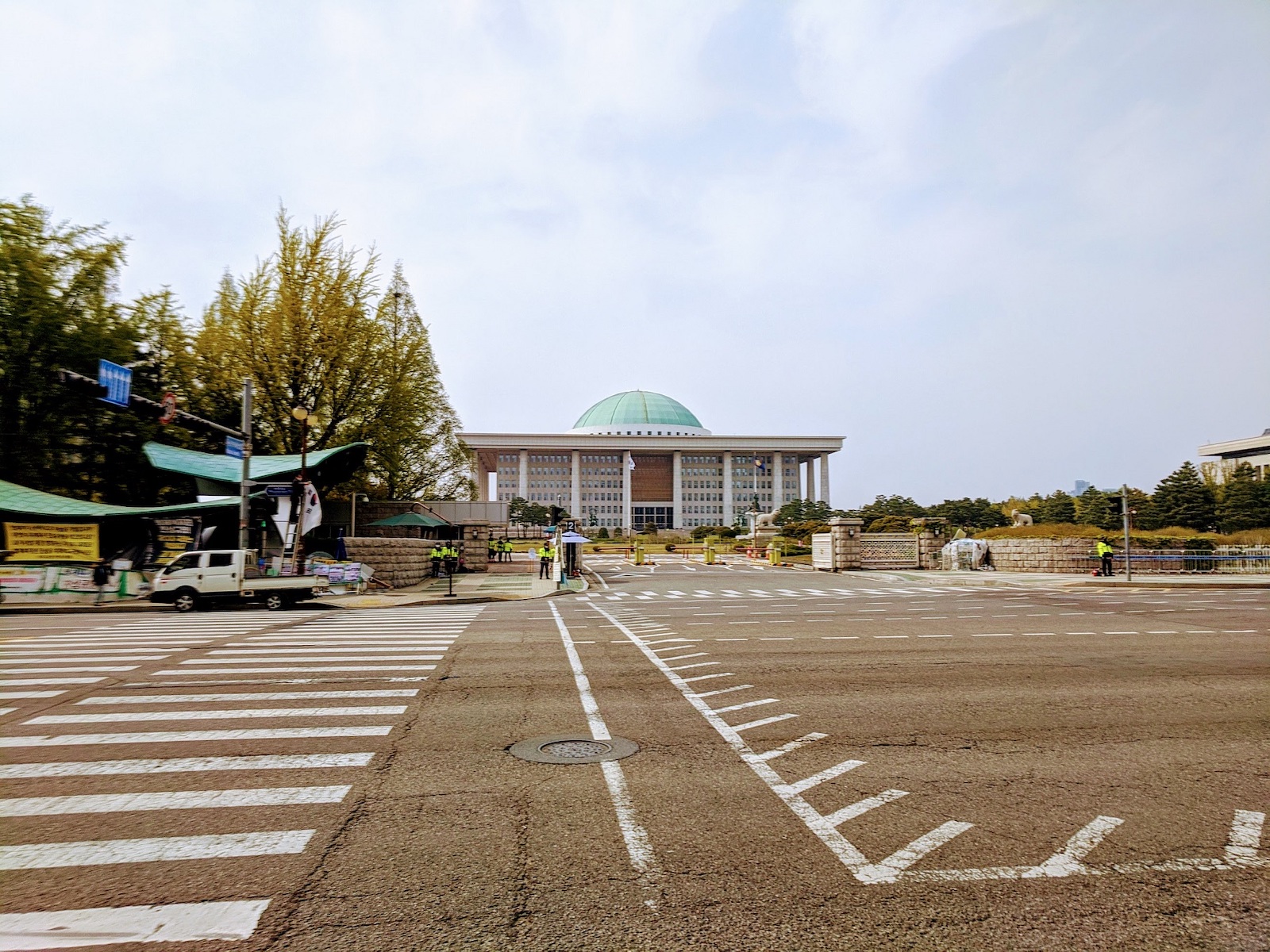

  • Mahatma Gandhi in his 70s, spinning yarn on a charkha.

    Life Summary: Gandhi, Lifelong Law-Defier

    After training to be a lawyer, the man who would come to be known as Gandhi ended up spending the rest of his life encouraging others to break laws in order to attain the rights they deserve. This is the timeline of how he fought against injustice and changed the lives of Indians all around the world. 

    1869 – Mohandas Karamchand Gandhi is born to a wealthy family in Porbandar, India—a British colony. His father is a political leader. His mother is a religious woman who believes in Hinduism. He has 2 half sisters, 2 older brothers and 1 older sister. They live in a 3-storey house with servants. They are vegetarians.

    Age 7 – Gandhi and his family move to the city of Rajkot. His parents arrange a marriage for him with a girl his age—Kasturbai—who is the daughter of a good friend of his father. 

    Age 13 – Gandhi and Kasturbai marry. They have a big wedding. He takes a year off to learn how to be a husband. 

     Age 14 onwards – Gandhi returns to school. He and Kasturbai have a son. 

    Age 18 – Gandhi completes high school. He attends college but after 1 semester returns home. He decides to study law in England instead. 

    Age 19 – The leaders of the Modh Bania caste Gandhi belongs to reminds him that travelling overseas is against the caste’s rules and that he might be kicked out and become an untouchable if he goes. Gandhi goes anyway. He attends University College and becomes a member of the London Vegetarian Society.

    Age 22 – He graduates and returns to India to find that his mother had died while he was away. His caste has disowned him and he has to bathe in the sacred Godavari River in order to be a part of them again. He gets a job but realises he is too shy to be a lawyer. 

    Age 24 – Gandhi and his wife have another son. He gets a job as a lawyer for a merchant in South Africa and leaves his wife and sons under his brother’s care to go work there. There, he is discriminated for his race and gathers the Indian community to push for fair treatment of Indians in South Africa.

    Age 25 – Despite having finished his case in South Africa, Gandhi remains there and sets up the Natal Indian Congress so that Indians can be involved in government in South Africa because they presently have limited rights. 

    Gandhi aged 26, shortly after arriving in South-Africa.
    Gandhi aged 26, shortly after arriving in South-Africa.

    Age 27 onwards – He returns to India and brings his wife, sons and a nephew back to South Africa with him. He and his wife have 2 more sons. 

    Age 30 – During the Boer War, Gandhi puts together an Indian ambulance corps with over 1000 volunteers to help South Africans but the Indians in South Africa continue to have limited rights. 

    Age 34 – He starts a weekly journal called the Indian Opinion, writing about what is happening in the government, how to treat sickness with natural medicines and also the benefits of a vegetarian diet. 

    Age 35 – He develops a philosophy of life he calls satyagraha, meaning—truth force—which includes ideas about using non-violent ways of breaking the law if the law is unfair, loving others instead of fighting them and living a simple life with very few possessions. He sets up a settlement called Phoenix Settlement for those who follow satyagraha to live together.  

    Age 37 – The South African government passes a law that requires Indians to register with the government and allows police to stop Indians to prove they had been registered or search their homes. Gandhi sees hatred of Indians in this and pushes his followers to break the law. They are sent to jail but they believe it to be the honourable thing to do. 

    Age 40 – Gandhi founds an even bigger settlement called Tolstoy Farm.

    Age 45 – The government of South Africa finally passes the Indian Relief Act which ends the unfair taxes Indians have to pay in South Africa and allows Hindu marriages to be recognised by law at last. His work done in South Africa, Gandhi returns to India to work on allowing India to govern itself.

    Age 46 – He creates a settlement similar to the ones he had created in South Africa and calls it the Satyagraha Ashram. He allows those from the untouchable caste to join this settlement, even when some of Satyagraha Ashram’s members object. 

    Gandhi aged 46, and his wife, Kasturbai (seated).
    Gandhi aged 46, and his wife, Kasturbai (seated).

    Age 50 – The British pass the Rowlatt Acts, making it illegal for any group to organise against the government. Gandhi calls for a strike to protest against it and Indians across India refuse to go to work for one day. When the British government fire on a crowd of people who had gathered to celebrate Vaisakhi Day (a new year’s day for many Indians) and hadn’t heard about the ban on gatherings, Gandhi decides to actively fight back against British rule. 

    Age 51 – Gandhi becomes leader of the Indian National Congress and encourages Indians to make and buy their own cloth instead of British ones. This becomes a national symbol for India’s independence. Gandhi leaves his settlement and family to spread the message through the rest of India wearing Indian-spun cloth and sandals. 

    Age 53 – He is arrested for sedition and is sentenced to 6 years in prison. There, he reads and studies and continues to spin cloth daily. 

    Age 55 – He is released 2 years early and goes right back to work, this time trying to solve the disputes between Hindus and Muslims in India. To get them to listen to each other, he begins a 3-week fast. The religious leaders agree to try to live with each other peacefully to get him to break his fast. 

    Age 61 – Gandhi and some of the dwellers at his settlement begin a march from the settlement to the sea to defy the Salt Acts—which basically says all Indians have to buy salt from the British and will not be allowed to make their own using seawater. Along the way, he acquires hundreds of followers. A week later, tens of thousands of Indians living along the coastline defy the Salt Acts by making and selling their own salt. They are soon arrested and jailed and Gandhi is too. This time however, the British receive criticism from the rest of the world for doing so. In exchange for Gandhi calling off the civil-disobedience campaign, the British release all prisoners and allow Indians to make their own salt at last. 

    Age 62 – Gandhi travels to London with a few supporters to speak for an independent India. Instead of putting on a suit like everybody else, he remains in his Indian cloth and sandals and makes the front page of world news. Upon returning to India however, he is arrested again for starting another non-cooperation campaign, this time against the British’s decision to keep the untouchables class separate from the rest of Indians. In prison, he refuses to eat unless the government gives up their plans for that and they eventually agree. 

    Mahatma Gandhi in his 70s, spinning yarn on a charkha.
    Mahatma Gandhi in his 70s, spinning yarn on a charkha.

    Age 73 – During World War 2, he starts the “Quit India” movement telling British forces that Indians will support them in the war if they agree to leave India at the end of it. He, his wife and followers are arrested again when riots break out around India because of this campaign.

    Age 75 – His wife dies from bronchitis in prison. Gandhi contracts malaria and is released early to recuperate. 

    Age 76 – World War II ends. Great Britain, broke from the war, finally agrees to give India its independence. Gandhi and other Indian leaders meet to work out their new form of government. 

    Age 78 – India becomes independent but Hindus and Muslims continue to clash, killing hundreds of thousands of people in the process. 

    Age 79 – Gandhi begins a fast to get the religious groups to stop fighting. After 5 days of fasting, the religious leaders agree again at last. A few days later, a lone Hindu extremist shoots Gandhi 3 times in the chest when he steps onto a platform to lead a prayer meeting. Gandhi dies that evening and is mourned by the prime minister of India. 

    More life summaries available here.

    Photographs: Public Domain. Compiler: Sy
    Sponsor or support the Life Summary series here.
    If you found this article useful:


  • A Fiend’s Diary (2019) directed and performed by Oliver Chong. A Fiend’s Diary (2019) directed and performed by Oliver Chong. He won a Best Actor award for this performance.

    How I Became An Award-winning Theatre Director, Playwright, Actor and Designer

    Oliver Chong joined the theatre industry at age 25 as an actor and set designer, added the title of director and playwright to his repertoire at age 29 and won his first major award at age 34. He has since amassed 23 nominations and 5 awards for his work in the industry. We asked him how he got his career to where it is today.

    “It was very difficult financially and I was feeling the stress of having to explain what I was doing to my family and friends. I wasn’t expecting anything from it, and all I wanted to do was to be able to keep practising theatre until the day I die.”

    Q: How did you end up in the theatre industry in the first place? What was your first job scope and how did you get the job?

    A: I’ve been performing since I was four and there wasn’t a single year that I wasn’t on stage. However, pursuing theatre as a career used to be a far-fetched idea as it was much more difficult to make a living out of it. It was until 2002 that I decided to burn all bridges and give it a shot and have never looked back since. I figured theatre was the only thing that I wanted to do and I was still young and I could afford to regret later. First job scope was acting. I got the job through a referral and audition. 

    What were the early days of working in the industry like? Did you struggle or was it easy? Did you think you would be a big success eventually or did you have no idea what to expect?

    Very low to no pay. I struggled, of course. It was very difficult financially and I was feeling the stress of having to explain what I was doing to my family and friends. I wasn’t expecting anything from it, and all I wanted to do was to be able to keep practising theatre until the day I die. 

    How did you end up as a director-playwright-actor-designer? And where did you learn all the skills needed for such a vast variety of roles?

    Growing up, I have been very fortunate to have met many great acting mentors along the way, learning the ropes on the job and training under them.

    I was interior design trained at the Nanyang Academy of Fine Arts and have worked as an interior, graphic and product designer. I decided to try my hands at set designing, some 20 years ago, for a production for which I was an actor. The director was game enough to let me try and I have been designing all the sets for my productions since.

    I have always been curious about the workings behind playwriting and directing. I picked up these skills from books and largely from close observation and study of the directors and playwrights whom I admired, while working with them over a long period of time. These playwrights and directors have been very generous and helpful with all my queries. My skills in acting and designing have also informed the way I write and direct, and vice versa. 

    Citizen Dog (2018) co-written, directed and set designed by Oliver Chong.
    Citizen Dog (2018) co-written, directed and set designed by Oliver Chong.

    How did you win your first award and what was it? Was there something you did differently for that particular project that you hadn’t done before?

    My first win that was an individual award was Best Original Script for Roots. There was nothing that I did differently for that particular project except that every project is different.

    What was your routine like in the years/month/weeks leading up to you winning your first award?

    Same old. Work, work and work. My work is my life.

    Now that you are established, what is your routine like? Has it changed in any way?

    Same old. I am a very boring person in life. 

    How do you spend your weekends?

    Work. If there is no work, it will be either catching up on sleep, gatherings or outings with family and friends, or simply having a good dinner with my wife.

    What advice do you have for someone hoping to become a full-time, award-winning theatre professional?

    You shouldn’t hope to win awards. Our work is not about winning awards or pleasing the judging panel on any award. All awards are, or will inevitably become, political and therefore it is their game, not mine. You can only focus on improving yourself and giving it your all with every work that you make. 

    A Fiend’s Diary (2019) directed and performed by Oliver Chong. A Fiend’s Diary (2019) directed and performed by Oliver Chong. He won a Best Actor award for this performance.
    A Fiend’s Diary (2019) directed and performed by Oliver Chong. He won a Best Actor award for this performance.

    Can you map out a recommended path for people who want to be award-winning theatre professionals to follow?

    Be truthful, sincere, hardworking and humble. Be a perfectionist. Do not think about winning awards.

    What are the key things/people/situations that enabled you to become an award-winning theatre professional, in your opinion?

    Luck. While I do take pride in my many quality works that are the result of hard work and with support from a very strong team, the serendipity of being in alignment with the politics of an award’s agenda is often more crucial for a piece of quality work to get recognised.

    How did working in theatre and winning awards for it change you as a person? Or did it not change you?

    I guess I was moulded into who I am, partly because of practising theatre. As it all started in my formative years, I would never know otherwise. Winning awards did not change me as a person.

    If you could go back and replay your career in the theatre industry all over again, what would you do differently?

    Nothing.

    3 acclaimed, staged and published works of Oliver Chong are available on Amazon.
    3 acclaimed, staged and published works of Oliver Chong are available on Amazon.

    What were you like as a child? What about as a teenager and young adult? How did you change at every decade? Or did you not change?

    I don’t think a self-assessment can be accurate but my close friends would tell me that I have mellowed with age. I used to be more intense, quick-tempered and anal. I still am, perhaps less so.

    Which major event in your life has made you who you are, in your opinion? Why do you think so?

    The major event that has made me who I am would be quitting polytechnic without my parents’ knowledge and signing up for my interior design course at NAFA more than twenty years ago. Because that was my first most daring move in life. A change of course in life (no pun intended) and enrolling in an art school used to be less acceptable.


    Also available at Amazon.sg

    LUCK-IT will receive a tiny commission when you purchase this product, at no additional cost to you.

    Which 3 objects/people in your life can you presently not live without and why?

    My wife, because she is my sanity check. Theatre, because it is the only thing that I want to do. Pay cheque, because I need to survive.

    Of all the objects you bought in the past year, which has most positively impacted your life? Why?

    My late father’s car. It is the only thing left that I can have to remember him by.

    The Spirits Play (2017) directed by Oliver Chong.
    The Spirits Play (2017) directed by Oliver Chong.

    Which person do you wish LUCK-IT would interview for you to learn from? Why? 

    God. I wish for wisdom.

    What’s the worst advice you’ve been given, or have heard people giving? And what’s the best?

    “You can be anything you want to be, you just have to decide and grind” is the worst advice because it doesn’t work that way.

    “Strive for the true, the good and the beautiful” is the best advice because that is the only thing worth doing for the meaning of our existence.

    What is the most helpful thing anyone has ever done for you?

    Tan Beng Tian bringing me into the family of The Finger Players [a theatre company in Singapore] fifteen years ago. 

    Oliver is now 43 years of age, and recently won Best Actor at The Straits Times Life! Theatre Awards for A Fiend’s Diary—a play he directed, acted in and also designed the set for. He remains a director-playwright-actor-designer and artistic director of ODDDCROP Theatrical Productions today. You can follow his work on his website, www.odddcrop.com, and Facebook Page or ask him for career tips using the comment box below. 

    More interviews about other types of careers available here.

    Photographs courtesy and copyright of Oliver Chong, Tuckys Photography. Interviewer: Sy
    Sponsor or support The Professionals series here.
    If you found this article useful:


  • COVID-19 Diaries: The Situation In Germany, 156 Days In

    Lorne Anderson is a human rights consultant from Ottawa, Canada who is living temporarily in the southern Black Forest region of Germany while working to support the persecuted church in the Middle East and North Africa—“My German is limited, and no-one speaks English so we have a certain amount of normal social distancing.” We asked him what’s been going on with the COVID-19 situation in Germany. 

    “If this situation lasts much into June I expect people will start ignoring the social distancing provisions.”

    Q: Hi Lorne, thanks for speaking with us all the way from Germany! When did you first hear about the novel coronavirus and what did you think of it then? 

    A: I first heard it in news reports in early January. I thought the Chinese would manage to contain it and it wouldn’t affect my life at all.

    How concerned are you and the people of Germany now?

    I’ve never been that concerned. Even though I am technically “higher risk,” I am healthy and take precautions not to be unnecessarily exposed. The German people have had a wide range of reactions. Some have been paralyzed by fear, others, especially the young, don’t see the problem, or think it is overblown.

    Who were the first few coronavirus-infected people in Germany and where did they contract COVID-19 from? 

    There were cases in the northern part of the country that were reported in late February (I think), people who had traveled or been exposed to travelers from China. I live in the south, where France, Germany and Switzerland meet. Our first cases crossed the border from France, from Mulhouse. Many people who live there work in Germany, and Mulhouse was where one of the first outbreaks happened in France. 

    Can you tell us about the biggest COVID-19 clusters in Germany?

    I haven’t paid that much attention—unnecessary travel is discouraged, so I haven’t paid much attention to what is happening in other areas. There are daily statistics published, but I haven’t followed them since late February. 

    Lorne before COVID-19: “Travel can take you to some strange places—like standing in the ruins of Iraqi dictator Saddam Hussein's bedroom in northern Iraq.”
    Lorne before COVID-19: “Travel can take you to some strange places—like standing in the ruins of Iraqi dictator Saddam Hussein’s bedroom in northern Iraq.”

    What measures has the government of Germany imposed to keep the COVID-19 outbreak under control thus far, and how have those measures affected you personally?

    There have been many shop closures and travel restrictions, and gatherings larger than two unrelated people (with social distancing) are forbidden. I work from home, and my village is so small that 2020 doesn’t seem much different from 2019. The biggest difference was probably not being able to go to church—online worship isn’t the same. And it would be nice to go to a city if I get stir crazy, but there is nothing open there. I now have to wear a mask in the grocery store, but that only became mandatory at the end of April. I had some business and leisure trips canceled, but that wasn’t a government decision.

    How did it feel when German Chancellor Angela Merkel ended up in quarantine because of COVID-19?

    I thought it was a smart display of leadership. It showed that the government took the issue seriously, and that no-one was above the rules. 


    Other options available at Amazon.sg

    LUCK-IT will earn a tiny commission when you purchase this product.

    Germany began easing its lockdown measures at the end of April. How has that been going?  

    Germans are tired of the restrictions, as are people worldwide. The sense I have is that there are still too many rules, that people are impatient for an end to them. If this situation lasts much into June I expect people will start ignoring the social distancing provisions. So far though people have been pretty accepting of the need for restrictions. The economic fallout will be huge though. 

    Have you and those around you done anything to prepare for the possibility that the novel coronavirus pandemic might get worse?

    Germany has probably handled the situation better than any European country. Hospitals have not been overtaxed (which was a fear in March) and the number of new cases is slowing. I don’t expect a worsening. I haven’t even stocked up on toilet paper.

    “Toilet paper cakes became popular in Germany in March 2020 when hoarders bought up every roll of the real thing in every store in the country.”
    “Toilet paper cakes became popular in Germany in March 2020 when hoarders bought up every roll of the real thing in every store in the country.”

    What will you do if you or those who live with you develop symptoms of the virus? What do the authorities of Germany want you to do?

    My understanding is people are expected to self-isolate for two weeks if they may have been exposed and see if anything develops. My neighbors did test positive for COVID-19 (and one was hospitalized), so I have done that already. If I contracted the virus, I was asymptomatic. At some point I hope to get tested to find out—international travel might be difficult otherwise.  

    If you did contract COVID-19, what do you think your odds of surviving it are?

    I’m an optimist. I would expect to survive. The death rate in Germany isn’t that much different from the death rate from seasonal influenza, 1.5%.

    When do you think this COVID-19 pandemic will end? 

    I am hoping by July—but that hope is because I have travel planned, and is probably not realistic. The end of 2020 is a more likely date for the lifting of all restrictions, and I wouldn’t be surprised if that was optimistic. 

    When do you think life in Germany will go back to normal again? 

    At this point the word “normal” has no meaning. Restrictions are slated to gradually ease, but some may remain in place permanently to create a new “normal.” Will people be willing to attend large gatherings like football games and concerts? Will face masks be required on public transit? At this point no-one knows.

    “Easter Sunday 2020–a spontaneous service outside the thousand-year-old church in Sulzburg—with appropriate social distancing.”
    “Easter Sunday 2020–a spontaneous service outside the thousand-year-old church in Sulzburg—with appropriate social distancing.”

    What are the best and worst examples of humanity you’ve seen since the COVID-19 crisis broke out?

    I’ve seen a lot of people willing to help others. I can’t say I’ve seen bad examples—just a lot of ignorance. Those who were hoarding (toilet paper, flour and pasta seemed to be the biggest items here) were doing so out of fear. I don’t condemn people for fear, even if it is irrational.

    Which 3 items or people are most useful for you right now? 

    The Zoom teleconferencing platform has been very useful. I already used it for business, but there have been new uses. My wife celebrated her birthday on Zoom, with more than 90 friends joining the party. Other than that, I can’t think of anything. My life hasn’t changed that much. 

    Lastly, what have you learned from this pandemic that you didn’t know before?

    How incredibly unprepared governments are for emergencies. I have worked in government and know that emergency planning has been done, but this pandemic seems to have taken everyone by surprise. That needs to be addressed moving forward.

    You can find out more about Lorne at his website, lorneanderson.com—“I post most days on whatever strikes my fancy: travel, politics, religion, society, leadership, music and pretty much anything you can think of. Eclectic and interesting is my goal.”—or chat with him using the comment box below. 

    Follow the latest in our COVID-19 Diaries series here.

    If you’re in a country that has been affected by the novel coronavirus and would like to share information about the situation where you’re at, do get in touch with us here.

    Photographs courtesy and copyright of Lorne Anderson. Interviewer: Sy
    Sponsor or support the COVID-19 Diaries series here.
    If you found this article useful:


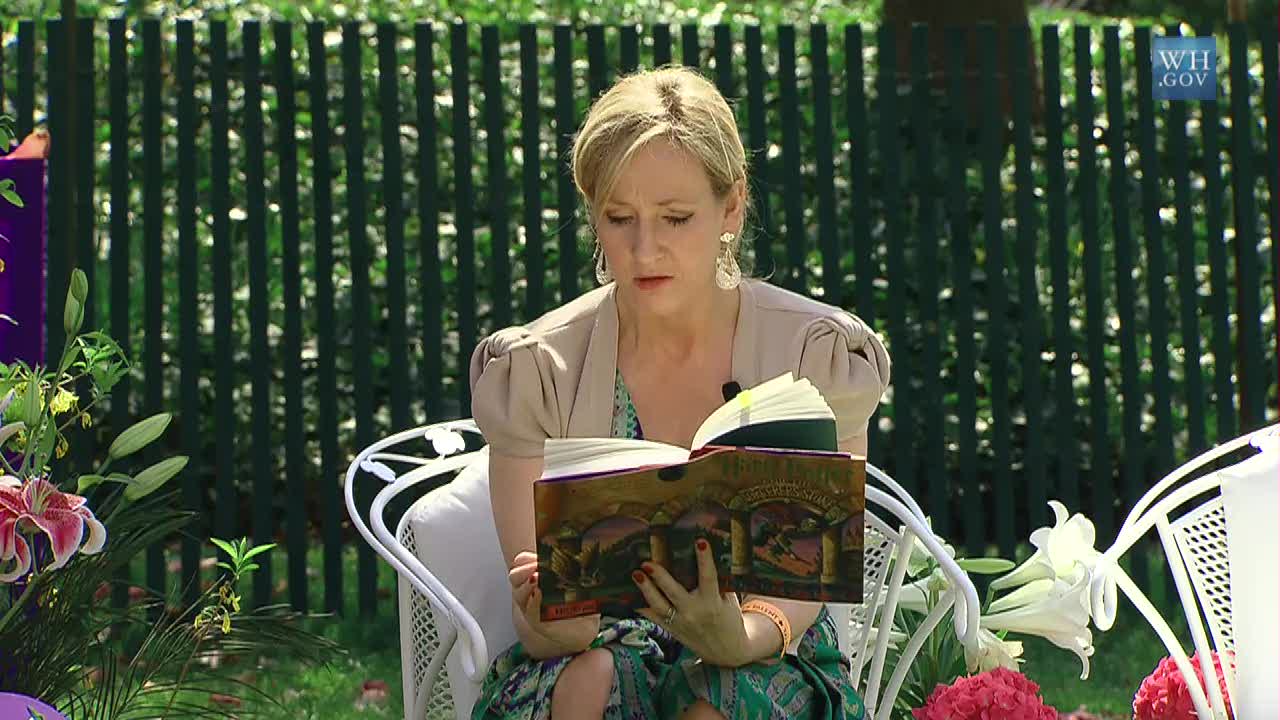
  • J.K. Rowling aged 45.

    Life Summary: J.K. Rowling, Multi-Millionaire Novelist

    J.K. Rowling experienced unemployment, death and divorce in her 20s and went on to turn those life lessons into inspiration for a book series that would go on to take the world by storm. This is the timeline of the life of the woman who created Harry Potter. 

    1965 – Joanne Rowling is born in Gloucestershire, England to a lab technician and an aircraft worker. 

    Age 2 – Her sister is born. 

    Age 9 – Jo and family move to Tutshill, a small village in the countryside. There is a castle, forest and river near the village. 

    Age 11 – She goes to Wyedean Comprehensive School. She discovers Jane Austen. 

    Age 15 – Her mother develops multiple sclerosis and gets weaker by the day. In her last year in Wyedean, she is chosen to be head girl. 

    Age 18 – Jo graduates and enrols into the University of Exeter. She studies French, Latin and Greek and spends a year in Paris as a teaching assistant. 

    Age 22 – She graduates and moves to Clapham, London. She gets a job as secretary at Amnesty International and writes stories during her lunch hour. She writes several adult novels but never finishes them. 

    Age 25 – While on a train trip to Manchester to look at apartments there, she gets the idea for a story about a boy called Harry Potter. She moves to Manchester and her ideas for this story grows. Her mother dies. She moves to Portugal to teach English and continues to write the story in her head. 

    Age 27 – Jo marries a journalist named Jorge Arantes. 

    Age 28 onwards – They have a baby girl together but split up that year. Jo takes her baby and moves to Edinburgh where her sister lives with her husband. Because she doesn’t have a job, she lives on public assistance. She writes every time her baby sleeps. Eventually, she gets a job as a French teacher but continues writing her book.

    Age 31 – She tries to get an agent and is rejected before finding one. Her agent then sells her book to Bloomsbury Publishers after 12 rejections from other publishers. With the money from the sale, she quits her French teaching job and goes back to writing her next book about the life of the boy wizard named Harry Potter. A US Publisher offers $100,000 to buy the US rights for her book. 

    Age 32 – Harry Potter and the Philosopher’s Stone is published in the United Kingdom. They write her name as J.K. Rowling as they are afraid boys will not want to read a book written by a woman. It is a big hit and voted winner of the Smarties Book Prize. 

    Age 33 – Harry Potter and the Sorcerer’s Stone is published in the United States. She wins more awards. Harry Potter and the Chamber of Secrets is released in the United Kingdom. She travels to America for a book tour. Her books are now on the New York Bestsellers list. 

    J.K. Rowling aged 34.
    J.K. Rowling aged 34.

    Age 34 – Harry Potter and the Prisoner of Azkaban is released. Now adults are fans of her books too. She wins more awards. She becomes world famous and reporters start to appear outside her house.

    Age 35 – Harry Potter and the Goblet of Fire is released. Jo meets Dr Neil Murray, a friend of a friend. She establishes the Volant Charitable Trust to combat poverty and social inequality. 

    Age 36 – They buy a 19th century mansion in Scotland and marry. By this time, Harry Potter is a worldwide phenomenon. The movie to her first book is released. She writes 2 books for charity: Quidditch Through The Ages and Fantastic Beasts And Where To Find Them.


    Also available at Amazon.sg

    LUCK-IT will receive a tiny commission when you purchase this product, at no additional cost to you.

    Age 38 – Jo and Neil have a son. Harry Potter and the Order of Phoenix is published. 

    Age 40 – Jo and Neil have another daughter. Harry Potter and the Half-Blood Prince is published. Within 24 hours, 9mil copies of the book are sold. Jo now owns 3 houses in total and hires a bodyguard to protect her family.

    Age 42 – Jo finishes the last book in the Harry Potter series—Harry Potter and the Deathly Hallows—in a hotel room in Edinburgh. It is published that year. 

    Age 43 – Jo publishes The Tales of Beedle the Bard—a book of short tales described in Harry Potter and the Deathly Hallows. She also releases Harry Potter, the prequel. 

    Age 44 – She wins more awards. 

    J.K. Rowling aged 45.
    J.K. Rowling aged 45.

    Age 46 – Jo launches Pottermore, an online interactive reading experience for fans. 

    Age 47 – She releases a new book unrelated to the Harry Potter series—The Casual Vacancy—under the pseudonym Robert Galbraith. 

    Age 48 – She releases ‘The Cuckoo’s Calling’ under her pseudonym, the first in her Cormoran Strike series. The book sells 500 copies until the Sunday Times investigates a rumour that Robert is Jo and proves it to be true. Within days, sales soar. 


    Also available at Amazon.sg

    LUCK-IT will receive a tiny commission when you purchase this product, at no additional cost to you.

    Age 49 – The Silkworm—the second Cormoran Strike novel—is released. 

    Age 50 – Career of Evil—the third Cormoran. Strike novel is released. Harry Potter and the Cursed Child which is a play about Harry Potter’s youngest son, Albus is released.

    Age 52 – Cormoran Strike is turned into a television series in the UK and picked up for distribution in the United States and Canada.

    Age 53 – The fourth Cormoran Strike novel titled Lethal White is released. 

    2020 – Jo is presently 55 years old.

    More life summaries available here.

    Photographs: John Mathew Smith, celebrity-photos.com. Compiler: Sy
    Sponsor or support the Life Summary series here.
    If you found this article useful:


  • How I Got Back Up After Failing The N-Levels

    Cho Jun Ming failed his N-Levels on his first try at age 16, which meant he was left with extremely limited options for higher education. We asked him how he picked himself up and found out he found inspiration and support in the most unexpected places. 

    “I locked myself in my room and I skipped going out. I just cried.”

    Q: Hi Jun Ming, thank you for coming back on to share your story. Can you tell us what it felt like when you first found out that you had failed your N-Levels? What did you do that very day and in the weeks after?

    A: When I first received my N-Level results, I fainted. My best friend helped me up. And what did I do next? I locked myself in my room and I skipped going out. I just cried. 

    Why do you think you failed your N-Level exams? Was it simply lack of preparation for the examination or something else much bigger?

    It was because I didn’t really study. I hated studying and I mixed with a company of friends who also didn’t study. Every day we would just hang outside and create troubles.  

    How then did you figure out your next steps after failing the exam? How long did it take you to figure that out and who or what helped you get over it?

    My teacher proposed, after I failed, that I either go to ITE [Institute of Technical Education] or, since I don’t like to study, I just don’t study. I chose ITE. And ITE [which has some stigma for having the worst students in Singapore and was said to stand for “It’s The End” in a local film] is actually not the end. Around 1 year into ITE, it was my supportive classmates who helped me achieve my dreams in film-making. 

    Jun Ming during his N-Level examinations.
    Jun Ming during his N-Level examinations.

    What was your routine like when you were trying to get back on your feet again? What did you do on weekdays and what did you do on weekends?

    I started watching film tutorials on YouTube and on my free days I would go do some part-time acting and when even more free, I would go to the gym and build my physical body to be a person with a healthy lifestyle. 

    Did you have any further setbacks during that period? If so, how did you move past those?

    Yes. Because I don’t come from a film school, not many people wanted to support me in terms of lending me their equipment or giving me funding. I just used my own pocket money and didn’t eat and used it to pay my cast. For equipment, I just borrowed it from ITE. 

    Which 3 objects or people were most useful to you during the above time period, when you were trying to get back on your feet?

    It’s more people. 1) My classmates. 2) My lecturers. 3) My dad—my dad often talked to me during that time. 

    What did you learn from failing your N-Levels that you didn’t know before? How have you changed as a person?

    I think learning how to be like my friends and studying hard, because academics is very important. Because I never studied and I failed, this is the thing I didn’t know. Or rather I knew but didn’t care. How did I change as a person? I understood I wasn’t good in academics, so right now I am pursuing my passion.  

    If you could go back and replay your time with the N-Levels all over again, what would you do differently?

    Definitely study in the library with classmates who will not hang out with friends and create troubles outside. 

    What advice do you have for those who are presently coping with the failure to pass their N-Levels too?

    Yes, academics are very important and you should be sad, you should be depressed, because all these emotions will make you learn and make you become a stronger person in the future. So you cannot avoid that. Move on and be positive, find the thing that you love and do the thing that you love. And one day, people will eventually give you their support. 

    What’s the worst advice you’ve been given, or have heard people giving? And what’s the best? 

    Worst advice was when I wanted to make a film and was told to face the reality and go home, and I was told that making films doesn’t earn much and that I have no talent. Best are any of the responses I’ve gotten from my films, positive ones that tell me it’s shaped their lives and changed their children’s lives, asking me to carry on and chase for my dreams and create positive change. 

    Jun Ming winning a film-making award.
    Jun Ming winning a film-making award.

    Lastly, what are your present goals now and who can we interview to help you achieve those? 

    My goals right now are to represent Singapore in international film festivals. And who you can interview I think would be those industry professional movie directors, Boo Junfeng, Anthony Chen, Jack Neo, people like them because they’ve been through it and have more experience and they can advise. 

    A close-up of one of the film-making awards Jun Ming has since won.
    A close-up of one of the film-making awards Jun Ming has since won.

    Jun Ming is presently working on a film about Chinese Fengshui and hopes to be able to send it to international film festivals eventually. You can find out about his films at his Facebook page or ask him about failing N-Levels using the comment box below. 

    Other interviews with Jun Ming:
    What It’s Like Being Older Than 20
    What It’s Like Losing A Father Before Age 20

    More interviews with those who have triumphed over adversity here.

    Photographs courtesy and copyright of Cho Jun Ming. Interviewer: Sy
    Sponsor or support The Strong series here.
    If you found this article useful:

  • COVID-19 Diaries: What It’s Like Being In The UK, 151 Days In

    W.F. from Hong Kong moved to London almost a year ago for a job, only to find herself having to deal with the coronavirus pandemic away from her family when it struck. We asked her what that feels like. 

    “Prince Charles and PM Boris Johnson caught COVID-19, but I don’t think people are in fear.”

    Q: How panicked are the people in the UK now?

    A: The situation in the UK now (April) is a bit similar to the situation in China in January. The government announced a nationwide lockdown in late March. People stayed at home and piled up food during the lockdown. There were less people taking the train while social distance was practiced. However, less than 5% of the people here are wearing masks. Prince Charles and PM Boris Johnson caught COVID-19, but I don’t think people are in fear.

    A lot of immigrants living in the UK went back to their countries after the PM announced the UK’s “herd immunity” strategy. As a foreign work pass holder, do you plan to go back to your country? 

    I don’t plan to go back at this moment. I rather follow the government guideline: to stay at home (share rent with flatmates) during the lockdown. I am not specifically afraid of the herd immunity thing.


    Other options available at Amazon.sg

    LUCK-IT will earn a tiny commission when you purchase this product.

    You seem to be fearless and strong. Have you ever felt weak or afraid during the lockdown?

    I really miss my family in Hong Kong and want to have dinner together. The last time I went back to Hong Kong, my sister was not there, so I only saw my parents. Now I really don’t know when all of us can have dinner together. 

    If you did contract COVID-19, what do you think your odds of surviving it are and why do you think so? 

    50%. Because I think I have a strong immune system but I had asthma when I was young. So I am categorised into the group with a slightly high risk of contracting the virus I guess.

    What will you do if you or those who live with you develop symptoms of the virus? What do the authorities of the UK want you to do?

    I will keep social distance with people who develop symptoms of virus and I will provide assistance if I am able to. UK wants people who develop symptoms of virus to stay at home, and they advise that if the symptoms are getting serious, they need to call the NHS [National Health Service]. 

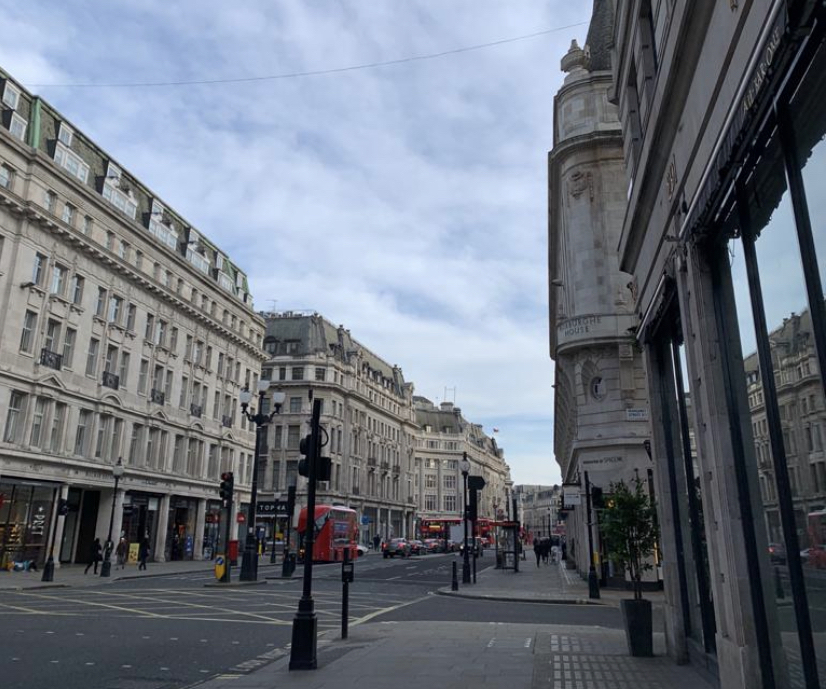
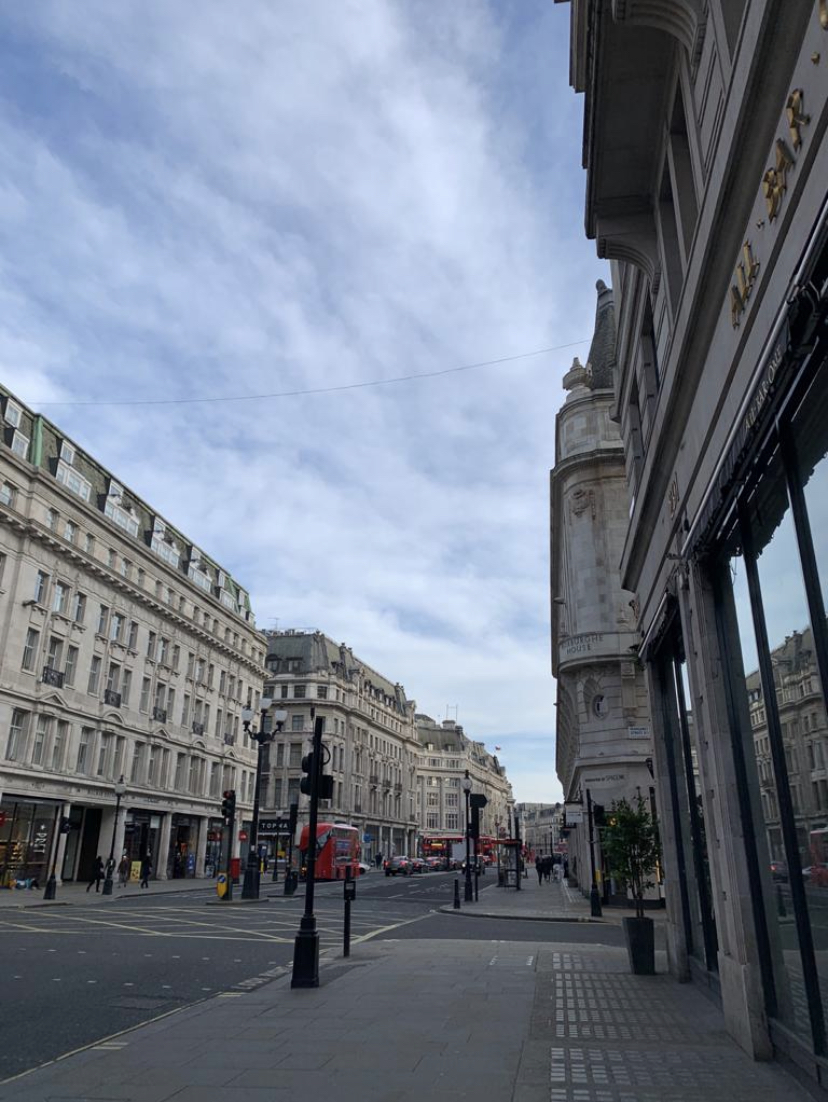
    A street in London during the lockdown.
    A street in London during the lockdown.

    How did most people in the UK contract COVID-19? Can you tell us about the biggest clusters and how those happened?

    I think because of social activity. I don’t know the details of how it happened.

    How do you think Boris Johnson and Prince Charles contracted COVID-19?

    I have no idea. When you are a human being, you have social activity. It is possible for anyone to get COVID-19.

    What will you be doing over the next year? 

    Hopefully COVID-19 is gone and everything is back to normal next year. This will only happen if people practice social distancing and take it seriously. I am not sure how long will I stay in London, I may or may not extend the work permit.

    More in our COVID-19 Diaries series here.

    If you’re in a country that has been affected by the novel coronavirus and would like to share information about the situation where you’re at, do get in touch with us here.

    Photographs courtesy and copyright of W.F. Interviewer: Kauai
    Sponsor or support the COVID-19 Diaries series here.
    If you found this article useful:


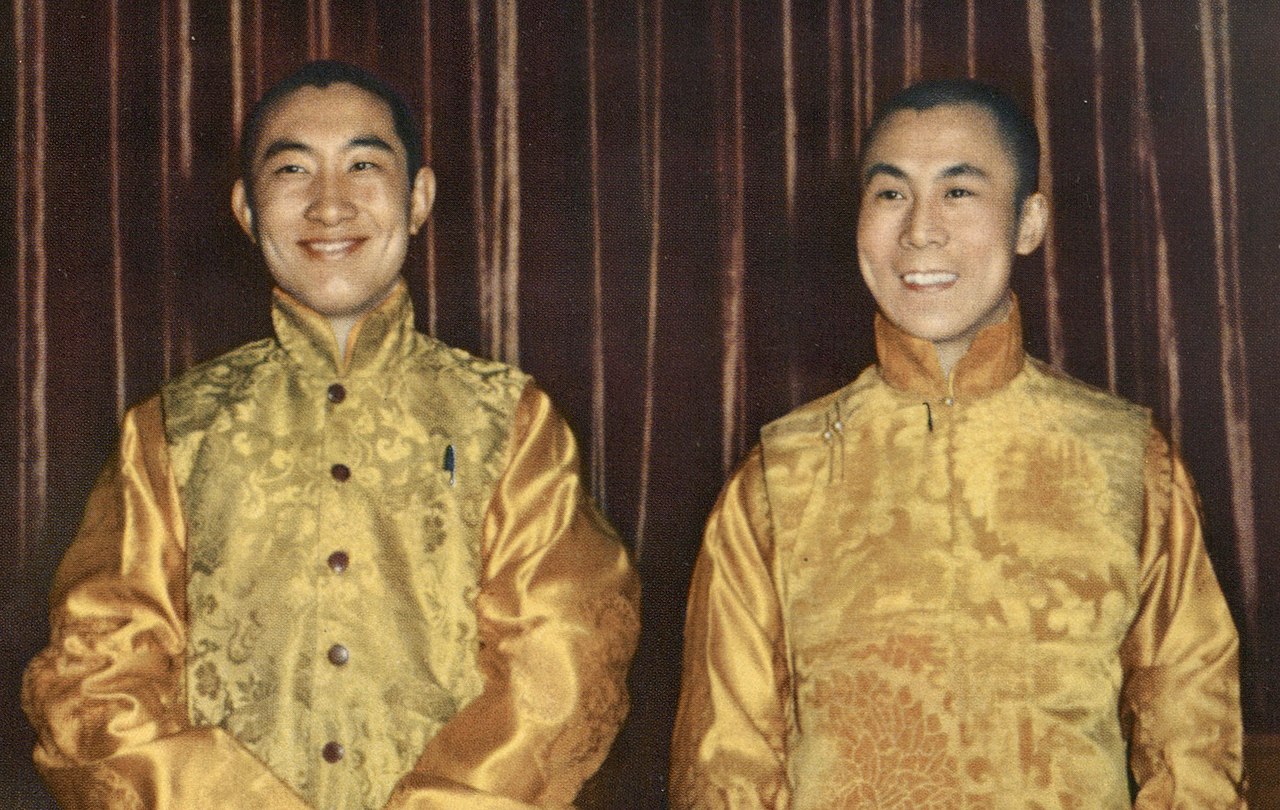
  • The 14th Dalai Lama aged 20, with Panchen Lama.

    Life Summary: The 14th Dalai Lama, Spiritual Leader In Exile

    Llamo Thondup was identified as the spiritual leader of Tibet at age 2 but ended up losing his entire country to China barely 2 decades later. This is the story of the 14th Dalai Lama, and his lifelong struggle to return his country to independence.

    1933 – The 13th Dalai Lama passes away. A search mission to find the next Dalai Lama—the spiritual leader of Tibet believed to be the reincarnation of Buddha who will be reborn as a child once the previous Dalai Lama dies—begins.  

    1935 – Llamo Thondup is born in the Amdo region of Tibet to a farming family.

    Age 2 – Reting Rinpoche who works in the search mission has a vision of 3 letters on a lake suggesting the Amdo region of Tibet, a monastery, a path and a small house. Monks visit the location and upon meeting Llhamo, declare Llhamo to be the reincarnation of the 13th Dalai Lama. They take him and his parents back to the Norbulinkga Palace in Lhasa and recognise him as the 14th Dalai Lama. His name is changed to Jetsun Jamphel Ngawang Lobsang Yeshe Tenzin Gyatso. His parents become noble aristocrats. 

    “The 14th Dalai Lama as a young boy.”
    “The 14th Dalai Lama as a young boy.”

    Age 5 – He moves to the Potala Palace without his parents and formally sits on the throne as the spiritual leader of Tibet. He begins training in religious austerity, which he will do until age 18. In the meantime, Reting Rinpoche will deal with politics on his behalf, while other Rinpoches simultaneously act as his private tutors. He is not allowed to play outside. Soon after, Reting Rinpoche resigns from his role to get into politics for his own benefit and breaks his vow of celibacy. The 14th Dalai Lama appoints Tathag Rinpoche to deal with politics. 

    Age 12 – Reting Rinpoche attempts to murder Tathag Rinpoche while trying to regain political power. Lives are lost, people are injured and monastries are destroyed. Reting Rinpoche is sent to jail.

    Age 14 – Mao Zedong takes over China and turns it into a communist country. His party then declares Tibet to be a part of China and sends troops to march in to “liberate Tibet from the hands of foreign imperialists”. As there are no foreign imperialists in Tibet, Tibet officials send missions to foreign countries to ask for help in defending themselves against China.

    Age 15 – The Chinese army attacks Tibet. The Tibetian army is no match for them. The monks in regions overtaken by the Chinese army are no longer able to practice their religion, instead they are forced to accept communism and accept that Tibet is a part of China. The Tibetian people begin to demand the 14th Dalai Lama come into power earlier than age 18. The Chinese army plan to kill the 14th Dalai Lama if he doesn’t submit to China and communism. The 14th Dalai Lama decides to come into power. He retreats from Llasa to evade approaching Chinese forces and takes refuge in Dromo, southern Tibet while waiting for foreign nations to send help.

    Age 16 – No foreign countries send help. China claim that they have signed an agreement with Tibet for Tibet to return to its Motherland, China, and their troops take over Tibet. The 14th Dalai Lama is forced by China to return to Llasa where he becomes aware of food shortages caused by the large volume of Chinese troops (numbering 20,000) now fighting for food with the common people of Llasa (numbering 70,000). Land and property belonging to civilians are confiscated and Tibetians are made to construct Chinese projects while being treated like slave labour. The youth of Tibet are also brainwashed into preferring communism over Tibetian culture. 

    Age 17 – 2 Prime Ministers of Tibet resign. The 14th Dalai Lama attempts to negotiate with the Chinese for Tibet’s autonomy but fails to convince them. 

    Age 19 – The 14th Dalai Lama is invited to visit Beijing and meets with Chairman Mao to discuss the care of Tibetian people. He soon realises that the meeting was just for China to show the world that they are not aggressors at all. He also finds out later that the Chinese troops are using the photographs he and Mao took together to convince Tibetians that he is in agreement with the reforms China is forcing upon them. 

    The 14th Dalai Lama aged 20, with Panchen Lama.
    The 14th Dalai Lama aged 20, with Panchen Lama.

    Age 21 – Civilian Tibetians form a rebellion called The Freedom Fighters’ Alliance Movement. Chinese troops bomb thousands of towns and temples in response to them. The 14th Dalai Lama complains to Chairman Mao but gets no response. He goes to India to attend the 2500th birth anniversary of Lord Buddha and when he returns, finds out that even more atrocities have been committed against the Tibetian people in his absence, and also that the rebellion in Tibet is gaining strength. 

    Age 22 – In response to the likelihood of worse violence, he decides to finish his doctorate of Buddhist studies earlier, in order to be officially a monk and a true spiritual leader of Tibet.   

    Age 23 – He receives his doctoral degree. The Chinese troops in Tibet invite him and his brother to a Chinese dance performance but news soon gets out that it could be a plot on his life and civilians soon gather outside his palace to prevent him from going to the event. The 14th Dalai Lama agrees to stay away from the performance to prevent the Chinese army from attacking the protesters but the crowd of protestors doesn’t disperse for days. When Chinese troops threaten to bomb the crowd outside the palace, the 14th Dalai Lama decides to evacuate in secret disguised as one of the Tibetan army. He seeks asylum in India but the Chinese troops bomb the crowd outside the palace anyway, killing thousands. He promises Tibetan refugees in India that he will continue to fight in a non-violent way for the freedom of Tibetan people and culture from there. 


    Also available at Amazon.sg

    LUCK-IT will earn a tiny commission when you purchase this product.

    Age 25 – In leaving Tibet, he officially loses control of Tibet. The 14th Dalai Lama relocates to Dharamsala in India with his administration and builds orphanages in India, funded by the Indian government. The town soon develops into a prosperous Tibetan community, full of temples with rituals held in accordance to the traditional Tibetan calendar. He begins meeting with other world leaders to preach for the autonomy of Tibet. 

    Up to Age 44 – Rebels supported by the US CIA who are determined to stop the spread of communism manage to kill some groups of Chinese troops but it only gives China an excuse to send in more troops and attack with more ferocity. Millions of Tibetans die and temples and monasteries are destroyed.  

    The 14th Dalai Lama aged 66.
    The 14th Dalai Lama aged 66.

    Age 54 – The 14th Dalai Lama receives the Nobel Prize for peace, having been in exile for 29 years. He takes the opportunity to mourn the extinction of Tibetan people and cultures and the damage done to its land caused by industrialisation and radioactive waste disposal sent over by the Chinese government, and urges the Tibetan people to continue their non-violent struggle for autonomy. 

    Age 84 – The 14th Dalai Lama says he might be reincarnated as either a man or woman, adult or child, or appear in the bodies of several people simultaneously. He says his rebirth will either occur in a “free country” or not at all.

    2020 – The 14th Dalai Lama is presently 85 years old.  

    The 14th Dalai Lama aged 78.
    The 14th Dalai Lama aged 78.

    More life summaries available here.

    Photographs: Brooke Dolan, Ilya Tolstoy. Compiler: Sy
    Sponsor or support the Life Summary series here.
    If you found this article useful:


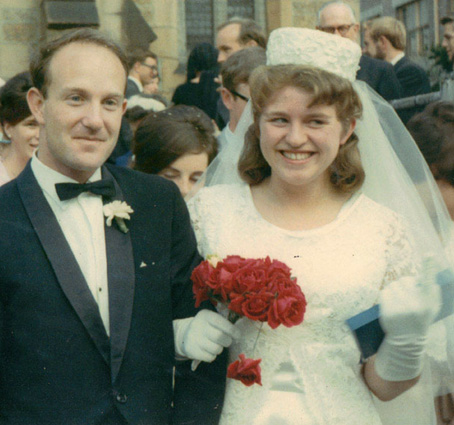
  • Bob at his wedding.

    Then & Now: Age 21 vs Age 77

    How does a person’s perspective of life change over decades? What does a person in his later years perceive that a 20-something doesn’t? To find out, we ask Dr. Bob Rich, the 77-year-old we interviewed just 2 weeks ago, to get a glimpse at how his perspective on the major matters of life has changed in the 50-odd years he’s been alive. 

    “The aches and pains and gradual organ failures are needed to make the thought of death acceptable to most people.”

    Q: Hi Bob, can you describe yourself at age 21 and also yourself now. 

    21: An intelligent, creative, physically attractive, athletically and academically high achiever. A Buddhist who didn’t know he was a Buddhist. And because of the lies of depression, he believed himself to be the opposite of all of these qualities.

    Now: A Professional Grandfather. Every person born in 1993 or later qualifies as my grandchild, anywhere on Earth. I am on this planet to strive for a survivable future for all my millions of grandchildren, and one worth surviving in. The second is as important as the first. What’s the point of living in a world where a few billionaires accumulate ever more wealth so others can starve, where people hate and hurt each other for trivial differences, where our natural being of empathy and compassion is overridden by an insane culture?

    Birth and Death, why do these exist?

    Then: 

    In the ancient days when I was 21, I was too miserable to worry about such issues. If I’d thought about it, I’d have felt sort of immortal: “Death? I suppose so, sometime. I wouldn’t mind not-living now.”

    Since 5 years of age, I “knew” that I was ugly, and stupid, and no one could ever love me. My self-description was, “If there is a wrong way of doing something, or even if there isn’t, I’ll do it that way first.” This was a literally translated version (from Hungarian) of my stepfather’s opinion of me, though I didn’t realise this until I was about 20, and had a flashback to the occasion.

    Now: 

    I am a sceptic. I don’t believe anything, but use whatever information I have to construct a tentative model of reality. Over many years, this model has evolved into the theory:

    The Universe is a living Person. I think of Her as a young, growing, sentient Flower of great beauty. The Universe is Life Energy. What we perceive, what we are parts of, is the universe of matter and energy that the Universe creates by observing it. Max Planck, one of the originators of quantum mechanics, said, “I regard consciousness as fundamental. I regard matter as derivative from consciousness. We cannot get behind consciousness. Everything that we talk about, everything that we regard as existing, postulates consciousness.”

    Because She is growing, the Universe needs to develop the equivalent of brain cells. The material universe is a school for souls. All of us are apprentice Buddhas, whether we realise it or not. Our reason for being born is to go around, life after life after life, caterpillars feeding on the green leaves of experience, until we graduate. This is when we automatically, intuitively give unconditional love to every other living being. Because the English word “love” has so many meanings, I prefer the Buddhist term “metta.”

    “Bob and Ochre.”
    “Bob and Ochre.” Now much older.

    What happens after death?

    Then:

    I thought of life as an emergent quality. When I open my hand, where did the fist go? The fist is a spatial organisation of fingers: an emergent quality. A burning candle is wax + a wick + energy. When you blow it out, where does the flame go? You look at a beautiful building. That beauty, the very shape and functions of the building, cannot be predicted from the parts it is composed of.

    So, I thought, make an organised collection of chemicals complex enough, and you have the emergent quality of life. Make a living being complex enough, and you have the emergent quality of consciousness.

    Now:

    There is scientifically very convincing evidence for reincarnation. I set it out in a chapter of my book, “From Depression to Contentment: A self-therapy guide” and because I consider it important, I’ve posted this chapter to my blog.

    Also, many millions of people of all religious persuasions, and no religion at all, know it happens because of personal experiences. I am one of them. In 2007, I gained recall of 6 of my past lives. The story is in “Ascending Spiral: Humanity’s last chance” in fictionalised form. I had to make it fiction to protect the guilty, not that they’d gain much by suing me.

    So, part of the model of reality I’ve mentioned is that after death, you face a superior Person. How this Person appears depends on your cultural background. For example, reports after clinical death experiences from Asian people don’t usually have a darkness with a bright light at the end of it, while most Europeans do.


    Also available at Amazon.sg

    LUCK-IT will earn a tiny commission when you purchase this product.

    I once had a client who had died from pneumonia, but was brought back. She has an unshakeable memory of sitting on a log looking at a chattering creek, with her long-dead grandfather comfortingly sitting beside her.

    This superior Person does not judge, but accepts you with perfect metta. However, you are guided to re-experience your just-ended life, for some reason from the death, gradually back to birth. Only, what you experience is your effect on other people. If today I do an act of kindness, I’ll experience the pleasure and gratitude of its recipient, and this is very powerful motivation for building on my strengths. If I do an act of cruelty, I’ll experience the pain I’ve caused, and this is even more powerful motivation to make restitution, and to set up Lessons to learn in the next life. The Guide and the deceased person then choose a life that will expose the spirit to the necessary situations to achieve these.

    So, the Lessons are not reward or punishment, but freely chosen by the spirit. For example, one of the spirits who has been travelling with me was my cruel rapist of a husband two lives ago. He was there because I chose a life in which I needed such a person. He was a very young soul, and was incapable of love, empathy, any of the positive emotions. In my current life, I again had this person as part of my family. In this one, he still had no empathy, but instead of a rapist, he was a seducer. I deduce that one of his chosen lessons was to be able to give pleasure to women, instead of taking it from them. He is dead now, and hopefully will learn empathy in his next life.


    Also available at Amazon.sg

    LUCK-IT will earn a tiny commission when you purchase this product.

    Why do bad things happen to us?

    Then:

    Again, at 21 I just knew that anything bad proved what an awful failure I was, in every way. When something good happened, which actually was often, it was luck, or due to the kindness of another person, or not that important anyway, or well, I never even noticed it. For example, at the half-yearly exams in first year university, I “only” got a Credit in chemistry, and this showed I was stupid. I simply accepted the High Distinctions and Distinctions in my other subjects without celebrating them in any way.

    Now:

    I have two dear friends, though I have only met them both through the internet.

    One is Petrea King. You just have to read at least one of her wonderful, inspirational books. They might change your life—for the better. She was raped when she was 17. Possibly as part of the long-term consequence of the trauma, she developed cancer at 32. The bloody doctor told her she wouldn’t see the next Christmas. Devastated, angry, resentful, she went from Australia to Europe, and travelled around. Then she spent time in St. Francis of Assisi’s cave, and peace came to her. She is a little younger than I am, 76, and still going strong. She has been of benefit to tens of thousands of people experiencing life-threatening diseases like cancer, AIDS, MS, etc., and also people like teenagers suffering from environmental despair. I am sure she is an enlightened spirit, and need not return for another life.

    The second friend is Rosemary. She is now 68, but has been forced to spend a great many years in a nursing home, among the elderly. She has been wheelchair-bound for a long time, and her health continues to deteriorate. All the same, she has joy in her life, because she can be of help to others. She hoons around in her wheelchair, running messages for less mobile people, reads to those who can’t anymore, helps the staff in whatever way she can. Sure, she has times of despair, but mostly, she lives a good life.

    This is what suffering is for. It is a spur to spiritual growth. There is no need to change anything when things go well.

    That suffering may be a Lesson situation you arranged before birth, or accident, or being caught in the crossfire of someone else’s actions. That doesn’t matter. Whatever, whyever, it is an opportunity to become a better person, to move closer to enlightenment.

    Why do good things happen to us? 

    Then:

    Oh, good things happen to other people, because they deserve them. Me? I try and try and try, but know I’ll fail anyway.

    Now:

    About a third of my book on depression teaches you the tools of positive psychology, which bear a remarkable similarity to Buddhist actions.

    When something bad happens, simply accept it. This, too, shall pass, and if it doesn’t, so what. It probably won’t kill me, and if it does, that’s all right too. When something good happens, celebrate it, enjoy it, but stay unattached. When it ends, as all things do, that’s fine.
    Why? Things can be measured on many dimensions, “good-bad” being one of them. So, sometimes up, sometimes down, so what.

    What is the point of marriage? 

    Then:

    Oh if only! Girls were a sweet torture, to be admired from a distance. I was a lost puppy looking for a home.

    During first year at University, I set myself an extra subject: Girls 101. Once a week, I got brave enough to approach a stranger, and tried to make the conversation last 5 minutes. At night, I made records of what went well, what didn’t, and how I could try to do better next time. This resulted in over 30 “sisters,” but no lover. They were put off by my intensity. One told me, “If I let you get too close, I know I’ll have you for life, and I’m not ready for that, with anyone.”

    But then, all of these sisters came to my wedding in 1967, glad to have me off their hands.

    Now:

    After nearly 53 years, I am still grateful to my wife for having rescued me from that.

    All the same, to me, a marriage is not a piece of paper, or a contract, but a commitment. If two people are committed to each other, legally or informally, they are married. If they have the piece of paper but care nothing for each other, they are not. You may be interested in my summary of how to have great relationships, and how to have terrible ones.

    What is the point of work? 

    Then:

    Everything I do in every waking moment is work. Studying, working as a tutor or in a summer job, running (both training and competition), environmental activism, helping to run a scout troop, having people cry on my shoulder, studying Girls 101… everything is a duty, everything is competition, not against others but against myself.

    Now:

    Life is too short for the seriousness it deserves. Some activities are for money. Some activities are not. It makes no difference. Often, money costs far more than it is worth. Some activities are interesting, some are boring. I’ll gladly do a boring one if in that way I can be of benefit to someone. For example, I do editing (for money), and the stuff sent to me may be TERRIBLE. But, after my feedback, not only does the client have the opportunity to improve that piece of writing, but also to improve in general writing skills. So, it’s worthwhile.

    When I review a book, I do much the same thing, only I don’t get paid for it. Doesn’t matter: I still do my best to be of benefit to the author. If I need to make many suggestions for improvement, I go to considerable trouble to track the author down so I can be of service.

    Can you organise these aspects of life—Purpose, Status, Money, Knowledge, Health, Peace, Love, Friendships—in order of importance, starting with the most important.  

    Then:

    I was too busy being properly miserable to worry about such issues. I dreamed of Success, not because I wanted status or money or fame, but because every instant I needed to prove that I was not a no-hoper, only to need to prove it again in the next instant.

    I was of benefit to many people, and there were wonderful people in my life I think of as my angels who taught me how to climb out of my hell, but I didn’t even know I had friends. Who would be MY friend? Come on!

    I dreamed of love, but it was a yearning for the impossible.

    Now:

    The most important is not on your list. This is to be of service. I get joy from making life better for someone, like fishing an insect out of a puddle, or taking an old woman to her doctor’s appointment although I hate the way she behaves, or answering an emailed cry of despair and leading the other person to a good life.

    I do value knowledge. I am an endless sponge for it. A friend once described me as a walking encyclopaedia. Love is something I have given all my life. Over the past decade or so, I have gradually also learned to accept it. Health is great. Getting old is not for the fainthearted. But then, if you stayed a vibrant 21, there would be no acceptance of death, and the planet is overpopulated enough as it is. Besides, spiritual growth is only possible by assessing a life, then setting up new Lessons, so death is necessary. The aches and pains and gradual organ failures are needed to make the thought of death acceptable to most people.

    Wealth, status, fame… all the Monopoly tokens of our insane culture, don’t turn me on at all. My wife and I have deliberately lived below the poverty line since 1978. If you want to understand why, read “How to change the world”.

    Who should we turn to when we’re in trouble?

    Then:

    No one. If I can’t handle it myself, I prove to be hopeless and useless. Grit teeth and charge at the problem.

    Now:

    I used to be one of the physically strongest people in my acquaintance, and also had fairly formidable unarmed combat skills. All gone now, and I often need physical help. I accept it with gratitude, because I know that the more you give, the more you grow, so I am making the gift of the opportunity to be helpful to my benefactor.

    When I lack skills or knowledge, I know that “If someone else can do it, I can learn it.” So, I seek out an expert or three, and welcome being taught.

    Is homosexuality okay? What about abortion, pre-marital sex, having a baby outside of marriage, divorce, polygamy and alcohol?

    Then:

    I have always rejected alcohol, tobacco, marijuana, every other drug (except for chocolate, which is my favourite vegetable). This is because I did my drunkenness in a previous life, when it killed me. Having learned that Lesson, I am now free from it.

    Abortion is better than an unloved, deprived, abused life. Pre-marital sex? I wish… sex of any kind! But if a girl had allowed me that close, that would have been marriage, ceremony or not. But all this was unthinking. I didn’t give any such issues explicit consideration.

    Now:

    Above all, do no harm. If you can, do good. If you can’t do good, change the situation until you can. I have applied this to homosexuality. You can apply it to any other issue. On my relationships page, I explain that there are 4 possible outcomes: together happy, together unhappy, separately happy, separately unhappy. What matters is that this situation should result in growth, increased wisdom, learning better ways of doing things.

    Polygamy, polyandry, polyamory are all in principle OK, if there is mutual love and commitment. If someone is forced into a multiple relationship, if there is jealousy and resentment, then it is not OK.

    What makes a person a ‘good’ person? What makes a person a ‘bad’ person? 

    Then:

    I was as yet unable to separate a person from the action. I judged people by the effects of what they did. I hated bullies, having been on the receiving end all too often.

    Now:

    There is no such thing as a bad person. Some are spiritually immature, and know not what they do, yet. I often disapprove of what people do, but my motivation is, if I can, I want to lead them to growth.

    Is there a powerful being somewhere up there looking out for us and pre-designing our lives for us? 

    Then:

    No. If there was, then why is there so much suffering? If there was a God, and allowed the crap to happen, I’d spit in His face for it.

    Now:

    We go back to quantum mechanics. Time exists in the material universe, so all that was, and all that is, and all that will be is “written down in the Book of Life.”

    But there is no Puppet Master in the Sky. There is choice, and free will, because if there wasn’t, we would not be able to grow, and that’s the purpose of life.

    Here is an analogy. You have a favourite book, which you are now reading for the fifth time. You know how the story will end. But the hero in chapter 2 doesn’t, and is agonising over a choice. You enjoy reading because you identify with this hero. If it was “Oh, just a story,” there would be no point in reading it again. So, you are IN THERE, in the story, and facing the terrible choice, even though if you take a breath and move back into your own life, you know the outcome.

    Bob is presently doing his best to live every moment as if he were to live forever, while also living every moment as if it were his last. He is presently looking for beta readers for his latest science fiction series, “The Doom Healer” (“In my unbiased opinion, it has the potential to join Harry Potter.”), so if you’re interested in being his beta reader, you can contact him via his website, Bobbing Around. You may also chat with him using the comment box below (“Delighted to chat with anyone. People posting comments will be rewarded with a big blast of metta.”). 

    Other interviews with Dr. Bob Rich:
    What It’s Like Being Older Than 70
    How I Wrote And Published 18 Books

    Photographs courtesy and copyright of Dr Bob Rich. Interviewer: Sy
    Sponsor or support the Then & Now series here.
    If you found this article useful:


  • COVID-19 Diaries: The Situation In Shanghai, 147 Days In

    68 days ago, we interviewed Greg who had just returned to Shanghai after a trip abroad only to find himself caught up in the growing COVID-19 epidemic there. Now that it’s been almost 3 months since then, we asked him—a kindergarten teacher who lives alone—to give us an update on what’s being going on in Shanghai since.

    “There are now new lockdowns going on up north, though this is not made public.”

    Q: Hi Greg, welcome back! What’s happened since the last time we spoke? Are you still in Shanghai and have you been well? 

    A: Yes, I’m still here in Shanghai. I haven’t left the city since I returned at the beginning of February. I seem to be OK.

    What restrictions presently remain in Shanghai and which have been lifted? Have you yourself gone back to work in person yet? Sat down for a meal in a restaurant?

    Checking people’s temperature at all residential compounds and many restaurants continues. A few weeks ago, we were notified that some public tourist spots, like the big towers across from the Bund and the Aquarium were ordered to shut down again without an explanation. We have not returned to the classroom, but the school is anticipating that we will return before the end of the term, so they are busy getting things prepared.

    What are the numbers of COVID-19 infected, recovered and demised in Shanghai right now? What about in China as a whole?

    If you rely on the official government approved data, it says that the numbers are as follows:  infected – 640, dead – 7, recovered – 532. The latest update on “One Tube Daily” lists China’s numbers as: total – 84,302, asymptomatic – 984, imported – 1,616, recovered – 78,147.

    How accurate do you think those numbers are? And do you think this means the COVID-19 crisis in China is getting close to being over?

    Whether those numbers are accurate, that’s anyone’s guess. China has repeatedly trumpeted that they have successfully defeated the virus, yet there are now new lockdowns going on up north, though this is not made public. There has also been talk about reinfections and more asymptomatic people not being properly reported. You must seek news sources outside of China to find this out, though. There is plenty of reason to believe that the official narrative is not accurate, so I’ll leave that to the discretion of the reader. But as for how it feels, it feels like things are returning to normal.

    This is Greg.
    This is Greg.

    When did the coronavirus situation in China first start getting better? In hindsight, what were the signs that suggested the epidemic was beginning to end?

    So much time has passed in just a few months that it’s hard to keep track of exactly when things started to change. I would say maybe 2 weeks ago things started to feel more like they were returning to normal, especially when food deliverymen were allowed back into the compound for door deliveries.

    Now that the rest of the world is just as affected by the coronavirus as China had been, how do you think China’s response to the virus compares to that of most other countries? 

    If you only follow Chinese media and believe the government propaganda, then it seems like China did a great job. However, the world knows by now that the government knew about the virus back in December and willingly covered it up until it became uncontrollable by mid-January. This topic is too complex to talk about in this format, though. As I said, if you only follow Chinese media and propaganda, then it seems like they did an amazing job. But if you view media outside of China (and the Great Firewall) then there is tons of evidence and reports that very much contradict that narrative.


    Other options available at Amazon.sg

    LUCK-IT will earn a tiny commission when you purchase this product.

    You’re from the US so what are your thoughts on the situation there now that they are presently the country most affected by COVID-19? How do you think they ended up with so many more infections and what do you think they can do to get the number of infections down?

    As an American, I feel embarrassed by how it was initially handled. Trump has gone back and forth between saying everything was fine to now having to pass all kinds of measures to try to ensure that people steer clear of each other. I hate that the US (as well as the rest of the world) did not have enough PPE on hand to better deal with this crisis. This has been a major wake-up call for companies to return to manufacturing important goods back in their home countries. People in the US understandably don’t like authoritative measures, but on the other hand, some people need to be more careful and responsible rather than being selfish and reckless.

    What advice do you have for the people all around the world who are presently still stuck in their homes because of lockdown measures, with no end to the COVID-19 pandemic in their countries in sight?

    I think if people utilize more technology to socialize then this could help (Skype, FaceTime, etc), as well as Netflix and all those free concerts/performances being offered, especially if you have kids at home. Some people around Europe have also had local neighborhood celebrations from their balconies, playing music and cheering to keep everyone’s spirits up. Getting outside to walk around and exercise (with social distancing and masks) is also critical. I would also look at some of the early videos that people in China made of things they did indoors. Some of them are quite funny and creative.

    Which 3 items or people are now most important to you?

    1) Online groceries 2) Didi drivers 3) My friends

    Lastly, what else have you learned in the time since we last spoke that you didn’t know before?

    I didn’t know just how many people could contract this virus in less densely populated countries and how unprepared many places were. It’s nice to learn though, that Taiwan has done a great job with how it handled the virus. I wish they were getting more attention for it because the situation there has been very different from that of China.

    Greg hopes to be able to work towards a master’s degree moving forward. You can ask him more about the situation in Shanghai using the comment box below or follow his adventures in Asia through his blog, globejournal2.com.

    Follow the latest in our COVID-19 Diaries series here.

    If you’re in a country that has been affected by the novel coronavirus and would like to share information about the situation where you’re at, do get in touch with us here.

    Photographs courtesy and copyright of Greg. Interviewer: Sy
    Sponsor or support the COVID-19 Diaries series here.
    If you found this article useful:
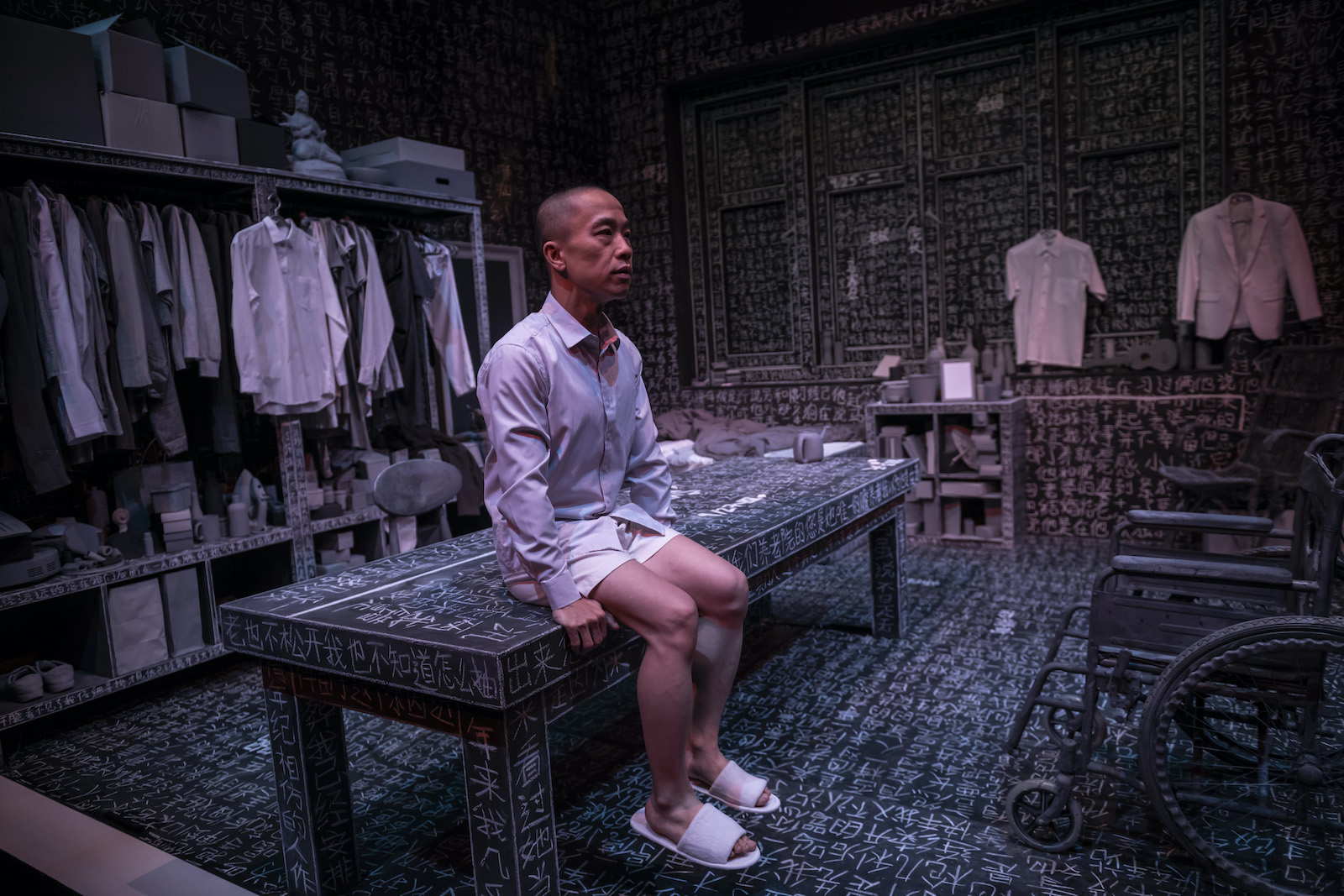

  • Princess Diana, aged 24, with John Travolta in 1985.

    Life Summary: Princess Diana, Princess of Wales

    Born into nobility and wed into royalty, Diana Spencer seemed destined for a fairytale life at a young age, until a tragic accident ended it all. This is the timeline of the life of the Lady who is known as much for her charm and charitable works as she is for divorcing a Prince. 

    1961 – Diana Frances Spencer is born as the 3rd daughter to a rich and powerful family that is part of the British nobility. Her father is Viscount Althorp and her mother is Viscountes Althorp. Her sisters are 6 and 4 years older. The house they live in has 10 bedrooms. 

    Age 3 – Her brother is born. They become best friends as their 2 older sisters have been sent away to boarding school. They are cared for mainly by nannies.

    Age 6 – Diana’s parents separate. Her mother moves out and moves to London. 

    Age 8 – Diana’s parents divorce. Her father gets custody. She now only sees her mother over the weekends in London. 

    Age 9 – Diana is sent to Riddlesworth Hall, an all-girls boarding school. She now returns home only on holidays and some weekends. 

    Age 12 – She is transferred to West Heath boarding school, the same one her sisters attended. Here she starts reading romance novels and keeps a poster of Prince Charles on her bedroom wall. 


    Also available at Amazon.sg

    LUCK-IT will earn a tiny commission when you purchase this product.

    Age 14 – Her grandfather, the 7th Earl Spencer, dies. Her father becomes the 8th Earl Spencer and moves himself and his children to Althorp—the family’s estate in Northamptonshire, England which has 90 rooms. Diana and her sisters inherit the title of ‘Lady’. Her brother becomes the new Viscount Althorp aka 9th Earl Spencer. 

    Age 15 – Diana fails her final exams twice. Since she cannot go to college with her grades, she goes to finishing school in Switzerland where she is to learn to correct manners and social skills to be an upper-class wife. She begs to be allowed to return home after a few months and her parents agree. 

    Age 18 – Diana moves into an apartment in London with friends. She takes a job as an assistant kindergarten teacher at a private school. She also takes a part-time job working as a nanny for an American family. At night and on weekends, she goes to parties with friends—some of the wealthiest and most influential people in the country. On weekends, she returns to Althorp to visit her father. Her oldest sister marries the Queen’s assistant private secretary.  

    Princess Diana and Prince Charles having dinner with the Reagans in the White House Residence in 1985.
    Princess Diana and Prince Charles having dinner with the Reagans in the White House Residence in 1985.

    Age 19 – Diana spends a weekend at a friend’s home in the country. She and friends go to watch 31-year-old Prince Charles play polo at a nearby park and they all end up having a barbecue together. Prince Charles and Diana get talking till late in the evening and one week later, Prince Charles asks Diana on a date, then more. Soon, the news picks up the story and Diana becomes world famous. Photographers start following her everywhere. 

    Age 20 – Prince Charles invites Diana for dinner at Windsor Castle and asks her to marry him. She agrees. Diana moves into Buckingham Palace and begins planning for the wedding and decorating the castle in the country that will be their marital home. They wed a few months later and the wedding—the “Wedding of the Century”—is watched by 750M people all over the world. Diana becomes Her Royal Highness Princess of Wales. Another few months later, Diana is pregnant. 

    Age 21 – Diana gives birth to her first son, Prince William, heir to the throne. 

    Age 23 – She gives birth to her second son, Prince “Harry”. 

    Age 24 – Diana becomes friends with celebrities and famous designers and is now thought of as one of the most attractive women alive. She begins working on charitable causes. 

    Princess Diana, aged 24, with John Travolta in 1985.
    Princess Diana, aged 24, with John Travolta in 1985.

    Age 26 – Newspapers begin to report that she and Prince Charles are barely spending time with each other and that when they are together they often looked miserable. She continues working on charitable causes.

    Age 31 – Diana’s father dies. She and Prince Charles both attend but reporters notice that they arrive and leave separately. By the end of the year, they officially separate. Diana moves into Kensington Palace while Charles remains in their home. Their children live in boarding school and take turns staying with each parent on weekends. The rest of the time, she travels around the world bringing reporters to places and causes that need help and money. 

    Princess Diana, aged 26, on a royal visit for the official opening of a community centre in Bristol. in May 1987.
    Princess Diana, aged 26, on a royal visit for the official opening of a community centre in Bristol. in May 1987.

    Age 35 – The divorce between Diana and Prince Charles is finalised. Diana is allowed to keep her home at Kensington Palace and remain Princess of Wales but is no longer to be called Her Royal Highness. Despite that, she remains popular and reporters continue to follow her everywhere she goes. She starts dating Dodi Fayed—a billionaire whose family owns Harrods department store.  

    Age 36 – Diana and Dodi take her boys along on vacation in the South of France. Shortly after, they visit Paris together and go out to dinner at the Ritz. When they leave in a car, they are chased by paparazzi and while trying to get away, the driver crashes into a concrete pillar inside the tunnel. Dodi and the driver die instantly. Diana dies slightly later on in the hospital. Her coffin is drawn through the streets of London in a horse-drawn carriage and she is mourned by celebrities all around the world. 

    More life summaries available here.

    Photographs: Ronald Reagan Public Library. Compiler: Sy
    Sponsor or support the Life Summary series here.
    If you found this article useful: