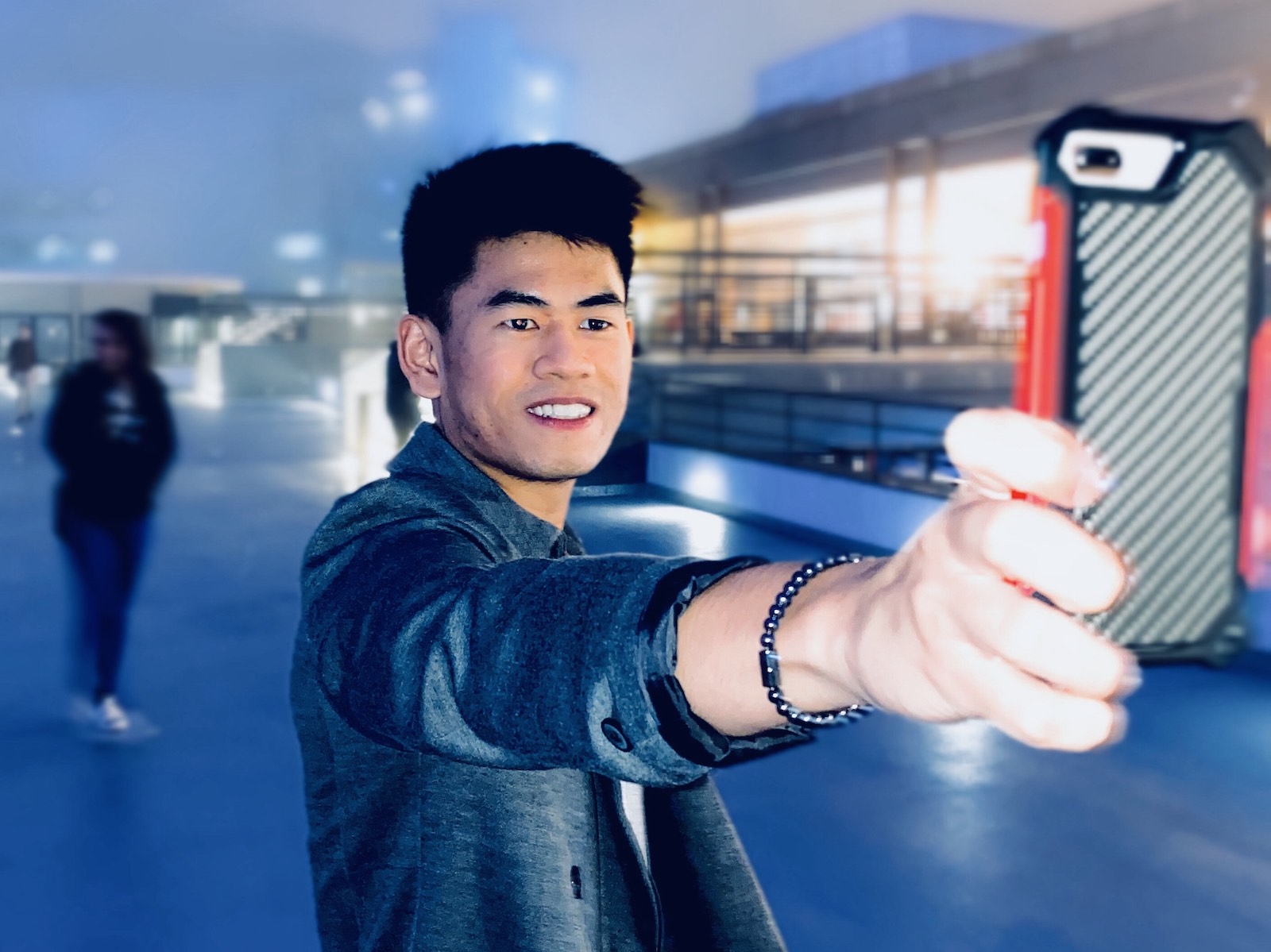
• Jun Ming and his important object: his phone.

    What It’s Like Losing A Father Before Age 20

    When Cho Jun Ming was 19, his 54-year-old father was diagnosed with heart issues. Because his father was a kidney dialysis patient and could not undergo operations, he was sent to the ICU where he passed on just 2 months later. We asked Jun Ming how he coped with losing his dad before age 20, and learned from him all the things he wished he had done with his father when he had the chance. 

    “After the funeral, I fell into a severe depression and had to seek psychiatrists and psychologists. ”

    Q: Hi Jun Ming, welcome back and thank you for sharing yet another part of your story. How did you find out your dad had passed away? What were you doing right before that and what did you do right after that?

    A: At first, I received a call from my dad saying that he needs to go to the hospital but I was playing Xbox at my Poly [Polytechnic—an alternative to university in Singapore] friend’s house and didn’t bother. That was in the afternoon. That night, after my dad admitted himself into the hospital, I received a call from the doctors asking me to go to the hospital because he was like a time-bomb that could pass on at any time due to his heart condition. Immediately after that, I went straight to the hospital and from then on, accompanied my dad every day for 1-2 months before he passed on.

    The day he passed, I was actually studying before going to visit my dad. And when I did I spoke with him, but when I went home I received a call from the hospital saying to rush down so I rushed down and saw that the machines were starting to beep slowly and he passed away in front of me. 

    What did it feel like when you first heard the news? What about at the funeral and in the days after?

    I hated everything that existed. And I blamed everything and everyone—the doctors, God, everything except for myself. After the funeral, I fell into a severe depression and had to seek psychiatrists and psychologists. 

    How long did it take you to get over the grief of losing your dad? What helped most? 

    It’s been 4 years. I’m now still undergoing treatment with psychiatrists and psychologists because I was told that some of the memories and the trauma that I had when I saw how my dad had passed on are being blocked in my mind. I can’t get over the grief even now though it’s been better with time. What helped most is making films because as long as I keep making films, I won’t think about it.  

    One of the awards Jun Ming has since won.
    One of the awards Jun Ming has since won.

    Which place in Singapore helped the most? 

    Changi Airport. Sometimes when I feel lonely I’ll go to the airport and sit down and watch the planes fly, and watch families hugging each other and watch how people cry, smile and laugh with tears of joy. It brings me warm feelings. 

    How did your life change after your dad’s death? And how did your dad’s death change you? 

    I became less energetic and more negative and more paranoid about life. And soon I got much support from my friends and eventually turned to be better. Right now, I’m still recovering. My dad’s death gave me a wake up call. It boosts me and motivate me to do something better but of course I would rather he be alive. 

    If you could go back and replay the time you had with your dad all over again, what would you do differently?

    I would eat dinner with him every day. I would talk to him and update him about what I’m doing. And also I would try to understand him and try to learn from his mentality as a person because he’s very mature, very calm and very patient—and that’s what I need. I would like to ask him to teach me things that I do not know and give me advice.

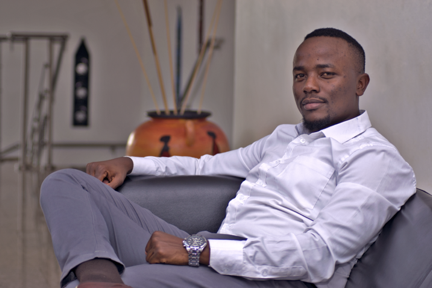
    A recent photograph of Jun Ming.
    A recent photograph of Jun Ming.

    What is it like being a young man without a father? 

    I think it’s very sad because sometimes I see my friends going back home and see their fathers and mother together and I feel that I just lost part of myself. 

    Which 3 objects/people can you presently not live without and why?

    My phone. My mother. And my relatives. Because they are all my closest people and objects right now and I know I have the time to cherish them so I will not waste any moment. 

    Jun Ming and his important object: his phone.
    Jun Ming and his important object: his phone.

    What do you wish your father had done more of while he was still alive?

    I wish he would have told me things he would have wanted because whenever I made mistakes he would just let me fall down by myself and never really scold me or beat me up because he wanted me to learn by myself. But because I was young, I didn’t know what he was trying to do until I grew up and reflected and realised… oh, I see. So I wish he would have scolded me and beat me. 

    What advice do you have for those who have only just lost their fathers?

    There will always be people who are worse off than you. I have a friend who doesn’t have family. I have even friends who have parents but both are mute. So think about those in a very bad situation and try to know that you’re not always alone. And that you have the ability to bring joy to people and to yourself. 

    Lastly, what is the biggest lesson your dad ever taught you? 

    He taught me to be calm at all times. No matter if the sky is falling down, just remain calm. When you’re calm you’re able to see perspectives and things not many people can see.

    Jun Ming presently makes films about societal issues and gives talks to people who are facing set backs in their lives. “It’s all about creating a positive impact on people in whatever ways I can through using both my backstory and my passion.” You can find out more about his films at his Facebook page or ask him about grief and recovery using the comment box below. 

    Other interviews with Cho Jun Ming:
    How I Got Back Up After Failing The N-Levels
    What It’s Like Being Older Than 20

    More interviews with people who have been through grief or other physical or mental hardships. available here.

    Photographs courtesy and copyright of Cho Jun Ming. Interviewer: Sy
    Sponsor or support The Strong series here.
    Want to be featured too? Tell us here.
    If you found this article useful:


  • Jakarta now: “The road itself, as you can see, is quite crowded. You can still get a little traffic jam here and there.”

    COVID-19 Diaries: Indonesia, 196 Days In

    The last time we interviewed Naya, a student from Indonesia, the country had not yet implemented large-scale restrictions. Now that it has and it’s been 80 days since we spoke with her, we asked her for an update. 

    “My family, especially my mom, really loves online shopping right now. The delivery guy shows up at my house almost every day.”

    Q: Hi Naya, welcome back! How’s Indonesia and how are you?

    A: Hi there, I’m good thanks! The coronavirus is still here and it doesn’t feel like it is going away soon. Therefore, Indonesia like any other country is slowly adapting to the “New Normal” situation. 

    The last time we spoke with you, you were doing online classes and your father was working from home, then a few weeks after, Indonesia implemented large-scale social restrictions. What was that experience like for you and your family and what have you been doing since then?

    It’s a new experience of course. Suddenly I’ve been staying at home for 2 months and don’t even bother to go out. I also struggled to fall asleep during this period, my record for staying awake is until 6 a.m (it’s ok, I’m working on it now). My family, especially my mom, really loves online shopping right now. The delivery guy shows up at my house almost every day.

    Can you explain what large-scale social restrictions are and how they differ from a lockdown?

    Large-scale social restrictions are rules that limit citizens’ activities. Residents can still move out of the house but the number of people in a place is limited. In short, this rule is looser than a lockdown. For example, my housing complex has four portals for access in and out but only one portal is opened. Please note that in Jakarta alone this rule has entered into a transition period where malls or restaurants have started to open.

    This is Naya.
    This is Naya.

    What are the first things you are going to do when the restrictions are eased? 

    If I could, I want to have a little reunion with my friends. I used to randomly hang out with my friends, decide things spontaneously and just go for it. So I kinda miss that and hope I can do all of that once we are allowed. 

    Is there anything you will avoid?

    People. There’ll always be that feeling of cautiousness around others. Even though the restrictions eased down, the virus is still there so I don’t think we should be too careless. I try to minimise physical contact with other people. 


    Other options available at Amazon.sg

    LUCK-IT will earn a tiny commission when you purchase this product.

    Is mask-wearing mandatory? Are people still encouraged to stay at home? 

    Yes. At least in Jakarta, the transition period to the new normal has a regulation stating that you can get a fine if you don’t wear masks in public. People are also encouraged to stay home, schools are not open yet, and buildings or rooms (such as hotels and malls) are limited to 50% capacity. 

    You’re a student so how has this pandemic affected your studies and your future job prospects?

    It affects me a lot. I’m extremely worried about my grades now because I’m so lazy. It’s hard sometimes to keep up with a class where there’s no face-to-face interaction. There are some of my classes that don’t require video calls, so we interact through the university website. It’s not effective I would say, only a few students that pay attention. 

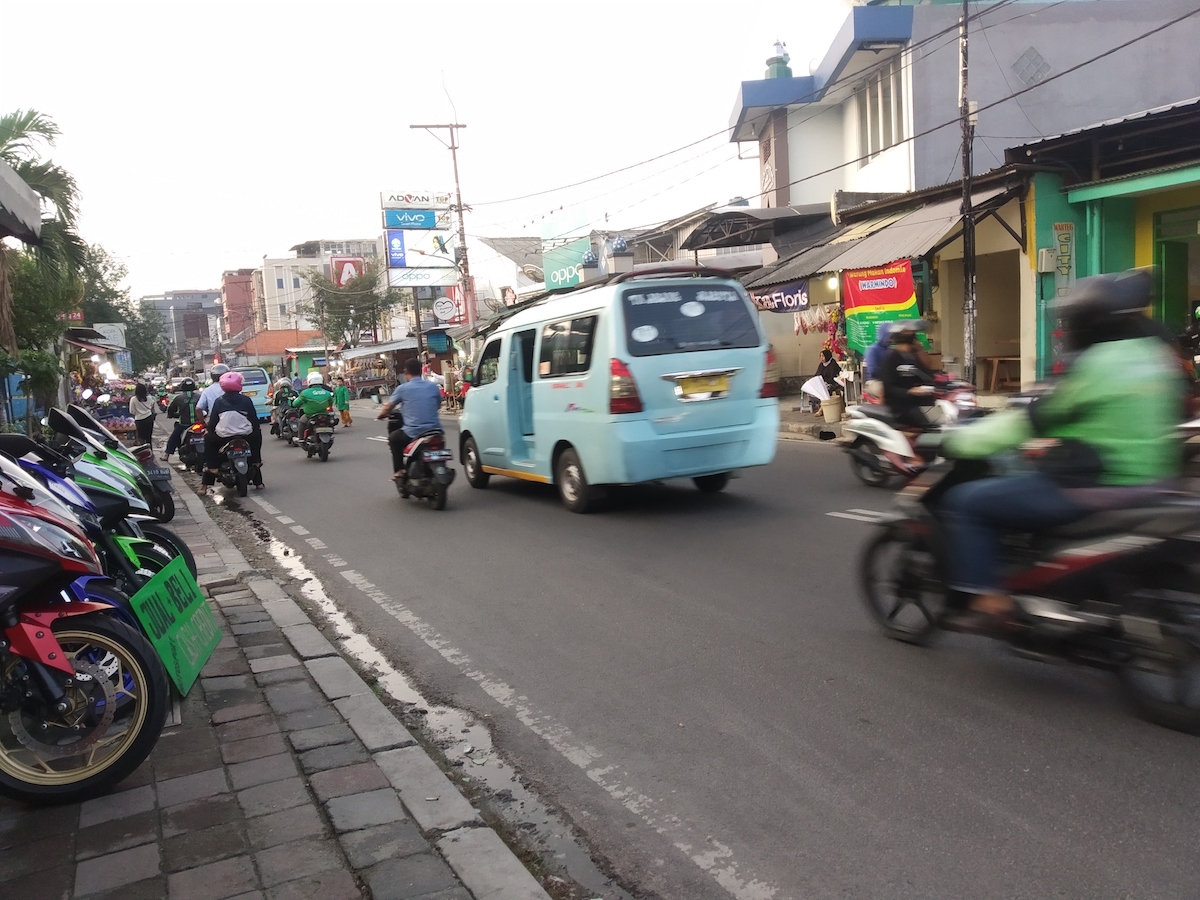
    Jakarta now: “The road itself, as you can see, is quite crowded. You can still get a little traffic jam here and there.”
    Jakarta now: “The road itself, as you can see, is quite crowded. You can still get a little traffic jam here and there.”

    Is there anything good that has come out of this pandemic for you though? 

    Pay attention to little things. For starters, I water my plant every day now and it grows flowers! That maybe sounds like no big deal but it makes me happy to see the plants healthy and beautiful. So does working out, even 10 minutes of work out makes me feel a lot better about myself.

    What advice do you have for humans of the future who find themselves hit by a pandemic like this one?

    Be grateful. Yeah, it’s kinda classic but it’s true. Don’t complain so much because there are people out there having a tougher time than you. It doesn’t mean you can’t complain, but start to see the bright side of this and be grateful for what you have. 

    Jakarta now: Starbucks is open. “And you can hang out there. However, seats are limited and guests sit at least 1 table away from each other.”
    Jakarta now: Starbucks is open. “And you can hang out there. However, seats are limited and guests sit at least 1 table away from each other.”

    Which 3 items or people are now most important to you?

    Family, friends, and technology. (Sorry haha I can’t decide so I generalise all of them)

    Naya hopes to be able to get as much experiences as she can in spite of the pandemic, likely by joining volunteer activities and going to seminars. “I also want to learn more languages so hopefully, I can keep the consistency to learn more throughout the year.” You can find out more about her and the COVID-19 situation in Indonesia through her blog, nightimewriter153211359.wordpress.com, or just ask her here using the comment box below. 

    Follow the latest in our COVID-19 Diaries series here.

    If you’re in a country that has been affected by the novel coronavirus and would like to share information about the situation where you’re at, do get in touch with us here.

    Other interviews with Naya:
    COVID-19 Diaries: The Situation In Indonesia, 111 Days In

    Photographs courtesy and copyright of Naya. Interviewer: Sy
    Sponsor or support the COVID-19 Diaries series here.
    If you found this article useful:

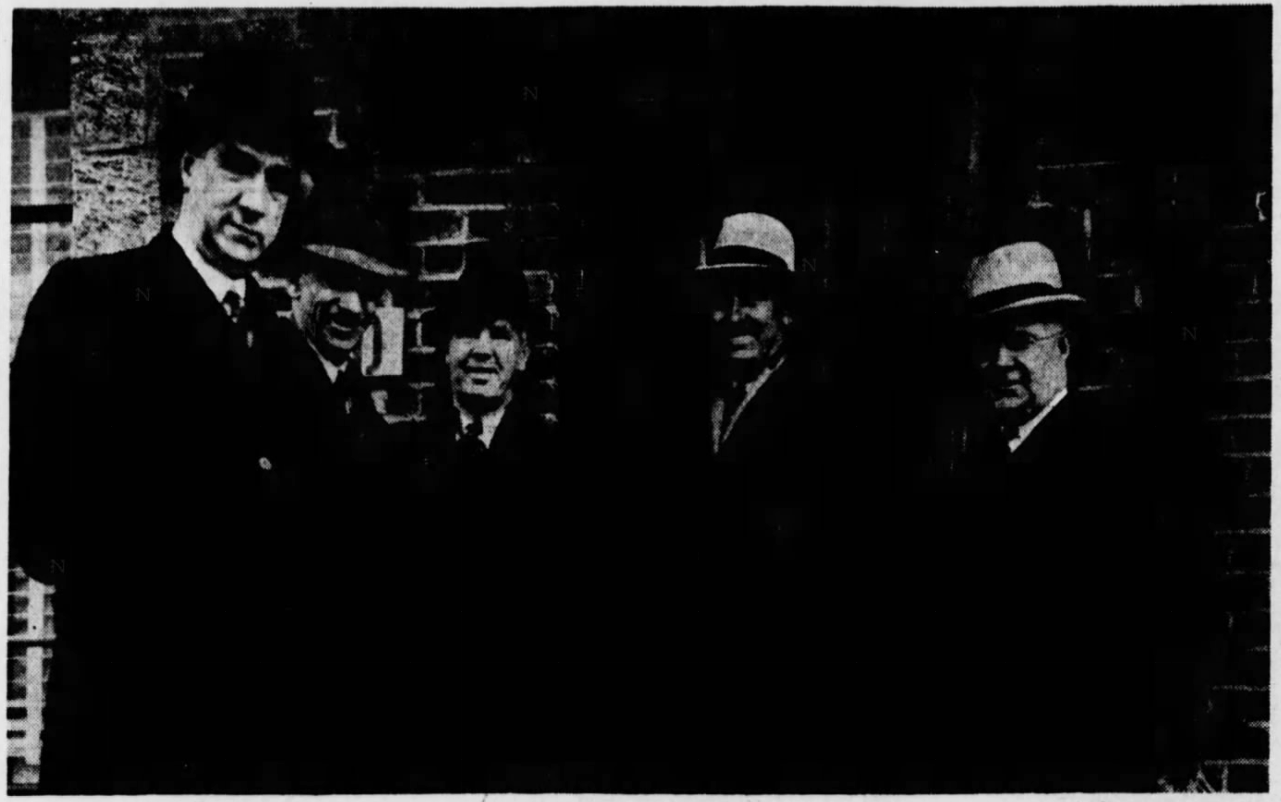
  • Fred Trump & associates in 1939.

    Life Summary: Fred Trump, Property Magnate

    Fred Trump started his own building business at age 15 and would go on to be known as the “Henry Ford of the home-building industry” in his 30s before fathering the man who would become the 45th President of the United States. This is the life story of the father of Donald Trump. 

    1905 – Frederick Christ Trump is born to German immigrants in Bronx, New York, USA. His father had come to America to dodge being drafted into compulsory military service and ended up as a barber, restauranteur, casino and brothel owner, and finally real estate investor. His mother is from his father’s hometown. He has an older sister. He would grow up speaking only English and no German. Shortly after, his family moves to Queens. 

    Age 2 – Fred’s younger brother is born. 

    Age 13 – He attends Richmond Hill High School while working as a caddy, curb whitewasher and delivery boy. At night he studies carpentry, plumbing, masonry and electrical wiring. Fred’s father dies during the flu pandemic.

    Age 15 – He starts a construction business with his mother under the moniker, Elizabeth Trump & Son, with his mother financing him partially.

    Age 18 – He graduates from Richmond Hill High School and gets a job as a labourer and carpenter. He also begins constructing his first house. 

    Further education – He attends Pratt Institute. 

    Age 21 – He has built 20 homes in Queens by this time.

    Age 22 – He is arrested for refusing to disperse from a Klu Klux Klan parade. He incorporates the company he started with his mum. 

    Age 25 onwards – He builds a supermarket and sells it to a supermarket chain within 6 months.

    Age 31 – Fred meets a domestic worker at a party and decides to marry her. He is sharing a home with his mum at this point.

    Fred Trump & associates in 1939.
    Fred Trump & associates in 1939.

    Age 32 – His first daughter, Maryanne is born.

    Age 33 – His first son, Fred Trump Jr. is born. He is called the “Henry Ford of the home-building industry” in the local paper. 

    Age 37 – His mother becomes an American citizen. His third child, Elizabeth is born. 

    During World War II – He builds barracks and garden apartments for U.S. Navy personnel.

    Age 40 – Worried that his German ancestry will hurt his businesses because he has many Jewish tenants, he and his family start pretending to be of Swedish ancestry. 

    Age 41 – His fourth child, Donald is born. 

    Age 43 – His fifth child, Robert is born. 

    Age 44 – He starts building middle-income housing for families of returning war veterans, starting with Shore Haven in Bensonhurst. 

    Age 45 – He builds Beach Haven in Coney Island. 

    Age 46 – He moves into a middle-class apartment in Queens and would live there for most of his life.

    Age 49 – He is investigated from profiteering from government contracts. 

    Age 59 – He builds Trump Village on Coney Island, and low-income apartments and row houses in the New York area.

    Age 61 – He is again investigated for profiteering but gets off with no indictments.

    Age 63 – His son, Donald joins the company.

    Age 66 – His son, Donald becomes president of his company. 

    Age 67 – His company is accused of refusing to rent apartments to African Americans and sued.

    Age 70 – The civil rights lawsuit from 3 years before ends with Fred’s company agreeing to put out ads to target minority families while admitting no wrongdoing. He begins loaning Donald millions of dollars to enter the real-estate business in Manhattan. 

    Age 71 – He is arrested for code violations for a building in Maryland and arrested. He is then released on a $1000 bail. He sets up trust funds of $1m for all of his children and grandchildren. 

    Age 76 – His eldest son dies from alcoholism. 

    Age 77 – He appears on Forbes 400 as one of the richest Americans.

    Age 88 – He develops Alzheimer’s disease.

    Age 93 – He dies of pneumonia, with an estate of $250-$300m. 

    More life summaries available here.

    Photographs: Public Domain. Compiler: Sy
    Sponsor or support the Life Summary series here.
    If you found this article useful:


  • Why I Left Atheism

    Sean Munger first became an atheist after doubting Christianity at age 13, but later found himself with the same doubts about Atheism at age 36. At age 42, just 5 years ago, he converted to Judaism. We asked him why he made all of those decisions. 

    “When you sense the eye of God looking at you, it’s kind of hard to take atheism seriously after that.”

    Q: Hi Sean, thank you so much for agreeing to share your experience with us. To start, could you share how you ended up as an atheist? 

    A: I kind of drifted into it. My family was nominally Christian but in practice not very religious; I remember going to church last when I was about 6. In my early teens I began questioning why people believed stories in the Bible as true. The story of Noah particularly bothered me. The hypocrisy and pettiness of religious right types—this was the 1980s—really grated on me, and I began to conflate, as many atheists do, fundamentalism and religiosity in general. From a rational standpoint the universe made much more sense without God than with Him. By college I was fairly entrenched, and even somewhat militant. God definitely did not exist!

    What was life like for you as an atheist? What was compulsory, what was forbidden and what was most important? 

    At first, there really wasn’t a “code.” The rise of the Internet in the 1990s and early 2000s started to change this, and atheism became sort of a cult. Fans and followers of public atheists like Richard Dawkins, Sam Harris and Christopher Hitchens increasingly began to define atheism as a belief system, but it was based not on a set of positive beliefs, but upon antagonism to others’ beliefs. What was most important was not giving any quarter, not even considering the possibility of the existence of God. It was a badge of purity and of moral achievement to be absolutely certain in your own non-belief, which usually manifested itself in maximum hostility to the views of others regarding religion. So, what was most important was “virtue signaling” how deep and perfect your own atheism was, which usually meant going on the attack against religious people or ideas. For an example of this, try mentioning the words “Mother Teresa” to a group of atheists online, and watch how quickly they rush in to demonize her.

    When then did you first start having doubts about atheism? What triggered your doubts? 

    My very first job, in high school, was as a counselor at a summer day camp run by a Jewish community center. They did not require you to be a Jew or have any kind of belief to work there. Though I wasn’t part of their faith, I loved their songs, their culture, the sense of shared community and the joy they took at being part of that community. The theology was incidental. I always considered myself a spiritual person, but while I was an atheist I was careful to define my belief in non-sentient terms. “I believe in nature” or “I believe in a cosmic balance of the universe” were things I would say. When I was in my late 30s I began to consider, if I truly believed in “nature” and “balance,” whether it was so far a jump from believing that to consider whether “nature” and “balance” could themselves be sentient and could have a consciousness. If they did, that could only be described as God, or at least some sort of God. So I realized I could no longer be certain that God did not exist.

    I also realized that atheism lacked the means to explain at least half of the human experience. Rationality and “show me proof” works very well for things in the tangible and measurable world. The world of the mind and heart, the world of artistic expression, creativity, and meaning, works along a totally different set of rules, where measurement and “proof” are useless. How can I “prove” that I love my family, or that a Michelangelo painting is beautiful? You can’t do it. Instead of trying to explain this aspect of being human, atheists generally ignored it. And most atheists I encountered weren’t really more contemplative about their beliefs than the fundamentalists they railed against. If it came out of the mouths of Dawkins, Harris or Hitchens, it was good and true. If not, they didn’t have much regard for it.

    When people, especially atheists, hear that I’m an ex-atheist, most of them assume that I found “proof” that God exists. That’s not what happened at all. It was a much less linear or empirical process.

    Sean when still an atheist. “Here I was in 2003, visiting Hamburg, Germany, ironically at a church (Nikolaikirche, the Gothic cathedral bombed out during World War II).”
    Sean when still an atheist. “Here I was in 2003, visiting Hamburg, Germany, ironically at a church (Nikolaikirche, the Gothic cathedral bombed out during World War II).”

    How long did it take you to go from doubting atheism to deciding you had new beliefs? What pushed you past the point of no return? 

    I guess I started to have doubts in the early 2000s, but the “point of no return” was one moment on a very hot Saturday morning in July 2009. I was considering a lot of life changes (like going back to school to get my Ph.D. in history), had entered a new relationship (with my now husband), but life was still very fraught for me at the time. Apropos of nothing, as I was getting out of bed, I had a very strong sense that a powerful presence had its eye fixed on me. For an instant, and no more than that, the eye of God was watching me. What I sensed was God looking at me and thinking, “Okay, so how’s he doing?” and then concluding, “Oh, he’ll be fine. He doesn’t need my help. Move on.” And then His eye wandered off to look at someone else. It has never happened since and I don’t ever expect it to, but when you sense the eye of God looking at you, it’s kind of hard to take atheism seriously after that. Still, even after that it took a while to really commit to Judaism.

    How does one leave atheism? Did you have to do anything special? 

    I don’t even know how you leave—write a letter of resignation to Richard Dawkins? One leaves atheism, at first, by conceding the possibility that God might exist. At that point you might be an agnostic, but you’re not an atheist anymore. Then you begin to explore the dimensions of God in your own mind. It’s about asking questions, not necessarily finding answers. This is what atheism, as a belief system, has so much in common with the fundamentalist religion it railed against: it professes certainty and discourages deviation from that certainty.

    How did the people closest to you react to your decision to leave atheism behind? And how did you react to their reactions? 

    Most of the people close to me were casually, not devoutly, religious, so they were fine with it. My father, who is devoutly religious (Methodist) and became so late in life, was quite happy. I did have friends who were atheists who simply couldn’t understand it but generally they just shrugged. The people who were most hostile were, predictably, strangers on the Internet who were very offended by the choice that I, a person they did not know, had made. I posted a blog article about leaving atheism which got a fair amount of traffic. It was linked on atheist message boards and Twitter threads where people reacted angrily and concluded that I “never understood” atheism, or that I was never “really” an atheist. That, incidentally, is a logical fallacy called “No True Scotsman,” a profound irony considering that most atheists see themselves as governed by logic and reason. Some tried to debate me and angrily demanded I give them proof that God exists. Clearly they missed the point of what I was trying to say.

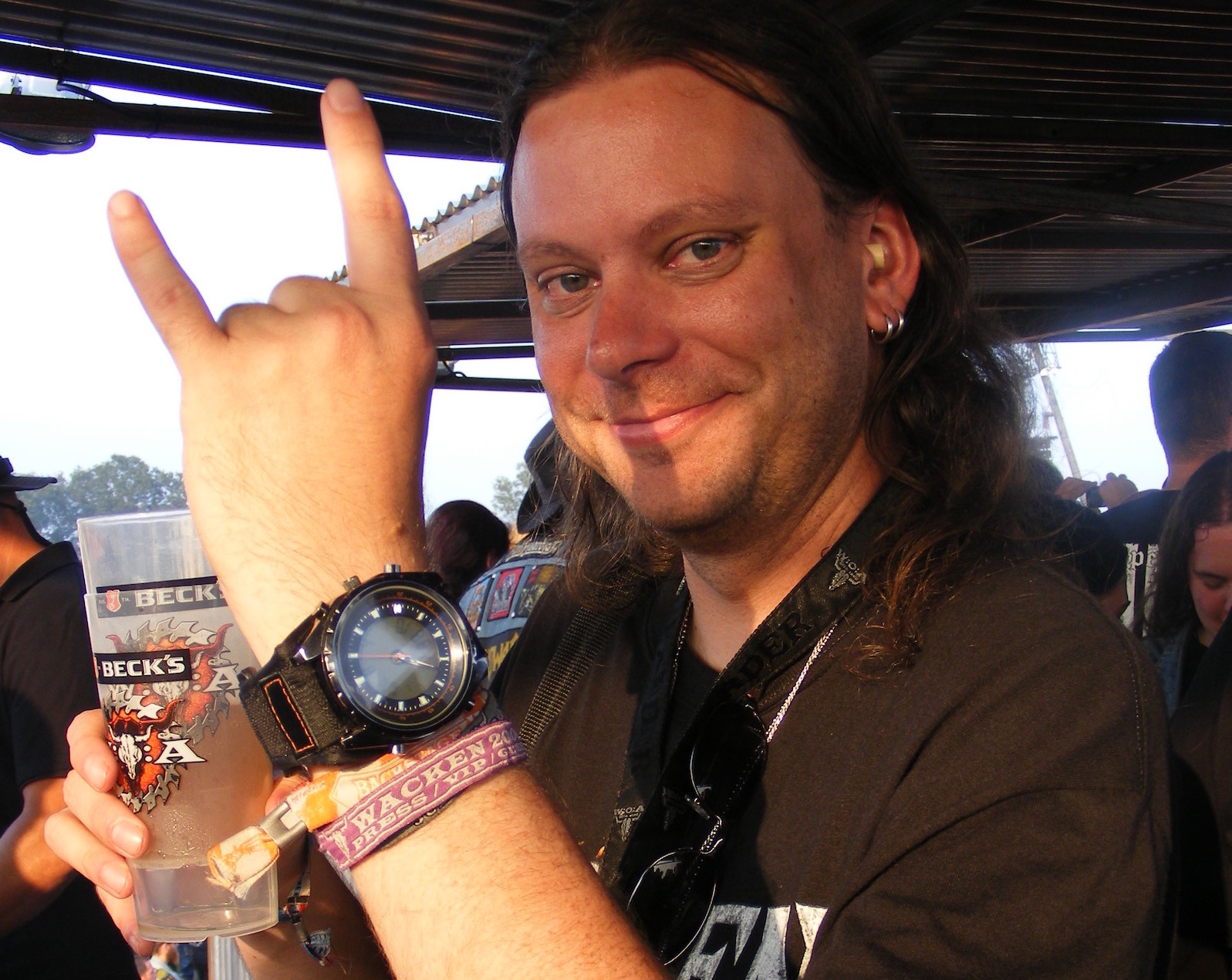
    “I was at the Wacken Open Air heavy metal festival in Germany in 2011, about the time I was deciding to become Jewish.”
    “I was at the Wacken Open Air heavy metal festival in Germany in 2011, about the time I was deciding to become Jewish.”

    What’s life like for you now that you identify as a Jew? Do you think it’s better, or worse? 

    Much better. I’m now part of that community I admired when I worked my first job. I like to say that I was born a Jew, I just didn’t know it for the first 40 years of my life. Judaism works for me because it’s about questioning God, not finding certain answers, and because the Judaic tradition judges you as a person by what you do, not by what you believe. What other religion makes it a sacrament to eat freshly baked bread and drink wine to celebrate the coming of the weekend? We’ve been “thanking God it’s Friday” for 4,000 years. The holidays are beautiful. The sense of community is meaningful. It’s made my life much richer.

    Is there any part of your life as an atheist that you miss? 

    No, I really don’t. Atheism gave me nothing of any particular value. I respect it as a belief and an intellectual tradition, but it did nothing for me, personally.

    Which 3 people or things in your life are most important to you right now? 

    My husband; fighting climate change; and understanding the past.

    Which item, bought or received after you became a believer of Judaism, has been most useful to you?

    If you’re talking about physical items, I can’t really answer that. It’s not about material items, really.

    Can you list 3 things you realised only after no longer being an atheist?

    First, being a person of faith is not a betrayal or an abrogation of reason. It doesn’t make you “less rational.” The mistaken view I had of religion when I was an atheist was that it was basically a zero-sum game, that any belief of a religious nature was tantamount to being a fundamentalist. Atheists make a lot of good critiques of fundamentalism, but they don’t really have much to say to people for whom faith is a reasonable part of a well-lived life.

    Second, most people, the vast majority, do not follow religions because they’re afraid of judgment in some sort of afterlife. Atheists often assume that religion is a form of extortion: “Follow this set of beliefs, or you’ll go to Hell!” That’s a ridiculous idea. Maybe that was true in the Middle Ages, but I don’t know anyone who seriously thinks that way now. As a Jew I don’t even believe in Hell; I have no idea what happens after death and frankly I doubt I’ll have time to worry about that until I do actually die.

    Third, most people of any faith fully recognize that religion is a construct of human beings, not of God. It was people, not God, who wrote down the Torah and created the mitzvot and established the cultural and theological features of Judaism. Going back to the story of Noah, which bothered me so much as a kid, now do I literally believe it happened? Of course not. It’s just a story, like many stories in the sacred books of most religions. No one has ever asked me to take it literally.

    A more recent photo of Sean. “My Tanakh sitting on the bookshelf, visible over my right ear.”
    A more recent photo of Sean. “My Tanakh sitting on the bookshelf, visible over my right ear.”

    What advice do you have for those currently contemplating leaving atheism?

    Don’t announce on Twitter that you are no longer an atheist—you’ll receive a ferocious tidal wave of abuse! Seriously, though, I would say that deciding whether you believe in God, or leaving the question open as a serious possibility, is not a moral failing. It won’t make you stupider or more irrational. You’re not suddenly going to wake up and want to join the Westboro Baptist Church.

    Is there anybody you presently look up to, who you would like to learn from?

    There’s a reason the wisdom of the Talmud scholars has survived for 1400 years. As I explore Judaism, I would like to learn more of that wisdom.

    Lastly, what is your perspective on life and the afterlife now? 

    As I said, what happens in the afterlife doesn’t motivate me very much. I certainly do believe there are other universes and planes of existence besides our own, but whether I’ll ever see them I have no idea. In this life I think you have an obligation to try to leave the world at least a little better than you found it. This is one reason why I work on climate change—we have to reverse the effects of climate change, urgently, and I feel like I have to contribute to that project.

    Sean hopes to continue to speak about, consult on and teach climate change and historical topics as much as he can in the future, and also put out another book soon. You can read more about him on his website, seanmunger.com or chat with him using the comment box below (“With the caveat that I do not wish to debate atheists (or anybody) on the existence of God. It’s been my experience that atheists think anyone who expresses a religious faith is eager to have this debate. In reality, no one other than atheists have any interest in having this debate. So please don’t send me demands for ‘proof’ that God exists. That’s not what this interview is about or why I did it.”).

    More interviews with people who have left habits, lifestyles and religions available here.

    Photographs courtesy and copyright of Sean Munger. Interviewer: Sy
    Sponsor or support The Exes series here.
    Want to be featured too? Tell us here.
    If you found this article useful:


  • COVID-19 Diaries: Italy, 189 Days In

    When we interviewed Eleonora from Milan, Italy 2 months ago, Italy had only just gone into lockdown, being the first place outside of China to do so. Now that the lockdown measures over there have since eased up, we checked in on her to see how she’s been. 

    “I actually realize how lucky I am, especially compared to the many people who lost everything because of the virus.”

    Q: Hi Eleonora, welcome back! How’s Milan and how are you and your mother? 

    A: Hi Sara, we are both doing well, thank you. Milan has been back to being very lively in the last couple of weeks. I guess people could not stand to stay at home any longer, especially with the warm weather 🙂

    The last time we spoke with you, you were in lockdown. What happened next in the months after and how was that experience for you?

    Lockdown actually ended on May 4th; since then people were allowed out but they only can move inside the borders of their region of residency, then on the 18th most stores reopened (thanks God, hair saloons too).

    What were the first things you went out to do when the lockdown in Italy was eased in early May? And how did it feel being able to do them?

    I had a coffee at my usual coffee place, however I remained quite cautious as I am still very concerned about my mum getting sick. 

    A photograph Eleonora took by the Milan canals' dock.
    A photograph Eleonora took just a few days ago by the Milan canals’ dock.

    What are the numbers of COVID-19 infected, recovered and demised in Milan and Italy right now?

    Numbers of new infections and deaths have lowered drastically, some virologists even mention the fact that the virus seems to cause a less aggressive disease.

    Yesterday (June 5th) new cases were higher compared to the day before; 518 vs 177. The total of healed case is 163,781, while the actual positive cases 36,976. Deaths are also very low compared to the past months; only 85 deaths yesterday. Today it is a bit better: 27 new cases and 72 deaths with 165,078 healed cases. Only about 300 people are in ICU at the moment.

    Why do you think the number of COVID-19 cases and deaths have been falling despite the easing of restrictions? What made that happen?

    Well, people are not confined in their homes any longer, but measures are still in act, such as wearing a mask outside, respect the social distancing, taking the temperature to access any store or bar or restaurant. Not being able to go out for almost 3 months helped to stop the virus spread massively and lowered the R0 index drastically.


    Other options available at Amazon.sg

    LUCK-IT will earn a tiny commission when you purchase this product.

    What’s open and what’s closed in Italy these days? Have you been going out and about regularly like before yet? 

    Concert halls, theatres, cinemas and discos are still closed as well as schools. Everything else is now open. I have not been very social actually, just a couple of happy hours sitting outside.

    Is mask-wearing mandatory? And are people still encouraged to stay home? 

    It is indeed. People are mostly asked to avoid large gatherings; who is able to work from home is highly suggested to do so, especially to avoid crowds in public transportations.

    Now that Italy is reopening to visitors from Europe, do you think there will be a second wave of coronavirus infections? Have the Italian authorities done anything to prevent the risk of that happening? 

    I hope it won’t happen obviously, however as the checks are possible only on people arriving on a plane, I am afraid cases may rise again a bit. Tourists will have to follow the same rules we are asked to follow.

    What advice do you have for those in countries still in lockdown after what you’ve been through in Italy? What should a person in lockdown be doing to best maximise the opportunity?

    Try to use this time to take care of yourself: read, train, study, develop your passions and take a chance to develop your relationship with family members.

    Another photograph Eleonora took by the Milan canals' dock.
    Another photograph Eleonora took by the Milan canals’ dock.

    Which 3 items or people are now most important to you?

    My mum and her well-being, my cats and obviously my friends. Thinking of items probably my PC and internet connection; a window on the world.

    Lastly, what else have you learned in the time since we last spoke that you didn’t know before?

    I actually realize how lucky I am, especially compared to the many people who lost everything because of the virus.

    Later this month, Eleonora will be starting an intensive Celta Course to become an English teacher. “After that I need to work in developing my business; I have planned many courses on social media marketing and the effective use of social networks to help spread my business.” You can follow her progress at her blog, livinghardtimes.wordpress.com or ask her about the new normal in Italy using the comment box below.

    Follow the latest in our COVID-19 Diaries series here.

    If you’re in a country that has been affected by the novel coronavirus and would like to share information about the situation where you’re at, do get in touch with us here.

    Other interviews with Eleonora:
    COVID-19 Diaries: What It’s Like Being In Lockdown In Italy, 109 Days In

    Photographs courtesy and copyright of Eleonora. Interviewer: Sy
    Sponsor or support the COVID-19 Diaries series here.
    If you found this article useful:


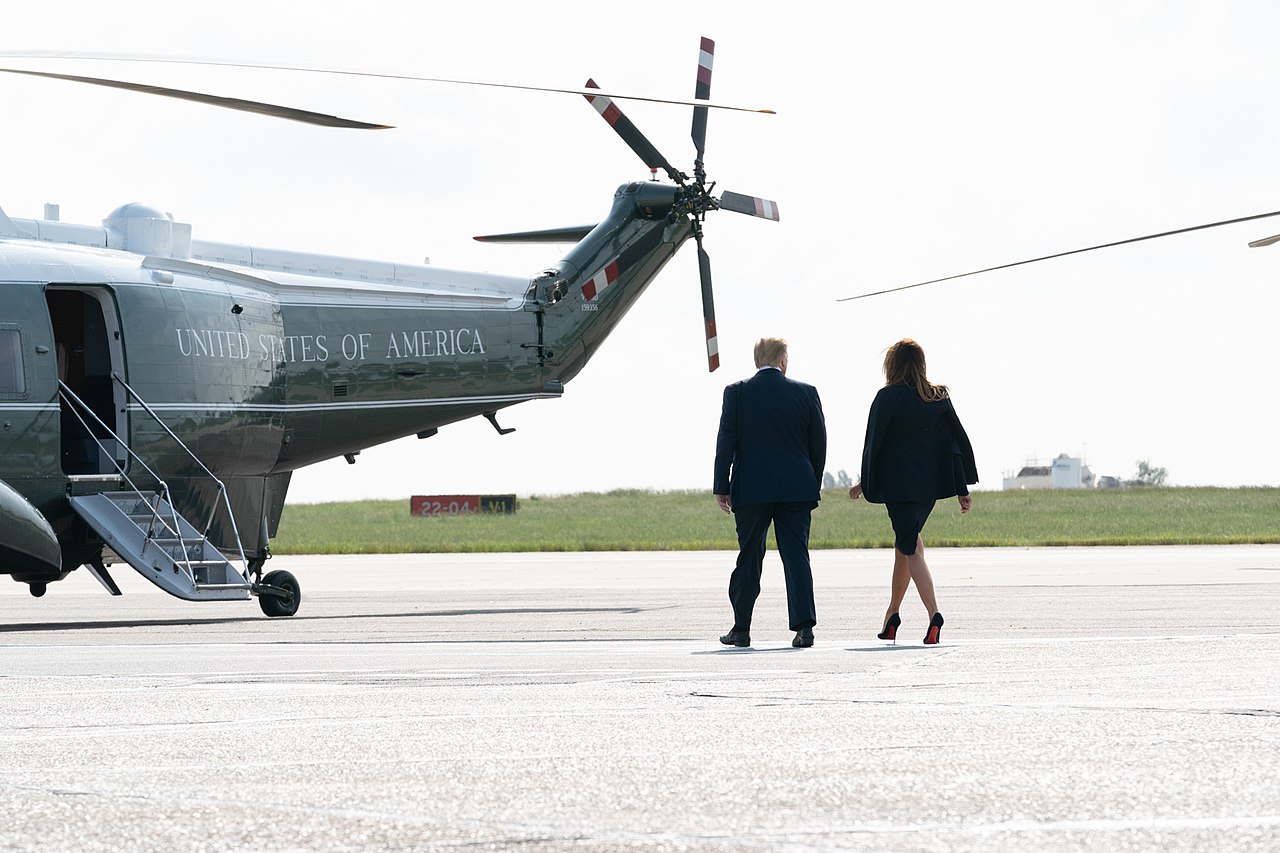
  • Melania Trump, aged 49, and her husband in 2019.

    Life Summary: Melania Trump, Foreign-born First Lady

    Melanija Knavs dropped out of university to become a model and ended up marrying the man who would become 45th President of the United States. This is the summarised life story of the present First Lady of the United States, Melania Trump. 

    1970 – Melanija Knavs is born in Yugoslavia to a car seller and textile worker. She has a younger sister and would later discover she has an older half-brother from her father’s previous relationship. 

    Age 16 – She begins modelling. 

    Age 18 – She attends the University of Ljubljana but leaves one year later to pursue a modelling career after joining an agency in Milan. She changes her name to Melania Knauss and finds success as a model in Milan and Paris. 

    Age 21 – The state of Slovenia where Melania is from becomes independent from Yugoslavia.

    Age 22 – She becomes runner up in a Slovenian women’s magazine’s ‘Look of the Year’ contest.

    Age 26 – She goes to New York where she appears on the covers of magazines and works with well-known photographers. 

    Age 28 – She meets Donald Trump at a fashion industry party in New York City. He is still married to his second wife at that time and she refuses to date him. Eventually though, they develop a relationship and she joins him for the opening of the New York Film Festival.

    Age 29 – She appears on The Howard Stern Show with Trump via phone in and discusses their sex life. 

    Age 30 – She appears in Sports Illustrated’s swimsuit edition. And poses nude for GQ magazine. She and Trump split up but later reconcile. In the years that follow they continue being seen together at high profile events.

    Melania Trump, aged 30, with her then-boyfriend at the U.S. Open 2000.
    Melania Trump, aged 30, with her then-boyfriend, Donald at the U.S. Open 2000.

    Age 34 – Donald Trump proposes with a 12-carat ring. 

    Age 35 – She marries Donald Trump on his estate in Florida. Bill Clinton and his wife Hillary Clinton are guests at their wedding. Shortly after, they appear as a married couple on Barry King live.

    Age 36 – She has her first child, Barron Trump and becomes a U.S. citizen. She also markets jewelry and develops a line of caviar-based skin care products.

    Age 46 – During her husband’s presidential bid, she gets pushed into the spotlight. Her nude photoshoot from 2000 begins circulating the internet. When she makes a speech that sounds similar to Michelle Obama’s, she is lambasted for plagiarism. Her husband becomes president and she becomes First Lady of the United States, the first to be born in a communist country and 1 of just 2 foreign-born ones. 

    Age 47 – She and Donald have their first dance as FLOTUS and POTUS. She moves into the White House but they apparently keep separate rooms there. In Slovenia, her image begins to appear on cakes, underwear and tourism advertisements. She threatens a Croatian language school with legal action after they use her image in an ad with the slogan: “Just imagine how far you can go with a little bit of English.”

    Age 48 – She launches the Be Best initiative to fight cyberbullying and sits down for a tell-all interview with ABC. She also ends up in the hospital for 5 days after an embolisation procedure. 

    Melania Trump aged 48 and her husband at the launch of her Be Best initiative.
    Melania Trump aged 48 and her husband at the launch of her Be Best initiative.

    2020 – Melania is presently 50 years of age and is still the First Lady of the United States.

    Melania Trump, aged 49, and her husband in 2019.
    Melania Trump, aged 49, and her husband in 2019.

    More life summaries available here.

    Photographs: White House, Marianique Santos, William Vasta. Compiler: Sy
    Sponsor or support the Life Summary series here.
    If you found this article useful:


  • This is Kinge.

    How It Feels To Quit Social Media, and Why I Went Back

    Kinge from Kenya first began using social media when he was 18, and by age 25, found himself spending more than 2 hours a day on it, while being greatly affected by social pressure. A year later, he decided to quit social media for good, and did just that for the next 4 years, until he decided to go back to using social media less than a year ago. We asked him why. 

    “Social pressure is real. Observing it from outside makes it even clearer. You see people around you being controlled by other people, strangers and friends on the platform, trying hard to belong, fit in.”

    Q: Hi Kevin, thank you so much for agreeing to share your experience with us. To start, could you share when you first started using social media? Which platforms were you on? 

    A: I first joined social media in 2008. Then, mobile devices’ penetration in this part of the world was limited. The network coverage was poor too, using 2G network on tiny screens mostly Motorola and Nokia phones. Internet in homes could only be found in the capital city and the other option was accessing a cybercafé, unlike today.

    The most popular platforms then were Myspace and Facebook. Their popularity was growing. I joined both, they were both website platforms then.

    What was life like for you when you used social media regularly? What routines did you have? 

    In the early years, social media was for a different use, it was a place friends could check on each other, communicate on a regular basis and share happy photos of good times spent. There were no individual profiles because they were wall based. They then changed the model to having a public and personal wall, then more platforms became popular such as Twitter, and later Instagram. 

    I loved using it in the beginning, it was plain, innocent and simple. Posting on the public wall, everything to your friends. Later, it evolved to platforms for displaying one’s lifestyles, status and a little about the general social life with friends and family. When it got to this, years just before I quit, there was always a need to keep checking and see other people posts, see what they are up to and an unnecessary drive to want to post, of places you’ve been, things you did.

    I found myself wasting several hours per day, maybe 3 hours on social media, and instead of the joy that was, the feeling changed to want which brought pressure.

    When then did you first start having doubts about having social media in your life? What triggered those doubts? 

    Around 2015 with the rise of social influencers. 

    This pushed the lifestyle and ‘notice me attitude’ a notch higher. There was real pressure among people to compare and show off. Basically the influencers’ work was to drive traffic to expensive products and destinations and get paid for that. Initially many people did not know it was a business and the desire to have such a lifestyle was fuelled with a few friends in your network managing to afford some of those lifestyles, creating pressure to most. I then saw friends go into debt-chasing lifestyles, others making bad critical life decisions trying to fit in and I will admit some pressure on my part to all this. 

    Social media felt like it was controlling the people, us, unlike in the beginning when we were using it for good, a place one would go to check on the digital album of genuine happy moments and say hello to friends in all regions of the world conveniently and affordably. 

    When then did you decide to quit social media? What pushed you to the point of no return? 

    I decided to quit social media when the intense drive for comparison grew to an unhealthy level, where someone would call to ask what you are up to, where you were during the weekend because you did not post these details on social media—the aim not to check on you but to compare. I quit because of the amount of pressure the platforms had. The amount of time wasted and loss of meaning pushed me to the limit.

    This is Kinge.
    This is Kinge.

    How does one leave social media? What did you have to do to get off it? 

    I don’t know if my method would work on others because I tend to have self-control. Basically, delete the apps now and do not install them back. Over time, you’ll forget about them and it becomes your norm. Find new activities to do with the extra time and grow the new habits; it can be reading a few chapters of a book a day, exercise, journaling or something other which will grow you gradually and bring you so much peace.  

    How did it feel in the days right after you quit social media? Did you feel any regrets or an urge to get back into it? 

    It was strange in the beginning, with a strong urge to check on what people are up to, then over time, it grows on you but you somehow find yourself distancing yourself to most of your friends. I then realised how much communication goes on social media but no, there was no regret. You can always catch up on texts and calls plus WhatsApp to me is more than a messaging app, having it is almost like a harmless social media until they introduced stories but I was still on it, just ignored the stories and I know many others who do.

    How did your life change in the 3 years you spent without social media? Was it better or worse for you—emotionally, mentally, physically and in terms of productivity? 

    My life changed for the better. I increased my productivity at work, with the extra saved time. The new habits developed grew in time and I kept adopting more and more such as reading and with more reading of self-help books, they pushed me to a new world of productivity, emotional, mental and physical growth.

     I made it a habit of working out a minimum of 4 hours a day, I began reading more books per year, applying what the books told me, growing in mind and productivity through better decisions, strategies and virtues. Socially, I valued the true friends in my life and family, my interactions became more present and aware which is really beautiful and fulfilling. 

    The act of quitting social media did not solely lead to all this, but it contributed greatly to this outcome. 

    Which 3 people or things in your life became most useful in the absence of social media? 

    1–Personal growth: I put more focus on myself without external pressure but on my own terms. 

    2–Relationships: The relationships that mattered most grew deeper. 

    3–Inner peace: Just like the peace you get not watching television news or newspapers but filtering the news that you consume, for example reading specific newspapers such as the financial newspapers because most news if not all is literally fear-based, such peace comes when you know how to use social media for you.

    Can you list 3 things you realised only after leaving social media?

    1–Social pressure is real. Observing it from outside makes it even clearer. You see people around you being controlled by other people, strangers and friends on the platform, trying hard to belong, fit in, which if not careful might make one get lost.

    2–I did not know myself the way I needed to find my purpose. This I came to realise later when I adopted the habit of reading, researching by asking the right questions and applying most of the lessons gradually. I came to realise that humans are spiritual beings having a human emotion, and our purpose is service to others. That we are one with nature although we try to live separate from our ignorance, that I am not my body by living in it, that there exist an ether which all things are connected to. I learnt of the mental laws which we are to use for a more harmonious life and the significance of service. 

    3–Social media is good only if you use it and not let it use you.  For example, the platforms exist to make a profit from people, through driving agendas and ideas, most of them consumer oriented. This is where the influencers profit from so they are using the platform for their benefit and monetary growth but the millions of their followers who are un-aware of this dynamics fall prey of the platform system.

    Why then did you end up going back to using social media?

    4 months ago, I begun blogging. Reason for blogging is to share the many timeless lessons on mind, body, spirit and personal development that I have learnt in the last few years and am still learning with the world, with the hope of changing someone’s life for the better, maybe many eventually. So, in my research of how to run a successful blog, there is an insistence of the proper use of social media to help push traffic to my blog and it being one of the most efficient methods. This is why I went back to social media, to use it to drive traffic to my blog. This time, I am the one using it and I understand how it works. 

    How does it feel to have social media back in your life? What are the pros and cons of having them back?

    I was resistant to it initially until I was able to convince myself that I am using it for me, for a purpose I am now comfortable with but I am very surprised with how monetized it is, the extreme level of algorithm uses on the platform and the same craze of having followers.

    Pros: 1–Boost of online presence for my blog. 2–Driving traffic to my blog, although only promotions works for this. 3–I can control myself while on it. I only visit for purposes of the blog, re-posts of the same, separating myself from it in a way spending less than 30 minutes on all the platforms that I use which is enough for the day’s update. 

    Cons: You have to pay to grow your traffic 

    What advice do you have for those currently contemplating leaving social media too?

    It is okay to leave if you feel overwhelmed by it. Take a break, maybe take some time to understand how it works and in that time better understand oneself. 

    Is there anybody you presently look up to, who you would like to learn from?

    Vusi Thembekwayo. I have seen his gradual growth over the years and what it has taught me is to just begin and belief. Vusi is a Global speaker, author, consultant and a dreamer. Lately I have been working to shape my career in the same direction and this is why I would like to learn from him.

    Lastly, do you think you’d be quitting social media again in the future? 

    Yes, I will. When the blog grows to a successful business, I will have someone look after the social media platforms within the business context and I will focus on other duties such as product/service advancement and strategies.

    Kinge has just written a book about good values for the young and is presently looking for a traditional publisher to get it out into the world. He is also in the midst of doing a Masters in Management and hopes to be able to launch a consultancy once he graduates. You can find out more about his progress by reading his blog, www.kevinkinge.com or ask him questions about quitting social media using the comment box below. 

    More interviews with people who have left habits, lifestyles and religions available here.

    Photographs courtesy and copyright of Kevin Kinge. Interviewer: Sy
    Sponsor or support The Exes series here.
    Want to be featured too? Tell us here.
    If you found this article useful:

  • The construction site across from Doris' apartment. "Ambulances were seen outside its gates multiple times a day for a time and buses carted away people by the busload."

    COVID-19 Diaries: Singapore, 182 Days In

    60 days ago, we interviewed Doris* (*not her real name) from Singapore because there was an outbreak of COVID-19 in the building she lived in and she was feeling unwell herself. Now that almost 2 months has passed, we checked in on her to see what’s happened since. 

    “Working from home is not so bad.”

    Q: Hi Doris, welcome back! What’s happened since the last time we spoke? How’s Singapore and how are you? 

    A: Right after we did the last interview, Singapore went into lockdown, although they didn’t call it that but the ‘COVID-19 circuit breaker’ period, which is interesting because when abbreviated to CCB it becomes a local swear word. Singapore has been in a state of standstill ever since. I’ve been generally healthy since I stopped leaving the house almost entirely but the construction site across my apartment then became a new cluster with more than 30 people infected, maybe much more.

    Were there any new infections in your building after the 3 you last talked about? And did you get tested for COVID-19 yourself?

    Thankfully, no. And no I didn’t go get tested because I just kept getting better. One morning, I woke up and I was full of energy all over again and just like that I knew I was going to be okay. 

    What are the numbers of COVID-19 infected, recovered and demised in Singapore right now?  

    Singapore has 34,861 cases in total, of which 21,699 have been discharged and 23 have died. I checked those numbers just for you. Personally I don’t check anymore because it’s just the same bad news day after day and no longer interesting.

    The construction site across from Doris' apartment. "Ambulances were seen outside its gates multiple times a day for a time and buses carted away people by the busload."
    The construction site across from Doris’ apartment. “Ambulances were seen outside its gates multiple times a day for a time and buses carted away people by the busload.”

    What’s open and what’s closed in Singapore these days? Have you gone out to work yet?

    At the point of me answering this interview, most businesses are closed, schools are on term break and no entertainment facilities are open. F&B establishments are open only for take out. Supermarkets, pharmacies and clinics are the only consumer businesses going on as before. Singapore is like a dead city right now. I haven’t gone back to work since I was first ordered to work from home by my company earlier this year. 

    Is mask-wearing mandatory? And are people still encouraged to stay home? 

    Yes. It is now illegal to go out without a mask. You can be fined $300 and up if you’re caught outdoors not wearing a mask. Everybody is encouraged to stay home. You’re not even supposed to go visit family living in different households unless you can prove that the particular family member desperately needs help. The authorities even closed all parks to make that an impossible activity as well. 


    Other options available at Amazon.sg

    LUCK-IT will earn a tiny commission when you purchase this product.

    Why do you think Singapore has been unable to get its coronavirus epidemic under control in recent days despite having been said to have done well in the early days of the pandemic? 

    At some point, I think it’s around early April or late March 2020, a shopping centre known as Mustafa Centre was identified as a cluster. Many of the patrons of that shopping centre were construction industry foreign workers from India or Bangladesh who lived in dormitories. Some time after, a few foreign worker dormitories became clusters and since then the virus has been spreading through various foreign worker dorms with no signs of stopping. 

    Most of the tens of thousands of COVID-19 infected in Singapore are now foreign workers living in dorms. They say it’s the squeezy living conditions (I heard it’s 20 men to a toilet) that made it easy for the virus to get out of control. Because many of those workers are still living in dorms, the situation is not under control. I am not sure why nobody wants to move them out of the dorms until the virus stops spreading. Is it an issue with money or space or ???

    Singapore is reopening this week. Can you tell us what will be allowed and what wouldn’t be?  

    Some essential businesses like pet care, hairdressing and repair services will be allowed to reopen like before, but not dining or retail. Marriages and wakes will resume, capped at 10 attendees per session. Religious venues will be open but only 5 households may worship at any one time with safe-distancing measures. Most significantly, schools will reopen, with most students going to school on a bi-weekly basis while graduating cohorts will get to go to school all the time. You are now allowed to visit your parents or grandparents, but each household can only have 1 visit per day and 2 visitors each time.   

    What do you miss most about life before this pandemic? 

    Dining out. I have a crazy relentless craving for sashimi and special broth ‘beauty’ hotpot right now because they are not meals you can cook at home.

    Which 3 items or people are now most important to you?

    Family (pets included), food delivery apps, computer with built-in camera.

    Lastly, what else have you learned in the time since we last spoke that you didn’t know before?

    Social gatherings via Zoom just don’t really work. Working from home is not so bad. I know some people can’t stand it but me and others like me will certainly miss this part of the pandemic most when it one day ends.   

    Doris has a full schedule of grooming (pets included) and repair services booked this week for when Singapore reopens. She looks forward to being able to colour her hair again most of all. 

    Follow the latest in our COVID-19 Diaries series here.

    If you’re in a country that has been affected by the novel coronavirus and would like to share information about the situation where you’re at, do get in touch with us here.

    Other interviews with Doris:
    COVID-19 Diaries: What It’s Like Living In A Building With 3 Confirmed Cases

    Photographs courtesy and copyright of Doris. Interviewer: Sy
    Sponsor or support the COVID-19 Diaries series here.
    If you found this article useful:


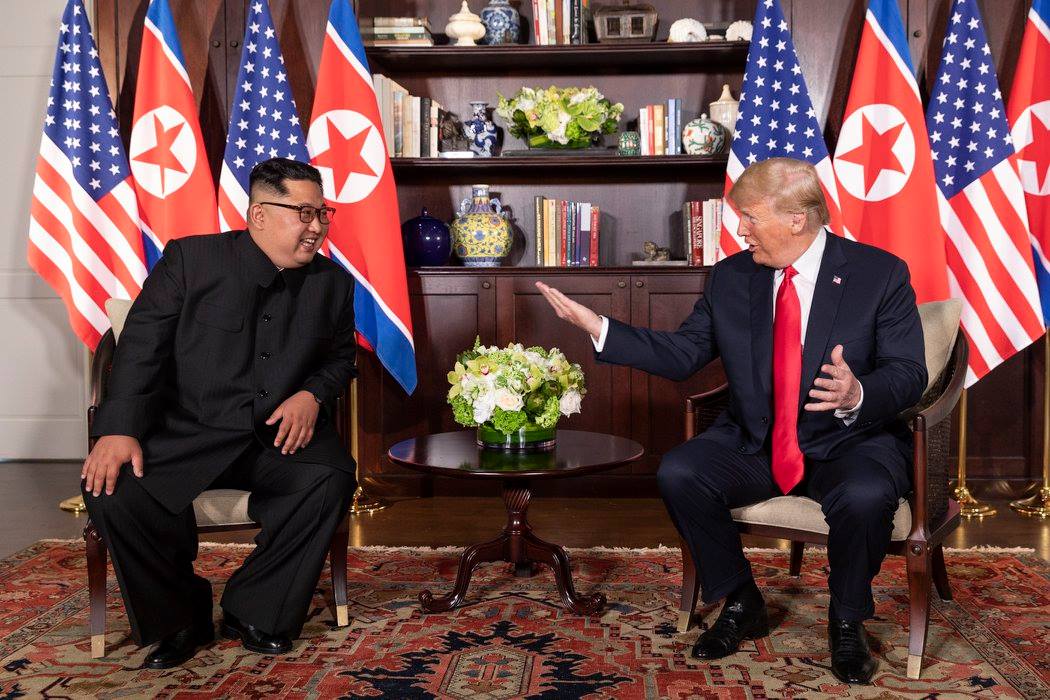
  • Donald Trump, aged 72 and North Korean leader, Kim Jong Un in Singapore.

    Life Summary: Donald Trump, Billionaire President

    Donald Trump was born into wealth and would spend most of his life getting his family name into the public eye through being a businessman, personality and President of the United States. This is a brief timeline of the life of the man who would have his businesses declare bankruptcy 6 times and yet remain known as a billionaire.

    1946 – Donald is born the fourth child to real estate tycoon Fred Trump in Queens, New York, U.S.A. His mother is an immigrant from Scotland. They live in an upscale community. He would later have a younger brother. 

    Age 13 – For misbehaving in school, he is sent off to a military academy. He does well there, becoming a star athlete and student leader. 

    Age 18 – He graduates from the military academy and enrols into Fordham University. In summer, he works at his father’s real estate business, then uses college and medical reasons to get out of having to fight the Vietnam War.

    Donald Trump aged 18 in the New York Military Academy yearbook.
    Donald Trump aged 18 in the New York Military Academy yearbook.

    Age 22 – He transfers to the Wharton School of Finance at the University of Pennsylvania and graduates with a degree in economics. He joins the family business.

    Age 25 – Trump takes over his father’s company—Elizabeth Trump & Son—and renames it Trump Organization. 

    Age 27 – The Justice Department alleges that the Trump Organization discriminates against African Americans wanting to rent apartments from them. The Trump Organization agrees to rent more apartments to African Americans and buys more property in other parts of the U.S.A.

    Age 30 – Trump takes over the bankrupt Commodore Hotel and develops it into the Grand Hyatt. He gets a 40-year city tax abatement for this project.

    Age 31 – Trump marries model Ivana Winklmayr. He makes her vice president of design in the Trump Organization. His first child Donald Jr is born. 

    Age 33 – Trump builds Trump Plaza (an apartment) and Trump Tower (an apartment and luxury shopping centre) with The Equitable.

    Age 34 – Trump opens the Grand Hyatt New York. He builds a casino in Atlantic City in partnership with Holiday Inns Corporation called Harrah’s at Trump Plaza.

    Age 35 – Trump’s brother, a pilot, dies of alcoholism at age 43. Because of that, Trump decides never to drink alcohol or take drugs. His second child Ivanka is born.

    Age 38 – His third child Eric is born. 

    Age 39 – His businesses lose money for the year. They will continue to lose money for the next 9 years. He buys over Holiday Inn’s share of Harrah’s at Trump Plaza and renames it Trump Plaza Hotel and Casino. He then buys over a Hilton Hotel casino and renames it Trump’s Castle. He also buys a resort in Florida called Mar-a-Lago Club and puts his wife in charge of running the property. 

    Donald Trump aged 39 with his wife, Ivana.
    Donald Trump aged 39 with his wife, Ivana.

    Age 40 – Trump takes over the rebuilding of the Wollman Rink in Central Park and gets a lot of publicity for doing so while simultaneously screwing over the contractor who did it for him for free. He buys over The Equitable’s stake in Trump Tower.

    Age 41 – He publishes The Art of the Deal about how he successfully makes business deals. 1-4m copies of this book will be sold.  

    Age 42 – He acquires The Plaza Hotel.

    Age 44 – Trump divorces Ivana, telling a reporter that he “doesn’t want to be married to a woman who’s had children.” His 3rd casino—the Trump Taj Mahal—opens and costs him a large amount of debt. 

    Age 45 – The Taj Mahal declares bankruptcy and Trump has to sell his airline, yacht and large portions of his casino holdings.

    Age 46 – His other 2 casinos declare bankruptcy, and The Plaza Hotel in New York too. 

    Age 47 – Trump’s 4th child, Tiffany is born. He marries her mother, actress Marla Maples 3 months later. 

    Age 49 – He forms a publicly traded company called Trump Hotels and Casino Resorts to protect himself from personal liability. He buys and renovates The Trump Building. Trump’s businesses finally stop losing money.

    Age 50 – He becomes the owner of numerous beauty pageants including Miss Universe. 

    Age 51 – He files for divorce from Marla Maples. His father transfers ownership of his buildings to his 4 surviving children, including Donald. 

    Age 53 – Trump’s father dies and leaves behind an estate of $250-300m. 

    Age 54 – Trump runs for president as a Reform Party candidate. Trump’s mother dies. 

    Age 55 – He completes Trump World Tower and begins construction on Trump Place. He then plans to build Trump International Tower in Chicago as the tallest building in the world, but after 9/11, changes his mind and decides to make it the second tallest building in Chicago.  

    Age 57 – The Apprentice—a reality show where contestants compete to work in Trump’s organisation—begins broadcast. Trump will go on to host the show for 14 seasons and get paid $213m for it. He also begins selling his name to real-estate businesses not built by himself and will end up with 30 such properties worldwide. 

    Age 58 – Trump Hotels and Casino Resorts goes into bankruptcy. Trump and his siblings sell their father’s apartments for $700m.

    Age 59 – Trump marries model Melania Knauss. He opens Trump University to offer courses in real estate, asset management, and wealth creation. The “University” is notified by New York State authorities that the word “university” in the business violates state law. 

    Age 60 – His fifth child, Barron William Trump is born. 

    Age 63 – Trump Entertainment Resorts declares bankruptcy again but Trump International Tower in Chicago is doing well. Trump gets on Twitter but his tweets are mostly written by his staff.

    Age 64 – Trump Organization takes over the management of the Central Park Carousel. Trump University is renamed Trump Entrepreneurial Institute after authorities alert them of the violation of the word “university” again. 

    Age 65 – Trump buys a winery in Charlottesville, Virginia. He starts using Twitter more, writing more tweets of his own. He joins the “birther” movement questioning whether Barack Obama was born in the U.S. Civil lawsuits related to Trump University are filed in court claiming that Donald Trump and his companies made false claims and defrauded consumers.

    Age 69 – Trump runs for president again, this time as a Republican. After he makes anti-immigrant remarks, NBCUniversal, NBC and Univision severe their contracts with him, bringing an end to The Apprentice and forcing him to sell his beauty pageants. 

    Age 70 – During the campaign, it is discovered that Trump’s real estate empire is $650m in debt. Trump defeats Hillary Clinton in the elections and is elected President of the United States. He hands the running of Trump Organization to his sons Donald Jr and Eric but keeps a stake. His lawsuits related to Trump University are finally settled. 

    Age 71 – Trump is sworn in as president of the United States. 

    Donald Trump, aged 72 and North Korean leader, Kim Jong Un in Singapore.
    Donald Trump, aged 72 and North Korean leader, Kim Jong Un in Singapore.

    2020 – Trump is presently 74 and is still the president of the United States.


    Also available at Amazon.sg

    LUCK-IT will receive a tiny commission when you purchase these products, at no additional cost to you.

    More life summaries available here.

    Photographs: Seth Poppel, Yearbook Library. Compiler: Sy
    Sponsor or support the Life Summary series here.
    If you found this article useful:

  • Why I Left Islam, and How

    Norsham Mohd was born into a Muslim family but began doubting Islam at age 18 and within a year stopped practicing Islamic rituals entirely. She is now 56 years old, still an ex-Muslim, and reached out to us to share her story. 

    “I asked her a lot of questions hoping to get some answers but I never got any. Instead all I got was negative remarks about the kafir and the non-believers.”

    Q: Hi Norsham, thank you so much for agreeing to talk about your experience with us. To start, can you share how you ended up as a Muslim?

    A: Both my parents are Muslim. So I’m a Muslim by birth.

    What was life like for you as a Muslim? What was compulsory, what was forbidden and what was most important?

    Growing up there was nothing much to say. We were taught how to pray and fast. We were also send to the local madrasah at a nearby mosque for our religious classes and reciting of the Quran. My mother too often would teach us recitation at home.

    When then did you first start having doubts about Islam? What triggered your doubts?

    When I was about 18 years old while in nursing school. I saw people in pain, abandonment and neglect. I was disturbed by what I saw. I turned to my religious teacher—I used to attend religious classes at the neighbourhood, twice a week and always in the evening—I asked her a lot of questions hoping to get some answers but I never got any. Instead all I got was negative remarks about the kafir and the non-believers.

    How long did it take you to go from doubting Islam to deciding you were no longer a believer? What pushed you to the point of no return?

    Didn’t take very long but I cannot tell you the time frame. By the time I graduated from nursing school, say 2 years, I stopped practising. I was not happy with what I saw and hear especially during the religious sermons.

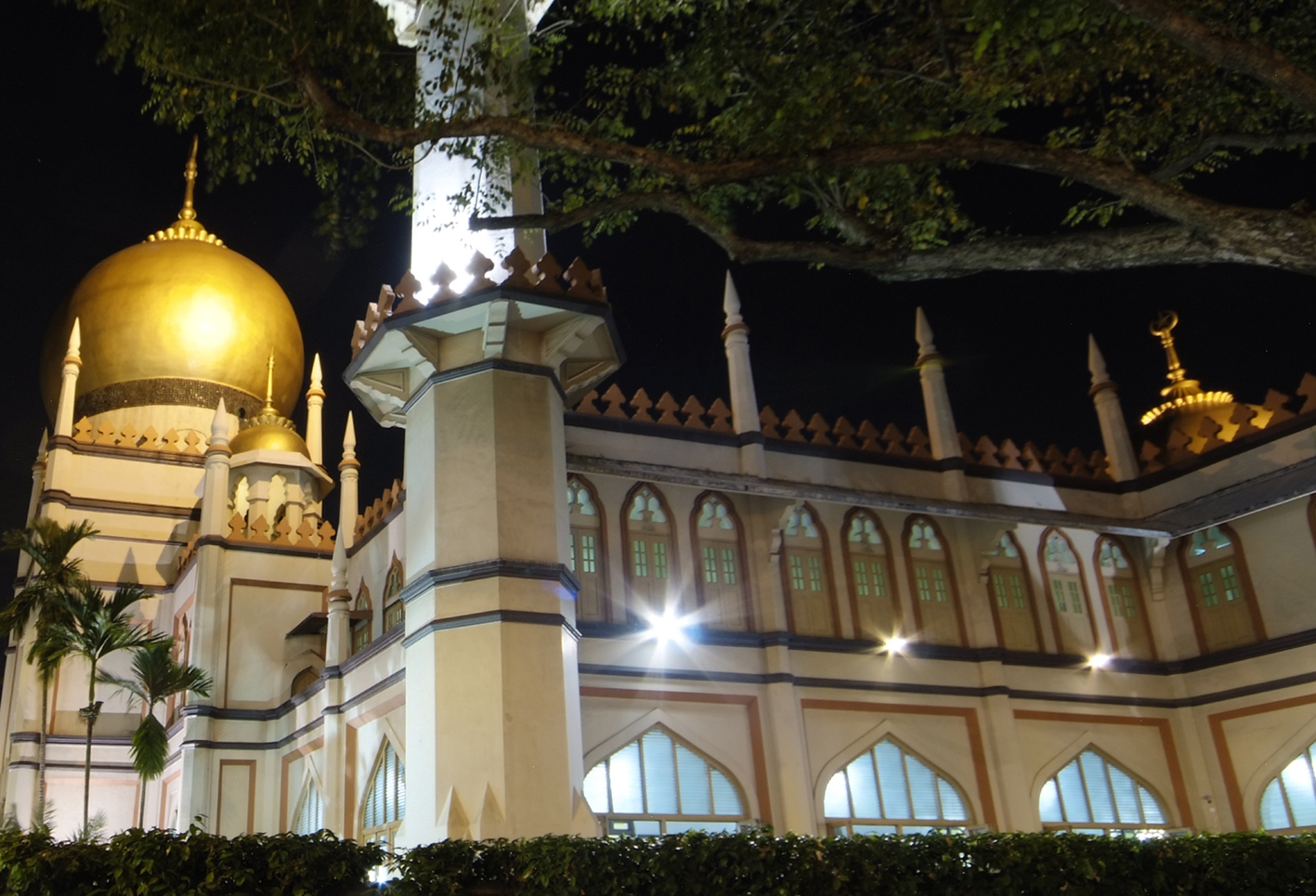
    Mesjid Kassim along Changi Road where Norsham used to attend religious classes.
    Mesjid Kassim along Changi Road where Norsham used to attend religious classes.

    How does one leave Islam? Did you have to do anything special to become a non-Muslim?

    Well in Singapore, you can renounce legally, that is you need to do a Statutory Declaration, then submit the SD to MUIS [Majlis Ugama Islam Singapura (Islamic Religious Council of Singapore)]. And MUIS will give you a cert/documents to certify that you are no longer a Muslim and have your name taken out from the Muslim registry.

    How did the people closest to you react to your decision to leave the religion? And how did you react to their reactions?

    They’re not happy obviously. They stop inviting me to their outings or to their houses. They don’t talk as much to me as before. How I react? I understand their reaction and honestly I don’t blame them. I am seen as a traitor… a person who betrayed their faith. There is nothing much I can do about it because I do not depend on them and my life does not revolve around them. 

    What’s life like for you now that you’re an ex-Muslim? Do you think it’s better, or worse?

    My life is good now that I’ve moved away from the faith. Nobody will force me to do something I don’t like. And yes it’s for better.

    Which 3 people or things in your life are most important to you right now?

    My family, including my siblings, My cats and my business. 

    Which item, bought or received after you stopped believing in Islam, has been most useful to you?

    Nothing. Can’t think of any now or perhaps my baju kurongs. I still treasure them. 

    Can you list 3 things you realised only after leaving Islam?

    1–You can be good without religion.
    2–You can still have your peace of mind without religion. 
    3–Stories told to me were so ridiculous, I am wondering how come I believed in them when they were related to me initially.

    Is there anybody you presently look up to, who you would like to learn from?

    My husband.

    Lastly, what is your perspective on life and the afterlife now?

    My perspective on life: I do not want to spend my time asking “What is the purpose of my life”. Instead I would say: this is how my life has become, this is what I have, what can I do now to make my life more meaningful and productive?

    About the afterlife: I do not believe there is an afterlife.

    Norsham hopes to be able to help other ex-Muslims in the future, “especially those still in the closet”. You can try to find her on Facebook through her profile page “Norsham Mohd”, or ask her questions about leaving Islam using the comment box below.  

    More interviews with people who have left habits, lifestyles and religions available here.

    Photographs courtesy and copyright of Norsham Mohd, William Cho. Interviewer: Sy
    Sponsor or support The Exes series here.
    Want to be featured too? Tell us here.
    If you found this article useful:


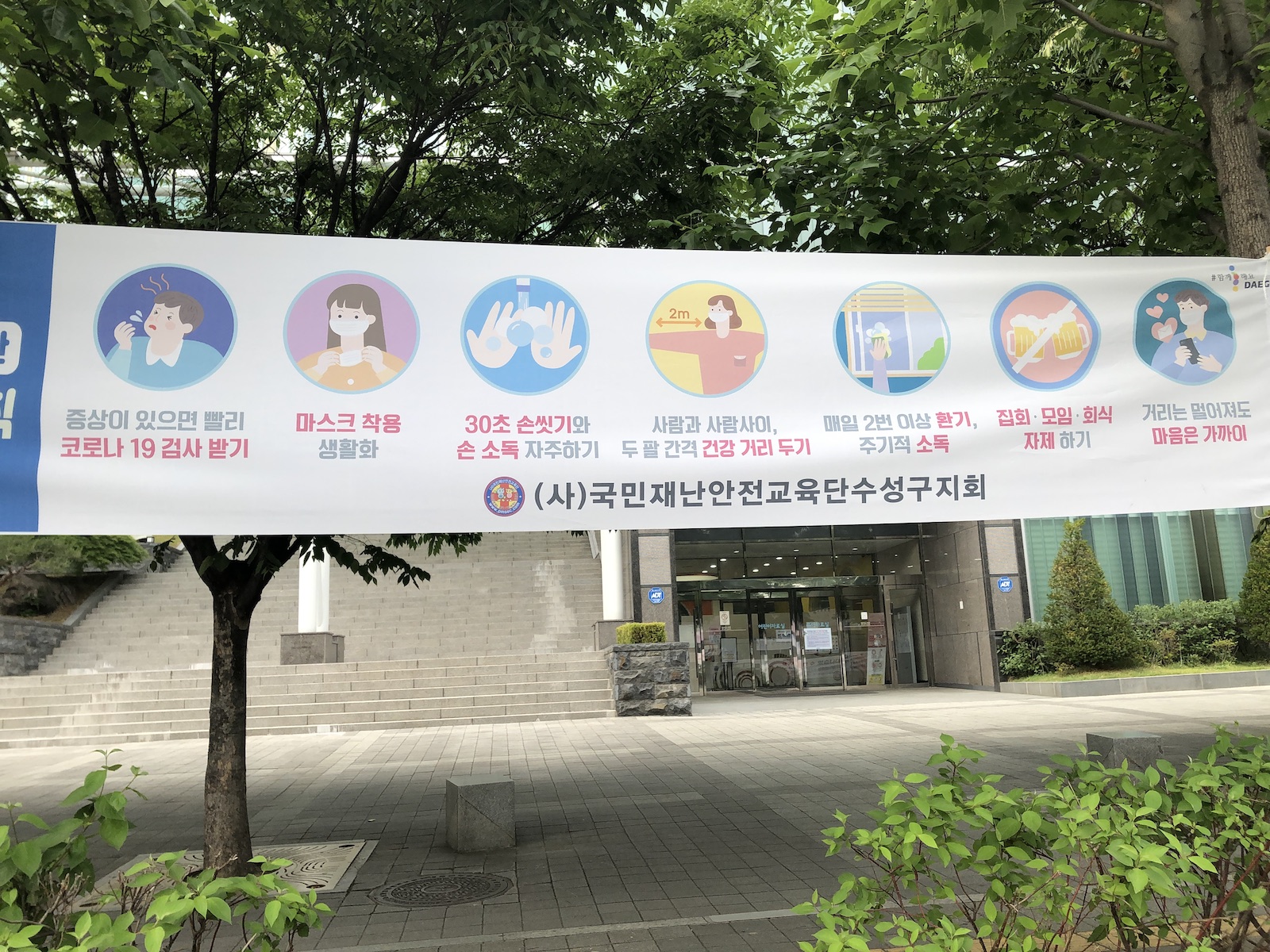
  • A banner recently on the streets of Daegu.

    COVID-19 Diaries: Daegu, South Korea, 167 Days In

    Ariel Soon from the United States was living alone in Daegu when it became the epicentre of the coronavirus outbreak in South Korea. Now that 78 days have passed since then, we asked her what’s changed. 

    “Even when the daily cases went down to zero in Daegu, everyone here was still wearing masks.”

    Q: Hi Ariel, welcome back! What’s happened since the last time we spoke? How’s Daegu and how are you? 

    A: Daegu is doing a lot better now. Korea is slowly easing its social distancing rules, although even at the beginning, I always went out to get food, so it really hasn’t affected my daily living. I live alone and don’t know anybody here, so it’s been easy for me to practice social distancing. 

    What are the numbers of COVID-19 infected, recovered and demised in Daegu right now? I know in mid-April there were zero new cases reported there for the first time. Have there been more new cases since then?  

    I would read online the daily count every day, but they haven’t been reporting the cases in Daegu on a daily basis anymore. I guess because it’s not as newsworthy. Yes, there have been only 2 or 3 cases, if any, per day lately.

    What’s open and what’s closed in Daegu these days? Have you gone out to work yet?

    I have been working remotely. There were always some convenience stores, shops and restaurants open during the outbreak, but now, almost all of the businesses have reopened.  The schools here are still closed, but they are slowly going to allow students to return to school in phases. Banks and government offices are open, but I tried to go to the local library the other day, and since I don’t know any Korean, I don’t know if it was open or not. There was someone standing in front of one of the many entrances (it’s a huge building) and she told me something in Korean. I didn’t think it was enough to make a fuss about, so I just left.

    How sports is done in Daegu these days.
    How sports is done in Daegu these days.

    Is mask-wearing mandatory? And are people still encouraged to stay home? 

    Yes. They won’t let you inside the store if you are not wearing a mask. There are signs everywhere. I thought it was so funny that even when the daily cases went down to zero in Daegu, everyone here was still wearing masks.  If this was America, everyone would just fling their masks aside by now, but Koreans are extra cautious. They are afraid of the second wave and are really vigilant about it.  That’s why some people still stay at home.

    How do you think South Korea managed to get the outbreak in Daegu under control? What helped most? 

    From my observations—I hope I don’t offend anyone by saying this—South Korea is a relatively small, homogeneous country. This makes managing a pandemic easier, I guess, when everybody carries similar views and will comply with the rules for the greater good. It’s also easier to trace and track down those that infected people have come into contact with. The privacy issues that exist in America don’t really exist here, so it’s easy to send texts and call them because that information is readily available. There was a small outbreak reported this past week all the way in Seoul. It seems to have started at a nightclub neighbourhood and everybody freaked out about it, but they were able to use credit card transaction details and cell phone data from the cell towers in the area at that specific time to track down the people who could have been potentially infected. Luckily, as of now, it doesn’t seem that the outbreak is as big as they feared.  I’m hoping that is the case.  


    Other options available at Amazon.sg

    LUCK-IT will earn a tiny commission when you purchase this product.

    Now that there’s been a new outbreak in Seoul in recent days, how do you think things will change again in South Korea? Do you think they will be able to get the second wave of outbreaks under control again?  

    I hope so! That’s the thing about Korea. They have never let their guard down this whole time. They have been continuing to wear masks and provide hand sanitizers everywhere. This is all from my limited observation, of course, and I am sure there have been a lot of group gatherings here, but this is just from what I’ve seen by walking down the street. 

    You’re from U.S. so what are your thoughts on the situation there in comparison to the situation in South Korea?  

    Obviously, S. Korea’s handling it much better than the U.S.. A note for back home: Now is not the time to be fighting about individual rights. We are all in this together.

    More on how sports is done.
    More on how sports is done.

    What advice do you have for those in the U.S. after what you’ve seen and been through in Daegu?  

    Wear a mask.

    Is there anything South Korea can learn from the U.S. response to COVID-19, you think?

    What not to do.

    Lastly, what do you miss most about life before this pandemic? 

    I know how fortunate I am, given all those who are suffering out there during this time, but the reason why I moved over here was to explore and travel. I wish I had more opportunity to do that, but I know that there are more important things to be concerned about right now.

    A banner recently on the streets of Daegu.
    A banner recently on the streets of Daegu.

    Ariel intends to continue living in South Korea. You can read more of her thoughts on living through a pandemic at her blog, woundedcat.wordpress.com, or ask her about the situation in South Korea using the comment box below. 

    Follow the latest in our COVID-19 Diaries series here.

    If you’re in a country that has been affected by the novel coronavirus and would like to share information about the situation where you’re at, do get in touch with us here.

    Other interviews with Ariel:
    COVID-19 Diaries: The Situation In Daegu, South Korea, 89 Days In

    Photographs courtesy and copyright of Ariel Soon. Interviewer: Sy
    Sponsor or support the COVID-19 Diaries series here.
    If you found this article useful:


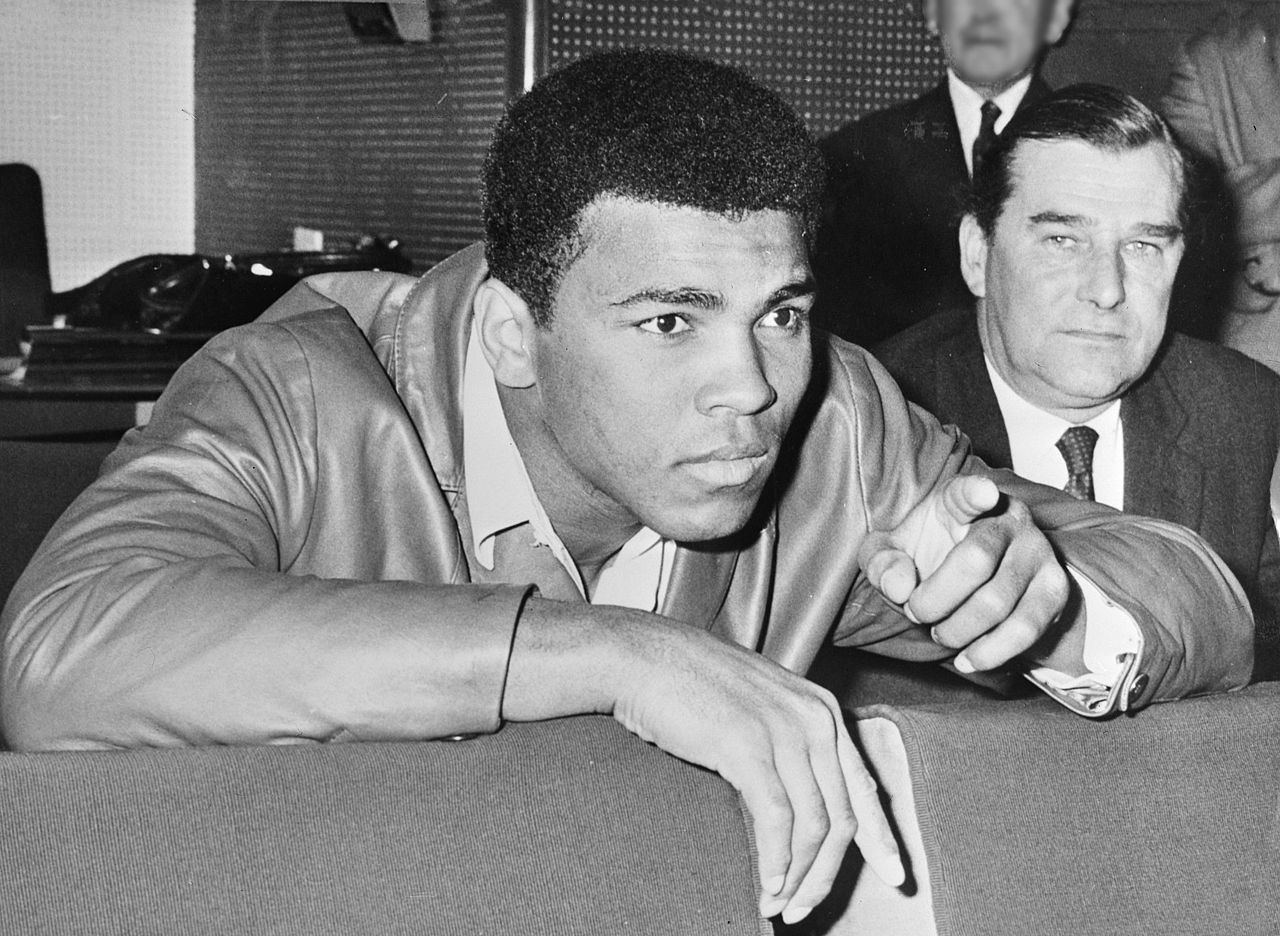
  • Muhammad Ali aged 24.

    Life Summary: Muhammad Ali, The Greatest Boxer

    As a child, Muhammad Ali put boxing before school and ended up as a professional athlete. As an adult, he put religion before patriotism and ended up with a prison sentence. This is the timeline of the life of the man celebrated as one of the greatest boxers of all time. 

    1942 – Cassius Marcellus Clay Jr. is born in Louisville, Kentucky, U.S.A. to a sign painter and a housewife who sometimes worked as a cleaning lady for extra money.

    Age 1 – His brother is born. 

    Age 12 – His bicycle is stolen. The policeman he makes the report to gives boxing lessons at the local youth centre and asks him to join. He begins boxing and wins his first amateur boxing fight. He begins devoting all his time to boxing and his grades at school suffer. 

    Age 14 – The policeman gets Cassius on the TV show, ‘Tomorrow’s Champions’. Cassius begins training under a trainer who teaches him the science of boxing. He wins the Golden Gloves tournament in the lightheavyweight class. 

    Age 17 – He wins the National Golden Gloves Tournament of Champions and the Amateur Athletic Union’s national title. 

    Age 18 – He competes in the Olympic games and wins the gold medal in the lightheavyweight division. He gets a contract with the Louisville Sponsors Group for this—the biggest contract ever signed by a professional boxer.

    After – He wins more boxing matches, using a style that combines speed with punching power.

    Muhammad Ali aged 21, with his competitor after a fight.
    Muhammad Ali aged 21, with his competitor after a fight.

    Age 22 – He competes in and wins the heavyweight championship of the world. In the same year, Cassius begins to follow the Black Muslim faith after being inspired by Malcolm X and changes his name to Cassius X. The Muslim leader Elijah Muhammad then gives him the name Muhammad Ali which means “beloved of Allah”. He marries Sonji Roi. 

    Age 23 – Muhammad Ali defends his world champion title with a first round knockout. He would go on to defend his title 8 more times. He divorces his wife because she refuses to adopt Muslim customs. 

    Age 25 – He marries his second wife, 17-year-old Belinda Boyd. Ali is drafted to fight the Vietnam War. He refuses to go, claiming his religion does not allow him to serve. Because of this, the New York State Athletic Commission and World Boxing Association suspends his boxing license and strips him of his titles. He is also sentenced to 5 years in prison for violating Selective Service laws but appeals and remains free while the appeal is going on.

    Muhammad Ali aged 24.
    Muhammad Ali aged 24.

    Age 27 – His first child, Maryum is born.

    Age 28 – He goes back to the ring where he wins again but loses the next championship to Joe Frazier who had replaced him as heavyweight champion. His conviction is finally overturned by the courts. His second wife gives birth to twins, Jamillah and Liban. 

    Age 30 – His 4th child, Muhammad Ali Jr is born. 

    Age 32 – Ali regains his title of heavyweight champion at last after beating the guy who had defeated Joe Frazier for the title. He then defeats Joe Frazier in another 2 fights. 

    Age 33 – Sports Illustrated names Ali ‘Sportsman of the Year’. He will go on to defend his title 10 more times. 

    Age 34 – He divorces his second wife. 

    Age 35 – Ali marries Veronica Porche who he had already been travelling with while married to his second wife. They would go on to have 2 daughters.

    Age 36 – He loses his title when defeated by Leon Spinks but regains it 7 months later by defeating Spinks—making him the first boxer in history to win the heavyweight championship 3 times. 

    Age 39 – Ali fights his 61st and last fight, which he loses. He spends the rest of his life working on social causes and politics. 

    Age 42 – He is diagnosed with Parkinson’s disease. 

    Age 43 – He tries to win the release of 4 kidnapped Americans in Lebanon. 

    Age 44 – Ali divorces his third wife and marries his fourth and final wife, Yolanda who is the daughter of his mother’s friend. They would go on to have a son together. 

    Age 54 – He is chosen to light the Olympic torch during the opening ceremonies. 

    Age 56 – He is chosen to be a United Nations Messenger of Peace. 

    Age 57 – Ali appears on a Wheaties cereal box.

    Age 59 – After 9/11, he appears in announcements to Muslim countries to inform them that the U.S. remains friendly to those of the Muslim faith. A film about his life is released. 

    Muhammad Ali aged 59 with his wife, Lonnie.
    Muhammad Ali aged 59 with his wife.

    Age 63 – Ali wins the Presidential Medal of Freedom from U.S. President George W. Bush. The Muhammad Ali Center opens in his hometown. 

    Age 73 – He contracts pneumonia and is hospitalised for severe UTI. 

    Age 74 – Ali is hospitalised for a respiratory problem and dies in hospital. His family throws him a 3-day memorial service in his hometown which he planned himself. Tens of thousands of people attend the service. His pallbearers are Will Smith and former heavyweight champions Mike Tyson and Lennox Lewis. He is buried at Cave Hill National Cemetery in Louisville. 

    More life summaries available here.

    Photographs: Dutch National Archives. Compiler: Sy
    Sponsor or support the Life Summary series here.
    If you found this article useful: