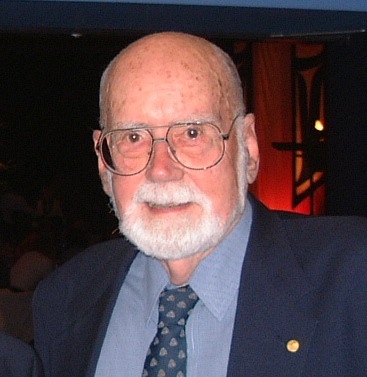
Edward Donnall Thomas was a Nobel Prize winning haematologist known for his work in making bone marrow and blood stem cell transplantation a treatment for leukaemia and other blood conditions. His work has saved and improved the lives of hundreds of thousands of people and has advanced medical knowledge. Here is a brief summary of how he lived his life…
1920 – Born to the second wife of a 50-year-old general practitioner in a small town in Texas.
Childhood – Grew up in that small town with mediocre academic results all the way up to university.
University – He enrols in the University of Texas, studies chemistry and chemical engineering. Money is short so he takes on various jobs. Waits tables in a girls’ dormitory and meets his wife, Dorothy Martin who is training to be a journalist. They marry and will go on to have 3 children together.
Age21 – He graduates with a Bachelor’s degree.
Age23 – He graduates with a Master’s degree and enrols in Harvard Medical School.
Age26 – He graduates with a doctorate and does his residency at Peter Bent Brigham Hospital in Boston. There, he meets Joseph Murray who becomes a friend and colleague, and they would pursue research on transplants, bone marrow and leukaemia. His wife becomes a lab technician to support the family and they begin working closely together.
Age35 – He becomes physician-in-chief at the Mary Imogene Bassett Hospital, a teaching hospital in New York associated with Columbia university.
Age43 – He moves his lab to the United States Public Health Service in Seattle.
Over the course of his career – His research on haematology, animal models and rigorous studies in humans reduces the painful reaction patients can have to a transplant. His bone marrow transplant research aids leukaemia and anaemia sufferers and encourages further research in those fields.
Age 45-69 – He is a member of numerous medical boards and committees with medical institutions like the National Institutes of Health, Leukaemia Society of America, National Cancer Institute, American Society of Hematology and Academie Royale de Medecine de Belgigue.
Age 54-71 – He gives lectures at medical institutions all around the world.
Age 55-78 – He wins many awards from medical associations.
Age 70 – He wins the Nobel prize in Physiology or Medicine along with his friend, Joseph Murray, and also the National Medal of Science.
Age 71-76 – He receives honorary doctorates and memberships from various universities around the world.
Age 92 – He dies of heart failure, survived by his wife and children.
Icypriest, who prefers to be known only by his online handle, is a 30-year-old Wuhan resident and postgraduate student at a university in Wuhan. He is presently in lockdown in his home together with his parents, aged 63 and 59, and is only allowed to go out once every 5 days. We found our way past quarantine restrictions, oceans, military blockades, walls and viral risks to ask him what being quarantined in the epicentre of a global viral outbreak is really like.
“We are more tense than afraid.”
Q: Hi Icypriest, thanks for connecting with us all the way from Wuhan. When did you first hear about the coronavirus and what did you think of it then?
A: I heard about it in early December. I sensed the situation could be serious, so I told my parents to consider it as a “potentially cautious event”. We didn’t think of it as a serious event back then.
When did you start becoming more concerned about the virus? What triggered that?
I saw the official announcement by the Wuhan government that 27 people were infected. Then I became more aware of the virus.
How did you find out that Wuhan was going to be locked down and quarantined? What were you doing before that and what did you do right after that?
The lockdown was announced by the government several days before so we had time for preparation. We had already stocked enough food for the Chinese New Year [CNY] since most businesses were closing down during those weeks, so we just bought some face masks for potential outdoor needs. After the lockdown, we didn’t change much in our lives except to keep exercising indoors since we have a treadmill in our home.
Icypriest’s present stash of food: “(1) Cabbage, (2) Common Yam Rhizome (山药), (3) Bunching Onion (大葱), (4) Garlic, (5) Onion, (6) Potatoes. There is also ginger and chicken, pork, yogurt and frozen dumplings kept in the fridge. We also have a giant bag of rice (10kg).”
How did you feel about no longer being able to leave?
It doesn’t feel mandatory since most traditions during CNY are home-based except for visiting relatives, but we cancelled that because of the virus. We understand it’s a special occasion which won’t stop us from all indoor activities.
How long have you and your family been in lockdown thus far? What is daily life for your family like?
We have been staying home for 12 days. Since we limited our outdoor activities to none, we stay in bed every day until 10 and reduce the daily 3 meals to 2: one at about 11am and one at 5pm. We go to bed at about 12. The only differences between lockdown life and our previous CNY lives is: 3 of us are exercising daily on the treadmill, and we check the news about the virus frequently. Nothing else has changed much.
How do you get food, water and medical supplies right now? And how long do you think you can last with the stock you have at home at the moment?
We stocked masks in advance and cancelled our family trip during CNY. As we have the tradition of stocking food during CNY, we didn’t make extra preparations food-wise. Our stock can still last for about 2 weeks.
What will you do if your supplies run out?
The lockdown now is not a strict one—we can go out for emergencies and supplies, provided body temperatures are taken before going out.
The scene from Icypriest’s home window.
Are emergency services (police, fire and ambulances) still in operation? What would you do in the case of an emergency right now?
All of the emergency services are still in operation. As almost everybody is in lockdown, I guess that police stations are not that much in need now. But if there’s an emergency, especially health-wise, there’s an appointed taxi to every xiaoqu(小区) [land plot] in Wuhan for that.
I’ve read that residents in Wuhan have been ordered not to leave their homes. Do you know what might happen if someone did leave their home?
As far as I know, all the quarantine protocols in Wuhan are not strict. But most people are aware of the situation and they are not intentionally challenging the law system.
How afraid are you and your family of the 2019-nCoV? How many people do you personally know who’ve been afflicted with the coronavirus?
We are more tense than afraid. I’m a little worried about the mental state of my parents but they clarified that they are not afraid or worried now. I don’t know anyone infected with the virus but I have an aunt, a friend’s mother and a friend working as nurses in different hospitals. They report daily on the situation and we’re informed about the virus and themselves.
What would you and your family do if one of you did develop the symptoms of the 2019-nCoV coronavirus?
If one of us have the symptoms we would voluntarily report to the community health centre. Since the big hospitals are stacked, the government has divided the responsibility to various communities. If they think it’s nCoV then we will be sent to designated hospitals.
When do you think you and your family will be returning to work and school? Which month will that be?
In my own optimistic view, I think things will start turning back to normal by 3-6 weeks. Traditional work and school days after CNY began a week before.
How are people in Wuhan and Hubei planning to get by without going out onto the streets to work? 手停口停的人怎么办 aka what would those with financial constraints do for income?
This is what I mainly worry about. People may be laid off if businesses go months without income, and all of them still have bills to pay. But I learned from the news that several cities are reducing taxes and rents to ease the burdens of people. I haven’t heard of similar news in Wuhan but I hope it would come soon.
Since we’re unable to go outside, my laptop is the most important thing in the world—it provides Internet, a work environment, most entertainment, news sources and communication. Headphones—because music is one of my main hobbies and it can be simultaneously enjoyed when I’m on the treadmill. The third is hand sanitiser—mostly not for hygiene but for easing our inner tension.
“Entertainment: guitar and Kalimba. My parents and I also enjoy TV shows.”
Lastly, is there anything you regret not doing earlier?
I regret not meeting all my friends for my birthday—I miss them. As my birthday is always during Chinese New Year, it was a great opportunity for me to meet many of them at once. But this year I hesitated and postponed my party plans.
Icypriest is presently still on lockdown inside his home but will be more than happy to answer any questions you may have for him if you leave them in the comment box below.
Next week, we ask him more about his feelings surrounding the racism that has appeared in the wake of the coronavirus, what he thinks of being barred from entry by numerous countries including Singapore, and what readers can do to help him and the rest of China get through this crisis. Stay tuned.
Photographs courtesy and copyright of Icypriest. Interviewer: Sy Sponsor or support the 2019-nCov Diaries series here. If you found this article useful:
4 days ago, just 4 days after Singapore (from which LUCK-IT operates) banned all travellers from China, Singapore announced its very first locally-transmitted cases of novel coronavirus infections—2 Singaporeans in the service industry who had attended to a vacationing group of China nationals from Wuhan (ground zero of the coronavirus outbreak).
2 days ago, just 2 days after the first Singaporeans had been infected, the very first case of locally-transmitted novel coronavirus infection of unknown origin was announced. The infected had not travelled to China or come into contact with any of the previous cases in Singapore.
Yesterday, 3 more locally-transmitted cases of unknown origin were announced, bringing the total number of cases within Singapore to 33. Panic-buying of groceries immediately ensued.
Today is the 69th day since the very first person known to be infected with the coronavirus in Wuhan reported feeling ill (on 1 Dec 2019), and a mere 16 days since the first case within Singapore (a 66-year-old tourist from Wuhan) was announced.
Singapore is now the country after China with the most number of confirmed cases. Masks have been out of stock for weeks and although the government has given each household 4 masks for use in emergencies, there is no information on when masks will be available for purchase again.
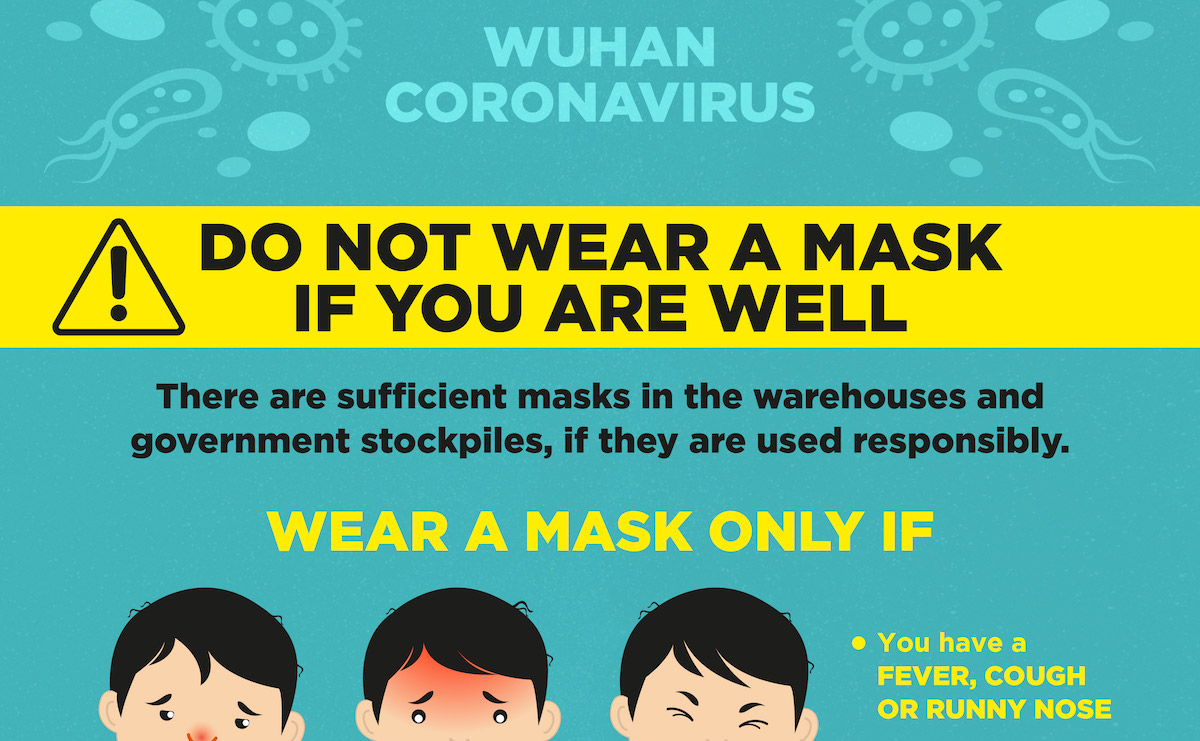
Advice from Singapore’s Ministry of Health, announced 10 days ago on 29 Jan 2020.
From here on, we are going to do a series called ‘2019-nCoV Diaries’ to document the developments of this new virus in Singapore and other affected countries—to assist with the understanding of this developing global emergency, and also for use for future outbreaks.
To start, tomorrow at 3pm, we’ll publish an interview with a Wuhan resident who’s been in lockdown in his home for 12 days. Beyond that, we’ll publish new interviews at 3pm on days when they are available.
You can read the whole 2019-nCoV Diaries series here.
If you’re in China right now or any other country that’s been affected by the novel coronavirus and would like to share information about the situation where you’re at, do get in touch with us here.
If you’d like to volunteer your time to help us gather more interviews with those affected by the coronavirus, you can also get in touch with us here.
Image Source: Ministry of Health, Singapore. Compiler: Sy Sponsor or support the 2019-nCov Diaries series here. If you found this article useful:
Born to a working-class family in an immigrant ghetto in Pittsburgh, Andy Warhola capitalised on his artistic gifts and went on to make a name for himself in New York while building a remarkable portfolio of work in the fields of art, music, film-making, publishing and television. This is a brief summary of how he did it…
1928 – Andy Warhola is born in a back bedroom of a tiny apartment in Pittsburgh’s immigrant ghetto. His father, Andrej Warhola, works in construction and is mostly out of town during the week. His mother, Julia, is a home-maker who likes going to church more than material things. He has two older brothers, Paul and John, with whom he shares a bed. The family speaks Po Nasemu at home and Andy would grow up speaking broken English for a while.
Age4 – Andy enrols in first grade but gets hit by a girl on the first day and goes home in tears, refusing to go back.
Age6 – The Warholas have moved. Andy starts school at Holmes Elementary School which misunderstands Andy’s single day in first grade as a full year and places him in second grade when he enrols. All though grade school, his English improves, his art ability is recognised, and most of his friends are girls.
Age8 – The Warholas move to a more middle-class neighbourhood called Oakland. Andy catches rheumatic fever and is away from school for months. He enjoys his time at home, lying in bed with comics and colouring books.
Age9 – His teacher recommends him for a gifted children’s art class on Saturday mornings at the Carnegie Institute, which he would attend for the next 4 years. There, he is exposed to great art and also children from Pittsburgh’s upper class. He stands out as an artist even then.
Age13 – Andy’s father dies from hepatitis-related peritonitis. Andy develops puberty-related acne, especially around the nose. After school, he hangs out at the local drugstore and draws people.
Age16 – His mother Julia is diagnosed with colon cancer. She goes for a colostomy and Andy looks after her after school.
Age17 – Andy joins the Carnegie Institute of Technology. When World War II ends, he nearly gets kicked out to make way for returning veterans but creates a big scene and cries and gets another chance. Meantime, he takes on a part-time job working for his brother, peddling fruits and vegetables door to door. When not selling fruit, he would stand on his brother’s truck and draw sketches of the neighbourhood women and children which he would sell for a quarter. That sketchbook gets Andy back into school and he wins the school’s award for finest work by student done over the summer and gets an exhibition of his drawings.
Later in college – He develops a unique drawing technique using a blotted line and soon attracts followers among his fellow art students. He decides to go into commercial art after school and concentrates on building a portfolio for that purpose. He also gets a part-time job at Joseph Horne, a top department store in Pittsburgh, getting paid to skim through fashion magazines to get ideas for window displays.
Age20 – He enters a provocative painting into a juried art show titled ‘The Broad Gave Me My Face but I Can Pick My Own Nose’—a portrait of a young man with a finger in his nose. The judges argue over this painting and it gets publicity even when retitled as ‘Why Pick On Me’ and hung in the show of “rejects”. He also becomes the only male to join the modern-dance club. Meantime, he is also member of the film club and art director of Carnegie Tech’s literary magazine.
Age21 – He graduates with a BFA. His friend Philip Pearlstein decides to go to New York and gets a cheap sublet on the Lower East Side. Andy joins him, boarding the train with his Carnegie Tech portfolio and $200.
First week in New York – He goes to see the art director for Glamour magazine and she ends up giving him 2 assignments. On his first assignment, the credit line misspells his name as ‘Warhol’ and that becomes the name he uses from then on.
Over the next years – Andy moves multiple times, living with various roommates, mostly dancers. A friend from Carnegie Tech introduces him to New York’s homosexual underground. He develops a big crush on award-winning writer Truman Capote and begins stalking him.
Age24 – His mother moves in with him and shares his bedroom. Andy has his first art exhibit at the Hugo Gallery titled ‘15 Drawings Based on the Writing of Truman Capote’. Nobody buys anything and he gets only 1 lukewarm review in the press. His commercial art career, on the other hand, is flourishing. He is becoming one of the highest paid illustrators in America.
Age25 – He and his mother move to a bigger apartment with two bedrooms but he continues to share a bedroom with his mother. They have many cats who reproduce and end up with even more cats. Andy gets his first boyfriend, Carl Willers, who he meets at the New York Public Library.
Age27 – He has an operation on his nose to reduce it but it does not change his appearance. Since he is starting to lose hair, he buys a wig and it eventually becomes part of his signature style. He hires a paid studio assistant and gets his mother to do lettering for his commercial work. He gets his friends to work for free and rewards them with dinners and paid nights out in the town. He starts selling his commercial rejects at Serendipity’s—an ice-cream parlour.
Age28 – Andy and television set designer friend, Charles Lisanby, make a trip around the world. They go to the Far East, Italy, France and England. Andy hopes for more with Charles but Charles doesn’t feel the same way.
Age32 – Andy buys a four-storey town house on Lexington Avenue. His mother moves along with him. He is now top of the commercial art sector, both professionally and financially. He turns his sights to establishing himself as a serious artist but is rejected by galleries and goes into a depression. His mother nags him to send money home to his brothers who have growing families in Pittsburgh.
Age34 – Andy paints soup cans. Irving Blum, a young art dealer from Los Angeles, offers him his first show at the Fergus Gallery in Los Angeles. Blum himself ends up buying the whole set of soup cans for $1000. (He would sell them in 1999 for $7million.)
Afterthat – Andy continues doing pop images of soup cans and Coke bottles. He turns to silk-screening to make the process faster. When Marilyn Monroe commits suicide, he does a series of portraits on her. People start dropping by the townhouse day and night to hang out and Andy welcomes them. He gives his mother her own apartment on the street level of the house. When his brothers and family visit, he doesn’t introduce them to his friends. Out of his house, he attends events, pushing himself to get noticed. With the help of assistants, he produces a staggering amount of groundbreaking work.
Laterthatyear – Gallery owner Eleanor Ward gives Andy his first show in New York. It sells out. He gives up commercial work.
Age35 – Andy gets interviewed by the media and becomes famous. He creates his Disaster series—made of disturbing images like an electric chair— which becomes popular in Europe but not in America. He creates the ‘16 Jackies’ collection right after President John Kennedy is assassinated. He has a new boyfriend, stockbroker turned poet John Giorno.
Age36 – Andy buys a Bolex 8mm and starts filming people. He goes on a road trip across America to Los Angeles. When in Hollywood, he shoots films and accumulates a growing entourage of young people eager to be in his films. His collection of Elvis portraits, exhibited at Fergus Gallery, however, does not sell and gets dismal reviews.
Back in New York – He moves into a warehouse space on the 5th floor of a loft building. He calls it The Factory and hires an off-Broadway lighting designer to design it. He starts entertaining at The Factory instead of his town house and attracts members from the swinging drug culture. He starts doing his famous ‘Screen Tests’. In April, a mural he is commissioned to do causes a furor and he does a show of Brillo boxes at Stable Gallery that does not sell. November, for his first show in the Leo Castelli Gallery, he presents his Flower series. In December, he wins the Sixth Annual Film Culture Award.
Age37 – Andy meets socialite Edie Sedgwick, invites her to the Factory and starts putting her in his films. With her as his acquaintance, the upper class begins inviting him to their parties. In May, he brings her to the opening of his Flower series at Sonnabend Gallery in Paris and announces his retirement from painting. They have a falling out because he doesn’t pay her.
Age38 – Andy meets the Velvet Underground and adds Nico to their band. They play together for the first time at a dinner for the New York Society of Clinical Psychologists. They then play at the Dom for a month then takes the show on the road. 6 months later, the unprofitable band dies out. His artwork is not profitable either. He makes a movie about The Chelsea Hotel and its inhabitants—‘Chelsea Girls’—and that becomes the first of his movies to make money.
Age39 – To make extra money, he and his friends travel around college campuses giving lectures. The students are unimpressed and Andy eventually hires an impersonator to stand in for him. He meets Fred Hughes, makes him president of Andy Warhol Enterprises and gets him to sell his artworks while he focuses on making his next film, ‘Lonesome Cowboys’.
Age40 – Andy gets shot by Valerie Solanas, founder and sole member of SCUM (Society for Cutting Up Men) but survives. The Factory’s open-door policy ends. He lets Paul Morrissey take over making films. He meets Jed Johnson.
Age41 – Andy starts Interview magazine. He also starts doing commissioned portraits at $25,000 per portrait.
Age42 – His mother goes for a visit in Pittsburgh, has a stroke and never returns to New York. He designs a cover for the new Rolling Stones album. He does a series of artworks of world leaders.
Age44 – His mother dies in a nursing home at age 80.
Age46 – Andy movies into a new town house with Jed Johnson and their dachshunds. He starts compiling dated Time Capsules (made of his stuff) that he says will be valuable someday and auctioned off. He goes to compile about 600 such cartons.
Age47 – He publishes ‘The Philosophy of Andy Warhol’.
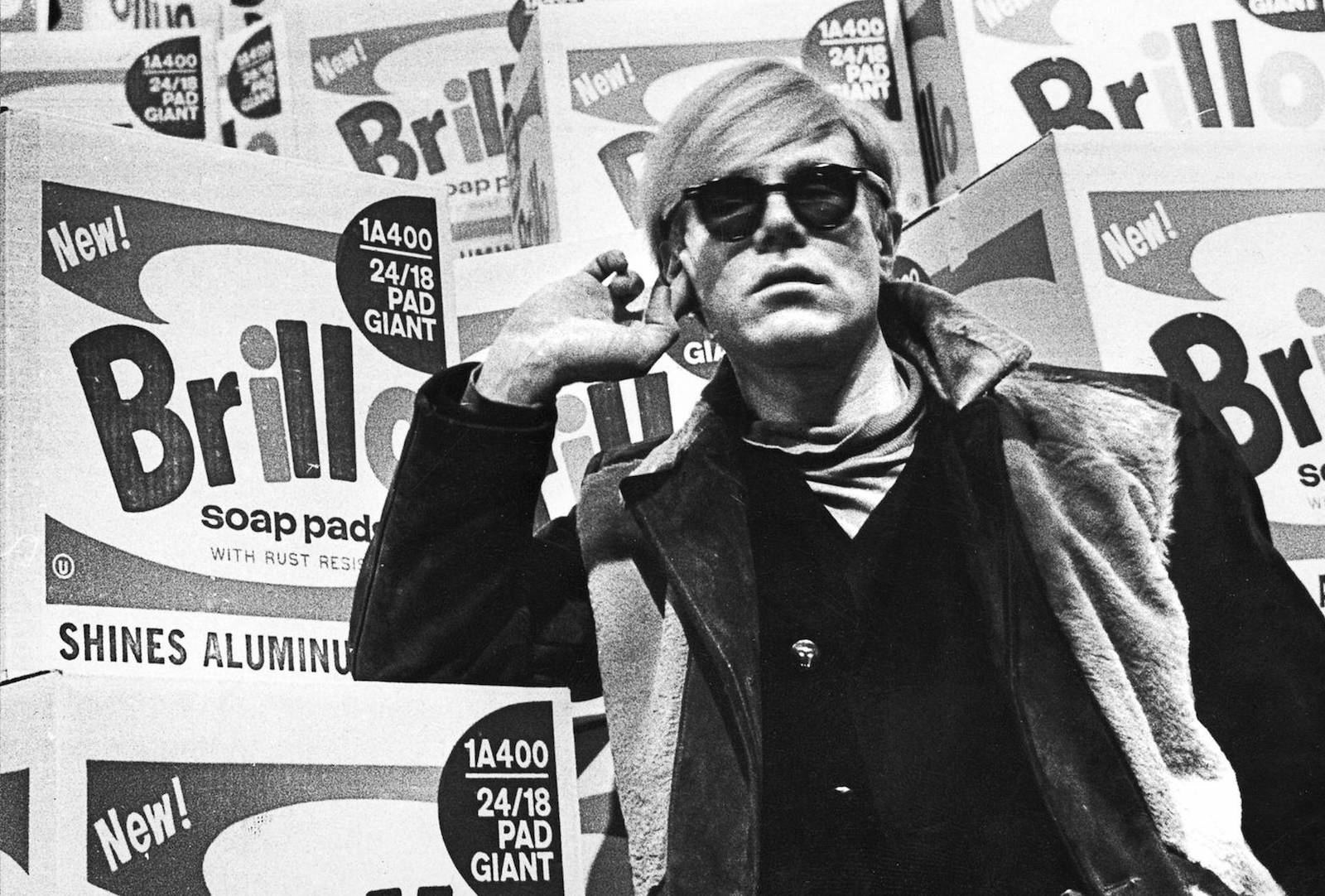
Andy Warhol at one of his exhibitions, aged 47.
Age49 – He paints his Hammer & Sickle still lifes, skull paintings and 103 shadow paintings.
Age50 – ‘Bad’ the movie flops and Andy stops making movies altogether. His relationship with Jed Johnson (who directed the film) also ends.
Age52 – He produces a show on cable television called Andy Warhol’s TV. He publishes a book with Pat Hackett called ‘POPism: The Warhol Sixties’.
Age53 – He does the series ‘Myth, Dollar Signs, Crosses, Guns and Knives’. His work is exhibited around the world.
Age54-58 – 23-year-old graffiti artist, Jean-Michel Basquiat charms Andy and they soon start painting together. They fall out eventually. Andy then exhibits his ‘Oxidation’ paintings from 1978—made from getting the Factory crowd to pee on canvases, and signs up with a modelling agency that books him for fashion shoots and magazines. Companies now commission him to glorify their products. He does more art and travels the world. Andy Warhol Television is shown on cable TV. He does his last series of self-portraits. He spends Christmas and Easter helping out a homeless shelter. He does his last great series based on ‘The Last Supper’.
Age 58 – Andy Warhol dies due to complications from gallbladder removal surgery.
Andy Warhol’s grave at St. John the Baptist Byzantine Catholic Cemetery in Pennsylvania, U.S.A.
1994, 7 years after his death – The Andy Warhol Museum opens in Pittsburgh. He goes on to become the subject of numerous retrospective exhibitions, books and films.
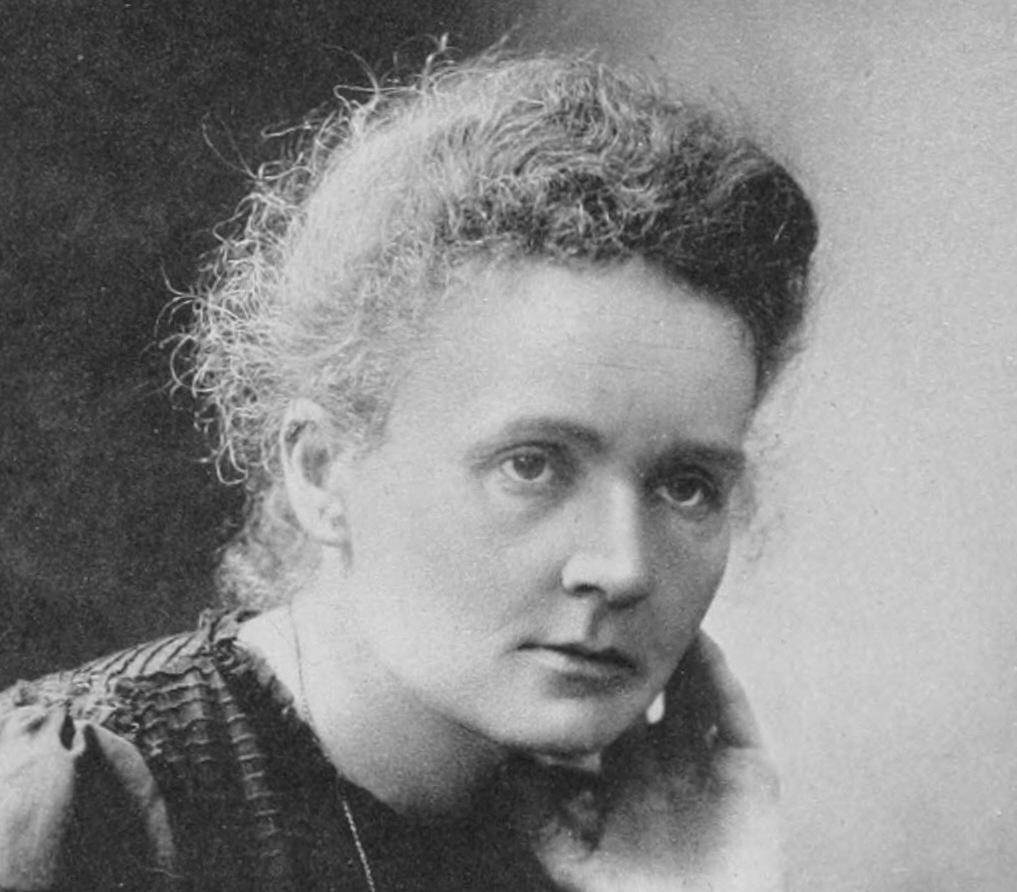
Maria Sklodowska from Poland, daughter of a school teacher, would grow up to defy gender norms, make headways in science and win 2 Nobel Prizes. This is the timeline of how her remarkable life played out…
1867 – Maria Sklodowska is born in Warsaw, Poland when it is part of Russia. Her mother is a school principal. Her father teaches science. She is the youngest of 5 children.
Childhood – Her father speaks 5 languages and she learns to speak them too. She is the smartest girl in class. At home however, her mother falls ill with tuberculosis and has to go away for a year to recuperate. Her father is fired from his job and starts a boarding school for boys in his home to provide for the family. A few years after, Maria’s sister, Zosia, dies of typhus and her mother dies too. Her father sends her away to a tough Russian school.
Age15 – Maria graduates top of her class and is awarded a gold medal for being the school’s best student. Her father sends her to live with relatives in the countryside. She would spend a year relaxing there and interacting with Polish culture.
Age17 – The family has only enough money to send one child to college at a time and her brother, Jozef, is in medical school. Maria starts going to a secret university for Polish women, started by a woman named Jadwiga Dawidowa, which has classes all over the city.
Age18 – Her sister, Bronia, goes to the Sorbonne university in Paris which accepts women. Maria takes a job as a governess and goes to live with a rich family in the countryside. Maria falls in love with the oldest son of the family but her employers forbid their son to marry her because they think she is not good enough for him.
Age20 – She works as a governess for another family and eventually returns home to study at the secret university again.
Age24 – Her sister graduates and invites Maria to Paris to live with her new husband and her while Maria attends the Sorbonne. Maria arrives in Paris and begins to use the name Marie—French for Maria. 6 months after arriving, she moves out and rents a single room in an apartment that is closer to the Sorbonne, where she studies science. She improves her French and spends most of her time studying.
Age26 – Marie graduates first in class, ahead of all the men, one of two women who graduated that year. She gets a scholarship to study another year and she picks math.
Age27 – She graduates second in class. Her professor, Gabriel Lippmann, finds her a job in a lab at Sorbonne—she is hired to study magnetism and steel. Her friends introduce her to a Frenchman named Pierre Curie who had invented the electrometer she uses to measure electricity. They fall in love.
Age28 – Pierre and Marie marry and go on a honeymoon bicycle trip that lasts all summer. When they get back home, they resume work.
Age30 – They have a baby girl named Irene. Pierre’s father, whose wife had just died, moves in to take care of his granddaughter and Marie goes back to work. She sets up a lab with Pierre in a storage room at the school he taught and begins to study rays coming from different metals. While testing a rock called pitchblende, she discovers a new element which she names ‘Polonium’—after Poland, her homeland. She also invents the word ‘radioactivity’ for the rays metals give out.
Marie Curie with husband, Pierre, and daughter, Irene.
Age31 – Marie gives her report to Gabriel Lippmann, her former professor, who reads it out to the Academy of Sciences in Paris. Being a woman, she is not allowed inside the Academy’s rooms. The scientists are not particularly impressed. They are not sure if she was right. Marie then gets to work trying to prove that polonium exists. In the process, she discovers another new metal which she names ‘radium’. She and Pierre ask the Sorbonne for a bigger, better laboratory and get instead a building with no heating that had been previously used by medical students to cut up dead bodies for experiments. For the next 3 years she works in that lab, writing reports about her research.
Age35 – Marie has extracted pure radium. She writes a report about her discovery and uses it to get her PhD from the Sorbonne. They win a Nobel Prize for their discovery and become famous. Newspapers start writing about them, especially Marie—a female scientist! The Sorbonne gives Pierre a job as a professor. Because radium glows in the dark, people presume it would cure illnesses and start using it in daily life.
Age37 – Marie and Pierre have another baby girl named Eve. With the prize money from the Nobel prize, they start enjoying life and take vacations.
Age39 – Pierre dies from being hit and getting his skull crushed by a horse-drawn wagon. The Sorbonne gives Marie Pierre’s teaching job, making her the first woman to ever teach at the Sorbonne. Hundreds of people line up to see her at her first day as a professor. She would do this for the next few years.
Over the next few years – She moves her children to a house in the country not far from Paris so they would be able to play outside. In the meantime, she has an affair with a married man, Paul Langevin, from her circle of friends, who has 4 children.
Age44 – She is nominated to be the first woman to be elected into the French Academy of Sciences but is not elected. In the meantime, her affair with Paul is picked up by the newspaper and a scandal breaks out. She wins another Nobel Prize but after the news reports, write again to her requesting she decline it. She refuses to decline it and receives her second Nobel Prize, presented by the king of Sweden. After that however, she goes into hiding for the next few years, leaving her children with a governess and using fake names to travel. When she goes back to work eventually, she forms a partnership with her daughter, Irene.
Age47 – The Curie Institute is built for Marie’s research but World War I breaks out before it can open, Germans invade France. Marie invents a small X-ray machine that can be carried to injured soldiers. She and Irene drive these machines to battlefield hospitals.
Marie Curie (3rd from left), at age 54, with daughters and a friend.”
Age59 – Irene, graduated and now a scientist working with Marie, marries Marie’s lab employee, Frederic Joliot. Marie, growing older and sicker from all the radiation in radium, would spend her last years working on using radium to treat cancer.
Age66 – Marie gets weaker. Her other daughter, Eve, takes her to the mountains in France to rest but it doesn’t help. She dies and is buried near Pierre in the small French village where he had grown up.
1995, 61years after her death – France digs up Marie and Pierre’s caskets and moves them to the Pantheon where France’s most famous people are buried.
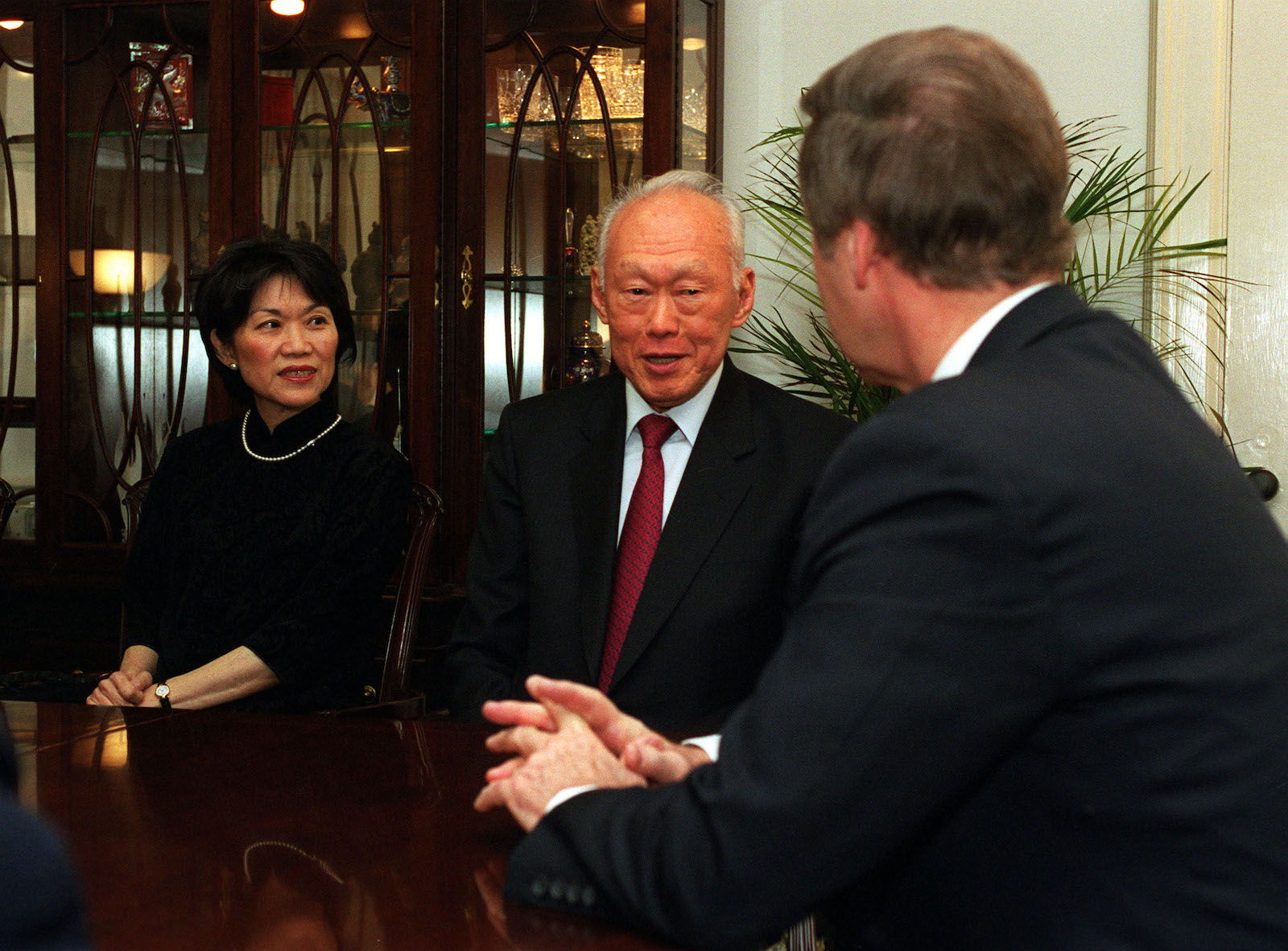
Lee Kuan Yew was a brilliant student born in an underdeveloped but wealthy British colony called Singapore. At 35, he became prime minister of the colony and went on to lead the country to independence and economic growth all the way into his 60s. This is the timeline of his personal story…
1923 – Lee Kuan Yew is born in a large two-storey bungalow in Singapore. His father, Lee Chin Koon, is 20, a rich man’s son. His mother, Chua Jim Neo is 16, also from a wealthy family. Their marriage was arranged and Kuan Yew would end up with 3 younger brothers and 1 younger sister.
Age 5 – Kuan Yew’s family is no longer wealthy. His parents’ families lost their fortunes in the Great Depression and his father is now a storekeeper. He lives in his maternal grandfather’s house along with 7 cousins and no television. He is the oldest of all the children in the house.
Age 6 – His grandmother makes him attend a Chinese school, believing the exposure would be beneficial for him. Coming from an English and Malay speaking household, he barely understands what the teachers are saying.
Age 7 – His begging to be transferred to an English school wins out and he transfers to the Telok Kurau English School.
Age 12 – He is the top student in his school and gets into Raffles Institution—which takes in only top students.
Age 16 – He meets schoolmate Kwa Geok Choo, the only girl in his boys’ school, when she presents a prize to him at Prize Giving Day.
Age 17 – Kuan Yew is the top student in school in the Senior Cambridge examinations and also the top student among all students in Singapore and Malaya. He receives a scholarship to study at Raffles College and moves into its dormitories.
Age 18 – He is the best student in Mathematics but not in English or Economics. Former schoolmate Geok Choo, who had also entered Raffles College, is best in those subjects. Abdul Razak bin Hussain, who would go on to become prime minister of Malaysia, is his classmate but they are not close.
Age 19 – The Japanese invade Singapore and his house is looted. Singapore’s colonial rulers, the British, very quickly withdraw their forces from Singapore. Kuan Yew begins to question his assumptions about the superiority of his colonial rulers.
During the war – Schools close. He spends his time learning Chinese and Japanese because his new rulers do not know English. He works as a clerk for about 2 years then takes on a job as an English-language editor for the Japanese information and propaganda department. Towards the end of the war, to make ends meet amid scarcity of food and inflation, he turns to trading in the black market—buying and keeping so that he can sell back on the market when prices go up. He goes into business making gum and meets Geok Choo again in the midst of it. He later would recall this period of his life as being more educational than any university could ever be.
Age 21 – He asks Geok Choo out to his 21st birthday dinner and she shows up escorted by her brother-in-law.
Age 22 – Hiroshima is bombed. The Japanese surrender a few days later. The British do not return until weeks later. He and his mother rent a house formerly owned by middle-class Europeans on Oxley Road. He and his younger brother start a business supplying workers to British officers in charge of public works.
Age 23 – He begins a courtship of Geok Choo and leaves Singapore to continue his studies in England. Upon arrival by ship, he goes to the London School of Economics in person to ask to be admitted, explaining that his studies had been disrupted by the war. He is admitted but later changes his mind and applies to Cambridge instead.
Age 24 – He helps Geok Choo get into Cambridge too. They secretly marry. He notices the racial prejudices around him and becomes critical of British rulership.
Age 26 – Both of them graduate and join Middle Temple to qualify to practice law in Singapore.
Age 27 – Kuan Yew is third in class and is called to the Bar. He and Geok Choo return to Singapore. He gets his first job as a lawyer at the firm, Laycock & Ong, as does she. He marries Geok Choo a second time in Singapore and she moves into his home which he still shares with more than 7 members of his extended family.
Age 28 – His boss, Laycock wins the election through the political party—The Progressive Party—and a seat at the Legislative Council. Kuan Yew worked as his election agent to make it happen. He completes his pupillage and is called to the Bar.
Age 29 – His first child, Hsien Loong is born. He takes on his first union work, standing up for striking workers, and gets press exposure and publicity that enhances his professional reputation. Numerous trade unions and clans begin approaching him to be their legal advisor. Over the next few years, he would take on more union and strike cases.
Age 30 – He and friends meet in his basement dining room to consider forming a political party.
Age 31 – They start the People’s Action Party. At work, his boss, Laycock, gives him partnership but does not want to continue employing his wife who is now preoccupied with childcare.
Age 32 – Kuan Yew wins the election by a huge margin. He is elected to the Legislative Assembly and becomes leader of the People’s Action Party. His daughter, Wei Ling is born. His boss’ party loses the elections and his boss terminates his partnership at the firm. Kuan Yew sets up a new firm, Lee & Lee, with his wife and brother, next to his boss’ firm, and sends his eldest son to a Chinese school to show solidarity with the Chinese masses. He begins getting heavily involved in politics and the fight for Singapore’s independence from the British.
Age 34 – People’s Action Party wins 13 out of 14 seats in the City Council election. Kuan Yew’s third child and second son, Hsien Yang, is born.
Age 35 – People’s Action Party wins 43 out of 51 seats in the general election. Lee Kuan Yew becomes prime minister of the self-governing state of Singapore. He leaves his law office to his wife and brother and focuses on learning about public administration. Lays the foundations of many important government policies including an economic board and the building programme that will transform the village atmosphere of Singapore into a modern, high-rise one.
Age 39 – Singaporeans vote for a merger with Malaya. Kuan Yew himself is for the union.
Age 40 – Malaysia is formed, with Singapore as one of its many states. People’s Action Party wins the general election in Singapore.
Age 42 – Things do not work out. In Malaysia, Tunku Abdul Rahman declares that Singapore has ceased to be a state of Malaysia. Meantime, in Singapore, Kuan Yew proclaims Singapore to be an independent nation.
Lee Kuan Yew at age 42, at a mayoral reception.
In the years afterward – The People’s Action Party goes on to win all seats in Parliament in the subsequent 4 elections leading up to 1984. Singapore becomes increasingly modernised and full-time national service is introduced to build up Singapore’s defence force.
Age 61 – 1984, 2 opposition parties are elected to parliament for the first time since Singapore’s independence. The Youth Wing of the People’s Action Party is set up in 1986 and the Women’s Wing in 1989.
Age 67 – Kuan Yew stands down as prime minister and People’s Action Party member, Goh Chok Tong takes over.
Age 75 – Kuan Yew publishes the first volume of his memoirs.
Age 77 – Publishes the second volume of his memoirs.
Age80 – His wife suffers her first stroke and he adjusts his lifestyle to take care of her.
Age81 – His eldest son is sworn in as prime minister. Goh Chok Tong is made Senior Minister and Kuan Yew is made Minister Mentor.
Minister Mentor Lee Kuan Yew at age 86 with Tigran Sargsyan, Prime Minister of Armenia.
Age85 – His wife suffers her second stroke. He spends his nights reading to her after coming home from work.
Age87 – His wife, Geok Choo dies from stroke-related illness.
Age88 – Kuan Yew steps down from the Cabinet. He continues living in the house on Oxley Road.
Age91 – He dies from pneumonia, just months before Singapore’s 50th year of independence.
Once again, happy 2020 readers! We’ve been really excited and full of energy since the start of the new year because this year, LUCK-IT is going to kick off a whole new schedule to bring you more life lessons in a more engaging manner.
New time slots will be introduced and interviews will resume shortly in those. Before that, we’ll be beginning a new series called ‘Life Summary’ on Mondays 3pm, featuring… well you probably guessed it… age-by-age summaries of the lives of the most influential people of our time.
Life Summary will run all the way till the end of the year so if you’re a blogger or business who would like to be featured in the series as a supporter (free) or sponsor (starting from just $10), please click on those links to find out more.
If you—be it blogger, business or community owner or individual on a mission—would like to be featured as an interviewee instead, now is an excellent time to be reaching out to us to secure an interview (for free). We welcome all individuals and all stories on LUCK-IT so don’t worry about fitting in.
That’s about it from us for now. See you next week and all through 2020! May 2020 be a peaceful, productive and meaningful year for you and all those you care about!
Happy new year everybody! Before we start afresh in this brand new year, let’s take some time to look at the regrets of our interviewees from last year, so that we don’t end up making the same mistakes they made… this year or ever.
“Not spending more time with my late grandparents.”
Q: What is your biggest regret so far?
Jeshua Soh, who dropped out of school, started a business at age 19 and started another business in Myanmar: Not following good advice.
Juliana, who made it through 4 years of topical steroid withdrawal: Not reading more books when I had all the time in the world.
HT, who made and sells Spiderman web shooters: Focusing too much on myself and not enough on others.
Dreaming Asa, who cosplays girl characters despite identifying as male: Being lazy.
Wing*, who was once a Hong Kong protester: Not planning for immigration earlier.
The road outside Pacific Place during the protest Wing attended, with a road block made by protesters. “A few days later, one protester committed suicide here,” Wing added.
Rishi Israni, who married and built a million-dollar business with the inventor of the Rotimatic: That I don’t travel enough, I don’t meet people enough. I tend to sort of live in my own world.
Elizabeth Seah, who has been cosplaying for 24 years: Going out way too much to help those who don’t appreciate you. I’ve learned to spend those efforts on people who are humble and need it.
Marianah Arshad, who stuck by the same boss for 12 years: Not spending more time with my late grandparents. I miss them every day.
Dr. Y, who did poorly all through school but ended up as a dentist with his own practice: Not being able to get my father to be baptised.
Kelvin Seah, who is a stay-at-home dad: That I did not have kids sooner.
Evelyn Eng-Lim, who built her own retirement farm: My biggest regret is not knowing how to be intimate with my parents.
Sheeba Majmudar, who has been a nutritionist for 12 years: I should have earned the Doctor title to have more authority in my field.
Russell Pensyl, who is an interactive media artist: I didn’t learn about the hurdy gurdy when I was young enough to master it. Now one of my goals is to build a version of this string instrument that I can play using motors and foot pedals, freeing one hand to make more notes on the drone strings.
Loh Teck Yong, who is a security guard and author: When I was working as a security guard, I often had to deal with abusive people. And sometimes the bullying was too hard to bear, so I would roll over instead of making a stand. I don’t have one biggest regret because I strongly regret each and every time I failed to stand up to a bully. If only my impression of Gordon Ramsay had been more polished back then.
Teck Yong in 2009. “A friend asked me to show him what I looked like when I was working.”
Yen-Lu Chow, who lost his son to suicide: I strive to live a life of no regrets—to live every day to its fullest.
Pranoti Nagarkar, who invented the Rotimatic: I don’t have any regrets. But there are many mistakes of course, which obviously is something that teaches you a lot, so no regrets. One regret I can think of from the Zimplistic point of view, which may or may not be considered a regret, is that we should have branched out earlier and diversified our exposure by not restricting ourselves to Singapore. We should have started an office in California and moved there for a few months at least, to try and expand to Silicon Valley. Because the ecosystem of that place will always be one step ahead and you can always help bring more of that into the Singapore ecosystem.
Sy, who founded LUCK-IT and interviewed all the above people: I don’t have any major regrets because I believe even the wrong choices were inevitable and necessary for me to grow into a better, wiser person. I do have trivial regrets though, like not buying Facebook and Apple shares when it was so obvious they were going to grow. And not noticing the potential of the internet much earlier.
Gwern Khoo, who is a Michelin Bib Gourmand certified hawker: None. All are learning opportunities for me.
What is YOUR biggest regret? Drop your answer into the comment box below and we’ll add it to this list!
Photographs courtesy and copyright of those featured. Interviewer: Sy If you found this article useful:
Last week, we asked our interviewees from this year about the best things their fathers taught them. This week, let’s take a look at the wisdom of the other parent, the mother, and what our interviewees have learned from theirs.
“She gave me the backbone that I have, and the education that has benefited me to this date.”
Q: What is the best thing your mother ever taught you?
Juliana, who made it through 4 years of topical steroid withdrawal: Take it as they come! There’s no use running away from problems. That woman has some wisdom!
Elizabeth Seah, who has been cosplaying for 24 years: Too many to list!
Elizabeth in 2018, doing a cosplay makeup demo at GameFest in Singapore.
Marianah Arshad, who stuck by the same boss for 12 years: To not only pray for what I want, but what’s best for me.
Dr. Y, who did poorly all through school but ended up as a dentist with his own practice: Serve people unconditionally.
Russell Pensyl, who is an interactive media artist: Get out of bed early and get to work. Never allow oneself to let one’s emotions get the better of oneself.
Rishi Israni, who married and built a million-dollar business with the inventor of the Rotimatic: Work really hard, but don’t ever care about the results. Because that’s not in your hands.
Kelvin Seah, who is a stay-at-home dad: To forgive and reconcile broken relationships as much as possible
Jeshua Soh, who dropped out of school, started a business at age 19 and started another business in Myanmar: Things may not always be as they appear to be.
Sheeba Majmudar, who has been a nutritionist for 12 years: That you don’t need to have paper titles to genuinely help people, just heart.
HT, who made and sells Spiderman web shooters: How to be kind, patient and lend a listening ear.
Yen-Lu Chow, who lost his son to suicide: She gave me the backbone that I have, and the education that has benefited me to this date.
Yen-Lu with kids of Singapore Creations—which provides young people with a supportive platform where they can be creative and grow as people—of which he is co-founder and chairman, at the non-profit’s inaugural production.
Petrina Ng, who quit her 14-year teaching career to become a wedding photographer: She taught me tenacity through her own actions and how working smart and hard pays off.
Nur Syahidah Alim, who is a paralympian and world champion in archery: My mother taught me to fight back and prove to people that I can live independently as abled persons do.
Gwern Khoo, who is a Michelin Bib Gourmand certified hawker: Her constant reminder: “Do not lie, steal or cheat.”
Evelyn Eng-Lim, who built her own retirement farm: She accepts us for what we are and is non-judgemental.
Sy, who founded LUCK-IT and interviewed all the above people: Through watching her, I learned that what you do says way more than what you say, always.
Pranoti Nagarkar, who invented the Rotimatic: The concept of God. It’s not the concept of God that most religions teach. She was the one who made us think—who do you really think God is? She made us contemplate the concept of God—that it could be in nature, a Creator, doesn’t have to be a certain figure head—and that inherently taught us to question everything.
What’s the best thing YOUR mother ever taught you? Let us know in the comment box below and we’ll add your answer to this list!
Photographs courtesy and copyright of those featured. Interviewer: Sy If you found this article useful:
As we wind down to the end of the year, let’s take 2 weeks to consider the influence of the earliest important people in our lives—our parents. What survival skills have our interviewees this year learned from their parents? We asked them, and found out.
“To listen to my mother, and to keep my promises.”
Q: What is the best thing your father ever taught you?
HT, who made and sells Spiderman web shooters: Nothing can stop you if you set your mind to it.
HeroTech’s workbench: various web shooters in different stages of construction; tools and materials used to make web shooters; packing and shipping materials used to ship web shooter orders.
Elizabeth Seah, who has been cosplaying for 24 years: 孙子兵法 aka The Art of War.
Jeshua Soh, who dropped out of school, started a business at age 19 and started another business in Myanmar: Do something useful and do what you love.
Kelvin Seah, who is a stay-at-home dad: To save for a rainy day.
Sheeba Majmudar, who has been a nutritionist for 12 years: To always question everything and not follow blindly.
Sheeba winning an award for ‘Best Brands’ in 2016.
Russell Pensyl, who is an interactive media artist: To listen to my mother, and to keep my promises.
Pranoti Nagarkar, who invented the Rotimatic: That you create your own destiny with hard work and there is no substitute for hard work. And also that you don’t look down on anybody or up to anybody. And if you’re in a situation where you’re feeling sad or pitiful about your own situation, always look to people who have worse issues than you, who don’t have a house to live in while you’re complaining about not having a room.
Dr. Y, who did poorly all through school but ended up as a dentist with his own practice: How to play badminton when I was young.
Juliana, who made it through 4 years of topical steroid withdrawal: It’s okay to do badly for this test, just try harder next time. He taught me to look at failures positively, and it has served me well so far.
Before Juliana went into withdrawal. “21 years old.”
Yen-Lu Chow, who lost his son to suicide: My father was a humble man. Humility. His bilingual skills (in English and Chinese) as a professional translator also gave me early groundings.
Gwern Khoo, who is a Michelin Bib Gourmand certified hawker: His work ethics and quest for excellence.
Evelyn Eng-Lim, who built her own retirement farm: Daring to venture afar in business and telling us about successful entrepreneurs of the 50s and 60s. Never to look down on people because of their appearance.
Sy, who runs LUCK-IT and interviewed all the people featured in this article: Through watching him, I learned that truth is never absolute. Just because one person insists something is true does not mean it is.
Rishi Israni, who married and built a million-dollar business with the inventor of the Rotimatic: He taught me that one must pick a goal in life that cannot be fulfilled until you’re dead. You should pick a goal that you just cannot fulfil—that will take you your entire life. And don’t set a small goal, set a big goal, because in striving towards that is where you get true enjoyment, true fulfilment. Also he has a ‘take it easy policy’. Never be too serious about anything in life.
LUCK-IT reader, ST: Keep your nose to the grindstone at all times. Someone, someday will take notice and lift you out of poverty.
LUCK-IT reader, KINDNESS: Hope is the companion of power, and mother of success; for who so hopes strongly has within him the gift of miracles. —Samuel Smiles
Next week, we’ll share what these individuals learned from their mothers. In the meantime, what’s the best thing YOUR father ever taught you? Let us know in the comment box below and we’ll add it to this list!
Photographs courtesy and copyright of those featured. Interviewer: Sy If you found this article useful:
This Christmas, instead of cluttering the homes of your loved ones with items they might not want or need, why not consider doing something nice for them instead? To give you some ideas, we’ve compiled a list of the best things our interviewees have ever had done for them and—surprise, surprise: only one of these cost money!
“Welcomed me into their home and shared their minds and wisdom with me.”
Q: What is the most helpful thing anyone has ever done for you?
Kelvin Seah, who is a stay-at-home dad: Too many to single out just any, but the numerous occasions in the past when friends/family took the effort and time to spend on/with me, e.g. a kind word, a shoulder to cry on, etc, certainly comes to mind.
Dr. Y, who did poorly all through school but ended up as a dentist with his own practice: Be a good listener in the middle of my family troubles without making judgements.
Dr. Y in recent years, teaching oral hygiene to a class of children in a remote village located at a no man’s land between Thailand and Myanmar.
Yen-Lu Chow, who lost his son to suicide: They listen to you deeply—and they are there for you when you need them most.
Derek Seong, who lost a mum abruptly to illness: My wife giving me twins.
Evelyn Eng-Lim, who built her own retirement farm: My brother’s friend who came to my aid at a Hong Kong hospital to look after my seriously ill brother. This allowed me to return to Singapore for a week to be with my husband.
Jeshua Soh, who dropped out of school, started a business at age 19 and started another business in Myanmar: Let me stay in their house and bring me around their city.
Christine Yong, who got the perfect score of 45 at the IB exams: Mutual quizzing and collaborative note-making before a big examination.
Dreaming Asa, who cosplays girl characters despite identifying as male: Helping me to spot mistakes whenever I dress up. Things like messy hair or a crumpled shirt.
Elizabeth Seah, who has been cosplaying for 24 years: Helping me out when my hands are full or when I’m in a big costume. It’s so hard to move around sometimes! It may mean little, but it means so much to me~ I really appreciate those little acts of kindness given.
Nur Syahidah Alim, who is a world champion in archery: As the archery range does not have storage facilities, I usually have to call for a Grab to travel from my home to the venue and back. One time, a Grab driver offered his help to carry my heavy equipment to my doorstep. I greatly appreciated his kind gesture.
Juliana, who made it through 4 years of topical steroid withdrawal: Accept me for who I am when I wasn’t able to accept myself. That gave me something to hold on to.
Hui Ling, who won a Young Artist Award: Allowing me the space to understand how to be me, and thus how I can be a useful person in my existence.
Hui Ling in 2015, after winning the Young Artist Award, out with the community on a Sunday, doing a Forum Theatre show.
Kamil Haque, Acting Instructor and Founder of the Haque Centre of Acting & Creativity: Allowed me the space to fail and gave me the permission and the skills to get up and try again and better.
Gwern Khoo, who is a Michelin Bib Gourmand certified hawker: Being able to trust and count on my group of close friends.
Pranoti Nagarkar, who invented the Rotimatic: I think the support system I have from my family and the people around, like friends and family. Most helpful would be, right now, helping me through the early weeks of having a newborn baby. My mum was here, she was with me the whole time—that was really helpful. I wouldn’t have been able to go through it without her. Violet too, who is our helper.
For Zimplistic… Helpful is somebody who does it without any greed or expectation of output, right? So from that point of view, I think there have been many people who have come along the way and given us advice at the right time or connected us to the right people and there have been many so they’re very hard to name.
Jack Chua, who started a video production business with $10,000: My father’s quiet support of me. He has never been one to complain about my business or look down on it. In fact, it is a source of pride that I am doing something that I like yet able to provide for my family.
Petrina Ng, who quit her 14-year teaching career to become a wedding photographer: Recently, a really good friend-mentor of mine (when I was teaching) apologised to me because she said that it probably broke me when I started leading a department due to her recommendations. On the contrary, I think it pushed me to my potential and I realised how much I could really do and I began to reflect more and understand myself better. So I think that was one of the most helpful things anyone has done for me.
Sheeba Majmudar, who has been a nutritionist for 12 years: Taught me how to fish instead of just feeding me fish.
Russell Pensyl, who is an interactive media artist: One of my teachers encouraged me to keep pushing the work even if I destroyed the piece. Then he forced me to recreate the project to solve the problems I created.
Loh Teck Yong, who is a security guard and author: My father gave me a huge portion of the money I needed to self-publish my book.
Rishi Israni, who married and built a million-dollar business with the inventor of the Rotimatic: Recommended a book. Many books. One is called ‘The Untethered Soul’. And once a random stranger sat beside me and said–I don’t even remember the context–lack of confidence is not justified. And it just stuck in my head.
Daphne Chua, who quadrupled the number of friends in her life in a single decade and is a prison minister: To pray for my needs and to show genuine concern and care.
Liew Tong Leng, who won over 200 photography contests before age 50: Being my mentor in photography.
The last photograph Liew won a competition with—at the SAFRA members’ annual photo competition. (As of Apr 2019)
HT, who made and sells Spiderman web shooters: Told me to aim higher.
Sy, who founded LUCK-IT and interviewed all the above people: Welcomed me into their home and shared their minds and wisdom with me.
Wing*, who was once a Hong Kong protester: Can’t remember.
What is the most helpful thing anyone has ever done for YOU? Share your answer in the comment box below and we’ll add it to this list!
Photographs courtesy and copyright of those featured. Interviewer: Sy If you found this article useful:
Earlier this year, one of our interviewees, Christine Yong, who achieved the perfect score in the IB exams, wanted to know how entrepreneurs and artists in Singapore have changed or adapted their businesses, works and public image to align with Singaporean behaviour, and if they had any struggle doing so. Here is what our other interviewees said in reply to that.
“The best I think we can do is to listen to others.”
Q: Entrepreneurs and artists in Singapore, how have you changed or adapted your business, works and public image to align with Singaporean behaviour? What were your struggles when doing so, or did you have no struggle?
HT, who made and sells Spiderman web shooters: Personally, I haven’t changed any of my business or public image to align with Singaporean behaviour.
Russell Pensyl, who is an interactive media artist: I don’t think I ever mastered that… the best I think we can do is to listen to others.
Jeshua Soh, who dropped out of school, started a business at age 19 and started another business in Myanmar: For J Rental Centre, a peer-to-peer camera rental, creative spaces and event logistics rental platform that I started, we added new e-payment methods while retaining cash as an option. This would cater to the growing demand for Singaporeans keen on using PayNow, Paylah GrabPay and Credit Cards as well as the demographic who still prefer hard cash as a means of settling payments. We did, however, go fully cashless for creative spaces, knowing that we’re targeting a more savvy audience and to ensure that renters turn up for their booked time slot.
J Rental Centre’s City Hall Collection Point.
Evelyn Eng-Lim, who built her own retirement farm: Advocate and promote local produce to our customers by introducing them to local kampong [village] vegetable recipes. Educate and explain Climate Change.
Elizabeth Seah, who has been cosplaying for 24 years: Since 2012, I’ve moved my offline stores online. It gives me the freedom and flexibility for many other things that I’ve been wanting to do over the years. There are pros and cons for sure, but I’m glad I made that move. I ended up having a real LIFE, more time for my creativity, myself, and those who matter to me.
Pranoti Nagarkar, who invented the Rotimatic: Ours is an Indian product—we sell to the non-resident Indians, mostly in the USA and in Singapore also—so we didn’t really have to change. And I think as entrepreneurs, you always have that freedom to be right, right? You don’t have to change anything.
Pranoti’s invention, the Rotimatic, makes any kind of flat bread in 90 seconds.
Rishi Israni, who married and built a million-dollar business with the inventor of the Rotimatic: I haven’t changed anything. Of course sometimes you try and be a little bit more conventional, you don’t try and be too unconventional, but we have not changed anything. It’s made some things harder to do but we’ve not changed much.
Sy, who founded LUCK-IT and interviewed all the people in this article: Honestly, I’ve always struggled with resonating with the Singaporean mass market myself because my own interests are not mainstream and vice versa. I’ve since learned it helps to focus instead on the overarching similarities governing those differences, which you can then use as a basis for connection. In terms of dealing with all sorts of behaviour, what works for me is to focus on the end goal of both parties and ignore emotions. And if all that doesn’t work, one can always just skip the Singapore market to sell direct to the global market these days.
Gwern (extreme left) outside his hawker stall, with his current team.
Gwern Khoo (featured in top photo), who is a Michelin Bib Gourmand certified hawker: No special adjustment required. Human behaviour, their thinking, their needs and wants are quite universal. You just need to understand human behaviour.
Have YOU ever changed your business, works or public image in order to align with Singaporean behaviour? Drop your answer into the comment box below if so and we’ll add it to this list!
Photographs courtesy and copyright of those featured. Interviewer: Sy If you found this article useful: