• COVID-19 Diaries: What It’s Like Being In Quarantine In Changwon, South Korea, 92 Days In

    Mira from Wales, United Kingdom began a teaching position in Changwon, South Korea 3 months ago. She is presently under self-quarantine in her apartment together with her partner because of the COVID-19 outbreak in Changwon, 1433km away from Wuhan, and they have been asked to continue to self-quarantine until further notice. She told us what that feels like.

    “It’s like being in a very comfortable prison where you have the freedom to do anything apart from go out.”

    Q: Hi Mira, thanks for connecting with us all the way from Changwon, South Korea! When did you first hear about the 2019-nCoV novel coronavirus and what did you think of it then? 

    A: I first heard about the 2019-nCoV novel coronavirus during the middle of January. The Korean news began to report on the break out in Wuhan. Initially I was unsure of how to react. Korea is clearly very close to China. But information about the effects of the virus were very mixed. Gradually children and staff at the school started wearing more masks. From the start of February, the school put hand sanitiser at the entrance doors, and more and more concerned conversations about the virus could be heard around Changwon city. But in truth I downplayed the seriousness of the issue, as I wanted to enjoy my life in a new country and also, I felt sceptical of how western media reports on China, as it is often prone to be sensationalist. Also the trade war shapes news reports. So I was sceptical of reports on corona.  

    How concerned are you now? How bad is the COVID-19 outbreak where you are—what are the numbers? 

    When I heard on Saturday afternoon that the first person in Changwon had been infected with the virus, my heart sank. The night before I had been out in the city centre with my partner, enjoying cocktails and Korean BBQ. But everywhere we went, people were in masks and the streets were more quiet than usual. On our walk home, we saw a crane hoisting temporary housing into the hospital, and we realised things were getting serious. A week later, Changwon has 16 cases. No new cases have been registered since Wednesday. Hopefully it is under control now. 

    How did you end up under quarantine? What did you do that put you at risk of contracting COVID-19?

    I am in voluntary self-quarantine, under instructions from our employer, as the virus has reached my local area. I work with children, and all public schools have been told to close their doors until further notice. That’s also the case for where I work and other private academies. We saw this quarantine container (see images) being delivered to our nearby hospital at 1am on Saturday morning, we went out at usual on the Friday night—it was quieter than usual. We saw this sight on our walk home and realised something was very wrong. By Saturday mid-day we were told to self-quarantine as the virus had reached our city. 

    The quarantine container Mira saw.
    The quarantine container Mira saw.

    Where are you presently being quarantined? Can you describe the size of your accommodation and all the features within it? 

    I am in my apartment. We are fortunate that we have a spacious apartment as we applied for a couple position, it is on the 17th floor so we are lucky enough to have a balcony with a view for when we feel stuffy or need a breather.

    What is your daily routine like in quarantine? Does anybody come to check on you regularly? 

    Our Korean colleagues and friends we’ve made text and check in on us now and then, the apartment communal areas are sanitised daily and we receive any information from the guards via a built-in tannoy. It’s all in Korean but our Korean neighbours kindly translate it to us via messages. 

    Are there any quarantine rules you are expected to follow? Things you must do or things you must never do? 

    They’re not rules but we’ve had guidelines such as to boil water before drinking it or use bottled water, to thoroughly wash produce such as meat and veg. And my friend from Hong Kong who recently experienced a self-quarantine period advised me to regularly disinfect sinks and drains with bleach, especially as we lived in an apartment block. 

    The view from Mira’s balcony.
    The view from Mira’s balcony.

    How does food, water and supplies get to you when you’re in quarantine? 

    We were lucky enough to have groceries paid for and delivered by our very generous boss on the first day of self-quarantine. My partner, Lloyd has been out since to replenish stock and we sanitise all products and our clothes if we need to go outside to buy food. 

    What do you do to keep your brain sharp and body healthy? 

    As a wellbeing advocate back in the UK, I was quick to set up a list of things to do when I discovered we’d be confined indefinitely. I started a blog on WordPress and regularly follow YouTube workouts from mild cardio to 10 minutes of yoga. This period of inactivity meant that we had to stock up on healthy foods; frozen fruit to make smoothies, brown rice to keep us full and vegetables to eat daily. We regularly speak to family and friends too. 

    Seriously, how does it feel to be confined to a small space and not allowed to leave for days? What’s the best and worst parts of it? 

    It’s surreal to say the least. But like anything in life, you should make the best of any situation. We both have individual writing projects we are working on and now have the time to start. But not being able to go out when you’re a very outgoing person is a tough one. It’s like being in a very comfortable prison where you have the freedom to do anything apart from go out. I miss eating out the most and just being outside and sharing the same air with everyone. 

    What would happen if you did try to leave? 

    No repercussions. I am voluntarily self-quarantined to avoid contracting the virus and complying with advice and guidelines from people of Korea. 

    “The photo of food delivered by our director on day 1 to keep us going for a week.”
    “The photo of food delivered by our director on day 1 to keep us going for a week.”

    How have the people around you (neighbours, friends, family) reacted to your being put under quarantine? 

    People have been so supportive here. In truth, I feel safer here in this country than anywhere else right now knowing that they are controlling it the best they can and they are putting people first. That’s not the same treatment we’d receive in the UK. South Korean people are some of the friendliest people I’ve ever met with great concern for their elderly citizens. The reason for so many cases being found here is because the government have put protocols in place to actively seek out virus carriers in order to protect those most vulnerable to it. Regardless of your status here, whether you are on a temp visa or here illegally, South Korea has provided free virus tests for everyone in order to put an end to the mess. 

    During self-quarantine: “The picture of me on our balcony on day 1.”
    During self-quarantine: “The picture of me on our balcony on day 1.”

    Which 3 items or people are most useful for you right now? 

    1: My partner, I’m not sure how I would have remained so calm and patient if he wasn’t here for me. The thought of being alone like so many other foreign teachers here is the reason I started my blog, to reach out to anyone on self-quarantined alone right now.
    2: My laptop— video call for connecting, Netflix for entertainment, WordPress for writing and YouTube for workouts.
    3: The people of Korea—friends, colleagues and neighbours for their constant update and concerns— they keep us in the loop with what’s going on which gives us peace of mind. What do I miss about the outside world? The world, I miss being out in the world, meeting new people, discovering new things. 

    What advice do you have for people who have been ordered to go into quarantine too?

    I have a list of things that I have mentioned on my blog ‘Welcome to Quaranteam’. It’s probably the most important time of your life when you need to keep busy and healthy (mentally and physically). 

    Is there anything you wish you did earlier that would have helped make your quarantine process better? 

    Not really. It is what it is. You can’t prepare for these things when you don’t expect them to come to you. We wished we stocked up on masks but I think everybody is in the same boat with that one. 

    What’s the first thing you’re going to do when your quarantine period ends? 

    Go to Lounge Groo in Changwon and drink a margarita (or five).

    During self-quarantine: “My partner working on a jigsaw.”
    During self-quarantine: “My partner working on a jigsaw.”

    Lastly, what have you learned from being quarantined that you didn’t know before?

    1–That happiness truly is freedom.
    2–The best time to learn about yourself and any hidden potential you have is when you’re confined. As a former prison teacher I fully understand why undiscovered potential is found when you’re caged. I’ve loved to draw since I could pick up a pencil. When life gets in the way as an adult you forget about what you once loved, today on day 9 of self-quarantine I started to draw again and produced one of the best sketches I’ve drawn since I first picked up a pencil. 

    Mira hopes to be able to go back to teaching ASAP (“We miss the kids!”) and to save, build a foundation and explore the world in the future. You can read more about her present status at miramiraoyw.wordpress.com or provide her with some entertainment by chatting with her using the comment box below. 

    Tomorrow, we’ll see the situation in Hong Kong, a country that was earlier also hit by a COVID-19 outbreak, but has since gotten their numbers of infected stabilised. Follow the latest in our COVID-19 Diaries series here.

    If you’re in a country that has been affected by the novel coronavirus and would like to share information about the situation where you’re at, do get in touch with us here.

    Photographs courtesy and copyright of Mira. Interviewer: Sy
    Sponsor or support the COVID-19 Diaries series here.
    If you found this article useful:


  • Life Summary: Peyton Rous, Discoverer of Tumour-Inducing Viruses

    At age 32, Peyton Rous discovers that cancer might be transmissible, like a virus. His inability to reproduce this theory in other experiments results in no one believing him and him abandoning his research. Decades later however, he finally finds a way to get his theory proven and wins the Nobel Prize. This is a summary of how he did it…

    1879 – Peyton is born in Baltimore, Maryland, U.S.A.

    University – In medical school, while dissecting a tuberculous bone, he accidentally scratches his finger on it. The scratch causes an infection that results in his axillary glands being removed. He misses one year of medical school because of this. While recovering, he goes to Texas and his uncle gets him a job on a ranch. When he returns to his studies, he decides he is unfit to be a practicing physician. He obtains a Bachelor’s degree from John Hopkins University and continues his studies.

    Age 26 – He receives a Master’s degree from John Hopkins Medical School. Becomes an instructor in pathology at the University of Michigan for insufficient salary.

    Age 28 – His boss tells him to learn German and study physical anatomy at a hospital in Dresden, Germany, for the same salary. He does.

    Age 36 – He marries Marion deKay. They will go on to have 3 daughters.

    Age 30 – Peyton returns to the U.S. and gets a job at the Rockefeller Institute for Medical Research. A few months later, he becomes responsible for the cancer research laboratory.

    Age 32 – Peyton turns his attention to pathological problems, including cancer. He begins researching tumours, discovering that extracting material from a cancer tumour in a hen and injecting it into a healthy chicken would give the healthy chicken cancer, proving that the cancer tumour contains a virus. Nobody believes him because the experiments cannot be recreated in mammals and he abandons his research.

    Age 55 – A friend and colleague asks Peyton to study a virus that is responsible for giant warts in wild rabbits. Peyton agrees and soon proves the warts to be benign tumours that often turn cancerous, reviving his virus-cancer theory.

    Later – Scientists accept that viruses can be one cause of cancer. Peyton would also research blood transfusions and produce work that would lead to the launch of the world’s first blood bank in Belgium.

    Age 79 – He wins the Albert Lasker Award for Basic Medical Research.

    Age 86 – He wins the National Medal of Science.

    Age 87 – He wins the Nobel Prize in Physiology or Medicine for his research in cancer causing viruses.

    Age 91 – Peyton dies.

    More life summaries available here.

    Photographs: Public Domain. Compiler: Sy
    Sponsor or support the Life Summary series here.
    If you found this article useful:


  • The scene Dinosaur saw while fleeing Hubei in the wee hours of the morning.

    COVID-19 Diaries: How I Made It Out Of Hubei Just Hours Before The Lockdown

    Dinosaur is a Hong Kong citizen with a mum from a small village inside the Hubei province of China. She and her family went back to Hubei before the Chinese Lunar New Year, only to find themselves fleeing 2 days later—just hours before Hubei went into formal lock down because of the COVID-19 outbreak. This is her story. 

    “We left immediately after receiving the phone call (around 1 a.m.).”

    Q: Hi Dinosaur, thanks for coming on to talk about your experience! When did you first hear about the 2019-nCoV / COVID-19 coronavirus and what did you think of it then?   

    A: I knew there was such a virus in Dec 2019, it was called Wuhan Pneumonia at that time. I didn’t realise it would be that serious in January.

    Why and when did you choose to go to Hubei? Which part did you go to? 

    My mum is from Hubei so we went to Hubei for the Lunar New Year. Since the high-speed train ticket was sold out while the air ticket was too expensive, we decided to drive to Yichang, a city in Hubei province. We left Hong Kong on 22 Jan and arrived Yichang the next day, 23 Jan.

    As I remember, the government announced on 22 Jan: “Wuhan (another city in Hubei) would be in lock down from 23 Jan, public transport would be unavailable in Hubei from 25 Jan”. If you guys decided to travel by plane instead of car, you guys might be trapped in Hubei, is that right? Which airport would it be if you chose to take a plane?

    If we took the plane or high-speed rail we definitely would be trapped in there. I think I am so lucky this time. If we chose to take a plane, we would probably fly from Shenzhen to Yichang. The public transportation including train and plane were all unavailable in Hubei from 25 Jan.

    When did you become more concerned about the virus?

    I started to worry before the trip and I tried to ask my family not to go back [to Yichang]. However, they didn’t show much concern. Anyway, I went with them even though I was not willing to go. We arrived at Yichang on 23 Jan and [right away] heard that Wuhan would be lock down. I became more and more nervous on 24 Jan because there was rumour saying the whole Hubei would be in lockdown as well. My family members started to become a bit tense at this point.

    The scene Dinosaur saw while fleeing Hubei in the wee hours of the morning.
    The scene Dinosaur saw while fleeing Hubei in the wee hours of the morning.

    What made you decide to leave Hubei? How many people in Hubei were infected and dead at that point? 

    On 24 Jan, there was a rumour saying that the whole of Hubei would be in lock down the next day. However, we stayed on at our relative’s home because we were not sure if the rumour was true. We visited relatives in a village and prepared for the Lunar New Year. 

    Suddenly, at 1am on 25 Jan, we received an urgent call from one of our relatives working for the government and were told that the rumour was true. He told us to leave as soon as possible at because the lock down would be effective from 6am, 25 Jan!!!

    Understanding we were running out of time, my brother, dad and I packed luggage immediately. We were afraid there would be no more chance to leave if we didn’t go now. However, my mum decided to stay because she believed the village we stayed at was not located at the city centre, thus safe. 

    At that time, there were about several hundred people [reportedly] infected, but my relatives were terrified because they believed the actual number would be much bigger than this. However, they were confident and believed the government would be able to solve the problem. Most of the people in Yichang were feeling doom and gloom with certain level of fear. However, nobody wore masks there.

    How difficult was it to cross the border of Hubei? How did you make it? Did you face any trouble at any point for having come from Hubei?

    We left immediately after receiving the phone call (around 1 a.m.). It was very tiring to drive past midnight but we were highly cautious. The weather was bad and visibility was quite low. Traffic was not heavy but obviously more than usual after midnight. I looked out of the window and realised there were cars from Wuhan (could be identified by car license plates) occasionally. The air was so cold on a Hubei winter morning, nobody spoke a word because of stress. It was so quiet that I could sense the smell of the dead. After 4 hours drive, we were less stressed because we crossed the Hubei border before the lock down. We were grateful for this but worried about mum on the contrary.

    Immediately after entering Hunan, we were stopped by police on a highway, they asked us where we were from, we told them we drove from Hubei to here, but since our car license plate was a Hong Kong one, the police let us go after checking our body temperature. I realised that more and more people wore masks in other provinces. However, only very few people wore a mask when I was in Hubei.

    The view from the car window when daylight broke.
    The view from the car window when daylight broke.

    I heard from the newspaper that some of the Wuhan people who escaped from home were later found astray outside because no hotel would accept them and the police might stop them. Why was it this easy for you to make it out?

    I am not sure how they treated the cars with Wuhan license plates. Since we crossed the border before the Hubei lock down, our car could pass the checking points easily. (Hubei lock down was at 6am, 25 Jan, while Wuhan’s was at 10am, 23 Jan). Some cars next to us with Hubei license plates were stopped by police with more strict checking, but they were released if the police thought they met certain checking requirements.

    More from others affected financially by COVID-19 coming next week. Follow the latest in our COVID-19 Diaries series here.

    If you’re in a country that has been affected by the novel coronavirus and would like to share information about the situation where you’re at, do get in touch with us here.

    Photographs courtesy and copyright of Dinosaur. Interviewer: Kauai
    Sponsor or support the COVID-19 Diaries series here.
    If you found this article useful:


  • COVID-19 Diaries: What It’s Like Working In A Hospital Ward For COVID-19 Suspect Cases

    George* (*not his real name) works at a hospital in Hong Kong, in a department responsible for handling novel coronavirus infections. Although he was unwilling to reveal his identity online, he did tell us what it was like working in the frontlines of the fight against the coronavirus in Hong Kong. 

    “I am the only one who was called for this job (management told me others are not willing to do this).”

    Q: Thanks for connecting with us all the way from Hong Kong. When did you first hear about the 2019-nCoV novel coronavirus and what did you think of it then? 

    A: [I first heard of it at the] end of Jan. I was afraid it might increase our workload and risks.

    When did you first start working to fight the virus as a frontline staff? What are your responsibilities? 

    7 Feb. We were responsible for opening a new fever cohort area and isolation ward for nCoV-2019 infected patients. Our job and duties included sourcing materials, checking the materials record and the lab results of suspected cases, and assisting in bed assignment and case transfers—if we found any abnormal result, we would have to coordinate with infections control team.

    Did you come across any patient in the fever cohort area who was not honest about their travel history?

    Yes, some patients lied to us… we can only check their immigration records and double check with their relatives. We send all doubtful cases to the isolation ward directly. 

    Can you describe how you deal with confirmed cases? How do hospital staff and the patients feel?

    My fever cohort area is mainly [responsible for] screening the suspicious cases. Fortunately, the confirmed cases in our hospital have to go straight to the isolation ward.

    When I found a confirmed case last week, I locked the fever cohort area immediately and called the guard to lock the lift. The patient was escorted by staff with protective clothing to the isolation ward directly. Since there was standard protocol in place for dealing with COVID-19 patients, I was quite calm when handling the case. Besides, the patient seemed to be worried but did not look terrified, maybe because the mortality rate is not high. 

    The staff here are tense but [things are] not as bad as [they were] during 2003 SARS. For SARS, it was totally new and people did not know what to do at all (e.g. what medication would help, how the virus spread and thus how to prevent it). This time, we learnt a lesson from SARS, we also know certain drugs used for AIDS can help a patient to recover. 

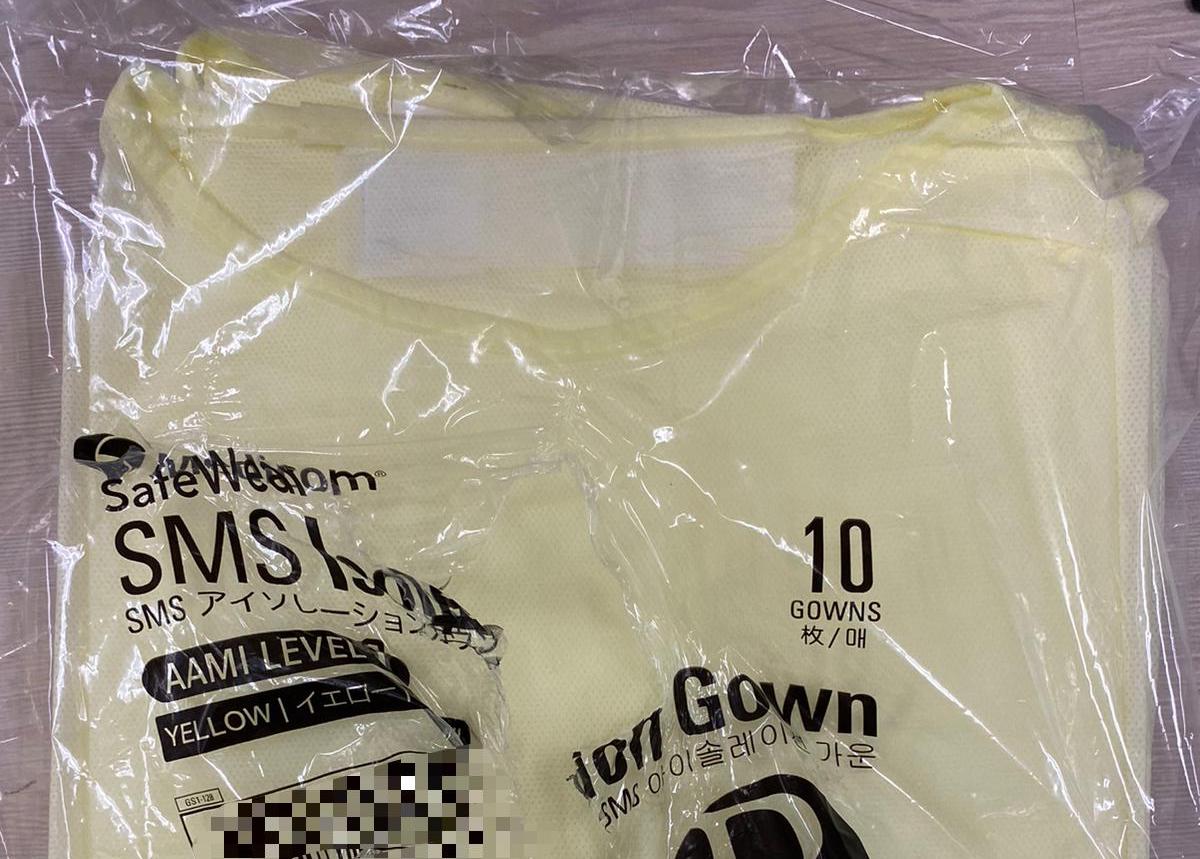
    The only picture George would share with us—a shot of the disposable gowns he wears at work.
    The only picture George would share with us—a shot of the disposable gowns he wears at work.

    Why did you agree to take on this job? What were your first thoughts when you found out that you were going to have to do the frontline job and what was the response of your family when they found out? 

    I am the only one who was called for this job (management told me others are not willing to do this). My first thought was how to protect myself and my family. They understood my duty and keep asking me to stay safe.

    How risky is being a frontline staff? What are the precautions you take to stay safe when doing the job?   

    The fever cohort area is the highest risk area as there is no negative pressure system in place and has instead an open cubicle design. We are allowed to use 2-4 pieces of N95 [masks] in a whole day and all face shields and visors have to be reused.

    What is a negative pressure room? 

    Negative pressure is an isolation technique used in hospitals to prevent cross-contaminations from room to room.

    How many people does the hospital scan in a day?

    Around 100.

    How has your life changed since you took on the job of being a frontline person fighting the coronavirus?

    I have isolated myself in a hotel assigned by the hospital and have minimum social interaction.

    Tomorrow, we’ll chat with another person from Hong Kong who escaped Hubei less than 5 hours before the lockdown. Follow the latest in our COVID-19 Diaries series here.

    If you’re in a country that has been affected by the novel coronavirus and would like to share information about the situation where you’re at, do get in touch with us here.

    Photographs courtesy and copyright of George*. Interviewer: Kauai
    Sponsor or support the COVID-19 Diaries series here.
    If you found this article useful:


  • LUCK-IT IS ONE!

    Exactly 365 days after interview #1 went live and what do we have here? 

    25K unique visitors in total

    1-4.8K monthly visitors 

    (last month we had 1.7K)

    828 subscribers

    11.5K impressions on Google

    27 first pages on Google

    Hardly “influencer” status yet by definition of the experts but hey, how many other places can you go to to get 1700 people reading your thoughts every month? 😉

    Credit goes to…

    Everyone we’ve interviewed in the past year, who’s put in precious time and mind-space towards discussing highly personal experiences.

    Everyone who’s ever shared or liked or made use of any of the comment boxes on any of LUCK-IT’s platforms (I’m talking about you Ameet Kothari, Warriortan, drjurisharma, Florence Ezekafor, ST, Bob Rich, jennspoint, Susan Koh, Lawrence Chai Chuanze and all the other repeat ‘likers’ of our interviews, you know who you are 😀 ).

    And also Kauai, our new interviewee, who recently came onboard to do interviews in Chinese for our COVID-19 Diaries series.

    Thank you very very much for being a part of our very first year in cyberspace, and may we continue to have many meaningful conversations together in the years to come! 🙂

    Next Friday onwards, we will resume our regular interviews with people with all sorts of experiences. We will also work towards compiling two series over the course of the year:
    The Wisdom Of Old Age (about what life is like at every age) and The Exes (a series about how various peoples have quit all sorts of habits and lifestyles), amongst other topics. 

    As always, if you want to share your stories and add your perspectives to our online collection (and get a link back to your website while at it), remember you can do so at any time here.

    In the meantime, just for today, we just wanted to interrupt our regular programming to say… HAPPY HAPPY BIRTHDAY, BABY LUCK-IT!!! We’re so so proud of you!!!

    If you found this article useful:


  • COVID-19 Diaries: 100 Days After Patient 1 Developed Symptoms

    Exactly 31 days ago, we started our COVID-19 series documenting the development of the novel coronavirus outbreak in China. At that time, 37,251 people in China were known to be infected and 812 had died. There was only 1 death outside of China, in the Philippines. 

    Singapore (from which LUCK-IT operates) was the country with the second highest number of infections outside of China: 40 in total, of which 19 were local transmissions. 

    Thailand and South Korea were next with 32 and 27 confirmed cases respectively. Then came Japan with 26 confirmed cases and Malaysia with 17. 

    The Diamond Princess cruise ship docked in Japan was the location with the second highest number of confirmed cases outside of China: 64 in total. 

    Across the ocean, there were 14 known cases in Germany (none of which were locally transmitted), 12 cases in the United States (of which 2 were locally transmitted) 11 cases in France (of which 6 were locally transmitted) and 3 cases in Italy (all of which were imported from China). There were no known cases in Iran. 

    In total, there were only 24 countries affected by 2019-nCoV. Only a few countries were denying entry to visitors with travel history to Mainland China. 

    Just 31 days later, there are now around 80,904 people in China known to be infected, around 3123 of which have died. Outside of China, there are now more than 686 deaths, mostly in Italy, Iran, South Korea and France. 

    Singapore, despite having more than doubled the number of confirmed cases since (150 confirmed in total), is now way down the list of countries outside of China with the most number of cases (ranked 16th). 

    South Korea is the country outside China with the most number of confirmed cases (7382), followed by Italy (7375) and Iran (6566). France (1116) and Germany (1112) are 4th and 5th. And the United States has now 213 cases (ranked 12th). 

    On the Diamond Princess, there ended up being 696 confirmed cases in total. 

    Now that 104 countries have been affected by the novel coronavirus, there are multiple countries denying entry to visitors from Mainland China, Singapore, South Korea, Japan, Italy, Hong Kong, Macao, Taiwan, Thailand, Bahrain, Iran, Iraq, Australia, Canada, France, Germany, Malaysia, Vietnam, USA, UAE, Afghanistan, Azerbaijan, India, Indonesia, Kazakhstan, Lebanon, Pakistan, Philippines, Somalia, Syria, Uzbekistan and Yemen. 

    Some (Kiribati, Micronesia, Nauru, Tajikistan) have even gone as far as to ban all visitors from countries with confirmed cases of COVID-19. Others ban those who have been on the ‘Diamond Princess’ cruise ship. North Korea has banned all tourists.

    On a positive note, within China the number of new coronavirus cases and deaths have been falling in recent days. Just yesterday, it had only 19 new coronavirus infections and enjoyed a 3rd straight day of having no new locally transmitted cases outside of Hubei province. In fact, China itself has now also imposed mandatory quarantine measures for visitors from Iran, South Korea, Italy and Japan as well.

    How will the situation be 31 days later, 50 days later or 100 days later? What will be of the economy now that stock markets around the world have gone into free fall and businesses are reporting dramatic drops in customer demand?   

    Nobody can tell.

    We just have to keep washing our hands while waiting to see. 

    Follow the latest in our COVID-19 Diaries series here.

    If you’re in a country that has been affected by the novel coronavirus and would like to share information about the situation where you’re at, do get in touch with us here.

    Articles that might be of interest:
    COVID-19 Diaries: An Introduction
    What It’s Like Being Locked Down In Wuhan During The 2019-2020 Novel Coronavirus Outbreak (Part 1)
    COVID-19 Diaries: The Situation In Daegu, South Korea, 89 Days In

    Image Source: World Health Organization. Compiler: Sy
    Sponsor or support the COVID-19 Diaries series here.
    If you found this article useful:


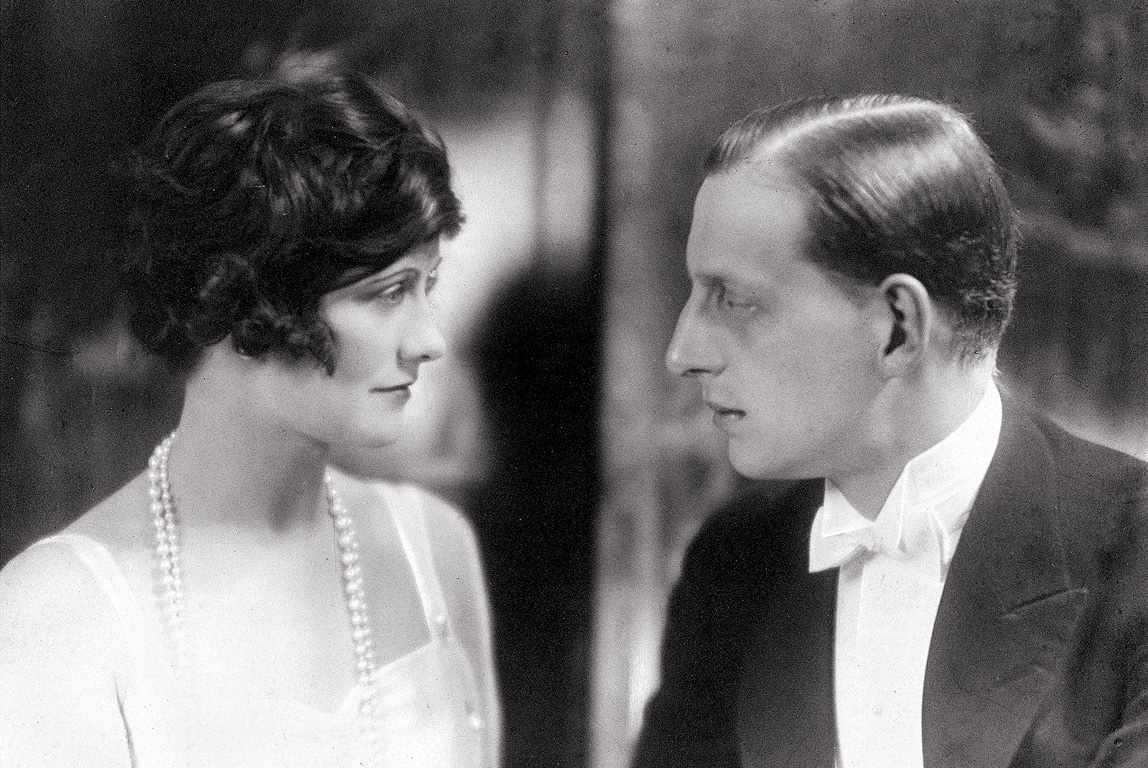
  • Chanel with Dmitri Pavlovich of Russia.

    Life Summary: Coco Chanel, Fashion Icon

    Coco Chanel, creator of the House of Chanel and the world-famous interlocked-CC monogram, was deposited by her absent father into an orphanage at age 11 but would go on to be listed as Time’s 100 most influential people of the 10th century. This is the timeline of the life, and life-changing love affairs, of the woman who created Chanel…

    1883 – Gabrielle Chasnel (misspelt because of a clerical error) is born in a hospice for the poor run by nuns in Saumur, France. She is named after one of the nuns in the hospice. Her mother, just 20, and her father, a 28-year-old merchant, are not married. She has a sister, Julia, who is less than a year older.

    Age 1 – Gabrielle’s parents get married and they move the family through the Auvergne in south-central France selling buttons, bonnets, aprons and overalls. Her father would be absent, travelling away from her home, for most of her childhood.

    Age 2 – Gabrielle’s brother, Alphonse is born.

    Age 4 – Another sister, Antoinette is born.

    Age 5 – Her mother falls ill. She and her 2 sisters are sent to live with an elderly uncle.

    Age 6 – Another brother, Lucien is born. Gabrielle begins playing in Auvergne cemetery and gets attached to two unnamed tombstones.

    Age 8 – A last brother, Augustine, is born but he dies in infancy.

    Age 11 – Her mother dies at home in her bed, from either tuberculosis or pneumonia. Her father drives her and her sisters to the orphanage at Aubazine Abbey (where there are no mirrors) and leaves them there. Her brothers are left with a peasant family and used as unpaid labour. She never sees her father again but would later make up stories about him being a good, successful man who had gone to America to make his fortune, who loved her. She would also never talk about this part of her childhood or identify herself as an orphan.

    At the orphanage – She would learn to sew in order to develop skills to earn a living in the future.

    Age 18 – She leaves the orphanage. She becomes close to her father’s youngest sister, Adrienne, who is only a year older than herself, and is sent to study in Moulins, at a religious institution run by canonesses, which Adrienne attends. As a charity pupil, Gabrielle is treated differently from those whose family pay and is made to feel inferior because of her lack of private lessons and second hand clothes. Here, she attends more sewing lessons. During the holidays, she and Adrienne learn to trim and embellish hats from her other aunt. In the evenings, she begins reading romance periodicals. Feeling unloved in real life, she contemplates suicide.

    After leaving school – The Mother Superior finds jobs for Adrienne and Gabrielle at a draper’s store which sells trousseaux, mourning clothes and layettes for newborn babies. They share an attic bedroom above the shop, work on weekends altering breeches for a nearby tailor, and start going out with the calvary officers who shop there. Gabrielle starts singing at La Rotonde, a pavilion in a small park, and has only 2 songs in her repertoire, one of which is ‘Qui qu’a vu Coco?’—about a girl who has lost her dog. Soon the audience would refer to her as Coco—the name of the lost dog.

    Age 21– Her sister, Julia, gets pregnant under mysterious circumstances and gives birth to a boy.

    Age 22 – Coco had met 25-year-old calvary officer, Etienne Balsan, by this point and they had become lovers. He invites her to see his home, a former abbey named Royallieu, and she leaves with him. There, she spends her time horse-riding and attending fancy dress parties, and encounters the courtesans who come and go from Royallieu, including the mistress in residence, courtesan-turned-actress, Emilienne d’Alencon, who is 14 years older than Coco, who dresses in heavy gowns and spotted veils and takes in lovers. Coco dresses in sober androgyny, riding breeches and equestrian jackets like a tomboy, to differentiate herself from the courtesans.

    Age 26 – Coco meets Arther ‘Boy’ Capel, a friend of Balsan, who is 2 years older than her, at Royallieu. She falls in love with him. She decides she wants to earn her own living and Balsan and Capel eventually agree to share the cost of her setting up a hat business at Balsan’s bachelor’s apartment in Paris. Her first clients are the courtesans-turned-actresses at Royallieu, who begin wearing her designs on stage and in magazines.

    Age 27 – Her business has grown too successful for Balsan’s apartment so she opens a new shop at Rue Cambon. She gets her sister, Antoinette and her aunt Adrienne to help. Her sister, Julia, dies of suicide. Coco takes in her 6-year-old nephew and brings him up as her own. Some would later speculate that the nephew is her own, rather than her sister’s. She would eventually send him to be educated at an English boarding school, where Capel had been educated, away from her.

    Age 28 – Coco leaves Royallieu and goes to live in an apartment in Paris paid for by Capel.

    Chanel in 1928 (Aged 45).
    Chanel in 1928 (Aged 45).

    Age 30 – Coco’s business is growing, backed by Capel’s capital. She begins to sell clothes on top of hats and opens her first shop in Deauville during the outbreak of the First World War. Antoinette and aunt Adrienne go to Deauville to join her. Soon after, she finally makes enough money to have no more need for Capel’s financial support.

    Age 32 – She opens a new boutique in Biarritz.

    Age 34 – Coco starts cutting her hair more and more and eventually wears it short. She starts to make herself look like a boy—breastless and hipless. At a dinner party, she meets Misia Sert, a gifted pianist and muse of many artists, who is also close friends with Serge Diaghilev, the director of the most sought-after ballet company in the world. Misia, 11 years older, becomes enchanted with Coco. She goes to her shop the next day and brings her boyfriend to dinner at Coco’s apartment that very night.

    Age 31 – Capel marries aristocratic beauty Diana Wyndham.

    Age 36 – Capel dies in an automobile accident after one of the tyres on his car burst. Coco does not go to the funeral but goes to the scene of the accident where the car still sits. He had willed her £40,000. She uses it to expand her shop at Rue Cambon, buys a villa of her own in the outskirts of Paris and makes an acquaintance of his wife, Diana. Coco turns to Misia and Misia’s boyfriend, Sert for solace after Capel’s death. Her sister Antoinette dies of influenza in Buenos Aires.

    Age 37 – Misia and Sert wed and they take Coco, who is still in mourning, with them on their honeymoon to Italy. Coco gives 300,000 francs to Misia’s friend, Diaghilev, to bankroll his collapsing ballet, without telling her friend. She also provides a home for his composer, Stravinsky, who finds her attractive. She dates and becomes a lover of the Grand Duke Dmitri Pavlovich, who she too supports financially, and falls out with Misia who sent a telegram to Stravinsky telling him Coco preferred grand dukes to artists. Dmitri introduces her to Ernest Beaux, an expert perfumer and perfumer to the tsars, and she asks him for some perfumes for her fashion couture house. She chooses the one called N°5 and would later go on to claim N°5 to be her creation and no one else’s.

    Age 39 – Jean Cocteau asks Coco to design costumes for his stage adaptation of ‘Antigone’ and she does, entering the world of avant-garde art.

    Age 40 – Coco meets the 44-year-old Duke of Westminster, the richest man in Britain in Monte Carlo, and he immediately invites her to dine on his yacht. He begins courting her. She begins to prefer him over Dmitri, though since both are womanisers, she cannot fully trust either. She opens a boutique in Cannes.

    Age 41 – Coco designs the costumes for the Ballets Russes production of ‘Le Train bleu’. She and the Duke of Westminster are officially an item. She tries to sell her perfumes in the department store, Galeries Lafayette, and is introduced to Pierre Wertheimer who agrees to manufacture Chanel perfumes, lipsticks and face powders in bulk. He would take 90% of the profits from that collaboration, and Coco would eventually come to regret giving it to him.

    Age 42 – Coco starts fishing at the estate of the Duke of Westminster, which she will do every summer for the next few years.

    Age 43 – Dmitri marries an American heiress. Coco falls in love with the poet, Reverdy, a married man who had fallen in love with Misia then with Coco after Misia introduced her to him and encouraged them to be together.

    Chanel with Dmitri Pavlovich of Russia.
    Chanel with Dmitri Pavlovich of Russia.

    Age 44 – Reverdy disappears into a monastic community where he would live as a recluse until his death. Coco fishes with Winston Churchill while fishing at the estate of the Duke of Westminster. She opens a shop in London with pieces all designed for outings in British High Society.

    Age 45 – Coco attends the Duke of Westminster’s 18-year-old daughter’s debut into society.

    Age 46 – Coco builds a villa on the French Riviera at Roquebrune for 1.8 million francs. She begins appearing in the society pages of fashionable magazines. Diaghilev dies from diabetes. She meets Hollywood producer, Samuel Goldwyn, through Dmitri, who she is still good friends with.

    Chanel with the Duke of Westminster in 1925 (Aged 42).
    Chanel with the Duke of Westminster in 1925 (Aged 42).

    Age 47 – The Duke of Westminster marries a young Englishwoman he met less than a month ago at a London nightclub. Coco is upset. Her aunt Adrienne finally weds the Baron de Nexon after having dated him for 20 years.

    Age 48 – Film producer from Hollywood, Samuel Goldwyn, invites Coco Chanel to Hollywood to ensure his film stars are dressed in the latest fashions, on screen and off. The contract he offers her is $1million. She takes Misia with her as her travelling companion. She designs the costumes for a film called ‘Palmy Days’.

    Age 49 – She designs the costumes of her second film, ‘The Greeks Had A Word For Them’ and finally the third and final film, ‘Tonight or Never’—which flops at the box office. Movie moguls decide her dresses aren’t sensational enough for Hollywood and she departs in a huff, claiming that she “out-fashion(s) fashion”. As the Depression looms, she moves into an 18th-century mansion in one of the most prestigious streets in Paris and starts designing diamond jewellery, holding an exhibition which princesses, duchesses, ambassadors and thousands of visitors come to see. At this point, she is involved with married former art director and owner of an interior design shop, Paul Iribe. They end up moving into the Ritz together.

    Age 52 – Iribe suffers a heart attack when on holiday at Coco’s holiday retreat, while playing tennis with her, and dies. Coco starts using morphine, which she will continue to use to the end of her days.

    Age 56 – World War 2 breaks out, Coco decides to shut down her business, aside from keeping a minimal staff on board to sell perfume. She continues living at the Ritz. She cuts off her brothers, for whom she had been giving financial support, and does not see either of them ever again.

    Age 57 – Germans invade France and as their soldiers approach Paris, Coco flees with friends to Pyrenees, to the house she bought for her nephew. France surrenders to Germany and Coco eventually travels back to Paris with a friend and returns to live at the Ritz. The Wertheimers sign Les Parfums Chanel over to Amiot, who is not Jewish, and her perfumes continue to sell in both Allied and Nazi-occupied territories.

    Age 58 – Her brother Lucien dies of a heart attack. Dmitri dies of tuberculosis. She begins an affair with Hans Gunther von Dincklage, a German who is 13 years younger than her, while trying to get her nephew out of a prisoner-of-war camp. Because the Second World War is in place, she is accused of being a Nazi collaborator.

    Age 61 – After the liberation of France, she is questioned for her involvement with a German but is released shortly after, possibly because of intervention from Winston Churchill.

    Age 63 – Coco launches more scents, under the brand Mademoiselle Chanel, to get around the Wertheimers’ ownership of her perfumes.

    Age 64 – Coco closes a deal that allows her to get 2% of the gross royalties of Les Parfums Chanel’s sales throughout the world (about $1million a year) and receives a sum of money to cover past royalties. It also gives her the right to produce and sell Mademoiselle Chanel perfumes but she never does so, being now wealthy enough to never need to work again. She begins travelling around Europe and America, reunites with Gunther, and buys her nephew a villa in Switzerland.

    Age 67 – Misia dies of morphine abuse with Coco by her side.

    Age 70 – Coco sells her couture house to the Wertheimers, giving them all rights to her name, and in exchange gets them to pay all her personal expenses. She retains creative control and launches her comeback but critics in France dismiss the show as old-fashioned. America, however, celebrates her comeback. The Chanel jacket is reborn and a bag named 2.55 joins it.

    Age 73 – She designs costumes for Ingrid Bergman in ‘The ET Sympathie’.

    Age 74 – Coco introduces slingback pumps to join the essential Chanel look. The department store Neiman-Marcus in America gives her an award for being the most influential designer of the 20th century. Jacqueline Kennedy begins buying Chanel.

    Age 80 – Jackie Kennedy wears a Chanel suit during her husband’s assassination and gets it stained with his blood. The suit is later stored at the National Archives for safe-keeping, uncleaned.

    Age 86 – A broadway musical about her life is in the works. Nerve damage causes her right hand to be paralysed. She continues living alone at the Ritz, giving herself nightly injections of morphine to get to sleep.

    Age 87 – She works to finish her latest couture collection all the way to the day before her death, despite it being a Saturday. She dies in the evening the following Sunday, in her bed at the Ritz, and is buried in Switzerland, under white flowers.

    More life summaries available here.

    Photographs: Public Domain. Compiler: Sy
    Sponsor or support the Life Summary series here.
    If you found this article useful:


  • COVID-19 Diaries: The Situation In Busan, South Korea, 90 Days In

    Jennifer, a Canadian and wife to a Korean man, moved to Busan, South Korea in 2013 to teach English. From her home, where she’s been holing up, she gave us information on the COVID-19 clusters presently in Busan, 1468km away from Wuhan, and told us why she thinks the Korean government has done well fighting the virus. 

    “We receive text alerts daily and the Busan government has every patient from here listed on their official website. You can click on each case and see where they have been over the past few days.”

    Q: Hi Jennifer, thanks for connecting with us all the way from Busan, South Korea! When did you first hear about the 2019-nCoV novel coronavirus and what did you think of it then?

    A: I started to hear about the 2019-nCoV novel coronavirus a week before the Lunar New Year. I remember not thinking much of it, but I had this feeling in my gut that it had the potential to be serious.

    How concerned are you now? How many COVID-19 cases and related deaths are there in Busan at the point of this interview and do you personally know anyone who’s been infected with COVID-19?

    As the cases continue to multiply, I am worried mainly because it is not just me I have to worry about. I have a husband and a four-year-old son who I want to be healthy. Also, our jobs are being impacted by the virus. There are currently 78 cases. As of right now, I do not know anyone infected with the virus.

    How did most of the cases in Busan get infected anyway? Are there any notable clusters?

    From what I understand, most of the cases involve the Oncheon Church. Reportedly, one of the members’ father is from Wuhan and, as of right now, that is where experts think the virus originated from in Busan. 

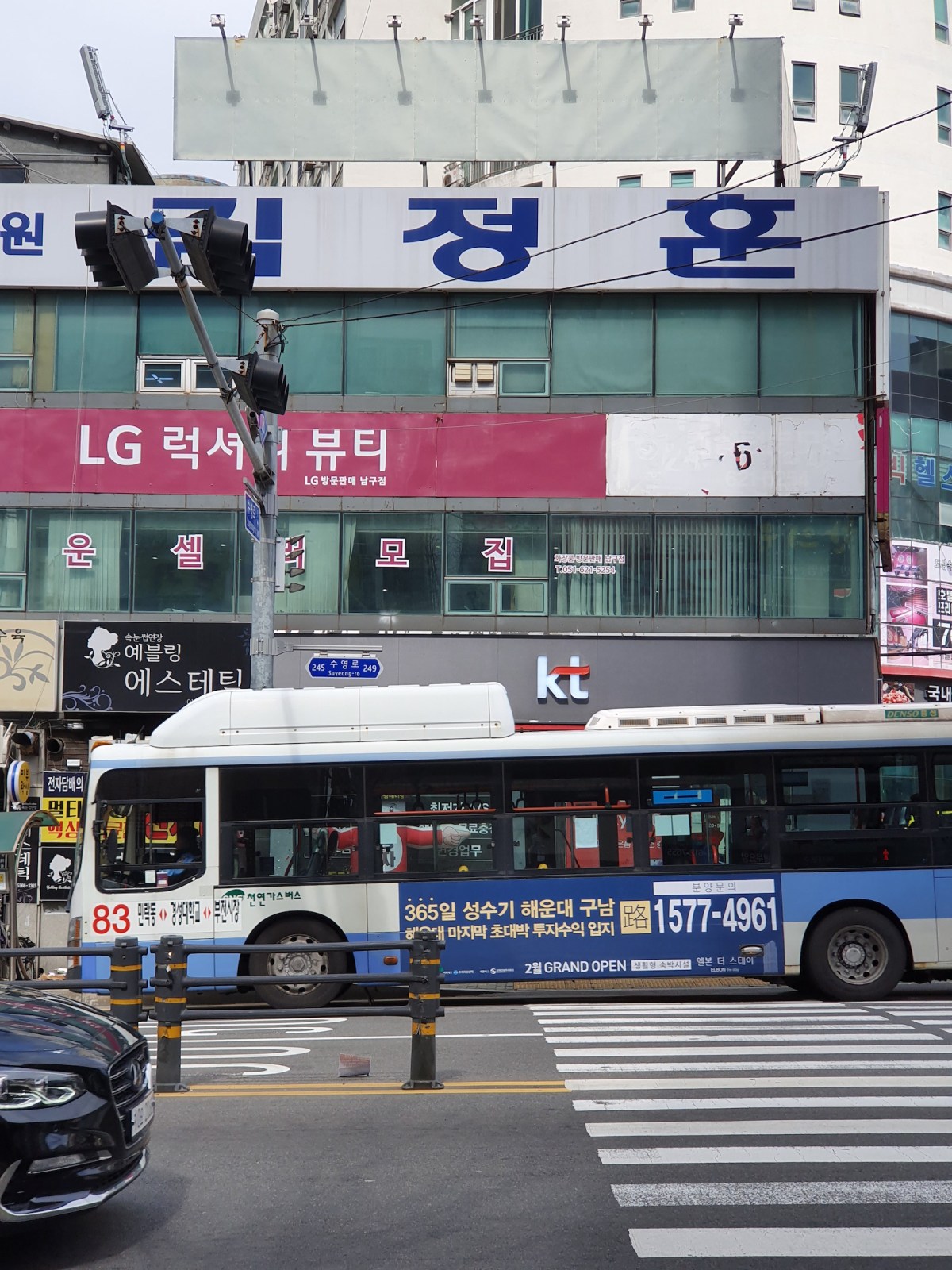
    “A bus in service with no people on it. People are avoiding using the bus like the plague.”
    “A bus in service with no people on it. People are avoiding using the bus like the plague.”

    How has life changed for you since the coronavirus entered South Korea? What are you no longer allowed to do and what extra are you expected to do to keep yourself and your community safe? 

    Since the virus entered Korea, nothing significant has changed. The biggest thing thus far is that I’ve had to wear a mask while teaching. I also make sure to wash my hands and use hand sanitiser more regularly. Since the virus has been detected in Busan, work has been temporarily suspended. My son’s kindergarten is also temporarily suspended. My family and I are following what the government has suggested such as spending as much time as possible indoors and avoiding crowds.

    What else do you do regularly to keep healthy and safe?

    Since the virus arrived in Busan, I try not to touch things when I’m outside or I will use gloves to prevent my hands from touching things. When I am at work, I disinfect my hands after each class. As an extra precaution, I shower immediately after coming home and throw my clothes in the wash. My family and I are also trying to eat foods to help boost the immune system.

    Why do you choose to stay on in Busan regardless?

    I am currently teaching in Busan and currently bound to a year-long contract. Thankfully, there aren’t too many cases in Busan and it seems to be under control thus far. The school has not found it necessary to cancel the contracts of the foreign teachers at work yet.

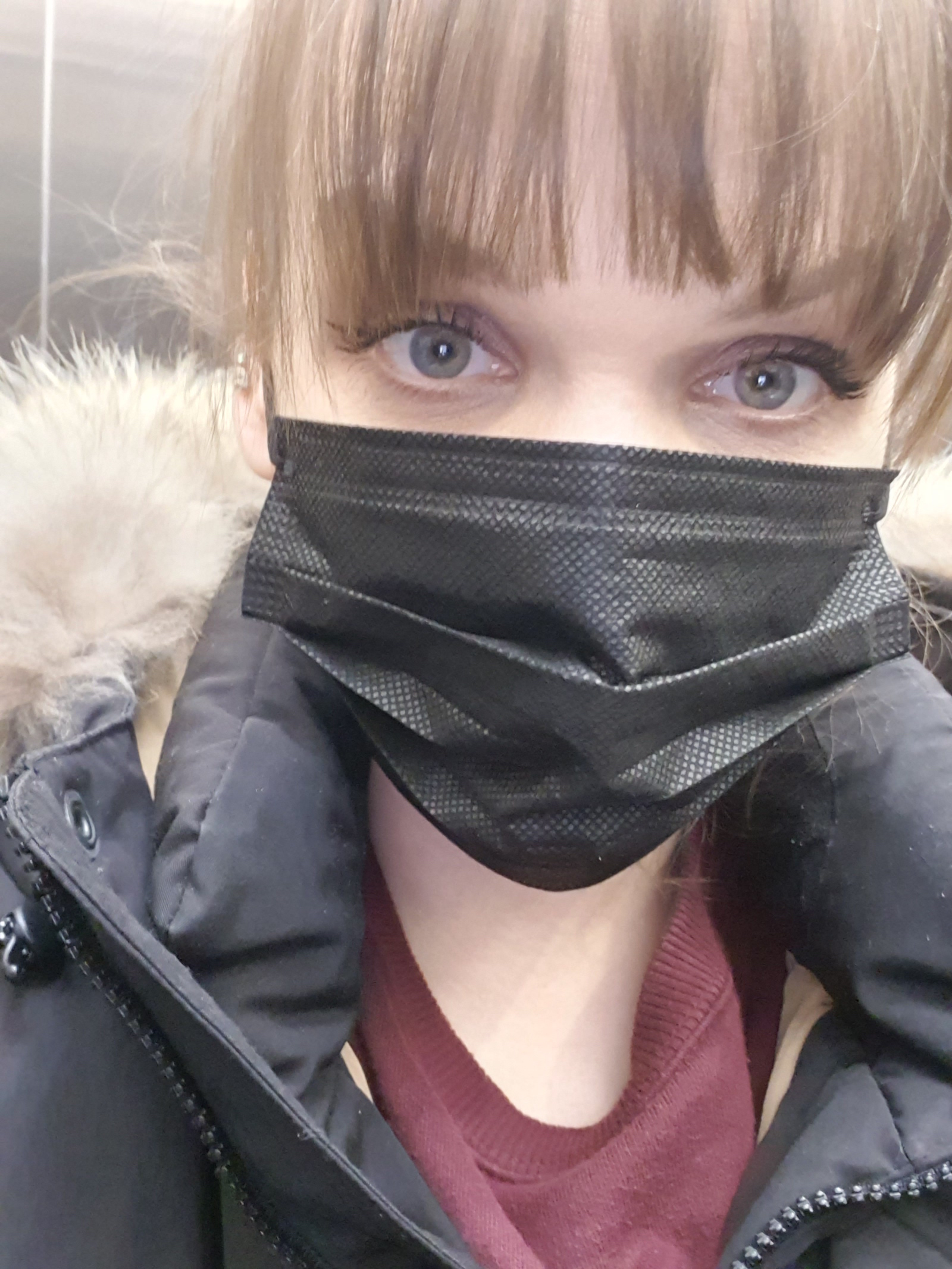
    “Me going to work masked up.”
    “Me going to work masked up.”

    What is the status of food, water and medical supplies like masks in stores right now? Where are those supplies coming in from? 

    Masks are hard to come by and people have been hoarding them and selling for ten times the price. The government is trying to combat this by limiting the amount of masks one can buy as well has heavily fining anyone caught hoarding and reselling. I have also read that some brands of ramyeon have sold out. 

    Have you done anything to prepare for the possibility that the novel coronavirus epidemic in South Korea might get worse? Have you stocked up or made special plans you can execute at a moment’s notice? 

    We have bottled water and some instant food stocked up. I am also signed up to receive e-mails from the Canadian government should things ever get worse.

    Is there anything you know about the situation within South Korea that has not been mentioned, or has been misrepresented, in global news?

    I pay most attention to Canadian news. I don’t think that they have misrepresented anything.

    What do you think of South Korea’s response to the COVID-19 outbreak? What did they do well and what could have been done better?

    I think the Korean government has done a good job. They are very transparent and I believe they are doing their best to fight this thing. We receive text alerts daily and the Busan government has every patient from here listed on their official website. You can click on each case and see where they have been over the past few days. We also get daily updates from the Korean and Busan government as to the numbers of cases and deaths. I know that President Moon has received a lot of criticism for not banning all Chinese people from entering Korea. Many Koreans want an all-out ban on the Chinese entering Korea.

    “You can click on every patient and see where they have been at least a few days before they were diagnosed with the coronavirus. The picture is of the whereabouts of Patient 46.”
    An image of the official Busan website. “You can click on every patient and see where they have been at least a few days before they were diagnosed with the coronavirus. The picture is of the whereabouts of Patient 46.”

    What will you do if you or those who live with you develop symptoms of the virus?

    Citizens are encouraged to call a special hotline if one should develop a fever and/or a second symptom, such as a sore throat or cough. Our plan is to continue to remain indoors as much as possible. We will call the hotline, and get to the hospital as soon as possible if symptoms were to develop.

    Which 3 items or people are most useful for you right now? 

    I rely on my husband the most as he is Korean and understands what’s going on better than I do. After him, the Busan Instagram page is very informative and up to date. The government texts that are sent out are helpful as well.

    Is there anything you regret not doing earlier?

    I wish that I had stocked up on more masks.

    Lastly, what have you learned from this novel coronavirus outbreak that you didn’t know before?

    I think I understand better how fragile and interconnected things are. I think it’s one of those things where you understand it, but it’s not until you experience it that you truly understand what it means.

    Jennifer hopes to be able to move to Jeju with her family this spring, and to blog more at jeffosaurus.wordpress.com and share more photos on Instagram @maple_jeon. “I also would like to start vlogging a bit after we move so friends and family back home can get a better understanding of what Korea is like.” You can also ask her questions about South Korea and Busan using the comment box below. 

    More interviews with others whose lives have been disrupted by COVID-19 coming up next week. Follow the latest in our COVID-19 Diaries series here.

    If you’re in a country that has been affected by the novel coronavirus and would like to share information about the situation where you’re at, do get in touch with us here.

    Photographs courtesy and copyright of Jennifer. Interviewer: Sy
    Sponsor or support the COVID-19 Diaries series here.
    If you found this article useful:

  • COVID-19 Diaries: The Situation In Seoul, South Korea, 90 Days In

    James from Canada quit his job in August last year and went on an extended trip though Canada, Europe and Asia. Presently living in a guest house in Seoul, South Korea, 1398km away from Wuhan, he told us how he’s prepared for the COVID-19 crisis as a traveller on the move, and why, despite not being tied down to South Korea, he has no plans to leave just yet. 

    “Everything I’ve got here fits in a backpack, so if I need to move at a moment’s notice, it wouldn’t be hard for me to do so.”

    Q: Hi James, thanks for connecting with us all the way from Seoul, South Korea! When did you first hear about the 2019-nCoV novel coronavirus and what did you think of it then?  

    A: I first caught wind of the 2019-nCoV around New Years Eve while I was travelling in Japan. At that point it hadn’t spread far beyond Wuhan and there wasn’t a lot of noise about it, aside from comparisons to SARS, so I really didn’t think too much about it.

    How concerned are you now? How many COVID-19 cases and related deaths are there in Seoul at the point of this interview and do you personally know anyone who’s been infected with COVID-19? 

    I’m not terribly concerned. As of today there are 1,146 confirmed cases in South Korea but the majority of those seem to be in the vicinity of Daegu, not here in Seoul.

    How did most of the cases in Seoul get infected anyway? Are there any notable clusters? 

    For the first few weeks, the locations of most of the cases weren’t really well-publicised (at least in English language media that I’m aware of), understandably as most could be linked to China, so location wasn’t really that important. It seems like this new burst (from ~30 to ~1100 in slightly over a week) is closely associated with a particular church centred around Daegu.

    "A partially-stocked shelf of instant noodles (very unusual here)."
    “A partially-stocked shelf of instant noodles (very unusual here).”

    How has life changed for you since the coronavirus entered South Korea? What are you no longer allowed to do and what extra are you expected to do to keep yourself and your community safe? 

    It hasn’t had a big impact on my life so far—in fact, up until this week the effect was virtually nil. In the last few days, there have been widespread closures of museums and the Asian League Ice Hockey cancelled their championship round, which had been scheduled to begin this upcoming weekend in Anyang, a satellite city of Seoul, between a Korean team and a Russian team from Sakhalin.

    What else do you do regularly to keep healthy and safe?

    I’m washing my hands extremely frequently—probably more than I have since I found myself in the middle of the 2005 H5N1 outbreak in China. I’m wearing a mask when I’m riding the subway and in public gatherings, but other than that, not much.

    Why do you choose to stay on in Seoul regardless?

    I’m travelling around indefinitely so I’m under no obligation to remain here, but at this point heading to any other Asian country means I’ll likely be turned away, and I’m not that keen on heading home and getting off the road quite yet.

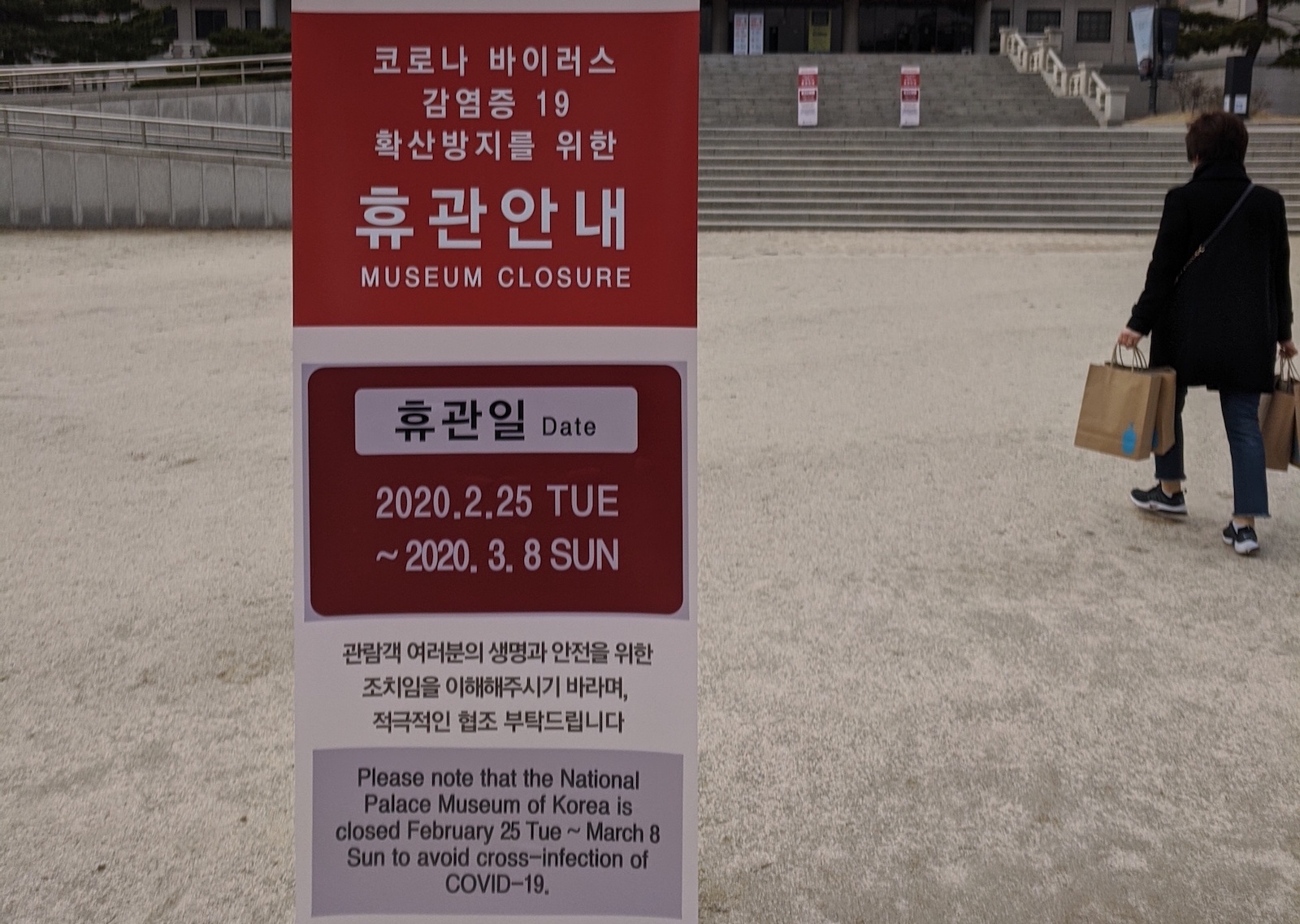
    "A museum closure sign."
    “A museum closure sign.”

    What is the status of food, water and medical supplies like masks in stores right now? Where are those supplies coming in from? 

    Masks have been intermittently low in some stores—some get re-stocked in the mornings but are often gone towards the end of the day. I haven’t personally seen any shortages of water, most food or medical supplies other than masks. I say most food because some non-perishables have been disappearing from the shelves quickly, particularly instant noodles and bulk bags of rice, but I’ve never seen them completely gone from a store, just low.

    Have you done anything to prepare for the possibility that the novel coronavirus epidemic in South Korea might get worse? Have you stocked up or made special plans you can execute at a moment’s notice? 

    I rely on daily medication, which I typically carry a limited supply of. Around the 2nd/3rd week of January, I went out of my way to get a supply that should last for several months in the event that availability is affected. Aside from another small stockpile of non-perishables, everything I’ve got here fits in a backpack, so if I need to move at a moment’s notice, it wouldn’t be hard for me to do so.

    Is there anything you know about the situation within South Korea that has not been mentioned, or has been misrepresented, in global news?

    No, I don’t believe so. If anything, the impact has been overblown, at least here in Seoul. It seems like Daegu is really taking the brunt of it at this point.

    What do you think of South Korea’s response to the COVID-19 outbreak? What did they do well and what could have been done better?

    I think that’s a question for public health experts, I’m not really qualified to answer it.

    "Hongdae neighbourhood on a Friday night. Nothing may seem unusual but that street is usually packed solid with people. Line-ups outside the busiest clubs were only 10-15 people long, but they're typically 50+ people long."
    “Hongdae neighbourhood on a Friday night. Nothing may seem unusual but that street is usually packed solid with people. Line-ups outside the busiest clubs were only 10-15 people long, but they’re typically 50+ people long.”

    What will you do if you or those who live with you develop symptoms of the virus?

    I’ll head straight to the nearest hospital.

    Which 3 items or people are most useful for you right now? 

    Soap and alcohol wipes are the big two, can’t think of a third.

    Is there anything you regret not doing earlier?

    Not really.

    Lastly, what have you learned from this novel coronavirus outbreak that you didn’t know before?

    Not that I can think of.

    James’ priority right now is looking for a new job back in Canada. You can read about him at distancefromnormal.com or chat with him using the comment box below.  

    Tomorrow, we chat with an expat in Busan, 93km away from Daegu, where masks are in short supply and hoarding has taken place. Follow the latest in our COVID-19 Diaries series here.

    If you’re in a country that has been affected by the novel coronavirus and would like to share information about the situation where you’re at, do get in touch with us here.

    Photographs courtesy and copyright of James. Interviewer: Sy
    Sponsor or support the COVID-19 Diaries series here.
    If you found this article useful:

  • COVID-19 Diaries: The Situation In Daegu, South Korea, 89 Days In

    Ariel Soon from the United States travelled to Daegu, South Korea earlier this year to start a new job, only to find herself right in the epicentre of the COVID-19 outbreak in South Korea. She told us about the situation around her, 1451km away from Wuhan, China.

    “To be honest, I don’t think any country is handling this crisis very well.”

    Q: Hi Ariel, thanks for connecting with us all the way from Daegu, South Korea! When did you first hear about the 2019-nCoV novel coronavirus and what did you think of it then? 

    A: I first heard about it when I was in the United States getting ready to move to Daegu. I didn’t really pay much attention at the time since the virus seemed to be mainly in China. When I actually arrived in Daegu, there were only about 30 cases here in South Korea.

    How concerned are you now? How many COVID-19 cases and related deaths are there in South Korea at the point of this interview and do you personally know anyone who’s been infected with COVID-19? 

    I’m getting more concerned about it each and every day, especially now that it’s up to 2,000. I don’t really know anyone here, so, no, I don’t know anyone personally who has been infected with COVID-19 yet. 

    "A cafe with a sign in the window indicating they were closed due to the coronavirus."
    “A cafe with a sign in the window indicating they were closed due to the coronavirus.”

    How did most of the cases in Daegu get infected anyway? Are there any notable clusters apart from the Shincheonji church cluster, or is that the only known cluster there? 

    As far as I know, Shincheonji is the main cluster here in Daegu.

    Can you tell us what you know about the Shincheonji Church of Jesus, the Temple of the Tabernacle of the Testimony? Why do people call it a cult and what is it about their activities that has enabled the virus to spread widely between its members? 

    I really don’t know much about Shincheonji, other than what I’ve read on major news outlets, that the followers crowd together and aren’t allowed to wear anything on their face, including masks, and people assumed that Patient 31 just had a cold, which is to imply that she was symptomatic at the time.

    How has life changed for you since the coronavirus outbreak in Daegu? What are you no longer allowed to do and what extra are you expected to do to keep yourself and your community safe? 

    Well, I haven’t been able to start working yet, and I don’t know when I will be able to. I always wear a mask whenever I go outside, and I don’t take public transportation. I would like to visit cafes and linger around, but I have been avoiding them. A lot of the cafes here in Daegu are closed, or they only allow you to order Take Out. 

    What else do you do regularly to keep healthy and safe?

    I’ve been staying indoors and avoiding contact with people. I have also been taking Vitamin C supplements to support my immune system.

    Why do you choose to stay on in Daegu regardless?

    I really enjoy being in Korea, despite all of this, and I would like to stay here with the hopes that the outbreak will get under control.

    Ariel's mask collection. "The top one I received when they were giving out free masks at a public square."
    Ariel’s mask collection. “The top one I received when they were giving out free masks at a public square.”

    What is the status of food, water and medical supplies like masks in stores right now? Where are those supplies coming in from? 

    There was an initial shortage of masks when news of the outbreak first occurred, but most pharmacies and cosmetic stores are now well stocked. They have increased the price, however. I haven’t seen any shortage of food and water, however, as all the food markets and convenience stores are all still well stocked. Deliveries are still being made here.

    Have you done anything to prepare for the possibility that the novel coronavirus epidemic in South Korea might get worse? Have you stocked up or made special plans you can execute at a moment’s notice? 

    I’m in contact with my employer on a regular basis and there are many medical clinics and pharmacies nearby. Luckily the convenience stores are still open 24/7–for now.

    "This is where I ate lunch. I was the only customer."
    “This is where I ate lunch. I was the only customer.”

    Is there anything you know about the situation within Daegu that has not been mentioned, or has been misrepresented, in global news?

    I haven’t seen that much news about the Daegu epidemic in great detail. I know some are reporting that it’s like a ghost town, but there are pockets of activity, and there a lot of businesses that are still open here.

    What do you think of South Korea’s response to the COVID-19 outbreak? What did they do well and what could have been done better?

    They should have closed its borders with China right after they found that first case. I have not been happy with the way they have handled this situation at all, but I also understand that I am in a foreign country and they do things differently here. To be honest, I don’t think any country is handling this crisis very well.

    "City buses are running but are mostly empty."
    “City buses are running but are mostly empty.”

    What will you do if you or those who live with you develop symptoms of the virus? How difficult is it to get a bed at a hospital in Daegu these days?

    I’m not really sure.

    Which 3 items or people are most useful for you right now? 

     Hand sanitiser, soap, mask.

    "Traffic is improving, compared to a few days ago."
    “Traffic is improving, compared to a few days ago.”

    Is there anything you regret not doing earlier?

    I don’t think it’s a question of what I, myself, could have done. This whole epidemic has to do with the community, and how do you control the behaviour of an entire community?

    Lastly, what have you learned from this novel coronavirus outbreak that you didn’t know before?

    I have admired the Korean people’s gentleness and humility in the way they treat each other. They are kind and respectful to one another, but I just keep thinking that if they were a little more stern—with China, the doctor with Patient 31 that tried to convince her to get tested for the coronavirus twice before she agreed to it—this outbreak wouldn’t be so widespread. But hindsight is always 20/20, and it’s up to the experts and public health officials to review what they got wrong this time to make sure they will be more prepared the next time this happens.

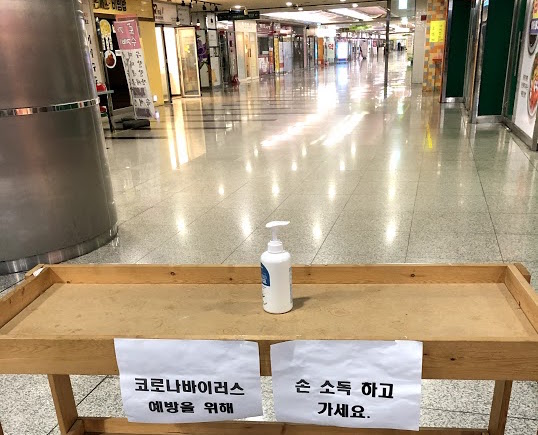
    "Hand sanitisers at an entrance to an underground mall."
    “Hand sanitisers at an entrance to an underground mall.”

    Ariel hopes to be able to continue to stay in Korea, so that she can gain some valuable experience as well as understand and learn more about Korean culture. You can follow her adventures in Korea at her blog, www.woundedcat.wordpress.com, or ask her for updates about Daegu by using the comment box below. 

    Tomorrow, we chat with a tourist in Seoul, capital of South Korea, 237km away from Daegu, to find out about the situation over there. Follow the latest in our COVID-19 Diaries series here.

    If you’re in a country that has been affected by the novel coronavirus and would like to share information about the situation where you’re at, do get in touch with us here.

    Other interviews with Ariel:
    COVID-19 Diaries: Daegu, South Korea, 167 Days In

    Photographs courtesy and copyright of Ariel Soon. Interviewer: Sy
    Sponsor or support the COVID-19 Diaries series here.
    If you found this article useful:


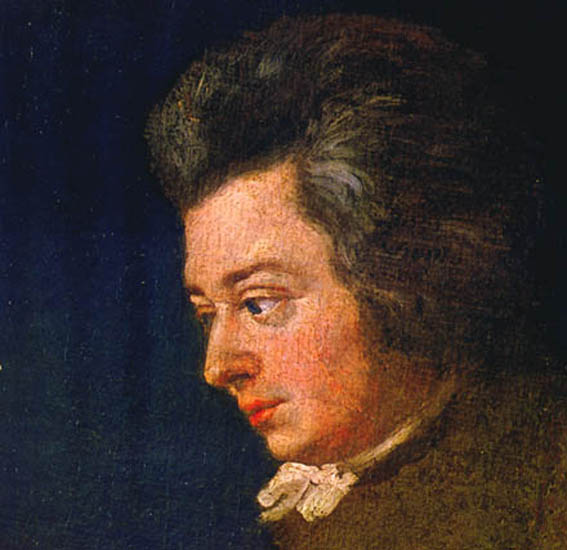
  • A portrait of Mozart when he is 26 years old.

    Life Summary: Mozart, Child Prodigy

    Wolfgang Amadeus Mozart began playing instruments at age 3 and composing his own music by age 5. He spent his childhood touring Europe with his sister and father, performing for royalty and nobility, and over the rest of his life would compose more than 600 pieces of music. At age 35, however, he was laid to rest in a pauper’s grave. Here is a brief summary of the rise and fall of the man everybody knows as Mozart…

    1756 – Johannes Chrysostomus Wolfgangus Theophilus Mozart is born in Salzburg, Austria to a middle-class family. His father, Leopold Mozart, is violin master to the Prince-Archbishop of Salzburg. His mother, Anna Maria Pertl, daughter of an official in the Archbishop’s court, nearly dies giving birth to him. He has an older sister, Nannerl, who is 5 years older. His other 5 siblings do not survive childhood.

    Age 3 – Wolfgang takes an interest in his sister’s music lessons and that gets him started in music. Soon he can perform little pieces. He learns to compose at the same time he learns to play. He also has an interest in Mathematics.

    Age 6 – His father, sensing a chance to make a fortune from him, takes him and his sister on tour with him. They perform in Munich and Vienna and Wolfgang begins to get famous. He begins playing for the royal family in Court.

    A painting commissioned by Mozart’s father of Mozart at 6 years old.
    A painting commissioned by Mozart’s father of Mozart at 6 years old.

    Age 7 – Wolfgang writes his first sonata. The Mozart family becomes famous and print shops sell their portraits.

    Age 8 – They travel to Paris and London to perform for the royal families there. Wolfgang continues composing little pieces. At the end of this tour however, the whole Mozart family falls ill— Wolfgang with inflammatory fever.

    Age 10 – They travel to Vienna for another tour and both Nannerl and Wolfgang catch small pox. When he recovers, he writes his first opera, La Finta Semplice, and another called Bastien et Bastienne. In the meanwhile, he continues composing music.

    Age 13 – They do a tour around Italy. Wolfgang is made member of the Philharmonic Academy of Verona and is knighted by the Pope. However, even though his works are highly praised, they do not lead to important engagements.

    Age 17 – Wolfgang is no longer considered a child prodigy. He continues composing and performing for the Archbishop in Salzburg.

    Age 21 – He starts signing letters as Wolfgang Amadè.

    Age 22 – Wolfgang goes on tour with his mother, during which Wolfgang has at least 4 love affairs, including one with the sister of a non-reciprocal crush, Constanze Weber, who he sleeps with. He notices however, that while people remember him as a child prodigy, there is no longer any interest in him. Now when he plays in salons, everybody talks over his music. He is offered a post as an organist in Versailles but her refuses it. Then, while they are in Paris, his mother dies.

    Age 23 – He returns to Salzburg and spends the next 2.5 years playing for the Archbishop. He continues composing.

    Age 25 onwards – Wolfgang quits his job with the Archbishop, leaves Salzburg, moves to Vienna and marries Constanze Weber, with whom he does not have any intellectual companionship. It is her mother who had forced them to marry. He becomes a music teacher by day and plays at a concert nearly every evening. He builds a good reputation but makes only a modest income.

    A portrait of Mozart when he is 26 years old.
    A portrait of Mozart when he is 26 years old.

    Age 27 – His first child is born and dies within 2 months.

    Age 28 onwards – While still teaching and performing in salons, he continues composing. His second child, Karl Thomas Mozart is born.

    Age 30 – He composes the Marriage of Figaro which will go on to set the model for all comic opera of the future. He does not profit much from it financially, however, and moves on to other things very quickly after. His third child is born and dies within a month.

    Age 31 – Because of the Marriage of Figaro, he is commissioned an opera, Don Giovanni, in Prague, at which he ends up playing at concerts too. Don Giovanni is a great success. Wolfgang’s father dies. Wolfgang’s fourth child is born.

    Age 32 – His fourth child dies. Don Giovanni is not a success in Vienna. However, Wolfgang is appointed Chamber Musician and Court Composer for the Courts of Vienna. He starts to go into debt and has to beg for and borrow money to pay his daily expenses. He cannot pay those back either. He starts taking on commissions from patrons but despite travelling in luxury, he returns to Vienna financially worse than before. Wolfgang starts composing very little music.

    Age 33 – His fifth child is born and dies shortly after birth. His wife falls ill and becomes an invalid. He starts to drink and cheat on her. Now, he composes only when commissioned.

    Age 34 – Wolfgang borrows 800 florins to travel to Frankfurt so that he can perform at the coronation of Leopold II but the visit ends with no financial gain. When he returns to Vienna, he borrows another 2000 florins.

    The manuscript of Mozart’s Symphony No.38 in D Major, K.504, which he wrote at age 30.
    The manuscript of Mozart’s Symphony No.38 in D Major, K.504, which he wrote at age 30.

    Age 35 – His sixth child, Franz Xaver Wolfgang Mozart is born. Under stress, Wolfgang starts composing again with renewed creative energy and takes on commissions to make music for musical boxes, a clock maker, the Carnival orchestra and an opera. The incessant production makes him ill. He becomes bed-ridden at his home and speaks of his illness as an attempt by his enemies to poison him. After 2 hours of delirium one night, he dies. He is given a cheap funeral, entered in records as ‘Wolfgang Amadeus’ and buried in a pauper’s grave amongst other paupers.

    More life summaries available here.

    Photographs: Public Domain. Compiler: Sy
    Sponsor or support the Life Summary series here.
    If you found this article useful:


  • “Myself in the gear I put on when I go out. I’m not wearing a mask and neither are most others.”

    COVID-19 Diaries: The Situation In Japan, 84 Days In

    Christine Yong, who we interviewed last year for tips on how to achieve the perfect score at the IB, is presently an AI researcher living in Ueno, Tokyo. We talked with her about the COVID-19 situation in Japan and found out a few interesting details about the crisis over there that we didn’t read about in global news.

    “Management of the epidemic has been by Japanese bureaucrats not trained in epidemiology or medicine.”

    Q: Hi Christine, thanks for coming back on to share updates on the coronavirus disease situation in Japan! When did you first hear about the 2019-nCoV novel coronavirus and what did you think of it then?

    A: I heard about it on the news just before flying home to Singapore for Chinese New Year. I remember not thinking that I was at high risk of catching it at the time, as cases were only beginning to be reported in mainland China. I did however feel some sense of impending doom. Spreading of the virus seemed inevitable given the masses that would be travelling during the festive period. My family and friends were already advising me to wear a mask at the airport, keep a distance from those who were sick, and monitor myself carefully for flu symptoms.

    How concerned are you now that Japan is presently one of the countries outside of China with the most number of infected? How concerned is the rest of Japan?

    I am concerned enough to be wary of others around me who have flu symptoms, but I have not thus far felt the need to wear a mask in public or stock up on food at home.

    As for the rest of Japan, there is a very palpable uptick in people donning surgical masks, but this is not particularly panic-inducing as wearing face masks is quite a normal sight in Japan. No panic-buying of food has yet occurred (Japanese usually already have stashes of food and emergency supplies at home, in case of an earthquake or tsunami). However, face masks are sold out everywhere, with both locals and tourists emptying out new stock immediately. More companies (mostly smaller, and/or younger ones) are also introducing remote work as a containment measure. A ramen shop in Ueno has even decided to turn away all foreign customers, although this is one of few extreme cases of discrimination against foreigners due to the coronavirus outbreak.

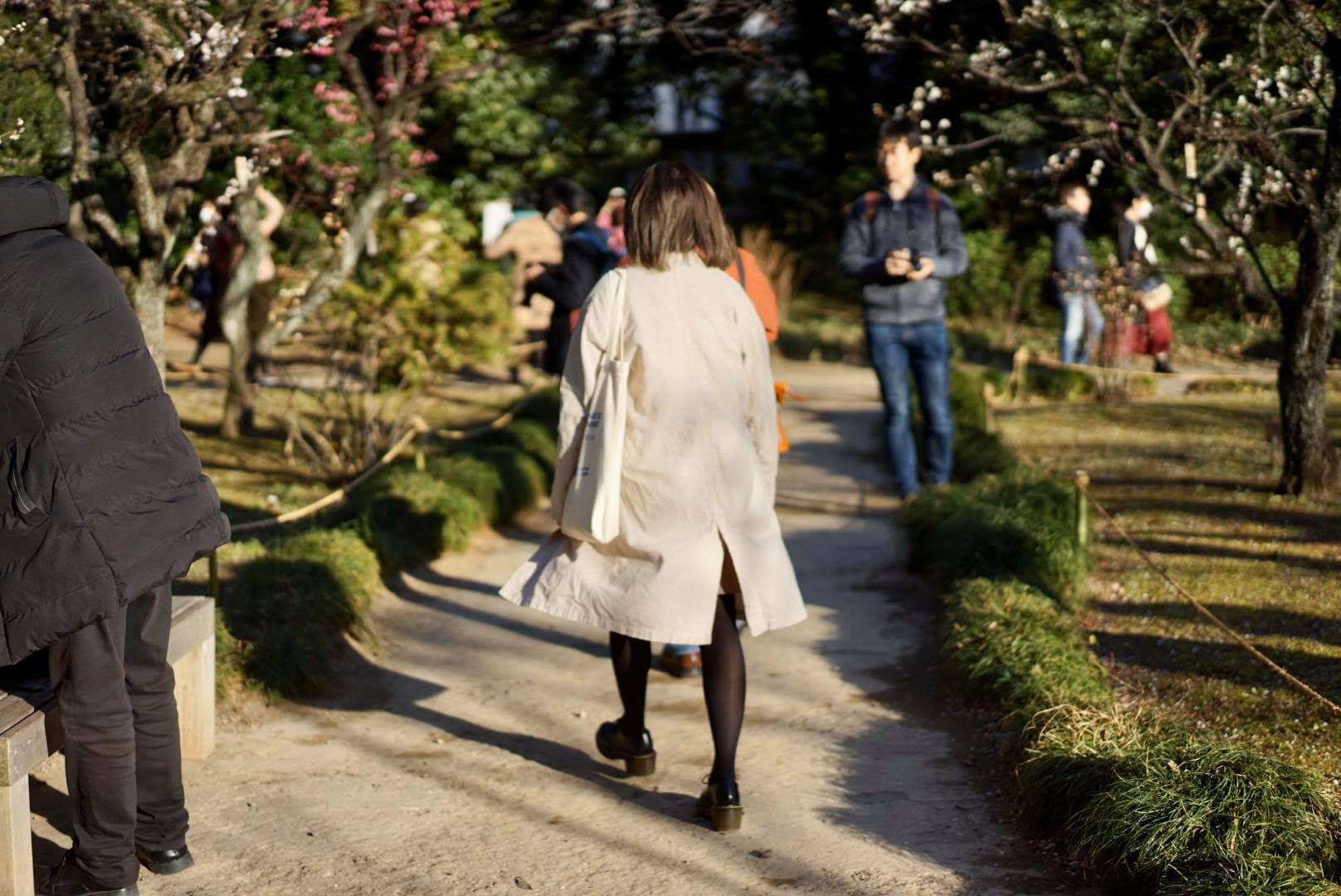
    “Plum festival proceeding as usual in Yushima, Tokyo, after the coronavirus outbreak.”
    “Plum festival proceeding as usual in Yushima, Tokyo, after the coronavirus outbreak.”

    Do you personally know people who’ve been infected with COVID-19? How did most of the cases in Japan get infected anyway? Are there any notable clusters other than the now infamous Diamond Princess cruise ship?

    I do not personally know anyone who has been infected with COVID-19. So far, the Japanese Ministry of Health, Labour and Welfare has updated the public through press releases on the number and prefecture of known cases, but it is not clear if there are significant clusters other than the Diamond Princess cruise ship—they are distributed across prefectures, with a slight concentration in the Greater Tokyo Area.

    Why do you choose to stay on in Tokyo regardless?

    Despite some shortcomings in the government’s reporting and its implementation of countermeasures, people in Japan practice good hygiene and social awareness in general. I am not so alarmed as to leave Japan and my job here because of the epidemic.

    What measures have the government of Japan imposed to keep the COVID-19 outbreak under control? What must you do and what are you no longer allowed to do?

    The Ministry of Health, Labour and Welfare is publishing regular updates on the number of identified cases and guidance on how to maintain hygiene at home and at work. They have emphasised hand-washing, maintaining cough etiquette, and wearing masks when ill. People with cold symptoms or fever of 37.5°C or more for 4 days or more have been advised to contact consultation centres and/or their General Practitioner. Since the beginning of February, Japan has not been admitting anyone who has history of travelling to and from Hubei or Zhejiang, or has a Chinese passport officially issued from Hubei or Zhejiang. Finally, some events including those related to the Olympics have been scaled down or cancelled. Announcements and public advisories have been published mostly in only Japanese.

    How effective do you think those measures have been?

    Because the level of hygiene is good in Japan, people have simply ramped up attention to existing practices. As for containing the disease, it is not the measures’ effectiveness but the lack of certain measures or mishandling of the Princess Diamond quarantine situation that I found unsatisfactory. For example, it has been difficult to trace the spread of the virus throughout Japan for two reasons. First, for those on the Princess Diamond, quarantine and travel restriction measures after release have not lived up to infection control standards, as pointed out in a now removed video by Professor Iwata Kentaro of Kobe University Hospital. Second, entry restrictions were imposed for those associated with Hubei or Zhejiang in the 2 ways stated above, but the recently infected were people who had travel histories to other countries, namely Indonesia and Hawaii. This left many people vulnerable to unknowingly causing person-to-person infections.

    What is the status of food, water and medical supplies like masks in stores in Japan right now? Has there been panic-buying or shortages?

    Only masks have really been affected by shortages. New stocks are depleted immediately.

    “Myself in the gear I put on when I go out. I’m not wearing a mask and neither are most others.”
    “Myself in the gear I put on when I go out. I’m not wearing a mask and neither are most others.”

    Have you done anything to prepare for the possibility that the novel coronavirus epidemic might get worse? Have you stocked up or made special plans you can execute at a moment’s notice?

    Not in particular.

    Do you still go out? If so, what precautions do you take when, and before and after, going out?

    Yes. I have not been taking any special precautions in my daily life other than wearing a mask when flying through airports, and avoiding those who appear to be ill.

    How has the COVID-19 epidemic affected your life and that of those around you?

    Only insofar as we are more aware of the need to keep hygiene standards high.

    Has the government of Japan offered any aid or relief for those whose livelihoods have been affected by the outbreak?

    A returnee contact centre has been set up for those who suspect they have the coronavirus. Other than this, the existing compulsory national insurance and public healthcare system have been responsible for providing treatment.

    Christine, out and about Tokyo without a mask.
    Christine, out and about Tokyo without a mask.

    Is there anything you know about the situation within Japan that has not been mentioned, or has been misrepresented, by global news?

    I believe that the following points have not been emphasised in global news:

    1—Lack of proper quarantine measures on the Princess Diamond.
    2—Those released from the ship were allowed to travel on public transport without further quarantine.
    3—Management of the epidemic has been by Japanese bureaucrats not trained in epidemiology or medicine.

    What will you do if you or those who live with you develop symptoms of the virus? What do the authorities of Japan want you to do?

    Wear a mask, and consult the returnee contact centre and/or your General Practitioner.

    Which 3 items or people are most useful for you right now? 

    Surgical masks, painkillers/anti-congestants, and news agencies.

    Lastly, what have you learned from this novel coronavirus outbreak that you didn’t know before?

    That despite Japan being a developed country with advanced research and medical capabilities, its epidemic response has not lived up to expectations. They have not matched measures implemented in other countries, especially with regards to contact tracing and quarantine measures.

    Christine will be moving back to Singapore for work later this year. You can follow her discoveries in AI at christineyong.com or ask her for updates on the coronavirus situation in Japan using the comment box below.

    More interviews with those affected by the novel coronavirus outbreak to come. Follow the latest in our COVID-19 Diaries series here.

    If you’re in a country that has been affected by the novel coronavirus and would like to share information about the situation where you’re at, do get in touch with us here.

    Other interviews with Christine Yong:
    How I Got The Perfect Score Of 45 For The IB

    Photographs courtesy and copyright of Christine Yong. Interviewer: Sy
    Sponsor or support the COVID-19 Diaries series here.
    If you found this article useful: