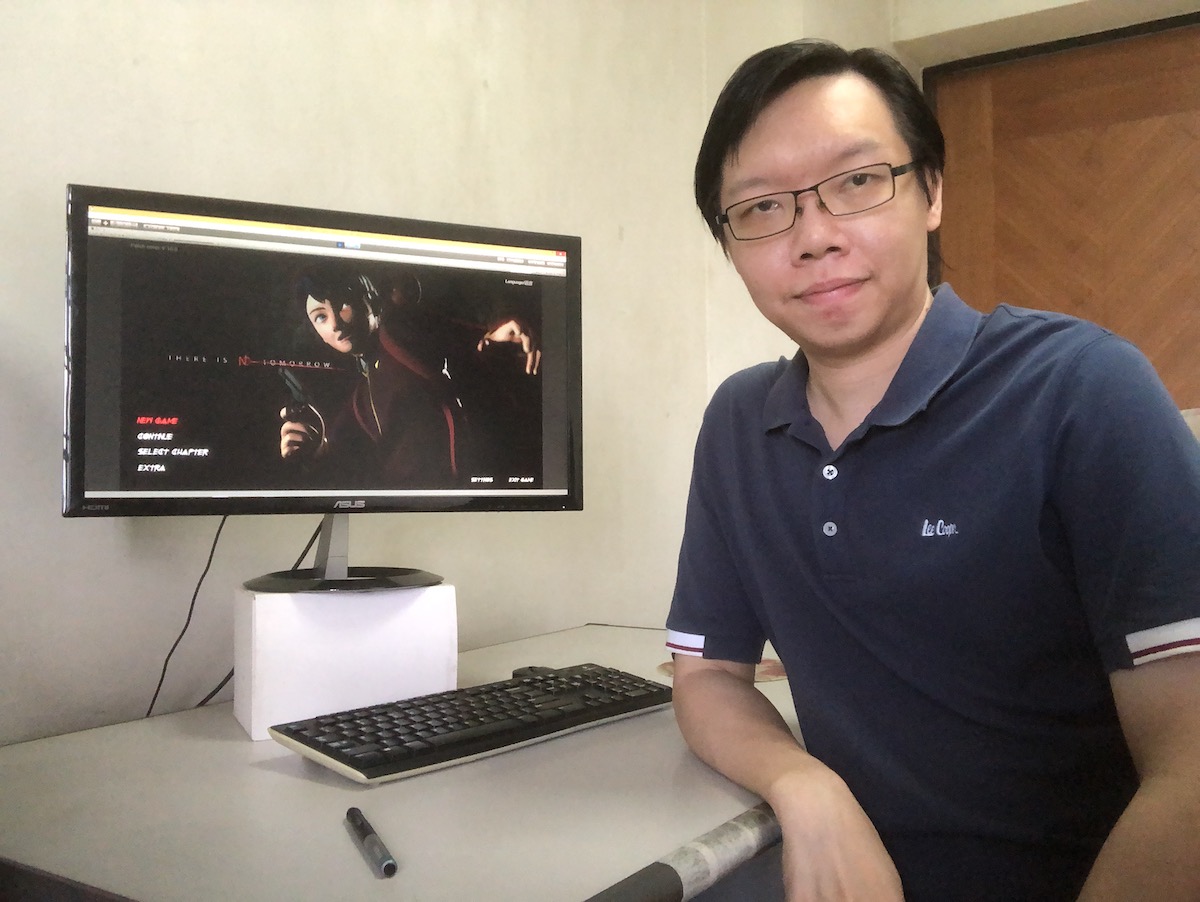
At 29, when Choo Bin Yong was trying to start an animation company with a friend and doing animated films online, he thought of doing a 3D game and began working on it on his own. 3 years later, he self-published the finished game on his own as well. Now that it’s been 6 months since then, we asked him why and how he did it all by himself.
“I am using a plugin called ‘Playmaker’ for Unity that helps me with programming the game visually without the need to understand coding.”
Q: Hi Choo! How did you end up as a game publisher and designer? Was it a lifelong dream or pure chance?
Making games is something that I always wanted to do ever since I first saw a CGI cutscene from a video game but I started with pursuing 3D animation which later went to game development. It was always a dream of mine to create a 3D game.
What certifications, training or experience does a person need to be qualified to be a publisher and designer of games, and how did you acquire those yourself?
I didn’t have any training or education in game development but is self-taught. I studied 3D animation in NAFA which helps with the creation part of the process but the things related to game design are mostly self-taught and through personal gaming experience.
A screenshot taken during the making of There Is No Tomorrow.
You designed the video game, There Is No Tomorrow, all by yourself in 3 years and published it all on your own too. Why and how did you do that?
It is my first 3D game so it’s something that I have to start on my own. It is difficult to find someone to work together with when there is no budget nor can I promise that the game will be financially successful. I think that making a game solo isn’t quite as difficult as people think because these days, game engine software is being modified to allow designers and artists to be able to use it to make games without much coding/programming knowledge.
Would it have been easier to sell the game to a publisher and hire collaborators to work on it?
The game development process took too long by which time when the game was almost finished, I felt that it was too late to approach a publisher. At the same time, I was also curious about whether self-publishing can be good. Also, I felt that it could be difficult to find a good publisher for my game.
Can you tell us a little about There Is No Tomorrow? What kind of game is it and what’s the end goal?
There Is No Tomorrow is a third-person adventure/action game. You play as a student who time-traveled into the future apocalyptic world. The main gameplay consists of stealth and action that either requires players to sneak past the enemy or to take them out.
Which 3 aspects of creating There Is No Tomorrow were most difficult for you and which 3 aspects did you enjoy the most?
The cutscenes were tedious to make because most of them required character animations. The 2nd most difficult aspect is fixing the bugs and the third will be the game design.
I enjoyed making the movement animations for the characters and AI because it feels satisfying to see them come ‘alive’. I also had fun with programming the AI and the combat system.
A screenshot of the finished game, There Is No Tomorrow.
Which 3 objects/people were most useful for you when you were creating There Is No Tomorrow? And which place was most useful?
I am using a plugin called ‘Playmaker’ for Unity that helps me with programming the game visually without the need to understand coding.
Now that your game is at last out, how do you feel?
I feel relieved that the game is finally out but also disappointed with how the game performed financially.
What has the response to your game been like?
At the beginning of the launch, the response wasn’t good because of the bugs in the game and unpolished levels but eventually, they got patched up.
What did you learn from creating a game all by yourself that you didn’t know before?
I learned everything from building a 3D game to selling a game online. Previously I was not knowledgeable about selling things online but with this game, I am starting to get some experience. One other thing I learned is to realistically manage the scale of my game so it is possible to finish it.
This is Choo Bin Yong.
What advice do you have for those thinking of being indie game publishers and making and owning their own video games too?
My advice is to start a project that you will be confident of finishing. So it means to understand the scale of your game and how realistic it is for you to finish it. I think most indie developers start off with their projects being too ambitious and end up failing to finish it.
What’s the best advice about game-making you’ve been given or heard, and what’s the worst?
The best advice I heard is to prepare a list of journalists’/reviewers’ personal or business emails and to promote your game to them.
Lastly, what’s next for you and will you ever be open to collaborators?
Right now I am developing a few games that are more focused on story and culture.
I am already collaborating with a composer and a sound designer for my current project and will be open to more collaborators for my other projects.
There Is No Tomorrow is presently available on Steam!
Choo’s goal for the future is to make several successful games and launch them on different platforms such as Xbox and Switch. You can find out more about him on his website, koexstudio.wordpress.com or ask him questions about designing games solo using the comment box below.
More interviews with people who’ve made stuff here.
Photographs courtesy and copyright of Choo Bin Yong. Interviewer: Sy Want to be featured too? Tell us here. If you found this article useful:
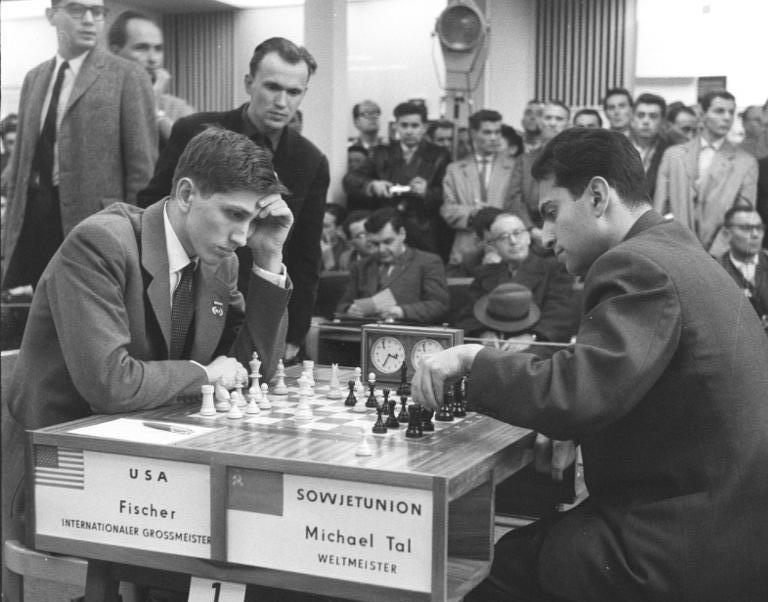
Bobby Fischer began playing chess at age 6 and quickly became a grandmaster by age 15. Although he spent most of his teens and 20s blowing the chess world away with his skills, he ended up a recluse in exile with no interest in competitive chess in his later years. This is the life of the only man to have ever won 11 out of 11 games in the history of the US Chess Championship.
1943 – Robert James Fischer is born in Chicago, USA to a Jewish schoolteacher mother. His mother is homeless at the time of his birth and the man listed on his birth certificate may not be his actual father. He has an older sister who is 5 years older.
Age 2 – His parents divorce and his father leaves the USA for good. His mother moves them to California, then Arizona before settling in Brooklyn.
Age 6 – His older sister buys him his first chess set and they learn to play together. His mother begins a master’s degree in nursing and eventually will end up working as a nurse.
Age 8 – He starts taking lessons at the Brooklyn Chess Club and plays chess against a Scottish chess champion at an exhibition. He meets the president of the Brooklyn Chess Club through that and the president becomes his chess teacher.
Age 9 – The man who may be Bobby’s real father, who had been paying for Bobby’s schooling and making monthly child support payments to his mother, dies.
Age 12 – He starts to win against adult players at chess clubs.
Age 13 – He wins the United States Junior Championship, being the youngest player ever to win. He later wins the Lessing J. Rosenwald Trophy Tournement by defeating an international chess master. The Chess Review calls it “The Game of the Century”. His chess teacher moves away and they lose contact. He gets a new mentor from the Hawthorne Chess Club.
Age 14 – He wins the United States Junior Championships again and his first United States Championship, making him the youngest person to hold that title. He will go on to win it 7 more times.
Age 15 – He attains the rank of grandmaster of chess—the game’s highest designation of skill.
Age 16 – He drops out of high school because it takes his time away from chess. His mother moves out of their apartment for medical training and leaves her son to live on his own.
Age 17 – He gets involved with the Worldwide Church of God and begins to believe that the world is coming to an end. Shortly after, he tells a magazine that women cannot be great chess players.
Bobby Fischer (left) aged 17.
Age 21 – In the United States Championships, he wins 11 games, loses and draws none. It is the only perfect score in the history of the tournament and blows the chess world away. From then on, he begins demanding special treatment from tournament directors—special seating, special lighting, quiet. He begins to worry that opponents are trying to poison his food and that hotel rooms may be bugged. He starts being afraid of flying in case Russians hide booby traps on the plane. He starts playing less chess.
Age 26 – He publishes My 60 Memorable Chess Games for serious players.
Age 29 – Bobby competes against world champion, Boris Spassky in Iceland. He refused to play the match in front of cameras and insisted the match take place in an isolated room. He wins $250,000. He is invited to the White House, interviewed for television and magazines and pursued by commerce. His bodyguard, Saemi Palsson will go on to be a lifelong friend of his.
Bobby Fischer aged 29.
Age 30 – He turns down millions of dollars of financial offers to play new matches and associates himself with the Worldwide Church of God, contributing to them significantly. He believes that the world is coming to an end.
Age 32 – He is asked to defend his title at the World Championships but refuses and is stripped of the world champion title. He then becomes a recluse and disappears from competitive chess.
Age 34 – Bobby leaves the Worldwide Church of God and begins attacking its methods and leadership.
Age 38 – He stays with grandmaster Peter Biyiasas for 4 months and wins him in chess continuously. He begins openly criticising Jews.
Age 45 – Searching for Bobby Fischer—a book about him—is published by Fred Waitzkin. He meets German chess player Petra Stadler and begins a relationship with her.
Age 47 – His relationship with Petra ends.
Age 49 – He wins $5m in a rematch against his old nemesis, Boris Spassky. Before the match, he presents a letter from the US Treasury Department saying that his participation in the match constitutes defiance against American sanctions in Yugoslavia and spits on it in front of reporters. He goes into exile after that and moves to Hungary.
Age 54 – His mother dies.
Age 56 – He talks about an international Jewish conspiracy in telephone interviews with a radio station in the Philippines, and says that the conspiracy is bent on destroying him and the world.
Age 57 – He moves to the Philippines. He meets a 22-year-old who later has a baby girl, Jinky, who she claims to be his daughter.
Age 58 – When 9/11 happens, he tells a radio talk show host in the Philippines that it is “wonderful news” and he hopes the country will soon be taken over by the military and that they will arrest all Jews. In response to his statements, the US Chess Federation cancels his membership.
Age 60 – The USA revokes his passport.
Age 61 – He is arrested by Japanese authorities when trying to board a plane to Manila and jailed for 9 months for trying to leave the country on an invalid passport. He claims then to be married to Miyoko Watai, president of the Japanese chess federation. Japan wants to deport him. Fischer writes to Germany and Iceland asking for citizenship. Iceland grants him citizenship and he is released.
Age 62 – He moves to Iceland.
Age 64 – He dies of degenerative kidney failure in Iceland. He is buried in Iceland. A legal battle over his estate soon begins between his supposed Japanese wife, his supposed Filipino daughter, his 2 American nephews, and the US government (because of unpaid taxes).
Bobby Fischer’s grave.
2 years after his death – His body is exhumed for DNA testing at the request of his supposed daughter. The test conclude he is not her father. The Icelandic district court rules that Miyoko Watai and Fischer were married in 2004 and she thus inherits his estate. His nephews are to pay her legal costs.
Photographs: Dutch National Archives, German Federal Archive. Compiler: Sy Sponsor or support the Life Summary series here. If you found this article useful:
Desti from illustration studio, Collateral Damage Studios began working on and off on a colouring book for adults last year. She jumped into it fully when COVID-19 affected business and now intends to have the book completed by the end of this year. We asked her why and how she does it.
“Colouring books have been known to be prescribed by psychiatrists to patients to calm their minds.”
Q: Hi Desti! Heard you’re working on a colouring book for adults now? Why is that and can you tell us more about this colouring book you’re doing?
Sure! The colouring book is a series of various animals of Singapore as anthropomorphic girls; each animal gets an illustration and an information page. That way, you get to learn more about the various animals as you fill in the books.
Why is it there’s this huge market for adult colouring books these days? Can you explain the appeal to someone who’s never tried doing a colouring book in adulthood?
There’s a fair number of studies that show that colouring books for adults benefit mental health. Even in the past, colouring books have been known to be prescribed by psychiatrists to patients to calm their minds.
It seems like the simple act of colouring seems to reduce anxiety and depression and can increase mindfulness by letting one focus on the moment and exhibit their creativity.
If you’re feeling overwhelmed and stressed, there’s also very little at stake to giving it a try, and you get tangible results of your work in the end as well.
A colouring collection Desti did previously for the adult colouring magazine, Colouring Heaven.
What’s the difference between a kids’ colouring book and an adult colouring book?
Generally, the adult colouring book tends to have far more intricate designs and themes designed to appeal to adults rather then children. Of course, in the end, it’s a personal choice, so it’s more of a matter of getting what you like.
Let’s talk about your process… What does it take to create a colouring book? Can you work us through the steps?
Decide who is your audience and what theme you want the colouring book to be. The theme was chosen as a result of brainstorming between my manager in CDS [Collateral Damage Studios] and I. We wanted to ride on the gijinka trend but also root it in a Singapore context.
Of course, there is the actual drawing part, as well as getting the book printed and distributed. The logistics will be handled by the manager.
What’s the most difficult part about creating a colouring book and what’s the easiest?
The easiest part would be conceptualising the theme, since there was already something I wanted to do… The most difficult part? Taking the concept and making it into reality!
Which 3 objects/people are most useful for you when you are in the process of creating a colouring book?
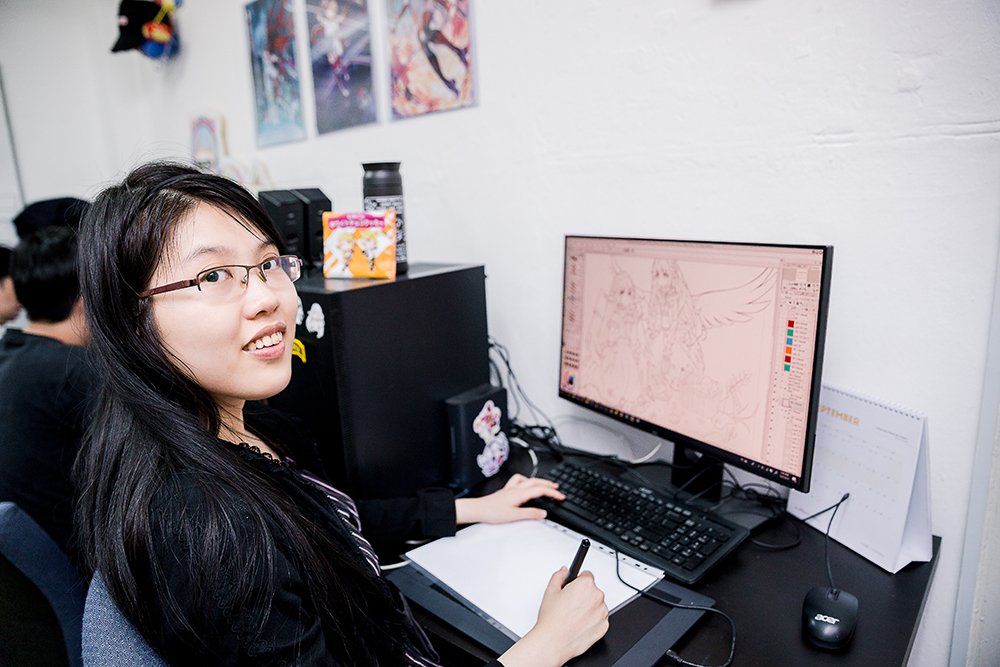
My laptop and tablet would definitely count as important, since I need those to make the artwork! I use a Wacom Intuos Pro (medium size), and the laptop is from a local brand called Aftershock. I would generally also play music when drawing too!
Desti at work.
Which place is most useful?
The internet. You can communicate with others, look up various things, and the internet always has an answer for everything.
What else do you do other than making colouring books?
I also livestream my drawing process occasionally on either Picarto (picarto.tv/desti) or the CDS Facebook page (fb.com/cds.sg).
What advice do you have for those thinking of making their own colouring books too?
Choose a theme you like and work around that theme!
Lastly, how often do you colour in adult colouring books yourself and why do you do it?
Well, since I can draw, I would colour my own images instead, is that cheating? Haha. After all, I can draw how I want for the picture to be coloured.
A livestream of Desti drawing.
Desti’s finished colouring book will be sold at the Collateral Damage Studios website, www.collateralds.com, when it comes out. If you want to know more about her and her work, you can follow her on Twitter.
More interviews with people who’ve made stuff here.
Photographs courtesy and copyright of Desti. Interviewer: Sy Want to be featured too? Tell us here. If you found this article useful:
139 days ago, we interviewed Marta from Spain who had a long time ago set up a family and life in China and was one of the first few people in the world dealing with the COVID-19 crisis. Now that the situation in China seems to be much better, we asked her for an update and found out what she thought of the way both China and Spain dealt with the pandemic.
“I don’t think people are actively encouraged to stay at home anymore, on the contrary, the local government is arranging a lot of street markets and other activities to try to encourage spending.”
Q: Hi Marta, welcome back! What’s happened since the last time we spoke? How’s Suzhou and how are you?
A: Hello and thanks for having me again! Since we last spoke, the epidemic has spread all over the world as everybody knows! In Suzhou, things started going back to normal in mid-March and by now everything is more or less business as usual, with the exception that many people still wear masks and public places still check your temperature. Me and my family are fine and we don’t know anyone who was infected in Suzhou.
You are the parent of a young child so how has it been trying to keep him clean, safe and entertained since COVID-19 appeared? What tips and tricks have you been using?
During our 6 weeks or so of home confinement, my son (who was 17-18 months then) only left the house 3 or 4 times. He actually took it better than I would have expected and the second floor of our apartment, where we have a big storage room, became his playground. After courier services went back to normal at the end of February, I bought him a play kitchen online and he has been addicted to that ever since. We also read lots of books and looked up easy activities to do at home. He started watching cartoons on TV too, but I managed to keep that under 20 minutes a day!
What are the numbers of COVID-19 infected, recovered and demised in Suzhou and China right now? We’ve been hearing a lot about a second wave of infected in Beijing in recent days—how serious is it?
I don’t have the specific numbers for Suzhou but in the whole province of Jiangsu, where Suzhou is, there have been 654 infected and 0 deaths. There’s only one active case as of now in the province. In the whole of China there have been 85,279 infected since the epidemic started, 4648 confirmed deaths and 80,105 recovered. There are currently 526 active cases.
The outbreak in Beijing is worrying because it was the first incident of local transmission in over 2 months, but it seems to be under control now. China is taking the epidemic very seriously and doesn’t hesitate to take very strict measures to contain it.
What’s open and what’s closed in Suzhou these days? Have you gone back to the office to work yet?
Everything has reopened, except the places that didn’t manage to survive. Among these are several shops that we used to go to, like an ice cream store and a cake shop (sad face!). I always work from home so nothing changed for me in that regard, but my husband went back to his office on February 18, after 2 weeks of working from home.
“Our favourite ice cream store didn’t survive the epidemic and has closed.”
Is mask-wearing mandatory? And are people still encouraged to stay home?
It’s not mandatory to wear a mask on the street but here in Suzhou many people still wear it. In places like malls, the security guard checking your temperature and QR code at the entrance asks you to wear a mask if you are not wearing one. I don’t think people are actively encouraged to stay at home anymore, on the contrary, the local government is arranging a lot of street markets and other activities to try to encourage spending.
Why do you think there’s been a new wave of outbreaks in China even though they had gotten things under control the first time?
I’m not a scientist but it seems this virus is a real sneaky bastard that is not going to leave anytime soon! I guess there had been some asymptomatic cases going around in Beijing and the virus was kept alive until people relaxed their precautions and it caused an outbreak again.
“This picture is from April. We visited a popular park in Suzhou. There were quite a lot of people and everybody wore masks.”
How do you think regulations will change again now that the second wave is happening in China?
As far as I know, people from Beijing now face some travel restrictions, but there haven’t been any new measures in Suzhou. I haven’t experienced new restrictions here in Suzhou (maybe also because we never stopped wearing a mask here).
What are your thoughts on the situation in Spain in comparison to the situation in China? Which country do you think has handled their epidemic better?
It seems Spain is doing better now and I’m told by family and friends that most people are wearing masks and keeping a safe distance outside. I think China handled the epidemic way better. Spain (and many other countries) seemed to believe the virus would not reach their borders and didn’t even prepare medical supplies in advance. I know many people don’t believe the infection and death numbers that China publishes and I cannot know what is happening in every corner of the country, but I don’t have any reason to be sceptic about the figures in Suzhou. Why? Because we don’t know anyone here who personally knows anyone that was infected (and we know a lot of people, due to my husband’s job). Meanwhile, in Spain I know 6 people who had infected relatives or friends (and 2 of them died).
What advice do you have for those in Spain after what you’ve seen and been through in China?
I think people in Spain now have more epidemic experience than I’ve had, as their lockdown was longer and compulsory! The only advice I’d give is that, seeing what has happened in Beijing, we cannot lower our guards just yet! Wearing a mask in the middle of the summer is a pain in the ass but it might save many lives.
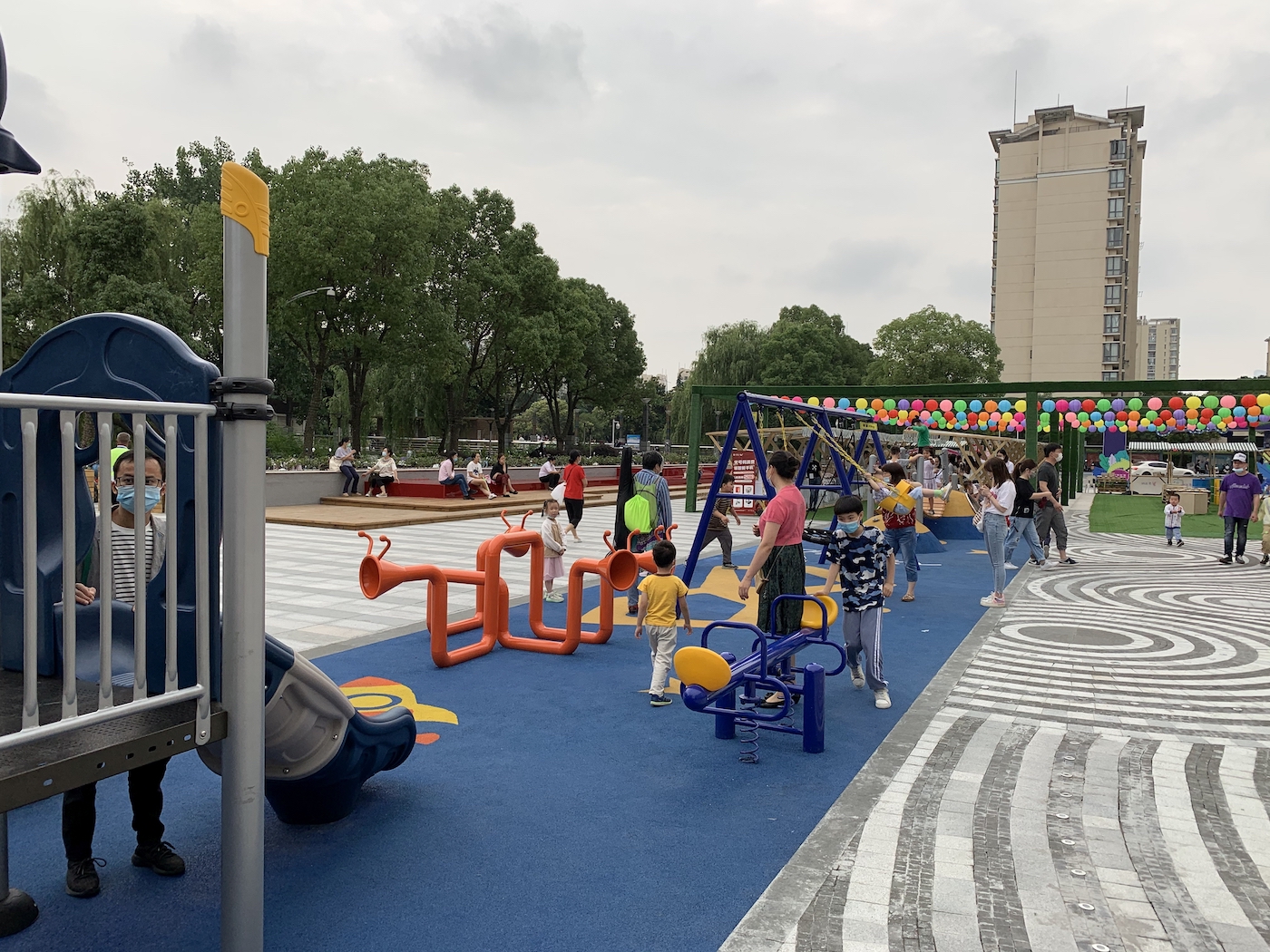
“A busy playground in Suzhou at the end of June. The colorful garlands in the background were part of an evening street market that was getting ready to open.”
What do you miss most about life before this pandemic?
I miss being able to travel! Not as a tourist as that is not important now, but I’m very sad thinking that I will most probably not be able to go to Spain this year and my family will not see my son until who knows when. China has closed its borders to foreigners so if I left, I wouldn’t be able to come back…
Which 3 items or people are now most important to you?
Video calls! So at least my parents can see my son and he doesn’t forget their faces. Children’s books, which my son is now very interested in. And mosquito repellent!! Because mosquitoes are a plague in the summer here.
Lastly, what else have you learned in the time since we last spoke that you didn’t know before?
When the virus was more or less contained in China, I was optimistic that things would return to normal soonish. Now that it is everywhere and out of control, I’ve come to realize that I might not be able to go anywhere for a long, long time.
Marta’s goal for the next year is to move to a bigger apartment. “So we might be doing a bit of apartment hunting.” You can find out about her progress at her blog, martalivesinchina.wordpress.com, or chat with her about the COVID-19 situation in Spain and China using the comment box below.
Follow the latest in our COVID-19 Diaries series here.
If you’re in a country that has been affected by the novel coronavirus and would like to share information about the situation where you’re at, do get in touch with us here.
144 days ago, we interviewed Liv from England who had only just moved to China to work as an English teacher. Recently, we caught up with her again, only to find she had since returned to England and is now without a job. Here’s her update on what’s been happening to her and around her.
“The whole “stay home” mantra has been long forgotten and most people refuse to wear masks even though it is encouraged.”
Q: Hi Liv, welcome back! What’s happened since the last time we spoke? I heard you’re back in the UK now, why is that?
A: Hello! Yes I came back home to the UK on March 13th. It was a bit of a complicated issue, but my boyfriend was unable to get out to China to live with me and it was looking unlikely for the next few months, if not for the rest of 2020. When I told my boss about how this was affecting me personally, I was told I had to either quit and leave the following week, or stay on for at least another two months. With such uncertainty, I decided I would rather be home safe with my family than stuck in my apartment alone for who knows how long.
What Liv saw when flying back to the UK from China.
What was it like returning to the UK in March? Did you have to undergo quarantine?
I literally walked straight through arrivals in Manchester Airport and no one batted an eyelid. I was not tested and did not have to quarantine, but I did for a week just to be sure, even though I had worn a mask and taken extra precautions the entire journey home.
Shortly after, your prime minister Boris Johnson announced he tested positive for COVID-19. How did you react to that?
I wasn’t surprised. Just days before he had bragged about shaking hands with people and didn’t seem to be taking things seriously. I obviously wouldn’t wish it on anybody but it was his own lack of responsibility and condescending attitude which caused it.
What’s open and what’s closed in the UK these days? Are people encouraged to wear masks or stay home?
As of July 4th, most places will be reopened – pubs, restaurants, cafes, hairdressers, etc. Shops are already opened up but with queueing systems and caps on capacity in place. The whole “stay home” mantra has been long forgotten and most people refuse to wear masks even though it is encouraged.
Have you been looking for a new job since? Is it difficult to find work in the UK these days?
I have been searching for jobs almost every day for the past 4 months, and gotten nowhere with it. It’s extremely difficult and disheartening, as I have had to seek out financial support.
One of the many cakes Liv baked out of boredom.
What are the numbers of COVID-19 infected, recovered and demised in the UK right now? Is the situation improving over there?
As I write this, there have been 312,000 confirmed cases of coronavirus (814 today, June 30th), and 43,575 deaths. We are being led to believe that things are getting better and back to normal, but until we have a day of no cases or no deaths, I don’t believe it is improving.
What’s the first thing you’re going to do once the lockdown is lifted?
I will not be doing anything differently once lockdown is lifted. It is far too early based on the stats, and we will no doubt get another spike in cases. The only thing I will do is see my family, but still maintain social distancing wherever possible.
Since you’ve been in two countries during the peaks of this pandemic, which country do you think has handled their epidemic better?
China!!! They enforced a real lockdown–what we have had here in the UK has been very vague and barely enforced. The government has done an awful job in laying out clear instructions, and they have prioritised the economy over the lives of the British people.
What can the UK learn from China in dealing with a pandemic, and vice versa?
Be more efficient and firm with enforcing lockdown. If we have another spike, they need to be more clear. That being said, the people of China are much more respectful of each other and what their government and health system recommends. A large number of the British population lack the same responsibility and respect.
More of Liv’s cakes.
What do you miss most about life before this pandemic?
I miss my friends and family. I feel like I took for granted the littlest things and will make more of an effort and be less lazy once this is all over!
Which 3 items or people are now most important to you?
1—My boyfriend and family, we keep each other going and stay positive. 2—My laptop for keeping connected over Zoom and Skype and giving me things like online courses and my blog to keep me occupied! 3—Not an item or person but my local area and countryside are super important to me—daily walks and discovering beautiful places nearby have helped me mentally during lockdown!
Liv’s local countryside.
Liv presently lives with her boyfriend and his family. She hopes to be able to get a job soon (“Any job!”) and save as much as possible so that she can travel the world in the future. You can read more about her at her website, www.wheresliv.com or chat with her about finding work during the pandemic using the comment box below.
Follow the latest in our COVID-19 Diaries series here.
If you’re in a country that has been affected by the novel coronavirus and would like to share information about the situation where you’re at, do get in touch with us here.
From next week onwards, we’re going to return to our 2019 schedule of posting just one article a week, on Mondays at 3pm SGT.
Not because we think everything about 2020 has brought bad luck (although to be honest, it does feel that way sometimes), but because we will be rolling out exciting new content and services in the near future and want to make space for those.
So for the rest of this year, Life Summary articles will appear on the first Monday of every month. COVID-19 Diaries will appear when available and the rest of the time, we will do interviews with really interesting people. All other exciting matters will be announced in due time.
If you want to be interviewed or if there’s anybody you want us to interview, either let us know in the comment box below or check out this page.
15 years ago, depressive symptoms led to T getting her first diagnosis of mental illness. 5 years after that, after having a hypomanic episode, she was diagnosed with bipolar disorder. We reached out to find out what it’s like to be in her shoes, and what a regular person can do to help.
* Trigger Warning: The following interview involves a discussion about self-harm and suicide. Please do not read on if you may be sensitive to such topics.
“Getting diagnosed actually felt freeing and empowering to me, as I finally felt that my constant lifelong struggles were validated.”
Q: Hi T, thank you for coming on to share your story. Could you tell us a little bit about yourself and how old you are now?
I’m a 36-year-old Singaporean Chinese woman. I’m single but currently have 2 furkids (I used to have 5 but the others have since passed on). I work full-time in customer service.
When did you first realise you had bipolar disorder and how did you end up getting diagnosed?
I was initially officially diagnosed with major depressive disorder (MDD), anxiety, and personality disorder in early 2005, weeks before my 21st birthday. It was only after my first hypomanic episode in 2010 that the diagnosis was changed from MDD to bipolar disorder type ii.
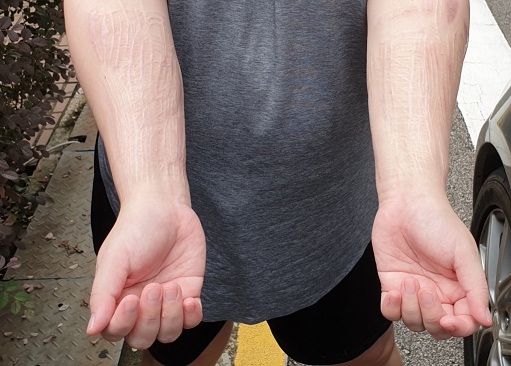
By my first visit to the Institute of Mental Health (IMH) in 2005, I had been self-harming by cutting my arms with a razor blade for several years already. However, the cuts were getting deeper and more frequent. I also cried daily for no identifiable reason, and had constant suicidal thoughts and feelings.
Prior to my diagnosis by my psychiatrist at the IMH, I saw a University counsellor who told me that there was nothing wrong and I had no reason to worry, despite his full knowledge of my symptoms. One day, after having inflicted several severe cuts on my wrists, I felt so desperate that I decided to visit the polyclinic to request for a referral to IMH. However, a referral appointment would take weeks or months, and the doctor who attended to me was alarmed at the severity of my symptoms so she wrote a memo for me to be seen at IMH A&E that very same day. It was my psychiatrist at IMH who eventually diagnosed me, first with MDD and subsequently with bipolar ii disorder.
A portrait sketch of T. “Done by a dear artist friend sometime during the first 2 or 3 years of my diagnosis (which he was aware of).”
In hindsight, what were the earliest symptoms you had and how old were you when those happened?
I first hurt myself at age 14 by clawing at my own arm with my nails until I drew blood. After that incident, the next time I hurt myself was when I was 18, by cutting my arms with a razor blade. The self harm became regular then, and slowly became a daily affair.
By the time I sought medical treatment, I was cutting myself several times a day. It took several years of treatment by my psychiatrist at IMH until the frequency of the self-harm decreased. By my 30s I only cut myself on a handful of occasions a year, and in the past 3 years the frequency has diminished to only about once a year, and the cuts are less deep and scarring.
This self-harm was the most visible symptom of having a mood disorder. However, looking back, there were signs that I had already experienced depressive episodes since childhood. The earliest I remember was when I was around 7 or 8 years old. I had extremely poor self-esteem and would have bouts of crying for no reason. And when I was 12, I was obsessed with suicide, although I did not have severe suicidal thoughts or feelings then. It manifested in me drawing fake scars on my wrists and bandaging them as if I had real wounds. My Chinese teacher thought the scars and bandages were real but I don’t recall if she did anything to help. So, in essence I have had depressive tendencies, thoughts, and behaviours since childhood.
How did it feel to be diagnosed with bipolar disorder? How old were you then and how did you think it would affect your life?
I was just about to turn 21 when I received my first psychiatric diagnosis of MDD, anxiety, and personality disorder. 5 years later, at 26, I had my first hypomanic episode and the diagnosis was changed to bipolar type ii disorder.
I never thought about how it would affect my life because as mentioned earlier, I had actually had depressive tendencies since childhood, so to me it was all normal. I was used to a constant low mood, crying often for no reason, and an obsession with self-harm and death. Frankly, getting diagnosed actually felt freeing and empowering to me, as I finally felt that my constant lifelong struggles were validated, they finally had an explanation and I wasn’t just being self-absorbed and self-pitying.
Were your first presumptions right? Is living with bipolar disorder what you thought it would be?
I didn’t go into this with any presumptions. As mentioned earlier, I had lived a life of dysregulated mood, and had been displaying symptoms for years, so this was status quo for me, just that now I had a name for it and I had people (my Dr) who cared, understood, and wanted to help. Other than that, I was too busy crying, cutting myself, and trying not to commit suicide to think about how my life would change after diagnosis.
Can you describe what bipolar episodes are like for you? How often do you have such episodes?
I have type ii bipolar disorder which involves depressive episodes as well as hypomanic episodes.
My first hypomanic episode was in 2010 and I have only had a few more over the years since then. However, the rest of the time that I was not hypomanic, I was deep in the depths of severe, suicidal depression, since around the time I turned 18.
I think most people understand depression, including the feelings of hopelessness and worthlessness. Perhaps less understood would be hypomania. My mind would race non-stop, 24 hours a day. I would survive on a couple of hours of sleep a day, even without drinking coffee. I was constantly writing things down in my notebook which made sense to me at the time, but later on after the episode I wouldn’t fully understand the notes. They weren’t exactly gibberish, just that there was no point or sense to them. I felt euphoric, on top of the world, the complete opposite of when I was depressed. I constantly had new ideas about the amazing things I could and would do. I had slightly delusional thoughts like thinking I could become a famous successful person.
Thankfully, my few hypomanic episodes over the last 10 years have only lasted a week or two each time. In the past few years I have had periods of 2 or 3 days when very mild and slight hypomanic symptoms would appear, but I would not categorise them as full hypomanic episodes. I am careful not to let myself feel as if I am flying, I am careful to recognise the signs and thankfully so far I have not needed to seek extra help or support during those periods. As for the severe, constant depression, it finally eased in late 2017 and I am very carefully cautious when I say that my depression has been much milder in the 2.5 years since then.
“Not all mental illness is only in the mind. My scars are proof of my survival and I am not ashamed of them.”
What was your worst episode like?
In terms of depression, I was pretty much at rock bottom from 2005 to 2017. I cried and cut myself daily. I was constantly suicidal. It was pretty much one long episode.
In terms of hypomania, the worst episode was my first in 2010. I couldn’t focus at work as my mind was constantly racing and flitting from one new idea to the next. I was planning my sister’s bachelorette party and it was extremely hard to concentrate on what I needed to do to make it happen. However, the energy from the hypomanic episode did help in motivating me to arrange all the logistics and procure all the items needed for the party within just a couple of days, whereas my normally-depressed self would have had no energy whatsoever to leave the house even once a week. Not that hypomania is a good thing, but it can make people very productive. But not necessarily in the right ways or directions.
How is your bipolar condition presently being managed? What medications or treatments are you on and what do they do?
Currently my condition is managed by taking daily medication and seeing my psychiatrist monthly. The psychotropic medication I take includes: Antidepressant, Mood stabiliser, Antipsychotic. I also have medication to ease anxiety and promote sleep, which I take as needed.
Do you have any plans to get off those medications someday? Why so?
I don’t have any plans or intention to stop taking medication anytime in the future.
I have been on psychotropic medications to treat my mental illness for 15 years without any breaks in between. Medication has changed my life. I tried several different antidepressants before I found the one that worked for me, and I remember very clearly that it was “like flipping a switch”—I was in such a dark place before medication but once I found one that worked, it was like a small light was switched on and it helped make it less nightmarish to get through each moment.
I have tried before to reduce dosages of my various medications. At one point, I was taking 120mg of antidepressant daily but I have since reduced to 30mg. However, my attempts at reducing others like the mood stabiliser have not been as successful, as even small dosage reductions made the symptoms return. Some months ago, I also inadvertently ran out of antidepressants for a week, as I had left my bag of medication at the hospital pharmacy and didn’t have time to go pick it up before running out of antidepressant. That one week was pure hell for me, as the severe suicidal depression returned and I was crying daily and almost unable to cope with work. Thus, that “accidental stoppage” of a medication has showed me that I need a certain minimum dosage to continue to function, so I don’t have any plans to try cutting down on medication any time soon.
Some people like to shame others who are on medication for psychiatric conditions, saying that we should just use “natural” treatment methods such as yoga, exercise, and healthy eating. Some people say it’s bad to keep putting chemicals into our bodies. I don’t share those sentiments. I feel that if a person needs pharmacological therapy to help with the treatment of an illness, then they should be allowed to do so without being shamed.
I have accepted that I may need to be on psychiatric medication for life, but it is this that helps me to stay functional, to keep a full-time job and not to stay in bed crying and cutting myself daily. No one should be allowed to shame me for that, just as no one should be allowed to shame others for depending on spectacles to correct their vision.
The medications T has to take on a daily basis.
Which 3 items or people help you most when it comes to coping with your bipolar disorder?
My cats definitely help me to cope with my bipolar disorder. They are calm and comforting, always there for me, and always showing me unconditional love.
My family (parents and 2 siblings) are also a source of support. I have always been close to my siblings, but my relationships with my parents has only improved within the past 5+ years. My family provides emotional support but also sometimes financial support, such as during the period when I was jobless and unable to afford my treatment at IMH.
Finally, having my razor blade and medications nearby at all times helps me to know that it’s always there just in case I need it. Cutting myself helps release tension and brings about calmness and brief relief from the emotional pain, so even though I seldom cut myself any more, it’s still comforting to know I have the tools to do so if I need. This may not be a healthy coping mechanism, but it works for me at this point in my journey. Having my medication on standby also helps me to know that I can take an anxiety pill or sedative in the event that I really need it.
Which place helps most?
My bedroom is the centre of my world, one of the only places where I’m really allowed to be myself. I’m extremely introverted and need a lot of time alone to deal with my bipolar disorder and anxiety, as well as to rest and recharge after spending time with others.
Apart from my bedroom, the IMH hospital has also come to be a safe space for me, as I know there are medical professionals around who can help me. I have had many sessions with my psychiatrist and psychotherapist at IMH which have brought me healing and recovery, and many of the other staff (nurses, administrative staff) at the clinic are also very helpful in dealing with patients who are not coping well. And I get my medication from IMH, which as I have mentioned is crucial to my day-to-day functioning. So, being at the clinic helps me to feel safe and validated.
What advice do you have for those who’ve only just been diagnosed with bipolar disorder?
Learn as much about the disorder as possible, so that you can recognise the signs and symptoms.
Understand what treatment is helpful, and stick to a treatment plan even if it doesn’t seem to be working at first. It took me years to find a treatment plan (including medication) that worked.
Hang in there. Build a support network—family, friends, pets, your healthcare professionals (even my GP helps briefly counsel me when I have acute episodes, and lets me know if he thinks I ought to seek emergency treatment at IMH A&E).
Have a structure and routine, it helps a lot to have a fixed schedule so that when you are too depressed or hypomanic to think or plan rationally, you still have a sensible routine to follow whilst you wait for the episode to be over.
And don’t be ashamed to reach out for help. You don’t have to go through this alone.
What advice do you have for everybody else when interacting with those with bipolar disorder?
Just like with any mental illness, people with bipolar disorder are not freaks or mentally deficient. There is a lot of stigma and many people think that persons with mental illness should be relegated to simple, menial jobs where they don’t need to interact with other human beings, as people fear that all mentally ill people will cause harm to people around them. This is not true. So many people with mental illness are smart, intelligent, kind, empathetic human beings. We just need you to educate yourself, seek the truth about mental illness, and be supportive instead of stigmatising us.People with bipolar disorder can suffer from extreme moods and mood swings. Please understand that these are not under our control, and we don’t mean to harm you or take it out on you. Look for the signs and symptoms of episodes, and provide support (including encouraging the person to seek treatment) where possible. If not, just be there for us. You won’t know how much it means to us for you to do so.
If you would like to ask T questions about mental illness or show your support of her, you may do so using the comment box below.
More interviews with people who have been through grief or other physical or mental hardships. available here.
Photographs courtesy and copyright of T. Interviewer: Sy Sponsor or support The Strong series here. Want to be featured too? Tell us here. If you found this article useful:
125 days ago, we chatted with a self-employed person in Singapore who had relied on the stock market to make up for his losses in regular income. We asked him how the market has changed since and how he’s been doing.
* Disclaimer: The below opinions are the interviewee’s own and should not be considered as specific investment advice. The risk of loss in trading the stock market can be substantial. Readers must consider all risk factors before trading.
“The stock market is looking ahead into the future when it’s a better place, and hence performs better than what’s on going on the ground.”
Q: Hi Amateur Trader, welcome back! How’s Singapore and how have you and your family been?
A: Not too bad, all things considered.
The last time we spoke, you said the stock market had been your main source of income? Is it still that way or have your other streams of income gone back to normal since?
It’s actually still that way. The stock market has actually been an even greater source of income, seeing how it has been behaving since the pandemic started.
Just for perspective, can you share what the state of the coronavirus outbreak in Singapore is at the moment? What is open, what is not, is full recovery anywhere in the horizon?
It’s Phase 2 of reopening. It’s a more measured way of reopening I guess, if you compare to other countries. It’s nowhere near a full recovery. In my opinion, there will be no full recovery within this calendar year. I optimistically am thinking it would be Q1 2021 at best.
What’s happened to the stock market in the 4 months since we last spoke?
The lows were reached on March 23rd. Since then, the NYSE has regained more than 40%, and has been going green and some stocks are even hitting new highs everyday.
There are stocks that are hitting record high levels with prices that are even higher than their pre-pandemic days, especially the pandemic stocks, such as those companies that are tools for stay-at-home and work-from-home activities. So we see many stocks in companies like Zoom Video, Docusign, Paypal etc, reaching record highs.
On the other end of the spectrum, stocks that are in heavily affected industries such as cruise ships and airlines and oil, where the demand has essentially dipped significantly, have basically crashed to the floor. So. But there are still opportunities to find some profit there.
You spoke of paying attention to opportunities in a crisis previously. Did you manage to make the most of these recent opportunities? Or were they too fleeting to catch hold of?
Yes and No. Yes, I caught some. My pandemic stocks that I held are literally seeing highs. No because I was also a bit too conservative as I wanted to hold cash as dry powder going into this pandemic. Who knew the market would react in this parabolic way. Wall Street and Main Street are completely opposite.
LUCK-IT will earn a tiny commission when you purchase this product.
So now that markets seem to have been rebounding from the plunges in March, do you think the stock market is already in a state of recovery? Or are we just in a bubble that may be likely to burst again at any time?
I have 3 simple thoughts about this.
The stock market is not the economy and vice versa, so in that sense, the stock market is always in a state of recovery from this pandemic because stocks look to the future. Today, the world may seem like a mess and the economy poor. But the stock market is looking ahead into the future when it’s a better place, and hence performs better than what’s on going on the ground.
We will no longer retest the March 23rd lows, even if the pandemic and unemployment gets worse. Simply because just think of all the information everyone has gotten in the last 3 months. The way people are going to react is simply, been there, done that already. So I don’t think there will be investors meltdown to that extent. We will not retests those lows. There will be dips, since stocks do not go up in one straight line. But it will be nothing similar to March.
Do not bet against the Fed.
Stocks that benefited from the pandemic and soared—do you think they have peaked or will they have potentially even more growth in the months ahead?
It depends really. The first thing you need to remember is that stocks did not benefit from the pandemic. You do not buy the stock market. You buy the company. So the question perhaps is, have the stock prices in companies that benefited soared?
My simple answer is, look at the fundamentals. Yes. It’s all trending and relevant now because of the pandemic. Does it have a lifespan and relevance outside the pandemic? And look at it company specific.
So a company like Netflix is a everyday kind of stock, not just during a pandemic. Docusign is a stock that people are going to continue to use after the pandemic. In fact, people wish they used it more. Chlorox is going to get a nice run for obvious reasons… but how about a Zoom Video? How do you make sense of this after the pandemic improves and everyone goes back to work…
Any more tips for amateur traders like yourself hoping for even more tips?
All In and All Out is a bad idea. You cannot buy low and sell high all the time. No one knows where the lows are. Buy when you are comfortable with the level.
What advice do you have for humans of the future who find themselves hit by a pandemic like this one?
Life is Beautiful.
Which 3 items or people are now most important to you?
My family, especially my 2 babies.
Lastly, what else have you learned in the time since we last spoke that you didn’t know before?
I am actually not too bad at this stock market thing.
The Amateur Trader hopes to be less amateurish next year and also to “stay invested, be dedicated and continue to improve” himself. You can find out more about him and his trades by joining his trading webinars via his Facebook page or ask him about the stock market using the comment box below.
Follow the latest in our COVID-19 Diaries series here.
If you’re in a country that has been affected by the novel coronavirus and would like to share information about the situation where you’re at, do get in touch with us here.
Photographs courtesy and copyright of DiplomatTesterMan. Interviewer: Sy Sponsor or support the COVID-19 Diaries series here. If you found this article useful:
Ivanka Trump was born and raised in communist Czechoslovakia but would later find a way past the Iron Curtain to end up amongst high society in capitalist America. This is the timeline of her life before and after being married to Donald Trump.
1949 – Ivana Marie Zelnickova is born in Gottwaldov, Czechoslovakia to an engineer father. Her family is Catholic.
Age 6 – She starts skiing competitively.
Age 12 – She enters a national training program for skiers and starts competing in tournaments across Europe.
Age 18 – She enrols in Charles University in Prague to study German and English and continues to ski. She starts dating George Syrovatka.
Age 19 – She and her boyfriend George plan to defect from communist Czechoslovakia.
Age 21 onwards – She continues her education and graduates with a masters degree in Physical Education.
Age 22 – She marries her first husband, Austrian Skier, Alfred Winklmayr which gets her an Austrian citizenship that allows her to leave communist Czechoslovakia. But as a consequence she can no longer see her parents. Her boyfriend George defects to Canada and opens a ski boutique.
Age 23 – She receives her Austrian passport.
Age 24 – She divorces from her husband who had moved to Los Angeles to teach skiing. She gets a new boyfriend but he is killed in a car accident. She then moves to Canada where she lives with her father’s sister in Toronto, before moving to Montreal to live with her boyfriend, George. She works as a ski instructor before beginning to model.
Age 27 – She goes to New York and meets then aspiring real estate mogul, Donald Trump.
Age 28 – Ivana marries Donald Trump and begins working for her husband’s company as Vice President of Interior Design. Her first son, Donald Jr. is born.
Age 31 onwards – She is a member of the elite New York social scene and begins holding executive positions at the Plaza Hotel in New York, and Trump’s Castle Hotel and Casino in Atlantic City.
Age 32 – Her daughter, Ivanka is born.
Age 35 – Her son, Eric is born.
Ivana aged 36 with then-husband, Donald Trump.
Age 39 – She becomes a US citizen.
Age 41 – Her father dies from a heart attack. The family goes on vacation to Aspen, Colorado, and she finds out there that her husband is having an affair with model Marla Maples. She separates from her husband and will eventually win $20m in the divorce settlement.
Age 43 – She publishes her first novel, For Love Alone.
Age 44 – She publishes her second novel, Free to Love.
Ivana aged 37 with beauty mogul Estee Lauder.
Age 46 – She publishes The Best Is Yet To Come: Coping With Divorce and Enjoying Life Again. She marries Italian businessman Riccardo Mazzucchelli. She begins writing for an advice column called Ask Ivana for the Globe.
Age 47 – She has a cameo in the movie, The First Wives Club.
Age 48 – She and Mazzucchelli separate. She begins dating Roffredo Gaetani.
Age 49 – She buys 33% of Croatia’s second largest daily newspaper.
Age 50 – She sets up Ivana Haute Couture that manufactures clothes, fragrances and jewelry, and Ivana Inc. to handle her public appearances and media work. She launches her own lifestyle magazine, Ivana’s Living In Style.
Age 52 – She contributes to an advice column for Divorce Magazine.
Age 53 – She meets Rossano Rubicondi, aged 30.
Age 56 – Roffredo Gaetani dies.
Age 57 – She appears on her own dating show, Ivana Young Man.
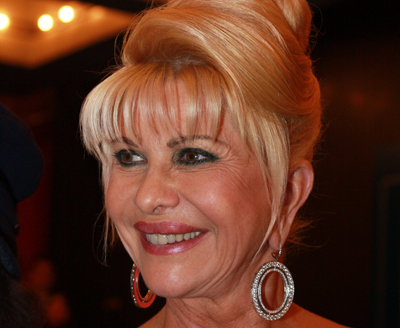
Ivana aged 58.
Age 59 – She marries Rossano Rubicondi on Donald Trump’s Palm Beach, Florida estate. Her daughter is her maid of honour. She appears on The Apprentice as a boardroom advisor.
Age 60 – She divorces Rubicondi. She says it’s because they want to live in different cities. They remain friends.
Age 61 – She appears on England’s Celebrity Big Brother TV series. She sues Finnish fashion company Ivana Helsinki for using her name without her permission. She stops writing the advice column for the Globe.
Ivana aged 60.
Age 62 – She launches a line of wines in partnership with Legends Wines.
Age 64 – She helps promote the work of artist, Giovanni Perrone and holds an opening for him in NYC.
Age 68 – She releases her autobiography, Raising Trump.
Photographs: Bert Morgan, Christopher Peterson, Manfred Werner. Compiler: Sy Sponsor or support the Life Summary series here. If you found this article useful:
21 years ago, Oliver Chong, a theatre professional we interviewed earlier this year, developed the symptoms of schizophrenia. He began having symptoms once every 3-4 days, then once a month, once every 3-4 months, once every year, till finally years would go by before he developed further symptoms. We had a chat with him about his journey with schizophrenia.
“I decided that I had to observe and study it in order to overcome it. I had to behave and look normal when it comes so that nobody could tell. I had to figure out the trigger. But first, I had to overcome my fear of it.”
Q: Hi Oliver, thank you for returning to share another side of yourself with us. Let’s talk about schizophrenia this time. When did you first realise you had it and what were the symptoms?
When I was nine. I didn’t know that it was schizophrenia until I was twenty-two.
It felt like someone had suddenly put a fish bowl over my head. The surrounding sounds suddenly became distant, like how you would hear them from inside a fish bowl, except that the sounds are now at half speed. Not only so, as far as my eyes could see, everything that moved also appeared to move at half speed. So everything that I could see and hear was in slow motion. On top of all these, there was a perpetual noise in the more distant background. It sounded like it might have come from a kitchen with many people holding unintelligible conversations with one another, over the noises of pots and pans.
In the beginning, I was very afraid and confused. I waved my hand in front of my face with all my might to make sure that it was really moving fast, but all I saw, was my hand waving in slow motion. When I talked, I heard myself speaking in a dragged-out fashion, but I really wasn’t. I told my mother about it and she was as clueless. She said perhaps I was just too tired and told me to go take a nap. Indeed, a nap always worked. The next morning I would be back to normal, until the next time it was triggered.
After a while, I decided that I should confront it instead of sleeping it out. I decided that I had to observe and study it in order to overcome it. I had to behave and look normal when it comes so that nobody could tell. I had to figure out the trigger. But first, I had to overcome my fear of it.
When it’s triggered, people would tell me that I was moving and speaking “too fast”. And I realised that I had inadvertently moved and talked faster than usual because everything appeared slow. I had to manage and adjust the speed of my movement and speech, and not be misled by my warped perception of time.
I studied the pattern, duration, frequency and circumstances under which it would be triggered. And then, I would experiment with putting myself under different circumstances, to find one that might be able to stop it. But as soon as I figured all these out, they would all change. And I would have to repeat the whole process over and over, like it was playing catch with me. However, the duration and frequency of the “visits” had decreased steadily over the years.
Over the years, I have long overcome my fear of it. And the process of investigating it has become a welcomed distraction from the mundane. Like a game with a friend of many years. The frequency of occurrence and duration has decreased so much and I would miss it and feel delighted when it “visits”. I wouldn’t want to do anything to make it go away because it would only “stay” very briefly. I would even feel a tinge of sadness when it “leaves” because I wouldn’t know when I would see this “friend” again. The last time it visited was at least four years ago, when I was in my late thirties.
It was only through consultation with a psychiatrist when I was twenty-two that I got to know its name.
How did it feel to be diagnosed with schizophrenia? How old were you then and how did you think it would affect the rest of your life?
Surprised. I only got to know that it was schizophrenia when I was twenty-two, after living with it for thirteen years. I had long gotten used to it by then and had managed it so well that nobody ever knew and it didn’t bother me at all. I felt very very lucky that I’ve had it easy, knowing that many people suffered and struggled with it. I did not think it would affect the rest of my life as I was confident I could manage and cope with it.
Were your first presumptions right? Is living with schizophrenia what you thought it would be?
I was right. I have been coping well so far. Though the symptoms are no longer a cause for worry, I do experience bouts of depression occasionally, a possible spin-off from the condition, which I have to fight and fend off.
Can you describe the last time you had a schizophrenic episode? What was that like, what triggered it, and how long ago was it?
It was at least four years ago. Please refer to the symptoms in the above response (fish bowl auditory, warped auditory and visual perception of time; and “voices”).
At the very beginning, the trigger was always stress and anxiety, and under the condition when I was alone in a quiet place. The remedy was to go to somewhere noisy with people and the duration of the episode would be shortened.
Once I figured out this pattern, it evolved. And the condition became that when I was with many people in a very noisy environment. The remedy was to go to somewhere quiet and be alone.
And then, the condition rule stopped applying. The remaining constant was still stress and anxiety. The remedy was to ignore it and focus on what I was doing. I wasn’t bothered by it because I could function as normal and I could be doing a presentation in a meeting with people and nobody could tell.
And finally, no rules. Not even stress. I could be on a holiday trip in the mountains when it happened. By then, the frequency of the symptoms was like once a year, and I was more than happy to welcome this “friend” of many years. I would enjoy its company and feel nostalgic when it leaves too soon.
What about your worst schizophrenic episode? What was that like?
The worst was at the very beginning when I was very afraid and confused with what I was hearing and seeing that was obviously different from everybody else’s. The harder I fought it, the worse it got, and I could hear my heart thumping very loudly in my head and it felt like my brain was going to explode. All I could do was to force myself to fall asleep and it would be gone when I woke up.
How has your schizophrenia been managed since your diagnosis? What medications or treatments have you had to cope with it?
The way I had been managing it years before the diagnosis. No medications or treatment. Though the psychiatrist I consulted with when I was twenty-two did prescribe me something, I didn’t follow [the prescription] because I had been coping fine all those years without any.
LUCK-IT will receive a tiny commission when you purchase this product, at no additional cost to you.
Has the diagnosis of schizophrenia affected your relationships with other people in any way? At work, at home, or romantically?
No. Very few people even know about it until I told them.
What about physically? Is there anything you cannot do now because of schizophrenia, or anything you must do to avoid further symptoms of schizophrenia?
No.
You are a creative person by profession. Has there been any positives to having schizophrenia in that regard?
I wouldn’t know as I grew up with it. Perhaps the positives of experiencing something more than people without it? I realise, perhaps the years of dealing with the symptoms have made me very sensitive to space and time and others’ perception of it. This sensitivity is especially useful in my work as a director, actor and designer.
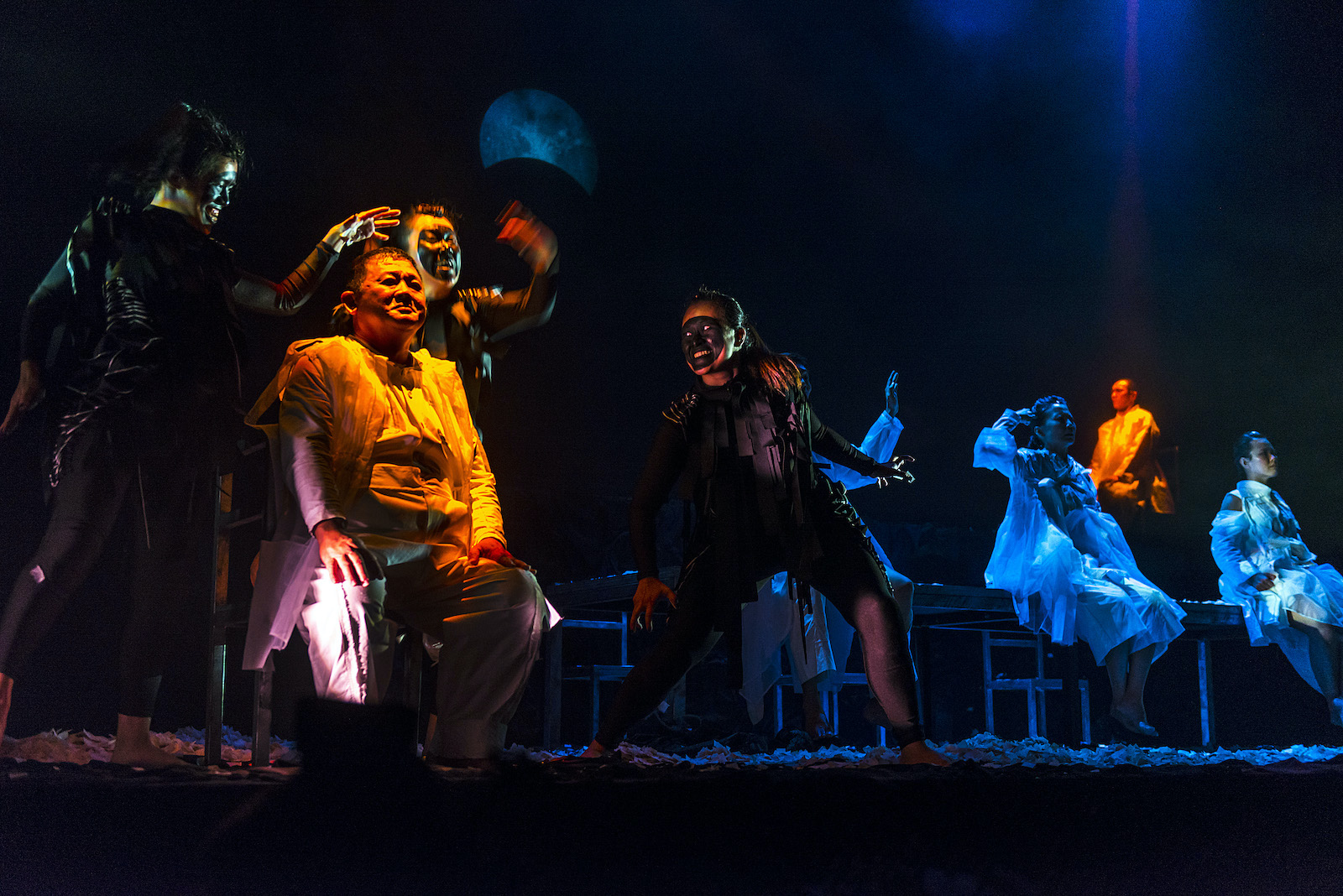
A production Oliver was in during which his experiences with schizophrenia served as a source of inspiration.
Which 3 items or people help you most with your schizophrenia? Why?
I can only think of one, and that would be how my dad had brought me up. He had always said that we should confront our fears, that we should always strive to choose fight over flight from our weaknesses, and there is more than one way to fight them than with just brutal force.
Which place in Singapore helps the most? Why?
Then, it changed according to the evolving trigger conditions. For noisy places, Orchard Road or hawker centre. For quiet places, library or the store room at home.
What advice do you have for those who have only been diagnosed with schizophrenia?
I wouldn’t dare. Not from someone like me who had it easy. Perhaps my dad’s advice might work for some people, but please listen to your doctor.
What advice do you have for those without schizophrenia, when interacting with those with schizophrenia?
Do not confuse sympathy for empathy. People with schizophrenia don’t need your sympathy.
What have you learned from having schizophrenia that you didn’t know before?
The fragility and reliability of reality.
Lastly, looking back to your childhood or younger days, were there any indications you might one day grow up to have schizophrenia?
I had it when I was nine. I did not see it coming at all. Not that I knew anything about schizophrenia then anyway.
Oliver will be striving to foster more collaborations with local and international artists over the next year. He hopes that his works and practice will continue to be desirable to his audience and relevant to the times. You can follow his work at his Facebook page or ask him more about schizophrenia using the comment box below.
More interviews with people who have been through grief or other physical or mental hardships. available here.
Photographs courtesy and copyright of Oliver Chong. Interviewer: Sy Sponsor or support The Strong series here. Want to be featured too? Tell us here. If you found this article useful:
Jane from China emigrated with her family to San Francisco many years ago and got a job in a factory near Chinatown. She shared her thoughts on what it’s been like living in the USA through COVID-19 and the George Floyd protests.
“If they are not afraid of guns, why would they be afraid of COVID-19?”
Q: How was the lockdown in your city like? How did you feel about it?
A: We called it the state of emergency here. Anyway it was similar to a lockdown. Office staff were required to work at home. People were required to keep a social distance if they needed to go to the supermarket or work. However, it was not like the lockdown in Wuhan. I think Wuhan was more strict. I think [the state of emergency in San Francisco] is not strict enough. I heard of a robbery in my area in March.
While San Francisco is suffering from the pandemic, it is also suffering from violent unrest due to the George Floyd protests. Can you tell us what is happening in San Francisco now?
Just like what you can see via the internet, people have gone to rob markets and factories everywhere. I think it is very dangerous now. Especially in the Chinatown area. Starting from Sunday, a curfew was introduced to try to stop the unrest.
Why are people robbing markets and factories?
The factory I work in was robbed. Colleagues say the robbers would sell the goods they robbed. I don’t know why they robbed the market, maybe because they thought it was easy to do so? By the way, people hoarded food and stuff before the state of emergency as well. The difference is now they don’t pay for it.
Aren’t people afraid of catching COVID-19 if so many people gather?
They’re not. If they are not afraid of guns, why would they be afraid of COVID-19? Some of them said COVID-19 is just like the flu.
Will you consider going back to China?
Let me show you this picture [picture below]. Whenever there is a robbery or violent unrest, a yellow spot will appear on the map. There are several yellow spots near me now. Yes, I am quite scared now. But even if I want to go back to China, I can’t. There are no flights now and I have my family here.
A screenshot of an app that lets residents of San Francisco see the criminal activities happening around them.
Jane hopes that life will be able to return to normal next year and that she will be able to go to work as usual and continue to stay with family.
Follow the latest in our COVID-19 Diaries series here.
If you’re in a country that has been affected by the novel coronavirus and would like to share information about the situation where you’re at, do get in touch with us here.
Photographs courtesy and copyright of Jane. Interviewer: Kauai Sponsor or support the COVID-19 Diaries series here. If you found this article useful:
Born into wealth and fame, Ivanka Trump followed her famous father into the spotlight and eventually dropped her own businesses to join him in politics. This is the timeline of the life of Donald Trump’s favourite child and only daughter.
1981 – Ivana Marie Trump is born in Manhattan, New York, USA to Donald Trump and socialite/model, Ivana Trump. She is nicknamed ‘Ivanka’—a diminutive form of Ivana.
Age 3 – Her brother, Eric is born.
School – She goes to the exclusive all-girls Chapin School in Manhattan.
Age 10 – Her parents divorce in a very public way.
Age 12 – Her half-sister, Tiffany is born.
Age 14 – She sent off to boarding school at Choate Rosemary Hall in Connecticut. She begins modelling and signs with Elite Model Management which gets her walking the runways for major fashion brands.
Ivanka aged 14 (on right).
Age 15 – She appears on the cover of Seventeen magazine and co-hosts Miss Teen USA which is partially owned by her father. She dates Greg Hersch who would go on to become an investment banker.
Age 19 – She graduates from Choate and attends Georgetown University for 2 years before transferring to the University of Pennsylvania.
Age 20 – She starts dating James Gubelmann.
Age 22 – She appears in the documentary, Born Rich.
Age 23 – She graduates with a degree in economics and begins working as a real estate project manager for a real estate development firm, Forest City Enterprises.
Age 24 – She breaks up with James, meets Jared Kushner who had also grown up in the public eye and they begin dating. She joins Trump Organization and soon becomes Executive Vice President of Acquisitions and Development.
Age 25 – Her half-brother, Barron is born. She is a guest judge on Project Runway. She and her brothers start the Trump Hotel Collection—a luxury hotel management company. She stars as a co-judge on The Apprentice and Celebrity Apprentice along with her father and brothers.
Age 26 – She supports Hillary Clinton as president. And walks the runway again. And partners Dynamic Diamond Corp to launch Ivanka Trump Fine Jewelry. She opens her flagship retail store in Manhattan and is featured on the cover of Stuff.
Age 27 – She and Jared break up because of objections from his parents but later get back together.
Age 28 – She publishes The Trump Card: Playing to Win in Work and Life for professional millennial women and it becomes a bestseller. She also launches a fashion/lifestyle brand, the Ivanka Trump Collection, and the website ivankatrump.com. She marries real estate developer, Jared Kushner and converts to Orthodox Judaism for him.
Ivanka aged 28.
Age 29 – She appears on Gossip Girl with her husband as themselves.
Age 30 – Her first child, Arabella is born. She suffers from postpartum depression.
Age 31 – She endorses Mitt Romney as president. And joins the board of 100 Women in Hedge Funds.
Age 32 – Her second child Joseph is born. She suffers from postpartum depression again.
Age 33 – She is listed on Fortune magazine’s 40 under 40.
Age 34 – Her jewelry flagship store is closed but Ivanka Trump Fine Jewelry continues to be sold at Trump Tower and all other fine jewelry stores across the USA and in other parts of the world.
Age 35 – Her third child Theodore is born. She suffers from postpartum depression yet again. She is sued by a footwear brand by copying its sandal design. She supports her father as he runs for president and soon gets her brand boycotted for supporting him when he makes derogatory remarks about women. Her father becomes President of the United States and she is named member of her father’s presidential transition team along with her brothers and husband.
Age 36 – Numerous big stores drop her brand because of poor sales. She leaves the Trump brands behind and shuts down her own brands to become senior advisor of President Trump and an unpaid employee of the White House. She publishes her second book, Women Who Work: Rewriting the Rules for Success but despite this appearing on the New York Times bestseller list, it receives a great deal of negative criticism. She donates the profits of this book to the National Urban League and Boys and Girls Clubs of America.
Ivanka aged 36 (on right).
Age 38 – She goes on a worldwide tour to promote her “Women’s Global Development and Prosperity Initiative”.