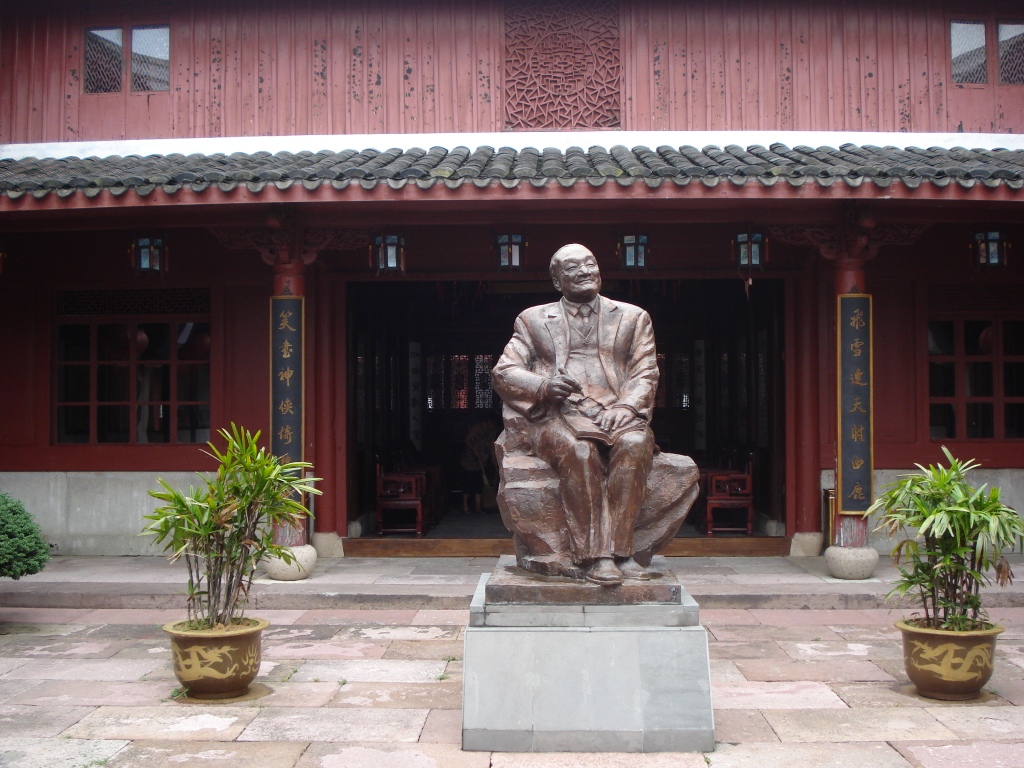
• Sculpture of Louis Cha on Taohua Island, Zhejiang, China.

    Life Summary: Louis Cha, Popular Wuxia Novelist

    Louis Cha was expelled from high school for criticising the Chinese government, watched his father get executed for counterrevolutionary behaviour, yet would manage to get the next leader of China to become a fan of his wuxia novels, along with millions in Chinese-speaking territories around the world. This is the life of one of the most popular authors in Chinese literature. 

    1924 – Zha Liangyong is born in Zhejiang Province, China to an “outstanding” family of scholars. He is the second child with an older brother, Liangjian who is 8 years older than he. 

    Age 2 – His sister, Liangxiu is born. 

    Age 4 – His second sister and third sibling, Liangxuan is born. 

    Age 10 – His second brother and fourth sibling, Lianghao is born.

    Age 11 – His brother, Liangdong is born.

    Age 12 – His fourth brother and sixth sibling, Liangyu is born. He spends his childhood reading many novels. 

    Age 13 – He enrols into Jiaxing No.1 Middle School. 

    Age 17 – He is expelled for criticising the government as autocratic. He continues his education at Quzhou No.1 Secondary school. 

    Age 19 – He graduates from Jiaxing High School and enrols in the School of Foreign Languages at Central University. He later drops out and transfers to Soochow University to major in international law. 

    Age 23 – He joins Shanghai’s Da Gong Pao newspaper as a journalist. 

    One of Louis Cha’s many articles at the Hong Kong Heritage Museum.
    One of Louis Cha’s many articles at the Hong Kong Heritage Museum.

    Age 24 – He is posted to Hong Kong to be a copyeditor. He is later transferred to New Evening Post to be a deputy editor and meets a new friend, Chen Wentong there. He marries Du Zhifen. 

    Age 25 – His father, Zha Suqing is arrested and executed by the communist government in China for allegedly being a counterrevolutionary and the family’s estate is seized. Louis is safe because he lives in Hong Kong, then a British crown colony.  

    Age 29 – Louis’ friend Wentong writes a wuxia (a genre involving the stories of martial artists in ancient China, usually with fantastical elements) novel under a pseudonym. By this time Louis has divorced his first wife and marries his second, Zhu Mei—a newspaper journalist. They will have 2 sons and 2 daughters together. 

    Age 31 – Louis himself begins to write his first serialised wuxia novel under the pseudonym, Jin Yong. The Romance of the Book and Sword is published in New Evening Post. 

    Age 32 – His second serialised wuxia novel—Sword Stained with Royal Blood—is published in the Hong Kong Commercial Daily.

    Age 33 – He quits journalism and goes to work as a scenarist-director and scriptwriter for a movie company. He continues to work on serialised wuxia novels on the side and his third serialised wuxia novel—The Legend of the Condor Heros—is published in Hong Kong Commercial Daily.

    Age 34 – He co-directs a film, The Nature of Spring, under the name Cha Jing-Yong, his official name in Hong Kong.  

    Age 35 – He founds the newspaper Ming Pao together with his high-school friend. He works as its Editor-in-Chief and writes both serialised novels and editorials for it at the rate of approximately 10,000 words a day. His Flying Fox of Snowy Mountain and The Return of the Condor Heros are published that year in New Evening Post and Ming Pao respectively. 

    Age 36 – He publishes Other Tales of the Flying Fox in Wuxia and History. He co-directs another film called Bride Hunter. 

    Age 37 – He publishes 3 other wuxia serials in Ming Pao. 

    Age 39 – He publishes 2 more wuxia serials in Southeast Asia Weekly. 

    Age 41 – He publishes one more wuxia serial in Southeast Asia Weekly. 

    Age 43 – He publishes his 13th wuxia serial in Ming Pao and Nanyang Siang Pao. He receives death threats from China’s communist underground for his anti-Maoist editorials and briefly hides out in Singapore. 

    Age 45 – He publishes his 14th wuxia serial in Ming Pao and will continue to work on it for the next 3 years. 

    Age 46 – He publishes his 15th and last wuxia serial—Sword of the Yue Maiden—in Ming Pao. By this time, Ming Pao has gained the reputation as one of Hong Kong’s most highly-rated press. 

    Age 48 – Louis retires from writing and spends his time editing and revising his previous works. 

    Age 52 – He divorces his second wife and marries his third, Lin Leyi who is 23 years of age. His son commits suicide while studying at Columbia University after a quarrel with his girlfriend. China’s leader Mao Zedong dies. 

    Over the next years – Louis becomes involved in Hong Kong politics. His novels are banned in China because the Chinese think they are satires of Mao Zedong and the Cultural Revolution. His novels are also banned in Taiwan because the Taiwanese think they are in support of the Communist Party of China. 

    Age 55 – He finishes revisions of all his previous works. His revised versions are known as “New Editions” in contrast to the “Old Editions”. A complete collection of all his works is published by Taiwan’s Yuenching Publishing House. 

    Age 56 – The Wulin magazine in Guangzhou is the first magazine to publish his work. His novels by this time are very popular in Chinese-speaking areas around the world. They would later go on to be adapted into films, TV series and radio dramas in almost all Chinese-speaking territories. 

    Age 57 – He is invited to meet China’s new leader Deng Xiaoping over dinner and the latter declares himself a fan of Louis’ work. He returns the compliment by saying good things about Deng in front of reporters. 

    Age 69 – He sells all his shares in Ming Pao to prepare for retirement. 

    Age 70 – His complete collection is published by Sanlian Shu Dian in Beijing, China. 

    Age 71 – His complete collection is published in Southeast Asia by the Ming He Shi Singapore-Malaysia Company. 

    Sculpture of Louis Cha on Taohua Island, Zhejiang, China.
    Sculpture of Louis Cha on Taohua Island, Zhejiang, China.

    Age 72 – He becomes part of the Preparatory Committee set up to supervise Hong Kong’s transition to the Chinese government. 

    Age 73 – He suffers a stroke and is unable to walk, write or speak well. 

    Age 74 – The asteroid 10930 Jinyong is named after him. 

    Age 75 – Louis begins revising his novels again. 

    Age 80 – An excerpt from his novel, Demi-Gods and Semi-Devils are included in senior high school text books in China. Other excerpts are included in text books in Singapore for secondary and junior college students. 

    Age 81 – He applies for a doctorate in Asian Studies at Cambridge University.

    Age 82 – The revisions of all his novels are complete. These are known as the “New Century Editions”.

    Louis Cha aged 83.
    Louis Cha aged 83.

    Age 85 – He applies for a doctorate in Chinese Literature at Peking University. 

    Age 86 – He obtains his doctorate from Cambridge University. 

    Age 89 – He earns his doctorate from Peking University. 

    Age 94 – He dies in Hong Kong Sanatorium and Hospital of organ failure after a long illness. He is survived by his wife and 3 children. Famous writers, producers, actors, politicians and even Alibaba’s founder Jack Ma (a huge fan of his) attend his funeral. His ashes are kept at a columbarium in a monastery on Hong Kong’s Lantau Island. By this time, over 300 million copies of his works have been sold worldwide. His personal wealth is estimated to be around HK$600million (US$77million).

    More life summaries available here.

    Photographs: 浙江省舟山市普陀区桃花岛旅游管委会, Hong Kong Heritage Museum. Compiler: Sy
    Sponsor or support the Life Summary series here.
    If you found this article useful:


  • How I Wrote An Interactive Speculative Fiction Play-by-Email Game

    From 30 Oct – 10 Nov 2020, LUCK-IT will be hosting an interactive play-by-email game titled Play This Story: The Book of Red Shadows where readers can go into the horror world of speculative fiction author, Victor Fernando R. Ocampo and interact with his fictional environment using nothing but the magic of words. Before that game starts, let’s find out why and how Victor wrote The Book of Red Shadows.  

    “Always remember that the road to hell is paved with good intentions.”

    Q: Hi Victor! To start, could you introduce yourself to those who don’t yet know of you? What do you write and why do you write?

    A: Hello! My name is Victor Fernando R. Ocampo and I am a Singapore-based Filipino writer of speculative and experimental fiction. 

    Why do I write? I write because I have stories that need to be told. I write to understand myself and the world. As Flannery O’Conner once said: “I write because I don’t know what I think until I read what I say.”

    Tell us a little about the other books you have published right now. What are they about and which types of readers are they for? 

    I’ve written two books, the International Rubery Book Award shortlisted The Infinite Library and Other Stories (Math Paper Press, 2017) and Here be Dragons (Canvas Press, 2015), which won the Romeo Forbes Children’s Story Award in 2012. 

    However, I primarily write short fiction and my work has appeared in many publications including Apex Magazine, Daily Science Fiction, Likhaan Journal, Strange Horizons, Philippines Graphic, Science Fiction World and The Quarterly Literature Review of Singapore, as well as anthologies like The Best New Singapore Short Stories, Fish Eats Lion: New Singaporean Speculative Fiction, LONTAR: The Journal of Southeast Asian Speculative Fiction, Maximum Volume: Best New Philippine Fiction, and the Philippine Speculative Fiction series.

    Most of my work is for general audiences, except for my experimental fiction which I usually write for myself to explore the limits of language and narrative structure. An example of the later is “1 M D 1 in 10” (BNSSS V.2 and online here) which was entirely written in SMS and L33t speak. 

    One of Victor Fernando R. Ocampo’s books.
    One of Victor Fernando R. Ocampo’s books.

    What about The Book of Red Shadows that you wrote for LUCK-IT’s Play This Story series? What is that about and what can readers and players expect when going into that world of yours?

    The Book of Red Shadows is my first Play-by-Email Interactive text narrative. It is part near-future Science Fiction and part mystery tale. Expect to be immersed in a future world that is almost familiar yet actually very alien.

    What do you hope readers and players will get out of playing Play This Story: The Book of Red Shadows?

    I want to challenge readers to test the limits of how much they are willing to sacrifice their morality for “the greater good.” With each chapter, the morally ambiguous choices escalate. I want everyone who goes through the narrative to question exactly how much they are willing to accept the old adage that “the end justifies the means.” 

    The Book of Red Shadows as visualised by Victor Fernando R. Ocampo himself.
    The Book of Red Shadows as visualised by Victor Fernando R. Ocampo himself.

    How did you write “The Book of Red Shadows”? How long did it take you and what were your inspirations and thoughts going through your mind as you wrote it?

    I was watching old episodes of Black Mirror when the germ of the story first came to me. Despite the pleas and threats from my partners, I took longer than the agreed-upon time to write it as my stories tend to evolve as I write them. If I had a choice, I would have loved to have six months to flesh out something that would be at least a novella in length.   

    Is “The Book of Red Shadows” your first interactive piece of work? How much more difficult or easy is it for you to write interactive fiction in comparison with regular fiction? 

    It is the first one to be published. It’s actually easier to write than a novel because there is a structure that you have to follow. 

    Which 3 people or things in your life were most important for you while you were writing The Book of Red Shadows?

    My phone—for editing while on public transportation. Google—for research. A white board for mind-mapping and threading your plot 

    Which place was most important?

    In the story there is a chapter that is set in Tiong Bahru. This references one of my favourite places in Singapore, which used to be located at 9 Yong Siak Street.  

    Can you list 3 things you realised only after writing “The Book of Red Shadows”?

    White boards are great for writing complex plots. There are places that can deliver pau and siu mai after midnight. You really need a lot of time to develop and let your plot breathe in an interactive narrative. 

    What advice do you have for creatives who hope to write their own interactive fiction pieces similar to The Book of Red Shadows?

    Make sure you have read a few Choose-Your-Own-Adventure books. Plots branch very quickly. Be careful not to do too many threads or it will become a nightmare to keep track of.  

    All the books and publications Victor Fernando R. Ocampo has written or contributed to, circa 2020.
    All the books and publications Victor Fernando R. Ocampo has written or contributed to, circa 2020.

    Lastly, what advice do you have for players hoping to survive till the end of Play This Story: The Book of Red Shadows?

    The obvious choice isn’t always the best and always remember that the road to hell is paved with good intentions. 

    This is Victor.
    This is Victor.

    Victor is presently planning to finish his novel, his second short story collection, his second children’s book and a screen play that he’s been working on. You can find out more about him at vrocampo.com and Twitter @VictorOcampo or ask him anything using the comment box below. 

    To register to Play This Story: The Book of Red Shadows for FREE, go here .

    More interviews with professionals of all sorts here.

    Photographs courtesy and copyright of Victor Fernando R. Ocampo. Interviewer: Sy
    Want to be featured too? Tell us here.
    If you found this article useful:

  • Introducing PLAY-IT

    LUCK-IT has always been a digital life survival kit which collects people and their experiences to provide knowledge about the workings of success, failure and possibilities. Since 2019, we’ve reached out to almost a hundred people from all walks of life in order to present their stories and personal lessons to you. 

    We are now taking that mission to a whole new level by adding a segment— PLAY IT —that will allow you to test out whatever you might have learned from our platform in a variety of interactive survival-themed games.

    Our PLAY-IT selection will be text-based simulation or role-playing type of games that will immerse you in a variety of fictional settings to allow you to find out how you will fare under various circumstances.  

    Curious to know what that will be like? Try out our very first PLAY-IT offering titled Play This Story: The Book of Red Shadows (now open for registration)!

    Synopsis: 

    You wake up amnesiac, trapped inside a machine attached to probes, monitors and sensors. A civil servant named Tan tells you that you are freshly deceased. However, something called the Book of Red Shadows is keeping you from being brain dead for the equivalent of 10 days. You are now part of the government’s secret Red Shadow Project, whose aim—as far as you have been told—is to change the fate of certain people destined to die tragic or horrific deaths.

    Using only a computer interface, you need to decide which random strangers will live or die, and then perform tasks to be able to literally make that decision happen. Survive long enough within the system and you will be given the same chance to rejoin the land of the living. However, with a rogue hacker threatening to destroy the system and an unknown digital presence—some form of consciousness trapped within Project Red Shadow’s massive AI—stalking you… you are going to have to get real creative in order to be able to make it out of there alive. 

    The clock is ticking. Can you manage to survive for ten days, uncover who you really are and write yourself back to life? Or will you be erased from existence in the most gruesome way imaginable?

    To play: REGISTER HERE

    It’s FREE, courtesy of the Singapore Writers Festival.

    (Limited slots available. Book fast to avoid disappointment.)

    Play This Story: The Book of Red Shadows is a speculative fiction, psychological horror Play-by-Email game.

    For organisations interested in developing text-based interactive games for your audiences or venue, we can customise a variety of creative services to suit your needs. Kindly contact us here for enquiries or a friendly discussion about working together. 

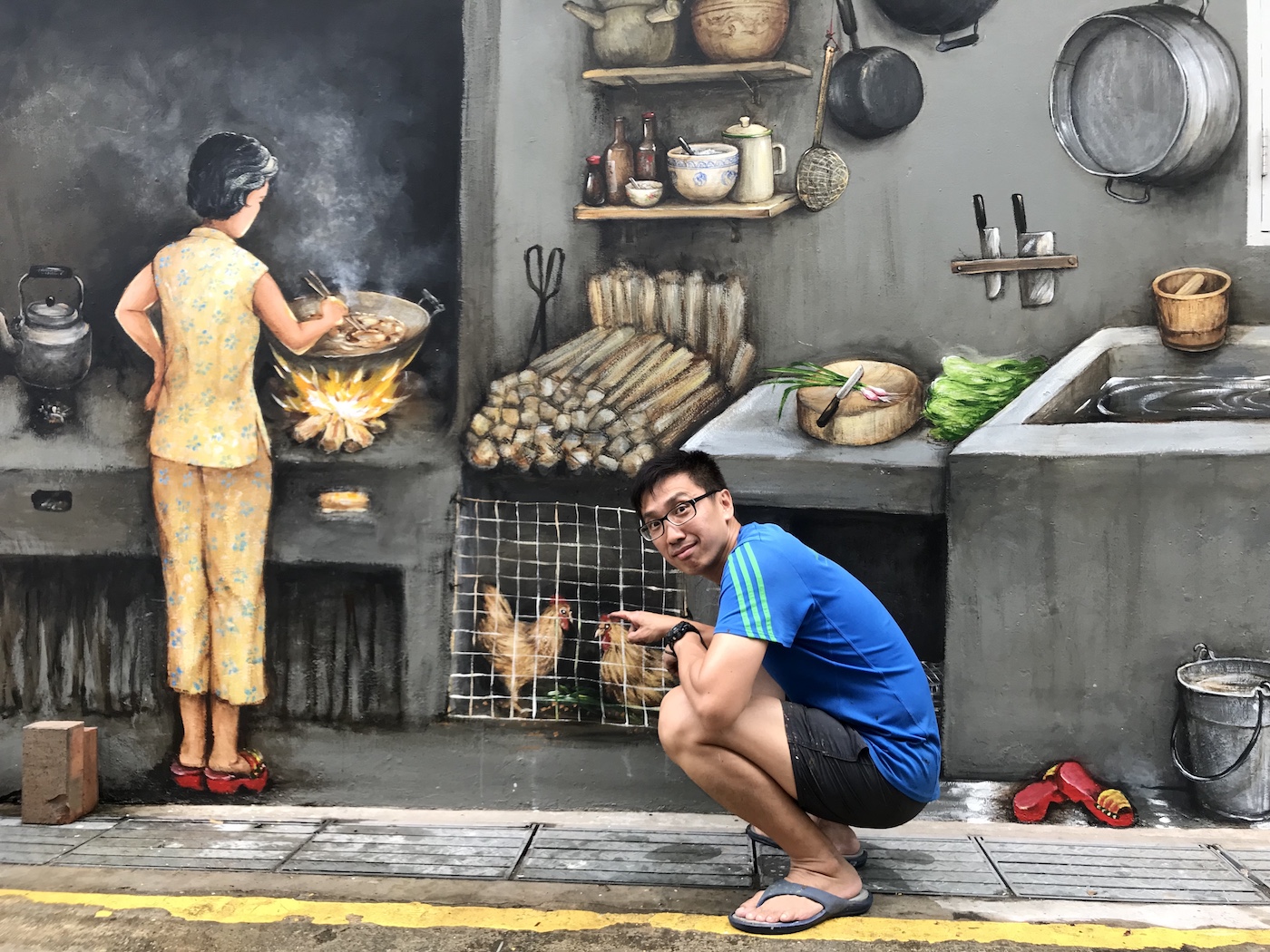
  • “My Chinatown Home” - Yew Chong and one of his favourite creations, painted on a wall located in Singapore’s Chinatown.

    How I Became A Mural-Painting Artist

    Yip Yew Chong painted his first mural at age 16, painted his 10th at age 47, and by age 50 had covered many streets, shopping malls, markets, libraries and private properties with his paintings. We had a chat with the now 51-year-old to find out how he did it.  

    “I am not trained and actually lack practice, but my strength is the content/story manifesting in the artworks.”

    Q: Hi YC! Thanks so much for being here. We’re very excited to have you. To start, can you tell us how you ended up as a muralist? Was it a life-long dream or pure chance?

    A: I am actually a general artist rather than a muralist. I was an accountant by profession for 25 years while dabbling in art since school days. It was never a dream. I won’t say it is by chance either as I knew I wanted to do art when I retired from Finance.

    How did you even learn how to draw and use colours this well? Is it innate or the result of decades of practice?

    The trained and sharp-eyed would see that my works are not polished because I am not trained and actually lack practice (just the last few years of dabbling in public art), but my strength is the content/story manifesting in the artworks. 

    “Thian Hock Keng Mural” - Painted on the back wall of the historical Thian Hock Keng temple in Singapore.
    “Thian Hock Keng Mural” – Painted on the back wall of the historical Thian Hock Keng temple in Singapore.

    How did you end up painting your first mural? Who was brave enough to let you do that to their wall and how did that turn out? 

    I spotted many murals popping all over Singapore and the region from 2012 onwards. In late 2015, while taking a break from work, I gave it a try by cold-calling on doors. For the first mural, the house owner asked me for a portfolio which I had none, but somehow I convinced him with my sketch, story and assurance to whitewash it in the original colour if he was not satisfied with the outcome.

    Can you give us a peek into how you work? What steps do you take and what is your work routine like for most pieces? 

    Discuss objectives and other factors with the potential commissioner. Site visit, conceptualise and submit to stakeholders/authorities for approval. Then paint.

    Do you paint by memory or use actual pictures for reference? 

    Broad childhood memory for what the overall scene composition and ambience should be like, then research the details to form the composition e.g. how an old thermoflask should look like.

    Which 3 objects/people are most useful for you when you are creating a mural? 

    Paints and brushes. References like archived stories or photos. Encouraging words from passersby/social media.

    “My Chinatown Home” - Yew Chong and one of his favourite creations, painted on a wall located in Singapore’s Chinatown.
    “My Chinatown Home” – Yew Chong and one of his favourite creations, painted on a wall located in Singapore’s Chinatown.

    Which place is most useful?

    Any place, every place is unique.

    You were a part-time muralist for a long time before finally going full-time. What made you decide to do that? And is it really possible to make a good living as an artist in a place like Singapore? 

    I was dabbling in paper and canvas sketching/painting all along, since school days/army/work, but rather irregularly. When I retired from Finance in mid-2018, I thus spent more time to develop my art. Actually, not a “long time”, only 2.5 years (2016-2018) juggling mural painting on weekends and a full-time job on weekdays.

    Your murals are now all over in Singapore, on streets, in shopping malls, markets, libraries, even on private properties. How did you get all those commissions? Was it through an agent, sheer genius of marketing or…?

    People usually contact me via social media (IG, FB) or my website. Social media helps publicise my artworks when people pose fun photos at the murals. Other media like TV, radio, magazines and online blogs/magazines/videos all helped to publicise the works as I did more and more. I actually don’t have a marketing strategy. 🙂

    Now that you’re a key figure in the mural scene in Singapore, what advice do you have for those thinking of becoming full-time muralists too?

    Haha, I am actually not a full-time muralist. In fact, I have curtailed murals and moved on to canvas paintings and digital art since late 2019. I will still do murals, but much more selectively. My advice to anyone wishing to do this full-time is to first try a few, perhaps by joining one of the many mural or street art groups or commercial companies in Singapore, get a taste. If you like it enough to venture out on your own, develop your unique style, publicise it and be bold enough to cold-call. The market is small in Singapore but it is currently quite popular. 🙂

    What’s the worst advice you’ve been given, or have heard people giving, with regards to being an artist, and what’s the best?

    I don’t remember getting any bad advice. I usually listen to people’s experiences and opinions, and also read books on how to behave as an artist, but I ultimately decide what I want to do for my own circumstance. If the decision was bad, it’s not because of the advice but due to many other factors. Same for ‘best advice’, some advices are common knowledge but very good reminders. For example, how to protect your artworks, what’s the common law, whether to use galleries to exhibit your artworks. 

    Who are your role models?

    My role models change as I explore and see more things. My first was Ernest Zach’s artworks, then Chua Mia Tee’s oil paintings, and several Western artists overseas I spotted on the internet.  

    “Impressions of Lodhi” — Yew Chong’s largest mural ever, done on a wall in Delhi, India.
    Joan’s desk in 2020.

    Lastly, you were also an accountant by profession for many years. Why? And how did that feel?  

    25 years. I enjoyed my work thoroughly. It allowed me to learn how to interact with and lead people from all over the world, especially my stint in Amsterdam leading a European finance team. 

    Yew Chong hopes to spend the next year traveling around the world, exploring and developing his art, practicing and making new friends. You can see him in action here or follow his work on Instagram @yipyewchong

    More interviews with various professionals here.

    Photographs courtesy and copyright of Yip Yew Chong. Interviewer: Sy
    Want to be featured too? Tell us here.
    If you found this article useful:


  • Life Summary: Blaise Pascal, Inventor of the Calculator

    Blaise Pascal was not allowed to study Mathematics until age 15 and as a result, developed a lifelong curiosity for the subject. He eventually went on to invent the calculator, Pascal’s law, and probability theory, amongst many other mathematical things. This is the timeline of the man who changed the world of computing and mathematics forever. 

    1623 – Blaise Pascal is born to a civil servant who serves as the King’s counsellor. He has 2 sisters. 

    Age 3 – His mother dies. 

    Age 8 – The family moves to Paris, France. Blaise’s father homeschools all his kids because he doesn’t like the way school is run. He emphasises education on Latin and Greek and doesn’t want his son to begin learning Mathematics too soon because he thinks it too enticing. This makes Blaise all the more interested in Mathematics.

    Age 12 – Blaise’s curiosity leads him to start studying geometry on his own.  

    Age 14 – He starts accompanying his father to mathematical meetings. 

    Age 15 – Blaise is finally allowed to study Mathematics. 

    Age 16 – The family moves to Rouen, France. Blaise studies hard but is often in poor health. He develops a theorem in geometry that he calls the “mystic hexagram”. He then writes a book, Essay on Conics, that discusses the geometry of cones and talks about his “mystic hexagram” in it. 

    Age 19 – His father gets Blaise to help him calculate taxes for the King. To make their lives easier, Blaise invents a calculating machine that can add and subtract by moving a series of gears and cylinders. He calls the machine the Pascaline. He will continue to improve this design over the next decade. 

    Age 23 – His father has an accident and is confined at home. Their neighbours who are Jansenists come to visit him and manage to convert the family to Jansenist beliefs. 

    Age 24 – Blaise conducts a barrel experiment to prove that hydrostatic pressure depends on elevation difference. This will eventually be known as Pascal’s barrel experiment. He also does New Experiments With A Vacuum to describe how various liquids can be supported by air pressure.

    Age 28 – His father dies. His sister joins a Jansenist convent. Blaise continues to enjoy secular life, paid for by his inheritance. 

    Age 30 – Blaise writes the Treatise on the Equilibrium of Liquids and explains what he calls Pascal’s Law of Pressure. He also finishes The Generation of Conic Sections. 

    Age 31 – Blaise writes the Treatise on the Arithmetical Triangle which describes a convenient tabular presentation for binomial coefficients. Through his correspondence with a friend, the theory of probabilities is also born. This will eventually be called Pascal’s Triangle in the future. After a religious experience though, Blaise gives up Mathematics, converts fully to Jensenism and joins his sister at the convent. 

    Age 32 – He releases a series of pamphlets called the Provincial Letters poking fun of the Jesuits. They are popular and the Jesuits try to hunt down the author but are unable to.

    Age 35 – He works on solving the problems of volume and surface area of the cycloid. 

    Age 36 – He becomes seriously ill and from then on spends his last years giving to the poor and going from church to church to attend services. 

    Age 39 – Blaise dies in great pain after a growth in his stomach spreads to the brain. Unfinished and unpublished works of his are released, including more mathematical theorems and a piece of work called the Pensées that defends the Christian religion, in which he tries to prove that belief in God is rational by writing “If God does not exist, one will lose nothing by believing in him, while if he does exist, one will lose everything by not believing.” This will come to be known as Pascal’s wager.

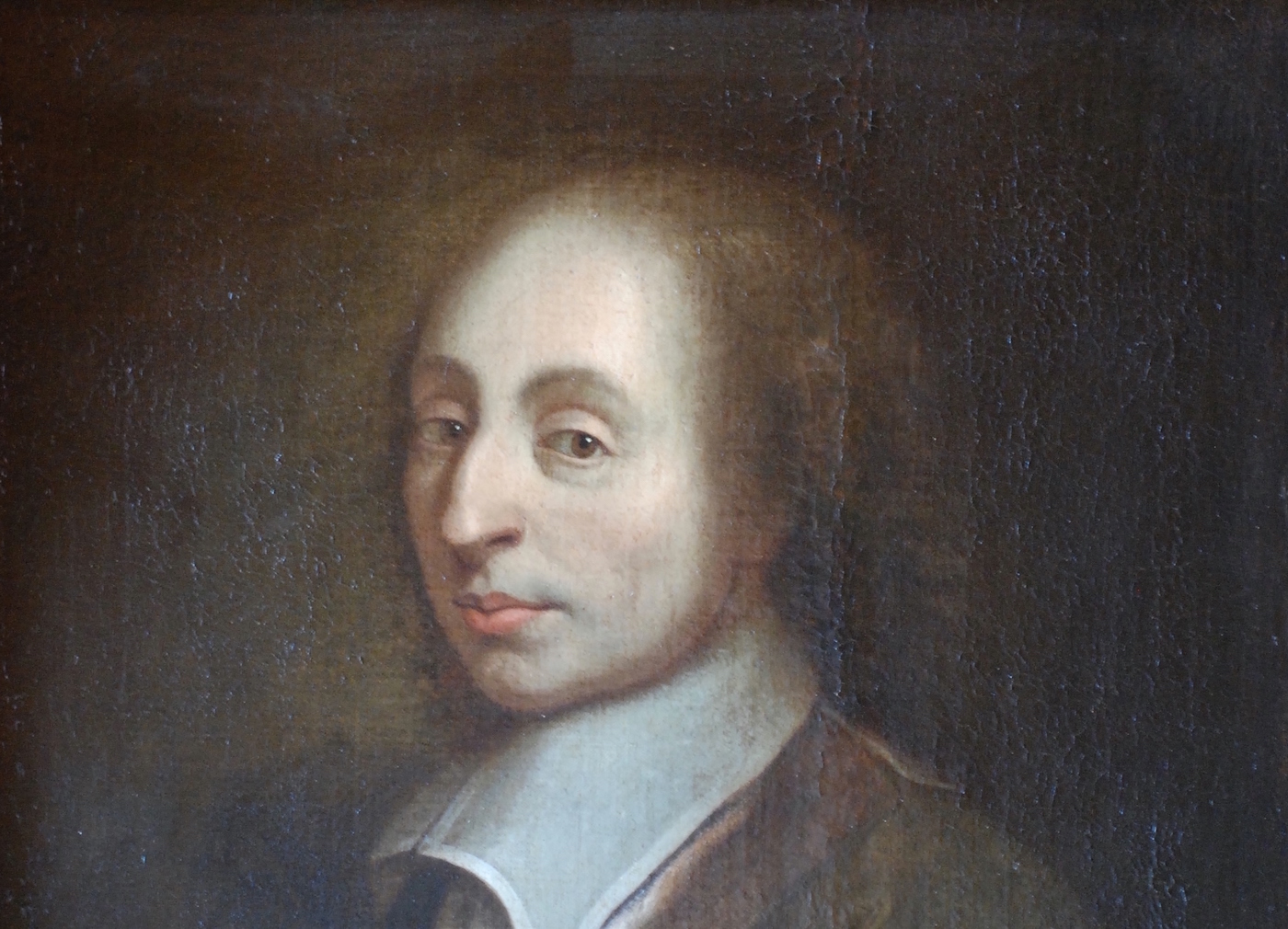
    Blaise Pascal's epitaph.
    Blaise Pascal’s epitaph.

    Much later – The computer programming language ‘Pascal’ is named after him to honour his contributions to the beginnings of computing. The SI unit of pressure and an important principle of hydrostatics is also named after him. His theory of probability eventually becomes important in economics too. 

    More life summaries available here.

    Photographs: Public Domain. Compiler: Sy
    Sponsor or support the Life Summary series here.
    If you found this article useful:


  • What It’s Like Taking A COVID-19 Test In Hong Kong

    Tsui is an office lady living in Hong Kong. She works from home without much contact with people yet recently opted to take a COVID-19 test at a private hospital. We asked her why she did that. 

    “I received the report in my mailbox at night. It was quick and convenient.”

    Q: What made you take the COVID-19 test?

    A: I found it hard to breathe. It felt like I was running low on oxygen and had to breathe deeper than normal. It did not feel like the normal flu. Besides, there had been a large number of COVID-19 cases in Hong Kong (more than one hundred local community cases everyday). Since I had asthma when young and heard that people with weak respiratory systems would be more susceptible to COVID-19, I was concerned. 

    As a citizen of Hong Kong, what procedures did you have to go through in order to get the COVID-19 test done?

    I just made an online appointment at a private hospital. It is quite easy to guarantee a test now. Since I was very worried, I made the appointment for the following day. I thought the schedule would be quite full at first, but it turned out I was assigned to one in the morning of the next day. The test might have been quite hard to get months ago, but now it’s become so simple that anyone sick can ask for the test, I think.

    How much did you pay for the test? 

    It costs 1800 HKD (around 320 SGD) for such a test in a private hospital. If you can’t afford it, you can go to a public hospital. However, I heard that the people who chose to test at public hospitals had to queue for hours.

    Can you describe how the test was carried out?

    When I arrived at the hospital, there was a special counter for COVID-19 tests. I registered and filled in some questionnaires. Then I met the doctor and he told me to provide a saliva sample. Then I paid for the test and went home to wait for the result. I received the report in my mailbox at night. It was quick and convenient.

    How did you feel? And how was the result?

    Before the test, I was quite stressed. I was afraid the test might be painful, I was worried that people would discriminate against me. Besides, I was very afraid of having COVID-19 because of having had asthma when I was young. But the test in the hospital was not painful at all. The staff were helpful and I did not feel discriminated by others there. Maybe people were already used to it. My testing result was negative, but I still felt sick. Maybe it was the flu.

    Would you join the free testing for COVID-19 provided by the Hong Kong government next week? 

    Surely not. Rumour has it the DNA results would be collected by the government for other purposes. I know some people would, they don’t believe in conspiracies, but I would not join anyway.

    Tsui hopes to be able to go drinking in clubs with friends without masks next year. She cannot imagine still needing to wear a mask for another year. 

    More interviews with people affected by COVID-19 here.

    Photographs courtesy and copyright of Studio Incendo. Interviewer: Kauai
    Want to be featured too? Tell us here.
    If you found this article useful:


  • What It’s Like Going To School During COVID-19

    Siddharth Mazumdar, who we interviewed earlier this year for inventing an AI-powered gadget before age 16, is 17, a student at St. Andrew’s Junior College in Singapore, and about to take his A-Levels this year.  We asked him how COVID-19 has affected his school life. 

    “The main issue was that many people lost their focus and thus were lost when coming back to school.”

    Q: Hi Sidd, welcome back! Let’s talk today about how COVID-19’s been going for you. To start, when did you first notice COVID-19 and what did you think about it then?  

    A: I noticed it when it was being mentioned on the news as this new epidemic in China. I thought that it would be restricted to China, much like the Swine Flu outbreak. The high virulence of Covid wasn’t as well-known then and it really seemed as though it was not much more than a cold.

    When did you really start to worry about COVID-19 and what did you do in response to that? 

    When Covid started spreading rapidly in Italy, I started to get more worried as it showed that it was not a regional thing at all and could easily come to Singapore. The full extent of its virulence was also established and so were its effects on the elderly population, which made me even more concerned about it wreaking havoc here.

    Sidd while doing home-based learning.
    Sidd while doing home-based learning.

    How did your routines change when schools were shut for “circuit breaker” measures?

    For one, I could sleep a bit more, which was quite needed. Beyond that, what we saw was that interaction decreased quite a bit and we had more lectures and assignments than before, so learning was much more self-directed. There were also much fewer collaborative sessions like class discussions as those were harder to conduct online.

    How effective do you think home-based learning is? Did you or your classmates run into any problems because of it? 

    In terms of absolute effectiveness, I don’t think it’s any better or worse. What changes is the shifting of responsibility, where instead of teachers constantly guiding and scaffolding, we have to take greater initiative in our learning. Technical problems were common at the start but they subsided eventually, the main issue was that many people lost their focus and thus were lost when coming back to school.

    What about when Singapore reopened schools? How did your routines change again then and how did that affect you and your classmates? 

    We had slightly later reporting times and had to wear masks throughout the day. Instead of before where we used to keep changing venues and moving around, we were confined to one classroom for the day, which led to a cabin fever of sorts. Days were initially very long-drawn but the school took our feedback into account and put lectures on a view at home basis, which helped us significantly. 

    How different is going to school now compared to pre-COVID-19 days? What do you miss most about the old days and what do you like most about the new days?

    I miss being able to walk around the school between classes as that always used to energise me. I like that the days are shorter now, which means we have more freedom to draw up and act on self-study plans.

    Sidd back in school.
    This desk is my new office. I spend hours here each day, researching companies and jobs and writing cover letters.

    How does it feel to have to attend school with a mask on the whole time? Are there any on the ground “cheats” students use to make the experience more comfortable? 

    It can definitely be a challenge, but it gets quite a bit better with time. To make it more comfortable we can do a few things: (1) look for a sports mask, this decreases the humidity under the mask and makes it more breathable, (2) go outside when drinking water, that way you get fresh air and also reduce the chance of contamination in class, (3) while I personally don’t, many also suffer from acne due to the mask and thus regularly rinsing the face with water after coming home is helpful

    How do you think COVID-19 will affect your grades, especially since you’re taking a significant exam later this year? 

    I can’t really predict that but I think that, in general, it shouldn’t have too adverse an effect.

    How do you think COVID-19 will affect your future career and living prospects? 

    Well, for career, it’s been deeply inconvenient for me as I had received a few invitations to do installations of the Newton’s Meter System in the Middle East, however, at the time of writing travel restrictions still have not eased and so neither my team nor I can go there. For living, well, I’d always thought of remaining in Singapore and COVID-19 has, if anything, solidified that as I think we handled community spread very well.

    You’re a school councillor in charge of planning the orientation programme for new students, so how did you and your fellow councillors manage that this year with all the restrictions related to the pandemic in place? 

    As regulations were changing by the day, we had to stay back after the day’s events to plan for the next’s and hope that no drastic changes were taken in the meantime. In general, the programme was significantly shortened and many external events and games had to be scaled down. While this meant that there were less activities, being in small groups also meant that we could interact and bond with each other a lot more.

    COVID-19 prevention items Sidd received from school and the Singapore government.
    COVID-19 prevention items Sidd received from school and the Singapore government.

    Do you think new students are missing out on anything by joining a new school during a pandemic? 

    Not really. I think they definitely do face a new challenge from the get-go, having to adjust to both the e-learning style and their new school’s style contemporaneously, but I wouldn’t really say that’s missing out. In fact, it could forge adaptability. However, that’s only the academic side. In general they will be able to interact with their friends less and may not have as much of a support system.

    Do you feel like you’re missing out on anything as a young person no longer able to go out for big events in big groups or sing karaoke? To what extent has digital technology made up for those? 

    To a small degree, yes. Eating together as a large group was always nice as we could listen to everyone’s experiences and learn from each other and that really helped us de-stress. Fundamentally though, most of the important events can generally be translated to an online platform. Personally, I did an international presentation for the Pitch-Your-Product award and attended Mensa Singapore’s AGM online.

    What have you learned from this pandemic that you didn’t know before? 

    Crucially, that it is better to err on the side of caution when it comes to health. At the start, we were unsure as to whether we should wear masks or not but if we had all just elected to do so, spread would be reduced.

    Second, premeditatio malorum, always consider adverse scenarios. While adaptability may be a great virtue, without preparation, we only make it more difficult for ourselves. Case in point, while the SAF did a great job in rehousing the migrant workers, if we had certain safety measures in place in the dormitories beforehand, we could have stopped clusters from forming.

    Lastly, if you could be the one in charge of planning how schools operate during COVID-19, how would you plan it? Which procedures would you keep and which procedures would you improve upon? 

    I would definitely keep the temperature screening procedures and staggered recess times, but in terms of reopening, I’d try to limit the days that people are in school as we did in the earlier stages. I also think that along with the supply of masks that we have, we could also carry out immediate swab testing of any symptomatic student in the school premises itself, instead of just advising them to see a doctor. I’d also definitely keep the regular cleaning of tables and chairs and wearing masks at all times.

    Sidd hopes to be getting his gadget, Newton’s Meter into new markets next year, and carry out more trials and installations. Beyond that, he’s thinking of looking into having predictive online systems that facilitate learning based on inclination and progressive ability. “I had conceptualised this in my group during Pre-U Sem last year and could go further with it once my exams are over.” You can find out more about him on Instagram @aceofcucumbers or chat with him using the comment box below. 

    Other interviews with Sidd:
    How I Invented An AI-Powered Gadget Before Age 16

    More interviews with people affected by COVID-19 here.

    Photographs courtesy and copyright of Siddharth Mazumdar. Interviewer: Sy
    Want to be featured too? Tell us here.
    If you found this article useful:


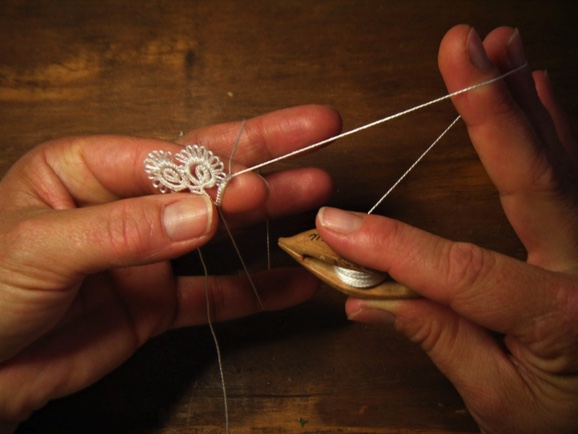
  • The process of lacemaking at Sabine's workshop.

    COVID-19 Diaries: Surviving COVID-19 As A Lacemaker In France

    Sabine Halm worked as a lacemaker for 12 years in Saint-Sulpice-les-Feuilles, France, practicing the highly prized trade her family has been engaged in since the beginning of the 18th century. The trade had been making a comeback in the fashion industry in recent years… that is, until COVID-19 happened. We checked out how she’s been coping since. 

    “We will come out of confinement with new creations to present!”

    Q: How are you living these last weeks of confinement in the heart of the Limousin countryside? Has it changed the way you live every day?

    A: The confinement has been disastrous for our art workshop! We were counting on the first sunny days, but the crisis hit us very hard instead. Trade shows and markets got canceled, suppliers closed, workshops-shops closed, courses and more courses got canceled… all for an extended period and an indefinite period. We lived through this confinement filled with questions, doubts, suddenly taken aback about the survival of our workshop. However, we remain confident about the future!

    This “closure” allows us to rework projects that have been in the background for lack of time. We are rethinking all of our designs, the design of our patterns, and taking totally new turns! We will come out of confinement with new creations to present!

    What makes your lace-making technique unique? And how did you acquire it?

    It is the only lace that is executed using “knots”. My great-great-great-grandmother was already making this lace with knots. I didn’t know her, of course, so I had to relearn on my own. This know-how has existed for several centuries in our heritage! Very beautiful old works refer to them. They transport me “elsewhere” by leafing through them. It is like a mystical force which escapes me a little, but which remains obvious for me!

    Sabine's laces.
    Sabine’s laces.

    What are your projects in the coming year?

    We’ve been turning to crowdfunding for several of our recent creations, doing presales, if you want! Ulule [a crowdfunding platform] allows us to continue to produce as best as possible, not to hibernate, to wake up in great shape! And we thus recreate a cash flow to pay our suppliers.

    For the rest, we can’t wait to reopen our shop and resume our lessons. Many creations are coming, modern or old adornments, which will have to be made known and disseminated.

    You’ve mastered the 4.0 tools (LinkedIn, Facebook, Instagram, Ulule, etc). How do they benefit you and how do you use them?

    The “4.0” tools are those of our generation. They talk to a lot, allow great encounters, give us very wide means of dissemination and are all adapted to our needs as craftsmen of the 21st century! “Artisans of art 4.0” (laughs)

    Our vision of things for the next six months remains mixed: France is seen abroad as the “Country of Crafts”, and yet, even in normal times, our professions can be discredited, even considered obsolete or superfluous. Yet we too participate greatly in the economy of the country! Our jobs and, especially the human beings who “hide” behind them, are stuck in the heart of what makes the French genius!

    What are your projects for the end of this year?

    I will be exhibiting sculptures at the Carrousel du Louvre as part of the International Cultural Heritage Fair in October. I make my sculptures using a mixture of the three skills that I have learned: spinning, embroidery and lace. I combined them to arrive at the result of the technique for my sculptures.

    One of Sabine's lace sculptures.
    One of Sabine’s lace sculptures.

    You can find out more about Sabine’s laces at her website, www.madrigalb.com and information on the International Cultural Heritage Fair here.

    More interviews with people affected by COVID-19 here.

    Photographs courtesy and copyright of François Beauxis-Aussalet
    Interviewer: François Beauxis-Aussalet
    Want to be featured too? Tell us here.
    If you found this article useful:


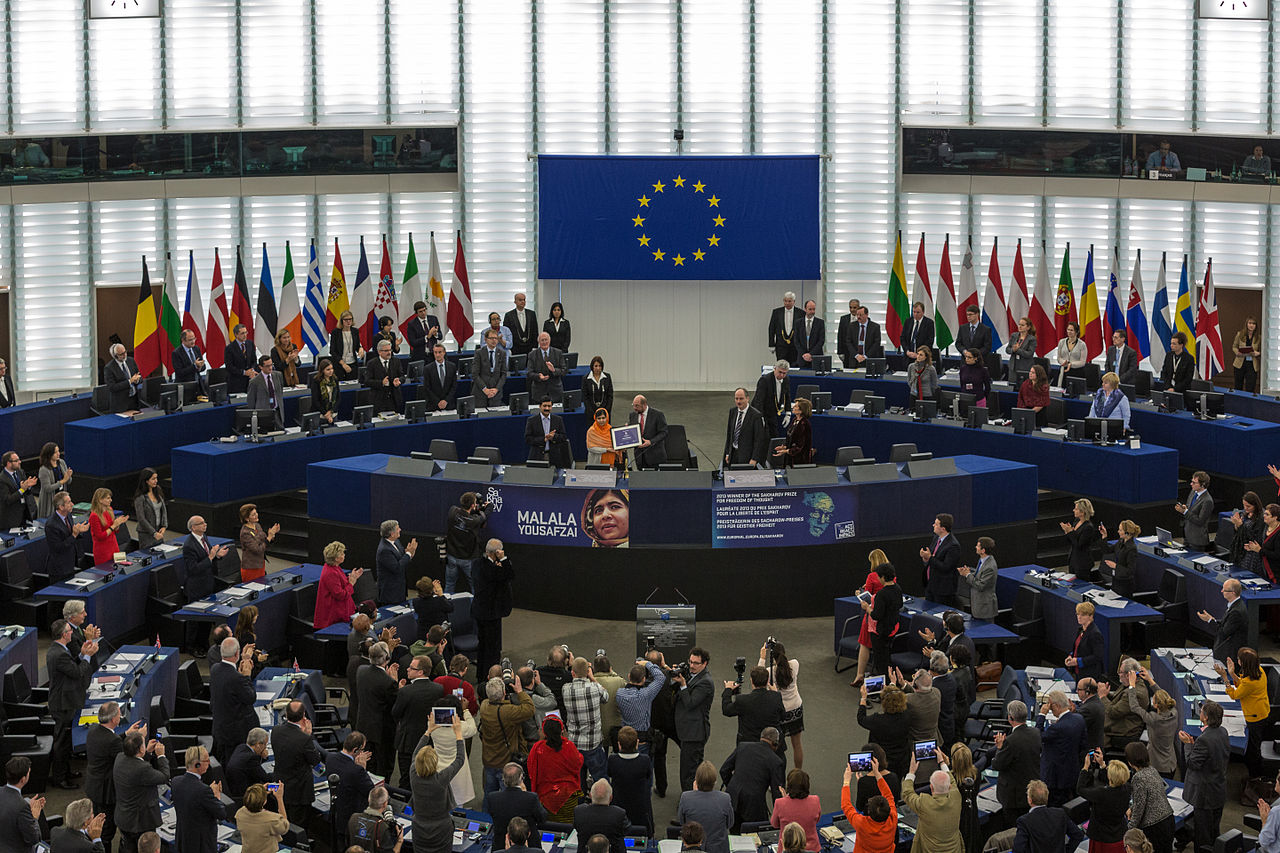
  • Malala aged 16, winning the Sakharov Prize presented by the European Parliament.

    Life Summary: Malala Yousafzai, Education Activist

    Malala Yousafzai was banned from going to school at age 11 but ended up getting into Oxford University at age 20. This is the story of the young girl who survived being shot by the Taliban and used her experience to devote her life to advocate for the education of girls all around the world.

    1997 – Malala Yousafzai is born at home in Mingora, Pakistan—a tourist spot known for its summer festivals. Her father is an educator and owner of a chain of private schools. She will later have 2 younger brothers and 2 pet chickens.

    Age 10 – Taliban forces begin fighting the Pakistani Army in a battle for the Swat Valley area of Pakistan which Mingora is a part of. 

    Shortly after – The Taliban gains control of most of the Swat Valley and begin banning women from going to school or the shops, along with banning television and music for everybody. Malala gives a speech titled “How dare the Taliban take away my basic right to education?” in response to it. 

    Age 11 – Her father is asked by the BBC to get one of his students to blog about being a schoolgirl under the Taliban’s control. He can’t find any other students willing to do so so he offers his own daughter. She begins blogging for the BBC about what it’s like living with Taliban’s threats to deny girls their education. She goes by the name Gul Makai for it. 

    Age 12 – After her BBC diary ends, she and her family are approached by the New York Times to be filmed in a documentary. In the meanwhile, the war in Swat Valley leads to Mingora being evacuated. Malala moves to the countryside to live with relatives. After the documentary, she is interviewed by more people for more television shows. She begins to publicly advocate for female education. 

    Age 14 – Malala is nominated for the International Children’s Peace Prize and wins Pakistan’s National Youth Peace Prize. Her family starts getting death threats from the Taliban but they do not actually believe that the Taliban would harm a child.  

    Age 15 – She is shot by a gunman when on the way home from school in a bus. The bullet goes into the left of her head and travels down her neck. She is flown to a military hospital in Peshawar in critical condition. Her skull is removed to help her swelling brain. She is then flown to England for more care while in a medically-induced coma. She survives after more surgeries. The Pakistani government pays for all of her treatment. She gets worldwide recognition after outrage brews over the incident. 

    Age 16 – She starts going to school in England. She also gives a speech to the United Nations and publishes her first book, I Am Malala. Her birthday is now known as Malala Day around the world. She wins the Sakharov Prize for Freedom of Thought. She launches the Malala Fund with her father which works to make sure girls around the world have access to education for 12 years. 

    Malala aged 16, winning the Sakharov Prize presented by the European Parliament.
    Malala aged 16, winning the Sakharov Prize presented by the European Parliament.

    Age 17 – She wins the Nobel Peace Prize for surviving an assassination attempt by the Taliban. 

    Age 18 – She opens a school in Lebanon for Syrian refugee girls. A documentary on her, He Named Me Malala, is released. She receives 6 A*s and 4 As for her GCSE O-Levels and 3 As for her A-Levels. In the meantime, in Pakistan, her book I Am Malala is banned in all private schools and her father is denounced as a traitor and an agent of the west.

    Age 20 – She gets honorary Canadian citizenship—the youngest person to be awarded that in history. She publishes Malala’s Magic Pencil, a picture book about her childhood in Pakistan. She goes to Oxford to study philosophy, politics and economics.

    Malala aged 21, photographed with world leaders.
    Malala aged 21, photographed with world leaders.

    Age 21 – She returns to Pakistan for the first time since being shot and meets with the Prime Minister to deliver a speech at his office. The next day, the group representing private schools in Pakistan organises an “I am not Malala Day”. She publishes “We Are Displaced: My Journey and Stories from Refugee Girls Around the World.” 

    2020 – Malala is presently 23 years old and is still a student at Oxford. 

    More life summaries available here.

    Photographs: Claude Truong-Ngo. Compiler: Sy
    Sponsor or support the Life Summary series here.
    If you found this article useful:


  • Why I Identify As A Minimalist

    Before becoming a minimalist, Joan enjoyed buying things on the fly just because they were quirky or seemed useful or were cheap. In her early 20s however, she jumped headlong into the minimalist lifestyle and changed her living habits entirely. Now that it’s been almost a decade since she adopted minimalism, we asked her what that’s been like. 

    “Stop buying shit to impress people who don’t give a shit about you.”

    Q: Hi Joan! Thanks for talking to us! Before we go further, can you explain what it means to be a minimalist?

    A: Hello! To keep things concise, to be a minimalist equates to being someone who lives life with intent.

    How did you end up as a minimalist? 

    I have always been enamoured by the chicness of Japanese meets monochromatic décor, as well as elements of the spartan lifestyle of vagabond meets cyber-punk/grunge from The Matrix and similar sci-fi movies.

    However, after graduating from university at age 20, I had my first existential crisis on what do I want to do with my life. That lead me down the rabbit hole of a minimalistic lifestyle.

    What Joan has in her purse.
    All that Joan keeps in her purse these days.

    Can you describe what your living space was like before you adopted minimalism and how it looked after you did? 

    As most Singaporeans do, I lived with my parents for most of my life. It was incredibly cluttered with no personal line drawn. However, post decluttering, my desk is pretty much empty. 

    How did your routines change as a result of you adopting minimalism?

    Wow. Honestly, the change was a huge relief to my mental health after making the switch. But it did take a few years to figure out what works and what does not.

    Before, it was haphazard as I did not follow a routine and was constantly worrying that I’d be late for school or work. Additionally, not everything I did was beneficial to me. From worrying about what to wear (which ends up being the same few outfits) and what to do next. It led up to quite a bit of mental fatigue.

    Thus, my younger self thought it was a huge waste of time and energy to not have a simpler routine.

    Nowadays, it is a bit more structured but it’s on auto-pilot. I wake up to feed my two furry bottomless pits at 8am. After which, I would exercise and get my coffee. I start work at 1PM but I like to have a lot of time to myself in the morning, time block my priorities for the day and spend time with my partner and cats before that.

    My job is fast paced, but thanks to time blocking in advance, I don’t have to use mental energy to think about what to complete in a limited time span.

    So what did you have to actually do to become a minimalist? What did you have to throw and how long did the whole process take? 

    To become a minimalist, I think you need a lot of dedication and commitment to a lifestyle that really limits your ability to accumulate baggage, physical or otherwise. It really throws you into a monthly reflection cycle. If you do not find introspection and being intentional with your choices a source of joy, minimalism is really not a lifestyle to hop into.

    The first time I decluttered was in my early 20s. But I recall bringing over 7 huge garbage bags of rotted textbooks, ill-fitting clothes that were crumbling into shreds to the garbage collection bins. Additionally, I discarded or donated almost all of my shoes (over 50 pairs) that were purchased because they were pretty, but barely used. Soon, they too disintegrated or were not worth selling off.

    The whole process is ongoing, but I believe the first 3 years is integral to learn to pace yourself on what and how to declutter to prevent any more regrets or impulsive discarding.

    Which was the hardest thing to do for the above and which was the easiest? 

    Hardest was definitely selling my CDs away. They are so sentimental (and expensive) to me but I don’t even have a CD player now. Even though I ripped them, I don’t play them as well. I only listen to a few albums (funnily enough, it’s also those I kept) on Spotify. My only worry now is if Spotify is taken away from my life, I might just die.

    The easiest was definitely decluttering stuff that needed to be discarded like crumbling clothes, books etc.

    Joan’s desk back in 2019.
    Joan’s desk back in 2019.

    How did the people closest to you react to your decision to become a minimalist? And how did you react to their reactions? 

    It was a mix of skepticism and encouragement, really. My friends and brother were onboard. However, I learnt that my mom was very much a sentimental person who did not like to part with things. Throwing away things around the house that clearly needed to be discarded caused quite a lot of friction between myself and my mother.

    So what’s life like for you now that you’re a minimalist? Do you think it’s better, or worse? 

    Easier. There’s no turning back for me. It’s probably one part of me that I do not regret honing from a young age.

    Is there any part of your non-minimalistic life of before that you miss? 

    Indulging in a more colourful wardrobe. I do have a few pieces that are not black, but I still rarely wear them. They are my designated “ran out of clothes” days or for occasions that call for some colour in the ensemble.

    How many items do you own now and which 5 are most important?

    I don’t count how many items I own as things are transient as we use them up, repurchase, get gifted etc.

    My 5 most important (physical) items: Hair straightener. Work essentials (Phone + laptop). Make up (not 1 but I use the same palette daily, just switching up the intensity when needed). Supplements (saving grace for energy, cramped muscles and brain fog). Good Coffee. 

    Which 3 places are most useful for you as a minimalist?

    A quiet space to introvert. A chill out bar to chill with friends. A well-equipped kitchen to reconnect with your food and body.

    Can you list 3 things you realised only after leaving consumerism behind?

    The things I own can define me only to a certain extent. The more accessible something is, the easier it is to lean towards purchasing those items. Happiness comes from you assigning that emotion to that purchase or experience.

    Joan’s desk in 2020.
    Joan’s desk in 2020.

    What advice do you have for those currently thinking of becoming minimalists too?

    Don’t be overzealous. It’s not a cult, it is a lifestyle. It’s ok to take a break from this lifestyle.

    What advice do you have for humans in general?

    Stop buying shit to impress people who don’t give a shit about you. Instead, try to show them that you care about why they do certain things. Some will let you in, some won’t. Cest la vie.

    Lastly, if you don’t spend your money on stuff, what do you do with it? 

    Investing in dividend stocks/bonds (because I have no energy nor interest in higher risk financial instruments). Invest in relationships I treasure. Invest in my bucket list.

    Joan in Aug 2020.
    Joan in Aug 2020.

    Joan is presently working on her career and bucket list, improving relationships with friends and family deliberately and growing the awareness of minimalism and how it can help the mental health of those with fast-paced lifestyles. You can get more minimalism tips from her at her blog, minimalisminsingapore.wordpress.com, and Facebook page, or discuss your own minimalism journey using the comment box below. 

    Other interviews with Joan:
    Why We Choose To Be Child-Free

    More interviews with people who’ve left habits behind here.

    Photographs courtesy and copyright of Joan. Interviewer: Sy
    Want to be featured too? Tell us here.
    If you found this article useful:


  • One good thing about being furloughed and losing your job is the amount of time I can now dedicate to reading.

    What It’s Like Going From Furloughed To Fired During COVID-19

    When COVID-19 began, Ryan was a military and legislative affairs programs coordinator with a regional Chamber of Commerce, working on a study into populism in America. Within months, he was furloughed, and not too long ago, he ended up getting laid off. We had a chat with him to understand how that experience has been like. 

    “When my CEO told me, my heart was racing. I’d never lost a job before.”

    Q: Hi Ryan, thanks for being here! To start, can you tell us when you first heard about COVID-19 and what you thought of it then? 

    A: I cannot recall when I first heard of the virus. I follow the news closely. So many other things were happening in America whenever the word “coronavirus” was first used. The virus started spreading in America during Donald Trump’s impeachment trial, so I believe many of us were preoccupied. At the same time, I began seeing memes about the coronavirus and Corona beer. People were joking about it, and I don’t think any of us believed it would spread throughout America as rapidly as it did.

    When did you really start to worry about COVID-19 and what did you do in response to that? 

    I was working on political programs at the time. I remember getting a phone call from a Fortune 500 company. They decided to withdraw $50,000 support because it required their executives to go to large political events with thousands of people. If their employees got sick after attending, the company could be held liable. At first, I believed they were overreacting. And $50,000 is a lot of money to lose. But that was the first moment I realized America was in big trouble.  

    One good thing about being furloughed and losing your job is the amount of time I can now dedicate to reading.
    One good thing about being furloughed and losing your job is the amount of time I can now dedicate to reading.

    Can you tell us how you ended up getting furloughed, and what you thought of it then?

    As I mentioned, I was working on political programs that resulted in large gatherings. As soon as our Governor gave the lockdown order, I knew we could not have events. I was furloughed a month later in April. It was kind of nice. I went on America’s unemployment CARES package, and I got paid to stay home and watch Netflix. I read constantly. I finished almost 50 books between April and August.

    How then did you end up getting laid off? And what did you do right after that? 

    I was supposed to go back to work on August 1. A week before that, my company’s CEO called me directly and said that I would be laid off because we could no longer do political programs. I sort of expected this because our income from political programs had dropped to zero dollars. Still, when my CEO told me, my heart was racing. I’d never lost a job before. The next day, I went in to clean out my desk. I still accidentally left my Dolly Parton coffee mug there, and I really wished I hadn’t. I love that mug!

    When furloughed, did you prepare for the instance you might end up losing your job or trust, like many, that all will return to normalcy soon enough? Why did you feel that way?

    I’m a political scientist, and one of my areas of expertise is populism in America. Many Americans do not trust the government or experts. Therefore, I knew that Americans would struggle to accept the experts’ advice to stay home, close down businesses, and wear masks. And because we struggle with that, I would probably not go back to work soon. I started applying for new jobs in June, more than a month before I was laid off. Searching for a job right now is very difficult.

    How different is being laid off from being furloughed, from your experience? And how do you feel about the choices you made when furloughed, now that that status has been changed?

    There is only one difference: While furloughed, your business promises you will return to work (even if it is a promise that ultimately falls through the cracks). I had some hope. Now the hope is gone. I am not sure I could do many things differently due to coronavirus restrictions. On the other hand, I’ve always wanted to expand my knowledge of coding languages, which is very beneficial to have during a job search. Maybe instead of reading so many books, it would have been better to expand my resumé.

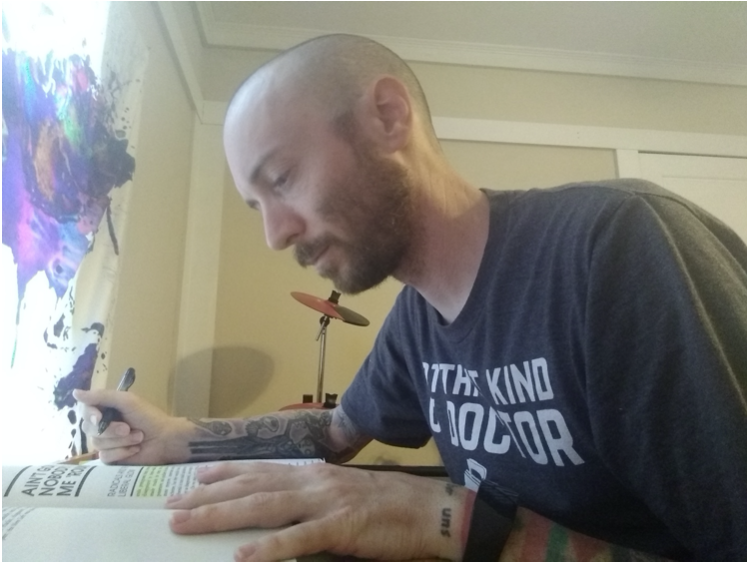
    This desk is my new office. I spend hours here each day, researching companies and jobs and writing cover letters.
    This desk is my new office. I spend hours here each day, researching companies and jobs and writing cover letters.

    How long do you think you will be able to survive without a job? What options will you have if a new job doesn’t come along anytime soon?

    I should have enough money in savings to last me six to eight months. I’m also getting unemployment income, which can stretch this timeline even longer. Still, I don’t want to be unemployed anymore. Eventually, I will find something. I delivered pizzas during graduate school. That was good money, believe it or not. I don’t mind doing it again. People pay delivery drivers to sit in their cars and listen to music!

    Do you think a new job will be coming along soon? Why so?

    I have had a couple of interviews already. I also applied for a job today that made my heart flutter with joy! Still, I do not have a lot of reason to assume I’ll be earning a paycheck anytime soon. Who knows? Maybe my phone will ring with good news today!

    Which 3 objects or people are presently most useful to you?

    I play the drums in a blues band with four other people. We practice once a week. I have a large basement, and it is easy to get us all down there and maintain physical distance. When I’m with them playing music, I don’t have any anxiety. Although the stress is still there, the band helps me not focus on it so much. And that is tremendously useful.

    Which place was most helpful?

    I walk 10,000 steps at least each morning before I start the day. It takes me one and a half hours. I walk along the Lafayette River and listen to audiobooks or music. The river is very peaceful and beautiful. Simply being near the river makes me feel better about everything.

    Every morning, I walk along the Lafayette River. This bridge connects the urban university area of Norfolk, Virginia to the suburbs across the water.
    Every morning, I walk along the Lafayette River. This bridge connects the urban university area of Norfolk, Virginia to the suburbs across the water.

    Did you ever imagine you would be having to deal with a situation such as this? If you could go back in time to January 2020, what would you do differently?

    I think many of us watch post-apocalyptic movies and TV shows, and we like to daydream about what it would be like to live through that. Still, I never expected something similar to happen (albeit with fewer zombies). I don’t think I would like to go back in time to January 2020. It was too late by then to prepare any differently or to stop the virus. I would just have to ride the whole thing out again.

    If you could go back a whole decade, what would you do differently? 

    But if I could go back a decade? I might have bigger things to worry about. Ten years ago, I lived in Beirut, Lebanon, and the Syrian Civil War was just about to start across the border. In a few years, almost everyone in that country would be killed in the fighting or displaced. I would be too focused on trying to stop the bloodshed. I might not worry about a virus that won’t exist for another ten years. The Syrian people suffered so much during that war.

    How do you think COVID-19 will affect your long-term career option and living conditions? 

    Before the subprime mortgage crisis (2007 – 2010), Americans found good jobs with college degrees. During the crisis, everyone got knocked down a notch. Mid-level associates settled for entry-level employment at half the salary, making it difficult for college graduates to compete for those jobs. I believe everyone will get knocked down another notch. Luckily, I have a doctorate and decent experience, but some jobs I apply to ask only for a bachelor’s degree. There are very few positions for my level out there right now. If I am willing to accept a low salary, it will be even harder for college grads to compete. Something will have to change soon.

    What do you think 2021 will look like for yourself and everybody else? 

    In a perfect world, epidemiologists, virologists, and other medical scientists worldwide develop a cheap, safe, and effective COVID-19 vaccine, which stops the virus from spreading in weeks. At that point, people all over the world will slowly emerge from the “new normal.” If we can get that vaccine, 2021 is going to be a strange but exciting year. We will all be a little timid and traumatized, and we might not feel safe giving out hugs, but there will be a giant weight lifted from our shoulders.

    Lastly, what do you know now that you never knew before? 

    I now know at least a little about gardening.

    Ryan is presently working on finding new employment while simultaneously developing 2 books—one about 1990s protest music and the other, a fictional novel. You can find out more about his progress at his website, www.ryanmnixon.com, or chat with him about life and circumstances using the comment box below. 

    More interviews with people affected by COVID-19 here.

    Photographs courtesy and copyright of Ryan. Interviewer: Sy
    Want to be featured too? Tell us here.
    If you found this article useful:


  • How I Invented An AI-Powered Gadget Before Age 16

    When Siddharth Mazumdar was just 14, a life-changing event inspired him to invent a better way for injured people to get help during accidents. A year later, he invented Newton’s Meter and by age 16, had gotten Newton’s Meter out in the market. Today, Siddarth is still just 17 but Newton’s Meter is a patented, CE and FCC certified device you can buy for personal or industrial use. We just had to ask him how he did it. 

    “The world is getting more uncertain thus the adaptability gained from entrepreneurship is key.”

    Q: Hi Sidd! Thank you for being here today! For those who don’t yet know you, could you introduce yourself: Who are you and why did you decide to start making your safety device, Newton’s Meter? 

    A: Hi there! I’m the Founder of Newton’s Meter, an AI-powered personal safety startup that significantly reduces medical response times, facilitating the saving of lives. I’m also a current JC 2 student in St. Andrew’s Junior College. When I was overseas 4 years ago, a young food delivery rider had crashed in the vicinity and passed away as it was late and he was unconscious upon impact. Had he received help, he would be among us today. This made me resolve to help people call for help even when they cannot.

    How does Newton’s Meter work?

    Newton’s Meter first forms an AI profile of a person to determine the threshold at which falls and crashes may be dangerous to them. Then, we detect these accidents and emergencies using accelerometers and 9 DOF sensors, the moment this is detected we use a BLE connection to the phone and use the phone to cellularly transmit information of the accident to 10 contacts, together with the GPS location and the victim’s blood group and diabetic status.

    This is Newton’s Meter.
    This is Newton’s Meter.

    How is it you know how to create a mechanically functional, AI-equipped gadget? Was it something you studied in school or something you picked up on your own?

    I attended a few seminars on IoT which helped me visualise the concept, but the technical details were fine-tuned in close collaboration with my technical team.

    Can you talk us through the process of making and getting Newton’s Meter to market? What did you do first, and next and so on and so forth?

    First, we had to build the Proof of Concept (POC), essentially our first prototype. Next, we had to move on to the Proof of Value (POV), which was a market-ready prototype, so effectively the POC but with improvements in design as well as being significantly smaller in size. Then, we had to get certifications to sell, such as CE and FCC. Next, to introduce it to the market we had to go to trade shows, we went to CES 2019 and 2020, the biggest technological exposition in the world. We also did online outreach with ChannelHub, where I won the Pitch-your-Product Award.

    Did your young age present you with unique problems along the way?

    Very mildly so, when people first saw me, they didn’t think that I was an entrepreneur. However, once I started speaking, people listened intently due to the value of the idea. Tech in general is a pretty open-minded field and as long as you can create value, people will be inclined to take you seriously, regardless of age.

    How did you find and acquire the parts required to make Newton’s Meter?

    We mainly sourced parts from the USA and the Nordic countries and manufactured it in Singapore. 

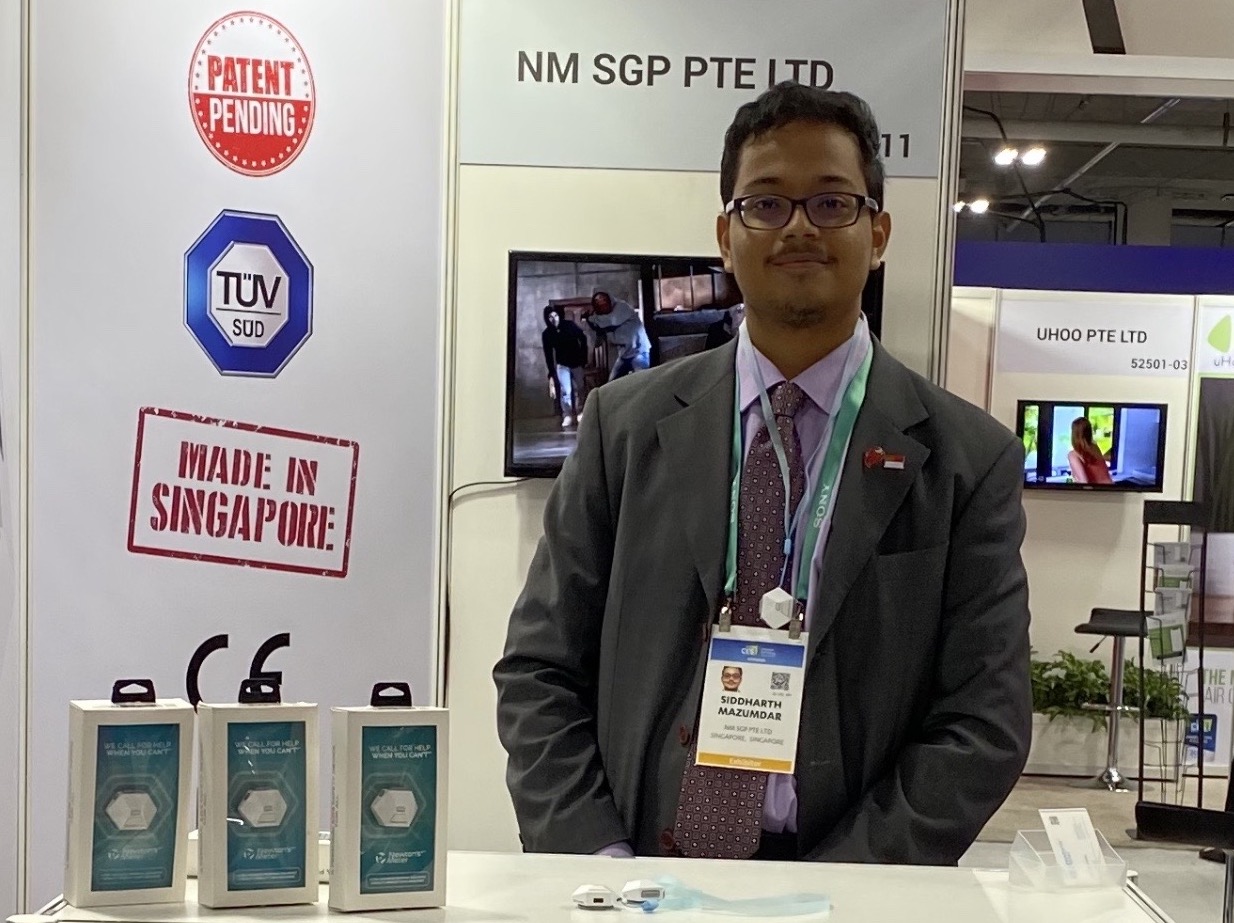
    Sidd at CES 2020, exhibiting Newton’s Meter.
    Sidd at CES 2020, exhibiting Newton’s Meter.

    How many months or years did you take in total to figure out how to get Newton’s Meter to work? How many failed prototypes did you have and how much money did you have to spend?

    To reach the first prototype it took us around a year. We didn’t have failed prototypes per se because we went very systematically, but doing it that way also meant that it took a little more time. We used around half a million dollars or so and we pooled this up from our savings, external investments, as well as most importantly, competitive grants from Enterprise Singapore.

    What was your routine like when you were thick in the midst of creating Newton’s Meter?

    I was concurrently in school so I mainly went down for weekly meetings, where we had reports and discussed progress and developments. Beyond that, I also tried to go down physically around twice a week to both learn and guide but when the scholastic workload became heavier due to my Triple Science stream, I had to do this via teleconferencing.

    Which 3 objects or people were most useful during then? 

    Firstly, my Dad. He is a business consultant and helped me tremendously in relation to liaising and headhunting and helped me connect with all the engineers.

    Next would be my branding expert Jacky. While the technology is crucial, the branding is also equally important when building a startup and Jacky’s years of experience were invaluable.

    Finally and most importantly, I would say it’s Enterprise Singapore, they supported us not only through monetary grants but also provided us outreach opportunities that greatly raised our profile.

    Which place was most useful?

    Block 71, Ayer Rajah Crescent. This was where I got inspired to connect my ideas with technology and in the vicinity of which all the development was done.

    Who were your role models? 

    Benjamin Franklin and Sir Tim Berners-Lee

    What did you learn from having made a functioning new invention that you didn’t know before? How did doing so change you as a person?

    I learned that we always have the ability to make a difference regardless of the odds. It’s an oft quoted figure that 3% of startups succeed and this terrifies many people but honestly, as long as you’re committed to your goal, anything is possible. Having a clear vision and sense of purpose is more important than age or background. 

    I used to think that we just had to accept things as they were, entrepreneurship showed me that I could have an impact if I put my mind to it.

    If you could go back and replay your entire process of inventing Newton’s Meter all over again, what would you do differently?

    I would have spent some more time getting to know my team as people from the get-go, instead of being so focused on the work. This would help break the ice a lot earlier and we would forge friendships right from the start.

    What advice do you have for those who are hoping to invent and engineer their own devices too?

    Delegate, don’t try to do everything on your own, everyone has their own strong suits. It may be visualisation, engineering, marketing, etc. Find your strength and capitalise on it, but don’t try to reinvent the wheel and step back when necessary.

    Next, always find ways to manage your stress, it could be your sports, games, movies, anything. This is because stressed people tend to be frustrated and this can lead to an inconducive (and unenjoyable!) work environment.

    What’s the worst advice you’ve been given, or have heard people giving, with regards to making devices? And what’s the best? 

    The worst advice is that money is everything. As far as startups are concerned, that’s unsustainable as there’s an arduous development window, so unless you feel purpose as well as interest in what you do, you won’t be able to persevere.

    The best advice is that your product is ultimately a service to the consumer. Looking at it from this perspective really allows you to empathise and make things that bring value to people’s lives.

    Sidd and his team having an intense discussion about Newton’s Meter.
    Sidd and his team having an intense discussion about Newton’s Meter.

    Lastly, are many of the teens your age inventing things too? If not, why do you think you did it while they didn’t? 

    Not many that I know of. I think for one, it’s the lack of technical knowledge, and if someone’s not familiar with our ecosystem, it can be rather daunting as you don’t know that there are experts who can help. Secondly, it’s the fear of the entrepreneurial process itself and the uncertainty it brings. For this, all I have to say is that the world is getting more uncertain thus the adaptability gained from entrepreneurship is key.

    Sidd is presently focusing on his studies (“So that I’ll be better prepared for university and make the most of my learning there, such that it can be used in my work.”) and looking forward to a career in the public service. He hopes to be a catalyst for entrepreneurs the way the people at Enterprise Singapore were for him some day. You can contact him personally on LinkedIn, view his invention at www.newtonsmeter.com, or ask him anything using the comment box below.

    More interviews with people who’ve made stuff here.

    Photographs courtesy and copyright of Siddharth Mazumdar. Interviewer: Sy
    Want to be featured too? Tell us here.
    If you found this article useful: