• How I Became Young Journalist of the Year

    How I Became Young Journalist of the Year

    Brought to you by:

    J Rental Centre

    Shushan Lam was 24 when she joined Channel NewsAsia as a journalist and just 27 when she was recognised as Mediacorp’s Young Journalist of the Year—an award given to journalists under 30 for impressive or outstanding work. She tells LUCK-IT how she did it.

    “I had no idea that I was in the running for Young Journo of the year—and I didn’t care much for it either. I just wanted to do what I loved and I guess it showed in my work.”

    Q: When did you first start wanting to be a journalist, and why? What were the steps you took to move towards becoming one after you decided so?

    A: It happened by chance. I missed business school by one point so I enrolled in the school of Media and Communications at RMIT in Melbourne. It was such a creative, hands-on and collaborative course, it just got me very excited about all things media. When I came back to Singapore, I was looking for a job and the digital team at CNA [Channel NewsAsia] was expanding—this was in 2014 when digital and social media was just on the cusp of exploding. I happened to be trained specifically in digital media, so it was the perfect match. They provided me with a platform to apply everything I had learnt, and it was fun working with them to push the boundaries of digital storytelling.

    How did you get yourself a job as a journalist and what were your early days of being a journalist like? Did you think you would succeed as a journalist or did you have no idea what to expect?

    Shushan (middle), on her first major assignment as a journalist.
    Shushan (middle), on her first major assignment as a journalist.

    So I got a job as a video journalist, producing short, human-interest, digestible type of video content. The early days were very experimental. In fact there was a bit of disillusion when I got the job and realised that we were part of a small team that didn’t have much weight in the company. But I believed in the digital platform, and social media sites like Facebook, Instagram and video-streaming sites like YouTube were really taking off.

    Then the company really started pumping resources into growing their digital team. We went from a small scattered bunch of producers who shot and edited everything on our own with handheld DSLR cameras and a crappy laptop, to a full-fledged team of about 50 people within a few years. It was a wonderful experience—because everything was so experimental, no one really set frameworks to follow. We were setting our own rules and discovering new things as we went along, using all the social media tools like FB live, Insta live, we used social media to crowdsource our stories, and the engagement and response that the audience had with the stories on the digital platform were unlike anything that people have experienced in the TV realm.

    How long did it take for you to go from being a newbie journalist to becoming Young Journalist of the Year? What was the process like? Did you have any big setbacks or wins along the way?

    It was in my second year on the job that I received the award. I had no idea that I was in the running for Young Journo of the year—and I didn’t care much for it either. I just wanted to do what I loved and I guess it showed in my work.

    “What I was doing as a digital journalist was quite new and novel then.”

    Why do you think you were selected to receive the Young Journalist of the Year Award over others? Was there something you did in particular that your peers did not do?

    What I was doing as a digital journalist was quite new and novel then. There are a lot of other people who can do what I do now, so to win Young Journo of the year based solely on being able to use a DSLR and editing software to tell a story may be a bit tougher now!

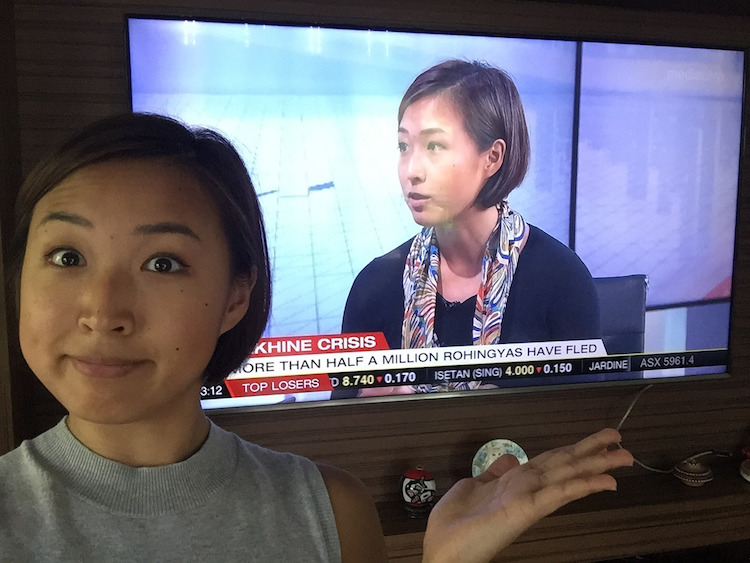
    Shushan (left), on assignment at a Rohingya refugee camp in Bangladesh.
    Shushan (left), on assignment at a Rohingya refugee camp in Bangladesh.

    What did you routinely do in the years/months/weeks leading to you being selected for the Young Journalist of the Year award?

    “’Drop everything and go get the story’, and I never said ‘no’.”

    Work and work and work and seize all opportunities given to me. In my first week on the job, the QZ8501 AirAsia crash happened, and I was catapulted onto a navy ship in the middle of the stormy Java sea for ten days. Shortly after there was the Sabah earthquake, and then the 2015 Myanmar elections, and so on. On top of that we have to manage our weekly assignments. One of the stories that got me nominated was an investigative piece about the elderly poor in South Korea. I had to stake out at rubbish dumps in sub-zero weather to find people willing to talk. All this requires a certain amount of ‘drop everything and go get the story’, and I never said ‘no’. This was the point of the digital team—to have journalists that you can send out in a heartbeat with minimal equipment and to be able to come back with a good story.

    Shushan winning the Young Journalist Award in 2017.
    Shushan winning the Young Journalist Award in 2017.

    After receiving the award, did your routine change in any way? If so, how?

    No, routine didn’t change. But I guess I felt like I had a reputation to uphold, and I put a lot of pressure on myself, and that’s when the process became a little less enjoyable.

    How did you spend your weekends before you received the Young Journalist of the Year award and after?

    Before, I didn’t set such high standards for myself so my weekends were quite alright, non-work stuff. Would hang out with friends, watch a movie, recuperate and get inspired to do the next story. But after I won the award, I put a lot of pressure on myself to give more to the job. I was working weekends a lot—but most people on the team were too.

    Can you map out a recommended path for people who want to receive the Young Journalist of the Year award to follow?

    Shushan (right), on her favourite assignment of all time—filming rescued endangered gibbons in the middle of the jungle in Malaysia.
    Shushan (right), on her favourite assignment of all time—filming rescued endangered gibbons in the middle of the jungle in Malaysia.

    Don’t do it for the awards—that’s the worse advice to give. Do it because you want it, and because you love it. Before you do any story, it helps so much to have your heart in it. Don’t do it for the awards.

    What are the key things/people/situations that enabled you to win the Young Journalist of the Year award, in your opinion? Who/What do you believe you never would have succeeded without?

    Editors who recognise your work—they are the ones who will nominate you. You need to get your editors excited about your story. Your pitch is so important. That is why I say, before setting out on any story, it’s important that you know why YOU want to do the story. Not to win an award, but because it’s a great story to tell! I wouldn’t have succeeded without the guidance of my editors who managed to elevate the stories, who forced me to dig deeper, to question more. And also the editors who helped polish my skills in video-editing and filming.

    If you could go back and replay your journalism career all over again, what would you do differently?

    Would not have said ‘no’ to a Japan earthquake assignment. They wanted me to do live PTCs [pieces-to-camera—a journalism term used to refer to a person speaking directly to the audience through the camera] for TV on top of the digital work and I felt like I wasn’t able to handle that. But when I saw the reporter they sent on TV, I was full of regret for not taking up the job.

    What were you like as a child? What about as a teenager and young adult? How did you change at every decade? Or did you not change

    Friendly and curious, but actually a bit shy in crowds. Preferred having deep conversations with one person. Perhaps why journalism suits me.

    Shushan now: “Travelling, taking it easy, spending time with friends and family, getting inspiration to move on to my next stint in the media. May not want to be a journalist anymore, but won’t be putting down my camera.”
    Shushan now: “Travelling, taking it easy, spending time with friends and family, getting inspiration to move on to my next stint in the media. May not want to be a journalist anymore, but won’t be putting down my camera.”

    Which major event in your life has made you who you are, in your opinion? Why do you think so?

    My dad was a traveling businessman, so we travelled a lot when we were kids and met a lot of people from around the world. It made me realise that there are so many things out there in the world, and so many things you can do with your life. So I never wanted a desk job.

    Which 3 objects/people in your life can you presently not live without and why?

    My cat—she gives me comfort after a stressful day. Social media—depend on it for work, sometimes to get leads. My gym membership—exercise helps to balance my mood. Gives me a good appetite too.

    Of all the objects you bought in the past year, which has most positively impacted your life? Why?

    Gym membership. I’m a lot less grumpy when I get regular exercise—endorphins.

    Shushan is presently a freelance video content producer who’s also busy getting married and figuring out her next moves. You can find her on Instagram @loulapod or ask her questions about journalism by dropping them into the comment box below.

    The above interview is sponsored by:

    J Rental Centre

    Photographs courtesy and copyright of Shushan Lam. Interviewer: Sy
    If you found this article useful:


  • How I Quadrupled The Number Of Friends In My Life

    When pondering her own funeral wake at age 45, Daphne Chua realised she would have less than two handfuls of people in attendance. Ten years on however, she had 50 people turning up for her 55th birthday party. She tells LUCK-IT how and why she increased the number of friends in her life so significantly in a single decade.

    “A pastor mentioned that a person would have about a hundred friends at his/her funeral wake. I pondered and realised I wouldn’t even have 10 friends at mine.”

    Q: When did you suddenly realise you had very few friends? What made you suddenly feel that way? And why did you decide to do something about it?

    A: During one Sunday service, a pastor mentioned that a person would have about a hundred friends at his/her funeral wake. I pondered and realised I wouldn’t even have 10 friends at mine. I started to imagine my lonesome and quiet funeral wake… 

    How did you start making friends again? What did you do and how did it feel for you to have to do it?

    I started to take an interest in people I came into contact with. Previously, I treated everyone as an acquaintance and did not see the need to keep a long friendship. In my mind, people come and go and I did not make any effort to keep in contact with anyone. 


    Daphne (middle) with the four friends who celebrated her 50th birthday with her.
    Daphne (middle) with the four friends who celebrated her 50th birthday with her.

    How long did it take for you to go from having less than ten friends who would show up for you to having 50 friends who would do just that? Did you have any setbacks or wins along the way?

    It is now a good ten years from then. There wasn’t any setback. I took a genuine interest in people without any expectations. 

    What do you think is the most significant course of action you took that enabled you to make more friends? Why did it work?

    Making time for others. Being pro-active to telephone or WhatsApp others to stay in touch. It was my attitude that made the difference. Previously, I could not be bothered and friendship did not have a place in my heart. 

    What was your routine like in the months/weeks/days during which you were rebuilding your pool of friends?

    There isn’t a fixed routine. I started to engage others in coffee sessions and meals. 

    Now that you have more friends, what is your current routine like?

    I still engage others in coffee sessions and meals and even organise baking sessions in my home once a month. 

    How do you presently spend your weekends?

    Weekends are mainly spent with family. Sunday is church and coffee time with church members. 

    Daphne at 54, with friends she made from a mission trip.
    Daphne at 54, with friends she made from a mission trip.

    What advice do you have for someone who is hoping to start having more friends too?

    To accept others for what they are, not be judgemental and have a genuine interest in their well-being.

    Can you map out a recommend path for people who want to have more friends to follow?

    List out your friends and schedule regular contacts either by just texting or meeting up. 

    What are the key things/people/situations that enabled you to have many friends again, in your opinion? Who/What do you believe you never would have been able to make many new friends without?

    I used to believe no one is genuinely interested in me and I do not trust people enough to want to share my life and my experiences. Being genuine and willing to share encourages more open sharing. 

    How did having more friends again change you as a person? Or did it not change you?

    Widened my perspective of things. Helped me to be more accepting of others and also to be generous towards others in terms of time/resources.

    “I have lost many good friends by not staying in touch.”

    If you could go back and replay the way you dealt with friendships throughout your life, what would you do differently?

    I would have done what I’ve been doing in the last ten years: keeping in touch with people who mattered. I have lost many good friends by not staying in touch.

    What were you like as a child? What about as a teenager and young adult? How did you change at every decade? Or did you not change?

    Outwardly extroverted, inwardly introverted child, teenager and young adult. The drastic change was after I attended church and found genuine friendships amongst church friends. I started to trust people and love the people around me. 

    Which major event in your life has made you who you are, in your opinion? Why do you think so?

    It was church and the realisation of who I am on this earth and my purpose here. 

    Which 3 objects/people in your life can you presently not live without and why?

    My family. My friends. My church community. 

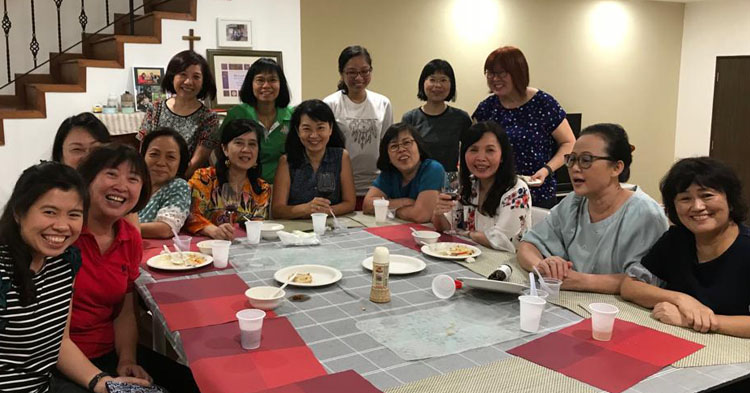
    One of the many groups of friends Daphne now has, having dinner at her home.
    One of the many groups of friends Daphne now has, having dinner at her home.

    Of all the objects you bought when trying to make more friends, which object enabled you to make the most new friends?

    Meals and coffee.

    What is the worst advice you’ve been given, or have heard people giving, with regards to friendships? And what’s the best?

    None… I did not seek advice nor have I attempted to give anyone any advice.

    Daphne is presently a realtor and open to answering questions about friendships. If you have a question about friendship for her, drop them in the comment box below.

    Other Answers by Daphne Chua:
    What I Learned From Doing Prison Ministry, And Why I Do It

    Photographs courtesy and copyright of Daphne Chua. Interviewer: Sy
    If you found this article useful:

  • Why I Started LUCK-IT

    This is a self-interview done by LUCK-IT creator, Sy, to test the experience of answering questions for LUCK-IT and also to get the spirit of sharing going. This interview is also the first ever posted on LUCK-IT, and the one that got the ball rolling, so to speak.

    “I always wished for a textbook or encyclopaedia of case studies that would explain how to deal with all sorts of life matters and since I never found one, I guess it’s up to me to create one for myself, and everybody else.”

    Q: So why did you start it?

    A: I had a complicated childhood, grew up without a mum or much guidance, so I spent a lot of my life confused about how I was supposed to behave as a woman and what I should be doing with myself as a person. After many decades of blindly trying to figure life out on my own, I eventually came to understand how helpful having knowledge of other people’s experiences was for decision-making and problem-solving purposes. I always wished for a textbook or encyclopaedia of case studies that would explain how to deal with all sorts of life matters and since I never found one, I guess it’s up to me to create one for myself and everybody else.

    What were the early days of LUCK-IT like?

    It was an affordable art store! I was a few months short of 30 when I felt compelled to go into business on my own and I frankly didn’t have the slightest clue as to what I was really doing. All I knew for certain was that there’d be a huge learning curve and since that was unavoidable, it was best to just jump right into it and get those 10,000 hours down.


    LUCK-IT's shop banner, circa 2015.
    LUCK-IT’s shop banner, circa 2015.

    Why affordable art first and not a resource of answers from the get-go?

    Simple—I didn’t think of it till much later on. Affordable art was the most doable ‘product’ idea I could think of back in 2013. It suited my personality then. Six years on however, I had acquired more work and business experience, met more people, travelled more, witnessed more births and deaths, become a minimalist and rediscovered the joys of acquiring wisdom through reading. I was racking my brain to think of how to make my art business more useful to more people while vacuuming one day when the idea for a resource of answers appeared in my head. It stayed there for months and wouldn’t go away so I just had to do something about it.

    What was your routine in the months that led to you starting LUCK-IT?

    In 2013, I had a full-time job as a TV producer so I had to wake before 7am to work on the business for an hour and a half before going to work, then continue after work and on weekends. I have to say it was hard to focus on either job, especially since TV production is time-consuming, mentally and physically stressful and subject to sudden overtime any time.

    I was able to grow my art business much faster after I quit that job but that growth stalled again when I gave in to curiosity and took on a digital journalist job a former colleague offered me less than a year later.

    It was through my years as a digital journalist however, that I learned many of the skills I would need to set up and run LUCK-IT as a resource of answers. When the time to do so came in late 2018, it was just a matter of setting aside half a day every work day to put together what I already knew could be done. I was really chill and open-minded the second time around because I knew what to expect and what I needed to do. Those hours put in really helped! Still, I’m not experienced enough to say if this version of LUCK-IT will succeed so I guess you’ll just have to check back every few months to find out how it turns out. 

    What is your current work routine like?

    I am presently 100% dedicated to doing business and working out a sustainable lifestyle for myself because I have experienced the inefficiency of burnout, followed by a year-long illness from being careless with my body. So I start my day by feeding all the living things living with me, go for a 5-minute jog to get my brain awake then jump right into coffee and deep work the second that is done. I break at lunch, during which I’ll do some toning exercises while waiting for food to cook, then it’s collaborative work all the way till dinner. In the evening, there will be a walk, chores and time with loved ones and books till bedtime.

    How do you spend weekends?

    On leisurely activities only, unless I’m really excited about getting some work thing done faster. I’m a big believer of sustainability and improving productivity with rest so I schedule rest into my week and stick with it religiously until excitement tells me otherwise.

    Why is LUCK-IT called LUCK-IT?

    It’s a kit you can use for luck. Get it? Kit you can use to make your own luck? Luck-kit? 🙂

    My 'view' now on a regular day at work.
    My ‘view’ now on a regular day at work.

    If you could go back and live your life all over again, what would you do differently?

    Lots. I think I was really dumb and ignorant all the way up to age 35 and if I could go back and redo everything, I would certainly make wiser and kinder choices. 

    What advice do you have for the users of LUCK-IT? What is the best way to use your site for maximum benefit?

    Read everything available before deciding on the best course of action for yourself. Remember that timing matters and micro-differences can affect outcomes. Treat LUCK-IT more like a 10-year-series rather than as the answer booklet to the exam you’re going to take. LUCK-IT may not give you the exact answers to the exam questions you get but you will certainly be more likely to know how to guess the correct answers after reading it.

    Can a person succeed by simply following the recommended paths provided by LUCK-IT interviewees from start to end?

    Every circumstance is different in minutely different ways so it is hard to say if entirely different people can get the same result by doing the exact same thing at different times. However, if you don’t know where to start at all, or if you’re hoping for some help and advice, LUCK-IT will certainly be able to provide you with clues, direction and a channel of communication with people who’ve been in the same boat, who may be able to answer the questions you have.

    Which major event in your life made you who you are, in your opinion? Why do you think so?

    My parents’ ugly divorce. What happened all those decades ago set in motion a series of consequences that, in hindsight, influenced my perception of life, methods of function and every last one of the major choices I’ve made. I’m very certain I wouldn’t be the person I am now if their divorce had been more amicable, though I can’t say if the difference would be for better or worse.

    What were you like as a child? And how did you change at every decade? Or did you not change?

    As a child, I was shy, imaginative and scared of everything. In my teenage years, I was sullen and desperate to rebel, though mostly compliant on the surface. In my twenties, I was into trying everything and anything and staying out for as long as I could. In my thirties, I finally understood who I was and what I wanted from life, learned to say ‘no’ and settled into a domesticated routine. I am still in my thirties.

    Which 3 objects/people in your life can you not live without, and why?

    Loved ones, text-input device and charger or pen and paper. Because I find love, in-depth observation and creative expression most meaningful and rewarding.

    Of all the objects you bought in the past year, which has most positively impacted your life? Why?

    The BOOX Note by Onyx—an e-ink tablet running on Android which I use to type large volumes of text on (with a Bluetooth keyboard) and read documents and books off. Before owning it, I had to grapple with printing and dealing with large volumes of paper or tedious transferring of e-book files to my Kobo (an older e-ink reader) if I wanted to save my eyes from the glare of digital screens. Now, I just do all my reading, writing and text vetting directly on my Note and no longer have tired eyes at the end of the process.

    Which person do you wish LUCK-IT would interview for you to learn from? Why?

    All sorts of people. All ages, races, nationalities, genders, orientations, religions, walks of life, especially those who seldom get to speak their minds. I believe every single person has something he/she can teach everybody else about. Maybe after a thousand interviews, we might end up noticing some patterns? See something we don’t yet know now? This is my quest and you can help out by telling me yours.

    What’s the worst advice you’ve been given, or have heard people giving? And what’s the best?

    Worst advice: “Just do as he/she/they say(s).” Unless you’re a complete noob on your first day, I don’t think anybody should simply do as another person says in the long run without first processing the said words with his/her own conscience or intellect. The Holocaust happened because many people did as they were told; during 9/11, right after the first WTC tower got hit, building authorities told people in the twin tower next door to stay in because it was safer than going outside. Other people don’t necessarily know or want better, I think.

    Best advice: “In life, you get what you put in. Want love? Give love. Want friends? Be friendly. Want money? Show value. Want to be miserable? Cause misery.”

    You can link up with Sy on Twitter, Instagram and LinkedIn. She almost always follows back on those platforms.

    Photographs courtesy and copyright of Sy.
    If you found this article useful: