• How I Started a Business in Myanmar at Age 23 - Jeshua Soh, Crossworks, Myanmar Singapore co-working human resources remote staff hiring repatriate programme

    How I Started A Business In Myanmar At Age 23

    At age 23, Jeshua Soh, founder of J Rental Centre and Startup Media, got the idea to set up a third business—one that would be based in Myanmar and tap on the resources of Myanmar. Despite being a foreigner in the country, he pushed past language and geographical barriers and got it done within the year. We sat him down, picked his brain and found out how.

    “Setting up the legal entity took just 15 minutes, but getting all the groundwork laid probably took around 6 months and we’re still figuring out some things along the way.”

    Q: Hello again, Jeshua! Now that we’ve heard all about the business you started at age 19, tell us more about the other one you started in Myanmar. What’s that business about? 

    A: Crossworks is a staffing, HR and office space solution in Yangon, Myanmar. We help Singaporean companies who want to hire remote workers—such as graphic designers, video editors, social media, admin/accounting or tech development personnel—by offering a committed employee at a fraction of the cost, providing a conducive office and managing the HR matters. Our vision is to stop the brain drain in Myanmar through discovering, developing and deploying talent to work remotely and collaboratively. Our repatriate programme helps those working in Singapore and want to return to Myanmar keep their jobs while working remotely from our office in Yangon. Lastly, we offer seats in our co-working space to entrepreneurs and creatives in Yangon to develop and grow.

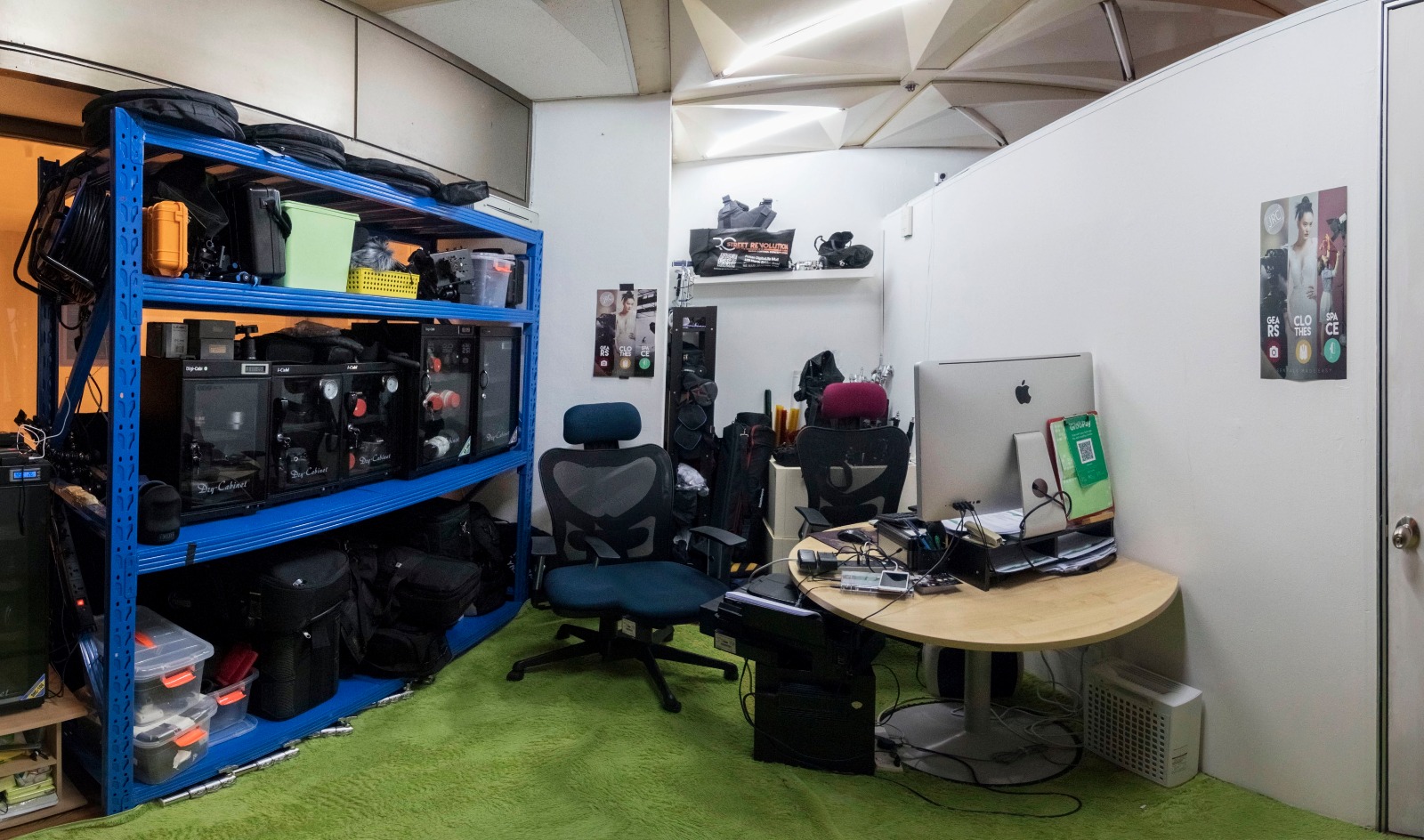
    Panorama of Crossworks’ Yangon office.
    Panorama of Crossworks’ Yangon office.

    How did you get the idea to tap onto the resources of Myanmar? And on that note, how did you come to know of the resources of Myanmar?

    I actually started Crossworks to hire people for my two companies in Singapore. One is a peer-to-peer rental platform for camera equipment, sound/lighting gear, creative spaces and event logistics (JRC.sg) while another is a media production outfit targeting startups and the ecosystem (Startupmedia.sg). Having tried hiring locals as well as freelancers from sites like Upwork and Fiver, the former proved challenging to hire suitable candidates while the latter was a stretch on our team’s energy to continuously re-explain certain processes due to high turnover rates and limited availability of freelance personnel. I first visited Myanmar back in 2013, when the country just started to open up, and immediately noticed the kindness of the people—which drew me back to visit repeatedly over the next few years and witness first hand how the country was rapidly changing and developing.


    Since you’re not from Myanmar, what administrative processes did you have to go through to set up a business in the country? And how did you figure out the whole process of setting up a business in the country in the first place? Do you have a local partner you’re collaborating with?

    Setting up a business [in Myanmar] was very similar to doing so in Singapore—with the new e-registration system that began last year, as well as with the British common law that is still largely practised in Myanmar (similar to Singapore). I believe that for many sectors, it has become tremendously more simple with the new government’s policy changes. I managed to figure it out and got the advice of some local friends and my employees. 

    How do you deal with the differences in language? Did you learn to speak Burmese or do you use translators or collaborators?

    There is not much of an issue since most people in the city speak basic English. Everyone at Crossworks is quite well above average in English proficiency and one of our goals is to train them to get even better, through office cultures like speaking English on certain days and with the communication between Singapore companies being done in English. I still can’t speak Burmese and am not sure if I’ll ever be able to.

    How did you decide on the location of your first office? And how did you get to rent/buy the office and find contractors to renovate it?

    Having been around Yangon city a lot, I knew that the landing place had to be in Yangon as it is the economic capital of the country where the largest international airport is and where most of the well educated people are. I also knew that I didn’t want an office near to the downtown area due to peak hour heavy traffic. We found a place in Bahan, near Myanmar Plaza, which has good accessibility for my employees to come to work from all corners of the city. It was bare and we had to start from scratch with the renovation (which was also a good opportunity to do what we wanted with the place).

    Jeshua in Myanmar in 2017.
    Jeshua in Myanmar in 2017.

    What about staff? How did you find and hire your first employees, and what have you learned about managing Burmese employees since?

    I asked a couple of friends whom I met and used social media and employment agencies to find my first few hires. I have learnt that priorities in Myanmar can be quite different from Singapore, but the need to focus on the individual’s aspirations and growth areas is the same. For example, working hours are more sticky in general as people want to spend time with friends and family, but the workforce is also generally very eager to learn and upgrade themselves. There needs to be a balance struck between training and development and getting work done, especially given the limited hours within the day.

    How long, in total, did it take you to set up your business in Myanmar? Did you stay in Myanmar the whole time or did you come back to Singapore every now and then?

    Setting up the legal entity took just 15 minutes, but getting all the groundwork laid probably took around 6 months and we’re still figuring out some things along the way. I travelled back and forth between Myanmar and Singapore.

    What about now? How often do you go to Myanmar to run the business? And where do you sleep when you’re there? 

    I usually go to Myanmar once or twice a month and stay in hotels when I’m travelling.

    What do you do with your non-work hours when in Myanmar? Do you have friends there now? 

    I spend a good amount of time visiting other states and am working on a series of videos to show people another side of Myanmar that the media rarely focuses on. As of June 2019, we launched HEAR Myanmar as a Facebook Channel (fb.com/hear.mm). I also enjoy meeting other start-ups and trying different local foods if I’m not out travelling/filming.

    At the opening of the Crossworks’ office in Yangon.
    At the opening of the Crossworks’ office in Yangon.

    What advice do you have for foreigners hoping to start businesses in Myanmar too?

    Do something that is win-win and be in it for the long game. There have been way too many case studies of one-sided investments which, in my opinion, are short-sighted and sometimes even outright exploitation. As many things are just getting started in this country, I believe that one needs to be ready to keep sowing seeds instead of eagerly waiting for the harvest.

    Can you map out a recommended path for foreigners wanting to start businesses in Myanmar?

    It starts with what you want to do, and who you know. There are many things that can be found online now, but it is still not a complete and fully accurate picture so being on the ground and talking to potential partners/customers will always be a plus.

    Which key things/people/situations enable you to do business in Myanmar, in your opinion?

    I thank God for the opportunity to have visited Myanmar, started my business and seen the needs of both Singaporean companies as well as Myanmar as a country—the former having a tight labour market and the latter very much in need of opportunities to stop the brain drain of the country’s best and brightest talent. Being a school drop-out myself, I have actually learnt the importance of learning (ironically), whether in or outside of school. 

    How did successfully setting up a business in Myanmar change you as a person? Or did it not change you?

    It has reaffirmed my believe that people are not just a statistic or a ‘resource’. Every person who sends in a CV is seeking a career and has a whole life ahead of him/her. Even though we get hundreds of applicants and go through stacks of people, it’s truly life upon life that needs to be developed and I hope that neither myself nor any of my team members lose this perspective. 

    A board of employees presently using Crossworks’ co-working space.
    A board of employees presently using Crossworks’ co-working space.

    If you could go back and replay your whole process of setting up Crossworks in Myanmar all over again, what would you do differently?

    I guess I would have liked to have spent more time being around during the early days to experience the ups and downs of daily operations when the company was still in its nascent stage. 

    Which 3 objects/people are most necessary for you when you’re in Myanmar?

    My longyi (traditional costume), phone and camera. These are what I bring around most often.

    Of all the objects you’ve ever bought/received for the purpose of setting up your business in Myanmar, which has been most useful? Why?

    It’s not exactly an object, but my business is heavily reliant on the internet. Remote working can’t happen effectively without good communication and connectedness between the employer and employee, and the internet is a real enabler and the reason which we are able to do a lot of things in Myanmar that was once not possible.

    Now that you’ve spent quite a bit of time in Myanmar, do you have any local idols—people from Myanmar you look up to or who inspire you? If so, who are they and why do they make you feel the way you feel?

    I am very inspired by the Myanmar people as a whole. Having a less than ideal history (as many would consider), the people are family-oriented, eager to learn and very kind-hearted. I feel that while a lot of countries in Southeast Asia had a head start in terms of development, Myanmar is now able to take advantage of the lessons that history has taught us and the opportunity to learn from [its neighbouring countries’] successes and failures in its own push for development.

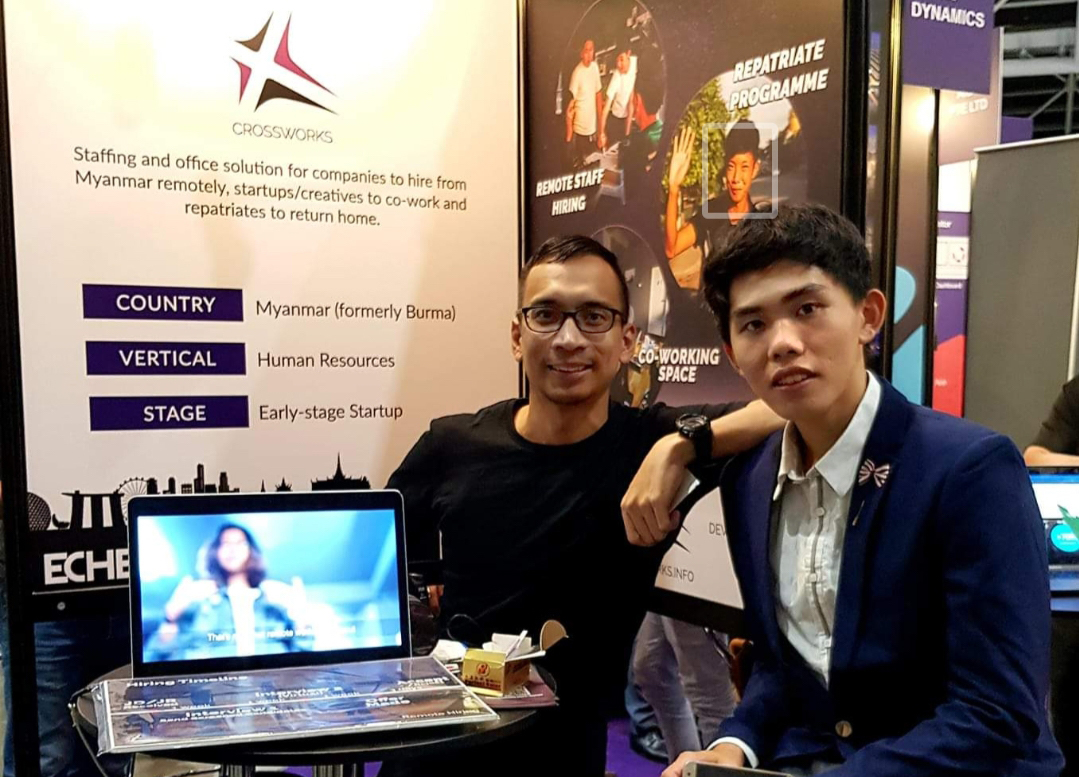
    Jeshua presenting Crossworks at Echelon 2019.
    Jeshua presenting Crossworks at Echelon 2019.

    Lastly, what’s the worst advice you’ve been given, or have heard people giving, with regards to doing business in Myanmar? And what’s the best?

    Haven’t really gotten any bad advice, but a hilarious comment I’ve heard about doing business in Myanmar is that everyone is corrupt and you’ve got to bribe people everywhere in order to get things done. This was from someone who had never been to the country, and I’m very thankful that it isn’t true. 

    Jeshua is presently busy with running his four brands—Crossworks / JRC.sg / startupmedia.sg / HEAR Myanmar—but will chat with you if you drop him a message using the comment box below. You can also find out more about his remote-hiring programme here.

    ★★★★★★
    LUCK-IT Perk:
    Readers of this article can get a 50% discount off Crossworks’ recruitment success fees (worth up to $200) when they email a screen shot of this article to hello@crossworks.info.
    Promotion ends 30 Sep 2019.
    ★★★★★★

    Other Answers by Jeshua Soh:
    How I Started A Rental Service At 19 With $0 and Grew It Into A Full-Fledged Peer-to-Peer Business By 23

    Why I Chose To Drop Out Of School In Year 5 Of The Integrated Programme

    Photographs courtesy and copyright of Jeshua Soh. Interviewer: Sy
    If you found this article useful:


  • Why I've Been Cosplaying For 24 Years, and How I Get Paid To Do It - Elizabeth Seah, Elizabethheartz, Singapore, Cosplayer, Cosplay, Cosplaying, Job

    Why I’ve Been Cosplaying For 24 Years, and How I Get Paid To Do It

    Elizabethheartz first began cosplaying at age 15 for Speech Day at her secondary school. At 26, she began getting paid to do it. Now that she has 24 years of cosplaying under her belt and is the organiser of many cosplay events in Singapore, we decided to find out what keeps her at it.

    “Cosplay is a form of art—it should be respected as well. However, there tend to be some who try to underpay or, sadly, don’t pay cosplayers for their work. This should not be encouraged.”

    Q: Hi Elizabeth! Nice to have you with us today! Tell us a little about yourself—who are you when not cosplaying and who are you when you cosplay?

    A: I tend to be more image-cautious when I’m cosplaying, as a form of respect to the character I’m cosplaying. Especially when the public eye tends to fall on you more, I’ll take extra note of my actions, etc.

    How did you start cosplaying? When was the very first time you ever cosplayed and what about it made you want to do it again… and again? 

    I first started cosplaying during 1996? Then, as I started a store, catering to the needs of local cosplayers, I felt it important to get into the action to bond with my customers too. From there, I learned to understand them better and how to operate the business smoother. Slowly, I started enjoying it as [the extent to which I could] transform myself into character seemed quite fun.


    The first time Elizabethheartz cosplayed, it was for a play at school in 1996. “Back then, Cosplay wasn’t exactly popular. I had to be in character, then danced and sang LIVE.”
    The first time Elizabethheartz cosplayed, it was for a play at school in 1996. “Back then, Cosplay wasn’t exactly popular. I had to be in character, then danced and sang LIVE.”


    When you first became an active cosplayer, how did you figure out where to get your costumes and accessories from and how did you know where there would be events you could go to dressed in cosplay get-up?

    Back in 1996, there weren’t any stores catering to such. It was for a musical play with my teacher’s help. After I started the store, I slowly created more events to cater to the needs of more cosplayers joining the community. 

    How did you choose which character you wanted to be? Did you have to watch the anime of that particular character over and over like an actor to learn how to behave as her?

    Usually it’s from an anime that I enjoyed, which makes me want to cosplay the character. Having a store has its pressures—people expect much from you especially [when you’re] being a judge for cosplay competitions in Singapore and regional countries. It is the basic [requirement] for each cosplayer to do homework on their character inside and out, to check the suitability and weigh the possibilities.

    How did your family and friends react when they first saw you dressed that way, behaving like an anime character?

    As it wasn’t common back then, people tended to be so curious, but perhaps it also depends on what character you started off as, etc. Thus for me, it was a pleasant experience. 

    I know you’re also a professional cosplay artist and rather well-known in the cosplay scene in Singapore, so please share—when and how did you start getting paid to cosplay and what did your very first paid gig require you to do? 

    Honestly, most clients have a budget allocated for marketing. When I am engaged for work, it is natural for the client to pay. If it’s for a local gig, transportation and meal allowances are to be considered as well. If it’s an overseas gig, transportation, accommodation, meal allowances, helpers/translators should be provided too.

    Cosplay is a form of art—it should be respected as well. However, there tend to be some who try to underpay or, sadly, don’t pay cosplayers for their work. This should not be encouraged. I’ve always [told] the community that, since we also put so much effort into outfits, makeup, time, effort, etc, for any form of engaged work. In fact, we should be paid higher because we usually come with our costume/makeup/styling done before starting any form of work. 

    Elizabethheartz in 2018, at AFA, a Jakarta-based event.
    Elizabethheartz in 2018, at AFA, a Jakarta-based event.

    Is being a professional cosplay artist a sustainable career, in your opinion? Or do you have to do anything else to supplement your income when trying to be one?

    From time to time, yes I do get offers to make appearances for events, etc. However the market demand in Singapore isn’t that big compared to overseas [markets]. Unless you have connections and know your rights, it is quite hard to sustain [yourself with cosplay as a career]. However, if you have your own merchandise, depending on your popularity, it is also possible to bring in extra income.

    Also, to be respected on a professional level, you should know how to do your own costumes/wigs/props. Others will tend to respect you for your talent more [if you can do so].

    What is the routine of a professional cosplayer like? How often do you get gigs and what do you have to do on a regular basis to promote yourself as a cosplayer for hire?

    Every professional cosplayer should have their list of rate cards and profiles available when approached. Our costumes/wigs/props/etc are usually kept in mint condition, with slight repairs/touch up [done to them] after every use. So they will be either busy at gigs, with costume/prop-making, photoshoots, interviews, meet & greets, appearances online/offline or handling collaborations, etc.

    [Gigs come] about a few times a month (it is up to the individual whether to accept or not) and can come in many different forms. I will usually share my work proofs on my social media platforms.

    Cos-tume in the making—a hair piece made by Elizabethheartz herself.
    Cos-tume in the making—a hair piece made by Elizabethheartz herself.

    Do you still cosplay simply for the fun of it? When and how often do you do so if so?

    Yes I still do but not as often as before as I’m usually tied up with other events. It has been quite busy for me in the recent years especially now that I’m more active in my collaborations.

    What are weekends like for a cosplayer?

    For most cosplayers, it could be a private photoshoot indoor (with studio booking) or outdoor. Other than that, they still hang out together but on a budget basis, to save up for materials/costumes.

    Elizabethheartz (middle, in blue), with guests of Jakarta-based event, CLAS:H in 2013.
    Elizabethheartz (middle, in blue), with guests of Jakarta-based event, CLAS:H in 2013.

    What advice do you have for people hoping to become cosplayers too?

    Be humble and be hardworking. Check out Haru House’s monthly gathering for rookies/seniors where we chill and hang out, and are more than willing to share tips and information about cosplay! Do research, lots of it before jumping into the community. Last but not least, have fun, lots of it while at it!

    Can you map out a suggested path for people who want to make a living from cosplaying to follow?

    Always be humble and polite. Strive to be better each time and observe/ask the seniors how they do it. It is never the same path for everyone.

    What key things/people/situations enabled you to cosplay throughout your adult life, in your opinion?

    Effort and determination. Having a supportive family also helps a lot. 

    How did cosplay change you as a person? Or did it not change you? Why?

    Having been the one many new cosplayers come to [when needing to] share their concerns or even family issues, I’ve become like a sisterly character to hundreds or even thousands. Somehow a lot of them look up to me, thus it pushes me to stay strong even during down times, just to be around for them! 

    Elizabethheartz (right), with fellow judges at Jakarta-based event, ITGCC in 2015.
    Elizabethheartz (right), with fellow judges at Jakarta-based event, ITGCC in 2015.

    If you could go back and replay all the occasions you’ve cosplayed at all over again, what would you do differently?

    To date, I’m satisfied with all my cosplay plans so far, and have enjoyed the growing process too!

    What were you like as a child? What about as a teenager and young adult? How did you change at every decade? Or did you not change?

     I’ve become more experienced with life for sure! Seeing a lot of different types of people & situations has helped me grow to who I am today!

    Elizabeth in 2018, doing a cosplay makeup demo at GameFest in Singapore.
    Elizabeth in 2018, doing a cosplay makeup demo at GameFest in Singapore.

    Which major event in your life has made you who you are, in your opinion? Why do you think so?

    I would like to thank [those who] invited [me] overseas as a cosplay guest and judge back then in Jakarta because it allowed me to make friends with so many awesome guests as well! It also kick-started my blogging career!

    Which 3 objects/people in your life can you presently not live without and why?

    1.My phone. Due to my job nature, it is hard for me to be away offline for long, so I definitely need it! I can connect me to my love ones, take pics (for memories/work) and connect to my work online!

    2.My parents. I am grateful for them always letting me be who I want to be, and often checking on me [to see] if I’ve eaten, etc. I really appreciate them and want to bring smiles on their faces whenever I can.

    3.My daughter. As a single parent, I want nothing more than to be supportive and provide as much as I can so she can spread her wings as much as she wants as she blooms.

    Of all the objects you bought/received for cosplay purposes, which was most useful? Why?

    Cos Cos Face Glue! It sticks the wig to my face so I don’t get those fly-ends and it helps to frame my face smaller!

    What’s the worst advice you’ve been given, or have heard people giving? And what’s the best?

    People who just jump into cosplay just for the fun/fame of it. It takes more than that sweetie~

    And finally, at what age do you think you will finally stop cosplaying?

    I will still do it, for as long as I want! 

    “Me when I'm not in my Harajuku fashion outfits.”
    “Me when I’m not in my Harajuku fashion outfits.”

    Elizabethheartz is presently a content creator busy with managing her social media platforms and running Haru House online at this page (“Left segment for all my blogging content, right segment for Haru House!”). She does appearances and filming and modelling gigs as and when they arise and will be more than happy to answer any questions you may have if you drop them into the comment box below.

    She is also presently running a Haru Pop Up Store at Scape #02-17D from now till 14 Sep 2019 so you may hop on down to catch her there or get yourself some cosplay merchandise!

    Other interviews with Elizabethheartz:
    COVID-19 Diaries: The Coronavirus Situation In Singapore, 73 Days In

    Interviewer Note:
    I first met Elizabethheartz almost a decade ago when I went to interview her for an NHK documentary on cosplay in Singapore. She had Haru House as a physical store at Scape then and there were always these youths and students in there, sitting at the tables deep within her shop, working on their own cosplay props or simply having a take-out or hanging out. It was like their ‘place to be’; their community; where they went after school and hung at till late. Because of them, I came to understand the appeal of cosplay and the full magic of what Elizabethheartz had created for the youth of Singapore. Because of her shop, they had some place to go to where they could feel welcome and like they belonged. Because of her big sisterly presence and community-building efforts, they found a tribe which accepted and supported their desires to move beyond their circumstances and set free their inherent personalities. Because of that, I have always thought Elizabethheartz an awesome person. 🙂

    You can watch the documentary we filmed at Haru House all those years ago on Haru House’s YouTube page:

    I do wonder if those in it are still cosplaying/making costumes a decade on.
    If you are in it, please wave in the comment box below and share what you’ve been up to!

    Photographs courtesy and copyright of Elizabethheartz. Interviewer: Sy
    If you found this article useful:


  • How I Became A Relief Teacher At My Alma Mater - Bryan Yong, Singapore

    How I Became A Relief Teacher At My Alma Mater

    Ten years after graduating from Saint Andrew’s Secondary School, Bryan Yong went back and attended classes again—this time as a relief teacher. He told LUCK-IT how he got the gig and shares what the jobscope and schedule of a relief teacher entails.

    “I was recommended by an ex-teacher.”

    Q: Hi Bryan! How did you end up as a relief teacher at your alma mater? How did you know they were hiring and why did you want to do the job?

    A: I had some spare time after graduating from university and before starting my first full-time job and was looking for something to do in between. I had taken up other part-time jobs before (e.g. car valeting) but was looking for something more fulfilling and better paying.

    What does the job of a relief teacher entail? What are your main responsibilities and side responsibilities?

    Relief teaching requires you to take charge of a class when the teacher isn’t present due to certain circumstances (sick leave/on course), mainly to ensure all students are present and to keep order. If work is assigned to the class, the relief teacher will carry out the instructions given, usually in the form of readings or worksheets. Basic knowledge of most subjects would be a bonus as you will meet inquisitive students who will need help with their work.


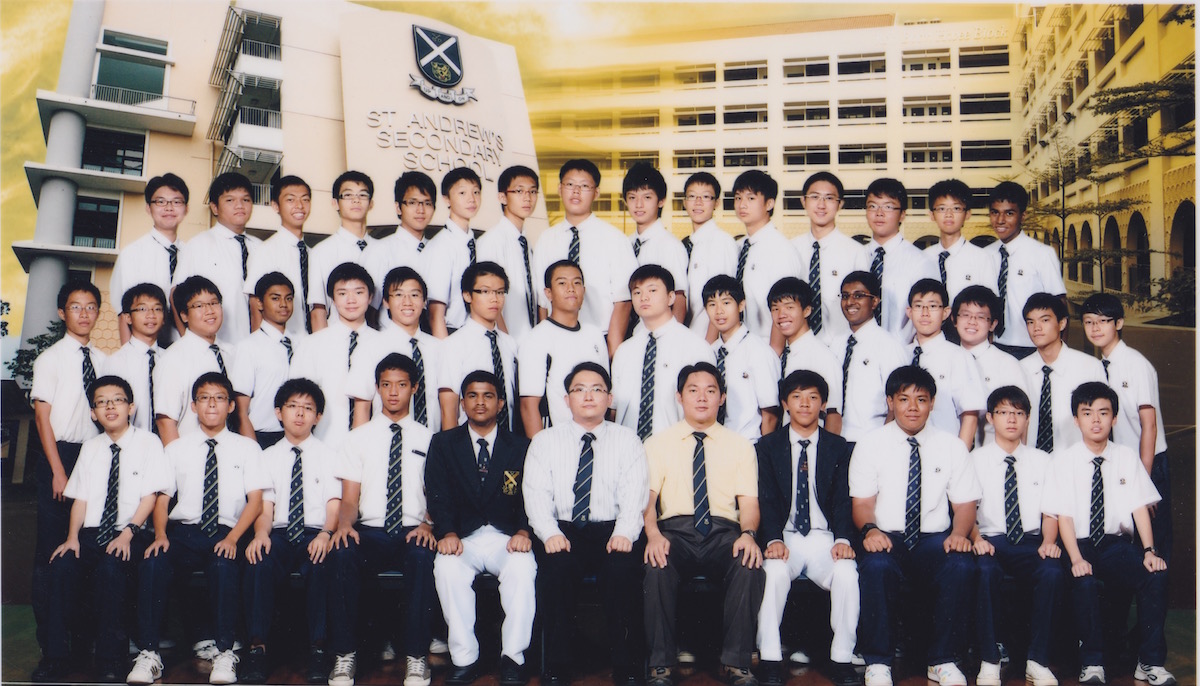
    Bryan (front row, middle) in his Sec 3 yearbook photo.
    Bryan (front row, middle) in his Sec 3 yearbook photo.

    How did you apply for the job? Did you have to do anything special in the process of applying for it?

    Application is through a MOE [Ministry of Education, Singapore] portal, where you have to first create an account and thereafter furnish your details for registration. In short, the documents you need at hand are your past education result slips and personal information. Upon registering, MOE will review the documents submitted and decide whether you have the qualifications to become a relief teacher. If approved, the next thing is to make a trip down in person to your desired school to register with the school. (Proximity to the school plays a considerable part in whether the school will accept you or not.)

    Applications can be made throughout the year but will only be reviewed in 2 windows, 1 January to 28 February and 1 July to 31 August.

    To be eligible as a Relief Teacher, you have to possess either:
    1) an on-campus Degree or be an undergraduate pursuing an on-campus degree;
    2) have a diploma from a local polytechnic/IB Diploma;
    3) with at least 2 GCE ‘A’ Level/H2 and 2 GCE ‘AO’ Level/H1 passes (including General Paper); or
    4) 5 GCE ‘O’ level passes (including English and Mathematics) with L1B4 of ≤ 26 points.

    More details on application and eligibility can be found in this link.
    [LUCK-IT disclaimer: This post is not sponsored by MOE. All MOE links are provided purely because of Bryan’s enthusiasm.]

    How long did it take for you to go from applying for the job to getting hired for it?

    Approval can take roughly 3 weeks to 1.5 months from submission of documents. After which, registering with the desired school can take an hour or 2 depending on the availability of the Head of Departments (HODs) or Principal/Vice-Principals who will interview you to determine your suitability for the school.

    Why do you think they hired you for the job?

    I met the minimum requirements meted out by MOE, and I was recommended by an ex-teacher from my alma mater (St. Andrew’s Secondary School).

    What is the work routine for a relief teacher like?

    The school(s) that you’ve registered with successfully will call you in the morning (on the day itself) if they require your assistance. The school that I was registered to would call between 6:45am and 7am if they required me to come in that day. This may differ from school to school. Relief teachers are required to come in by 7:30am to collect the relief schedule for the day. The first period starts at 8am and the last period typically ends at 2pm or 2:30pm. There is no dictated lunch period–teachers normally take the chance to grab a bite or drink during their free periods, whenever that may be.

    How do relief teachers spend their weekends?

    Unlike full-time teachers, relief teachers do not have to prepare materials for class or bring worksheets/exam papers back to mark. Hence during the weekends we are free to enjoy the time at our own pleasure.

    Bryan (middle, with hands on side) in Sec 4.
    Bryan (middle, with hands on side) in Sec 4.

    What advice do you have for someone hoping to become a relief teacher at their alma mater?

    If you have teachers who have taught you in the past and are still teaching at the same school, you can reach out to them for advice on how you can go about applying to the school. If you have left a good impression on your teachers upon graduating, they may put in a good word for you with the school’s upper management.

    Can you map out a recommended path for people who want to be relief teachers at their alma maters to follow?

    As mentioned, apply through MOE and get yourself approved to relief teach first. Then proceed down to your alma mater’s General Office to apply as a relief teacher. Knowing an ex-teacher that you have built a good rapport with in the past is beneficial as they can put a good word in for you with the HODs/Principals who are going to interview you.

    What has the experience of being a relief teacher been like for you?

    The first few days/weeks will be a bit of a challenge as you have to first discover ways to teach or discipline students. But as time passes, you will pick up skills from your fellow teachers and colleagues on how to deal with more difficult students. As an ‘old boy’, students tend to look up to you as they know that you’ve once been sitting in the very seat they are in now.

    Have you changed as a person since becoming a relief teacher? Or learned some things you didn’t know before?

    Relief teaching has taught me patience when it comes to educating the younger generation. I have had the chance to see how both the students and the education system has changed since my days as a secondary school student 10 years ago. There are now other schemes for Normal Academic students to through-train into polytechnics without having to take their ‘O’ levels, as well as a major change in the education system to look forward to in the next few years.

    The school which educated Bryan and later became his source of temporary income.
    The school which educated Bryan and later became his source of temporary income.

    If you could go back and replay your time as a relief teacher all over again, what would you do differently?

    Wouldn’t change a thing, the students and teachers I’ve met really do bring back memories of those carefree days as a student.

    How have you changed since secondary school? Or have you not changed?

    My thoughts have definitely matured since. In secondary school you’re kept in this protected environment and things that happen around the world don’t really affect to you. I’m glad to know that the education system has opened up to give students a more worldly perspective.

    Do you think your secondary school has had an influence on your personality today? If so, how? If no, why not?

    Yes! Saint Andrew’s is an Anglican mission school teaching Christian values, which has definitely made an impression on me even through my young adult years.

    Which 3 objects/people in your life can you presently not live without and why?

    Friends, good ones. They stick with you through good and bad times and provide valuable perspective on matters to help you better see a situation you’re in.

    Of all the objects you bought in the past year, which has most positively impacted your life? Why?

    In this technological age it would be my new phone [the iPhone XS]. Eons faster than my previous one and with a better camera, it has made me more productive as I use my phone a lot for work/keeping up with friends.

    Which person do you wish LUCK-IT would interview for you to learn from? Why?

    Anyone who can give young working adults good advice on saving for the future.

    [UPDATE: We have found some answers on saving for the future for Bryan. Click here to read them.]

    Bryan now (middle), on the job as a relief teacher.
    Bryan now (middle), on the job as a relief teacher.

    Bryan starts working at Singapore Airlines as a Cadet Pilot this month but will try his best to answer questions on relief teaching when he has the time if you leave them in the comment box below. Aspiring pilots can also reach out to him via his Facebook page should they need help preparing for airline job interviews (at his discretion).

    Photographs courtesy and copyright of Bryan Yong. Interviewer: Sy
    If you found this article useful:


  • How I Made My Own Spiderman Web Shooters - HeroTech Etsy Singapore

    How I Made My Own Spiderman Web Shooters

    When HT was 10-years-old, he wanted to be able to shoot webs like Spiderman. There was a lack of high quality, realistic web shooters available for purchase then so he decided to make his own. Today, HT has sold close to 300 self-made web shooters on Etsy under the brand HeroTech, mostly to middle-aged Americans, some of whom buy for their kids. LUCK-IT couldn’t resist asking how he made that happen.

    “It’s a lot easier than you think—almost everything I learned to make the web shooter was learned through free online resources.”

    Q: Hi! So excited to have you with us today! Tell us about yourself: Who are you and why did you decide to start making your own web shooters?

    A: Hi! While I’d rather not share specific details related to who I am, I can tell you that I’m a pretty huge nerd. I’ve always loved engineering and inventing new things, so when I heard about the then-new Spider-Man Homecoming movie coming out, I wanted to make my own web shooters. There’s something pretty magical about bringing things from science fiction to reality, and after 6 months of prototyping I was able to make something satisfactory to me.


    HeroTech’s web shooters in action! Powerful enough to take down music stands!
    Source: HeroTech’s YouTube channel

    How do your web shooters work?

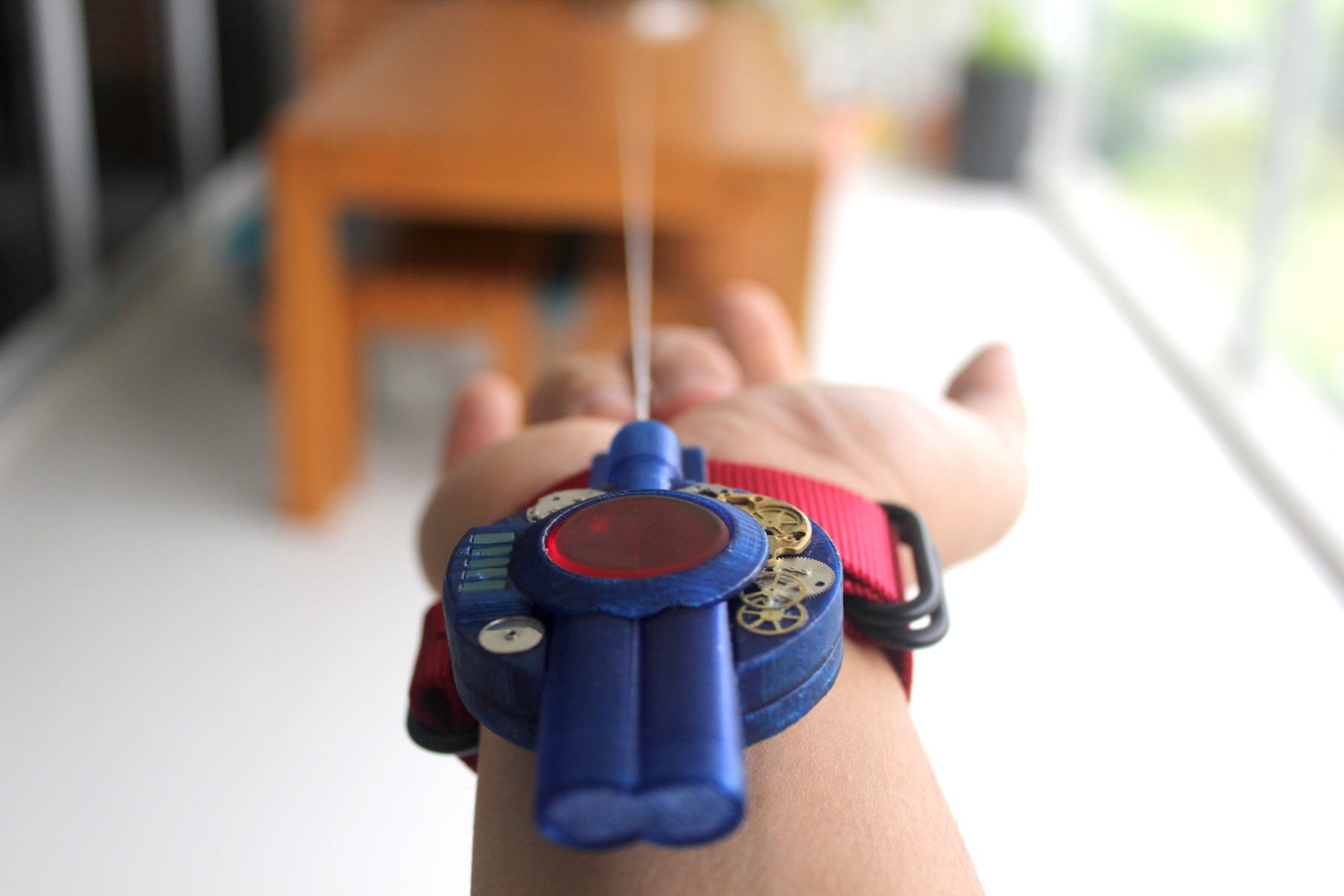
    When engineering I try to follow the KISS (Keep It Simple Stupid) method, and that’s the approach I went with this. Basically, inside the web shooter is a block on a spring. The projectile itself also has a spring on it, and when the projectile is loaded into the shooter, the block catches on a latch on the projectile, thus keeping it in place. Fishing line is tied to the block and around the middle finger, so when the fishing line is pulled, the projectile releases.

    How is it you know how to create a mechanically functional gadget? Was it something you studied in school or something you picked up on your own?

    I took physics in school, so I had some basic knowledge of mechanical principles. However almost every other part of the construction of the web shooter was self-learned through online resources.

    How did you find and acquire the parts required to make your web shooters?

    Almost all of it was online through sites like AliExpress, eBay, etc.

    Can you talk us through the process of creating your web shooters? What did you do first, and next and so on and so forth?

    First, I had to define the parameters and goals of the project: what specific capabilities did I want the web shooters to have? From there, I was able to ideate several solutions to the different goals, and then prototype them. Some worked, most didn’t, and I retested the prototyping process until I found systems that worked. From there it was just refining and testing the web shooters to make them reliable and looking good.

    Did you succeed the very first time you tried to create a web shooter or did you have any failed prototypes? If so, how many of your early designs failed and why did they fail?

    Nothing ever worked the first time—oh my goodness was the prototyping process arduous and frustrating. I lost count of the failed designs somewhere after version 20. Most of the failures were due to unaccounted for variables or stresses in the environment.

    How many months did you take in total to figure out how to get your device to work? And how much money did you spend in the process of doing so?

    The first working version took about 6 months and $800 SGD to develop.

    HeroTech’s workbench: various web shooters in different stages of construction; tools and materials used to make web shooters; packing and shipping materials used to ship web shooter orders.
    HeroTech’s workbench: various web shooters in different stages of construction; tools and materials used to make web shooters; packing and shipping materials used to ship web shooter orders.

    What was your routine like when you were thick in the midst of creating your web shooter?

    As I was studying full-time, I was usually only able to work on the web shooter in my free time. When I was able to squirrel away time to work on it, it was usually late in the night or early early morning.

    What about weekends? How did you spend weekends then?

    Weekends were spent with friends and family usually, but occasionally I liked to show them the prototypes and get their opinions.

    What advice do you have for someone thinking of making their own superhero gadgets too?

    My advice is that it’s a lot easier than you think—almost everything I learned to make the web shooter was learned through free online resources, so don’t be too intimidated to try making gadgets of your own.

    Can you map out a recommended plan of action for people wanting to create their own superhero gadgets to follow?

    The design thinking process is what I’d go for—empathise, define, ideate, prototype and test. These five steps are pretty essential for creating anything of use, and once you find something you want to make, it’s just a matter of following these steps.

    What key things/people/situations enabled you to create your web shooters, in your opinion?

    In my opinion, me creating the web shooter and the resultant online success of it was mainly enabled by my situation and circumstance. I was lucky enough to have access to a 3D printer via my school, and my parents were supportive of me and what I wanted to create.

    How did having successfully created a working web shooter change you as a person? Or did it not change you? And what did you learn from doing it that you didn’t know before?

    It changed me because I learned what I can do if I just set my mind to a goal and work consistently towards it.

    If you could go back and replay your entire process of engineering web shooters all over again, what would you do differently?

    I wouldn’t change a thing actually. The hiccups and failures are the real takeaways for me, and the process as a whole was quite enjoyable—those moments of triumph when something actually worked made it all worth it.

    What were you like as a child? What about as a teenager and young adult? How did you change at every decade? Or did you not change?

    As a child I was quite carefree and happy—ever since young, I loved to create things. Legos were my favourite toys. As a teenager/young adult, I became quieter and generally more mature. I still love to create things, however instead of Legos, I use CAD modelling and 3D printing now.

    Which major event in your life has made you who you are, in your opinion? Why do you think so?

    The moment when the first web shooter video hit 1 million views on YouTube was an epiphany moment for me. I realised not only was there a sizeable audience and demand for HeroTech, but that I could tap into it even with the limited experience and knowledge I had. HeroTech has long been a pipe dream of mine, something I envisioned doing on the side while I worked a full-time job. I never imagined that I could do it right now. I’ve never been the kind of person who wanted to change the world or make my mark on history, but that moment truly made me realise the impact and reach even a kid with barely any engineering experience could have on a large community, something that has propelled and driven me ever since.

    Two halves of HeroTech’s new WEB-12 web shooter. Prototypes made out of steel.
    Two halves of HeroTech’s new WEB-12 web shooter. Prototypes made out of steel.

    Which 3 objects/people in your life can you presently not live without and why?

    My mom, dad and my friends. (Technically more than 3 but who’s counting 🙂 ) I think friends and family are the most important things in life, and without them I wouldn’t be where I am today.

    Of all the objects you bought in the past year, which has been most useful? Why?

    3D printer for sure. Specifically the Prusa i3 MK2, shoutout to Prusa Research #pleasesponsorme. It’s allowed me to bring ideas from my mind into physical reality, and is my most invaluable engineering tool.

    Which person do you wish LUCK-IT would interview for you to learn from? Why?

    Anyone who’s done a lot of good for the community would be awesome to interview.

    [LUCK-IT Update: We have interviewed a gentleman who has done just that, right here. And another lady too, right here.]

    Editing in progress: A YouTube video for HeroTech’s WEB-12 functional thread shooter.
    Editing in progress: A YouTube video for HeroTech’s WEB-12 functional thread shooter.

    What’s the worst advice you’ve been given, or have heard people giving? And what’s the best?

    Worst advice I’ve ever heard is “get so drunk you forget everything”, and the best I’ve heard is “this too shall pass”.

    Lastly, what other superhero gadgets do you intend to create in the future?

    Some Iron Man projects are planned, as well as some stuff from the Flash, and of course more web shooters.

    HT is presently working on making metal web shooters, a micro flying ornithopter, and some other secret stuff. You will be able to track his progress and see his web shooters in action via HeroTech’s YouTube channel, Instagram page, Facebook page and Twitter account. You may also ask him questions by leaving them in the comment box below.

    Interviewer Note:
    You make me want to go invent gadgets to solve all of life’s problems now. Thanks for helping me realise everything’s doable 🙂

    Photographs courtesy and copyright of HeroTech. Interviewer: Sy
    If you found this article useful:


  • How I Started A Rental Service At 19 With $0 and Grew It Into A Full-Fledged Peer-to-Peer Business by 23 - Jeshua Soh, JRC, Crossworks, Startupmedia

    How I Started A Rental Service At 19 With $0 and Grew It Into A Full-Fledged Peer-to-Peer Business By 23

    Back in 2015, 19-year-old Jeshua made the decision to rent out his personal collection of camera gear and started a Facebook page titled ‘J Rental Centre’ to do so. Today, J Rental Centre has a website, an office, staff and three collection points all around Singapore. LUCK-IT asked the now 24-year-old entrepreneur/film-maker how he did it.

    “I would say the reason we’re still here and still focussed on the same vision of connecting people is because of the community impact we have seen.”

    Q: Why did you decide to start an equipment rental business? And how is it you could start it with almost $0?

    A: We’re not exactly an equipment rental business but a peer-to-peer platform, something like Airbnb/Grab, that connects owners and renters of camera gears, event logistics and creative spaces with each other. I began JRC.sg in early 2015 as I saw that the existing rental houses were expensive and rigid, especially for students and smaller productions. We wanted to provide a rental service that is both affordable and convenient, while focussing on the people element, not just the hardware or spaces. There is nothing like getting tips directly from a professional owner and a few minutes chat can prove more useful than 2 hours of manual-reading or YouTube-watching.

    The business was started not as a business but as a means of cost reduction and better utilising resources which I already had. There wasn’t capital investment that could be measured in $ but certainly a lot of time and energy in formulating the policies, writing agreements, developing the website, marketing, and the list goes on.


    What was your first year of business like? How did you get customers and what did you learn along the way?

    JRC began as a Facebook page with a list of stuff that I personally already owned. Shortly after, some friends also wanted to rent out their equipments and we grew the list, then created a blog-site. The first few customers came from people whom I had known through school and work and word slowly spread through word of mouth as well as our digital marketing efforts.

    J Rental Centre's first Facebook list of gear for rent.
    J Rental Centre’s first Facebook list of gear for rent.


    How did you start expanding your business? Was it something you planned for at the start or something that occurred organically?

    In 2016, we launched the first version of JRC.sg which listed camera equipment like DSLR, lenses, lighting, sound and support gear from 16 different owners all over Singapore. It was a huge step up from the Facebook page or blog-site but still largely manual in the way we cleared inquiries, created invoices and collected payments. More partners came on board—some customers and some who just had a spare set of kit they didn’t want collecting dust at home. Today, we have over 100 owner partners and are on our second version of the site which features two new verticals (event logistics and creative spaces), e-payments, user accounts, online ID verification as well as a host of other bells and whistles. We are always thinking of ways to add value and connect more people as we know that there is still a sizeable portion of the media and events industry that are more used to just walking into a shop to get what they need.

    How long did it take you to get to the point where you felt like your business would be sustainable in the long run? Was there a significant turning point/course of action that got you feeling that way?

    I don’t think that we have even reached this point today, despite being around for over 4 years. Reaching critical mass and achieving a network effect that is win-win for all parties is not easy, and even companies like Grab are not profitable yet. I think a better question would be at which point did I start taking this Facebook page that I created more seriously and try to scale up what we were doing, and that would have to be in 2016, when I saw that having a site which organises the listing information was going to be very important if we wanted to connect more people. So, I hired a developer to code the first version and started taking in some interns to assist with marketing as well as thinking of new ways to grow the platform.

    J Rental Centre's present website.
    J Rental Centre’s present website.

    Did you have any setbacks or wins along the way while in the process of doing the above?

    Our setbacks include lengthy development time, especially on the current site, as I was properly trained in film-making and not as a tech-geek, some mis-steps in terms of trying to penetrate the clothes rental market sometime in 2017 and a bunch of poor hiring decisions. I would say the reason we’re still here and still focussed on the same vision of connecting people is because of the community impact we have seen. The power of team cannot be underestimated, especially in a small industry like media. It is always good to know more people and the transactional value of renting out a piece of kit is actually far lower if this transaction actually leads to a friendship or even becoming acquaintances with each other.

    What was your routine like when trying to expand J Rental Centre?

    Routine would be the last word I’d use to describe a lot of things that I do but we’re really goal-oriented and try many different things to fulfil the goals that we have set out. A lot of focus would be on balancing the chicken and egg problem which would bug most platforms–having too many ‘suppliers’ would mean that each person has less transactions, while having too many ‘buyers’ would mean that each buyer has insufficient choice. So it is a balancing act and we are always trying to court both sides to tell them about why they should use the platform or how we can help them to achieve their goals (be it to save costs, learn more, increase revenues or worry less about safety and procedures).

    J Rental Centre's City Hall Collection Point.
    J Rental Centre’s City Hall Collection Point.

    What about now? What is your present routine like?

    I now spend a good amount of time working remotely, travelling back and forth from Myanmar where I have started Crossworks since 2018. The company was started to help local Singaporean companies (such as my own) hire remote talent from Myanmar/Yangon to fulfil their manpower needs as well as lower their manpower costs, while stopping the brain drain out of Myanmar.

    How do you presently spend your weekends?

    If I’m in Singapore, I’d either be busy with productions, accounting, emails, or in church where I serve in the live production team as well. If I’m in Myanmar, I could be on a boat, up in the hills, by the beach or in a city–that’s really much less predictable.

    What advice do you have for someone hoping to start their business at age 19, or with $0?

    It’s not going to cost $0. Take into account the time and attention that will be the investment in whatever you’re doing but also don’t stop at ‘hoping’ and ‘dreaming’—the realistic chances of success are slim (statistically speaking) but I think that if you’re like me and don’t take it too seriously and are doing something that you like, it’s always worth trying and learning along the way.

    Can you map out a recommended path for people wanting to start their business at 19, with $0, to follow?

    I don’t have one and I don’t think one exists. I would suggest as above but if you have a clearer idea of the kind of business you’d like to setup, talk to some potential customers/partners and see if that is something that they would need. Don’t be surprised if there is hesitation or if they don’t sound supportive but take those initial observations in and remember why you started always.

    This is Jeshua.
    This is Jeshua.

    Which key things/people/situations enabled you to keep and grow the business you started at age 19, in your opinion?

    The business began after a few other platform businesses like Airbnb, Uber/Grab, etc, started, and people became more open to the idea of resources being shared instead of just owned. The gig economy was also and is still continuing to expand such that people do not need to keep all the resources in-house and have them be less than optimally utilised but are able to ‘plug and play’ resources as and when needed.

    How did starting your own business at 19 change you as a person? Or did it not change you?

    It gave me the opportunity to interact with much more people and hence I would say that it has changed me for the better.

    Jeshua's present office in Tai Seng, Singapore.
    Jeshua’s present office in Tai Seng, Singapore.

    If you could go back and replay the adventure of starting and running J Rental Centre all over again, what would you do differently?

    I would focus on what I can do at this present moment.

    What were you like as a child? What about as a teenager and young adult? How did you change at every decade? Or did you not change?

    I never liked being bored. I don’t think that has changed but I have learned to value quiet and slow moments, grown in patience as well as increasingly seen the value in some routines.

    Which major event in your life has made you who you are, in your opinion? Why do you think so?

    Not one event per se but in general not having examinations being a huge part of my life at any point made me realise that there are more important priorities. Learning became a joy and something I still constantly try and do. With grades and accolades being something that many people in our society get caught up with, I think it gives me a different perspective when looking at issues or making decisions.

    Which 3 objects/people in your life can you presently not live without and why?

    Objects are easier. A laptop, phone and my passport. I use these to get work done and get around.

    Of all the objects you’ve ever bought/received for the purpose of expanding or sustaining J Rental Centre, which has been most useful? Why?

    We’re not really a brick and mortar store so I guess our website itself is our biggest asset to help connect people.

    Jeshua’s studio at Tai Seng, Singapore.
    Jeshua’s studio at Tai Seng, Singapore.

    Which person do you wish LUCK-IT would interview for you to learn from? Why?

    Jony Ive—his design has had a huge impact on the world we live in today.

    What’s the worst advice you’ve been given, or have heard people giving? And what’s the best?

    I have forgotten most of the worst advice. Some of the best would be to take care of yourself physically and not neglect health while focussing on your other priorities.

    Jeshua presently runs his two other businesses—Crossworks and Startupmedia—on top of running J Rental Centre. You can connect with him at those websites or his LinkedIn page, or drop him in a question in the comment box below.

    Other Answers by Jeshua Soh:
    How I Started A Business In Myanmar At Age 23
    Why I Chose To Drop Out Of School In Year 5 Of The Integrated Programme

    Photographs courtesy and copyright of Jeshua Soh. Interviewer: Sy
    If you found this article useful:


  • How I Won Over 200 Photography Competitions Before Age 50

    How I Won Over 200 Photography Competitions Before Age 50

    When Liew Tong Leng was 23-years-old, he took part in his very first photography competition and won a prize. In the three decades that followed, he participated in more than 300 photo competitions and won more prizes in at least 200 of them—including $30,000 worth of cash and camera equipment on local reality TV competition ‘The Big Shot‘, $10,000 in a Great Eastern photo competition and another $10,000 in a Konota photo contest. He tells LUCK-IT all about his keys to winning and lets us in on what made him the man he is today.

    “It’s the process of taking part in competitions that moulded me to be what I am today. There is no short cut.”

    Q: How did you start taking part in photography competitions? Which was the first one you participated in and did you win that?

    A: I started taking part in photography competitions in 1992 through the influence of friends. I happen to know many photography friends who take part in competitions and I joined them to benchmark myself and also to improve my skills.

    How many photo competitions did you lose before you finally won a prize in one?

    The first time I took part in a photo competition is also the first time I won a prize.


    The last photograph Liew won a competition with — at the SAFRA members' annual photo competition. (As of Apr 2019)
    The last photograph Liew won a competition with — at the SAFRA members’ annual photo competition. (As of Apr 2019)

    Which was the first photo competition you won first prize in?

    I really can’t remember when I first won a first prize because it was a long time ago and it was still in the film era.

    Now that you’ve won many competitions, what, in your opinion, are the key elements that make a winning photograph? And what are the skills a photographer must have in order to achieve that photograph?

    I think a winning photo must contain three elements: good lighting, good composition and a good moment. The most important being a good moment. In order to capture a great moment, you have to anticipate and be ready.

    How frequently do you take part in photography competitions? Is there a routine you have to keep track of all the competitions going on and if so, what is it?

    I take part in photography competitions almost every month. I have a way of archiving all my potential winning photos and categorising them.

    How often do you pick up a camera when not participating in photography competitions? What do you usually do with the camera then?

    I shoot almost every weekend when I’m free. I don’t wait for a competition to be available to go and shoot. It’s the other way round—I shoot first, categorise them and then select the suitable photos for the theme of different competitions.

    Liew's entry for the Perspectives, Capture The Moment Photography Competition.
    Liew’s entry for the Perspectives, Capture The Moment Photography Competition.

    How do you presently spend your weekends?

    Shooting.

    What advice do you have for someone hoping to win not just one but many photography competitions?

    Study competition photos. Learn the elements required in a winning photo and keep shooting different genres.

    Can you map out a recommended path for people who want to win many photography competitions to follow?

    As above.

    What key things/people/situations enabled you to win so many photo competitions, in your opinion? Who/What do you believe you never would have succeeded without?

    Passion and hard work. Again spending time and being hardworking is my key to winning.

    How did winning many photography competitions change you as a person? Or did it not change you?

    I always strive to be creative and shoot differently in order to win. Since 1992 when I started photography, I had that passion and till now I’m still burning with that passion to take great photos, but through the years, in terms of photography I see things differently now.

    Liew's entry for the 4th Great Eastern "Life is Great" Photo Competition.
    Liew’s entry for the 4th Great Eastern “Life is Great” Photo Competition.

    If you could go back and replay all the competitions you’ve ever taken part in all over again, what would you do differently?

    No, I think it’s the process of taking part in competitions that moulded me to be what I am today. There is no short cut.

    What were you like as a child? What about as a teenager and young adult? How did you change at every decade? Or did you not change?

    As a child I was quite an introvert. As I grew and started to win photo competitions, I was known and became more confident of myself.

    Which major event in your life has made you who you are, in your opinion? Why do you think so?

    Winning the first prize in the TV reality show, ‘The Big Shot‘. The photography competition was quite a major event in my life. I was on national TV and the attention increased. I had to learn to be humble and yet confident in what I do.

    Liew's photography gear.
    Liew’s photography gear.

    Which 3 objects/people in your life can you presently not live without and why?

    Camera equipment. Without it, I can’t shoot.

    Of all the objects you bought for photography in the past year, which has most positively impacted your life? Why?

    Photography equipment is just a tool to take great photos. It doesn’t really impact my life.

    What’s the worst advice you’ve been given, or have heard people giving, with regards to photography? And what’s the best?

    The worst advice I heard was to fix certain settings while taking a photo. I think the best advice was to explain the reason I do certain things instead of just telling others what to do.

    Liew is presently an Airworthiness Manager with CAAS (Civil Aviation Authority of Singapore) and regularly posts his photographic creations on his Facebook and Instagram pages. He is also happy to answer questions on photography so if you have a burning question about photography techniques or competitions for him, drop them in the comment box below.

    Photographs courtesy and copyright of Liew Tong Leng. Interviewer: Sy
    If you found this article useful:


  • How I Make A Living As A Freelancer In The Media Industry

    How I Make A Living As A Freelancer In The Media Industry

    Brought to you by:

    J Rental Centre

    Sean Cheong, a TV director/writer/producer/lecturer/course developer, was 17 when he began freelancing in the media industry on a part-time basis and 29 when freelancing became his primary occupation. Now with seven years of full-time freelancing under his belt, he tells LUCK-IT how freelancing in the TV/advertising/radio industries of Singapore really works.

    “Always have a back-up plan, or a diversification in your industry. ”

    Q: How did you end up freelancing in the media industry? Why didn’t you get a full-time job instead?

    A: It was not really a conscious choice. I think it is the nature of the industry. Most of the work is freelance and full-time jobs are limited. So I started to freelance and then one thing led to another and it just happened naturally. So now I’m full-time freelance and have been for the last ten years.

    What were the early days of you being a freelancer like? How did you get jobs? Did you think you would succeed or fail? Or did you have no idea what to expect?

    The main thing it taught me was to treat every job that I do as if it is my last job, because sometimes it literally is. You won’t know where or when your next job will come. So this means that:

    a) I do the best I can.
    b) I service the project/client the best that I can.
    c) I have to be frugal with every cheque that I get.
    d) You have to rely only on yourself. It’s up to yourself to hustle to find the next job, etc. Don’t expect it to come to you so simply.


    Sean (with cap) directing TV drama, 2025.
    Sean (with cap) directing TV drama, 2025.

    How long did it take for you to end up with a sustainable income from freelancing? Did you have any setbacks or wins along the way?

    If by sustainable, you mean stable, then it’s still not. It never was and I wonder if it ever will be.

    What was your daily routine like in the early days?

    It’s been so long ago, but if I remember it correctly, it was a lot of getting myself out there to try to find a new gig to do if I was not already on one.

    What about now? What’s your current daily routine like?

    Sean with actress, Huang Biren, when directing a Milo TV commercial.
    Sean with actress, Huang Biren, when directing a Milo TV commercial.

    Mostly hanging out with my wife and baby. I don’t see the need to be enthusiastically getting myself out there to try to find a new gig. On that front, I think I’ve reached a point where either people know me enough to know where to find me or they don’t know me/are not interested to, and as such, that won’t change very much.

    How do you presently spend your weekends?

    Again, hanging out with my wife and baby.

    What advice do you have for someone thinking of becoming a media freelancer in Singapore?

    1) Always have a back-up plan, or a diversification in your industry. I’m glad to currently have two other diversifications while still doing media.
    2) Find a way to make your money work for you through investment or dividend revenue instruments. As it is, we work hard for our money, harder than perceived sometimes. It will be a waste not to make it work hard back for us.

    Can you map out a recommended path for people who want to be media industry freelancers in Singapore to follow?

    There is no such thing as starting out at the top from the start. Start from the bottom, do everything, do anything. If you move higher to the top, that’s good on you and that’s a bonus.

    What are the key things/people/situations that enabled you to become a media industry freelancer, in your opinion?

    I honestly don’t know because I am still finding it. But if I were to guess, I would say being reliable and positive is important. I have, at no point, let any project down (in terms of delivery schedule) or given up, no matter how tight or poor the conditions are.

    If you could go back and replay your entire career all over again, what would you do differently?

    I would have made some better decisions on some of my jobs. People have longer memories than we expect.

    What were you like as a child? What about as a teenager and young adult? How did you change at every decade? Or did you not change

    I don’t know about changes. I always wanted to work in television. I just grew up into a young adult and am doing it so, I lived the dream somewhat (and still am).

    Sean (pointing) on another one of his many projects, in 2013.
    Sean (pointing) on another one of his many projects, in 2013.

    Which major event in your life has made you who you are, in your opinion? Why do you think so?

    Getting let go from a dream job (it happens) which I was convinced I could do until I was in my sixties, for reasons that is not related to my skill and competencies in the media. Other than the shattering of a dream, it made me realise the only reliability is me, myself and I.

    Which 3 objects/people in your life can you presently not live without and why?

    Family. Family. Family.

    Of all the objects you bought in the past year, which has most positively impacted your life? Why?

    I have not bought anything in 2018, unless it’s for my daughter so…

    Sean (with cap) on the set of 2025 with cast—Nicholas Lee, Gerald Chew, Edward Choy, Melissa Yeo, Eunice Annabel Lim, Amy Cheng, Scoot Hillyard and Amesh Kumar.
    Sean (with cap) on the set of 2025 with cast—Nicholas Lee, Gerald Chew, Edward Choy, Melissa Yeo, Eunice Annabel Lim, Amy Cheng, Scoot Hillyard and Amesh Kumar.

    Which person do you wish Luck-it would interview for you to learn from? Why?

    A stock day trader. It’s something I would be interested to know more about. It’s also a skill that I am currently learning, that I wish to improve on.

    What’s the worst career advice you’ve been given, or have heard people giving? And what’s the best?

    Worst: (It was not given to me, but it is done and I have heard of people doing it.) “As long as you participated in it, just put it in your C.V., write ‘you directed/shot it’. You are not lying. You did participate in it.” As a means to make your C.V. look better. It has also been done to me when an intern on one of my productions said they directed a particular production when applying for the job. There are ways and things you may need to do to get ahead, especially in the early days when you are starting out fresh, but this is not the way. It’s actually stupid.

    Best: “You can’t control what others think, but what’s within your control is to keep your nose clean.” I do that all the time.

    Sean is presently still a full-time freelancer and TV director, busy with his 11-month-old daughter, managing his stocks portfolio on NASDAQ and the SGX and running two other businesses on the side. You may read more about him on his website or ask him questions about becoming a media freelancer by dropping them into the comment box below.

    The above interview is sponsored by:

    J Rental Centre

    And supported by:
    The Amateur Trader

    Photographs courtesy and copyright of Sean Cheong. Interviewer: Sy
    If you found this article useful: