• How I Became An Esports Professional

    Tiffani “Oling” Lim was 22 when she decided to turn away from the careers her studies prepared her for, risk suffering her parents’ wrath and move to a training house in Malaysia to pursue a career in esports. We asked her how she did it and how that fateful decision has since paid off.

    “It doesn’t even feel like work, most of the time. It’s like something we may even be willing to do for free, so getting paid on top of that is a bonus.”

    Q: Hi Tiffani, welcome to LUCK-IT! Could you tell us a little about yourself and how you are involved in the esports industry? 

    A: Hello! I’m Tiffani, also known as Oling or Babyoling to my friends in the industry. I’ve been in the esports industry for 7 years now, for the past 3 years I’ve been with Battle Arena Malaysia, a high-end esports hub, as their Head of Marketing & PR. I’m also the chairperson of the International Esports Federation’s (IESF) Athletes’ Commission. 

    For those who don’t fully understand what esports is about, can you explain what it is? What are the roles available in the industry and how big is it?

    Esports is a niche industry that was built around gaming tournaments that can fill stadiums and attract large crowds of gamer fans. 

    Many people confuse “esports” with “gaming”. While there are some casual games that we play to relax, esports usually revolve around the most competitive and high-pressure game titles like Dota 2 or Fortnite, where strategies, communication, reflexes and skills at the topmost level are required in order to win. So gaming is to esports as casual street basketball with friends is to competing in the NBA – the former is a hobby, while the latter is a professional career; a livelihood that requires utmost dedication. 

    And just like in sports, esports feature regular, seasonal tournaments of all sizes which culminate in grand finals that are usually held offline. And the whole ecosystem is built around these events – you have the offline events crew, technicians, planners and marketers to put the event itself together, your online broadcasting crew who work behind-the-scenes to produce the live feed, then there are talents such as hosts, commentators, panelists, and of course you have the stars of the show – the esports players themselves who train full-time and compete for tens of thousands of prize money. There are also team owners, managers, coaches, even psychologists and nutritionists as part of the teams’ support crew. 

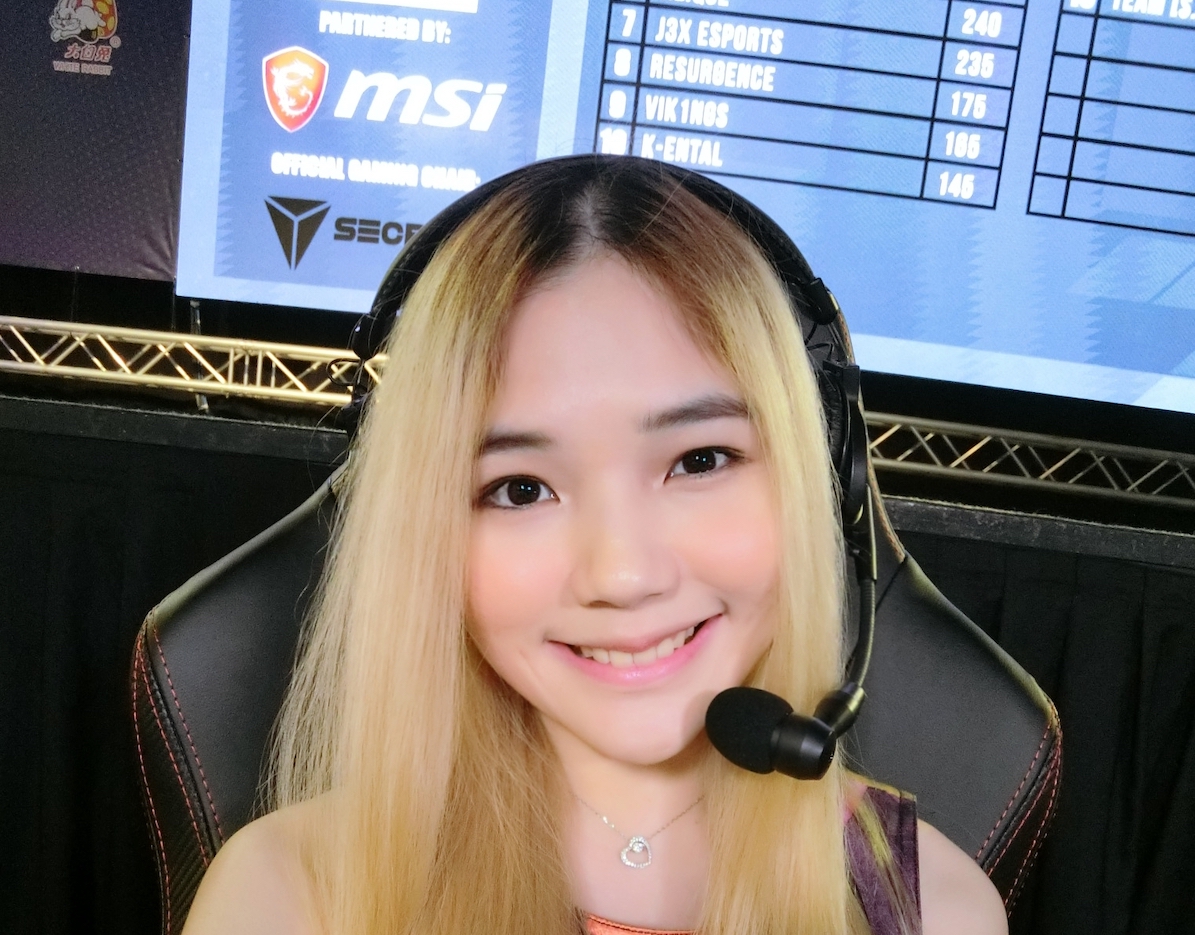
    Tiffani commentating PUBG games at the Asia Game Festival in Singapore back in 2018.
    Tiffani commentating PUBG games at the Asia Game Festival in Singapore back in 2018.

    As for how big the industry is, a simple search would tell us the estimated valuation. I don’t believe in these statistics, but esports’ exponential growth has been evident in the fact that there are many celebrities and traditional sports club owners who’ve started investing in esports brands; esports has also been recognized as a medal event, at the 2019 SEA Games as well as the upcoming 2022 Asian Games. Right now the IOC is also considering including esports in the future Olympics, but truth be told, the esports industry is already flourishing without its inclusion in mainstream sporting events, and it will only continue to grow as our habits in entertainment consumption shift over time. 

    Why did you want to join the esports industry and how did you get your first job in it? Did you have to move to another country to get involved in it or were you able to start where you were? 

    My initial venture into esports was more of a spur of the moment decision – I started shoutcasting (commentating) DOTA 2 during my university days in Singapore, and formed an all-female DOTA 2 team to compete in tournaments. An opportunity then came by where I was offered to manage a top-tier Malaysian DOTA 2 team (Team Titan), that’s when I took the leap of faith and moved back to Malaysia. And that was my first contract in esports. 

    To further my esports career I had to move to and stay in Malaysia – the scene in Singapore was comparatively smaller, and even when there were many passionate and capable people running the scene esports could never really gain traction or governmental support openly due to the societal culture that values academic excellence over all else. Gaming, and by extension esports, has thus always been seen as a bane and it’s going to take much more to convince parents or even athletes themselves that esports is a path worth exploring. 

    What are the challenges of working professionally in the esports industry and what are the benefits? Also, is it really possible to make a living from specialising in esports? 

    The main challenges would be things like not having a stable salary – the inherent nature of the industry is that it’s events-based, so paying jobs are mostly on a contract/adhoc basis. For talents, players, production & events crew alike, that’s the norm everywhere. Things have definitely improved over the years but there are still many newcomers in the industry living paycheck to paycheck. Players too if they’re past their peak, or struggling to reach the level of competitiveness where they can be picked up by pro teams. 

    Tiffani being interviewed by the Malaysian TV channel NTV7, at the inaugural Flight of the Valkyries tournament which she co-founded and organized.
    Tiffani being interviewed by the Malaysian TV channel NTV7, at the inaugural Flight of the Valkyries tournament which she co-founded and organized.

    That said, the excitement in knowing that every project would be different and has to be tackled differently is the main benefit I can see; coupled with the fact that many of us stepped into the industry in the first place because we are deeply passionate about esports, so it’s never boring to us. It doesn’t even feel like work, most of the time. It’s like something we may even be willing to do for free, so getting paid on top of that is a bonus. 

    Yes it is entirely possible. Either by becoming an esports player, an on-screen talent, or by working in production, events or team management. As long as you have the passion or skill and are willing to learn, you can make a living in esports. 

    What is it like being female in the male-dominated esports industry? 

    Essentially you have to prove and keep proving your “geek cred” to everyone, including those you intend to work with. I imagine it’s probably the same or similar in engineering, politics, IT or any other male-dominated industries; people will assume that you don’t know your stuff, so you just have to keep proving them wrong. And the community would usually be skeptical or patronizing when they look at a female in esports, and it would take years of consistent hard work and an almost impeccable record for females to really gain any sort of recognition, validation or respect in the industry. 

    I don’t think there are females holding top leadership positions in the industry for our region, and the only few female leaders I know who own some of the top esports organizations in China and the US, all of them have been under attack by really nasty and vicious comments by netizens, suggesting that they relied on their sexuality to get to where they are today, despite their obvious success in running their companies that can only be credited to talent and grit. Females in esports generally have to endure much more “nonsense” compared to their male counterparts, and it’s always “guilty until proven innocent”. 

    Worst part is when you’re a public figure while the hurtful comments or accusations come from netizens shrouded behind the anonymity of their screen names. It’s really unfair that way, but it does train you up and strengthen your resolve. 

    Which 3 objects or people are most useful for you as an esports professional?  

    I rather not touch on people because there are simply too many of them to name who’ve inspired or guided me on my path in esports. 

    Objects-wise, 1. Laptop (MSI GE73), 2. Phone (Razer Phone 2), 3. Mouse (Razer Deathadder autographed by Min-Liang Tan!)

    Which place is most useful? 

    I would say Battle Arena since it’s a place filled with fond memories for me; it’s held many past events which I’ve been involved in, including the very first female tournament I’ve organized, the “Flight of the Valkyries”.

    What did you learn from being an esports professional that you didn’t know before? How did it change you as a person? 

    I never thought that I could derive such a great deal of joy and contentment from giving and aiding others. I’ve had many mentors in my journey who would give me valuable advice unconditionally, so I’ve taken it upon myself to pass the favor on to others who’ve come to me for advice. Helping others understand esports better, or even grow and flourish in the industry, just gave me so much pride and happiness that I have been doing it more over the years. This is the prevailing culture and the beauty of esports, and it happens when everyone’s united by the same passion and only want the best for the industry. 

    So changes-wise I guess I’ve since become more altruistic, in that sometimes even if the goal is far away and there’s no end in sight, as long as it’s for a good cause and that it can help people out, I would trudge on. 

    Tiffani during a Flight of the Valkyries tournament video shoot.
    Tiffani during a Flight of the Valkyries tournament video shoot.

    If you could go back and replay your entire career, what would you do differently? 

    I probably would’ve taken up a particular job offer in China, just to learn more about how they do things over there, since their esports production is on an entirely different level. Back then I didn’t take it up since I was just in my early 20s and having to move there alone was a daunting prospect. And as a result I feel that my view of the industry today is lacking and myopic at best. 

    What advice do you have for those who are presently thinking of becoming professionals in the esports industry too? 

    If you know what you want to do in esports, that’s great, just don’t get in over your head since it’s a highly-competitive environment, so please always be mindful of the realities of the industry. If you don’t know what you want to do, you can just get started somewhere first and figure it out along the way. Passion will bring you to great lengths in this industry, and that’s what’s amazing about esports. 

    Stay humble and willing to learn; the industry is small and word spreads so don’t think you can get away with bad behavior. Always do the right thing even when nobody’s watching. 

    How has and how will COVID-19 impact the future of esports? 

    The pandemic had greatly limited the types of entertainment that we have access to, and esports viewership likely benefited from this change in lifestyle. People have more time and reasons to watch gaming streams, so the demand for online esports content/events has gone up. On the other hand, at the heart of esports is the unique charm of offline events, where like-minded fans can gather in the same stadium to cheer for their teams, you get to see your favourite casters and players up close… it’s a wholly different kind of experience and atmosphere that online events aren’t able to replicate. 

    Esports is already largely online-based with no need for contact or for participants to be physically in the same space, so it’ll be easier to organize compared to other sport titles, perhaps getting a head start during the first phase of recovery. There have been two international esports events held in Singapore already (Mobile Legends M2 World Championship, Dota 2 Singapore Major) when most countries haven’t even begun vaccination for their people. 

    As the global community adapts to this new lifestyle, and the generation of gamers start to age, esports may eventually grow to edge out some traditional spectator sports that may be more difficult to produce in the “new normal” that we’ll have to start embracing in the near future. 

    Lastly, anything else you would like to say?

    Yeah I do have a rant about content creating… 

    The reason why I rarely stream nowadays is because I prefer to play games that I like, instead of adjusting the types of games I play according to the community’s tastes and likings. For example, mobile gaming is really huge nowadays and garners huge viewerships, so almost all the existing streamers switched from PC to mobile games. But this is something I don’t really agree with, because I feel it can be a slippery slope. Once you start to change your content’s direction for the sole purpose of garnering views and attention, it’ll get harder and harder to notice when you’ve gone too far, or realize where you should eventually draw the line. 

    If for example you realize your viewers love to watch you swear, the positive reinforcement will influence you to start swearing non-stop on stream. If one day you realize that your viewers love to leave racist or sexist comments, you may find yourself purposely changing your tone to match theirs in order to please your audience; it’s just like how you switched from PC to mobile, but the difference is that your speech can potentially become a huge social issue since streamers usually have large followings, and people who watch gaming streams, many of them are children or underaged. What sort of messages would you be sending to them? 

    The sad thing nowadays is also that Facebook and other social media platform’s algorithms favor drama and sensationalism. So as you compete for views and try to earn from your streaming career, you have to make these decisions very often. I’ve personally made it a point to turn down all endorsements of shady or grey area businesses, in order to keep my social media presence clean and not to impart any questionable values. But at the same time I’ve also seen many public figures in esports who don’t share the same principles, so that’s quite worrying. 

    I feel that many content creators need to realize that they have a social responsibility to play, and actively avoid the “easy way outs”, such as endorsing or condoning – betting, misogyny, sexual harassment, toxic behaviour, online gambling, matchfixing, or things like encouraging viewers to blow their entire rent or hard-earned salary on stream donations, or in-game items that are based on luck. Once you justify or naturalize these actions, it may have adverse effects on people, it might even ruin families. Every single word of streamers with huge followings, especially an adolescent following, can have unintended and far-reaching consequences, and this is something that most people don’t realize. 

    Because when the competition for viewership is fierce, content creators can resort to all sorts of lowly tactics to incite drama or hate, just so they can beat the algorithms and come out on top, and unfortunately people ARE drawn to these things, there’s nothing much we can do about it. So at the end of the day, the onus is on the streamers themselves to practise their social responsibility, and also for viewers to be cautious of who they regard as their role model.

    Oling is presently working to develop better protection for player rights, and looking for partners to work together on female empowerment in esports. You can follow her journey on Instagram, Facebook and www.babyoling.com or ask her questions about anything using the comment box below.

    Other interviews with Oling:
    Q: What Do You Plan To Do In 2021?

    More interviews about other careers here.

    Photograph copyright of Tiffani Lim. Interviewer: Sy
    Want to be featured too? Tell us here.
    If you found this article useful:


  • This is Jason. Account director of one-stop pop-culture marketing agency Neo Tokyo Project, the producer of the Doujin Market art festival, the author of several D&D adventures, and a professional game master-for-hire.

    What It’s Like Being A Dungeon Master

    At the age of 12, Jason Koh’s cousin introduced him to Dungeons and Dragons and he was immediately hooked. By age 15, he was running games after class for friends and soon after, he was playing Dungeons and Dragons with people all around the world through chat rooms and message boards. We asked the now 38-year-old why he’s still playing the game 2 decades on. 

    “Players love it especially when you remember the little things they do, and then use it to make the story more engaging for them later.”

    Q: Hi Jason, welcome to LUCK-IT! Could you tell us a little about yourself? Who are you and how do you tick? 

    A: I’m the overlord (well, director) of a pop-culture marketing and events agency, the convention producer for one of Singapore’s largest comic art and illustration festivals, a game writer, and game master-for-hire. Basically, I do many things and wear many hats, but they’re all things I do out of love for all things pop-culture related. Lots of people think it’s challenging to make a career out of your hobbies, but here I am. I’m living it. 

    You are also known as a dungeon master? What’s that and how did you get started doing it? 

    A dungeon master (DM), or more commonly, a game master (GM) serves as the referee or storyteller for games, but you are an entertainer first and foremost. By telling an engaging story or creating clever scenarios, you can transport players from the familiar and ordinary into a fantastic world where they can slay imaginary dragons, become heroes, and take respite from the mundane, at least for several hours. 

    I began playing Dungeons & Dragons over two decades ago, and have been a game master for private games and games with friends for almost three quarters of that, but organising and running public games at conventions and hiring out my services as a game master is a fairly recent endeavour. It was a suggestion from a client who enjoyed the spectacle of one of the massive, multi-table adventures we ran at a convention, and since I have the game materials, resources and the know-how, it seemed like a natural next step. 

    A typical game at Jason's table includes the use of intricate miniatures, props and set pieces, making the experience a highly engaging and tactile one.
    A typical game at Jason’s table includes the use of intricate miniatures, props and set pieces, making the experience a highly engaging and tactile one.

    For those who might not know, can you explain what Dungeons & Dragons is and how it works? How do people play it and where do they go to play it? 

    Dungeons & Dragons (D&D) is a tabletop roleplaying game where players take on the role of heroes (and sometimes villains), and partake in adventures. It’s a very vast, open and collaborative experience where the game master and players work together to tell a story. The game master is like the director, and the players are the stars of the show. 

    All you need to play D&D are some polyhedral dice, a pen and paper, and your imagination. In the past, hobbyists would play at local game stores and conventions, or meet up at cafes or in someone’s home for a game. Now, many groups have gone digital, and you can play through platforms like Zoom or Discord, or even highly specialised sites designed to facilitate such play like Roll20.net.

    As a dungeon master, how do you create the games? Do you have a source of reference or is it all created by you from scratch? 

    In convention games and community play, we use D&D Adventurers League organised play rules. This system uses worlds and stories produced or endorsed by the publisher of D&D, and it allows players around the world to create persistent characters, record their achievements, and play with whomever they wish. The materials are available online, through the publisher’s website, and through a portal for community-created, crowdsourced content called the DMsGuild. 

    But it’s not too tough to create your own world or tell your own story if you’re familiar with the tropes of the genre and are willing to do a bit of research. I personally enjoy telling stories that draw on Eastern influences and themes, and crafting elaborate and suspenseful mysteries for my players. In fact, working with your players to develop the story, letting their actions impact the world, and having the world evolve with them is great too.

    Cover for one of Jason's D&D works, which was nominated for an ENnie Award in 2019.
    Cover for one of Jason’s D&D works, which was nominated for an ENnie Award in 2019.

    What’s the D&D game you’ve created that you’re proudest of and what is it about? Where can people go to play it? 

    I’ve published several adventures on DMsGuild for D&D Adventurers League, and one of the titles, “Ooze There?”, was nominated for an ENnie Award in 2019. The ENnies are like the Oscars of the RPG world, and it was a first time an RPG writer in Singapore was nominated, so that was quite the achievement. I have several other projects in the pipeline that will be published on the platform soon, and they will all be available for purchase as a digital download. I’m also currently working on some RPG Kickstarters, including an insect-themed one with a popular digital artist, and a Wuxia-themed project slated for release next year. 

    As for those who want to dip their feet into D&D, the D&D Adventurers League Singapore Community runs monthly games online, and new players are always welcome to participate. Just check out their Discord at www.bit.ly/discalsg for more details. 

    What is your monthly routine like as a dungeon master and… do you get paid for being one?

    Being a game master is just a small part of what I do in the agency. If it’s a corporate engagement, we might have to devote time to research so we can craft a storyline and scenarios tailored to the client’s team-building needs. If it’s for community building or outreach, we might have to pick suitable adventures following the theme for that month or event. With games taking place remotely right now, it’s inevitable that I have to devote some time to creating visual aids and inputting data into the platforms we use for online play. 

    We typically charge clients for any corporate team-building projects we run. We also charge a fee for private bookings that take place in our studio. 

    With the current global health crisis however, games take place strictly online, and are typically run on Discord. We don’t charge players to participate in such online games, but they’re encouraged to tip us on Ko-fi if they had a good time. The tip goes towards keeping the Discord servers we run games on boosted, and the costs of any materials we purchase to facilitate online games. 

    Which 3 people or things are most useful to your dungeon mastering work? 

    I’ve found it incredibly helpful to have the rulebooks on hand, not as a reference for myself, but for players who might be newer to the game. They’re a great reference, and it’s even better now that they’ve been fully digitised and are available online. Other than that, I’d say lots of post-its and writing material. You never know when an idea might suddenly strike you, or if you might need to jot down something in a hurry. Players love it especially when you remember the little things they do, and then use it to make the story more engaging for them later.

    Which place is most important?

    Any place with a large enough table to fit your playgroup, really, or a place with good connectivity if you’re playing games online. That’s the beauty of the game. It takes hardly anything at all to get started.

    Can you list 3 things you realised only after becoming a dungeon master?

    1) Managing player expectations is easy. It’s managing player egos that is hard. 

    2) Players who join the game without any preconceived notions of what D&D is can be some of the most fun to play with. 

    3) Time management, and making sure your games don’t take more than four hours though, can be incredibly tough. Sometimes, you just get so caught up in the story and the roleplaying you simply lose track of the time. 

    For players, what do they get out of playing Dungeons & Dragons games? How different is Dungeons & Dragons from say video/computer RPGs or life simulators like Second Life?

    Playing D&D fosters cohesion, and promotes bonding through shared experience. We’ve also discovered that it’s a great tool for helping people develop communication, problem solving and social skills, heightening concentration, and in some cases, improving confidence. 

    Unlike a video game, where dialogue and interactions are pre-scripted, and scenarios have predetermined endings, D&D is incredibly open-ended. If you are immersed in the game, you’ll soon realise that the story is shaped not just by the game master, but by the decisions of you and your fellow players. You’re capable of actually making a mark on the world. You’re the hero. You’re the star of the show.

    Even in games run on digital platforms, Jason enlivens the experience through the use of detailed custom graphics, visual aids and voice acting to provide an immersive experience.
    Even in games run on digital platforms, Jason enlivens the experience through the use of detailed custom graphics, visual aids and voice acting to provide an immersive experience.

    Can you recommend some good places people can go to play D&D games in Singapore and around the world? 

    I’d definitely say check out the D&D Adventurers League Singapore Community Discord (http://www.bit.ly/discalsg). You can also download the basic rules for D&D from the official Dungeons & Dragons website to play with friends and family. 

    Some game stores may run physical games on-site, but we all know how that may not be the best right now with Covid-19, so definitely check for communities that play online near you instead. 

    Lastly, what advice do you have for those hoping to become dungeon masters too? 

    Lots of people don’t dare to make the jump to becoming a game master because they think they’re not good enough, or that they don’t know the game rules enough. The truth is, it’s a learning process. If you like writing stories and telling stories, it might not be a bad idea to just give it a try. Take that first step, play with friends you feel comfortable with. Practice, and you’ll definitely be able to make it. 

    This is Jason. Account director of one-stop pop-culture marketing agency Neo Tokyo Project, the producer of the Doujin Market art festival, the author of several D&D adventures, and a professional game master-for-hire.
    This is Jason. Account director of one-stop pop-culture marketing agency Neo Tokyo Project, the producer of the Doujin Market art festival, the author of several D&D adventures, and a professional game master-for-hire.

    Jason is presently pivoting towards producing more content for DMsGuild and through Kickstarter, while also organising monthly games for the community through Discord. He is also planning to launch a D&D stream on Twitch. You can find out more about his updates through his Facebook page  (“check out the #dailylivesofntp hashtag”) or ask him anything you need to know using the comment box below. 

    More interviews with professionals of all sorts here.

    Photographs courtesy and copyright of Jason Koh. Interviewer: Sy
    Want to be featured too? Tell us here.
    If you found this article useful:

  • How I Wrote An Interactive Speculative Fiction Play-by-Email Game

    From 30 Oct – 10 Nov 2020, LUCK-IT will be hosting an interactive play-by-email game titled Play This Story: The Book of Red Shadows where readers can go into the horror world of speculative fiction author, Victor Fernando R. Ocampo and interact with his fictional environment using nothing but the magic of words. Before that game starts, let’s find out why and how Victor wrote The Book of Red Shadows.  

    “Always remember that the road to hell is paved with good intentions.”

    Q: Hi Victor! To start, could you introduce yourself to those who don’t yet know of you? What do you write and why do you write?

    A: Hello! My name is Victor Fernando R. Ocampo and I am a Singapore-based Filipino writer of speculative and experimental fiction. 

    Why do I write? I write because I have stories that need to be told. I write to understand myself and the world. As Flannery O’Conner once said: “I write because I don’t know what I think until I read what I say.”

    Tell us a little about the other books you have published right now. What are they about and which types of readers are they for? 

    I’ve written two books, the International Rubery Book Award shortlisted The Infinite Library and Other Stories (Math Paper Press, 2017) and Here be Dragons (Canvas Press, 2015), which won the Romeo Forbes Children’s Story Award in 2012. 

    However, I primarily write short fiction and my work has appeared in many publications including Apex Magazine, Daily Science Fiction, Likhaan Journal, Strange Horizons, Philippines Graphic, Science Fiction World and The Quarterly Literature Review of Singapore, as well as anthologies like The Best New Singapore Short Stories, Fish Eats Lion: New Singaporean Speculative Fiction, LONTAR: The Journal of Southeast Asian Speculative Fiction, Maximum Volume: Best New Philippine Fiction, and the Philippine Speculative Fiction series.

    Most of my work is for general audiences, except for my experimental fiction which I usually write for myself to explore the limits of language and narrative structure. An example of the later is “1 M D 1 in 10” (BNSSS V.2 and online here) which was entirely written in SMS and L33t speak. 

    One of Victor Fernando R. Ocampo’s books.
    One of Victor Fernando R. Ocampo’s books.

    What about The Book of Red Shadows that you wrote for LUCK-IT’s Play This Story series? What is that about and what can readers and players expect when going into that world of yours?

    The Book of Red Shadows is my first Play-by-Email Interactive text narrative. It is part near-future Science Fiction and part mystery tale. Expect to be immersed in a future world that is almost familiar yet actually very alien.

    What do you hope readers and players will get out of playing Play This Story: The Book of Red Shadows?

    I want to challenge readers to test the limits of how much they are willing to sacrifice their morality for “the greater good.” With each chapter, the morally ambiguous choices escalate. I want everyone who goes through the narrative to question exactly how much they are willing to accept the old adage that “the end justifies the means.” 

    The Book of Red Shadows as visualised by Victor Fernando R. Ocampo himself.
    The Book of Red Shadows as visualised by Victor Fernando R. Ocampo himself.

    How did you write “The Book of Red Shadows”? How long did it take you and what were your inspirations and thoughts going through your mind as you wrote it?

    I was watching old episodes of Black Mirror when the germ of the story first came to me. Despite the pleas and threats from my partners, I took longer than the agreed-upon time to write it as my stories tend to evolve as I write them. If I had a choice, I would have loved to have six months to flesh out something that would be at least a novella in length.   

    Is “The Book of Red Shadows” your first interactive piece of work? How much more difficult or easy is it for you to write interactive fiction in comparison with regular fiction? 

    It is the first one to be published. It’s actually easier to write than a novel because there is a structure that you have to follow. 

    Which 3 people or things in your life were most important for you while you were writing The Book of Red Shadows?

    My phone—for editing while on public transportation. Google—for research. A white board for mind-mapping and threading your plot 

    Which place was most important?

    In the story there is a chapter that is set in Tiong Bahru. This references one of my favourite places in Singapore, which used to be located at 9 Yong Siak Street.  

    Can you list 3 things you realised only after writing “The Book of Red Shadows”?

    White boards are great for writing complex plots. There are places that can deliver pau and siu mai after midnight. You really need a lot of time to develop and let your plot breathe in an interactive narrative. 

    What advice do you have for creatives who hope to write their own interactive fiction pieces similar to The Book of Red Shadows?

    Make sure you have read a few Choose-Your-Own-Adventure books. Plots branch very quickly. Be careful not to do too many threads or it will become a nightmare to keep track of.  

    All the books and publications Victor Fernando R. Ocampo has written or contributed to, circa 2020.
    All the books and publications Victor Fernando R. Ocampo has written or contributed to, circa 2020.

    Lastly, what advice do you have for players hoping to survive till the end of Play This Story: The Book of Red Shadows?

    The obvious choice isn’t always the best and always remember that the road to hell is paved with good intentions. 

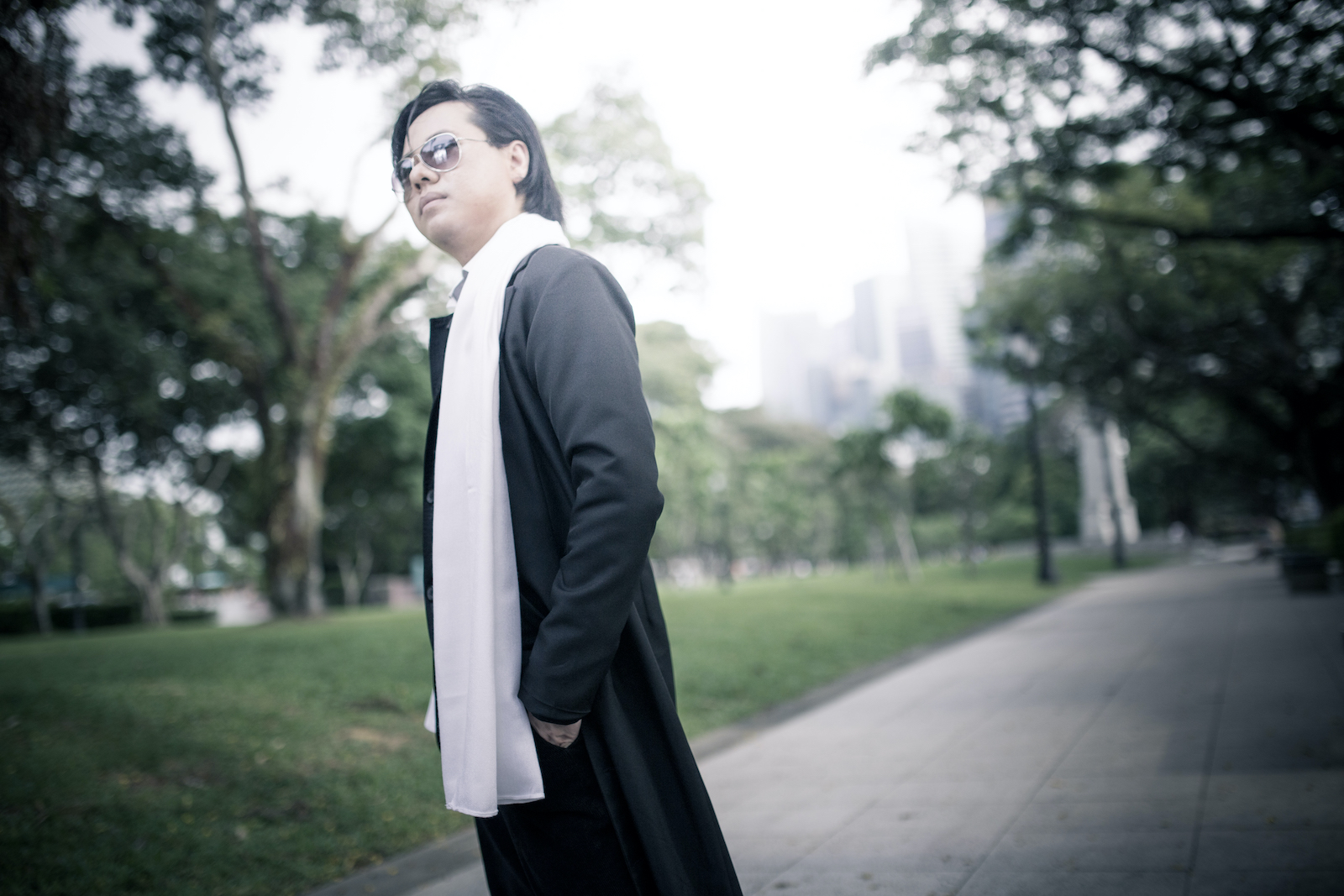
    This is Victor.
    This is Victor.

    Victor is presently planning to finish his novel, his second short story collection, his second children’s book and a screen play that he’s been working on. You can find out more about him at vrocampo.com and Twitter @VictorOcampo or ask him anything using the comment box below. 

    To register to Play This Story: The Book of Red Shadows for FREE, go here .

    More interviews with professionals of all sorts here.

    Photographs courtesy and copyright of Victor Fernando R. Ocampo. Interviewer: Sy
    Want to be featured too? Tell us here.
    If you found this article useful:


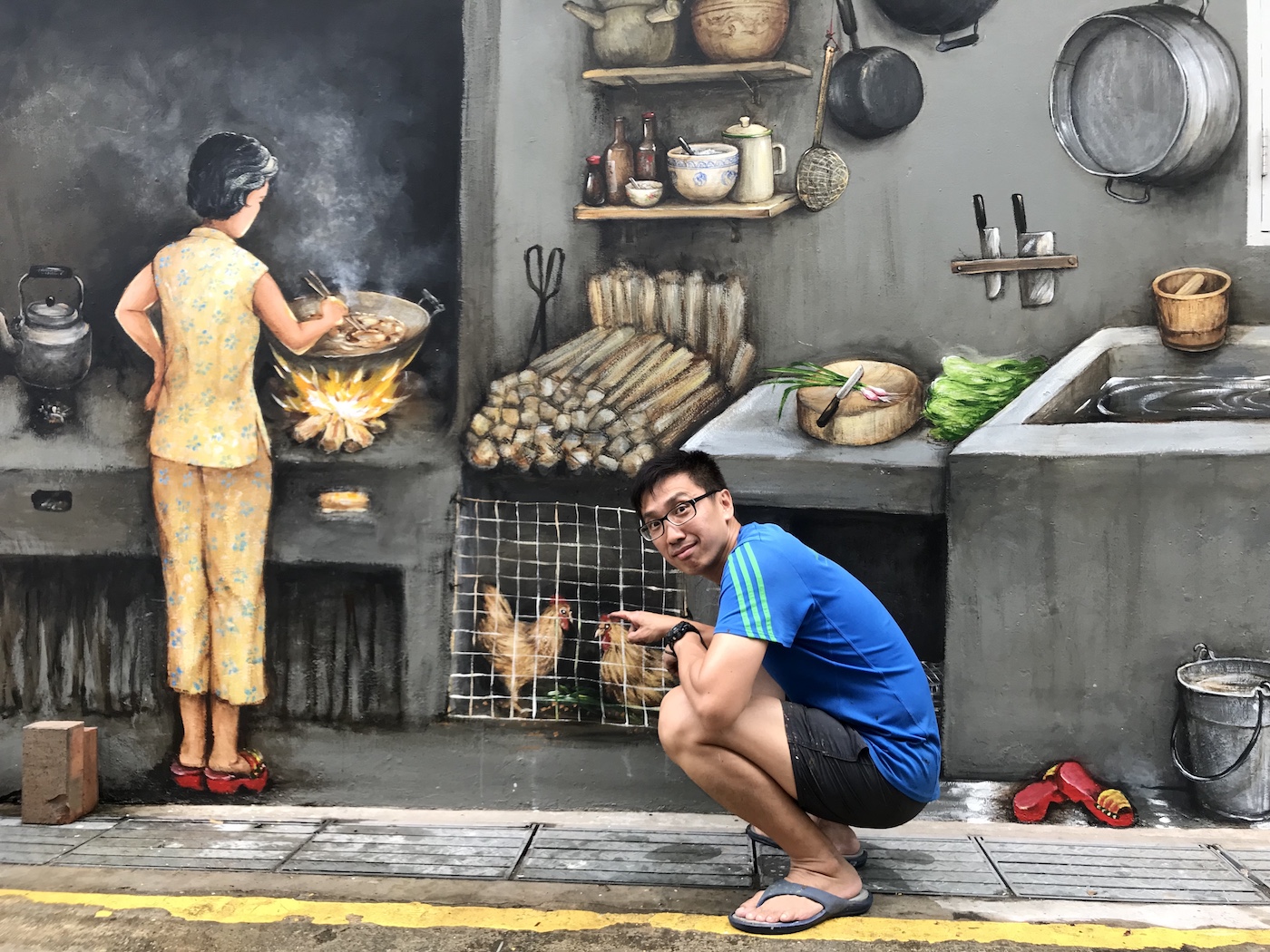
  • “My Chinatown Home” - Yew Chong and one of his favourite creations, painted on a wall located in Singapore’s Chinatown.

    How I Became A Mural-Painting Artist

    Yip Yew Chong painted his first mural at age 16, painted his 10th at age 47, and by age 50 had covered many streets, shopping malls, markets, libraries and private properties with his paintings. We had a chat with the now 51-year-old to find out how he did it.  

    “I am not trained and actually lack practice, but my strength is the content/story manifesting in the artworks.”

    Q: Hi YC! Thanks so much for being here. We’re very excited to have you. To start, can you tell us how you ended up as a muralist? Was it a life-long dream or pure chance?

    A: I am actually a general artist rather than a muralist. I was an accountant by profession for 25 years while dabbling in art since school days. It was never a dream. I won’t say it is by chance either as I knew I wanted to do art when I retired from Finance.

    How did you even learn how to draw and use colours this well? Is it innate or the result of decades of practice?

    The trained and sharp-eyed would see that my works are not polished because I am not trained and actually lack practice (just the last few years of dabbling in public art), but my strength is the content/story manifesting in the artworks. 

    “Thian Hock Keng Mural” - Painted on the back wall of the historical Thian Hock Keng temple in Singapore.
    “Thian Hock Keng Mural” – Painted on the back wall of the historical Thian Hock Keng temple in Singapore.

    How did you end up painting your first mural? Who was brave enough to let you do that to their wall and how did that turn out? 

    I spotted many murals popping all over Singapore and the region from 2012 onwards. In late 2015, while taking a break from work, I gave it a try by cold-calling on doors. For the first mural, the house owner asked me for a portfolio which I had none, but somehow I convinced him with my sketch, story and assurance to whitewash it in the original colour if he was not satisfied with the outcome.

    Can you give us a peek into how you work? What steps do you take and what is your work routine like for most pieces? 

    Discuss objectives and other factors with the potential commissioner. Site visit, conceptualise and submit to stakeholders/authorities for approval. Then paint.

    Do you paint by memory or use actual pictures for reference? 

    Broad childhood memory for what the overall scene composition and ambience should be like, then research the details to form the composition e.g. how an old thermoflask should look like.

    Which 3 objects/people are most useful for you when you are creating a mural? 

    Paints and brushes. References like archived stories or photos. Encouraging words from passersby/social media.

    “My Chinatown Home” - Yew Chong and one of his favourite creations, painted on a wall located in Singapore’s Chinatown.
    “My Chinatown Home” – Yew Chong and one of his favourite creations, painted on a wall located in Singapore’s Chinatown.

    Which place is most useful?

    Any place, every place is unique.

    You were a part-time muralist for a long time before finally going full-time. What made you decide to do that? And is it really possible to make a good living as an artist in a place like Singapore? 

    I was dabbling in paper and canvas sketching/painting all along, since school days/army/work, but rather irregularly. When I retired from Finance in mid-2018, I thus spent more time to develop my art. Actually, not a “long time”, only 2.5 years (2016-2018) juggling mural painting on weekends and a full-time job on weekdays.

    Your murals are now all over in Singapore, on streets, in shopping malls, markets, libraries, even on private properties. How did you get all those commissions? Was it through an agent, sheer genius of marketing or…?

    People usually contact me via social media (IG, FB) or my website. Social media helps publicise my artworks when people pose fun photos at the murals. Other media like TV, radio, magazines and online blogs/magazines/videos all helped to publicise the works as I did more and more. I actually don’t have a marketing strategy. 🙂

    Now that you’re a key figure in the mural scene in Singapore, what advice do you have for those thinking of becoming full-time muralists too?

    Haha, I am actually not a full-time muralist. In fact, I have curtailed murals and moved on to canvas paintings and digital art since late 2019. I will still do murals, but much more selectively. My advice to anyone wishing to do this full-time is to first try a few, perhaps by joining one of the many mural or street art groups or commercial companies in Singapore, get a taste. If you like it enough to venture out on your own, develop your unique style, publicise it and be bold enough to cold-call. The market is small in Singapore but it is currently quite popular. 🙂

    What’s the worst advice you’ve been given, or have heard people giving, with regards to being an artist, and what’s the best?

    I don’t remember getting any bad advice. I usually listen to people’s experiences and opinions, and also read books on how to behave as an artist, but I ultimately decide what I want to do for my own circumstance. If the decision was bad, it’s not because of the advice but due to many other factors. Same for ‘best advice’, some advices are common knowledge but very good reminders. For example, how to protect your artworks, what’s the common law, whether to use galleries to exhibit your artworks. 

    Who are your role models?

    My role models change as I explore and see more things. My first was Ernest Zach’s artworks, then Chua Mia Tee’s oil paintings, and several Western artists overseas I spotted on the internet.  

    “Impressions of Lodhi” — Yew Chong’s largest mural ever, done on a wall in Delhi, India.
    Joan’s desk in 2020.

    Lastly, you were also an accountant by profession for many years. Why? And how did that feel?  

    25 years. I enjoyed my work thoroughly. It allowed me to learn how to interact with and lead people from all over the world, especially my stint in Amsterdam leading a European finance team. 

    Yew Chong hopes to spend the next year traveling around the world, exploring and developing his art, practicing and making new friends. You can see him in action here or follow his work on Instagram @yipyewchong

    More interviews with various professionals here.

    Photographs courtesy and copyright of Yip Yew Chong. Interviewer: Sy
    Want to be featured too? Tell us here.
    If you found this article useful:


  • How I Invented An AI-Powered Gadget Before Age 16

    When Siddharth Mazumdar was just 14, a life-changing event inspired him to invent a better way for injured people to get help during accidents. A year later, he invented Newton’s Meter and by age 16, had gotten Newton’s Meter out in the market. Today, Siddarth is still just 17 but Newton’s Meter is a patented, CE and FCC certified device you can buy for personal or industrial use. We just had to ask him how he did it. 

    “The world is getting more uncertain thus the adaptability gained from entrepreneurship is key.”

    Q: Hi Sidd! Thank you for being here today! For those who don’t yet know you, could you introduce yourself: Who are you and why did you decide to start making your safety device, Newton’s Meter? 

    A: Hi there! I’m the Founder of Newton’s Meter, an AI-powered personal safety startup that significantly reduces medical response times, facilitating the saving of lives. I’m also a current JC 2 student in St. Andrew’s Junior College. When I was overseas 4 years ago, a young food delivery rider had crashed in the vicinity and passed away as it was late and he was unconscious upon impact. Had he received help, he would be among us today. This made me resolve to help people call for help even when they cannot.

    How does Newton’s Meter work?

    Newton’s Meter first forms an AI profile of a person to determine the threshold at which falls and crashes may be dangerous to them. Then, we detect these accidents and emergencies using accelerometers and 9 DOF sensors, the moment this is detected we use a BLE connection to the phone and use the phone to cellularly transmit information of the accident to 10 contacts, together with the GPS location and the victim’s blood group and diabetic status.

    This is Newton’s Meter.
    This is Newton’s Meter.

    How is it you know how to create a mechanically functional, AI-equipped gadget? Was it something you studied in school or something you picked up on your own?

    I attended a few seminars on IoT which helped me visualise the concept, but the technical details were fine-tuned in close collaboration with my technical team.

    Can you talk us through the process of making and getting Newton’s Meter to market? What did you do first, and next and so on and so forth?

    First, we had to build the Proof of Concept (POC), essentially our first prototype. Next, we had to move on to the Proof of Value (POV), which was a market-ready prototype, so effectively the POC but with improvements in design as well as being significantly smaller in size. Then, we had to get certifications to sell, such as CE and FCC. Next, to introduce it to the market we had to go to trade shows, we went to CES 2019 and 2020, the biggest technological exposition in the world. We also did online outreach with ChannelHub, where I won the Pitch-your-Product Award.

    Did your young age present you with unique problems along the way?

    Very mildly so, when people first saw me, they didn’t think that I was an entrepreneur. However, once I started speaking, people listened intently due to the value of the idea. Tech in general is a pretty open-minded field and as long as you can create value, people will be inclined to take you seriously, regardless of age.

    How did you find and acquire the parts required to make Newton’s Meter?

    We mainly sourced parts from the USA and the Nordic countries and manufactured it in Singapore. 

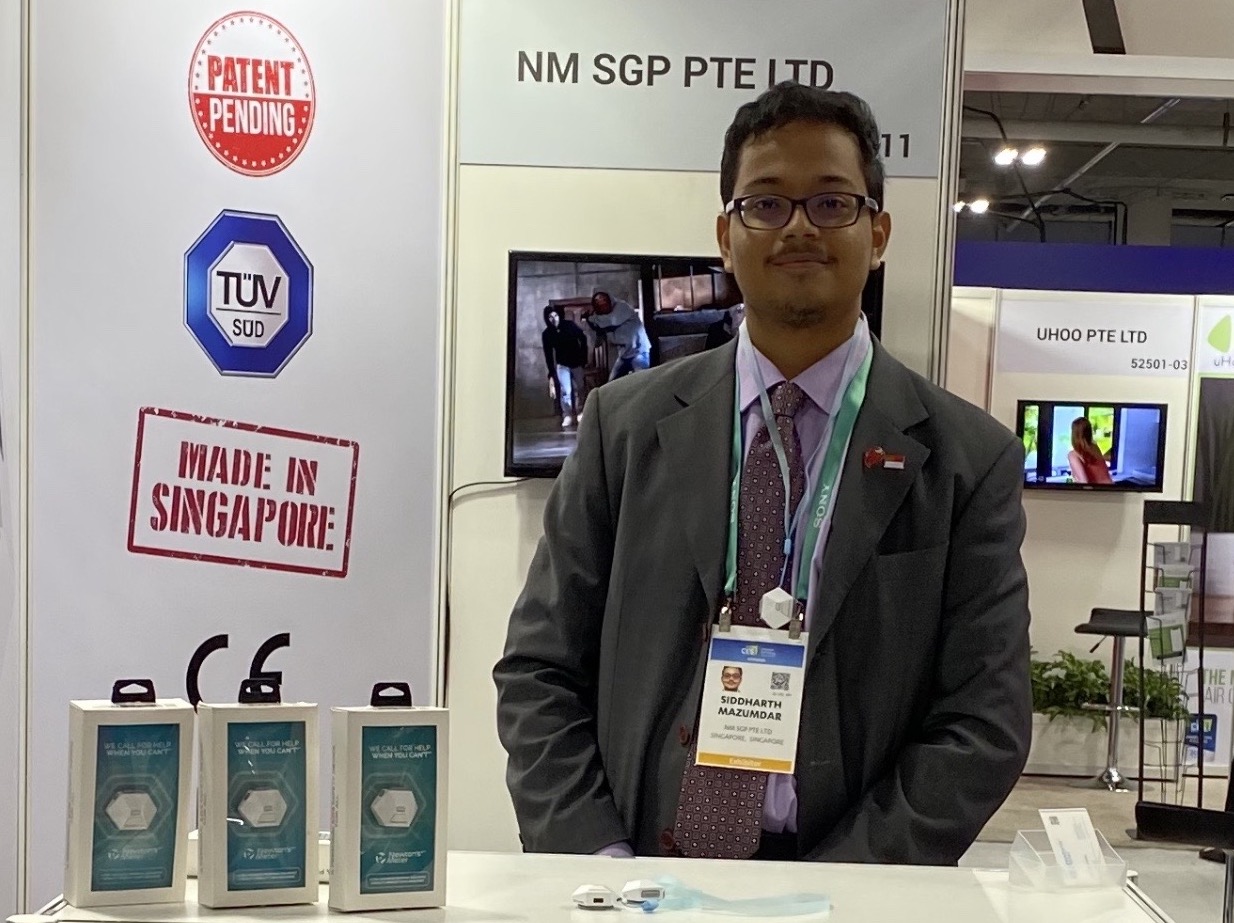
    Sidd at CES 2020, exhibiting Newton’s Meter.
    Sidd at CES 2020, exhibiting Newton’s Meter.

    How many months or years did you take in total to figure out how to get Newton’s Meter to work? How many failed prototypes did you have and how much money did you have to spend?

    To reach the first prototype it took us around a year. We didn’t have failed prototypes per se because we went very systematically, but doing it that way also meant that it took a little more time. We used around half a million dollars or so and we pooled this up from our savings, external investments, as well as most importantly, competitive grants from Enterprise Singapore.

    What was your routine like when you were thick in the midst of creating Newton’s Meter?

    I was concurrently in school so I mainly went down for weekly meetings, where we had reports and discussed progress and developments. Beyond that, I also tried to go down physically around twice a week to both learn and guide but when the scholastic workload became heavier due to my Triple Science stream, I had to do this via teleconferencing.

    Which 3 objects or people were most useful during then? 

    Firstly, my Dad. He is a business consultant and helped me tremendously in relation to liaising and headhunting and helped me connect with all the engineers.

    Next would be my branding expert Jacky. While the technology is crucial, the branding is also equally important when building a startup and Jacky’s years of experience were invaluable.

    Finally and most importantly, I would say it’s Enterprise Singapore, they supported us not only through monetary grants but also provided us outreach opportunities that greatly raised our profile.

    Which place was most useful?

    Block 71, Ayer Rajah Crescent. This was where I got inspired to connect my ideas with technology and in the vicinity of which all the development was done.

    Who were your role models? 

    Benjamin Franklin and Sir Tim Berners-Lee

    What did you learn from having made a functioning new invention that you didn’t know before? How did doing so change you as a person?

    I learned that we always have the ability to make a difference regardless of the odds. It’s an oft quoted figure that 3% of startups succeed and this terrifies many people but honestly, as long as you’re committed to your goal, anything is possible. Having a clear vision and sense of purpose is more important than age or background. 

    I used to think that we just had to accept things as they were, entrepreneurship showed me that I could have an impact if I put my mind to it.

    If you could go back and replay your entire process of inventing Newton’s Meter all over again, what would you do differently?

    I would have spent some more time getting to know my team as people from the get-go, instead of being so focused on the work. This would help break the ice a lot earlier and we would forge friendships right from the start.

    What advice do you have for those who are hoping to invent and engineer their own devices too?

    Delegate, don’t try to do everything on your own, everyone has their own strong suits. It may be visualisation, engineering, marketing, etc. Find your strength and capitalise on it, but don’t try to reinvent the wheel and step back when necessary.

    Next, always find ways to manage your stress, it could be your sports, games, movies, anything. This is because stressed people tend to be frustrated and this can lead to an inconducive (and unenjoyable!) work environment.

    What’s the worst advice you’ve been given, or have heard people giving, with regards to making devices? And what’s the best? 

    The worst advice is that money is everything. As far as startups are concerned, that’s unsustainable as there’s an arduous development window, so unless you feel purpose as well as interest in what you do, you won’t be able to persevere.

    The best advice is that your product is ultimately a service to the consumer. Looking at it from this perspective really allows you to empathise and make things that bring value to people’s lives.

    Sidd and his team having an intense discussion about Newton’s Meter.
    Sidd and his team having an intense discussion about Newton’s Meter.

    Lastly, are many of the teens your age inventing things too? If not, why do you think you did it while they didn’t? 

    Not many that I know of. I think for one, it’s the lack of technical knowledge, and if someone’s not familiar with our ecosystem, it can be rather daunting as you don’t know that there are experts who can help. Secondly, it’s the fear of the entrepreneurial process itself and the uncertainty it brings. For this, all I have to say is that the world is getting more uncertain thus the adaptability gained from entrepreneurship is key.

    Sidd is presently focusing on his studies (“So that I’ll be better prepared for university and make the most of my learning there, such that it can be used in my work.”) and looking forward to a career in the public service. He hopes to be a catalyst for entrepreneurs the way the people at Enterprise Singapore were for him some day. You can contact him personally on LinkedIn, view his invention at www.newtonsmeter.com, or ask him anything using the comment box below.

    More interviews with people who’ve made stuff here.

    Photographs courtesy and copyright of Siddharth Mazumdar. Interviewer: Sy
    Want to be featured too? Tell us here.
    If you found this article useful:


  • This is Choo Bin Yong.

    How I Made A Video Game All By Myself

    At 29, when Choo Bin Yong was trying to start an animation company with a friend and doing animated films online, he thought of doing a 3D game and began working on it on his own. 3 years later, he self-published the finished game on his own as well. Now that it’s been 6 months since then, we asked him why and how he did it all by himself. 

    “I am using a plugin called ‘Playmaker’ for Unity that helps me with programming the game visually without the need to understand coding.”

    Q: Hi Choo! How did you end up as a game publisher and designer? Was it a lifelong dream or pure chance?  

    Making games is something that I always wanted to do ever since I first saw a CGI cutscene from a video game but I started with pursuing 3D animation which later went to game development.  It was always a dream of mine to create a 3D game.

    What certifications, training or experience does a person need to be qualified to be a publisher and designer of games, and how did you acquire those yourself?

    I didn’t have any training or education in game development but is self-taught. I studied 3D animation in NAFA which helps with the creation part of the process but the things related to game design are mostly self-taught and through personal gaming experience.

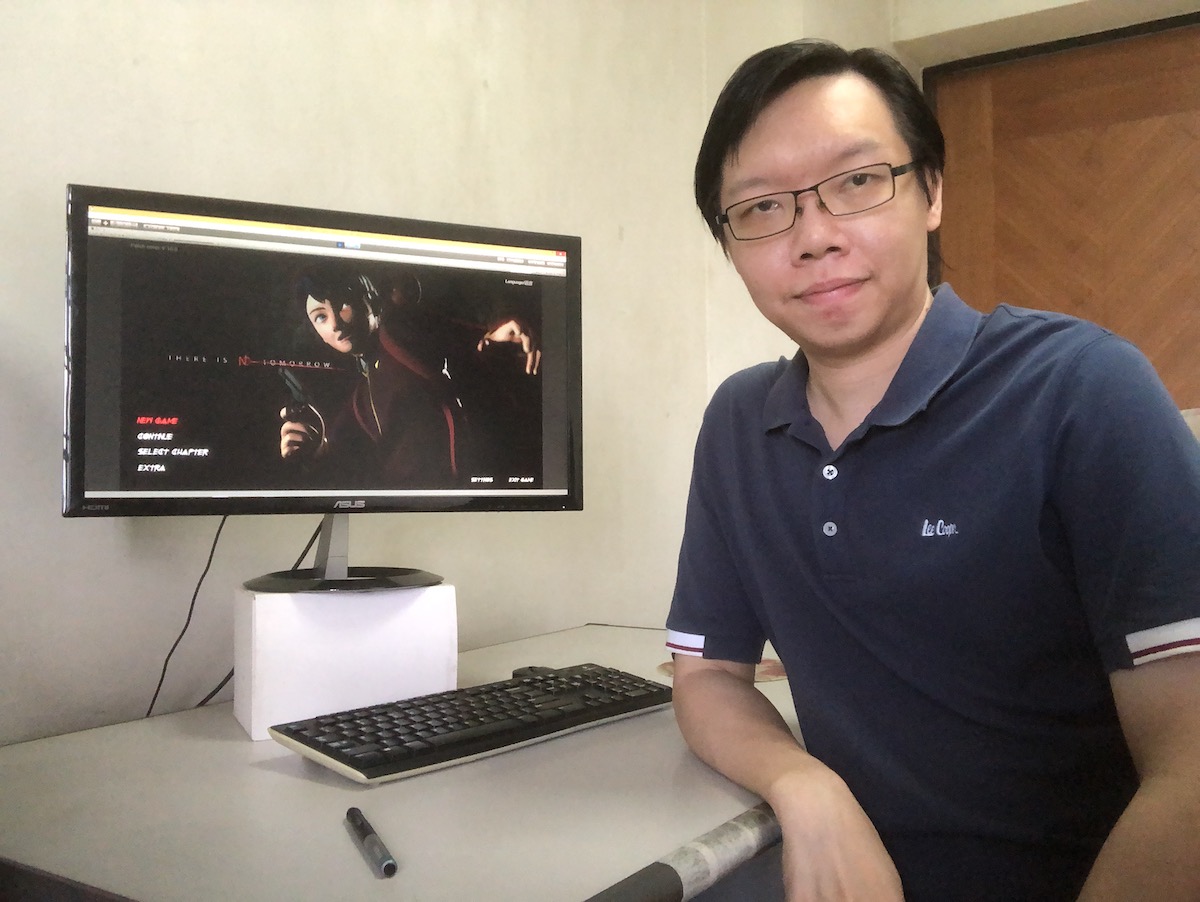
    A screenshot taken during the making of There Is No Tomorrow.
    A screenshot taken during the making of There Is No Tomorrow.

    You designed the video game, There Is No Tomorrow, all by yourself in 3 years and published it all on your own too. Why and how did you do that? 

    It is my first 3D game so it’s something that I have to start on my own. It is difficult to find someone to work together with when there is no budget nor can I promise that the game will be financially successful. I think that making a game solo isn’t quite as difficult as people think because these days, game engine software is being modified to allow designers and artists to be able to use it to make games without much coding/programming knowledge.

    Would it have been easier to sell the game to a publisher and hire collaborators to work on it?

    The game development process took too long by which time when the game was almost finished, I felt that it was too late to approach a publisher. At the same time, I was also curious about whether self-publishing can be good. Also, I felt that it could be difficult to find a good publisher for my game.

    Can you tell us a little about There Is No Tomorrow? What kind of game is it and what’s the end goal?

    There Is No Tomorrow is a third-person adventure/action game. You play as a student who time-traveled into the future apocalyptic world. The main gameplay consists of stealth and action that either requires players to sneak past the enemy or to take them out. 

    Which 3 aspects of creating There Is No Tomorrow were most difficult for you and which 3 aspects did you enjoy the most?

    The cutscenes were tedious to make because most of them required character animations. The 2nd most difficult aspect is fixing the bugs and the third will be the game design. 

    I enjoyed making the movement animations for the characters and AI because it feels satisfying to see them come ‘alive’. I also had fun with programming the AI and the combat system.

    A screenshot of the finished game, There Is No Tomorrow.
    A screenshot of the finished game, There Is No Tomorrow.

    Which 3 objects/people were most useful for you when you were creating There Is No Tomorrow? And which place was most useful? 

    I am using a plugin called ‘Playmaker’ for Unity that helps me with programming the game visually without the need to understand coding. 

    Now that your game is at last out, how do you feel? 

    I feel relieved that the game is finally out but also disappointed with how the game performed financially.

    What has the response to your game been like? 

    At the beginning of the launch, the response wasn’t good because of the bugs in the game and unpolished levels but eventually, they got patched up. 

    What did you learn from creating a game all by yourself that you didn’t know before?

    I learned everything from building a 3D game to selling a game online. Previously I was not knowledgeable about selling things online but with this game, I am starting to get some experience. One other thing I learned is to realistically manage the scale of my game so it is possible to finish it.

    This is Choo Bin Yong.
    This is Choo Bin Yong.

    What advice do you have for those thinking of being indie game publishers and making and owning their own video games too? 

    My advice is to start a project that you will be confident of finishing. So it means to understand the scale of your game and how realistic it is for you to finish it. I think most indie developers start off with their projects being too ambitious and end up failing to finish it.

    What’s the best advice about game-making you’ve been given or heard, and what’s the worst? 

    The best advice I heard is to prepare a list of journalists’/reviewers’ personal or business emails and to promote your game to them.

    Lastly, what’s next for you and will you ever be open to collaborators? 

    Right now I am developing a few games that are more focused on story and culture. 

    I am already collaborating with a composer and a sound designer for my current project and will be open to more collaborators for my other projects.

    There Is No Tomorrow is presently available on Steam!
    There Is No Tomorrow is presently available on Steam!

    Choo’s goal for the future is to make several successful games and launch them on different platforms such as Xbox and Switch. You can find out more about him on his website, koexstudio.wordpress.com or ask him questions about designing games solo using the comment box below.

    More interviews with people who’ve made stuff here.

    Photographs courtesy and copyright of Choo Bin Yong. Interviewer: Sy
    Want to be featured too? Tell us here.
    If you found this article useful:


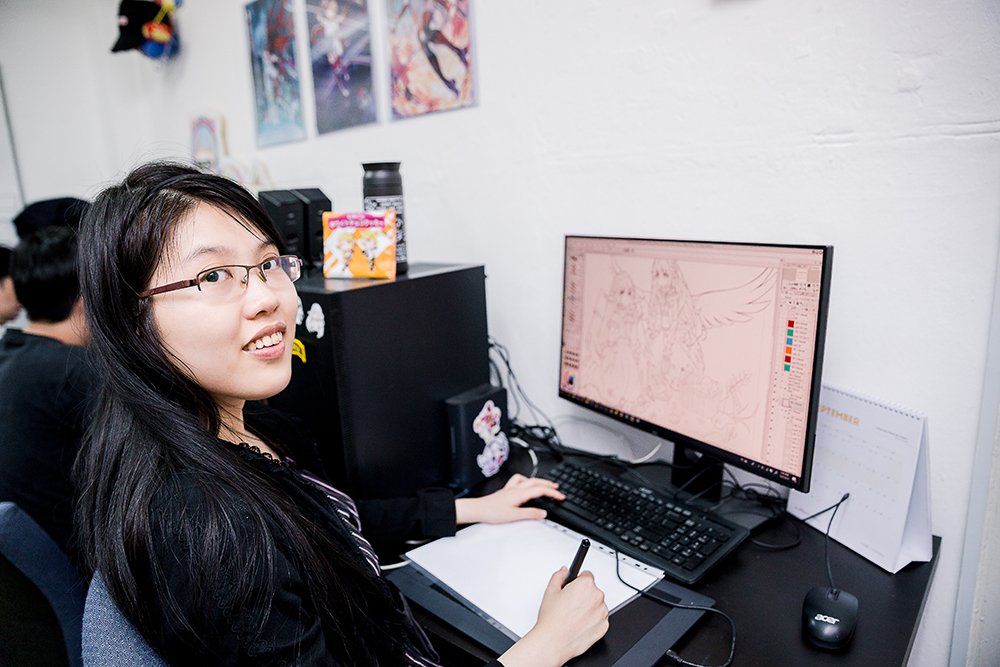
  • Desti at work.

    How and Why I’m Making A Colouring Book For Adults

    Desti from illustration studio, Collateral Damage Studios began working on and off on a colouring book for adults last year. She jumped into it fully when COVID-19 affected business and now intends to have the book completed by the end of this year. We asked her why and how she does it. 

    “Colouring books have been known to be prescribed by psychiatrists to patients to calm their minds.”

    Q: Hi Desti! Heard you’re working on a colouring book for adults now? Why is that and can you tell us more about this colouring book you’re doing? 

    Sure! The colouring book is a series of various animals of Singapore as anthropomorphic girls; each animal gets an illustration and an information page. That way, you get to learn more about the various animals as you fill in the books. 

    Why is it there’s this huge market for adult colouring books these days? Can you explain the appeal to someone who’s never tried doing a colouring book in adulthood?

    There’s a fair number of studies that show that colouring books for adults benefit mental health. Even in the past, colouring books have been known to be prescribed by psychiatrists to patients to calm their minds.

    It seems like the simple act of colouring seems to reduce anxiety and depression and can increase mindfulness by letting one focus on the moment and exhibit their creativity.

    If you’re feeling overwhelmed and stressed, there’s also very little at stake to giving it a try, and you get tangible results of your work in the end as well.  

    A colouring collection Desti did previously for the adult colouring magazine, Colouring Heaven.
    A colouring collection Desti did previously for the adult colouring magazine, Colouring Heaven.

    What’s the difference between a kids’ colouring book and an adult colouring book? 

    Generally, the adult colouring book tends to have far more intricate designs and themes designed to appeal to adults rather then children. Of course, in the end, it’s a personal choice, so it’s more of a matter of getting what you like. 

    Let’s talk about your process… What does it take to create a colouring book? Can you work us through the steps?

    Decide who is your audience and what theme you want the colouring book to be. The theme was chosen as a result of brainstorming between my manager in CDS [Collateral Damage Studios] and I. We wanted to ride on the gijinka trend but also root it in a Singapore context.   

    Of course, there is the actual drawing part, as well as getting the book printed and distributed.  The logistics will be handled by the manager.

    What’s the most difficult part about creating a colouring book and what’s the easiest? 

    The easiest part would be conceptualising the theme, since there was already something I wanted to do… The most difficult part? Taking the concept and making it into reality!

    Which 3 objects/people are most useful for you when you are in the process of creating a colouring book?

    My laptop and tablet would definitely count as important, since I need those to make the artwork! I use a Wacom Intuos Pro (medium size), and the laptop is from a local brand called Aftershock. I would generally also play music when drawing too!  

    Desti at work.
    Desti at work.

    Which place is most useful?

    The internet. You can communicate with others, look up various things, and the internet always has an answer for everything.  

    What else do you do other than making colouring books? 

    I also livestream my drawing process occasionally on either Picarto (picarto.tv/desti) or the CDS Facebook page (fb.com/cds.sg).

    What advice do you have for those thinking of making their own colouring books too?

    Choose a theme you like and work around that theme!  

    Lastly, how often do you colour in adult colouring books yourself and why do you do it?

    Well, since I can draw, I would colour my own images instead, is that cheating? Haha. After all, I can draw how I want for the picture to be coloured.  

    A livestream of Desti drawing. 

    Desti’s finished colouring book will be sold at the Collateral Damage Studios website, www.collateralds.com, when it comes out. If you want to know more about her and her work, you can follow her on Twitter

    More interviews with people who’ve made stuff here.

    Photographs courtesy and copyright of Desti. Interviewer: Sy
    Want to be featured too? Tell us here.
    If you found this article useful:

  • How I Wrote And Published 18 Books

    At age 37, when stuck in hospital, Dr Bob Rich began typing out a large body of text that would eventually become his very first book. In the 40 years since then, he has written and gotten published a total of 18 books, and is still working on his 19th. We asked him how and why he does it.

    “Writing is like cooking. A novice cook had better stick exactly to the recipe, or court disaster. With experience, it’s possible to vary ingredients to suit what’s in season, and what’s in the pantry.”

    Q: Hi Bob, thank you for coming back here to share more of your personal adventures! Let’s talk about your life as an author this time. Why did you decide to pursue writing books? 

    A: It’s more the writing pursuing me than the other way. Most people watch TV. I haven’t had one of those since 1975. Instead, I watch the stories inside. It’s more fun. Here is what I say about writing:

    “A writer is not just a person who writes. Almost anybody can write, which is why publishers are drowning in a flood of manuscripts that no one wants to read. But a writer must write. I can no more give up writing than I can do without breathing. It is something I do all the time. Working at one of my many jobs, talking with a friend, whatever I am doing, I am also observing life and translating it into words. I look at the expression on a face, the movement of a hand, a flower, the scenery, on joy and suffering and squalor and magnificence, and all of it is stored away, to emerge some time later. Everything is ammunition for the machine gun of my imagination. It will become part of some work or another, perhaps a long time later, transformed and hidden and combined with other experiences.”

    How did you get started with your first book and how long did it take you to finish it?

    My writing career started in 1980, because I was abducted by a bunch of kids who needed one more male in a boys vs. girls soccer game. I was in the middle of making mudbricks (adobe to Americans), and they dragged me away. So, I played in my muddy rubber boots. Predictably, I slipped over and tore a cartilage in my knee. That’s definitely not a good idea.

    In hospital, I was so bored I borrowed the office typewriter (are you old enough to remember those?), and wrote an article about making mudbricks for a marvellous magazine, Earth Garden. I’ve had a regular byline column with them since.

    After a few years, I thought I could combine my collection of “how-to” essays into a book, and sent off a letter to Keith Smith, the magazine’s publisher. I posted the letter, and checked my postbox. In there was a letter from him, suggesting we collaborate on the same thing. Meant to happen, or what?

    I contributed the technical bits. Keith’s part was inspiring essays by other contributors, history and background. We had the book ready in 2 years, in 1986. The fourth edition went out of print in February, 2018.

    How did you get that first book to market?

    Keith is a journalist by training, and this was his 8th successful book. He had close connections with a publisher, which was bought by Penguin soon after.

    One of Dr Bob Rich's 18 books.
    One of Dr Bob Rich’s 18 books.

    How then did you end up writing and selling 18 other books?

    Approximately one at a time.

    My second book was also practical self-help: Woodworking for Idiots Like Me. It sold about 60,000 copies in the tiny Australian market, because it combines short stories and humour with serious instruction. It’s now out of print, but I sell it in the format of a large webpage.

    Then I went to nursing school. In my off-duty times I had a choice: make a fool of myself running after gorgeous 18-year-olds, or do something creative. So, I started writing short stories. The first one I submitted to a contest won a prize, and I was hooked.

    But 18 books is not such a big deal. My friend, British/Australian writer Anna Jacobs, has now had her 90th published, and fans keep clamouring for more. Her writing is very popular women’s fiction.

    Another one of Dr Bob Rich's books.
    Another one of Dr Bob Rich’s books.

    What tips and tricks or techniques, when writing books, did you pick up through writing those 18 books?

    Writing is like cooking. A novice cook had better stick exactly to the recipe, or court disaster. With experience, it’s possible to vary ingredients to suit what’s in season, and what’s in the pantry. A chef can cook without a recipe, but if you analyse the process, it’s there, implicit, and you can write it down. And a master chef will write the recipe.

    So, a beginning writer needs to craft a detailed plot. My old friend Beth Anderson described this process in detail on this page so I won’t go into it here.

    The books I wrote last century all had a plot. It was not set in concrete, but I knew exactly where it was going before I wrote the first sentence. This avoids traps like a story wondering off into a quagmire of loose ends and disappearing people.

    Sleeper, Awake  was different. My only specification was, I wanted conflict, but without any baddies. Each person was decent and reasonable but… different enough to lead to head-butting. So, Flora Fielding came to me. She is a retired film star who made a fortune, then had breast cancer. She went into cryogenic storage, and invested her money in cancer research, expecting to be woken when a cure was developed. Instead, she found herself in a very different world, 1433 years later. This book won a first prize, and mostly 5 star reviews. I forgive the few who gave it 4 stars.

    Nowadays, not only do I have my characters write the plot, but also I enjoy experimenting with new ways of doing things. For example, this is the current start to my so far unpublished series, The Doom Healer.

    How long does it take you to write a book these days and what are your writing and marketing routines like?

    I am a slow writer, I guess because I need to get it 200% right before anyone else sees it, and because, hey, what’s the hurry? There is only this moment. Past and future are constructions.

    My quickest was the biography, Anikó: The Stranger Who Loved Me, which I finished in 3 months. However, that was after a trip to Hungary to visit my dying mother in 2000, then two years of not even being able to look at the material I’d brought back with me. When it was ready, it burst out, and this is the book that has won me the largest number of awards. It’s the story of a woman who survived the unsurvivable, and accomplished the impossible, more than once.

    I often have a project I put away, then get out, maybe years later, gallop through it. Guardian Angel was like that.

    What advice do you have for new writers hoping to have published as many books as you one day?

    As I said, there is only NOW. This moment. This instant. This. Live it to the full, do the best you can right now, and enjoy it. Write what you’d love to read from someone else, then expose it to positive but firm criticism. In my work as an editor, I am as much a teacher as a critic. 

    Incidentally, I am happy to swap beta reads for reviews, or for beta reads of my current work.

    Which items or people help you most when you are writing books?

    That just has to be Little Bob who lives inside my head, and does my writing for me while I concentrate on something else.

    A non-fiction book by Dr Bob Rich.
    A non-fiction book by Dr Bob Rich.

    What about when you’re selling books? Who or what helps then?

    You are! For the past couple of years, I’ve been doing lots of written, audio, and video interviews and guest appearances, because I want to be of service to people, and my writing is a tool for this.

    How many awards have you won so far and how did you win them?

    Oh dear. I don’t know. I used to have a list of awards and prizes for short stories. There were something like 40. But a computer crash has eaten the list.

    Some of them are on the welcome page of my writing showcase, bobswriting.com.

    Anyway, they are not an ego trip, but another means to an end: of using my words to make this planet a better place.

    Is there anybody in the publishing industry you presently look up to, who you would like to learn from?

    I learn from everyone, including little babies. At the moment, there is a spider nursing her bagful of babies-to-be inside my compost bin, and I am learning from her.

    People I admire? Here is a very small selection:

    Carolyn Howard-Johnson is an award-winning poet, and has taught writing. She is the ultimate publicity hound, and writing how to publicise books is one of her specialties. Her way of becoming known is to be of benefit to others.

    Victor Volkman has a full time job, which he uses to keep a publishing company going. He makes no money from providing a venue for many excellent books. Tellingly, it is Loving Healing Press. 

    Joan Edwards taught me about blogging, and is also a person who keeps giving.

    Rajat Mitra is a writer from India. I reviewed his book, which is a bridge-building exercise between Hindu and Muslim, and liked it so much that I interviewed him.

    Lastly, which of your books are you proudest of, and why?

    I am a good daddy, and don’t have favourites among my children. They are all different, and all worthy of love. However, the last one or current one tends to hold me the most, for now. Here is the opening of the book I would be writing if I wasn’t answering your questions.


    Also available at Amazon.sg

    LUCK-IT will receive a tiny commission when you purchase this product, at no additional cost to you.

    Bob is presently working on his Doom Healer series which he has been working on since 2015. “In my unbiased opinion, my hero Bill Sutcliffe should be up there with Harry Potter. I am now seeking a sensible, visionary publisher to take on the first volume.” You can read about his books at bobswriting.com or ask him how you can become a prolific author using the comment box below. 

    More interviews about other types of careers available here.

    Other interviews with Dr Bob Rich:
    What It’s Like Being Older Than 70
    Then & Now: Age 21 vs Age 77

    Interviewer Note: 
    I don’t normally do reviews but Dr Bob Rich offered me one of his books to read for free in return for a review and I couldn’t resist the one titled Cancer: A Personal Challenge. “This book is for you if you want to reduce your chances of developing cancer” its synopsis read. Having now read it, I am glad I did. The book is full of stories written by those who’ve had cancer, those who’ve looked after someone with cancer, and those who know enough about cancer to tell you what precisely you should be doing for each particular types of cancer. It basically answered all the questions I ever had about cancer, without me having to pick up the courage to start a conversation with anyone with it. There are also chapters on how you can avoid cancer in the first place which I certainly appreciated. 
    I wouldn’t say I enjoyed it, because there’s nothing enjoyable about watching someone recount the hardships of cancer, but I did think of reading it as good use of time. Once again, I’m not a reviewer, so if you want to know more, I would say the best thing to do is go read it yourself. You can buy CANCER: A Personal Challenge here.

    Photographs courtesy and copyright of Dr Bob Rich. Interviewer: Sy
    Sponsor or support The Professionals series here.
    Want to be featured too? Tell us here.
    If you found this article useful:


  • A Fiend’s Diary (2019) directed and performed by Oliver Chong. A Fiend’s Diary (2019) directed and performed by Oliver Chong. He won a Best Actor award for this performance.

    How I Became An Award-winning Theatre Director, Playwright, Actor and Designer

    Oliver Chong joined the theatre industry at age 25 as an actor and set designer, added the title of director and playwright to his repertoire at age 29 and won his first major award at age 34. He has since amassed 23 nominations and 5 awards for his work in the industry. We asked him how he got his career to where it is today.

    “It was very difficult financially and I was feeling the stress of having to explain what I was doing to my family and friends. I wasn’t expecting anything from it, and all I wanted to do was to be able to keep practising theatre until the day I die.”

    Q: How did you end up in the theatre industry in the first place? What was your first job scope and how did you get the job?

    A: I’ve been performing since I was four and there wasn’t a single year that I wasn’t on stage. However, pursuing theatre as a career used to be a far-fetched idea as it was much more difficult to make a living out of it. It was until 2002 that I decided to burn all bridges and give it a shot and have never looked back since. I figured theatre was the only thing that I wanted to do and I was still young and I could afford to regret later. First job scope was acting. I got the job through a referral and audition. 

    What were the early days of working in the industry like? Did you struggle or was it easy? Did you think you would be a big success eventually or did you have no idea what to expect?

    Very low to no pay. I struggled, of course. It was very difficult financially and I was feeling the stress of having to explain what I was doing to my family and friends. I wasn’t expecting anything from it, and all I wanted to do was to be able to keep practising theatre until the day I die. 

    How did you end up as a director-playwright-actor-designer? And where did you learn all the skills needed for such a vast variety of roles?

    Growing up, I have been very fortunate to have met many great acting mentors along the way, learning the ropes on the job and training under them.

    I was interior design trained at the Nanyang Academy of Fine Arts and have worked as an interior, graphic and product designer. I decided to try my hands at set designing, some 20 years ago, for a production for which I was an actor. The director was game enough to let me try and I have been designing all the sets for my productions since.

    I have always been curious about the workings behind playwriting and directing. I picked up these skills from books and largely from close observation and study of the directors and playwrights whom I admired, while working with them over a long period of time. These playwrights and directors have been very generous and helpful with all my queries. My skills in acting and designing have also informed the way I write and direct, and vice versa. 

    Citizen Dog (2018) co-written, directed and set designed by Oliver Chong.
    Citizen Dog (2018) co-written, directed and set designed by Oliver Chong.

    How did you win your first award and what was it? Was there something you did differently for that particular project that you hadn’t done before?

    My first win that was an individual award was Best Original Script for Roots. There was nothing that I did differently for that particular project except that every project is different.

    What was your routine like in the years/month/weeks leading up to you winning your first award?

    Same old. Work, work and work. My work is my life.

    Now that you are established, what is your routine like? Has it changed in any way?

    Same old. I am a very boring person in life. 

    How do you spend your weekends?

    Work. If there is no work, it will be either catching up on sleep, gatherings or outings with family and friends, or simply having a good dinner with my wife.

    What advice do you have for someone hoping to become a full-time, award-winning theatre professional?

    You shouldn’t hope to win awards. Our work is not about winning awards or pleasing the judging panel on any award. All awards are, or will inevitably become, political and therefore it is their game, not mine. You can only focus on improving yourself and giving it your all with every work that you make. 

    A Fiend’s Diary (2019) directed and performed by Oliver Chong. A Fiend’s Diary (2019) directed and performed by Oliver Chong. He won a Best Actor award for this performance.
    A Fiend’s Diary (2019) directed and performed by Oliver Chong. He won a Best Actor award for this performance.

    Can you map out a recommended path for people who want to be award-winning theatre professionals to follow?

    Be truthful, sincere, hardworking and humble. Be a perfectionist. Do not think about winning awards.

    What are the key things/people/situations that enabled you to become an award-winning theatre professional, in your opinion?

    Luck. While I do take pride in my many quality works that are the result of hard work and with support from a very strong team, the serendipity of being in alignment with the politics of an award’s agenda is often more crucial for a piece of quality work to get recognised.

    How did working in theatre and winning awards for it change you as a person? Or did it not change you?

    I guess I was moulded into who I am, partly because of practising theatre. As it all started in my formative years, I would never know otherwise. Winning awards did not change me as a person.

    If you could go back and replay your career in the theatre industry all over again, what would you do differently?

    Nothing.

    3 acclaimed, staged and published works of Oliver Chong are available on Amazon.
    3 acclaimed, staged and published works of Oliver Chong are available on Amazon.

    What were you like as a child? What about as a teenager and young adult? How did you change at every decade? Or did you not change?

    I don’t think a self-assessment can be accurate but my close friends would tell me that I have mellowed with age. I used to be more intense, quick-tempered and anal. I still am, perhaps less so.

    Which major event in your life has made you who you are, in your opinion? Why do you think so?

    The major event that has made me who I am would be quitting polytechnic without my parents’ knowledge and signing up for my interior design course at NAFA more than twenty years ago. Because that was my first most daring move in life. A change of course in life (no pun intended) and enrolling in an art school used to be less acceptable.


    Also available at Amazon.sg

    LUCK-IT will receive a tiny commission when you purchase this product, at no additional cost to you.

    Which 3 objects/people in your life can you presently not live without and why?

    My wife, because she is my sanity check. Theatre, because it is the only thing that I want to do. Pay cheque, because I need to survive.

    Of all the objects you bought in the past year, which has most positively impacted your life? Why?

    My late father’s car. It is the only thing left that I can have to remember him by.

    The Spirits Play (2017) directed by Oliver Chong.
    The Spirits Play (2017) directed by Oliver Chong.

    Which person do you wish LUCK-IT would interview for you to learn from? Why? 

    God. I wish for wisdom.

    What’s the worst advice you’ve been given, or have heard people giving? And what’s the best?

    “You can be anything you want to be, you just have to decide and grind” is the worst advice because it doesn’t work that way.

    “Strive for the true, the good and the beautiful” is the best advice because that is the only thing worth doing for the meaning of our existence.

    What is the most helpful thing anyone has ever done for you?

    Tan Beng Tian bringing me into the family of The Finger Players [a theatre company in Singapore] fifteen years ago. 

    Oliver is now 43 years of age, and recently won Best Actor at The Straits Times Life! Theatre Awards for A Fiend’s Diary—a play he directed, acted in and also designed the set for. He remains a director-playwright-actor-designer and artistic director of ODDDCROP Theatrical Productions today. You can follow his work on his website, www.odddcrop.com, and Facebook Page or ask him for career tips using the comment box below. 

    More interviews about other types of careers available here.

    Photographs courtesy and copyright of Oliver Chong, Tuckys Photography. Interviewer: Sy
    Sponsor or support The Professionals series here.
    If you found this article useful:


  • COVID-19 Diaries: What It’s Like Working In A Hospital Ward For COVID-19 Suspect Cases

    George* (*not his real name) works at a hospital in Hong Kong, in a department responsible for handling novel coronavirus infections. Although he was unwilling to reveal his identity online, he did tell us what it was like working in the frontlines of the fight against the coronavirus in Hong Kong. 

    “I am the only one who was called for this job (management told me others are not willing to do this).”

    Q: Thanks for connecting with us all the way from Hong Kong. When did you first hear about the 2019-nCoV novel coronavirus and what did you think of it then? 

    A: [I first heard of it at the] end of Jan. I was afraid it might increase our workload and risks.

    When did you first start working to fight the virus as a frontline staff? What are your responsibilities? 

    7 Feb. We were responsible for opening a new fever cohort area and isolation ward for nCoV-2019 infected patients. Our job and duties included sourcing materials, checking the materials record and the lab results of suspected cases, and assisting in bed assignment and case transfers—if we found any abnormal result, we would have to coordinate with infections control team.

    Did you come across any patient in the fever cohort area who was not honest about their travel history?

    Yes, some patients lied to us… we can only check their immigration records and double check with their relatives. We send all doubtful cases to the isolation ward directly. 

    Can you describe how you deal with confirmed cases? How do hospital staff and the patients feel?

    My fever cohort area is mainly [responsible for] screening the suspicious cases. Fortunately, the confirmed cases in our hospital have to go straight to the isolation ward.

    When I found a confirmed case last week, I locked the fever cohort area immediately and called the guard to lock the lift. The patient was escorted by staff with protective clothing to the isolation ward directly. Since there was standard protocol in place for dealing with COVID-19 patients, I was quite calm when handling the case. Besides, the patient seemed to be worried but did not look terrified, maybe because the mortality rate is not high. 

    The staff here are tense but [things are] not as bad as [they were] during 2003 SARS. For SARS, it was totally new and people did not know what to do at all (e.g. what medication would help, how the virus spread and thus how to prevent it). This time, we learnt a lesson from SARS, we also know certain drugs used for AIDS can help a patient to recover. 

    The only picture George would share with us—a shot of the disposable gowns he wears at work.
    The only picture George would share with us—a shot of the disposable gowns he wears at work.

    Why did you agree to take on this job? What were your first thoughts when you found out that you were going to have to do the frontline job and what was the response of your family when they found out? 

    I am the only one who was called for this job (management told me others are not willing to do this). My first thought was how to protect myself and my family. They understood my duty and keep asking me to stay safe.

    How risky is being a frontline staff? What are the precautions you take to stay safe when doing the job?   

    The fever cohort area is the highest risk area as there is no negative pressure system in place and has instead an open cubicle design. We are allowed to use 2-4 pieces of N95 [masks] in a whole day and all face shields and visors have to be reused.

    What is a negative pressure room? 

    Negative pressure is an isolation technique used in hospitals to prevent cross-contaminations from room to room.

    How many people does the hospital scan in a day?

    Around 100.

    How has your life changed since you took on the job of being a frontline person fighting the coronavirus?

    I have isolated myself in a hotel assigned by the hospital and have minimum social interaction.

    Tomorrow, we’ll chat with another person from Hong Kong who escaped Hubei less than 5 hours before the lockdown. Follow the latest in our COVID-19 Diaries series here.

    If you’re in a country that has been affected by the novel coronavirus and would like to share information about the situation where you’re at, do get in touch with us here.

    Photographs courtesy and copyright of George*. Interviewer: Kauai
    Sponsor or support the COVID-19 Diaries series here.
    If you found this article useful:


  • How I Am Changing The World (by inventing the solution to the age-old chore of making flatbreads)

    When Pranoti Nagarkar was 25, she had an engineering job away from home which left her with very little time to cook… and that gave her a big idea. 5 years and quite a few failed prototypes later, she successfully invented and brought to market the world’s first roti-making machine—the Rotimatic—which has since sold more than 60K units and served up more than 66M pieces of flatbread. We grabbed a few minutes with her to find out what she had to do to turn her idea into a revolutionary household product.

    “You always learn on the job. You’ve never done it before but what is it you’re trying to do? You’re trying to tell them: This is my dream, this is a big problem, if we crack it there’s going to be a lot of benefits, not just to the people who use the product but financially also, because nobody has done this before.”

    Q: Hi Pranoti! Thanks for taking time out of your crazy schedule to do this! First off, can you tell us a little about this machine you invented to make flatbreads. What does it do and how does it work?

    A: Rotimatic is the name of the machine and it’s essentially a robot that makes any kind of flat bread automatically. The user just puts in the flour and the water, puts in the preference—how they want it: thickness, roast level and what sort of flour thereby defining the flatbread output—and that’s about it. The machine mixes, measures the flour, kneads the dough with water and oil, makes the dough balls, flattens the dough ball into discs and after that roasts it to dispense puffed and hot flatbreads in 90 seconds.

    Pranoti’s invention, the Rotimatic, makes any kind of flat bread in 90 seconds.
    Pranoti’s invention, the Rotimatic, makes any kind of flat bread in 90 seconds.

    Can you describe the precise moment at which you got the idea to invent that machine? When was it, where were you and what was going on in your life at that time?

    It was the beginning of 2008. By then, I had completed two years of my first job after graduating as a mechanical engineer, I was working as a product designer and all through the two years, I was constantly thinking about a big problem that I was surrounded with and coming up with an idea or product for a solution. I wanted to fix something with a machine. I wanted to build a product and invent a solution that would address a larger problem. That was the time when coincidentally in my personal life too, I experienced a challenge in cooking food after wee hours of working, especially after Rishi and I got married. We started cooking at home and we realised to be healthy you have to eat healthy, and to eat healthy you have to cook at home because that is when you have control over the ingredients. And, as an Indian, roti-making is a staple and yet, so difficult to make. So, there it was. The big problem, an age-old problem nobody had looked into—there were attempts but only on an industrial scale and nobody had done a home appliance in this case. So that was it—the big idea—a roti-making appliance. It was beginning of 2008 when we had this idea and in June 2008, we formed the company.

    As a kid, I had this book called ‘Who Invents What’—about who is the inventor of what, the who’s who or the great people in the world who had life-changing inventions. I would read about them and I would get really inspired; I always felt that if I could do something to fix a big problem in the world, I would feel fulfilled. That would be my purpose. So as a kid, that was what I dreamt of and I grew up with the idea of building a future around those aspirations.

    How is it you know how to invent a functioning machine? Was it something you learned in school or something you picked up on your own?

    Both my parents had a very engineering outlook. My father was a mechanical engineer, my mum was an architect so they both had this hands-on, spatial/physical sense of engineering. I grew up in that environment, building stuff from arts and crafts to engineering stuff so when I went into mechanical engineering, I was always looking out for what I could do too. I worked in the industry also, as a product design engineer, and so I knew how to take a paper concept all the way to manufacturing—because that’s the real world challenge. I learned that, then along the way when this problem was lurking in my head, I realised this is a great and big idea for which a great product can be worked upon, thereby embarking on the journey that would lead to Rotimatic.

    How difficult or easy was it for you to invent the Rotimatic? What was the process like and where did you build it?

    Inventing a product like Rotimatic, completely new product without any benchmarks to follow was indeed a huge endeavour. I was like this tiny person standing in front of a big mountain when I began designing and conceptualising it—I knew it wasn’t going to be easy. The machine had to have so many moving parts—it needed to deal with sticky dough, it’s food, there is chemistry, there’s art, there’s science—all of it had to come together and it had to be a certain price point. There were many complexities to it but I knew this and I was willing to do it, one step at the time because it was such a big problem—if I would be able to crack it, it would be a big one! So, yeah, the process was one step at a time.

    How then did you manage to get the finances, resources and support to have your Rotimatic manufactured at an industrial level?

    First three years was pure R&D, which was completely self-funded with whatever savings we had. Rishi was doing his first start-up as well so when I decided to quit my job and start Rotimatic, we had very little money. That’s another other funny story. But as we had a prototype to show to investors, we started looking for private investment. So, we got our first angel investment which funded us to the next level and we built another level of prototype which got us to another level of funding. Resources wise, we started hiring a team and putting together what was needed from an engineering point of view. Then we decide to manufacture the product in Malaysia through a contract manufacturer. Everything else was done in-house, from the concept to the R&D to the design building.

    You always learn on the job. You’ve never done it before but what is it you’re trying to do? You’re trying to tell them: This is my dream, this is a big problem, if we crack it there’s going to be a lot of benefits, not just to the people who use the product but financially also, because nobody has done this before. That’s how I sold the idea to investors. And I did go for a business plan competition. Start-Up@Singapore was like a strategy for me because the thought was that if I win it, I’ll get $40,000—which was quite substantial at that time—and you get some credibility.

    It seems not many women aspire to be inventors, and yet you believed you could be, then you got it done. How? Was there something in your upbringing or early experiences that made you that way?

    Absolutely. I think growing up, somehow, my parents almost encouraged us to be rebels. Everything was “you can’t assume anything so you must question, you must be curious, you must enquire.” So that was the upbringing my parents gave me. And my brother and I are so blessed to have them because, as kids, we were brewing with questions and we only wanted answers, and my parents entertained all those questions. They never really gave up or told us that those were enough questions. Secondly, as a woman, I never felt like there was some advantage or disadvantage—either way there was none. In fact, mostly I would say there was always an advantage because you get to be the first one to do it.

    Did being a woman pose unique challenges in your quest to get the Rotimatic made? How did you overcome those challenges if so?

    There were minor challenges and there will be biases people have because there will be their own pre-existing conditions. They wouldn’t think of me as an engineer, they will assume I am the sales and the marketing person, not the engineer who designed the product. Those were some biases I had to fight but once you start talking, once you start talking technical facts, they understood and would think, “This person understands and knows what they are talking about.” Technical know-how is very key. If you’re technically sound, people understand that once you talk.

    The other way I broke certain barriers was by a little bit of projection—I rode a motorbike, a really big, heavy cruiser bike, and of course, I enjoyed it and it was very convenient for me, but I very smartly sometimes took it to the meetings when I felt I needed to break the gender biases. This would essentially be to prove a point—‘Don’t assume that I am a fragile little woman or a fragile person.’

    Watch the Rotimatic in action.

    What was your routine like when you were inventing the Rotimatic? How did you juggle home life and work life then?

    Back then, life was simple. It was all merged—work and life together—because we didn’t have kids, Rishi and I, both dedicated our lives to the start-ups we were working on and that was life for us. The fun part was the engineering of Rotimatic. It’s like when your inventing, you’re working with all these materials, you’re fixated on the small issues everywhere: How am I to move the robot from point A to point B; once that’s done you move on to the next like, now how do I make the Roti puff… Every day you’re fixing these challenges so… life used to be full of sleepless nights. But, great ones.

    What about now? What is your routine like? How has the Rotimatic improved your life?

    (Laughs) Rotimatic, of course we use it every day—we are the first users of the Rotimatic. But now, I’m a mum of two kids—I just had a baby a few months back—so right now, time spent is all around my older kid and the baby. On a normal day, both Rishi and I have this evil tussle of “Whose idea is better?”—and we enjoy that, constantly talking about different problems—“Okay, so what can we do?”—to this idea and how we should execute it? Still having fun.

    How were weekends when you were inventing the Rotimatic and how are they like now?

    At that time, weekday, weekend, it was the same thing, there was no real difference because it’s your own baby you’re working on. Now, weekends are dedicated for kids. So we take our son out for different activities, provide him with the exposure and experiences that will enhance his outlook towards life.

    What advice do you have for women, and men, hoping to invent machines to improve lives?

    The biggest thing that worked for me was that I personally felt the pain myself. So I knew exactly what I needed as a user. To invent, I went with my gut and my own know-how. I understood the problem really well but what really is the cause and what would I like as a user? Would I want to compromise on health for a convenient product? No. I wanted both. I wanted convenience but I also wanted to make sure the flour I use to make rotis by hand is the same flour I put in there, that it’s the same instant fresh process. So real world experiences are important. Thinking and being the consumer first really helps. I think that would be the advice if you’re going to solve a problem: Make sure you understand the problem. Don’t borrow the problem from someone and then work on it.

    Can you map out a recommended plan of action for them to follow? Where should they start and how should they proceed?

    I think the number one thing is that for any problem you’re trying to solve, pick a problem that has the requirement of a certain skill set that you can fulfil. For me, it was Rotimatic as a hardware product, because I was a mechanical engineer and knew product design and how to take it all the way to manufacturing and launching. If it were service-based, let’s say I make rotis by hand and deliver it to your house, then it would need a different kind of skill set. So for me, the advice I would give myself is that if you have a certain skill set, you make sure that the problem comes from that skill set. Because then, you are in control. Therefore, you pick the problem accordingly.

    What key things/people/situations enabled you to successfully invent the Rotimatic, in your opinion?

    I think the key thing would be the equation that Rishi and I share as the inventors of Rotimatic. It was the brainstorming we would both do—he is the software guy and I’m the hardware person—so the amalgamation of the ideas that would come from my end and his end, and the know-how that we had in terms of experience, would always enhance the solution. And of course, the financing is so key—without that, you can’t go anywhere.

    How did successfully inventing and bringing the Rotimatic to market change you as a person? Did you learn anything through the process that you didn’t know before?

    There were many things we had to pick up on the job. The engineering phase, I was quite confident of—as an inventor, you fail and then you try again; you keep trying until you succeed—I was pretty confident of that phase. But then, once it comes to the launching of the product, the financing, and the operational phase of it, all that had to be picked up and learnt on the job. I had no idea, I had no experience whatsoever. So, the way we launched Rotimatic was completely in Kickstarter style: Online, we used a social media platform, built community around users. Customer support was such a big piece and for such a technical product, it wasn’t easy. So, I think those were the challenges we had to face but we learned along the way, by talking to the right people and by involving the right people.

    If you could go back and replay your entire process of inventing the Rotimatic all over again, what would you do differently?

    The only thing I can think of is that I wish I knew a better hiring process that would enable us to gather the right people at the right time. I think that’s a challenge—to get the right people—because everybody has to be equally driven and motivated but not just that—that’s not enough for start-ups—you also need a very strong skill set. It’s very hard to find people who have both and that was something that was very difficult. You use your common sense, you put a few tests and case studies and some interviews and everything else is then left to luck. (laughs) Honestly, it’s still a trial and error but we’re hoping that in the next start-up, at least we’ll have a better start. (laughs again)

    This is Pranoti Nagarkar, inventor of the Rotimatic, with all the previous iterations of the Rotimatic behind her.
    This is Pranoti Nagarkar, inventor of the Rotimatic, with all the previous iterations of the Rotimatic behind her.

    What were you like as a child? What about as a teenager and young adult? How did you change at every decade? Or did you not change?

    I was a very aware child. I was quite aware of a lot of nuances and subtleties of life, aware of the thought process for example, which I remember now, though obviously I don’t know how much of it is accurate. As a kid, I knew—okay this is my thought that is making me do a certain thing. So I would actually work on my thought—“Okay, why am I thinking like that?” I was a very thinking kind of child, quite serious for my age perhaps. But then as a teenager, I knew much more about the mind and you know, you go through a lot of internal turmoil during the teenage years which then makes you think more, makes you more aware, you become more conscious. And I think as a young adult I was a rebel. I was like, okay, nobody knows what’s the right answer in the world, you don’t have to look up at somebody or look down on somebody but just question everything. So I think for me that’s what made me a rebel. That’s also what made me bold and brave because I didn’t have the conditioning that made me think—“Oh no, how do I talk to this person? This person is so senior!” I never had that change at every decade—I think that my consciousness and that awareness just kept getting deeper and deeper.

    Which event in your life made you who you are? Why do you think so?

    That’s a very deep question. There is one event I remember. As a kid, I was in grade 2 or 3, around 10-years-old, when I had a major argument with my teacher. According to me, as a kid back then, my memory tells me, she was a very unfair teacher. She was very partial, she was rude, she would punish us, so I actually confronted her in front of the entire class and I actually questioned her like why are you like this and why are you doing this… And she cried. Literally. I made her cry, basically. Whatever I said made her cry. And that was a big event for me because I was like why is she crying? What did I say? What was so wrong? She’s crying? Obviously, I didn’t know then that your personality has many layers to it and there’s the ego… It actually brought this to the forefront of my mind and I became aware of those issues at that age—that okay, that’s what ego is and that’s why she felt bad, that’s why she cried. And maybe she’s going through something else in her own personal life which is why she’s being so bad with the kids. It made me think of all these things that made me, at a very young age, become very aware of these things.

    Which 3 objects/people in your life can you presently not live without and why?

    I think people are easier to name. I think my kids and Rishi and Violet—who is our caretaker/helper/guard. I think it’s this small unit of family that I have here which I can’t live without. And of course the next layer which is parents and siblings.

    Of all the objects you bought in the past year, which has been most useful? Why?

    My laptop, my phone. A breast pump. The first week, my baby wasn’t latching properly and getting enough milk by himself so the doctor said we needed to supplement his diet but I didn’t want to give him formula so I started expressing to feed him. So I’m here because of that. Because there is milk in the fridge and I don’t have to worry.

    Which place in Singapore is your favourite? Why?

    I like MacRitchie a lot. The feel of nature, its unruliness, that it’s not really manicured. Home and office too. I think my office is beautiful and the people here are beautiful so home, office, and MacRitchie.

    Which person do you wish LUCK-IT would interview for you to learn from? Why?

    Razor Inc. CEO, Min-Liang Tan. He has built a big company and I think it will be interesting to know how he hired the right people at the right time. And Elon Musk and, if you could go back in time by building a time machine, Steve Jobs. It’s very intriguing to see how these people think and how they operate. Marissa Meyer, former Yahoo CEO and currently co-founder of Lumi Labs. She has kids and I don’t know how she juggles everything. And Ho Ching. She seems like a very, very intriguing person, she’s done a lot of work and handled a lot of big problems. I would love to hear from Ho Ching too.

    What’s the worst advice you’ve been given, or have heard people giving? And what’s the best?

    Rishi had finished his first company, got acquired, and I was persuading him to join Zimplistic because it needed a software brain, and around that time a lot of people were telling us—“Don’t do it! Don’t do it! You know, you’re married, it’s going to complicate your life…” I don’t know if it was good or bad advice but it was an advice we didn’t really pay heed to because for us, Rotimatic was such a huge problem, we were like, anything for it! So we decided we’ll figure it out along the way, and we ended up having kids along the way, going through a lot of complications… When going through it, there were times where I felt maybe I should have waited a few more years, not done this, but those were only momentary. Now that I’m out of it and have the privilege of looking back and connecting the dots, I feel there’s no better way to grow as a person than to go through certain hardships. I think we’ve only grown stronger and become better people.

    Lastly, will you be inventing anything else? Or is it a secret?

    Currently, because I’m using the breast pump so much, I feel there is so much more we can do about it and that it can be designed in a much, much better way, so maybe something along those lines. But with Zimplistic, I think it will be a secret. What is on top of my head right now is—the breast pump. Because I’m facing that problem personally and my own advice to myself would be to solve your own problems! (laughs)

    Pranoti is presently working on improving the Rotimatic and on entering the Indian market and expanding there. You can find her at the Zimplistic office where she is co-CEO or follow the latest in Rotimatic’s technology at rotimatic.com.

    Photographs courtesy and copyright of Pranoti Nagarkar. Interviewer: Sy
    If you found this article useful:


  • What Working As A Security Guard Is Really Like

    Back in 1999, curiosity about what security guards really did at work led 23-year-old Loh Teck Yong to take on the job of security guard when the opportunity presented itself. He remained in the industry for the next 2 decades, wrote a book about his adventures on the job, and recently gave us a rundown on the ugly and beautiful sides of being a security guard in Singapore.

    “If you are considering a career in the security industry, you have to steel yourself for the scoldings and beatings that come with the job.”

    Q: Hi Teck Yong! How did you end up as a security guard? Was it a life-long dream or pure chance?
    A: Neither. I took my first security job out of curiosity. At that time, I didn’t know much about the industry and was somewhat fascinated by the existence of security guards. I had run-ins with security guards at shopping malls during my teenage years, and I noticed that they didn’t seem to serve any discernible function at the mall. They didn’t sell merchandise. They didn’t clean. So what’s their purpose?

    And eventually, my curiosity prompted me to accept a security job when the opportunity presented itself.

    Teck Yong in 2009. “A friend asked me to show him what I looked like when I was working.”
    Teck Yong in 2009. “A friend asked me to show him what I looked like when I was working.”

    What academic certifications, training or experience does a person need to be qualified to work as a security guard, and how did you acquire those yourself?

    You have to complete the following WSQ (Workforce Skills Qualifications) [Singapore’s workforce credentials system] modules:

    1—WSQ Basic Licensing Units
    2—WSQ Recognise Terrorist Threats

    NTUC LearningHub is one of the largest WSQ security training providers so you can visit their website for more information.


    How much, approximately, did acquiring the above qualifications cost and how did you pay it off?

    If you haven’t used your SkillsFuture credit [credit given to all Singapore citizens to use to pay for training courses] yet, you should have enough to pay for the compulsory modules.

    How long after becoming qualified did it take you to get your first job as a security guard? How did you know of the job opening and what did you have to do to get hired?

    If I remember correctly, I completed the WSQ Basic Licensing Units back in 2009 and got a job shortly after graduation.

    But my first security job was in 1999, one decade before I even attended the WSQ course for security guards. Back then, the security industry wasn’t strictly regulated and you could work as a security guard without any professional qualifications.

    Job openings in the security industry are advertised in the newspapers and, nowadays, security agencies have also turned to using Facebook groups to find job seekers.

    “2017. A photo of a newspaper clipping from Lianhe Zaobao. I had a dream and now I am living it!” The title of the article reads: ‘Security guard dreams of becoming an author’.
    “2017. A photo of a newspaper clipping from Lianhe Zaobao. I had a dream and now I am living it!” The title of the article reads: ‘Security guard dreams of becoming an author’.

    Which 3 aspects of the job were most difficult for you at first and how did you figure out how to overcome them?

    One: The long hours. Full-time security guards have to work 12-hour shifts for 6 days a week. I depended heavily on energy drinks to keep myself awake when I worked full-time.

    Two: Late or non-payment of wages. It’s a chronic problem in the industry but, thanks to the proliferation of social media, this problem is less severe nowadays than when I first started working as a security guard. And some security agencies are trying to attract the guards with trust issues by offering the daily-pay system. You get paid on each and every day that you work. There. Late payment problem solved.

    Three: The abuse. We security guards tend to be on the receiving end of abuse—perhaps it’s because we are not armed with degrees from top universities. If you are considering a career in the security industry, you have to steel yourself for the scoldings and beatings that come with the job. I was harassed by gangsters at a shopping mall and threatened by a knife-wielding supervisor at a department store. On both occasions, I tried to reach an understanding with my superiors. And on both occasions, I lost my job.

    But despite my grim tidings, don’t despair just yet! Thanks to the proliferation of social media, more and more incidents of abuse involving security guards are seeing the light of day. If you are a victim of workplace abuse, then my advice to you is this: Facebook is your friend.

    What is the work schedule of a security guard like? Did you have to work on weekends?

    Full-time security guards work 12-hour shifts for 6 days per week, but some agencies are reducing the work hours to 60 hours per week. And if you look hard enough, you can also find assignments that offer a 48-hour work week.

    Security has to be in place 24/7 at most facilities so security guards are expected to work on weekends and public holidays.

    Are there benefits to being a security guard?

    In my work life, I had the opportunity to meet people from all walks of life and, because I was just a security guard, many of them didn’t think twice about parading the ugliest sides of their personalities in front of me. Interactions like those are a gold mine for any writer who wants to write interesting characters.

    So the benefit to being a security guard is you never run out of muses. And that’s a useful benefit to have if you are aiming to become a writer.

    “2019. Unsold copies of my book sitting on a shelf. Take them home!”
    “2019. Unsold copies of my book sitting on a shelf. Take them home!”

    Name 3 people you’ve ever tried to emulate over the course of your career and explain why.

    Gordon Ramsay. In order to protect myself from the unreasonableness in the industry, I tried to emulate Chef Ramsay’s take-no-nonsense attitude and outspokenness. Tried to. I didn’t succeed but at least I tried.

    Professor Snape. Because there were occasions when swearing was inappropriate, I had to resort to using cutting sarcasm.

    Mother Teresa. Because you need to have the patience of a saint to be able to do the job.

    What did you learn from becoming a security guard that you didn’t know before?

    I learned that not all women are attracted to men in uniform. But all kidding aside, I did learn something important. Before I joined the industry, I was looking at security guards as an outsider and didn’t see the whole picture. I ended up falsely assuming that security guards were lazy and did no real work.

    But after I became a security guard myself, I began to understand the pressures of the job. Today, the stories of the abuse and injustice I faced together with my colleagues have been published into a book. If you are interested, you can look for ‘Guards Gone Wild!’ at the Kinokuniya bookstore at Takashimaya or the LocalBooks.sg webstore.

    Teck Yong’s book, Guards Gone Wild! is a memoir of his experiences in the security industry.
    Teck Yong’s book, Guards Gone Wild! is a memoir of his experiences in the security industry.

    What’s the worst advice you’ve been given, or have heard people giving, with regards to being a security guard, and what’s the best?

    Okay, the worst advice came from the people who told me not to take security work because the job was too menial.

    The best advice was my comeback to the people who gave me the worst advice. I told them that all jobs should be valued equally and they should stick their bourgeoisie mindset where the sun doesn’t shine.

    If you could replay your entire career all over again, what would you change?

    I would probably tweak my personality a bit. I was too meek most of the time. If I had adopted the Gordon Ramsay persona right at the beginning of my career and stuck to it, I would have had a happier work life.

    Lastly, what advice do you have for those hoping to make a living as security guards too?

    Use your own money or SkillsFuture credit to take the WSQ modules. Do not rely on company sponsorship. Once you accept sponsorship from a security agency, you become indebted to them and lose the freedom to switch from one agency to another. In an industry so fraught with abuse, it’s a bad idea to lose that freedom.

    Teck Yong is presently working on marketing his book, Guards Gone Wild! You may follow his adventures with his book through his website, guardsgonewild.wordpress.com, or ask him questions about being a security guard and the security industry using the comment box below.

    Photographs courtesy and copyright of Loh Teck Yong. Interviewer: Sy
    If you found this article useful: