• How I Became A World Champion Archer - Nur Syahidah Alim Syah Singapore Archery Championships Sportsman Sportswoman Sports paralympian parathelete para-athlete athlete global asia

    How I Became A World Champion Archer

    Nur Syahidah Alim was 18 when she first tried archery and 30 when she became a professional archer. Over the next four years, the now 34-year-old amassed seven gold, two silver and eight bronze medals, and was recently crowned World Champion at the 2019 World Archery Para Championships. We asked her for sporting tips and sought a peek into the secrets behind her success.

    “Breathe in confidence, breathe out anxiety.”

    Q: Hi Syahidah! What made you pick up archery? What was going on in your life during that time?

    A: I first learnt about archery at a disability expo at the age of 18. I picked up archery because I loved the feeling of seeing my arrows at the centre of the target. At that time, I shot as part of my recreational activities during the weekends. I enjoyed learning about the sport, which in turn became a passion.

    I only started shooting competitively in 2015; ASEAN Para Games in Singapore was my debut. During the time I was representing Singapore, I was working at Sport Singapore as an executive in the Strategy and Planning division.

    Syahidah at her first training camp in Bangkok, Thailand, in Sep 2014, when still in the development para team. She eventually got selected to represent Singapore for the first time in the ASEAN Para Games in Aug 2015.
    Syahidah at her first training camp in Bangkok, Thailand, in Sep 2014, when still in the development para team. She eventually got selected to represent Singapore for the first time in the ASEAN Para Games in Aug 2015.

    Did you think, when you first started, that you would become a World Champion Archer someday? Was it a goal you worked towards or just… luck?

    Becoming a world champion was one of my goals during my career as a competitive archer. It took 4 years for me to achieve that goal.


    How did you start representing Singapore in the sport? What did you have to do to get on the national team?

    After I graduated from NTU [Nanyang Technological University of Singapore], I was in a dilemma: if I should focus on my work or continue archery. It was through the encouragement of my Mom that I tried out for the national team. I went to one of the selection trials for the para archery teams, with no expectations, and (surprisingly) got in.

    I had to train in the development team for one year before I was able to represent Singapore in archery in 2015.

    Looking back, it was a long and hard road of sacrifices to reach and continue to be part of the national para team. However, I tried to enjoy the process as much as I could.

    “My first debut at the ASEAN Para Games 2015 in Singapore. This would be the first historic gold medal for Singapore in archery.” Photo credit: Ben Cho / Sport Singapore
    “My first debut at the ASEAN Para Games 2015 in Singapore. This would be the first historic gold medal for Singapore in archery.” Photo credit: Ben Cho / Sport Singapore

    You’ve got more than six gold medals so far, so what’s your secret? What do you do before every game to get into the zone?

    Archery is both a mental and physical game. Before every game, I will remind myself to focus on my process and simply enjoy the game. Breathing exercises (“Breathe in confidence, breathe out anxiety.”) help to keep me calm before I begin shooting.

    What about your training routine, what is that like? How do you train on weekdays and how do you train on weekends?

    I train about 30 hours per week, both weekdays and weekends. My training programmes include both archery training sessions, gym sessions and other SSI [Singapore Sport Institute] support such as nutrition, psychology, biomechanics and medical sessions (e.g. physiotherapy).

    Syahidah during a practice session at the ASEAN Para Games 2017 in Kuala Lumpur, Malaysia. Her sport assistant (Nasrul Haq) is helping her to spot and retrieve arrows.
    Syahidah during a practice session at the ASEAN Para Games 2017 in Kuala Lumpur, Malaysia. Her sport assistant (Nasrul Haq) is helping her to spot and retrieve arrows.

    Which 3 objects or people are most useful for you when you’re preparing for a game?

    1—My coach (Pang Qing Liang), 2—Saunders’ Firing-Line (i.e. my travel-friendly bow trainer), and 3—my visualisation audio clip.

    “This picture was taken at the ASEAN Para Games 2017 in KL, Malaysia. Singapore successfully defended the gold medal for archery.” Photo credit: Dyan Tjhia / Sport Singapore
    “This picture was taken at the ASEAN Para Games 2017 in KL, Malaysia. Singapore successfully defended the gold medal for archery.” Photo credit: Dyan Tjhia / Sport Singapore

    What setbacks have you had in your career as an archer? How did you move past those?

    I had many setbacks during my career as an archer, from not having a dedicated training venue for para archers (which [meant we] ended up with jumping from [one] archery range to [another] range), to injuries and naysayers. At one point, I experienced a very bad slump that almost made me give up archery.

    But what kept me going were the reminders from my support system and sponsors about my passion for the sport and grit. I felt that I still had more to give to and for Singapore. I am very grateful for them having my back when I am down in the slumps.

    What did you learn from becoming World Champion Archer that you didn’t know before? How did you change as a person?

    I think having a champion’s mind is important in sports. I learnt that having a process-oriented mindset in competitions helps me to be at the present moment and focus on the most important thing—i.e. process. Archery, in general, has made me into a stronger, resilient and confident person.

    Syahidah’s first debut at the Asian Para Games 2018 in Jakarta, Indonesia. “Singapore was ranked 5th place. I was leading the Singapore Contingent as the flag-bearer. This is also the period where I was nominated into the Asian Paralympic Committee Athletes' Commission.” Photo credit: Fiona Hakim / Sport Singapore
    Syahidah’s first debut at the Asian Para Games 2018 in Jakarta, Indonesia. “Singapore was ranked 5th place. I was leading the Singapore Contingent as the flag-bearer. This is also the period where I was nominated into the Asian Paralympic Committee Athletes’ Commission.” Photo credit: Fiona Hakim / Sport Singapore

    If you could go back and replay your entire archery career all over again, what would you do differently?

    I wouldn’t do anything different.

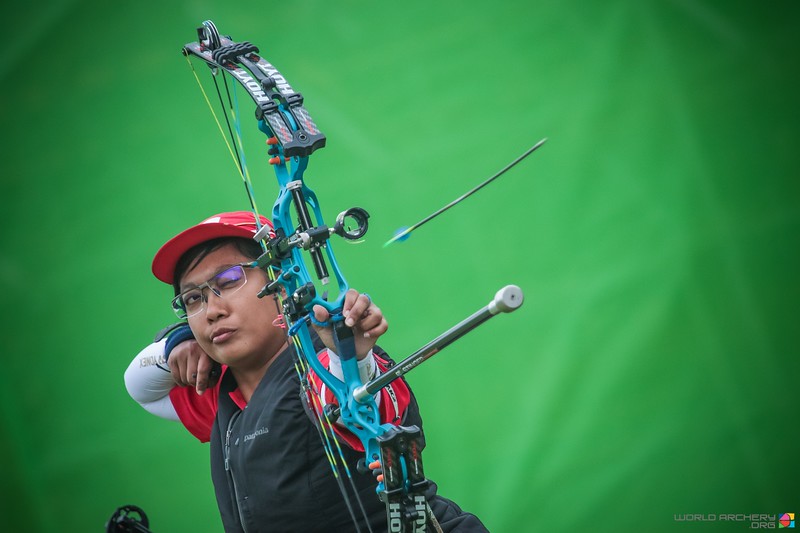
    "This picture was taken at the World Indoor Series 2018 in Macau. Singapore won the Silver medal.” Photo credit: World Archery
    “This picture was taken at the World Indoor Series 2018 in Macau. Singapore won the Silver medal.” Photo credit: World Archery

    What advice do you have for those who hope to become world champions too?

    My advice is to be 100% committed to your goals and dreams. Work with those who can help achieve your goals. Communication, clarity of roles and trust is important—i.e. once you have identified who you can work with, have a short meeting with them to discuss a training plan, have a clear understanding of your roles and expectations as an athlete and the role or the coach and other support personnels, as well as ensure that trust and open communication/feedback with everyone is always available.

    Remember that this is a team effort.

    A picture taken after the finals at the World Archery Para Championships 2019 at ’s-Hertogenbosch, Netherlands. “I was named Singapore's first World Champion. Singapore is currently ranked 3rd in the world by the World Archery Federation. Beside me is my coach, Pang Qing Liang.” Photo credit: World Archery
    A picture taken after the finals at the World Archery Para Championships 2019 at ’s-Hertogenbosch, Netherlands. “I was named Singapore’s first World Champion. Singapore is currently ranked 3rd in the world by the World Archery Federation. Beside me is my coach, Pang Qing Liang.” Photo credit: World Archery

    Syahidah is presently a spexScholar and Paralympian, busy with competitions and training camps in preparation for Tokyo 2020, and also with competing at the Asian Para Archery Championships 2019 in Bangkok this October. You can follow her on her Facebook page (@nsyah.alim) to see where she will be training at next (“Feel free to say Hi when you see me, I promise I won’t bite.”), see her full sporting portfolio on her website, or ask her questions about sports and personal success using the comment box below.

    Photographs courtesy and copyright of Nur Syahidah Alim, Sport Singapore, World Archery. Interviewer: Sy
    If you found this article useful:


  • How I Got The Perfect Score Of 45 For The IB - Christine Yong Singapore

    How I Got The Perfect Score Of 45 For The IB

    After taking her GCE O-Levels in Singapore, 17-year-old Christine Yong had the option to either enrol in a Polytechnic, work towards the GCE A-Level examinations or pursue a International Baccalaureate (IB) diploma. After careful introspection, she chose to take the IB at Anglo-Chinese School (Independent) and two years later, graduated with the best possible score an IB student can attain—which gave her a better chance at getting into top universities around the world and winning scholarships. LUCK-IT had a chat with the now 24-year-old about her study techniques and snagged some tips for present and future IB students hoping to achieve the same.

    “I don’t have a specific system other than placing importance on practice and repetition.”

    Q: Hello Christine! First off, can you tell us why you chose to take the IB instead of the alternatives? And what subjects did you take and why?

    A: The most crucial constraint on my choices was that I did not take Higher Chinese in secondary school. With my L1R5 of 6-2=4, Raffles Institution (RI) and Hwa Chong Institution (Hwach) were out of my reach. I decided to pursue the IB programme at Anglo-Chinese School (Independent). Even if I had qualified for RI or Hwach, I would not have chosen to go to either. First, I felt it was too early for me to specialise in either the arts or sciences. As someone who was inclined towards both disciplines, I thought the holistic curriculum of the IB was more suited to my interests. Not only did it have a better breadth-depth trade-off for me, it also trains a more comprehensive set of skills. For example, in languages and literature, students are assessed via both written and oral examinations. For the sciences, independent research projects are part of the compulsory assessment. In retrospect, these were incredibly valuable for training my presentation and research skills. Secondly, I much preferred the continuous assessment format of IB over the one-shot style of the A-Level [Singapore-Cambridge General Certificate of Education Advanced Level] examinations. I felt that this type of assessment was not only less stressful but more fair—based on aptitude, rather than ability to memorise.

    I took HL [Higher Level] Chemistry, Biology and Geography with SL [Standard Level] Mathematics, English Literature, Chinese B (the subject for Chinese as a second language, since English is my first), Extended Essay (compulsory research paper) and Theory of Knowledge (also compulsory). The principle was to first take what I loved—Biology, Geography and Literature—then take what I felt was practical or necessary for my university applications/career—Chemistry, Mathematics and Chinese. Finally, this was rounded out by the required subjects: Extended Essay and Theory of Knowledge. I would recommend taking Mathematics HL if you are unsure about your future career path—at once, it helps open up engineering, science, and medicine as career options. I ended up pursuing a Biology degree where Maths HL would have been immensely useful.


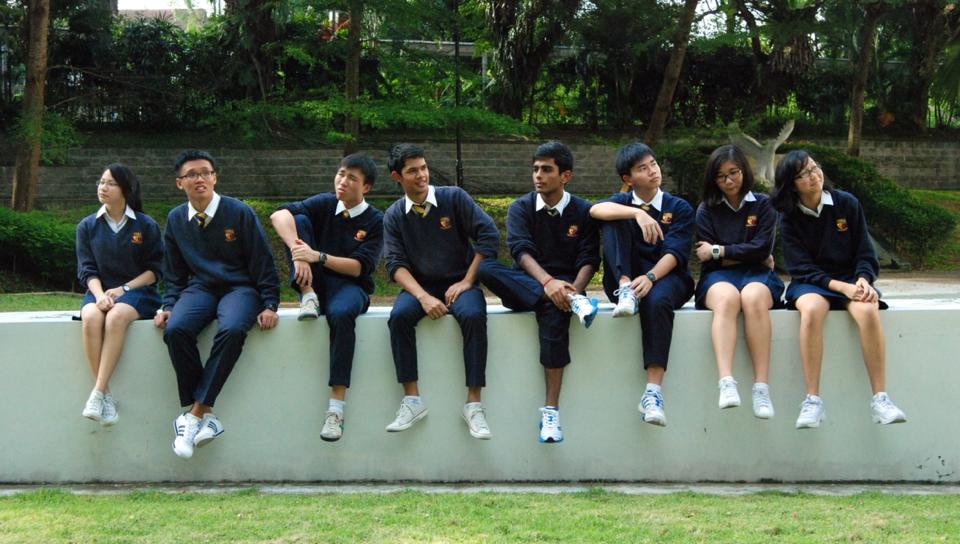
    Christine (far left, in black) at Anglo-Chinese School (Independent)’s Prom Night in 2013.
    Christine (far left, in black) at Anglo-Chinese School (Independent)’s Prom Night in 2013.

    What grades were you aiming for and what grades did you think you’d get?

    I didn’t have any particular aims other than at least my school average (I believe around 41 at the time I took the IB in 2013) and 7-7-6/7-7-7 for HLs (a requirement for my top target universities).

    When did you start properly studying for the IB final exam or working towards getting those grades? How much time do you think you spent preparing for the final exam in total?

    The IB involves lots of continuous assessments, so the effort was continuous. In terms of final examination preparation, I began studying intensively about 2 months before the first examination.

    How do you study, really? Do you have a system you use? If so, where did you learn that system from?

    I don’t have a specific system other than placing importance on practice and repetition. For Chinese, I simply followed the assignments and classes, and practiced on past exam papers. For the sciences, maths and Geography, in addition to ensuring I did all the regular assignments, I would go over all of the content of my subjects at least once prior to my examinations. In this first pass, I would make summary notes of all content as this helps to solidify the concepts, facts, and statistics in my memory. In the process, I would read around concepts or topics that I find particularly interesting (usually on Wikipedia or journal articles) and embed these insights into my notes. I would also identify the sections in which I have poorer understanding for further rounds of revision (this entailed reading over notes/making new notes depending on how confident I feel about the subject). For each round of revision, I would check my understanding either on a per-topic basis or through past examination papers, depending on my confidence level and what resources were available to me. For Literature, we broke up each text into parts and worked in a group to analyse the sections we thought were more likely to be significant. For the oral examination, we practiced answering questions with each other.

    Can you share your study routine? How did your week look when you were preparing for the IB final exams?

    For the 2 months I spent preparing for the final exams, I spent every day except Sunday studying for about 8-10 hours each day. I would usually allocate 2 subjects to 1 day and alternate between reading/memorisation and practice, to reduce the monotony. Sundays and mealtimes were essential breaks that ensured I was fresh for my other study sessions. I spent some days studying together with friends, where we would talk about the subject, quiz each other, and take some well-earned breaks.

    How did your week look when you weren’t close to any exams?

    I would usually be dedicating around 12 hours per week to completing assignments, reading, and whatever continuous assessment was ongoing at the time. 4 hours went to extracurriculars. The rest was free time spent with friends, at home, and/or pursuing hobbies.

    How did you spend your weekends then?

    Some mix of work and chilling, according to the weekly schedule above.

    Christine (middle, in boots) with her closest friends from Junior College.
    Christine (middle, in boots) with her closest friends from Junior College.

    Did your parents do anything special to prepare you for the final IB exams?

    Nag at me when I appeared too relaxed i.e. whenever I was not studying, and not disturbing me when they saw me studying!

    What advice do you have for someone thinking of getting 45 for the IB?

    Choose subjects you love, pace yourself well for the 2-year grind (marathon, not a sprint!), and don’t forget to set aside time for your family, friends and hobbies.

    Can you map out a recommended path for students who want to get 45 at IB to follow?

    The IB offers lots of flexibility, so it’s difficult to recommend a path. But I would say choose the right school, with teachers who care for you as an individual, and who have a good grasp of the IB assessment rubric.

    What are the key things/people/situations that enabled you to get 45, in your opinion? Who/What do you believe you never would have done it without?

    As I mentioned above, I felt very blessed to have teachers who cared about my personal growth and learning, and who were experienced in the IB. In comparison with friends and family from other schools or countries who did the IB, I feel that ACS(I) [Anglo-Chinese School (Independent)] provides one of the best environments for doing well in the IB.

    How did getting 45 change you as a person? Or did it not change you?

    It didn’t change me very much, other than helping me get into the university and course I wanted. Personally, I don’t think there is a significant difference in ability between people who scored within the range of 42-45 (this is also reflected in universities’ IB cut-offs).

    If you could go back and replay your entire education process all over again, what would you do differently?

    Now that I am on the verge of starting my career, I feel that I should have taken the more difficult Mathematics HL, taken a philosophy or sociology subject at an earlier age (though this was not possible for my O-Levels [Singapore-Cambridge General Certificate of Education Ordinary Level]) and worked harder to express myself in Mandarin Chinese, dialects, and other languages. These are skills that I see as very important not only in the current global job market, but in defining my personal identity.

    What were you like as a child? What about as a teenager and young adult? How did you change at every decade? Or did you not change?

    I was as interested in a wide range of academic subjects as I was in things society didn’t seem to value as much—writing, design, baking, cooking, and gaming. I did begin to realise that others did not consider these latter pursuits potential career paths, so I became less invested in these areas (to my great disappointment) and more in academic science. However, these all continue to be a part of my life in some way today.

    Which major event in your life has made you who you are, in your opinion? Why do you think so?

    I can’t identify a single major event!

    Which 3 objects/people in your life could you not live without when studying for the IB final exams and why?

    My IB friends, my family, and my Wah Chee teh bing and butter chicken.

    What Christine calls ‘The best Teh Bing in Singapore’, located within walking distance from Anglo-Chinese School (Independent).
    What Christine calls ‘The best Teh Bing in Singapore’, located within walking distance from Anglo-Chinese School (Independent).

    Of all the objects you bought when preparing for IB, which was most helpful? Why?

    My laptop, where all of my notes and assignments live.

    Which person do you wish LUCK-IT would interview for you to learn from? Why?

    I’d like to learn from entrepreneurs and artists in Singapore about their struggle to change or adapt to Singaporeans’ behaviour—whether as consumers or as individuals in society.

    What’s the worst advice you’ve been given, or have heard people giving, with regards to studying? And what’s the best?

    The worst: to study everything. Sometimes spotting is necessary for efficient studying. The best: to use mnemonics when you need to memorise something that is organised or named in an effectively senseless way.

    Christine is presently a graduate student studying the fields of science and tech policy. She also works part-time in a Japanese startup in the field of computer vision within the mobility sector and keeps a portfolio of her thoughts and work on her website. If you wish to get her advice on studying and taking the IB, you may drop her your question in the comment box below.

    Other interviews with Christine Yong:
    COVID-19 Diaries: The Situation In Japan, 84 Days In

    Photographs courtesy and copyright of Christine Yong. Interviewer: Sy
    If you found this article useful:

  • What I Learned From Doing Prison Ministry, And Why I Do It - Daphne Chua

    What I Learned From Doing Prison Ministry, And Why I Do It

    Brought to you by:

    Hear Myanmar

    Having ministered to prisoners at Changi Prison and ex-prisoners at halfway houses for the past seven years, Daphne Chua, a Christian, tells LUCK-IT all about the difficulties and rewards of being a prison minister in Singapore.

    “It is a roller coaster ride for most.”

    Q: How did you start ministering to prisoners? What made you want to do it?

    A: I started ministering in Changi Prison five years ago. Prior to that, I spent two years ministering to ex-prisoners at halfway houses. I have always been encouraged by newspaper articles I read about life transformation in prisons and I told myself I would want to do that some day. The call of Jesus to visit those in prison after I became a Christian was the final call for me to step out.

    Can you share how you minister to prisoners? Take us through the process?

    Each session is two hours long. Starts with worship, then prayer, followed by the Alpha session [an evangelistic course used around the world by various Christian denominations which explores a different aspect of the Christian faith each week], then the session closes with prayer.


    How receptive are prisoners when you minister to them? How can you tell when you’ve succeeded/failed in your efforts to get the message across to them?

    They are mostly receptive. Some may be apprehensive at the start but after a few sessions, they mostly warm up to our coming. When the inmates look forward to our coming, their warm handshakes and sharing of their struggles tell us we have succeeded in gaining their trust.

    How long does it take for you to get a prisoner to accept what you’re telling them and truly believe in it themselves?

    It is a roller coaster ride for most. Usually after a few weeks, they see the hope but again, there will be setbacks that cause them to lose confidence from time to time.

    What’s your worst experience when ministering to prisoners? And what’s the best?

    Worst: We go in without expectations so nothing can be bad when you do not expect anything good.

    Best: When you know the inmates trust you and when they look for you when they are discharged.

    Are there any traits/personal experiences that make a prisoner more likely to accept your ministry, from your experience?

    Being genuine is the most important trait to receive acceptance.

    Conversely, are there any traits/personal experiences that make a prisoner less likely to accept your ministry, from your experience?

    When one talks down on them… or shows that we are more superior.

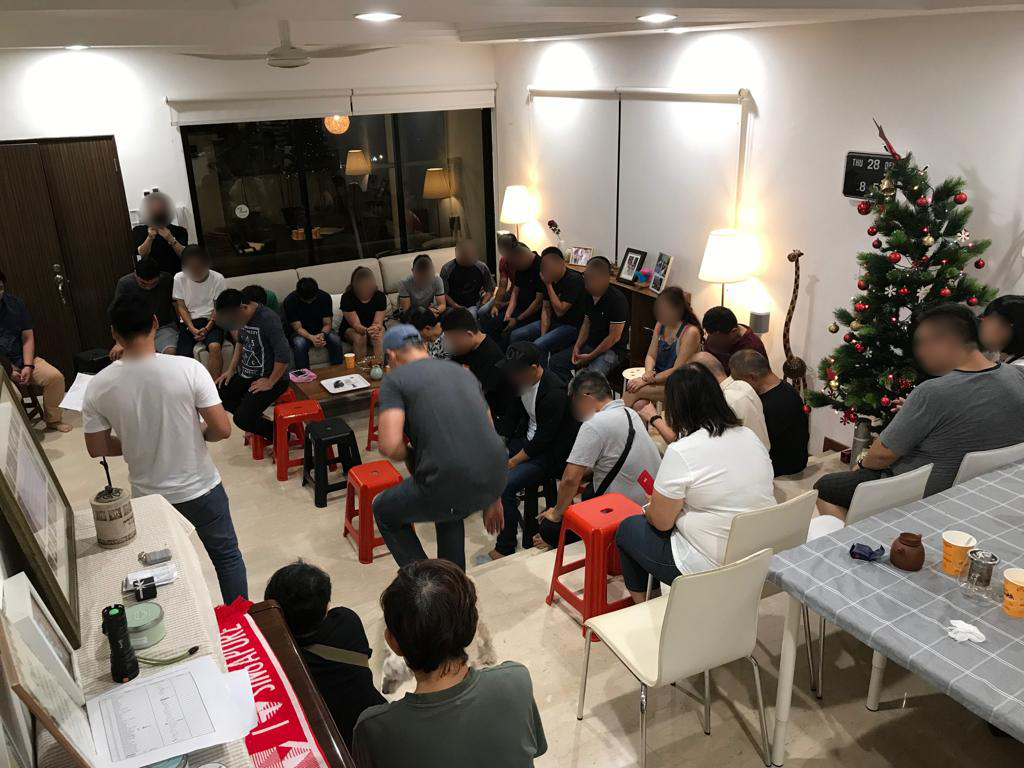
    Daphne hosting fellow volunteers and prisoners she's ministered to at a BBQ get-together at her house.
    Daphne hosting fellow volunteers and prisoners she’s ministered to at a BBQ get-together at her house.

    What’s the single most effective method of getting a prisoner to accept your ministry, in your opinion?

    Using the word of God in a non-threatening, yet firm and loving manner.

    What advice do you have for someone hoping to minister to prisoners?

    Genuine love and concern for the least in the society.

    Can you map out a recommended path for people who want to minister to prisoners to follow?

    Be a disciple of Christ.

    What are the key things/people/situations that contributed to your ability to be effective as a prison minister, in your opinion?

    Fellow volunteers of the same mind, with the same care and concern for the those in incarceration.

    How did the experience of prison ministry change you as a person? Or did it not change you?

    It humbles me and makes me more thankful that God has taken care of me and that I have been blessed to be watched over and protected by Him.

    If you could go back and replay your prison ministry journey all over again, what would you do differently?

    Not very much differently…

    Of all the objects you bought in your journey of doing prison ministry, which has been the most useful, in your opinion? Why?

    God’s words i.e. the bible and the materials we use to share with the inmates.

    What is the worst advice you’ve been given, or have heard people giving, with regards to dealing with prisoners? And what’s the best?

    Best advice: Not go for the number. It doesn’t matter if anyone is transformed in the process of being ministered to. Just do as love compels you to do.

    Worst advice: They are crooks, never to trust them. But in a way, it creates the awareness of being discerning and helps me be on my guard against people who are out to exploit your kindness.

    Daphne is presently a realtor, busy with real estate work and prison ministry, which she has no plans to stop in the near future. She’s open to answering questions about the above topic so if you have any, drop them in the comment box below. 

    Other Answers by Daphne Chua:
    How I Quadrupled The Number Of Friends In My Life

    The above interview is sponsored by:

    Hear Myanmar

    Photographs courtesy and copyright of Daphne Chua. Interviewer: Sy
    If you found this article useful:


  • How I Quadrupled The Number Of Friends In My Life

    When pondering her own funeral wake at age 45, Daphne Chua realised she would have less than two handfuls of people in attendance. Ten years on however, she had 50 people turning up for her 55th birthday party. She tells LUCK-IT how and why she increased the number of friends in her life so significantly in a single decade.

    “A pastor mentioned that a person would have about a hundred friends at his/her funeral wake. I pondered and realised I wouldn’t even have 10 friends at mine.”

    Q: When did you suddenly realise you had very few friends? What made you suddenly feel that way? And why did you decide to do something about it?

    A: During one Sunday service, a pastor mentioned that a person would have about a hundred friends at his/her funeral wake. I pondered and realised I wouldn’t even have 10 friends at mine. I started to imagine my lonesome and quiet funeral wake… 

    How did you start making friends again? What did you do and how did it feel for you to have to do it?

    I started to take an interest in people I came into contact with. Previously, I treated everyone as an acquaintance and did not see the need to keep a long friendship. In my mind, people come and go and I did not make any effort to keep in contact with anyone. 


    Daphne (middle) with the four friends who celebrated her 50th birthday with her.
    Daphne (middle) with the four friends who celebrated her 50th birthday with her.

    How long did it take for you to go from having less than ten friends who would show up for you to having 50 friends who would do just that? Did you have any setbacks or wins along the way?

    It is now a good ten years from then. There wasn’t any setback. I took a genuine interest in people without any expectations. 

    What do you think is the most significant course of action you took that enabled you to make more friends? Why did it work?

    Making time for others. Being pro-active to telephone or WhatsApp others to stay in touch. It was my attitude that made the difference. Previously, I could not be bothered and friendship did not have a place in my heart. 

    What was your routine like in the months/weeks/days during which you were rebuilding your pool of friends?

    There isn’t a fixed routine. I started to engage others in coffee sessions and meals. 

    Now that you have more friends, what is your current routine like?

    I still engage others in coffee sessions and meals and even organise baking sessions in my home once a month. 

    How do you presently spend your weekends?

    Weekends are mainly spent with family. Sunday is church and coffee time with church members. 

    Daphne at 54, with friends she made from a mission trip.
    Daphne at 54, with friends she made from a mission trip.

    What advice do you have for someone who is hoping to start having more friends too?

    To accept others for what they are, not be judgemental and have a genuine interest in their well-being.

    Can you map out a recommend path for people who want to have more friends to follow?

    List out your friends and schedule regular contacts either by just texting or meeting up. 

    What are the key things/people/situations that enabled you to have many friends again, in your opinion? Who/What do you believe you never would have been able to make many new friends without?

    I used to believe no one is genuinely interested in me and I do not trust people enough to want to share my life and my experiences. Being genuine and willing to share encourages more open sharing. 

    How did having more friends again change you as a person? Or did it not change you?

    Widened my perspective of things. Helped me to be more accepting of others and also to be generous towards others in terms of time/resources.

    “I have lost many good friends by not staying in touch.”

    If you could go back and replay the way you dealt with friendships throughout your life, what would you do differently?

    I would have done what I’ve been doing in the last ten years: keeping in touch with people who mattered. I have lost many good friends by not staying in touch.

    What were you like as a child? What about as a teenager and young adult? How did you change at every decade? Or did you not change?

    Outwardly extroverted, inwardly introverted child, teenager and young adult. The drastic change was after I attended church and found genuine friendships amongst church friends. I started to trust people and love the people around me. 

    Which major event in your life has made you who you are, in your opinion? Why do you think so?

    It was church and the realisation of who I am on this earth and my purpose here. 

    Which 3 objects/people in your life can you presently not live without and why?

    My family. My friends. My church community. 

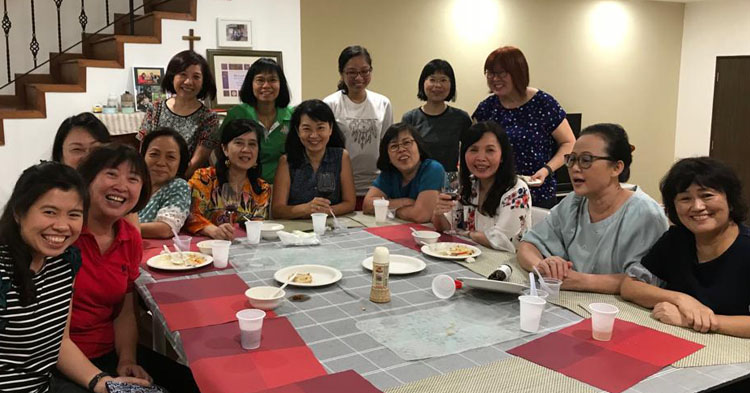
    One of the many groups of friends Daphne now has, having dinner at her home.
    One of the many groups of friends Daphne now has, having dinner at her home.

    Of all the objects you bought when trying to make more friends, which object enabled you to make the most new friends?

    Meals and coffee.

    What is the worst advice you’ve been given, or have heard people giving, with regards to friendships? And what’s the best?

    None… I did not seek advice nor have I attempted to give anyone any advice.

    Daphne is presently a realtor and open to answering questions about friendships. If you have a question about friendship for her, drop them in the comment box below.

    Other Answers by Daphne Chua:
    What I Learned From Doing Prison Ministry, And Why I Do It

    Photographs courtesy and copyright of Daphne Chua. Interviewer: Sy
    If you found this article useful: