At 21, Tony wanted to become a writer. He ended up being one, and a journalism lecturer, and a bond investment manager, on top of marrying twice and having 2 children, while also experiencing the shock and joys of being fired. (“I was let go by a publisher in a small company. He was interested in one of the women editors there and because I was friends with her, he fired me. Ironically, it was one of the most positive things that ever happened to me. He gave me 2 weeks severance pay. My wife had just given birth to our son the day before. I went to the hospital and told her what happened. That weekend I found an ad in the Chicago Tribune looking for a writer. It was Reuters. They hired me.”). We asked him what it is like being 80.
“One of the traps in retirement is to think ‘I don’t have to work any more.’ Wrong you still need to work to keep you body healthy.”
Q: Hi Tony, thank you so much for being here with us. Could you tell us a little bit about yourself and how old you are now?
A: I am 80 years young. Turned 80 on Jan 26. I retired from a major philanthropy in 2000 where I managed $900 million in bond investments for the prior 5 years. Before that, I wrote a newsletter for the Investment Department. Worked there 10 years total. Before that I was a journalist for Reuters News Service. Enjoyed a one year posting to London in 1977. Worked there 20 years. Previously I had edited men’s magazines for some years after graduating college with a degree in finance. I know that is a strange career track.
Currently I write my blog Diet, Exercise and Living Past 100 (guysandgoodhealth.com) which I began 9 years ago. I ride my bike around 100 miles a week year ’round here in Chicago. I eat healthy and get a full night’s sleep. Go to Las Vegas 4 times a year with my girlfriend and play video poker.
“This is me in my 20’s flying a kite.”
What are your current daily and weekly routines like?
I try to get a good night’s sleep because that is a great reboot for the brain and body. Have written a number of posts on the value of a good night’s sleep. Ride my bike daily. Play video poker at the casino twice a week. It is a fun game that allows the player to choose the best cards to hold to make the strongest hand. I eat intelligently. My weight has been in the 155-160 lb range for 10 years. I walk a couple of miles a day, some with my pooch and otherwise every chance I get. Walking is a great weight-bearing exercise.
How is your body different from what it was like at age 70?
I think it is healthier now than when I was working because I pay attention to healthy practices like sleeping well, eating intelligently and exercising regularly. When I was working I weighed in the 180’s and after I retired I got more careless about my weight and ballooned up to 225. I felt terrible and looked terrible with a big pot belly. I decided to straighten myself out.
Tony when younger.
What brings you joy these days?
I enjoy writing my blog and I am active on social media. Big Wonder Woman fan. She was created in 1940, so I have been a fan since reading her comics in the ’40s as a kid. Belong to several Wonder Woman groups on Facebook. Have my own group on the Mewe social network. I like Pinterest. I have boards on video poker, Wonder Woman, puns, Alice in Wonderland, geometric pics and animal memes. My girlfriend and I go to the theatre and concerts as well as Las Vegas and the local riverboat. Lastly, I have a 25-year-old daughter who teaches kindergarten in Indianapolis. I also play backgammon on the web.
Which item, bought or received in the past year, has been most useful to you?
LOL My car. I drive a white Mini Cooper with black racing stripes on it. Hadn’t owned a car for 25 years, then saw The Italian Job movie and got a car crush on the MINI. Bought one in 2004 and now am driving my fifth one. It is a three-cylinder car with a manual transmission. I am one of the dinosaurs that still shifts gears with a clutch. Great fun car to drive.
LUCK-IT will earn a tiny commission when you purchase this product.
What were you like as a middle-aged adult and how have you changed since?
In middle age, I was still working. I was married to a much younger woman so I became a father at 55. Great experience raising a child at the age. Someone called it having your own grandchildren. I was managing money and involved in the market on a daily basis. I use the same money management principles in the casino today that I did when I managed money professionally. Limit your losses; let your profits run. The biggest thing, then, and now, is discipline.
Can you list 3 things you realised or learned only after age 80 that you didn’t know before?
Well, technically, I can’t. I have only been 80 for a couple of weeks. I can tell you what I have learned since retiring at 60. I don’t rush so I live with minimal stress. I know how important it is to exercise daily. One of the traps in retirement is to think “I don’t have to work any more.” Wrong you still need to work to keep you body healthy. That is a full time 7 day a week commitment. I have learned the danger of a sedentary lifestyle. I have written in the blog that a sedentary lifestyle is more dangerous than smoking. Because you don’t realise how you are damaging your body.
Which 3 people or things in your life are most important to you right now?
My girlfriend, my daughter and my dog.
“My girlfriend shot this of me in the Las Vegas airport.”
Is status important beyond age 80? What about wealth, knowledge acquisition, romance, birthdays and friendships?
Status is not at all important now. But, when I was just beginning in my first marriage and early career, that kind of stuff meant something. Wealth is a relative term. I retired 20 years ago, but I live a simple life, bike riding, web surfing, walking my dog. I also gamble regularly, but I have strict l limits on how much I risk, so that is not an expensive pastime. I think wealth is relative, though, mostly anyone with more money than you is ‘wealthy.’ You need to define it specifically for an accurate answer. Knowledge acquisition is very important. I still take courses from The Great Courses. I started when I retired. Just bought 2 this month. Romance will always be important. Birthdays are a joke, of course, now they just tell me how much closer to being dead I am. The number 80 sounds like hell. But, thankfully, I don’t feel 80. Friendships count for a lot. I also have a lot of acquaintances from walking my dog.
What regrets do you have?
I can’t think of any regrets.
What do you think those not yet 80 should be doing while they still can?
Regarding folks under 80, I write my blog for them. No matter what your age you should be taking care of your body and eating intelligently. I feel strongly about that, because for many years, I didn’t and it was a foolish mistake. Exercise is particularly important because it keeps our bodies (which are organic machines) in tip top shape. But also, it helps the brain in lots of ways. I took care of an aunt who was dying of Alzheimer’s and watched her decline. It scared the life out of me. That’s why I care so much about keeping the body active.
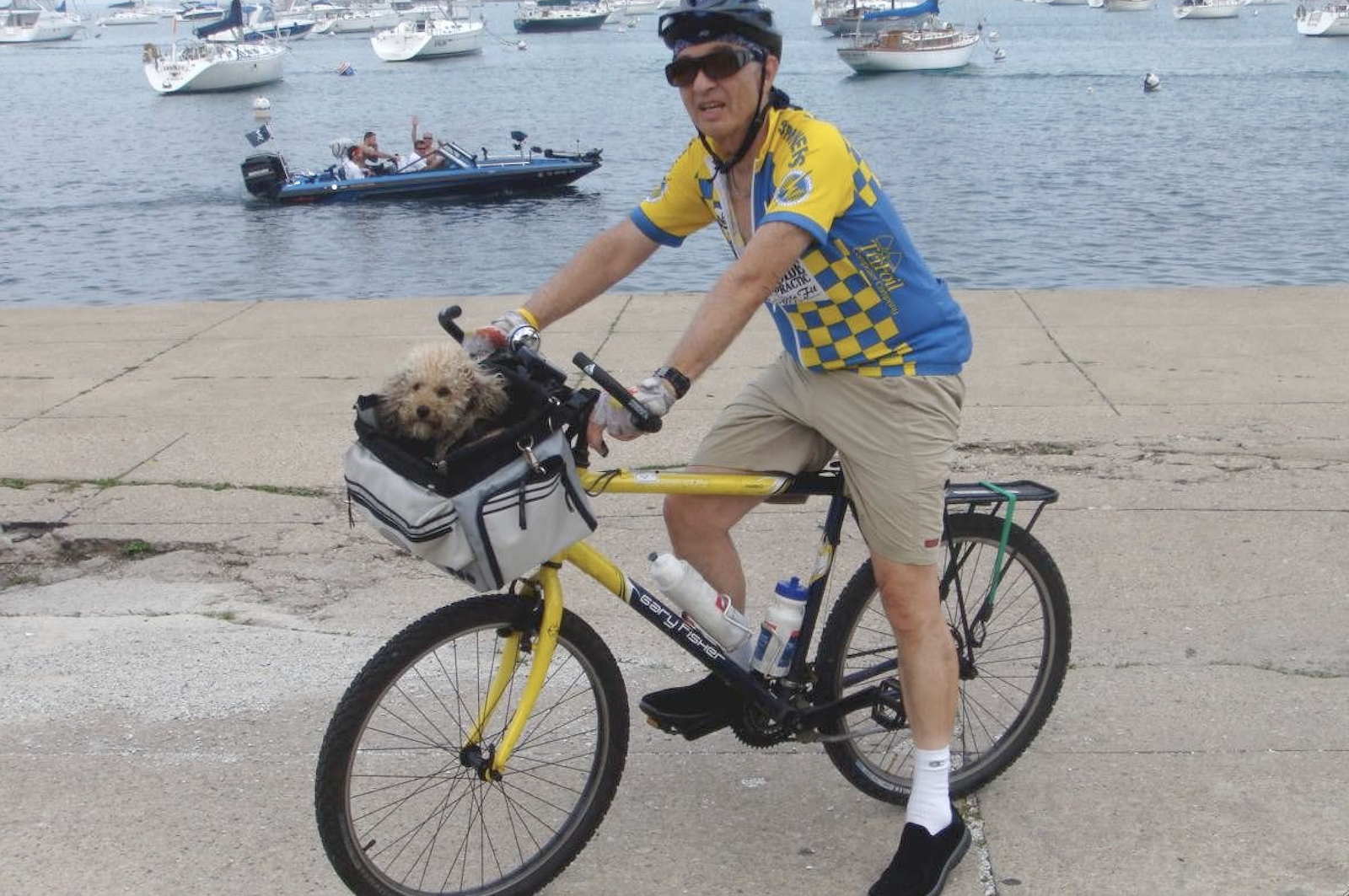
“This is me riding my bike with my dog along the Chicago lakefront.”
Is there anybody you presently look up to, who you would like to learn from?
As a football fan, I look up to Tom Brady for his all around excellence and the way he keeps his body together. Likewise, Bill Bellichick for his superb coaching ability. I think I face life the way they do.
Lastly, do you think about death? And if so, what do you think of it?
I don’t think about death. There doesn’t seem to be anything in that. I have a will and a planned estate, but other than that, I am enjoying my being here now.
Tony presently rides his bike every day and produces for his blog, guysandgoodhealth.com. “I put out jokes every Friday—weekend funnies.” You can follow him on his adventures there or ask him to impart wisdom to you using the comment box below. He also runs a Wonder Woman fan group on MeWe here.
If you would like to share your thoughts on being the age you are, do let us know here. Or read what it’s like to be a different age here.
73 days ago, in early February, we started this series to document to progress of the development of the new coronavirus in China that had only just arrived in Singapore (from which LUCK-IT operates). At that point, WHO and the Singapore government were actively dissuading people from wearing masks. “Do not wear a mask if you are well,” was the catchphrase of the day.
42 days ago, in mid-March, we did our first update. By that point, the virus was just starting to spread beyond China, with South Korea being the worst hit, and Italy, France and Germany fast catching up. China on the other hand was only just starting to report a drop in the number of new cases and deaths. WHO was still hesitant to call this situation a pandemic, afraid that doing so “may certainly cause fear”.
Today…
We are most certainly deep in the middle of a pandemic, with COVID-19 cases worldwide having already crossed the 2mil mark and the death toll now more than 150k globally. This is in contrast to the number of cases having been just over 100k and the death toll being just under 4k 42 days ago.
China is no longer the country with the most cases in total. It has been overtaken by 7 other countries, with the US holding the top spot in both the number of cases and deaths.
LUCK-IT will earn a tiny commission when you purchase this product.
While some countries are starting to report a decline in new cases and deaths (e.g. China, South Korea, Vietnam, Hong Kong, Italy, Spain, Germany, USA) suggesting recovery may be on the horizon, others (e.g. Singapore, the UK, Japan) see no end in sight yet .
Much of the world is now in some form of a lockdown or another, with wealthier countries pumping aid to their citizens by the billions. Even so, millions have lost their jobs or shuttered their businesses. The travel, aviation, F&B, events and oil industries are among the most affected. The 2020 Olympics has been postponed to 2021.
Singapore—the “best-case scenario” no more…
Singapore, which was at some point considered a “best-case scenario” for being able to allow its inhabitants freedom of movement while simultaneously keeping the virus under control, began losing control around the time the second wave of imported infections began coming in from the US and UK (fleeing Boris Johnson’s herd immunity policy).
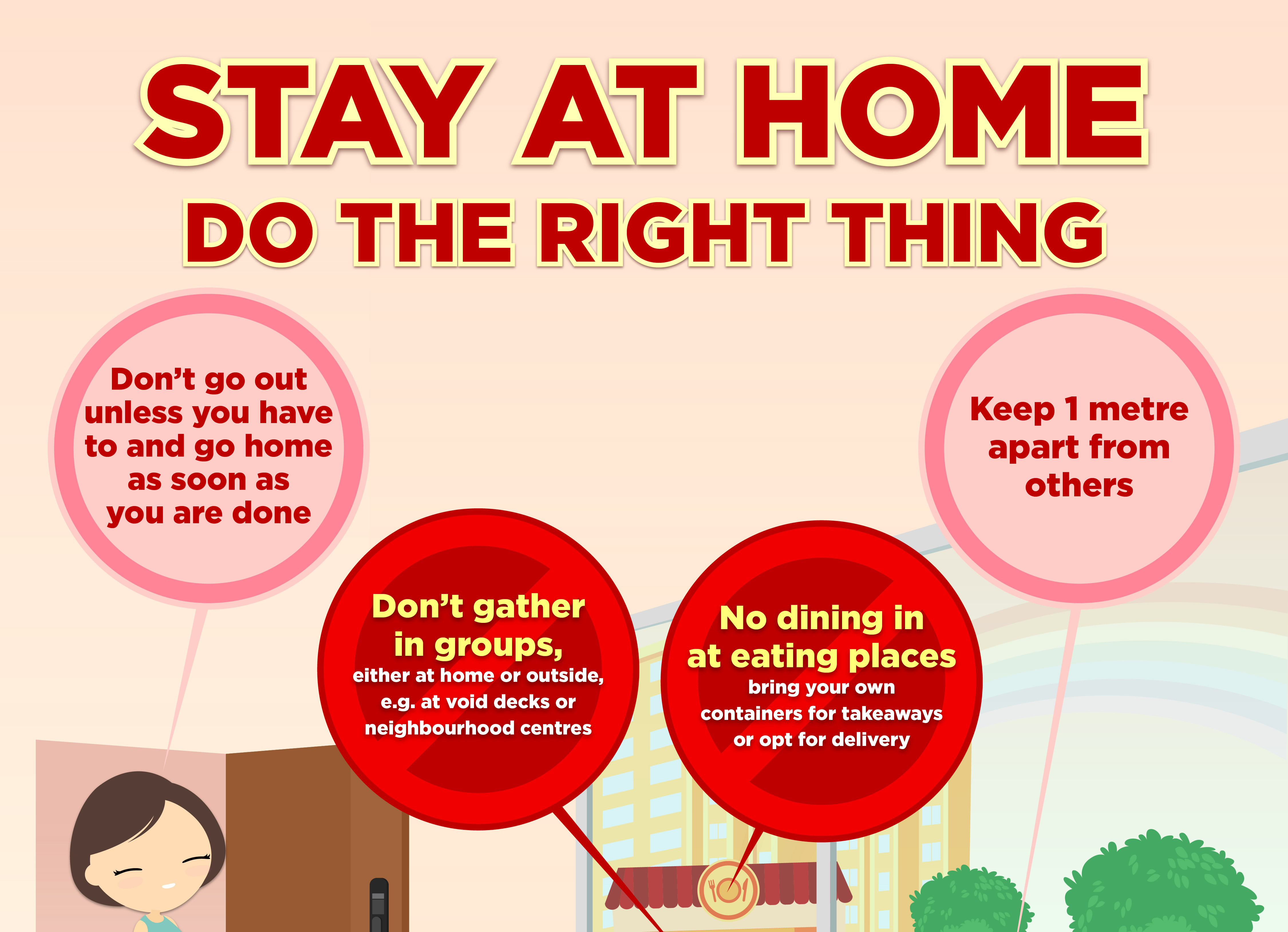
The Singapore government’s public advisory for April 2020.
The island country decided to go into semi-lockdown when the number of cases crossed the 1000 mark, and today, just 17 days later, the number of cases in Singapore stands at more than 8000.
Just last weekend, McDonald’s Singapore was made to suspend all operations islandwide after 7 of its employees across more than 5 outlets tested positive for COVID-19.
Mask-wearing when outdoors is now mandatory in Singapore, with non-compliance punishable by law. This is despite WHO’s stand that “you only need to wear a mask if you are taking care of a person with COVID-19.”
Interestingly, Singaporeans account for only 13% of the total number of COVID-19 cases in Singapore. The majority of those infected here are Bangladeshi and Indian nationals, migrant workers living in crowded dormitories that have since become the largest clusters of COVID-19 infected.
What’s next?
What’s starting to become clear as the months go on is that the numbers coming out from WHO or floating around popular media are unlikely to be accurate indicators of the spread of the virus or how individual countries are doing in comparison with each other.
A screen grab of the notice shown on the McDelivery app for Singapore.
China, for example, had not included asymptomatic cases in their numbers until towards the beginning of April, whereas some other countries like South Korea, Singapore and Taiwan had been doing so from the very start. Some countries have been telling everyone with COVID-19 symptoms to go get tested right away, whereas others like Italy, UK and the US have been telling those with symptoms to stay home to avoid straining the healthcare system. A few countries have reported a shortage of testing kits and no country has been able to provide accurate data of all asymptomatic cases yet, for obvious reasons.
Even the date of when the novel coronavirus first appeared is ambiguous. We’ve been using 1 Dec 2019 as the date the first known COVID-19 patient developed symptoms but recent reports from China have retrospectively traced the first likely COVID-19 patient back to 17 Nov 2019.
In short, the situation changes at lightning speed every single day and the data available doesn’t present any obvious answers. We could be at the middle-point of the COVID-19 pandemic right now or there could be wave after wave of upcoming recurrent infections nobody can presently foresee. A country may be doing well in controlling the virus at a specific point in time, but who knows how well it will continue to perform in the future?
LUCK-IT will earn a tiny commission when you purchase this product.
All we can do now is stay home, mask up, and document these strange days for clues on how to do better in the future. Hopefully, one day soon, we will be able to look at these notes and very effectively pinpoint what exactly we did wrong, and right.
Follow the latest in our COVID-19 Diaries series here.
If you’re in a country that has been affected by the novel coronavirus and would like to share information about the situation where you’re at, do get in touch with us here.
Image Source: Ministry of Health Singapore, McDonald’s Singapore. Compiler: Sy Sponsor or support the COVID-19 Diaries series here. If you found this article useful:
Steve Jobs was given up by his American and Syrian parents at birth, said to smell bad and spent ten years of his life struggling to make multiple failing business ventures succeed. Today, however, he is a legend who is greatly missed. This is the story of the man who changed telecommunications and music for our generation.
1955 – A baby boy is born to a young graduate student from the University of Wisconsin who had fallen in love with a teaching assistant from Syria. Because his parents have no money, they decide to put him up for adoption. Paul and Clara Jobs who live in Mountain View, California, USA (which will later come to be known as Silicon Valley) adopt their baby and name him Steven Paul Jobs.
Age 3 – The Jobs adopt a little girl they call Patti. Steve now has a sister.
Age 5 – Steve’s dad makes him a workbench and teaches him to use a hammer and saw. A neighbour gives Steve his first Heathkit and Steve starts to make radio transistors with it.
LUCK-IT will earn a tiny commission when you purchase this product.
Age 13 – Steve joins the Hewlett-Packard Explorer Club which offers lectures to kids interested in electronics. Steve sees a computer for the first time at one of these lectures.
Teenageyears – Steve gets a girlfriend, Chrisann Brennan and joins the computer club. At the club, he meets Steve Wozniak (Woz) who is a few years older and designs computers as a hobby.
Age 17 – Steve graduates from high school but can’t afford to go to college. He asks the Dean of Reed College to be allowed to live in the dorms and sit in on classes for free. The Dean agrees, however, he does not allow Steve to get a degree from doing so.
Incollege – Steve goes to lectures on Eastern Religions and Calligraphy. He sleeps on the floor of his friends’ dorms. He collects Coke bottles for money and depends on local charities for food.
Age 19 – After 18 months in college, Steve takes a job at Atari which makes computer games. His friend Woz is already working there. He takes a trip to India when he has enough money saved and continues working at Atari when he returns.
Age21 – Woz creates a circuit board for an easy-to-use computer that can execute commands on TV screens. Steve suggests they leave Atari to start their own company selling that board to people who want to build their own computers, and on April Fool’s Day 1976, Apple Computers is born. It operates out of Steve’s parents’ garage. They build a sample computer to show how the circuit board works and end up getting a deal to sell 50 such computers to a local electronics store for $2500. They don’t have the money to make those computers (each cost $200 to make) so Steve persuades a local electronics supply store to give him the parts first and promises to pay later. They make a big profit when the deal is completed, and decide to work on making a better computer that can be used out of the box—the Apple II. Their computers are called Apples because Steve thinks apples to be the perfect fruit and wants his computers to be the same.
LUCK-IT will earn a tiny commission when you purchase this product.
Age22 – Steve finds an investor who gives them money to create the Apple II. Woz is in charge of tech and Steve is in charge of design. He gets a logo designer to create a logo for their computer—a rainbow coloured apple that has a bite taken out of it. They finish in time for a computer fair in San Francisco and their product—with colour, good graphics and sound—stands out.
Age23 – Apple Computers is growing. Steve now has employees but is difficult to work for, partly because he seldom showers and smells bad. His girlfriend, Chrisann, now an artist, has his baby, Lisa. Steve refuses to have anything to do with the baby because he is 100% focused on his company.
Age24 – Apple now employs thousands of employees. They make a home computer with a mouse.
Age25 – Steve is a millionaire and becomes the youngest person in history to make Fortune magazine’s list of top Americans in business.
Age26 – Woz is injured in a plane crash and never returns to work at Apple full-time. Steve handpicks a team of engineers to build a new computer called the Macintosh—a type of Apple. He hires John Sculley, head of the Pepsi-Cola company to run the business for him.
Age29 – The Macintosh is released. The computer “for the rest of us” in Steve’s words. The first advertisement for it runs during the Super Bowl and soon many people want to buy it but it remains far from being a big hit.
Steve Jobs aged 29.
Age30 – Due to disappointing sales of the Macintosh, Sculley wants to make computers for businesses instead of home users. Steve refuses and tries to get the board of directors to fire Sculley. The board of directors remove Steve instead and move him to a new office across the street, away from other employees. 5 months later, Steve leaves Apple to start a new company called NeXT—a company that would make the next perfect computer.
Age31 – Steve’s adoptive mother dies. He tracks down his birth mother and meets her and his sister, Mona. From then on he would be close to Mona. He collaborates with George Lucas, who he is a big fan of, and becomes owner of Lucas’ computer graphics company, Pixar.
Age33 – NeXT has lost $10million, much of which is Steve’s own money. Nobody wants to buy NeXT computers because at $6500, they are too expensive for the average user.
Age35 – While giving a lecture at Stanford University, Steve meets graduate student, Laurene Powell who is like himself not a meat eater. They exchange phone numbers.
Age36 – Steve marries Laurene and their son, Reed Paul Jobs is born. He lays off most of Pixar’s staff because he had put in $50million and Pixar was still losing money. He signs a deal to make 3 animated movies for Disney, which wouldn’t make Pixar much money but would allow Pixar to get movies made.
Age38 – Steve’s adoptive father dies. His teenage daughter Lisa goes to live with him. He lays off most of the workers at NeXT and stops going in to work. He spends most of his time with his son, Reed.
Age40 – Pixar’s first movie—Toy Story—opens and becomes the most popular movie of the year. Pixar goes on to make many more hit movies in a row. His second daughter, Erin Sienna, is born.
LUCK-IT will earn a tiny commission when you purchase this product.
Age41 – At last, Steve Jobs is a success again. He is a billionaire now. Apple, on the other hand, is now struggling because their computers have failed to change with the times and are slow. They are nearly bankrupt. Apple, who had removed Scully 3 years prior, now wants Steve back. Steve agrees to be its head, but only for a while. He gives himself a salary of $1 per year.
Age42 – Steve announces that Apple is going to team up with Microsoft—all of Apple’s computers will use Microsoft’s Internet Explorer web browser—to produce iMacs (Internet Macintoshes). He gets rid of products that aren’t selling. He lays off workers. He runs an ad campaign that brands Apple products with the words, ‘Think Different’, and makes his iMacs brightly coloured.
Age43 – The iMac becomes the best-selling computer in the world. Steve has a third daughter, Eve.
Age45 – Despite only wanting to stay in Apple for a few months, Steve becomes Apple’s permanent head. He has too many new ideas to want to leave now.
Age46 – Apple opens its first stores. Just like Apple’s computers, they too look different, more like works of art than IT stores. Steve then releases the iPod and iTunes for Mac computers only.
Age47 – The iPod is now compatible with Microsoft’s Windows computers. Sales skyrocket. This however sets in motion the era of music piracy.
Age48 – Steve opens the iTunes music store for record companies to sell music on. This begins the era of online music buying. A medical check up, however, reveals Steve has pancreatic cancer.
Age49 – Steve has surgery to remove the tumour. 3 months later, he returns to work but looks thin and pale.
Age50 – He gives a speech to the graduating class at Stamford University, telling them that “time is limited, so don’t waste it living someone else’s life.” He decides to improve cell phones with his time left.
Steve Jobs aged 50, showing that he is using a Mac OS X on an Intel chip.
Age52 – Steve introduces the iPhone—a personal computer that fits into your pocket, and can also be used as a phone. It is imperfect but popular.
Age54 – Steve begins taking time off and gets in touch with a biographer to get his biography told. Soon after, he has a liver transplant and returns to work a few months later.
Age55 – Steve introduces the iPad—Apple’s new tablet computer, smaller, thinner and lighter than the ones that had been in the market for the past few decades.
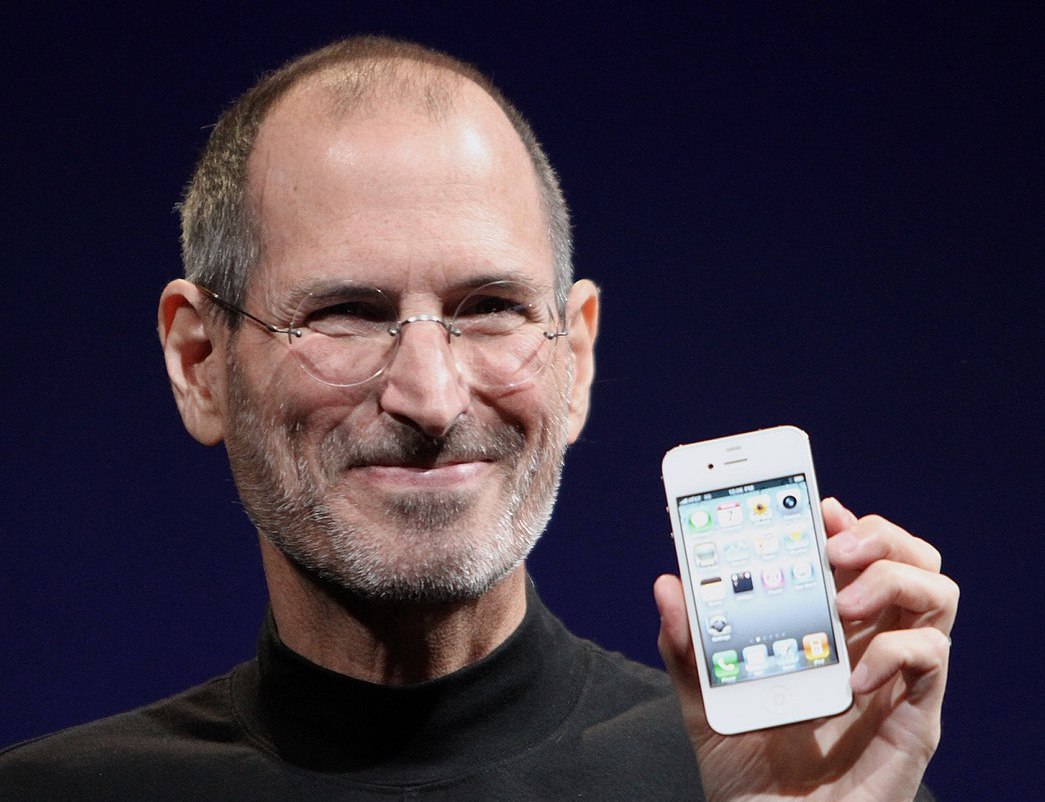
Steve Jobs aged 55, showing off the iPhone 4 at the 2010 Worldwide Developers Conference.
Age56 – Apple is now the most successful company in the world. Steve steps down as CEO, no longer well enough to continue working. He spends his time with friends and family instead, and dies just 2 months later. He is mourned by people all over the world.
Dr Bob Rich was born in Hungary then shoved past the ‘Iron Curtain’ as a child in the 1950s and ended up living in Australia. He’s since tried to be an Olympic distance runner, become a nurse, gotten a PHD in Psychology and is presently an author. We asked him for his thoughts on being older than 70.
“We are here as students: caterpillars munching on the green leaves of experience, until we graduate as butterflies.”
Q: Hi Bob, thank you so much for being here with us. Could you tell us a little bit about yourself and how old you are now?
A: You can be entertained, informed, inspired and probably outraged while finding out about me at my blog, Bobbing Around.
As I say there, I have retired from 5 different occupations so far. Still going strong as a writer with 18 books published, an editor, and most important as a Professional Grandfather. This means two kinds of activities: 1. Striving for a survivable future and one worth surviving in for all my grandchildren (any person born after 1993 qualifies as my grandchild, anywhere on the planet). 2. Healing with words. Hundreds of people, mostly young, now live better lives because of our email exchanges. This is the gift that makes me resist wanting to jump off the planet when I look around at the criminal idiocy that’s been destroying everything.
Oh, I have just attained the age of the magical number 77.
“The ugly little kid no one could love, right?”
How is your body different from what it was like at age 60?
10 years younger.
At that time, I was in unremitting 7 to 8 /10 pain that had gone on for some years. Then, (duh!) I had an X-ray done, and there was a stalactite growing in my right hip joint. Everything improved when I got a new hip installed.
Mind you, that pain was useful, because it got me to deepen my meditation practice. If any of you readers experience chronic pain, let me tell you, the mindfulness approach works. I describe it in detail in my book on cancer, or look up “Jon Kabatt-Zinn” who is one of my heroes.
“Part of a protest against Australia’s inhumane treatment of refugees.”
What brings you joy these days?
A week ago, a young woman sent me a desperate email. Guilt and shame had torn her apart. Now she is working her way through my book on depression and has a positive view of herself and her world.
And yesterday, when I was doing my exercises, I improved from 62 to 65 pushups.
Which item, bought or received in the past year, has been most useful to you?
I don’t go for stuff. I could live in a cave in the desert (as long as it had internet connection and room service).
If I need something new, I’ll see if I can redefine the need into a want I can satisfy some other way. My wife and I have deliberately lived below the Australian poverty level since 1978. If you think that idiotic, please read my essay, “How to change the world”. Well, read it anyway.
LUCK-IT will earn a tiny commission when you purchase this product.
What were you like as a young man? How have you changed since?
I didn’t know it, but I was terribly depressed: just knew that I was ugly, and stupid, and no one could love me, and “if there is a wrong way of doing something, or even if there isn’t, I’ll do it that way first.” I also unknowingly suffered from post-traumatic stress disorder.
I started doing therapy on myself at 21 years of age, though I didn’t realise I was doing that. Then for 20 years, I had depression under control. And at 43, I completely defeated it. Please read “The onion and the pearl”, a recent blog post that explains this.
Which 3 people or things in your life are most important to you right now?
Only 3? There is my family, starting with wife, kids, grandkids, great-grandkids.
Second are the children of my imagination: people who move into my computer, then come alive and dictate to me as I write fiction. One of them is the hero of a series, “The Doom Healer”. I’m working on the 5th volume when the world outside my computer allows me, while seeking a publisher wise enough to realise my young man will match Harry Potter.
Third is my environmental and humanitarian campaigning.
Is status important beyond age 70? What about wealth, knowledge acquisition, romance, birthdays and friendships?
I’ve never worried about status. As a young man, I realised that wealth can cost more than it’s worth. This is one of the things I’ve described in my novel, “Ascending Spiral”. It’s a good day when I learn something new: I am a learning addict. Romance? My wife would be VERY upset with me. Every day is a birthday. There is only NOW. The past is history, the future is a mystery. I give you a PRESENT.
What regrets do you have?
Being a human, on planet Earth. I explain this here.
“Charlie and Emily are not related to me, but are my grandbabies anyway.”
What do you think those not yet 70 should be doing while they still can?
Before or after 70, realise that life has meaning. We are here as students: caterpillars munching on the green leaves of experience, until we graduate as butterflies. That’s when we learn the ultimate Lesson, which has been revealed by Confucius, the Buddha, Jesus, Gandhi, Martin Luther King, and lots of others. Read Corinthians 13. Whether we realise it or not, all of us are apprentice Buddhas.
LUCK-IT will earn a tiny commission when you purchase this product.
Is there anybody you presently look up to, who you would like to learn from?
The Dalai Lama, Pope Francis, Malala, Greta Thunberg, Leonardo di Caprio, the cat who owns my household, and every lovely baby I encounter.
Lastly, do you think about death? And if so, what do you think of it?
Death doesn’t bother me. I often part with people by saying, “Have a good life!” If they return the wish, I explain that I already have, thank you.
If I die today, fine. I have firm theories (based on what evidence is available) about what happens after death, and there is only one way of finding out if they are correct, right? And if I live another 20 years, fine.
Death is not the end of a book, but the end of a chapter. Here is a little poem I wrote about it to console a grieving husband:
She will return. Having lived the joys and agonies, ecstasies and sorrows of this life— to do better the next time around. Will her passing make you a better person, as her presence did, by your side? Her school is in recess for now, for she has passed, though our examination is still to come. She will return.
Bob believes the planet is in its 6th major extinction event and is presently working to reduce and delay disaster while simultaneously promoting compassion, decency and cooperation through fiction. You can read more about him at his blog, bobrich18.wordpress.com, or chat with him using the comment box below (“I’ll be delighted to have a conversation with anyone who leaves a comment. After all, why should they take it with them?”).
If you would like to share your thoughts on being the age you are, do let us know here. Or read what it’s like to be a different age here.
Photographs courtesy and copyright of Dr Bob Rich. Interviewer: Sy Sponsor or support The Wisdom Of Old Age series here. If you found this article useful:
When the novel coronavirus outbreak in China first began, we interviewed Thomas who had been put under lockdown in Beijing and found him to be calm. Now that almost 2 months have passed and the numbers of reported COVID-19 cases in China appear to be falling, we had another chat with him, hoping for light at the end of the tunnel, but were surprised to find him a tad less calm than before.
“COVID-19 is certainly, definitely not over in China, not even close.”
Q: Hi Thomas, welcome back! What’s happened since the last time we spoke? Are you still in Beijing and have you been well?
A: Hi Sara, it’s good to be back! The couple of months since we spoke have been sort of a blur, which is to be expected if you’re spending most of the time inside, with no real schedule. I am still in Beijing, and have been physically well, but have admittedly started to go a bit loopy.
What restrictions presently remain in Beijing and which have been lifted? Have you yourself gone back to work in person yet? Sat down for a meal in a restaurant?
Beijing is seeming to relax, partly because of the weather. Some people are back to work, but the universities remain closed. Places like malls are a bit more lively than they had been. At their worst, public spaces were really ghost towns. Restaurants are now back open for dine-in—but customers are still pretty thin on the ground. Places like McDonalds are doing huge takeaway business.
LUCK-IT will earn a tiny commission when you purchase this product.
What are the numbers of COVID-19 infected, recovered and demised in Beijing right now? What about in China as a whole?
I do hear about new cases in Beijing, but my impression is that these are primarily people who have come back to China from outside.
How accurate do you think those numbers are? And do you think this means the COVID-19 crisis in China is getting close to being over?
I can’t comment on the accuracy of the numbers, but COVID-19 is certainly, definitely not over in China, not even close. This is a virus that spreads exponentially among asymptomatic carriers—so it remains as insidious as ever.
A brochure stating laws related to controlling the novel coronavirus.
When did the coronavirus situation in China first start getting better? In hindsight, what were the signs that suggested the epidemic was beginning to end?
Until there is a cure and/or a vaccine, getting better will consist only of managing the spread. While people have certainly gotten better about washing hands and other hygienic measures, progress can only be temporary. People are certainly relaxing, but the fact is that another outbreak could occur at any time.
Now that the rest of the world is just as affected by the coronavirus as China had been, how do you think China’s response to the virus compares to that of most other countries?
Again, I can only comment on what I have seen publicly, but there’s no question that China took this very seriously, and coordinated its response at a central level. Given that China was the first to deal with the outbreak, it’s inevitable that mistakes would be made, but on the whole, the response has been remarkably well coordinated. The ability to keep consumer goods in stock remains a testament to the miracle of modern logistics. The switch to online learning has gone without a hitch, which again is pretty remarkable considering the sheer numbers of people involved.
LUCK-IT will earn a tiny commission when you purchase this product.
You’re from the US so what are your thoughts on the situation there now that they are presently the country most affected by COVID-19, with more than 3x as many cases of infection compared to China? How do you think they ended up with so many more infections and what do you think they can do to get the number of infections down?
Well to be fair, it is hard to compare data from different countries, since there is no standard for reporting criteria. But that said, the US federal response has by any measure been an absolute clown show, with neither moral nor operational leadership coming from the White House. I am not a particular fan of our current president, but even by the low standards of the past three years, the response of this government has been abysmal. On the other hand, states have shown real leadership. Governors of California, New York, Ohio, Maryland, Michigan and Washington have been standouts. The lineup of people prepared to return the US to a state of competent governance is growing longer and more coordinated. As a historian, I can only hope that this moment represents the low point of a longer cycle in US politics.
What advice do you have for the people all around the world who are presently still stuck in their homes because of lockdown measures, with no end to the COVID-19 pandemic in their countries in sight?
My advice is to embrace the slow erosion of your sanity. It’s gonna happen, so just belt up and enjoy the ride.
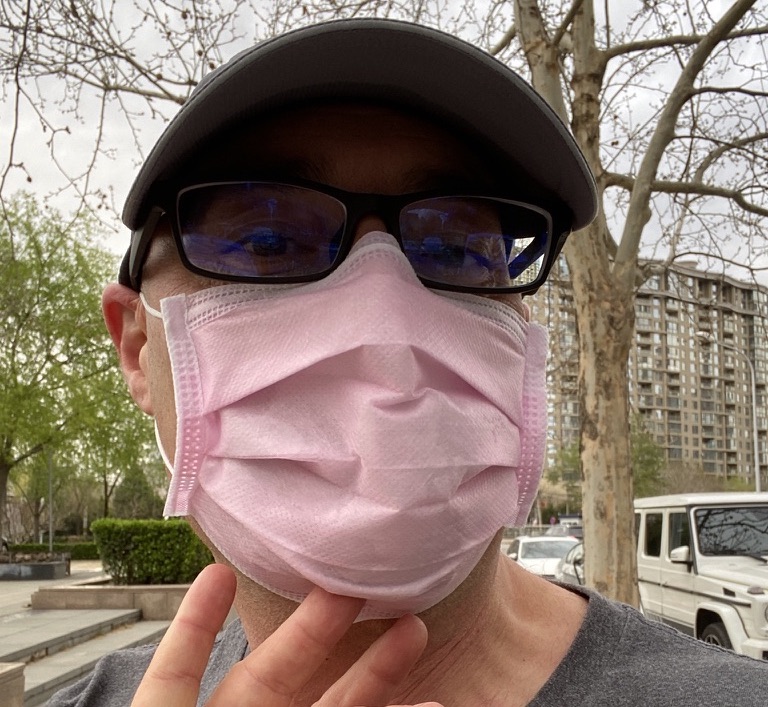
This is Thomas.
Lastly, what else have you learned in the time since we last spoke that you didn’t know before?
Oh all kinds of things. I have learned that you really want to brush your teeth before putting on a face mask, and that going running with a mask on is a great way to make yourself pass out. I have learned that animals are pretty quick to fill up spaces that humans have vacated, and that stray dogs lead surprisingly rich and fulfilling lives.
I have been learning to make better use of the Internet for my teaching. My class on food studies is still on, but we have adapted our assignments so that students trapped at home can interview their relatives, and conduct ethnographies of e-commerce sites like Taobao.
I have also been listening to a lot of podcasts, and even doing a few of my own. This is truly a golden age for sitting around and yapping into a microphone.
Thomas is a historian of modern China who presently just hopes to be able to get back to his work on China’s food eventually. You can read more about him and his work at thomasdaviddubois.com and bnu.academia.edu/ThomasDavidDuBois or ask him about China’s anything using the comment box below.
Follow the latest in our COVID-19 Diaries series here.
If you’re in a country that has been affected by the novel coronavirus and would like to share information about the situation where you’re at, do get in touch with us here.
Photographs courtesy and copyright of Thomas. Interviewer: Sy Sponsor or support the COVID-19 Diaries series here. If you found this article useful:
Italy has been reporting a consistent reduction in daily new cases of COVID-19 this month. Back in March however, this wasn’t the case with the country fresh in lockdown and hospitals worrying about how they were going to cope with the rapidly increasing number of infections. Here’s a look back at what the situation was like in Italy just a month ago, as told by Roberto who lives in the Umbria region of Central Italy.
“Lots of people are reporting horrible flu with chest pain but until they need to be hospitalised they won’t be counted. Basically, we’re ignoring the mild cases.”
Q: (Asked on 16 March) Italy has been in lockdown for more than a week but infections have not slowed. How do you feel about it? Are people taking the lockdown seriously?
A: People are pretty scared. Grocery stores are open. You need to sign a declaration with the reason why you’re around to get there, though. There are people around… going to the grocery store, taking the dog out, having a walk with their children… But they keep much more than 1.5m among them.
My mindset about these arguments when they happened in Italy was “just relax, stay at home, be safe and wait a couple of weeks”. And it worked. Stressing out about it is a huge waste of time, some people won’t understand until it begins impacting them personally.
Under what conditions can a person go out?
If you’re out you must have a reason. They will stop you and you need to provide a signed declaration. Valid reasons are commuting to work and going to buy groceries/to the pharmacy. You’re also allowed to take the dog out and you must keep 1.5m from everyone.
LUCK-IT will earn a tiny commission when you purchase this product.
Can someone move from one city to another by showing a signed declaration?
They are pretty strict about town borders. You can only move for work, basically.
What happens if anyone breaks the rules?
There have been like 7000 people reported breaking the rules in 3-4 days. They’ll all face a big fine and could go to jail—also, they’ll have that on their records. Besides that, there is news saying a prison riot happened in Italy over the lockdown measures. Probably something organised by the Mafia. 12 inmates dead while 16 escaped. They’re probably back with their families and will be caught again in a while.
I found that the mortality rate for COVID-19 is very high in Italy. Why do you think that is the case? I read from the newspaper that it is because hospitals in Italy don’t have enough beds and ICU machines, is that true?
Regarding the higher lethality: It’s widely believed to be because of a combination of A—the bigger population of elderly people (average age in Italy is pretty high) and B—the fact that the infected are many, many more than reported. At least double the official number, according to The Lancet.
Probably many, many more are unreported. To get tested nowadays in most of Italy you need to be on the verge of death basically. So it’s not that it’s much more lethal here than in China, it’s that we’re only testing people who are coughing their lungs out. They don’t test you if you have symptoms but no history of contacts with a known infected person. Lots of people are reporting horrible flu with chest pain but until they need to be hospitalised they won’t be counted. Basically, we’re ignoring the mild cases.
We still have enough beds and pulmonary ventilators—not for long though. Especially in Lombardy, the situation is critical and they could have to choose who to save soon. That’s not happened yet though.
With regards to the elderly patients issue, I heard a rumour saying that hospitals in Italy are choosing to not treat the elderly because of shortages of resources. Another rumour said that the Italian government has been using trucks to send corpses to crematoriums. Is that true?
No one’s stopped treating the elderly yet, they just said it could happen if we don’t slow the infection down. That is basically fake news. However, the ordinary crematory could not deal with the corpses and the military had a lot of trucks available. That one is not rumour.
Why are there so many COVID-19 infections in Italy? How did most of those infected contract the virus and are there any big clusters?
At first the government tried to follow contacts starting from patient zero for a while, but it wasn’t useful as multiple infection chains appeared and many are untraceable. Thus they failed to contain the virus.
If you’re in a country that has been affected by the novel coronavirus and would like to share information about the situation where you’re at, do get in touch with us here.
Photographs courtesy and copyright of Adert. Interviewer: Kauai Sponsor or support the COVID-19 Diaries series here. If you found this article useful:
Born to a poor family in communist China, Jack Ma endured numerous failures in school and entrepreneurship before finally setting up Alibaba—a company which revolutionised trading in China and earned him billions of dollars. This is the timeline of the downs and ups across his life…
1964 – Ma Yun is born in Hangzhou, China. His mother is a factory worker. His father is a photography for the Hangzhou Photography Agency. At the time of his birth, there is almost no private enterprise in China. 90% of industry is run by the state.
Age 2 – Chairman Mao comes into power and the Cultural Revolution happens, resulting in 10 years of turmoil, bloodshed and stagnation.
Childhood – Yun is a fan of the author Jin Yong, whose writing is infused with traditional Chinese culture and arts, as well as Buddhism, Taoism and Confucianism. He learns tai chi.
Age 14 – Deng Xiaoping launches China’s ‘open-door policy’—leaving self-sufficiency behind to allow Chinese citizens to participate actively in global markets. Tourists begin coming to Hangzhou. For the next 9 years, Jack would offer tourists a free tour of the West Lake if they taught him English. One of the tourists has a father and husband both named Jack. She suggests Yun be called Jack too and he becomes known henceforth as Jack.
Age 15 – The Morleys from Australia visit Hangzhou and Jack befriends them to practice English. They begin a penpal correspondence that helps Jack improve his written English.
Age 16 – Jack fails the higher education entrance exam badly, scoring only 1/120 in math. He becomes a menial labourer with his father’s connections, delivering bundles of magazines from printers to train stations. He is rejected from numerous other jobs.
Age 18 – Jack tries the higher education entrance exam again but still fails to qualify for higher education. He applies for 11 jobs and is rejected by all. He starts going to the library of Zhejiang University every Sunday to memorise formulas and equations.
LUCK-IT will earn a tiny commission when you purchase this product.
Age 19 – He attempts the entrance exam for a third time and finally raises his math score enough to be accepted into a local university, the Hangzhou Teachers College—not a prestigious college in the city.
Age 21 – He is elected president of the student union and president of the Hangzhou Students Federation. The Morleys, his Australian pen pals, invite him to stay at their home in New Lambton, Australia. He goes to stay there for a month and returns suddenly aware that China is not the richest country in the world, unlike what he’s been taught. He realises he has to use his own mind to make judgements. Jack invites the Morleys back to his family home in return, securing the use of a pickup truck for their trip and arranging a banquet with local officials and VIPs for them too. The Morleys start funding Jack’s compulsory live-in fees at college because Jack’s family can’t afford it.
Later at college – Jack falls in love with a fellow student from Zhejiang, called Zhang Ying, Cathy. They marry and the Morleys once again step in and give them 22,000 Australian dollars to help them finance the purchase of their first home.
Age 24 – Jack graduates with a degree in English and gets a 2-year contract to become a lecturer in English and international trade at the Hangzhou Institute of Electronic Engineering. After his day job at the institute, he teaches English at the Hangzhou YMCA.
Age 28 – Deng Xiaoping pronounces that “to get rich is glorious”, inviting entrepreneurs across the country to return to action. Jack decides to launch his own business before turning 30. He starts a company called ‘Hope’ and works on it part-time after class. Jack’s first child is born. He is named Jerry. 2 more children will follow in the years ahead.
Age 29 – Jack founds the Hangzhou Haibo (meaning ‘hope’) Translation Agency to help local companies find customers overseas. He employs 5 retired teachers from the institute. He gets students from his English night school to help publicise the business and find his first clients but he experiences cash flow issues from the start. To support his business, he starts peddling goods on the streets, effectively turning his translation company into a trading company that sells gifts, flowers, books, plastic carpet, etc.
Age 30 – His translation company is hired by the government of Tonglu County to translate a dispute with an American company. For this he travels to Hong Kong, and later to the United States, ending up in Seattle in a twist of fate where he uses a computer and the internet for the very first time at the home of his colleague’s son-in-law. There is no data on China on the internet then so he creates China’s very first page, advertising his translation agency in there and gets 5 emails enquiring about his services within hours. He decides to set up a business helping Chinese companies find export channels online and partners with his colleague’s son-in-law, Stuart Trusty. Stuart wants a deposit of $200,000 but since Jack is penniless, they agree that Jack just needs to pay up as soon as possible. He brings a computer home with him, the most advanced in China at that time, quits his teaching job and starts his second business—China Pages. He ropes a former colleague, He Yibing, who was a computer science teacher at the same school, and they register the company Hangzhou Haibo Network Consulting.
LUCK-IT will earn a tiny commission when you purchase this product.
Age 31 – China Pages opens its first office, funded by money borrowed from his family. His wife is his first employee. During the day, they go out and find clients. In the evening, they teach a course about the “information superhighway”. This course helps them get some of their earliest customers. Jack also calls in family and former students to spread the word but this is difficult because Hangzhou itself is not connected to the internet, relying only on Stuart in the USA to upload the information and send over screenshots to prove that the information is indeed online. Until at last, in the fall of 1995, Zhejiang Telecom provides internet services to Hangzhou. Jack is one of the first 200 users of the internet. He steps up his efforts to promote his business and gains some success when the Zhejiang provincial government hires China Pages to build its website, bringing the Chinese government online for the first time. Soon, the papers are featuring his story. Jack travels to Beijing to promote China Pages there and gets more publicity. But even then business is poor.
Age 32 – Jack is almost bankrupt. He enters a join venture with a bigger company, Hangzhou Dife, his competitor and with only 30% of the company in his ownership, soon loses control of China Pages.
Age 33 – Jack gives up his stake in China Pages and moves to Beijing. He takes a job at the Ministry of Foreign Trade and Economic Corporation and is asked to receive Jerry Yang (founder of Yahoo and a billionaire by age 30) and take him on a tour around Beijing.
Age 35 – Jack founds Alibaba with a few friends, all regular people, none of who come from privileged backgrounds. The China internet market was now dominated by others. He decides to focus on small businesses instead. Over the next year, the number of internet users in China grow from 2 million to 17 million. Jack meets Joe Tsai, a Taiwanese-born investor living in Hong Kong, and gets him to help incorporate his company and find investors around the world. Jack lists all the friends who helped start the company as shareholders, and starts promoting the company in the media. Towards the end of the year, Goldman Sachs invests $5m for a 50% stake in the company.
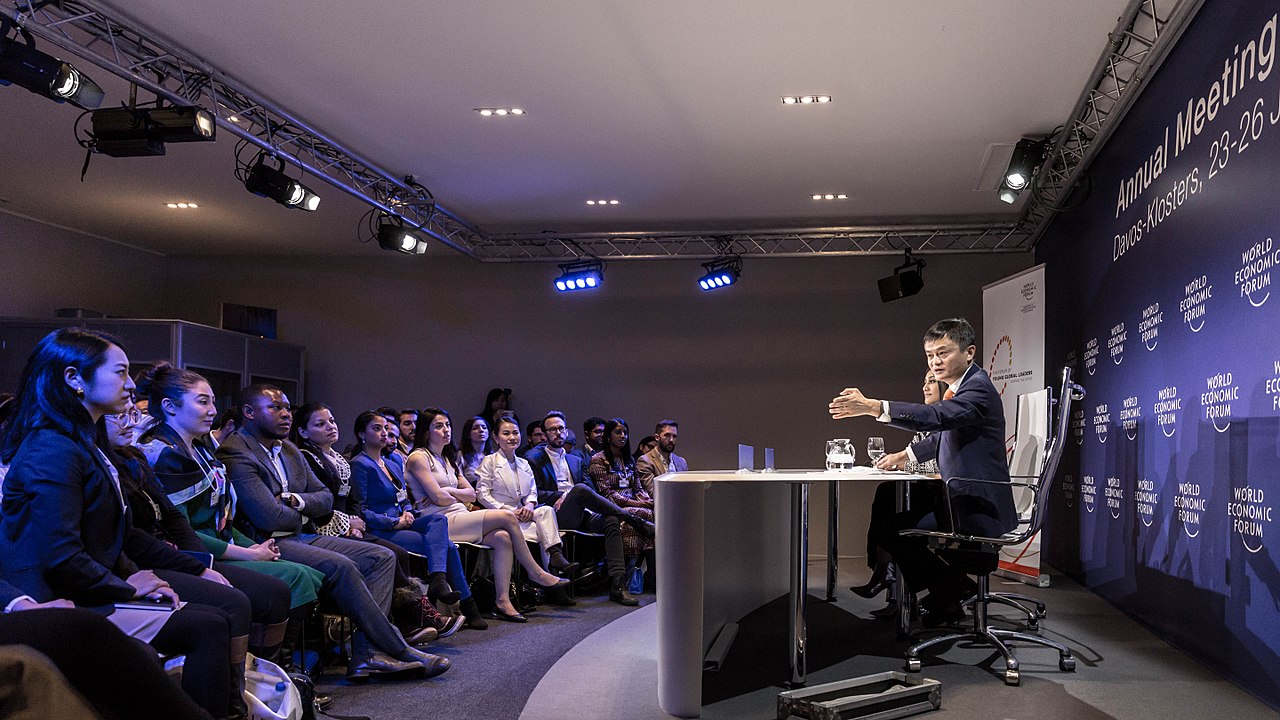
Jack Ma aged 35.
Age 36 – Alibaba moves into a bigger office in Hangzhou. They start to host gatherings of SMEs in hotel ballrooms, arranging tables to group companies from similar industries. Japanese investment firm SoftBank invests $20 million. Jack travels to Silicon Valley to hire John Wu, a yahoo executive. He allows him to work from Fremont, California. By this time, there are 150,000 members on Alibaba from 188 countries. The company goes on a hiring spree in mainland China, Hong Kong, and California, and steps up advertising. Jack is featured everywhere, including Forbes, but Alibaba is making less than $1 million from web building and hosting for its users.
Age 37 – The tech downturn continues. Jack and Joe bring in COO from GE, Savio Kwan to help turn Alibaba into a proper business. At this point, all Jack wants is to remain standing.
Age 38 – Alibaba is slowly edging towards profitability. eBay enters China and gains 90% share of the consumer e-commerce market. Jack decides to enter the consumer market to protect Alibaba from eBay with a new venture called Taobao. SoftBank invests $80 million to support this new venture.
Age 39 – Alibaba launches Taobao in May, during the SARS epidemic and advertises by posting on free bulletin board systems and online forums. He gets each of his employees to find 4 items to list for sale. They only announce their association with Alibaba later in July. New investors start investing in Alibaba and Taobao.
Age 40 – Ken Morley, the man who had financed Jack many times in his youth, dies at 78. His obituary mentions that he had befriended a poor, young Chinese boy who now heads a successful company in China. Goldman Sachs sells off its stake in Alibaba for $3.3million (this stake would rise in value to more than $12.5 billion later on). Taobao launches Aliwangwang, a chat window for buyers and sellers to communicate. Later that year, they launch Alipay. eBay begins to fail in China.
Age 41 – Taobao overtakes eBay in market share. Alibaba partners with Yahoo and takes over operations of Yahoo China.
Age 42 – eBay exits China for good. There are now 30 million users on Taobao.
Age 43 – Alibaba.com is listed on the Hong Kong stock exchange, selling 19% of the company for $1.7 billion. Its handle is ‘1688’ which sounds like prospering along the way in Mandarin.
Age 44 – Tmall is introduced to complement Taobao.
Jack Ma aged 44.
Age 45 – Jack sells some of his shares for $35 million and buys prime real estate in Hong Kong. Alibaba launches cloud computing subsidiary, Aliyun and acquires HiChina, a leading China infrastructure service provider.
Age 46 – Alibaba launches Juhuasuan and acquires more companies.
Age 48 – Alibaba buys back half of Yahoo’s stake in the company and delists Alibaba from the Hong Kong stock exchange.
Age 49 – Alibaba goes into logistics, TV OS and networking apps.
Age 50 – Alibaba expands into more digital services and goes public on the New York Stock exchange. Its handle is ‘BABA’. Jack and Joe create the Alibaba philanthropic trust to care for China’s environment and health care. Alibaba Pictures is launched.
Age 51 – Alibaba expands their digital services and collaborations and acquires more companies. Jack buys Brandon Park estate in New York State’s Adirondack Mountains for $23 million. Alibaba purchases the South China Morning Post, the main English daily newspaper in Hong Kong. They also launch the Alibaba Hong Kong Young Entrepreneurs Foundation.
Age 53 – Jack makes his acting debut in a kung fu short film Gong Shou Dou.
Jack Ma aged 54.
Age 53-54 – He is given an honorary doctorate degrees from universities in the Philippines, Hong Kong and Israel.
Age 54 – Jack steps down as executive chairman of Alibaba Group Holdings.
2020 – Ma is 56 and China’s richest man with a net worth of $44.3 billion.
At age 21, Simon Templar from the US set out to make enough money to retire before his 60th birthday. 4 decades later, he’s done that and now lives in Chiang Rai, Thailand. We asked him what’s next.
“I don’t fight as easily or as often as I used to.”
Q: Hi Simon, thank you so much for being here with us. Could you tell us a little bit about yourself and how old you are now?
A: I am a retired US Marine. I was an infantry officer and served from 1985-2010.
“Pic of me and bro’s when little.”
What are your current daily and weekly routines like?
I work in the mornings and play golf or something in the afternoons. Wednesday nights I go see a movie because I am “Cheap Charlie” and the ticket is only 100 baht.
How is your body different from what it was like at age 50?
12 years older. I broke my leg at the ankle and had to learn how to walk again after it finally healed.
“Me with 70’s porn star moustache.”
What brings you joy these days?
Helping good people and making the occasional birdie. Pars are nice too.
Which item, bought or received in the past year, has been most useful to you?
LUCK-IT will earn a tiny commission when you purchase this product.
What were you like as a young adult and how have you changed since?
I was very intense. I don’t fight as easily or as often as I used to.
Can you list 3 things you realised or learned only after age 60 that you didn’t know before?
A girl does not have to be a supermodel to be a super girlfriend. The best way to save money is to not waste it. Love is what ties it all together and makes the world go round.
Which 3 people or things in your life are most important to you right now?
The pursuit of the truth. Lending a helping hand to people who have had a lot of bad luck through no fault of their own. Making more money so I can give more of it away.
“Me after Infantry Officers Course in the field training my rifle platoon. Actually I was relaxing in this moment.”
Is status important beyond age 60? What about wealth, knowledge acquisition, romance, birthdays and friendships?
Social status is always important but it is earned not purchased. Wealth is dandy because it gives one options/choices. Knowledge is not the only thing in life. It is the only thing. Romance never gets old or dull. Birthdays are no longer wonderful at some point in everyone’s life. Friendships should be maintained. Thanks to the connectivity provided by the internet, friends for life is more possible than before.
What regrets do you have?
I drank too much and that eventually scared off some super women that wanted to be with me.
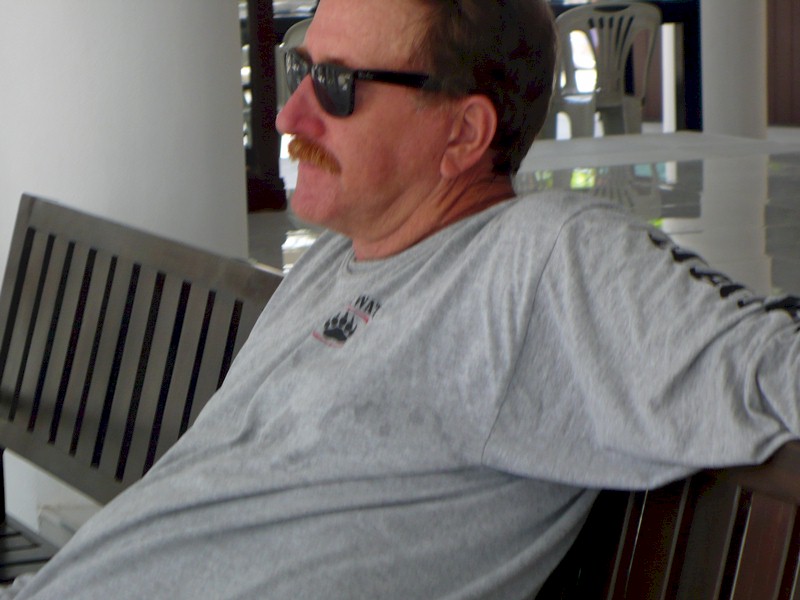
“Me taken in July 2018.”
What do you think those not yet 60 should be doing while they still can?
LUCK-IT will earn a tiny commission when you purchase this product.
Is there anybody you presently look up to, who you would like to learn from?
I like President Trump. I would like to sit at and learn from Jesus Christ, but that would require either time travel or some other type of miracle.
Lastly, do you think about death? And if so, what do you think of it?
I hope it comes upon me quickly but not while I am in good health, mentally and physically. I never worried much about death and try not to think about it too much other than doing common sense things such as estate planning and having a final will and testament.
Simon is presently looking to fall in love and going on as many dates as possible in order to achieve that. You can find him out and about Chiang Rai, at his blog, inuinoueritashome.wordpress.com, or ask him where he’s at using the comment box below. You can also check out the Northern Thailand Christian Orphanage he supports here.
If you would like to share your thoughts on being the age you are, do let us know here. Or read what it’s like to be a different age here.
Photographs courtesy and copyright of Simon Templar. Interviewer: Sy Sponsor or support The Wisdom Of Old Age series here. If you found this article useful:
Doris* (*not her real name) lives in Singapore, in a building where many units are stacked close together, one on top of the other. She was recently informed of 3 confirmed cases of COVID-19 in the very block she lives in. She told us how she’s responded and how her health has been like since.
“This pandemic has been going on for months now. It’s getting more tiresome than frightening.”
Q: Hi Doris, thanks for speaking with us! When did you first notice a COVID-19 patient living in your condominium? How did that develop and end up becoming 3 cases?
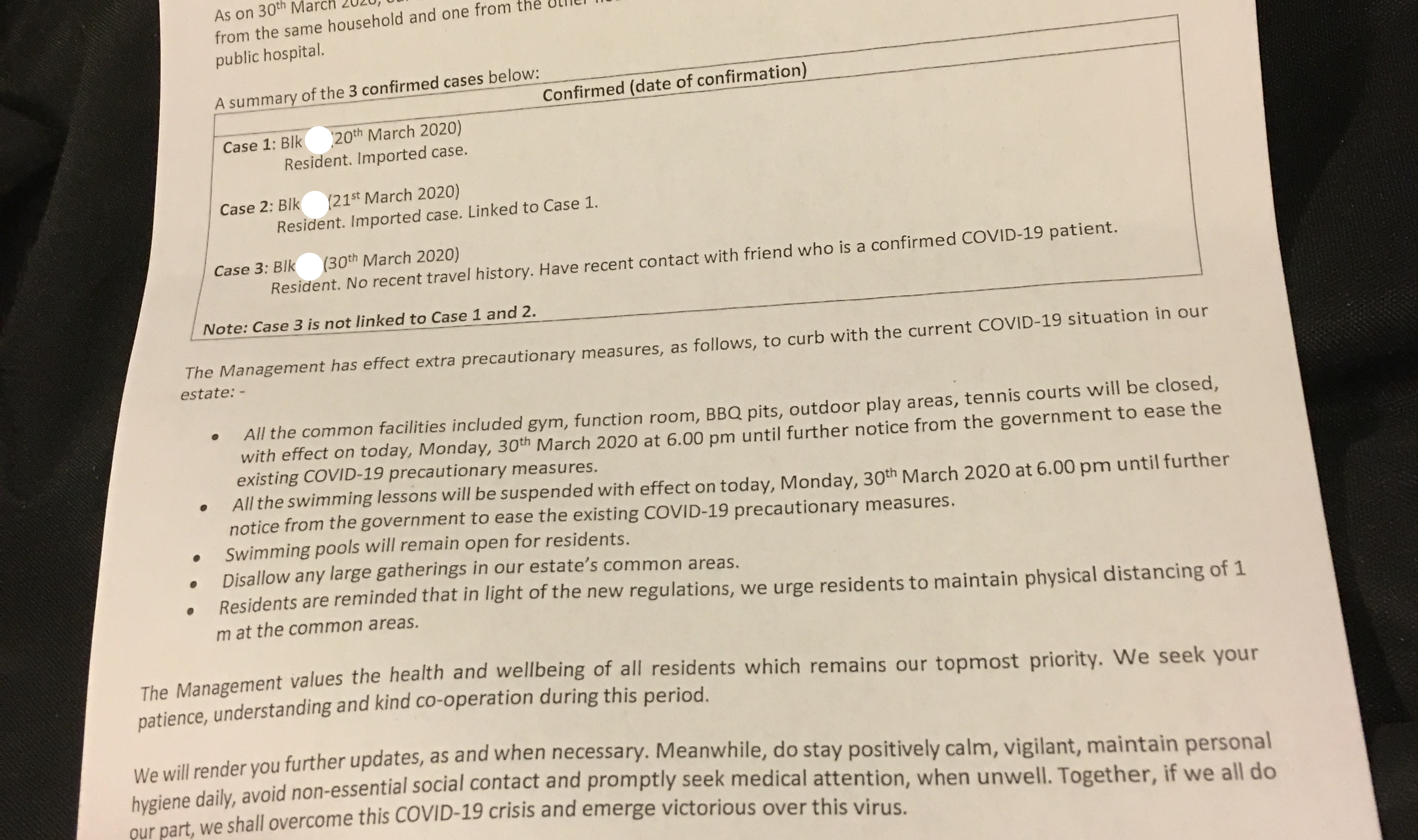
A: I first suspected there might be a coronavirus-positive person in my condominium when I saw red and blue lights flashing outside my window one night. It was an ambulance that didn’t have its siren on, turning into my condo. I couldn’t see where it went after that and kinda forgot about it for a few days until I noticed a note placed at the lift lobby by the condo management saying that a resident had tested positive. It didn’t reveal which block the resident lived in though.
A few days later, I get a note from the condo management stuffed under my door saying that a second resident from the same household had been infected, and that those 2 residents were from my block. And more days after that, I got yet another note under my door saying a third resident from a different household but again from the same block had been infected.
The fortunate thing is that the third and the first 2 cases are not linked (or at least that’s what the last note said), meaning it wasn’t transmitted through the building (or so they think). That is the reason the condo hasn’t been identified as a cluster in the news. I guess all we can do now is wait a month to see if more cases in the same block develop. If none do, then we’re clear.
What did you feel when you first realised you were living in a “contaminated” building? What did you do then?
My first thought was “oh crap” but I was otherwise generally calm because well, it is what it is. Fate. A friend from Hong Kong then advised me to pour a mix of detergent and water into my pipes in case the virus spreads through the pipes like SARS did in Hong Kong so that was the next thing I did. Basically those emotional and behavioural reactions repeated themselves every time I heard about there being a new confirmed case in the building. I have since bought a large container of disinfectant and eventually poured that down the pipes instead of detergent.
The memo Doris found under her door one evening.
How did your sense of panic increase when the cases of infection went from 1 to 2 to 3?
It didn’t really increase. 1 infected feels the same as 3 infected. Basically so long the building is infected, you already feel screwed…
How did this community outbreak affect your daily life? Will you consider moving to another apartment to live temporarily?
I now wrap my finger with a thick wad of tissue before pressing any lift buttons and I generally don’t open my windows as often as I used to (lest someone in my block decides to cough out theirs). I also pour disinfectant down my pipes every now and then which I never did before.
Because the virus seems to be everywhere in Singapore now (a supermarket and a pharmacy had to close recently because of infected employees and there are almost 100 cases of unknown origin here today), I don’t see anywhere else as being any safer. It’s like you can run but not hide, so no, I don’t see moving as the solution.
What is the health status of you and your family members presently?
Oddly, on the night the note about the third infected resident appeared under my door, shortly after I disinfected my pipes, I developed a 38-degree fever that burned through the night. The next morning, I was feeling much better but another member of my family developed a fever. The day after that, we were both feeling normal again with 36-degree temperatures, but later that night my throat was sore and my chest felt inflamed and itchy inside, to the extent that I occasionally felt the urge to cough. Today my sore throat is gone but my chest still feels itchy, though I’m no longer feeling that urge to cough. I am otherwise well enough to be answering this while seated in an upright position and going about my day like normal—within the confines of my home, of course.
What will you do if you suspect you are infected? How likely do you think you will be infected?
I do presently suspect I MIGHT be infected, mostly because I had a fever just days ago, coupled with the fact that the virus has been in my building, and in a supermarket and basically everywhere. But I’ve read enough news reports to know that COVID-19 is seldom detected in the early stages of the disease and that many positive cases end up seeing a doctor more than once before testing positive. In fact, day 5-7 of illness is when it all reportedly goes south and breathing difficulties develop. I’ve been staying home and avoiding people since I got my fever but if I develop breathing difficulties past day 5 or 7, I’m definitely calling a doctor to arrange a non-crowded time-slot.
If I did test positive, I wouldn’t be surprised at all. And not just because of my building. Just the other day, I grabbed a takeaway dinner from a hawker centre that was a short walk away from the supermarket that had the infected employee. And I have been ordering online deliveries from that very supermarket brand too. Who can say for sure where I contracted the disease from if I did contract it?
If the pandemic is not going to stop unless herd immunity is gained, how panicked are you at this point? What is your plan then?
If COVID-19 becomes a regular disease like any other then contracting it at some point would be inevitable and even necessary. If there is nothing I can do to avoid getting COVID-19 then I would like to hurry up and contract it and get the antibodies in my body all set up and ready to deal with future occurrences of it. I’m not panicking at all right now because what’s the use in that? This pandemic has been going on for months now. It’s getting more tiresome than frightening.
If these are the last 30 days of your life, what will you do?
I would quit work at once because that would no longer be relevant. And I would spend the next 30 days spending or giving away all of my money with my loved ones by my side round the clock. When not doing that, I would contact everyone who’s ever meant something to me or made a difference in my life and tell them all the sappy things I never would if I wasn’t dying.
Doris hopes to be able to go out again like before soon. (“To be able to attend events and hang out amongst large groups of strangers like before.”) She can’t say when she will be able to do that though. (“I don’t think anybody can.”)
More interviews with people in other parts of the world coming up next week. Follow the latest in our COVID-19 Diaries series here.
If you’re in a country that has been affected by the novel coronavirus and would like to share information about the situation where you’re at, do get in touch with us here.
Photographs courtesy and copyright of Doris*. Interviewer: Kauai Sponsor or support the COVID-19 Diaries series here. If you found this article useful:
Heather Rowsell is a retiree from the UK living in Spain, 9,767km away from Wuhan, China. She told us how her household has been coping with the National Emergency declared by the Spanish government and also how the 3 of them worked out how to share a single Netflix account.
“At first we were told this situation would last for 2 weeks, Day 8 we were told another 2 weeks were added to it, and a couple of days ago yet another 2 weeks.”
Q: Hi Heather, thanks for speaking with us all the way from Spain! When did you first hear about the 2019-nCoV novel coronavirus and what did you think of it then?
A: The first time I heard about the COVID-19 virus was in January 2020, it was on the news about Wuhan in China with cases spreading very fast. It was also said that a doctor there tried to warn the authorities in advance, and was ordered to say nothing. But as the number of cases grew so fast, people were posting photos and expressing their fear online. Social media announced the truth while their government regime seemed more concerned about an economic downturn and how other countries would react.
Even when it started to spread to other, smaller “hotspots” in China, it would never get to Europe right? Even when experts said it would spread to other countries, it would never get to Europe right? For Europeans the subject hardly got a mention here, life carried on as normal for us. We had sympathy for the Chinese population and could only imagine what it must be like. We did not dwell on the situation at all.
How concerned are you and the people of Spain now? How many are infected or dead because of the virus in Spain at the moment of this interview?
Very concerned, it hit home hard when the shutdown first began, and makes me wonder just how long such a heavily restricted life will last. The Spanish Government is discussing further restrictive measures today, but what else?!
As I write this.. Current figures in Spain: Total cases: 78,799. New cases: 5,564 (last 24 hours). Total deaths: 6,606. Deaths: 624. (last 24 hours).
Spain has the world’s 4th largest COVID-19 outbreak. Second highest in Europe behind Italy. Double the total number of deaths in China.
The situation in Madrid and Barcelona is horrific, beyond critical, the Spanish people there say the system is devastated. There’s an acute shortage of equipment, and believe this or not: Healthcare workers account for 13% of COVID-19 cases, so there’s a huge shortage of medical staff.
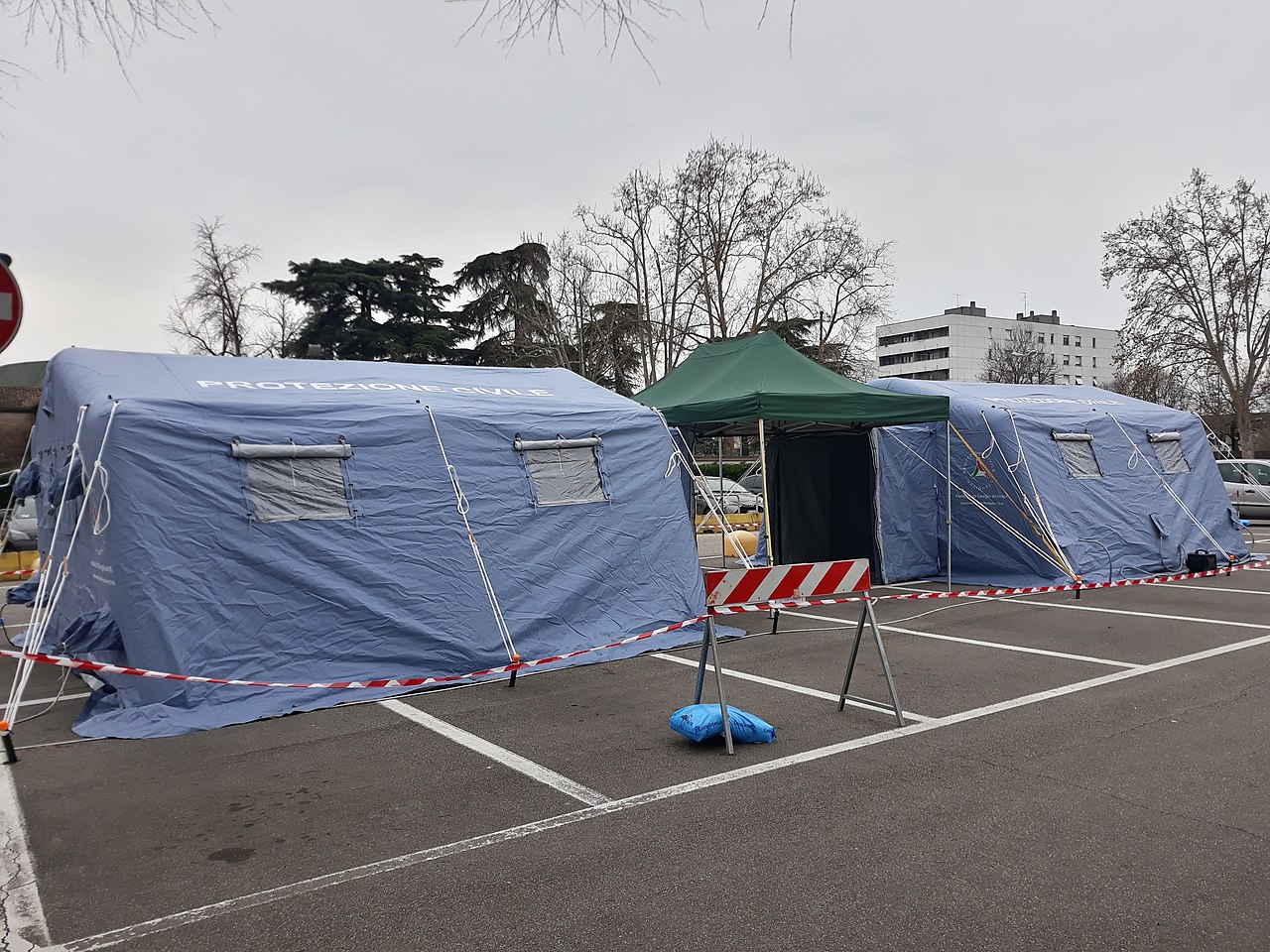
Hotels are being turned into hospitals for those with less severe symptoms. A massive ice skating rink is now a morgue. A huge conference centre is now a field hospital. Coffee shops have turned into food banks, and the army delivers to those in need and helps with sourcing supplies. A car manufacturer is changing production lines to making ventilators and an airline is now building other vital medical equipment. Bear in mind this country has one of the best medical healthcare systems in the world, even prepared for something like this, but not on such a phenomenal scale.
Concern varies from how devastating it is for people, families, especially the elderly on their own, and how the emergency services put their lives on the front line every day despite the risk of contracting the virus.
Experts worldwide talk about “flattening the curve” so that hospitals and emergency services can cope with the number of cases. But look at any chart and beyond a spike the virus doesn’t just go away, it’s still there in a straight line. With a return to free movement are we back to square one with numbers increasing rapidly again?
“La Zenia shopping mall closing down.”
Who were the first few coronavirus infected people in Spain and where did they contract COVID-19 from?
On January 31st 2020 the first confirmed case of coronavirus was reported in the Canary Islands, part of Spain, but not mainland. On the same day Spaniards were evacuated from the place where COVID-19 originated from Wuhan in China, and landed in Madrid. A few days later another case was reported on the island of Mallorca, both had just returned from Italy.
On February 26th 2020 several confirmed cases were reported in both Madrid and Barcelona, mainland Spain. So I can only assume those 2 clusters of the virus originated from Wuhan and Italy.
How did most people in Spain contract COVID-19? Can you tell us about the biggest clusters and how those happened?
I think we’ve all had time to learn the several ways COVID-19 can spread from person to person so easily. It’s the same on a global scale. It might be helpful to know that in the past couple of days 2 more symptoms have been reported. Lack of smell or taste, and that it can sit in the digestive system and cause symptoms similar to food poisoning.
Density of population is a major factor worldwide, Madrid, Barcelona and Catalonia are examples of the authorities being so overwhelmed so quickly, perhaps speed of containment was secondary. Even so, free movement in those huge regions turned into voluntary isolation then enforced isolation in a short space of time. (This happened before the whole country was quarantined).
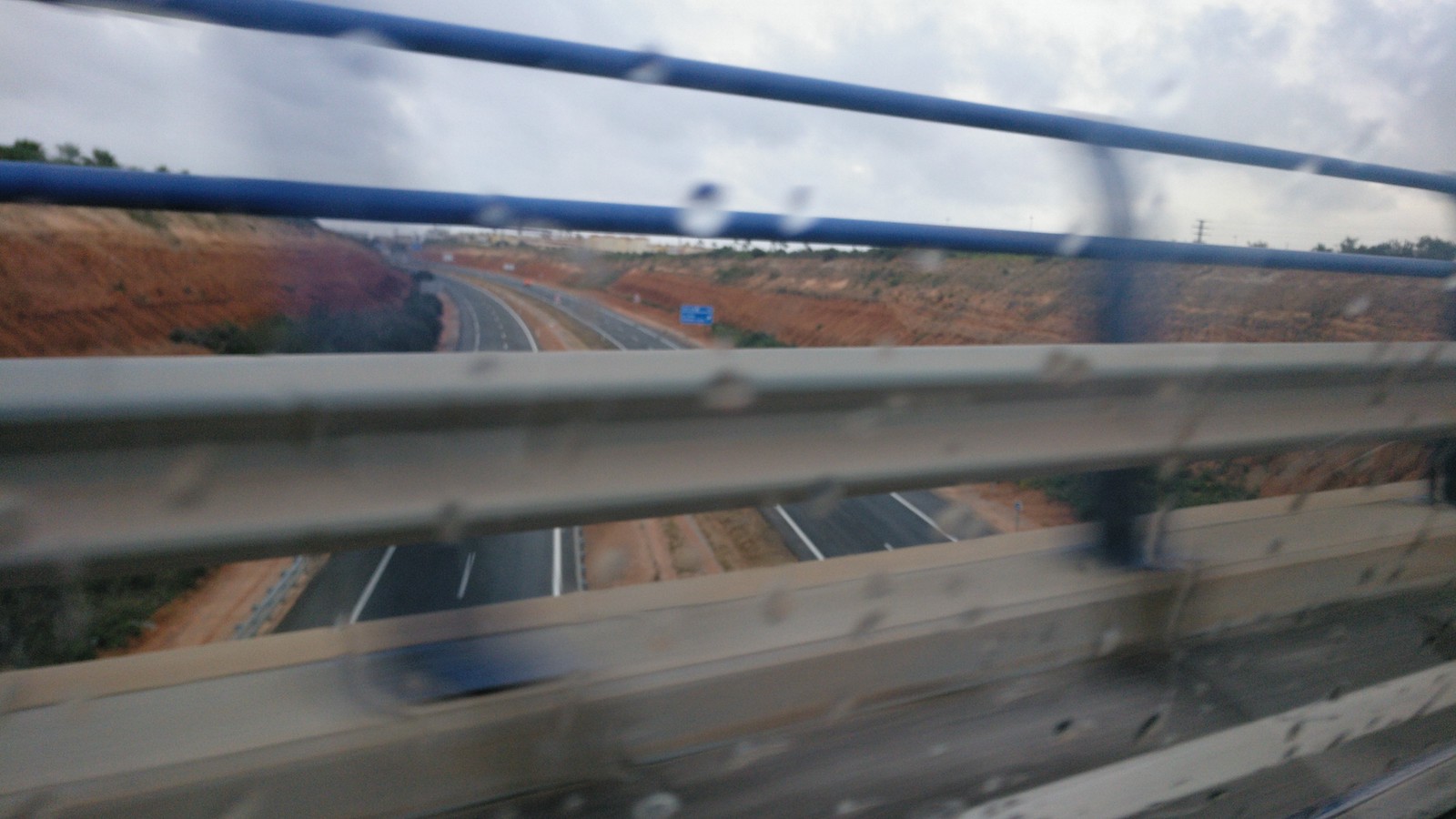
So, for several weeks of emergency quarantine being 500 kilometres away from us, life here on the coast still carried on as normal.
New clusters have recently been reported in smaller regions. Fortunately we have zero cases where we live on the Costa Blanca.
What measures has the government of Spain imposed to keep the COVID-19 outbreak under control? We know the whole of Spain is in lockdown but what does that really mean? What can’t you do and what must you do?
On Friday 13th March (appropriate date) the Government declared a National Emergency, the whole country was initially shut down for 2 weeks, borders closed, airports, and normal transport don’t exist anymore. These strict measures are now Europe wide, some countries have slight differences on travel within their country. Last week leaders of the EU closed all external borders for 1 month.
For us humans this means staying inside and only being allowed out for essentials which include visits to supermarkets, pharmacies, and gas stations. They are the only places that remain open. The few people who have to go to work are those who keep essential supplies available to us (even a till operator needs paperwork to prove where they work). And of course all emergency services are free to drive wherever they need to. Another exception to the rule are lorries crossing borders delivering life’s necessities.
Just one person (the driver) is allowed in a car and has to keep a receipt of where they’ve been shopping in case of being stopped by the police. No unnecessary journeys are allowed, and no taxi services are operating. Banks, solicitors, doctors (doctors surgeries are closed, but we have a local emergency number to call if necessary, and a doctor will come out to the house), dentists, schools, nurseries, post offices, bars, restaurants, hotels, swimming pools, gyms, every beach and all shops that don’t sell food are shut down, including car garages. They are only available to service essential lorries/wagons.
One of our cars is nearing its ITV date—“Inspecction Tecnica de Vihiculos”. If it goes beyond that date the car would normally be classed as illegal on the roads. No problem, it doesn’t matter anymore, there’s nowhere open to get it done.
There must be a few I’ve missed out there but it doesn’t matter considering all we have open are supermarkets, chemists, and petrol stations. No free movement for anything except essentials, let’s face it, that’s all there is available.
Dog owners are the only people allowed out on foot alone, while walking their dog once a day. (We’ve even discussed borrowing someone else’s and taking turns.) Sadly, this is the first time cranes aren’t moving since the upturn here in 2010. Even building sites are off limits.
People are working from home, that’s not a problem, but they’ve had to free up bandwidth for the internet across Europe because everyone’s watching Netflix, YouTube, etc, or making video calls. Here at our casa, our son who’s working from home owns Netflix (and his PlayStation) during the day, and we have ownership of Netflix at night. It works quite well aside from arguing about who’s got the sound bar on too loud. What would we do without Wi-Fi?
Drones with cameras are the only things airborne, and there are many police roadblocks. We wouldn’t be able to drive beyond our province (unnecessary travel) without it being an emergency.
This is a truly bizarre situation to be in when there’s no reported cases nearby. Liberty and freedom disappeared overnight. Sounds draconian? Leaders of other free countries thought so at first, yet within a week they were doing the same thing. Down here on the coast we feel “relatively” safe from an invisible enemy, however it also feels a bit like we’re a collective experiment!
Will this pre-emptive lock down work? Only time will tell, but whatever it takes right? At first we were told this situation would last for 2 weeks, Day 8 we were told another 2 weeks were added to it, and a couple of days ago yet another 2 weeks. A total of 6 weeks so far which takes us to the end of April. But looking at the number of new cases and deaths going up so fast elsewhere, who knows? There are places in this country resembling war zones.
How effective do you think the above measures have been in stopping the spread of the virus? What was done well and what could have been done better?
As inconvenient as it is, at first I thought enforced isolation was a bit much when there are no cases, but now it feels essential. Here on the coast we’ve escaped the COVID-19 crisis. So now, as inconvenient as it is, we feel protected, strict measures have been put in place sooner rather than later. Distance and boredom are now a good thing, even though we all moan and whinge.
After watching other democratic countries dither about freedom vs human rights, let me tell you: There’s “advice” which goes ignored by some idiots, therefore defeating the objective. There’s mandatory lockdown between people, businesses, monitored provinces and closed borders which hopefully works.
IF and only IF full mandatory lockdown procedures are put in place soon enough does protection have a chance. For coastal areas in Spain, they may have timed total isolation right. But inland it’s too late, small clusters have appeared outside of Madrid and Barcelona.
I know it’s too soon to say, but as yet cases are still rising rapidly in the most affected areas I’ve mentioned, the death toll every day is alarming. Surely those figures should be dropping by now, but as yet they’re still rising.
This is Heather.
2 Spanish ministers (the minister for territorial policy, Carolina Darias and the equality minister, Irene Montero) have tested positive for the virus. How do you think that happened?
Until recent days, senior officials and dignitaries haven’t used the elbow bump on camera enough. Seems like they prefer grand announcements to be made while standing next to each other, shaking hands with someone who may have the virus, in what may be a place with contaminated surfaces.
I noticed this continued long after they’d announced their citizens should refrain from all of the above and use the elbow bump. While the rest of us are overloading Skype for conversation and video calling, there they were, doing exactly what we’ve been told not to and not doing exactly what we’ve been told to.
A couple of days ago it was announced that Boris Johnson and the UK health minister both have the coronavirus. Oh the irony, I have no sympathy for those who arrogantly thought they were immune, it’s a kind of “justice” for ignoring the limitations they set for everyone else. For goodness sake even citizens of this country and others who do the double kiss thing gave that up yonks ago, but there’s more precaution required than that.
However, it seems they’ve finally got the message. I saw a video call with a Spanish minister in voluntary self-quarantine on the news last night. Donald Dump is moaning about being in the White House on his own playing with his Lego wall, and we the people have to put up with this crap.
Another disappointment came today: Prince Charles got the coronavirus and self-isolated for just 1 week. The rest of us Europeans have been told 2 weeks… Doctors have been following the rules, perhaps they should be in power.
What is the status of food, water and medical supplies in Spain right now? Are there any shortages? What is the plan for those shortages if so?
In our area, Day 1 of lockdown was all about panic buying, I have photos of empty shelves. We even bought serviettes as toilet paper! Since then we were told supermarket supplies would not be affected.
5 days later was a test run of this theory. Hand sanitiser and plastic gloves provided at the door plus a wipe-down of the trolley with anti-bac. The shelves were full, and the place itself devoid of people. We even had 4 different makes of overpriced toilet paper to choose from! What more could you ask for while in quarantine?
BUT, another 5 days later was a whole different story, I’d say shelves were almost half empty and no toilet paper of any kind. I really wish I could remember exactly what day and time it was “the day the shelves were full”. It might be the golden hour. Conclusion: Panic buying has stopped, but people are stocking up more than usual.
My husband just went down to the supermarket in our car, and our son in his (only the driver in a car). But they forgot about keeping 2 metres distance from each other while shopping, and got a stern telling off from a security guard.
At first we thought a supermarket visit might be a possibility for social supermarket gatherings. For instance, message your friends round the corner: “I’m setting off now, see ya down the toilet paper aisle in 5 mins.” NOPE, even standing at opposite ends of the aisle wouldn’t work either, besides, what else is there to shout to each other about except which series you’re watching on Netflix, and on a scale of 1 to 10 how insane you feel today.
Today’s report about what’s on the shelves was interesting: well stocked on food, but no toilet paper, are people resorting to eating it now? There’s plenty of bottled water here on the Costa, there always is and many people have filter taps like us. No problem with water pressure either, our fresh water comes from desalination plants out at sea, and medical supplies are not affected.
Have you and those around you done anything to prepare for the possibility that the novel coronavirus pandemic might get worse?
To be honest, with reference to the pandemic getting worse, there’s nothing we can do except donate to charity, adhere to quarantine rules and watch the news. There is no cheating the lockdown here, everyone knows how critical this situation is, so it’s a sit and wait situation for us. Meanwhile the coronavirus pandemic just gets worse in the cities. The number of cases continues to rise every day.
How has the COVID-19 pandemic affected your life and that of those around you?
Self-containment, social distancing, washing hands more often, cleaning surfaces with anti-bac more than usual. Most of the time is spent online every day. Oh, and I’m still writing my blog, focusing on satire helps! I couldn’t be bothered doing a workout though, those days are gone for now. Forget maintaining my abs, the need for entertainment is more important.
It’s now got to the stage whereby we know the only places at any level of risk are the supermarket or the chemist. Gas stations are ok, no-one is allowed in, there’s a kiosk where you pay, and if you need anything from inside, just say and the guy passes it to you. Thankfully the risk is minimal, but who knows if ultra early quarantine works? We’ve all been told to use debit cards, not coins.
What will you do if you or those who live with you develop symptoms of the virus? What do the authorities of Spain want you to do?
To be honest, we haven’t seriously discussed the possibility of any of us getting the virus, probably because it’s so far away. Naïve? Perhaps, but we know what to do, isolate (whoever) in one room. However, even if the symptoms were mild, I wouldn’t take any chances about severity, ring the emergency services ASAP.
The authorities have given us regional numbers to call and as previously stated a doctor comes to your house to test and assess (everyone).
There’s 3 of us living in our house, my husband and I both took early retirement, and our son is an estate agent working from home now. As you can imagine there isn’t much for him to do except keep in touch with clients who can’t leave their own country, and wouldn’t be allowed in here!
“Empty main roads in rain!”
If you did contract COVID-19, what do you think your odds of surviving it are and why do you think so?
If I contracted COVID-19 I´m guessing my odds would be fairly good. All 3 of us have taken vitamin C and Vitamin B (iron) in soluble form for years. We each have our own exercise routines, which admittedly have gone out the window for 16 days. None of us are obese or have any underlying health problems. The last time I had a cold was about 2 years ago.
I’ve heard people talk about starting to take vitamin C now, sadly it doesn’t work that way, in order for it to improve immunity a person has to have been taking it for years, every day and not in tablet form. How do I know all this? My grandmother was a chemist, and a pioneer of how vitamins and minerals can help the immune system in the 1930’s. Never as a cure for anything other than a basis of resistance and prevention if taken regularly.
When do you think this COVID-19 pandemic will end and why do you think so?
Dr Fauci is the leading expert of infectious diseases in the USA. I watched an interview of his today where he stated that this was the worst case scenario of any respiratory borne pandemic he has ever studied. One that easily spreads from one person to another with a high degree of fatality and morbidity. He called COVID-19 devastating. Even this leading health expert, the guy who’s advised several different presidents about infectious diseases, knows several outcomes. But not which one. He also said the virus is the clock and we can’t know when a turnaround will occur because it’s too unpredictable.
So basically my answer is this, if he doesn’t know, then neither do any of us.
What are the best and worst examples of humanity you’ve seen since the COVID-19 crisis broke out?
In Spain, the best examples are the doctors, nurses, specialists, police, paramedics who are willing to enter this war zone every day, work for many hours, put themselves at risk of infection, and continue to do so. Even though their own colleagues are contracting this virus in the thousands. 14% of COVID-19 cases, are now medical staff.
Retired doctors and nurses going back to work. Coffee shops providing food for emergency services. Seamstresses are making masks. Car manufacturers switching production lines from cars to ventilators. Plane manufacturers making medical equipment. Donated food bank collection points, usually at ex-restaurants, delivered by taxi drivers. Overstretched emergency services, paramedics, police, helping in any way they can. The army, responsible for turning hotels into field hospitals. An ice rink into a morgue. A conference centre into Europe’s biggest field hospital. Disinfecting empty train stations, airports, and transport of desperately needed equipment in army trucks.
All these brave heroes get a round of applause, a tribute for their services throughout Madrid and Barcelona every night at 8pm. People sing from their balconies and let their gratitude be heard. It started in Italy, and other EU countries now do the same.
There´s even a YouTube video where 3 police cars drive down a road in Spain with sirens blaring and lights flashing. Then they all get out and sing in the road while one of them plays a guitar to the people, for the people. (They were on a shift change so don’t judge.)
Truly heart warming, it brings tears to my eyes.
Unfortunately the worst I’ve seen is a video of drunken Brit yobs fighting with Spanish police officers in Benidorm. Apparently they tried to break into a (closed bar) after they’d worked their way through several bottles of god knows what from a liquor store first.
Why is it always the Brits? Truly heart breaking.
Which 3 items or people are most useful for you right now?
2 out of 3, my husband and son, which is all about companionship, not usage, caring for each other remains the same under any circumstances.
And there’s a number 4, keeping my sense of humour alive.
Lastly, what have you learned from this novel coronavirus outbreak that you didn’t know before?
What I’ve learned from the coronavirus is to remain positive, and stay safe while in quarantine. It’s also made me realise how precious FREEDOM is, and how under normal circumstances we take it all for granted.
Heather has no more goals for the future (“I don’t need goals anymore, I’ve been to so many countries in my life and experienced everything on the average bucket list.”) but you can find out what she gets up to in Spain on her blog, twobritsinspain.com or ask her more about the situation in Spain using the comment box below.
Tomorrow we speak with someone closer to the pandemic, who is living in a building with 3 infected residents. Follow the latest in our COVID-19 Diaries series here.
If you’re in a country that has been affected by the novel coronavirus and would like to share information about the situation where you’re at, do get in touch with us here.
Photographs courtesy and copyright of Heather Rowsell. Interviewer: Sy Sponsor or support the COVID-19 Diaries series here. If you found this article useful:
The nun famously known as ‘Saint Teresa of Calcutta’ decided to give her life to being a missionary nun at age 18, attributing it to the will of God. She ended up roaming the slums of India helping the poorest of the poor. This is a timeline of how her life played out before and after her moment of divine inspiration…
1910 – Agnes Gonxha Bojaxhiu is born in Skopje, Macedonia. She is baptised into the Roman Catholic faith a day after she is born. Her parents are Albanian. Her father owns part of a construction company, has other businesses which buy and sell goods like leather and sugar, is a member of the town council and is often away for work. Her mother spends her free time helping the neediest people in town. She has a sister who is 6 years older and a brother who is 3 years older.
Earlychildhood – Agnes accompanies her mother to help the poor on the streets. The family attends the Church of the Sacred Heart which is on the same street as their home and prays every night. Agnes and her sister sing in the church choir. She goes to school at Sacred Heart and later goes to different public schools. She learns different languages and contracts malaria and whooping cough.
Age8 onwards – Her father dies unexpectedly. Her mother suspects he was poisoned by political enemies but that is never proven. Her father’s partners refuse to give a share of her father’s business to her mother. They are left with only their house. Her mother starts an embroidery business. The family turns to their faith and begin attending Sacred Heart almost every day. Once a year, they go to the shrine of the Lady of Letnice in the mountainous area of Montenegro.
Age12 – Agnes believes God is calling her to a spiritual life and tells her mother about it.
Age14 – Agnes teaches Sunday school to children at church, and joins the ‘Sodality of the Blessed Virgin Mary’ to honour the mother of Jesus and pray and serve the poor. Her brother leaves home to attend military school.
Age18 – She tells her mother that she is interested in becoming a missionary nun and attributes the choice to the will of God. Her mother and brother are concerned but she persists anyway. She applies to join the Sisters of the Institute of the Blessed Virgin Mary, also known as the Loreto Order, which works to bring Christianity to the Hindu and Muslim population in India. She is accepted.
Thatsameyear – She takes a train to Zagreb, Yugoslavia with her mother and sister. There, they part ways. She never sees her mother or sister ever again. With another young woman who is joining the Loreto Order, Agnes takes a train to France and is received by the Mother Superior (nun in charge) of the Loreto Order house in Paris. Because they don’t speak French, an interpreter helps them out. They are then sent by train and boat to Dublin, Ireland, to learn English and study how to become nuns. Once done, they take a train to Italy and board a boat to travel to Bombay, India.
Age19 – Agnes arrives in India with her fellow young nun. They sail to Calcutta then take a train to Darjeeling where they reside at the Loreto Convent in Darjeeling. There, she studies English, Bengali (the language of Calcutta) and Hindi (the official language of India) for the next 2 years, while also teaching children at the convent school.
Age21 – Agnes takes her first vows and becomes a nun. She is now Sister Teresa, named after a French saint. She returns to Calcutta and teaches girls at St Mary’s which is located within the Loreto Convent. She would do this for the next 17 years.
Age27 – She takes her final wows as a nun.
Age33 – The Bengal famine happens. Thousands of people from the countryside enter Calcutta in search of food. Sister Teresa prays for the poor and organises a local chapter of the Sodality of the Blessed Virgin Mary at St Mary’s to gather school girls to deliver food and medicine to the poor once a week.
Age34 – The Mother Superior at St Mary’s falls ill. Sister Teresa takes over the Mother Superior’s duties and becomes known instead as Mother Teresa. She would be identified by that name for the rest of her life.
Age36 – Hindus and Muslims fight in the streets of Calcutta for many days. 5000 people are killed and many more injured. Food is scarce and Mother Teresa leaves the convent in search of food, seeing the horror on the streets first hand. She manages to find a British truck to give the girls rice for several days but the scenes of the street remain on her mind even as she goes to her annual retreat in Darjeeling several weeks later. On the train, she receives a message from God to go into the slums and work with and live with the poor. She asks a local priest for help to approach the archbishop of Calcutta to allow her a leave of absence from the convent but the archbishop tells her to wait a year to see if that’s what she really wants.
Age37 – After the year is up, she still wants the same and approaches the archbishop again. It takes another year before he allows her to do so, but only if she would do it on a one-year trial basis. They are to decide later if she should continue. She agrees.
Age38 – Mother Teresa removes her habit, puts on a sari and leaves Loreto Convent to go into the slums of Motijhil. She has only 3 rupees on her and basic medical training. She finds a place to sleep at the Little Sisters of the Poor—a Roman Catholic organisation that helps the elderly. A priest there also gives her a little bit of money. In the day, she teaches children the Bengali alphabet by drawing in the dirt with a stick. Soon there are children gathering around her lessons and the families of those children soon donate chairs, slates, chalk and a table. She now has a school. As a reward for attending classes and learning lessons, Mother Teresa gives out bars of soap and rents 2 rooms for her school with the rest of the money the priest at the Little Sisters of the Poor had given her. Through the local priest, she gets to stay in a spare room of a local man called Alfred Gomes for free.
Age39 – The archbishop gives Mother Teresa permission to continue living in the slums. 10 of her former students approach her and offer to serve the poor too. Gomes builds a new room and bathroom to accommodate all of them. Mother Teresa applies to Rome to form a new order of nuns called the Missionaries of Charity.
Age40 – Missionaries of Charity is approved. They vow to remain poor, chaste and obedient, and also to serve the poorest of the poor.
Age42 – Mother Teresa approaches city officials for a place to establish a home for the dying. They give her an abandoned building behind a large Hindu temple. The Missionaries of Charity scrub the floors and walls and bring in beds. One week later, the home for the dying opens. It’s called Nirmal Hriday—“the place of the pure heart”. Mother Teresa allows dying patients to receive the rituals they desire instead of trying to convert all to Christianity and soon the Hindus next door are offering to help.
Age 43 – The order of the Missionaries of Charity is outgrowing Gomes’ home. The archbishop helps her buy a building in Calcutta to serve as its headquarters.
Age 45 – Mother Teresa opens a home for orphans and abandoned babies too. She also opens a clinic for lepers, brings in a van to act as a mobile treatment centre and helps to build a village for lepers to live on their own. She funds this village by selling the car the Pope donated to the Missionaries of Charity when he visited India.
Age55 – The pope gives Mother Teresa permission to open Missionaries of Charity houses all over the world. Soon, houses open in Venezuela, Italy, Australia, Africa, England and the United States.
Age59 – The BBC makes a film about Mother Teresa’s charity work and soon money for the Missionaries of Charity comes in from all over the world.
Mother Teresa (aged 75) with President and Nancy Reagan.
Age62 – Mother Teresa receives a letter from Albania sent by her sister. Her mother is living there and very ill. Albania does not allow its citizens to travel freely and might not allow Mother Teresa to return to India if she did go there. Mother Teresa chooses not to go. Her mother dies later in the year.
Age63 – Her sister dies.
Age69 – Mother Teresa wins the Nobel Peace Prize for “bringing help to suffering humanity”. Her brother, who had been living in Italy, travels to Norway to see her receive her award. She becomes world famous.
Age71 – Her brother dies.
Age72 – Mother Teresa leads a group to the war zone of Beirut to pick up children and carry them to Red Cross cars. These children are taken to a school the Missionaries of Charity had opened there 2 years earlier.
Mother Teresa aged 84.
Age87 – Mother Teresa retires from her post as head of the Missionaries of Charity in March 1997, after a decade of heart attacks, malaria and pneumonia. She dies that September, while still in Calcutta.
2003, 6 years after her death – Mother Teresa is beatified by the Catholic Church and given the title Blessed Teresa of Calcutta.
Leanne is a popular beauty Instagrammer in her 40s and a mum of 2 teen boys. We asked her what it’s like being older than 40 and learned about the importance of self-care and self-love.
“At age 45 or so, weight control became challenging.”
Q: Hi Leanne, thank you so much for being here with us. Could you tell us a little bit about yourself and how old you are now?
A: Thanks for having me. I am a mom of 2 boys (19 & 15) and I will be turning 48 this July.
Leanne in her 20s.
What are your current daily and weekly routines like?
My day revolves around my family, friends and work. As the boys grow older, I’m beginning to have more time for myself. I indulge a little bit more on my hobby in photo-taking, spending longer time for skincare and taking more coffee breaks during work. I start my day at about 5am to prepare my son for school and a round of skincare (daily masking) before the morning nap at 7-9. Thereafter, work starts and there will be breaks (IG, tea time, meet-ups) in between. I’ll hit the gym or do brisk walking in the park at 5pm. Followed by dinner before 8pm and a bedtime massage for my son (for his tired legs instead of story time). I have a weekly date night with hubby and look forward to my elder son returning home from the army every weekend. Lots of cooking and baking at home but on Sundays, a visit to our favourite Italian restaurant after church is a must.
How is your body different from what it was like at age 30?
In my case, more obvious changes are on the face at age 30. In my mid-30s, the eyelids began to feel heavier and maintaining the V-shape face and skin-firming became harder. Physical changes got more apparent as I entered my 40s. And at age 45 or so, weight control became challenging with the need for stricter diets and exercise.
Leanne in her late 20s.
What brings you joy these days?
Many things. Calming scents & kind gestures, a good conversation, a hello from an old friend or a poem that speaks to me. Family gatherings or meet-ups with friends. Coffee and tea, sunrise and sunsets. And weight loss, haha! It always makes me smile.
Which item, bought or received in the past year, has been most useful to you?
Contour stick—it becomes your best friend as you age, one that helps you slim down instantly and define your face shape better despite the “less firm” skin.
LUCK-IT will earn a tiny commission when you purchase this product.
Can you list 3 things you realised or learned only after age 40 that you didn’t know before?
That beauty transcends time and age. It doesn’t stop at “youth”. It is not that scary after all. Know that there’s so much in us, so much we can give at every stage of our lives. And that, makes us beautiful.
Which 3 people or things in your life are most important to you right now?
My family and friends.
Leanne in her early 40s.
What regrets do you have?
None I suppose because it’s never really about making the right or wrong choices but rather, make your choices right [for you].
They happened for a reason. It made me the person I am now.
Leanne aged 47.
What do you think those not yet 40 should be doing while they still can?
I thought about this question really hard but there’s nothing that I can list. At 40, I believe you still can do anything you set your heart to achieve. But in terms of things you should start young, it’s to have self-love, practice self-care and create memories. Take good care of your skin (especially eye cream), establish your beauty space and routine, work smart but not short-cuts, cherish moments and forgive your mistakes, don’t be too hard on yourself.
LUCK-IT will earn a tiny commission when you purchase this product.
Lastly, do you think about death? And if so, what do you think of it?
‘The afternoon knows what the morning never suspected.’ – Robert Frost. I see youth as morning, middle age as afternoon who is a little wiser than morning and when death comes like night fall, we watch the stars twinkle.
At the point of this interview, Leanne hoped to be able to take a year off to go visit another country, “travel with my camera and take time to appreciate the beauty that surrounds us”. We cannot say when she will be able to do that with the pandemic going on but you can find out when she does by following her on Instagram or asking her using the comment box below.
If you would like to share your thoughts on being the age you are, do let us know here. Or read what it’s like to be a different age here.