• How I Met, Married and Raised A Multi Million-Dollar Business With My Wife

    At age 20, Rishi Israni met a girl at a cooking event in University and fell in love. 4 years later, they got married and eventually began working together on a business that would go on to make millions of dollars with its flagship household product—the Rotimatic. We pulled him aside to ask for his advice on doing big business with life partners.

    “The first time we met, we chatted for about 5 to 6 hours, and then I said, “I’m going down to the vending machine to get a Coke, do you want to join me?” And she joined me.”

    Q: Hi Rishi! Thank you so much for making the time to be here! Okay so tell us, how did you meet your wife and what did you think of her when you first set eyes on her?

    A: She was the roommate of a friend I was on a committee with. I saw her a few times and she always came across as somebody who had a lot of zeal for life. Like I still remember her smile when I close my eyes—those moments I clearly remember. It just started like “oh, here’s another human soul who is very bright” and luckily, because of her roommate, I got to interact with her. We were trying to organise a large function, trying to cook for close to about 150 people for the first time ever, and her roommate was supposed to turn up but she was not well so Pranoti turned up. That’s how we got to know each other.

    How long did it take for you to ask her out on a date? What about her made you want to ask her out on a date and how did you actually do the asking?

    There was really no date per se. I remember the first time we met, we chatted for about 5 to 6 hours, and then I said, “I’m going down to the vending machine to get a Coke, do you want to join me?” And she joined me and we talked again for the entire night. So I think from the day we met, the first date was I think a week after, and within the next few days, we sort of knew that we were going to get married to each other. So it was like a whirlwind romance of sorts.


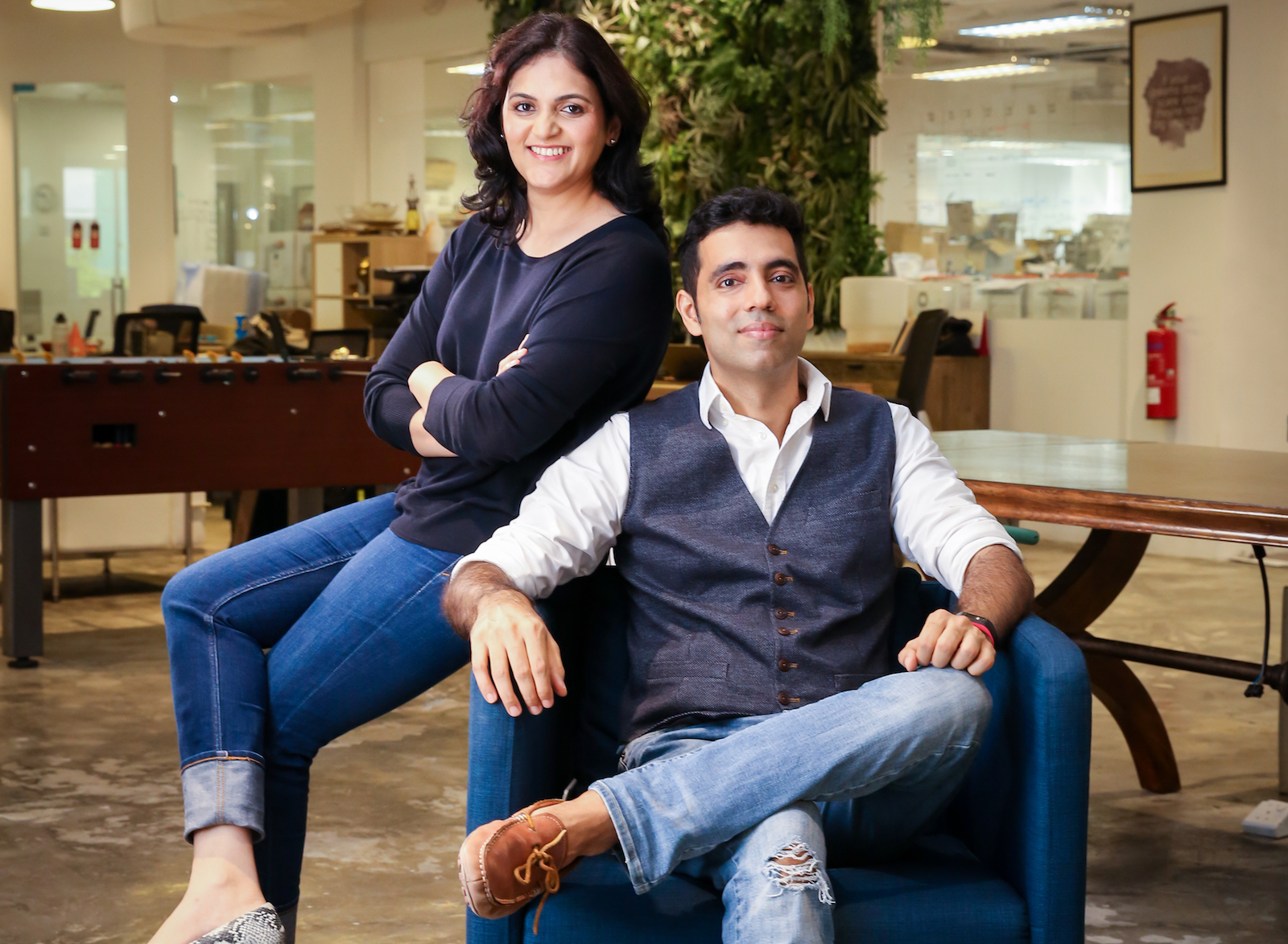
    Rishi Israni is co-founder of Zimplistic, the company that produces the Rotimatic.
    Rishi Israni is co-founder of Zimplistic, the company that produces the Rotimatic.

    How did the first date go? Did you think then you would want to marry her and start a business with her?

    Well, marriage, yes, certainly did cross my mind. But business, in the first date this was not something I thought of at all. The thing that attracted me to her was that she’d always been an engineer who wanted to solve problems. And she always used her own mind rather than just subscribing to the general narrative. She always understood that whatever the general narrative was, wasn’t always correct or doesn’t apply to you as is. So that is the thing I still find very attractive: she thinks on her own and has her own point of view.

    How and why did you eventually propose?

    There was no proposal. I like to believe that she is the one who proposed while she likes to believe I proposed, but actually, none of us proposed. And nobody ever asked, “Would you marry me?”—it was assumed. The bond, the chemistry was just so strong that we just assumed that we were going to get married at some point. Then, parents came into the picture.

    I had graduated, I was working, and she hadn’t even graduated and we had started thinking where she would live after she graduated, would she live with friends, etc? Parents intervened and said she is graduating, she’s going to move out of university so you’re going to get married. And I asked myself, do I have a reason to not get married? And it was the same—getting married or not getting married, it was the same thing. So, we were all right and we just got married.

    Was doing business together ever on your mind at that point?

    Oh yes, absolutely. I always wanted to start a company. Pranoti always wanted to change the world and do something, but her articulation was never to start a company. But I wanted to start a company and build a business, and that had been the case right through university and even when I was growing up. I knew I didn’t want to work for somebody. So right out of university, for a year I was trying to find something, I couldn’t find anything, so I took up a job for a year and a half. That job, I quit 3 or 4 times. And I went back to the same job. I would go out, and I would get scared or realise it wouldn’t work or I do not have the money or the correct understanding—initial whims can be misdirected—and I would go back. Finally, after the fourth time, my boss said, “Look Rishi, don’t do this again. This is the last time.”

    I never thought I’d ever work with Pranoti because our fields are so different. I am a software guy, she’s a mechanical engineer, and in the initial days, I was just interested in software. My first company was called tenCube, I started it with a few of my friends from NUS [National University of Singapore], and I sold that company in 2010. Zimplistic started in 2008 so I didn’t start Zimplistic. After I sold the company, Pranoti wanted me to come over, and there was a lot of negotiation because I was in a very difficult situation. In an acquisition you have some sort of commitment to your acquirer, to the team, to the company and to the product, so if you leave earlier on it’s not great. I was torn. Pranoti was also reaching the stage where Zimplistic was getting too big and it required software leadership, so I took the big decision and joined Zimplistic.

    So how did the idea to do business together come about? Was it you or she who proposed to do so?

    So when Pranoti decides on something, she will just get it. She is that determined. She knows how to convince and persuade one. She must have convinced me for a few months to join her. I was busy with my company, she was working on Rotimatic, we would talk about things but just on a very macro level because it was a different world and I was very busy. Once I sold my company, Zimplistic was running out of money, she was trying to raise money and I was trying to help out as an outsider, and I think that is when she and I realised, I must jump in, or it will get much harder. It was a very complex problem she was trying to solve.

    How did you figure out how to work together? Did you have any major problems along the way and if so, how did you resolve those problems?

    In the beginning, it was very difficult. I came in and I wanted to work on different challenges in my own way, from the way project management is done to different tools—the software industry is more tool-centric, the mechanical world is not as tool-centric, and now I realise why. Also, in the first year, she would mention, “This is my baby, you don’t really understand my world yet!” And I used to be a little more brash and arrogant like, “Oh? I have more experience in a start-up!” I think it took us one year to understand each other. But, I think the disagreements were momentary because we had respect for each other and different skill sets along with different strengths. Both of us took the time to understand each other.

    What are the best parts about running a business together with your wife though?

    There are many, many, many good parts. At the end of the day, what really matters is striking that work life balance and being able to spend time with the people you love. And running a business together, you get to be with the person you like or love all the time. So that’s phenomenal. The other thing is, when you are going through your ups and downs, they understand why. Some negatives also exist like that both partners may be going through some problems at the same time—so that’s another challenge you need to learn how to handle.

    How different are your routines now that you’re working on a business together, as compared to before when you both had separate jobs?

    I think when we both had separate jobs, we didn’t even have kids, so it was slightly different. We would see each other much later, many times after dinner, and I was also working till much later. Now, it is very different. Sometimes we catch up during the day for lunch and we get to manage our kids better—we go home early, spend time with the kids—so basically the juggling of work is much easier. So I feel, as a father, and Pranoti as a mother, we spend more time with our kids than most people with jobs. So this is a phenomenal outcome.

    What about weekends? Have those changed, and if so, how?

    Weekends haven’t changed much. They remain more or less the same. It is just that now you have somebody else to talk to about the same problems and the same challenges and it’s actually more exciting. I feel that most couples don’t have many things to connect at an intellectual level. They might be romantically connected, but intellectually, sometimes, they don’t have common interests. And now that Zimplistic and product innovation are our interests, they keep us much closer together.

    What advice do you have for couples hoping to start and run a business together?

    I say this to many people–what most people don’t look at is that co-founders, they are also a couple in a way. By the end of it, they go through so much ups and downs, they end up having a very strong bond. And sometimes, if you look at the start-up world, there’s a lot of falling out amongst co-founders. They go through the same cycles so you should just regard your spouse with an objectivity. Know that the ups and downs, they are not just because of your spouse—it would be exactly the same if they were somebody else and not your spouse. For your spouse, the silver lining is, if you have a strong bond, you will definitely sort it out and get over it. Sometimes with a co-founder, you just can never bridge that gap. My only advice would be that one must know and be able to assess whether the bond is really strong or not. If so, it’s an enriching experience. Otherwise it can pull you further apart.

    Can you map out a recommended plan of action for the above couples to follow?

    A tactic that has worked for us is, ideally, have complimentary skills. That’s the best. If both partners have the same skills, then it’s going to be much harder. It’s the same with a co-founder. When both people want to do the same things, the difference of opinion is too much and it’s much harder. Sometimes people start with a spouse because it’s the easy way out. Like, oh I can’t find anybody else, let me start with my spouse because working with her would be cheap, free labour, right? It shouldn’t be one of those reasons at all. That’s very hard to sustain and you lose respect over time if your spouse is not capable.

    I think one thing you should not do is get yourself into a situation where you end up losing respect because you didn’t think it through. For example, if you get your spouse to do business development but they are not the sort who can do it and they don’t want to do it, but are just doing it because they want to help out a little bit. Most couples are not very honest with each other but if two people can be absolutely honest with each other, that is a very strong foundation to start on. Otherwise it can derail your family life.

    How did growing a business with your wife change you as a person? What do you know now that you didn’t before?

    Pranoti has always had a more balanced perspective. I’m a bit more of an extremist. I think that is where it’s really helped me. Most people get swayed by either their greed or fear, and they can’t handle them. Pranoti has taught me balance. I have a tattoo on my hand that says ‘Play The Game’ and it’s about always making sure you know that all you can do is just try very hard. Not every time things work out but that’s part of the game; it’s okay, you’ve tried hard. So Pranoti keeps that perspective and even Zimplistic alive. If you see her around me, she’s always the more chirpier and happier one. I’m a little bit more serious.

    If you could go back and replay your entire journey of starting and growing a business with your wife all over again, what would you do differently?

    I would be less stressed about things.

    What were you like as a child? What about as a teenager and young adult? How did you change at every decade? Or did you not change?

    I think I’ve changed a lot. As a teenager, I always felt like I understood things at least a year later than I should have understood them. Like whatever was taught in Primary 3, I would only understand in Primary 4. It took me one year longer than everybody else because I would just go deeper and deeper and deeper into my head and I would just keep talking to myself and try to figure things out by myself. Slowly, over time, I realised most people don’t go so deep and they are more happy with a quick, simple answer. The other thing I realised in my later years was that I was very careless about sustained discipline work. I always thought I could just study at the last minute and do okay. And the truth is, I always did okay. But I only realised later that that okay was not okay. Because I really enjoyed my subjects; whatever I studied, I really liked those subjects. But studying at the last minute, I didn’t get all the knowledge I needed. I realised if you do things properly, compound interest has merit when it comes to knowledge accumulation. And it makes a huge difference.

    At every decade, I realise more that almost every human being is the same. I actually believe that people are not different. They all have the same fears, they have the same aspirations, people are just the same. So it just helps me connect with human beings better and be more comfortable because we’re the same, so there’s nothing to hide or either be arrogant about or be ashamed about.

    Rishi and his wife, Pranoti Nagarkar, who we interviewed last week.
    Rishi and his wife, Pranoti Nagarkar, who we interviewed last week.

    Which event in your life made you who you are? Why do you think so?

    There was this one very, very big event… So computer science has always been a very old lover of mine, I’ve always enjoyed computer science, always loved it, and I was also extremely undisciplined. For example in NUS, they had these mid-term exams and I would either just not go for them or not study for them because I came from the thinking that only the final exams matter—that’s what the education I came from taught. And I knew in my heart that everybody would do the past year papers before the exams and I thought, you know, why should I do the past year papers? I thought it would be cheating by doing the past year papers. It’s a stupid thought, thinking back now, but I thought it wasn’t really the right thing to do so I never really did very well. I did not end up getting honours and that was the turning point because I realised it doesn’t really matter how much you like something, it doesn’t really matter how good you are at something, sometimes you have to work within the system. You can’t always beat the system.

    Which 3 objects/people in your life can you presently not live without and why?

    I think people would be my son (I should say sons but my newborn is too new, we are yet to get close), my wife and my family. Objects would be my computer.

    Of all the objects you bought in the past year, which has been most useful? Why?

    All objects are useless. I think the one object that has been most useful, that I buy every 1-2 years is my Kindle. I have 3 or 4; I keep one in every place. One in the office, one in my bedroom, one of the other bedrooms, because I like to read every now and when I feel like reading I don’t want to be in a situation where oh, I left it in the office or it is in the other room with my son who may be sleeping or my wife is in there, so it’s just good to have a few.

    Which place in Singapore is your favourite? Why?

    I have very, very fond memories of NUS and the west of Singapore. All my life has been just here—my first company, my second company, my education; from NUS to Block 71 to Science Park 1, Science Park 2… This part of Singapore, I have a lot of memories.

    Which person do you wish LUCK-IT would interview for you to learn from? Why?

    There is this guy, Chade-Meng Tan who is running something called Search Inside Yourself. This guy is a Google employee and he now talks about—and the name probably gives it away—how you can get to know yourself better. I think few people realise most successful people, the people you look up to, are also very wise. Sometimes you hear what they say and it’s like oh my god, this guy sort of understands how all of humanity works and just because of that understanding, he can solve problems better than everybody else. So I think this guy understands. He’s also taken the steps to get others to dig deeper and understand themselves.

    The other guy, I don’t know his name, is a young, charismatic, dynamic guy who heads EDB [Economic Development Board of Singapore]. Even though he’s in the system which is so traditional, public sector, old school, he has maintained his identity and his perspective, so I find that commendable. Because it’s easy for the system to beat somebody into compliance, and if you get beaten into compliance then you don’t really think different, you don’t really think out of the box, you do what’s always been done before, whether right or wrong, it doesn’t matter. But some challenge the status quo.

    What’s the worst advice you’ve been given, or have heard people giving? And what’s the best?

    I think all advice is useless. I think when advice is given, most people lose the context of the advice. No two contexts are the same so everybody should–and this is also advice so this is also useless–take everybody else’s advice with a heap of salt.

    The advice I found to be most useful is a quote by Steve Jobs who said, “Everything around you that you call life was made up by people that were no smarter than you.” Hence, we are capable of change. As a young child, you start your life in a situation where you think you don’t know enough, and you think others know better than you and that’s your existence for the longest time, or at least for the 15-16 years you’re in school. But it doesn’t switch for many people when they grow older. So I think that’s one of the best advice that I’ve heard. I don’t know if I have implemented it, but I find it to be the most wise advice.

    Lastly, is building a business as a married couple something you would recommend?

    I would recommend it. But again, like with all advice, it’s a very complex piece of advice. Because Pranoti and I are not a traditional marriage couple. We are more friends than a married couple so if there is no strong friendship and no strong bond within a marriage, which does happen quite often, then one must be very, very careful. But if there is, then it can be a very, very wonderful experience.

    Rishi is presently working on taking the Rotimatic to more markets, especially India. You can find out the latest in Rotimatic’s developments at rotimatic.com or ask him and his wife about inventions and running businesses using the comment box below. For the super, super enthusiasts of the Rotimatic, their doors are always open for you to walk in and chat with them.

    Photographs courtesy and copyright of Rishi Israni. Interviewer: Sy
    If you found this article useful:


  • How We Built Our Own Retirement Farm In Singapore

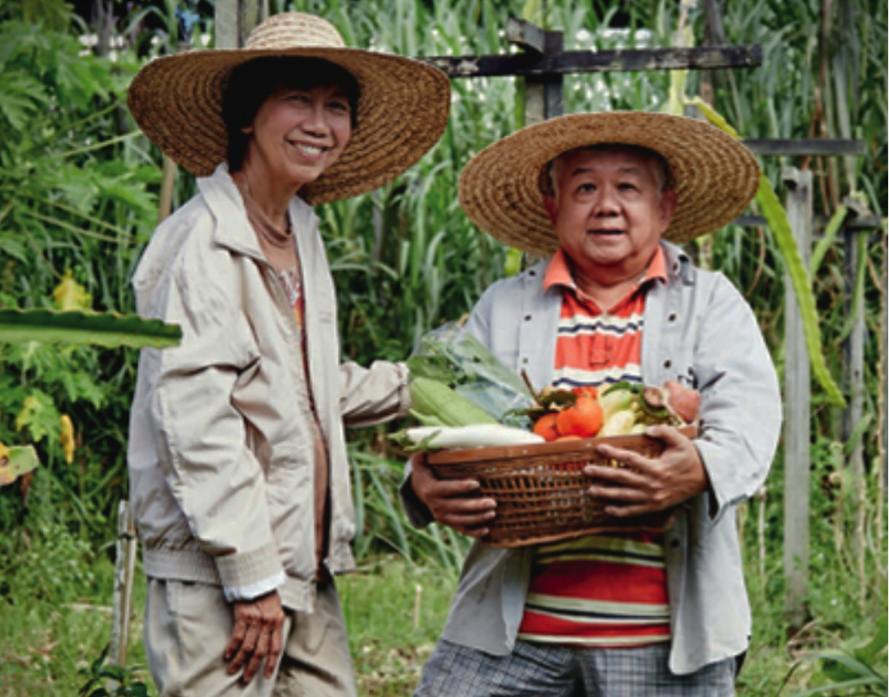
    At age 55, when their peers were thinking about retirement, Evelyn Eng-Lim and her husband bought a farm at the edge of a city. It took them 6 months to grow their first vegetables and more than 5 years to break even, but their farm home has been thriving for almost 2 decades since. We asked the now 75-year-old how they did it.

    “Now I had control over what I ate!”

    Q: Hi Farmer Evelyn! What made you and Farmer Tian Soo want to start a farm and live in it as a retirement home? What was going on in your life when you made that decision?

    A: When my husband & I decided to start our farm, it wasn’t for retirement. We were rather at a crossroad of our lives.

    It all started in 1984, when I volunteered for the Malayan Nature Society (Singapore Branch), which later became Nature Society Singapore (NSS). For 15 years, the society was my full-time job as I operated and managed its office.

    During those years as a volunteer, I read of numerous cases of pesticide contamination of imported vegetables which the Agri-Food and Veterinary Authority of Singapore (AVA, now known as Singapore Food Agency, SFA) had rejected because pesticide residues had exceeded the allowed limits.

    As a vegetarian, those cases shocked me because I did not have full control over what I ate!

    Evelyn, before she had a farm.
    Evelyn, before she had a farm.

    I realised I had to take action, in pursuit of a self-sufficient and sustainable lifestyle, by growing my own vegetables, rearing my own chickens and making my own compost. As a result of this self-sufficient and sustainable lifestyle, I would also reduce the greenhouse effect and do my part to combat climate change. How exhilarating!

    I understand you now grow your greens organically—without chemicals and pesticides. Why so?

    Synthetic man-made chemicals in the form of fertiliser and pesticides are not in a bio-chemical structural form so they are like foreign invaders into our biological entity. Organic matters and living organisms like insects, bacteria, fungi, earthworms exist in all healthy soil. When humans apply synthetic fertilisers, weedicides and insecticides, these soil organisms get ‘sick’ and slowly die, leaving the soil dead.

    Soil organisms in their natural cycle of life and death are providing nutrients back to the soil which can nourish plants. Plants provide animals with food and in return, animals help in pollination or dispersal of seeds. All living things are interconnected through the Food Web. We should not decimate so called “pests” to produce food. “Pests” such as caterpillars are food for some birds and insects that may help in pollination and seed dispersal. Eventually, caterpillars become butterflies which are efficient pollinators. Without these pollinators, there will be no fruits and vegetables for consumption.


    Humans tend to forget that we are part of the Food Web. Out of ignorance, commercial farmers produce vegetables laced with synthetic chemicals which are now known to mimic human hormones, upsetting the delicate balance in our bodies. Some scientists even believe that these exposures could be one of the causes of cancer, diabetes and allergies, which are so prevalent even in young people.


    How then did you manage to acquire farmland in Singapore when the country is mostly all city?

    In 1995, I called the AVA and was informed that tenders for farmland were regularly conducted in the newspaper. While we waited for the farmland tenders, I grew some vegetables in a common area at my condominium and at the same time, the AVA’s farmland regulations also evolved to allow the building of a home on farmland. This was a new clause which further appealed to me. Now I can live and immerse in nature. Perfect!

    The Neo Tiew area was one of our prospective sites to tender but the frequent bombastic sounds of fighter jets from the nearby Sungai Tengah Military Airport was a major concern for us. There were other tender options at that time but they were mostly for shorter periods, versus Neo Tiew’s 20-year lease. Another option would be to operate in Malaysia but with Singapore as our home.

    Having weighed our options carefully, we decided to proceed with the Neo Tiew area. So in 1999, we took possession of farm parcel 41, Neo Tiew Road and I resigned from all posts with NSS.

    How did you build and set up your new farm and home? Can you share your entire process?

    Our philosophy was to only clear when we needed to plant or build.

    1–Pond Excavation:

    The first task was to excavate a seven meter deep pond to hold rain water for farm irrigation. As we had heard stories of some contractors and site owners profiting from the burial of construction and non-biodegradable waste, we had to be there to closely monitor the excavation process to avoid that from happening on our leased land. We can’t afford any pollution here.

    2–Compost Production:

    Compost is crucial for our soil because being in an equatorial climate, Singapore land has very little top soil due to intense plant growth all year round. I first learnt about bio-dynamic composting from Mr. Peter Proctor, a consultant from New Zealand.

    In March 2000, we set up our tractor and a chipper and we were able to source for free carbon-rich tree waste from the nearby area. We then had to source for nitrogenous waste like cow poo, soya bean waste and rejected mung bean. In the beginning, it was just me and my husband working in the hot sun as I chipped away the free tree waste while he drove the tractor to move the chippings and nitrogenous waste and mix them into heaps of compost neatly arranged in rows.

    Compost made from urban bio-degradable waste helps replenish the fertility of the soil. This makes agriculture more sustainable instead of using short term synthetic fertilisers which cannot sustain other living organisms in the soil. Long term use of synthetic chemicals produces dead soils. After 4 months of daily compost production, we were ready to clear some land for planting.

    Evelyn and husband Lim Tian Soo, when GreenCircle Eco-Farm first opened for business.
    Evelyn and husband Lim Tian Soo, when GreenCircle Eco-Farm first opened for business.

    3–Land Clearing and Planting:

    Our plot of land was densely covered in wild vegetation, mainly elephant grass. We had to use our tractor to clear them which later became additional compost material. However, we had to use our tractor sparingly as the tractor would compact the soil in its path.

    Providence brought us a worker who specialised in making raised planting beds. In the meantime, we sought advice from a Malaysian agriculture consultant, who was aligned with our organic farming philosophy. He helped to kickstart the operation of planting long beans, corn, lady’s finger, cucumber, sweet potatoes and tapioca.

    Our clearing and planting process was executed in stages as I did not want to bare the soil to heat or rain, which would kill off soil organisms or wash away nutrients hidden in the soil. As we progressed, I hired two temporary workers to plant more beds and lay irrigation pipes under my husband’s supervision.

    4–Infrastructure:

    While all of the above were in progress, my husband was also busy executing the farm’s infrastructure plans, overseeing the building of our office, visitors’ hall, workers’ quarters and our residence with an engineer and contractor.

    By 2000, year end, these structures were ready and we had planted about one fifth of our plot. It was time to generate some income.

    5–Operation: 

    As the farm’s initial operation stabilised, we needed income to offset our operating costs. We first sold our organic produce to relatives and friends by private delivery. Our workers harvested according to what was ordered, packed them with minimal packaging materials and private deliveries were scheduled as early as possible to ensure freshness upon reaching our customer’s doorstep.

    During the internet growth phase in 2001, when information exchange wasn’t as readily available on the internet yet, my husband attended a website development course and built our website for our marketing and promotion purposes. As a result, our sales volume increased so he purchased a van and delivered the vegetables commercially. At the same time, we gained more attention from the media and the public. Schools and corporate clients were enquiring about farm tours so I seized the opportunity to design informative educational tours, which became one of the most important aspect of our farm. I am most passionate about using our farm as a platform to raise awareness on sustainability and environmental issues.

    By 2005, my husband and I were still without salaries but our farm had broken even. Instead, we were remunerated by the presence of the wildlife: birds, bees, butterflies, squirrels, garden lizards and the wide variety of chemical-free vegetables and fruits for our own consumption. This was what we had envisioned, a self-sufficient and sustainable lifestyle.

    Now I had control over what I ate! 

    Evelyn now, outside her farmhouse.

    What about farming techniques and processes? Where did you learn those from?

    We learnt some of it from Peter Proctor and our Malaysian consultant but a lot of it was self-taught and through a series of “trial and error”.

    What is your routine like now that you’re a farmer? What do you do on weekdays and what do you do on weekends?

    During 2005 to 2010, a typical day for us was:

    7am—Check crops (>100 varieties).

    Most workers only had experience in planting rice and growing vegetables in the conventional way by using lots of synthetic pesticides and fertilisers. They often wondered why I would forbid the use of pesticides to eradicate pests. Hence I had to educate and change their mindset and supervise them on how to care for the plants, to increase efficiency of their assigned tasks such as weeding, planting and harvesting.

    1pm—Lunch break.

    2:20pm—Continue work on the farm and supervision.

    As if that was not challenging enough, residue building debris from the mid-1980s was littered under the surface of our plot. The debris was supposed to be carted away but instead they had been unscrupulously buried and old foundations were not dug up. It was discouraging for us, when tilling in the hot sun, to find these residue debris. We also had to dig out historic mortar using only a straight steel rod to check for deeply embedded ones. When I wasn’t around, our workers turned a blind eye, resulting in the poor growth of deeply rooted vegetables and fruit trees.

    Things around the farm started to improve after 2010. I was more experienced and our workers were more efficient. I spent less time in the field and more time in the office, responding to customer feedback and queries; hosting group tours for kids, students and the elderly.

    By 2015, competition had intensified and I had to increase our marketing efforts by promoting our group tours. A typical day for us now still starts at 7am with 3 foreign workers reporting to me and telling me what they planned to do for the day. Farming and housekeeping tasks are then assigned on a priority basis based on weather conditions and the efficient use of our resources.

    To some, weekends may be a time for rest but since we live within our farm, we are never fully rested as there are endless tasks at hand and improvements to be made. However, we do enjoy a good meal and a movie occasionally to unwind. My husband loves listening to music and golf while I am an avid supporter of local theatre and stage productions.

    Do you think it’s important for Singapore to have its own farms?

    It is very important! Singapore must have its own farms so that our citizens and younger generations can obtain an understanding of the farming process, which results in what goes into our diet. We must create little food forests for healthy and efficient growing of food to promote sustainable farming.

    Although it is almost impossible for Singapore to be fully self-sufficient in farming due to our limited land mass, we can still create sustainable farms in Singapore to be used as farm models for other regional farms where we import food from. 

    Evelyn giving a talk at her farm.
    Evelyn giving a talk at her farm.

    What do you hope to achieve when you conduct tours on your farm?

    In 2015, we actively marketed our informative educational group tours to schools, universities and corporations. Our primary objective was to educate each participant to not fear nature because all living things are interconnected and we depend on each other for our survival.

    During our group tours, participants learn:

    a—To SHARE food with insects and animals: nothing wrong with eating vegetables with holes.

    b—Why a 50% plant based diet is important for their health and why walking under the sun for half an hour is healthy. 

    We particularly like to influence the preschoolers in their early formative years (we try our best to do it in a fun, creative and activity based way).

    Evelyn’s farm, Green Circle Eco-Farm (www.greencircle.com.sg), presently conducts cooking and farming courses and provides farming consultation, on top of selling vegetables and running group tours. Next week, we’ll have another chat with Evelyn about the challenges of being a organic farmer and what she’s learned from dealing with those. See you then!

    Photographs courtesy and copyright of Evelyn Eng-Lim. Interviewer: Sy
    If you found this article useful:

  • What It’s Like Parenting A Child With Autism - Kelvin Seah, Singapore, Dad, Son, Children, Caleb, ASD, Autistic, spectrum, disorder

    What It’s Like Parenting A Child With Autism

    Kelvin Seah’s second child was diagnosed with autism when almost 7, while coming to the end of pre-school and on the verge of transitioning into primary school. We asked Kelvin how his family adapted and changed to accommodate the new reality they had been confronted with.

    “Those who choose to deny and refuse to upend their lives to adjust to these changes are short-changing their kid’s future!”

    Q: Hi Kelvin! Thank you for coming on to share your experiences a second time. First off, can you tell us a little about how your son was diagnosed with Autism Spectrum Disorder (ASD)? What led to his diagnosis?

    A: My son Caleb was born in January 2011. He wasn’t the easiest of babies to care for, especially during his first year. He had acid reflux for most of that year which meant he neither ate nor drank well. He also cried a lot and didn’t sleep well, which meant that his parents didn’t either! He often had breath-holding spells when he cried too much, and sometimes his face would turn blue as a result. It would often appear like he had fainted! When he was 5 months old, he actually had a mini “fit” and fainted while we were shopping at Marina Square, and we had to rush him to KK Hospital where he then stayed for four nights, subjected to various tests to ascertain the cause. None were found.

    Looking back, these incidents invariably set us up to expect the unexpected with this child. And he didn’t disappoint! He was developmentally slower compared to his older sibling when he was a toddler. He wasn’t very verbal right up to age 2 and he also took longer to master walking. At around 2, he developed a fixation with spinning objects incessantly, especially round ones. He also continued to drool and wet his bed well into his pre-school years, and so a bib (plus a diaper every night) is still part and parcel of his “gear” today so to speak!

    Kelvin’s son, Caleb, before his diagnosis, when at his grandparents’.
    Kelvin’s son, Caleb, before his diagnosis, when at his grandparents’.

    Did the doctors who diagnosed your son give you a crash course in how to raise a child with autism, or did you learn most of what you know now on your own?

    No such crash course exists in Singapore. It’s essentially a diagnosis that is pronounced by clinical/child psychologists, not doctors. Though they can offer general advice and schedule periodic (annually or bi-annually) follow-up appointments to track a child’s progress, the responsibility of identifying and using suitable intervention techniques on a day-to-day basis must still fall squarely on the shoulders of parents like myself. That is the reality, simply because since every special needs child is unique, there isn’t a one-size-fits-all technique or crash course to suit every parent and/or child. Since parents are the ones in closest contact with their kids, it stands to reason that parents play the biggest role in helping their kids with special needs.


    What do you know now about autism that you didn’t know before?

    I didn’t have much knowledge about autism prior to having Caleb’s diagnosis. But once his diagnosis was confirmed, my wife and I started to research actively. Of course we also had to go through a “grieving process”, individually and as a couple. This is because when one has a special needs child, the initial reaction is always one of shock and disbelief, followed by sorrow and oftentimes denial. In worst case scenarios, there’s blaming and quarrels over how best to proceed. With autism, major life adjustments will need to be negotiated, including what specific and immediate help the child will need to manage his special needs, what schools or therapies he should attend, how our lifestyles will need to be adjusted to accommodate the child better, etc. The list is just too long to itemise here, but safe to say that parents with new/recent diagnosis of this nature must be mentally and emotionally prepared to deal with the huge change and upheaval to their lives.

    Those who choose to deny and refuse to upend their lives to adjust to these changes are short-changing their kid’s future! This is because, early and intentional intervention has so far proven to be the best safeguard against real life challenges for special needs kids growing up into adulthood and the real world.

    How did life change after your son was diagnosed with autism? Were there activities you and the rest of your family stopped doing because of his diagnosis? Were there any activities you picked up?

    As said earlier, lots of things had to be re-looked at, from education to day-by-day intervention and activities. While we still do stuff like most families, i.e. go shopping, sight-seeing, taking part in outdoor play or events that are family-friendly (like SSO [Singapore Symphony Orchestra] performances at the Botanic Gardens or family fiestas and carnivals), we also have to carve out time for (speech, occupational, etc) therapy appointments and sessions. We also do stuff at home that helps with his motor skills development and drooling, on top of the usual school homework and other school-related stuff like packing bags for occasional field trips, signing approval forms for this and that, etc.

    Did your plans or hopes for your son’s future change?

    To a large extent, his diagnosis did make it very clear to us that Caleb will need more help growing up in a society where people with special needs form a minority (although that is gradually changing as there’s now an upward trend with more people young and old being diagnosed with special needs). Things that the majority in society take for granted like how to earn a living, find a life partner, etc will now require more planning and thought for us, since his life journey won’t exactly be typical in light of his special circumstances. Also, the ultimate worry is as to whether he’s able to continue on to live an independent and fruitful life when his parents are dead and buried. These are unavoidable realities that we agonise over and will continue to agonise over in the years ahead.

    Kelvin and Caleb shortly after Caleb’s diagnosis, when on the way to a school field trip.
    Kelvin and Caleb shortly after Caleb’s diagnosis, when on the way to a school field trip.

    What is a regular day for your autistic child like?

    During school term time, mornings will be spent in school. Then it’s back home by half past one for lunch followed by a bath and some self-play time. This will then be followed by homework (if none from school, then my wife and I will usually prepare some simple English, Math or drawing exercises for him), and home occupational therapy (OT) time. OT at home will usually take the form of arm muscle strengthening exercises like “wheelbarrows”, as well as fine motor skill activities like inserting coins into a piggy bank with a tiny opening. There will also be outdoor frisbee and football play time if the weather is good before dinner and a half-hour TV time. Post dinner will be followed by baths, clearing up the room of messy toys before settling down for some reading time before he goes to bed.

    What do you regularly do to help him grow and thrive?

    Whenever we can, we encourage him to read and learn new things, through books and exposure to outdoor events or indoor stage performances of different kinds. These help open up his world to new sensations and experiences that will hopefully expand his capacity to embrace diversity and not stick merely to the few things he likes, as it’s typical for most kids with autism (as in they only like a few things). We also don’t agree with giving our kids (including my son with autism) too much screen time as we subscribe to research that proves over-exposure to screens daily alters the brain structure negatively.

    Which three toys/books/shows/educational materials does he enjoy the most, and what is it about them he enjoys?

    Caleb loves Awbie (an iPad-enabled coding game from the Osmo series), his Duplo set of construction pieces as well as his collection of cooking and superhero toys. He loves the colourful images on the iPad screen that respond when he assembles the code pieces, and the opportunity to build skyscrapers and be a pretend chef or superhero. Other than Awbie (which we restrict him to playing for just 30mins once a week), the rest he gets to play for up to an hour nearly everyday when he has his own play time.

    Which three toys/books/shows/educational materials does he want nothing to do with, and what is it about them he dislikes?

    He dislikes long-form reading materials with minimal or no pictures. He’s not fond of balloons as he’s always afraid they might suddenly burst (he’s sensitive to sudden loud sounds). He also doesn’t take well to live shows/films that have large crowds, loud sounds and pyrotechnics (like live band concerts), or darker themes and treatment (like “Kubo and The Two Strings”) .

    Caleb’s Duplo construct with a toy frying pan.
    Caleb’s Duplo construct with a toy frying pan.

    Which place in Singapore does he enjoy the most, and why? And which place does he dislike the most?

    He loves the downtown skyline, especially that of Marina Bay Sands and the office buildings at Raffles Place. His favourite vantage point to watch these would be at the promenade beside Esplanade—Theatres on the Bay. He likes unique architecture and their shapes and silhouettes/lines.

    What is a bad day for your autistic child like and what do you usually do to help him (and yourself) get through those difficult moments?

    That would be any day he throws a tantrum or has a meltdown because he didn’t get what he wanted. No different from other kids I suppose, but with him, it can take a lot longer than most to calm down. I remember one Saturday afternoon his tantrum was so bad we had to physically restrain him. And as he grows bigger, that can prove a huge challenge! But thankfully he doesn’t really have many such days and generally once he calms down, he’s alright. The key to managing is to stay with him throughout the tantrum or meltdown to ensure he doesn’t accidentally harm himself by tripping over, or banging into furniture.

    What about a good day? What is that like for him (and yourself) and what, from your experience, usually enables that to happen?

    When he gets plenty of time to do the things he loves. That usually comes as a “reward” after he’s done what he’s supposed to do like homework, etc. Of course the “rewarding method” doesn’t always work, and it shouldn’t be the only way kids get to do what they want. Cos after a while, it becomes too “forced” and doesn’t really help the child see that doing stuff like homework and occupational therapies is also worthwhile and deserving of their time.

    What do you wish more neurotypical adults knew about children with autism?

    Many times co-morbidity exists in children with autism. That means that apart from autism, they will also have other conditions and challenges such as attention deficit, stimming (i.e. wildly flapping their arms), and acute sensibilities related to one or more of the 5 senses. In my son’s case, sounds and noises in the background can be too loud for his hearing to bear e.g. fireworks, thunder, furniture/construction drilling or hand-dryers being used in public toilets. So it’s important for any adult to know that if you have met a kid with autism, that’s just one kid you’ve met. He/she doesn’t represent all kids with autism cos no one kid’s autism traits are exactly like another’s, so don’t generalise even though you might be tempted to.

    But perhaps top of the list for me as to what adults should know is that autism is a life-long and invisible disability. There are a few schools of thought which assert that autism is “curable” but insufficient evidence exists to support such claims. Neurotypical adults need to pause for a minute each time they encounter “odd” behaviours displayed in public by seemingly “normal-looking” kids or adults, and ask themselves before reacting if this person might have autism or some similar disability. That might explain any meltdowns or temper tantrums displayed. Try to show understanding or offer to help if possible.

    Caleb with grandma, viewing the Marina Bay Sands building in Singapore.
    Caleb with grandma, viewing the Marina Bay Sands building in Singapore.

    But most of all, don’t stare in disapproval or disparage the parents/caregivers for failing to discipline the kid or the adult for his/her own inability to self-regulate. They’re doing the best they can, and the last thing we should do is cast judgment without knowing the full context of what’s really going on. This is counter-intuitive unfortunately, as human nature (especially in many parts of Asia with our more reserved and conservative history and disposition) is, by default, judgmental. But it begins with awareness, which when exercised long enough, can lead one to be more accepting and ultimately more inclusive.

    Following from the earlier point, we as a society need to acknowledge, accept and even embrace the reality that people come in all shapes and sizes, and that “different” doesn’t always mean “less”. I like what A.J. Liebling once said: “Cynicism is often the shamefaced product of inexperience”. Everyone should step out of their comfort zone once in a while to experience and encounter people different from us. Everyone should show a little kindness, a little empathy and a little helpfulness more often. All these can go a long way to help make special needs and disabled kids/adults feel included. They too can positively contribute to society if given half a chance so let’s give these special folks that chance!

    What do you wish more neurotypical children knew about children with autism?

    That having a friend in school who acts or behaves differently from the rest is no reason to make fun of or bully that kid. These “special” kids just have different ways of interacting with the world, and if we just take a bit of trouble to understand and accept them (and render help if needed), we may be rewarded with a really fun playmate, and a precious/loyal friend for life.

    What’s the best advice you’ve been given with regards to parenting a child with autism, and what is the worst?

    Best: The best one I heard recently is that when it comes to choosing a school to best help the child learn, the question isn’t whether that should be a mainstream or special needs school. Rather, the question should be which learning environment at the point of consideration is the one this child will best learn and develop in.

    Another advice that proved really helpful was taking deep breaths during tense moments. When things with my kid go out of hand, that’s the time to take several deep breaths, counting slowly to 10 each time. I’ve tried it, and it really does help “bring down the blood pressure”!

    Worst: Any of the following useless advice (or similar) that essentially says: “Oh your kid’ll be alright…”, with no clear explanation as to how this person knows that for a fact. Or “…everything will work out fine”, without defining what that “work out fine” looks like. Or “don’t worry too much”, even though we all know that suppressing and ignoring any genuine feeling is rarely helpful in the long run (actually, in my humble opinion, worrying isn’t a bad thing if it leads to concrete and fruitful action that will help a child). In short, any advice given superfluously because the speaker actually wants to cover up his/her embarrassment of not being genuinely interested or lacking knowledge about what to do is just plain unhelpful. Better just to listen attentively, and say nothing.

    Caleb now, at Fort Canning Park.
    Caleb now, at Fort Canning Park.

    Lastly, what advice do you have for parents whose child has only just been diagnosed with autism?

    Grieving is a given. And since grieving is an absolutely necessary, normal and often iterative/non-linear process (you will invariably oscillate over time between grief and action), don’t resist it. I’m speaking especially to fathers, who typically bottle up their grief, sometimes without even realising it! It’s more than okay (and I dare say even critical) to embrace the grief and to weep. It will help you move along in the process towards affirmative action that will help your child have as meaningful and fruitful a life as possible.

    Begin to increase your engagement with your child, and prioritise your daily time to include either more quality and quantity time spent with him/her, or more time to investigate/research more about his/her condition, and what possible intervention methods can help. And of course to apportion time to intervene; don’t just leave it to therapists, domestic helpers or teachers! Know that there’re no short cuts and cookie-cutter methods that will work, but the committed involvement of a parent is the most important ingredient. This is because every intervention method must be tweaked to suit your child, as no two autism children have exactly the same symptoms. Hence, never “outsource” everything to “experts” because the parent is the true expert of his/her own child and his/her needs.

    Very important: treasure your child as a special gift from God, and love him/her unconditionally, no matter how things pan out in his/her life journey, and no matter what relatives, friends and society say, especially if what they say is negative and unhelpful. Along the way, rope in the neurotypical sibling too (if there’s one or more), and let him/her know that you love them just as much too, and how their role as a support and fellow caregiver to the special need sibling is very important for the family to enjoy many good years together. The neurotypical sibling, who isn’t envious but feels secure in knowing that his/her needs are also being well cared for by the parents, can prove a formidable ally in helping your special needs kid develop well.

    But most of all, don’t lose the marriage! Both parents need to stay united in this journey, and to take time away regularly to connect in order to keep the sanity and sanctity of the marriage intact. Your marriage is a non-negotiable anchor your child needs every step of the way. Take time to “date” each other regularly too, but also take time to do stuff individually that you love (self-care), so you can return to helping your child with a rested mind and renewed resolve and rigour.

    Kelvin is now a full-time stay-home dad who lectures part-time occasionally and is working on more intervention sessions in the form of art and music therapy for his son. You may follow up on his son’s progress at his blog, kelvinsmusings.home.blog or share your own experience with raising autistic children using the comment box below.

    Other Answers by Kelvin Seah:
    Why I Became A Stay-At-Home Dad, and How

    Photographs courtesy and copyright of Kelvin Seah. Interviewer: Sy
    If you found this article useful:


  • Why I Stuck With The Same Boss For 12 Years - Marianah Arshad Singapore Aidilic soaps products employee boss

    Why I Stuck With The Same Boss For 12 Years

    Marianah Arshad was employed by her former boss at age 26 and stayed with her till age 38, choosing to work under her through three rounds of organisational changes—when she could have easily switched bosses like many of her colleagues did—and even when her boss left to start her own company. Since this is so rare these days, we decided to find out what it was about her boss that made her stay, and, more intriguingly, why Marianah too eventually moved on.

    “Working for a boss who maintains a moral compass was very important to me.”

    Q: Hi Marianah! First off, can you tell us a little about the boss you spent 12 whole years working with? How did you end up working under him/her?

    A: I had been freelancing for about 7 years or so in production then. I was in my mid-20s and was honestly getting exhausted from the long production hours and unreliable paymasters. My boss was a Senior VP then who had been newly appointed as head of a new department in the company so she was recruiting a team.

    During my interview, I remember telling her very little of my production experiences. Instead, she gave me scenarios of potential work problems and asked how I would resolve them. I got the job a week later and I ended up working with her for 12 years.

    How did your jobscope and position change throughout the years under her management? And did her jobscope and position change as well? If so, how?

    There were no major changes in my jobscope or position honestly. Fundamentally, I was doing the same job—which was to manage productions. But each project came with its own set of challenges. For example, prior to working with her, I had no clue how to execute or manage productions overseas but that was what I had to learn to do for the first 3 years on the job.

    For my boss, her jobscope and positions changed over the years as the department went through several restructuring changes. With each change, new challenges followed. In the 12 years there, we produced award-winning documentaries, dramas, info-eds, talkshows, corporate videos, content for ministries, ‘live’ programs, and 5 seasons of a children’s show which was my last project working with her.


    Marianah (with tudung) on an overseas work trip with colleagues and other Asian broadcasters.
    Marianah (with tudung) on an overseas work trip with colleagues and other Asian broadcasters.


    Why did you stick with the same boss throughout all the above changes? Was there something working under her provided that you could not find elsewhere?

    She emphasised the importance of having strong moral principles constantly, i.e. you must always do the right thing, even if it means you may not be totally happy with the outcome. So if you can excel in a task by cheating your way through instead of honestly working on it, you’ll be out of her books if she finds out hahah. But working for a boss who maintains a moral compass was very important to me. She was a boss who gave credit where credit was due, so if you work honest and hard, you will get rewarded. Over the years, I had seen her fight for rewards and promotions for deserving staff. She was also genuinely concerned about your professional and personal development. So those were some of the reasons why I stayed as long as I did.

    Why did you eventually leave though?

    My passion for production work was dying. I had been in the line for almost 20 years and I had other interests that I had been unable to pursue earlier. As I was approaching my late-30s, I started thinking if I do not take the leap to pursue them soon, I never will. So I left.

    What was your work routine like when you were working under the boss you spent 12 years working for?

    My work was mostly regular hours, except when we had multiple productions and that was when things got really stressful and crazy. We’d have a few months of lull periods, and a few months of long hours.

    What about your routine in the hours when you were not supposed to be at work? What was that like with the boss you worked 12 years for?

    Of course there were times when I had to answer work messages or emails after work hours or even on holidays, but that’s the nature of the production work I was doing—it was something that’s expected of the job I signed up for. But they were hardly disruptive to my personal space and time, and even when/if they were at any time, I would just honestly say that I could not attend to it immediately.

    Marianah’s view when at work. Taken during an overseas shoot.
    Marianah’s view when at work. Taken during an overseas shoot.

    How were weekends like?

    Weekends were mostly my personal time, except, again, if we were on production.

    What advice do you have for someone thinking of staying with the same boss for more than ten years and what advice do you have for bosses wanting to keep their staff for more than ten years?

    I don’t think anyone will set themselves up to work for the same boss for a long time, in fact I didn’t think anyone would. For me, it just so happened I found a boss who could see the value I could bring to the table, and she appreciated that value by treating and compensating me fairly.

    What are the key things/people/situations that made you stick with the same boss for more than ten years, in your opinion?

    To be honest, there were many. I was always given opportunities to explore new things so I never felt that I was stuck in a rut. For example, my main job was managing budgets and resources—it was a very logistical role—but I like dipping my hands in creative work and have a knack for it. She saw this and opened up new things for me to try. She was also an ‘accessible’ boss. I could just walk into her room when I needed to clarify or suggest anything and she would always hear me out.

    How did staying with the same boss for so long impact your life, in your opinion?

    My boss was an intense, creative person. She had a ‘nothing is impossible’ attitude so our team would be finding all sorts of ways to make her ideas and concepts work. This had somehow forced and trained us to come up with innovative ways of doing things and solving problems, and this mentality has rubbed off on me personally. As I face new challenges now, I always find myself thinking, “I’ll find a way to do this. There has to be a way.”

    Marianah with the team and crew of the last TV production she worked on before leaving her boss of 12 years.
    Marianah with the team and crew of the last TV production she worked on before leaving her boss of 12 years.

    If you could go back and replay your entire career all over again, what would you do differently?

    I would have saved more money! Haha! But career wise, I wouldn’t change a thing. I had worked with many different bosses previously but the 12 years working with her was the highlight of my career. I got to travel extensively in the first few years on the job, met so many amazing people, and I had so many amazing experiences that I would cherish for a long, long time.

    Which 3 objects/people in your life can you presently not live without and why?

    My husband, my mother, and an internet connection. The first two are my pillars of strength. The third one is a luxury I cannot live without.

    Of all the objects you bought in the past year, which has been most useful? Why?

    My laptop. It has helped me start my own business and has been the source of all the information I need to run it.

    What is the worst advice you’ve been given, or have heard people giving, with regards to people management? And what’s the best?

    Worst advice—“Don’t play nice, they’ll walk all over you.” Personally, I find that it’s important to try and be nice, but firm, when you manage people. I find that most people tend to cooperate at work and go the extra mile this way. Plus, it just creates a pleasant environment. I don’t know if I just happen to be a lucky one.

    Best advice—“Always do the right thing, because it’s you who will have to live with your conscience.” I’d like to keep mine as clear as possible.

    Marianah is presently an entrepreneur and founder of Aidilic—a natural skincare brand.
    After leaving her boss of 12 years, Marianah founded Aidilic—a natural skincare brand.  

    Marianah is presently running a small natural skincare online business while simultaneously working towards a diploma in Natural Skincare Formulations. Her goal is to someday run workshops for folks who would like to make natural skincare products at home with better ingredients than store-bought ones. You can see her progress on her website, www.aidilic.com, or chat with her about good bosses and bad bosses using the comment box below.

    Interviewer Note:
    Full disclosure—I once worked under Marianah’s boss too, though not for a heroic 12 years like her, only for 3. Now that Marianah has mentioned it though, I’m noticing (for the first time) that that boss’s ‘nothing is impossible’ attitude must have rubbed off on me too, which is probably how I ended up creating and running LUCK-IT today. I now think bosses impact the world and human lives way more than they notice. That, I think, is what a boss should really be aware of when deciding how they want to rule. 😉

    Photographs courtesy and copyright of Marianah Arshad. Interviewer: Sy
    If you found this article useful:


  • How I Won Over 200 Photography Competitions Before Age 50

    How I Won Over 200 Photography Competitions Before Age 50

    When Liew Tong Leng was 23-years-old, he took part in his very first photography competition and won a prize. In the three decades that followed, he participated in more than 300 photo competitions and won more prizes in at least 200 of them—including $30,000 worth of cash and camera equipment on local reality TV competition ‘The Big Shot‘, $10,000 in a Great Eastern photo competition and another $10,000 in a Konota photo contest. He tells LUCK-IT all about his keys to winning and lets us in on what made him the man he is today.

    “It’s the process of taking part in competitions that moulded me to be what I am today. There is no short cut.”

    Q: How did you start taking part in photography competitions? Which was the first one you participated in and did you win that?

    A: I started taking part in photography competitions in 1992 through the influence of friends. I happen to know many photography friends who take part in competitions and I joined them to benchmark myself and also to improve my skills.

    How many photo competitions did you lose before you finally won a prize in one?

    The first time I took part in a photo competition is also the first time I won a prize.


    The last photograph Liew won a competition with — at the SAFRA members' annual photo competition. (As of Apr 2019)
    The last photograph Liew won a competition with — at the SAFRA members’ annual photo competition. (As of Apr 2019)

    Which was the first photo competition you won first prize in?

    I really can’t remember when I first won a first prize because it was a long time ago and it was still in the film era.

    Now that you’ve won many competitions, what, in your opinion, are the key elements that make a winning photograph? And what are the skills a photographer must have in order to achieve that photograph?

    I think a winning photo must contain three elements: good lighting, good composition and a good moment. The most important being a good moment. In order to capture a great moment, you have to anticipate and be ready.

    How frequently do you take part in photography competitions? Is there a routine you have to keep track of all the competitions going on and if so, what is it?

    I take part in photography competitions almost every month. I have a way of archiving all my potential winning photos and categorising them.

    How often do you pick up a camera when not participating in photography competitions? What do you usually do with the camera then?

    I shoot almost every weekend when I’m free. I don’t wait for a competition to be available to go and shoot. It’s the other way round—I shoot first, categorise them and then select the suitable photos for the theme of different competitions.

    Liew's entry for the Perspectives, Capture The Moment Photography Competition.
    Liew’s entry for the Perspectives, Capture The Moment Photography Competition.

    How do you presently spend your weekends?

    Shooting.

    What advice do you have for someone hoping to win not just one but many photography competitions?

    Study competition photos. Learn the elements required in a winning photo and keep shooting different genres.

    Can you map out a recommended path for people who want to win many photography competitions to follow?

    As above.

    What key things/people/situations enabled you to win so many photo competitions, in your opinion? Who/What do you believe you never would have succeeded without?

    Passion and hard work. Again spending time and being hardworking is my key to winning.

    How did winning many photography competitions change you as a person? Or did it not change you?

    I always strive to be creative and shoot differently in order to win. Since 1992 when I started photography, I had that passion and till now I’m still burning with that passion to take great photos, but through the years, in terms of photography I see things differently now.

    Liew's entry for the 4th Great Eastern "Life is Great" Photo Competition.
    Liew’s entry for the 4th Great Eastern “Life is Great” Photo Competition.

    If you could go back and replay all the competitions you’ve ever taken part in all over again, what would you do differently?

    No, I think it’s the process of taking part in competitions that moulded me to be what I am today. There is no short cut.

    What were you like as a child? What about as a teenager and young adult? How did you change at every decade? Or did you not change?

    As a child I was quite an introvert. As I grew and started to win photo competitions, I was known and became more confident of myself.

    Which major event in your life has made you who you are, in your opinion? Why do you think so?

    Winning the first prize in the TV reality show, ‘The Big Shot‘. The photography competition was quite a major event in my life. I was on national TV and the attention increased. I had to learn to be humble and yet confident in what I do.

    Liew's photography gear.
    Liew’s photography gear.

    Which 3 objects/people in your life can you presently not live without and why?

    Camera equipment. Without it, I can’t shoot.

    Of all the objects you bought for photography in the past year, which has most positively impacted your life? Why?

    Photography equipment is just a tool to take great photos. It doesn’t really impact my life.

    What’s the worst advice you’ve been given, or have heard people giving, with regards to photography? And what’s the best?

    The worst advice I heard was to fix certain settings while taking a photo. I think the best advice was to explain the reason I do certain things instead of just telling others what to do.

    Liew is presently an Airworthiness Manager with CAAS (Civil Aviation Authority of Singapore) and regularly posts his photographic creations on his Facebook and Instagram pages. He is also happy to answer questions on photography so if you have a burning question about photography techniques or competitions for him, drop them in the comment box below.

    Photographs courtesy and copyright of Liew Tong Leng. Interviewer: Sy
    If you found this article useful:


  • How I Ran 10 Half Marathons In 7 Years, And Why

    How I Ran 10 Half Marathons In 7 Years, And Why

    Bank Relationship Manager, Qiu Ruozhi was 28 when she first began running half marathons—a 21km run across varying routes. Having completed ten of them since, she tells LUCK-IT why she continues to do half marathons almost a decade on and lets us in on her preparation routines.

    “With training, I believe that anyone can run a half marathon. It sounds like a really long distance but it really isn’t that bad.”

    Q: How did you start running half marathons? Why did you do it?

    A: I was taking part in 10km runs as a social activity with my friends and I decided to challenge myself to go for a run that is longer than the usual.

    How did you train for your very first half marathon?

    I searched online for a training schedule for a 21km run.


    Did you think running it would be a breeze or did you have no idea what to expect?

    I enjoyed running so it made it easier.

    How long did it take you to prepare for your very first half marathon?

    It took me about 6 weeks to prepare for it.

    And how long does it take you to prepare for a half marathon now?

    I am running/working out regularly, so I guess about 3 weeks would be sufficient.

    How do you feel before, during and after a half marathon?

    I always take part in the half marathons with friends so it is usually an enjoyable run. I would look forward to it and enjoy the run. After a half marathon, all I want to do is eat and lie down.

    Ruozhi with her marathon essentials at The Straits Times Run 2016.
    Ruozhi with her marathon essentials at The Straits Times Run 2016.

    Can you describe your training/preparation routine for a half marathon in more detail? What do you do every week and how do you increase the intensity?

    It is a 6-days-a-week training. It starts off Monday-Thursday with alternate running distances, i.e. 4.8km, 6.4km, 4.8km, 6.4km. Friday is a sport of your own choice. Saturday would be 9.6km. Every week, the distance increases by 1.6km for all the days. Ultimately, by the last Saturday, you will need to clock 19.2km. There should be 3-4 days where you rest and finally run the 21km race.

    Now that you’re more experienced, how does your training routine differ?

    I would run four times a week. Twice would be 6-8km, a 10km and one incremental distance, i.e. 12,15,18km.

    How do you spend your weekends when you are preparing for a half marathon?

    I would ensure I get at least 8-10 hours of sleep before I train, so that I am well rested. I will go running first thing before I go about my day.

    And how do you spend your weekends when you are not preparing for a half marathon?

    These days I will go to the gym, catch up with friends and family.

    What advice do you have for someone thinking of doing a half marathon?

    With training, I believe that anyone can run a half marathon. It sounds like a really long distance (given that we do not really walk anywhere these days) but it really isn’t that bad.

    Can you map out a recommended path for people who want to complete a half marathon to follow?

    There are many training schedules online available depending on fitness level and time available to train.

    What, in your opinion, are the key things/people/situations that enable you to complete half marathons painlessly?

    I was encouraged to run a half marathon by a friend who is a triathlete. She was the one who trained with me and forced me to chat while running. Running became an activity amongst a couple of us and we would use that time to chat and catch up. It probably made me enjoy running even more because I didn’t have to give up my social life entirely. I think having people around to exercise with makes it difficult to procrastinate.

    Ruozhi trains in the gym on a regular basis, even when not preparing for a run.
    Ruozhi trains in the gym on a regular basis, even when not preparing for a run.

    Who/What can you not do without?

    Apart from my dear friends and family, I cannot go through a week without exercising and coffee every morning is a must.

    How has having completed numerous half marathons changed you as a person? Or has it not changed you?

    “Perseverance is important in whatever we do. Running is a test of this because we have the choice to stop and give up whenever we want and not go anywhere.”

    It has taught me that perseverance is important in whatever we do. Running is a test of this because we have the choice to stop and give up whenever we want and not go anywhere. I think this can be applied to almost every aspect in life. It has taught me how to self-motivate and keep going even when situations seem bleak.

    If you could go back and replay your preparation for your first marathon all over again, what would you do differently?

    I was actually pretty pleased with my preparation. I don’t think I would want to change anything about it.

    What were you like as a child?

    One trait that my parents still like to remind me of till this day is that I refused to ask anyone for help. I would do everything myself. Even if I didn’t know how to, I would try and figure it out on my own.

    I was always the favoured child. My nanny doted on me more than her own grandchild. As I am the firstborn, my parents showered me with presents and let me do anything that pleased me.

    It was a difficult time when I had to go to primary school because I was on holiday most of the time during my kindergarten years. I still remember crying every day and begging my parents to allow me to stay home.

    What about as a teenager and young adult?

    Ruozhi heading for fitness classes at the gym she frequents.
    Ruozhi heading for fitness classes at the gym she frequents.

    As I grew a little older, fitting in became really important to me. It was [the era of] the Baby-G fad and it was the first time I got rejected by my mother when I requested for it. She said it was ugly and refused to buy it for me. It felt like the end of the world for me.

    Apart from being FOMO and wanting to always be hanging out with my friends, I would say that I was fiercely loyal to them. I valued my friendships and people who were close to me and I would drop what I was doing if they needed help or just wanted a listening ear. The friends that I have who were there during my formative years are the friends that I know for sure would be friends for life. However, I never much cared about what other people thought of me, I guess this trait has followed me all the way up till this day.

    How did you change at every decade? Or did you not change?

    I think it’s a constant learning journey. As I age, I control my temper more and I will ask myself if what is troubling me is very important to me. I realised that there are many trivial things that are not worth getting angry or upset about. I have also learnt not to be consumed by things that I cannot control and focus my energies on things that I can change.

    I have also started being more appreciative of what I have and not comparing myself with others.

    I have also realised that I am making life difficult for myself if I do not ask for help. I can’t know everything in this world and asking for help does not mean you are less of a person. It just makes life easier and more efficient.

    Which major event in your life has made you who you are, in your opinion? Why do you think so?

    I think that was the time when I first started working. I realised that I had been living in a bubble with idealistic thoughts that after graduating with a degree, I had all the answers to life. Obviously, I was wrong.

    I had to learn how to communicate effectively with people and communication isn’t just about forming words. The difficult part is getting others to see your point. This requires you to speak their language and put yourself in their shoes. It was truly a steep learning curve for me and I went to my friends for advice. When that was not enough, I even went to buy books on communication to help me understand more.

    It was then that I was truly enlightened. I may have education but having people skills is equally important. There is no point in having brilliant ideas when no one buys into your ideas.

    Which 3 objects/people in your life can you presently not live without and why?

    My iPhone, iPad and, recently, Kindle. My phone is basically required for work and to catch up with friends. My iPad is also needed for work, and for me to catch up on Netflix. My Kindle is for me to read whenever I have free time.

    A route Ruozhi takes when exercising at MacRitchie Reservoir.
    A route Ruozhi takes when exercising at MacRitchie Reservoir.

    Of all the objects you’ve ever bought for half marathon preparation, which has been most helpful? Why?

    My running shoes are the most important item as of far. When I first started running, I was buying the designs that I liked best across all brands or the ones my friends were recommending. I was throwing them away because they didn’t fit me. I would suggest to find a brand of shoes that fit your feet before you start running, as comfort is key. Ill-fitting shoes will make training difficult.

    Which person do you wish Luck-it would interview for you to learn from? Why?

    A monk because they live a completely different life from me.

    What’s the worst advice you’ve been given, or have heard people giving, with regards to half marathon preparation? And what’s the best?

    I’m not sure if this is a bad idea but during half marathons they usually give out bananas/energy bars. I have no clue how people eat while running. I certainly cannot eat before or during a run. The best advice I had was to sip water and not drink the entire cup at water points. That would give you a stitch.

    Ruozhi is presently working on becoming more toned by adding body combat and yoga classes to her routine. You can find her in a gym or on Instagram @ruozhiq.

    Photographs courtesy and copyright of Qiu Ruozhi. Interviewer: Sy
    If you found this article useful: