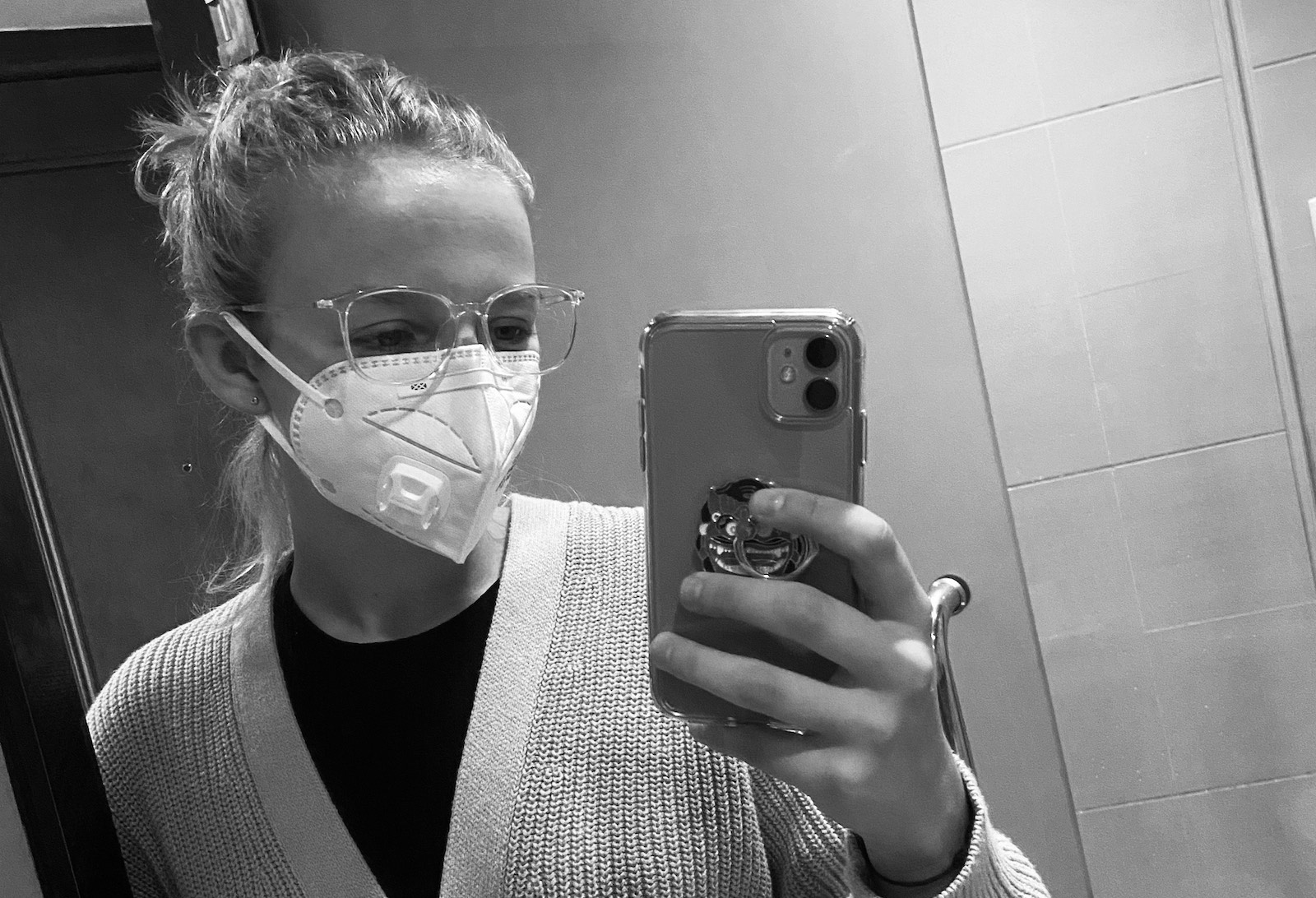
Doris* (*not her real name) lives in Singapore, in a building where many units are stacked close together, one on top of the other. She was recently informed of 3 confirmed cases of COVID-19 in the very block she lives in. She told us how she’s responded and how her health has been like since.
“This pandemic has been going on for months now. It’s getting more tiresome than frightening.”
Q: Hi Doris, thanks for speaking with us! When did you first notice a COVID-19 patient living in your condominium? How did that develop and end up becoming 3 cases?
A: I first suspected there might be a coronavirus-positive person in my condominium when I saw red and blue lights flashing outside my window one night. It was an ambulance that didn’t have its siren on, turning into my condo. I couldn’t see where it went after that and kinda forgot about it for a few days until I noticed a note placed at the lift lobby by the condo management saying that a resident had tested positive. It didn’t reveal which block the resident lived in though.
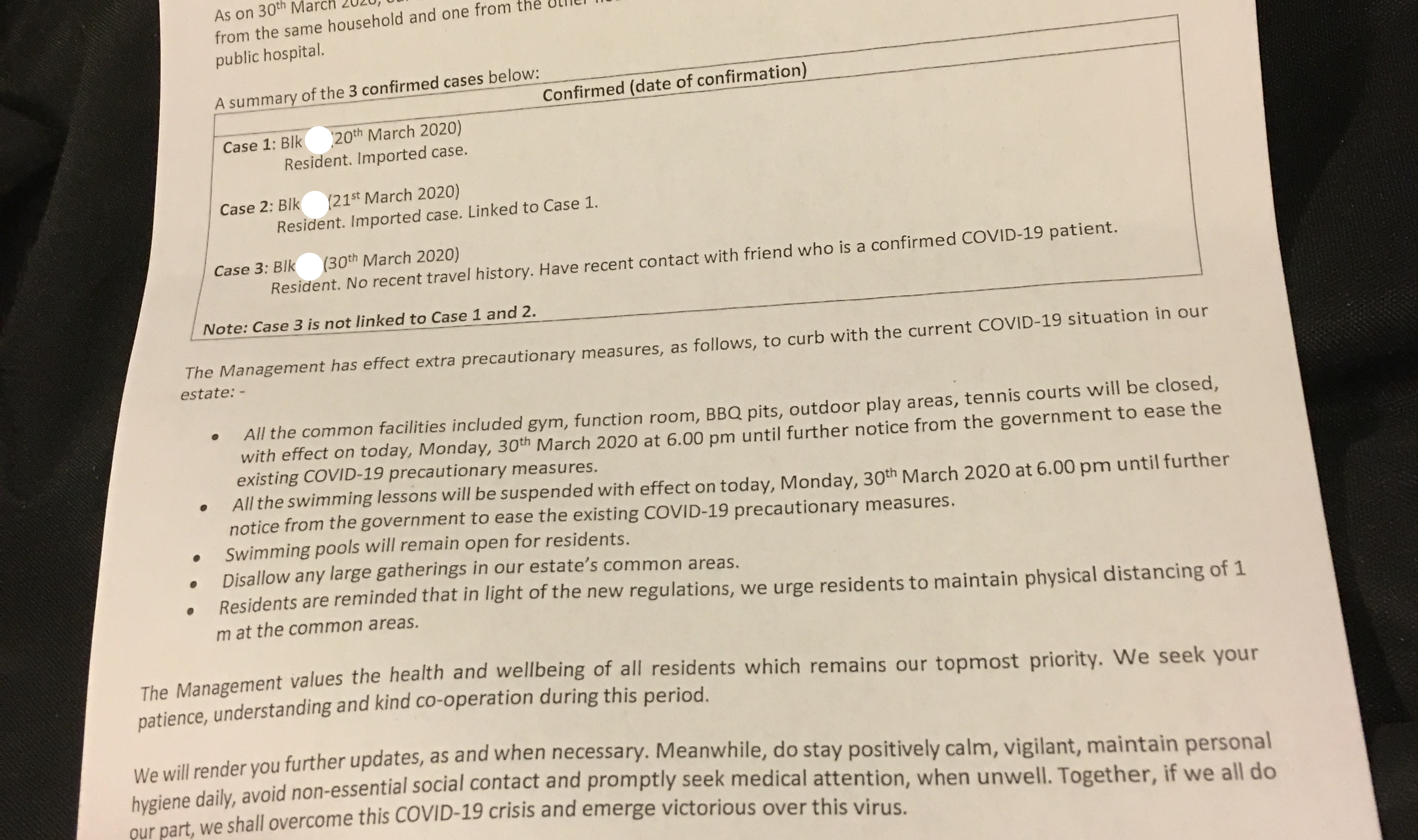
A few days later, I get a note from the condo management stuffed under my door saying that a second resident from the same household had been infected, and that those 2 residents were from my block. And more days after that, I got yet another note under my door saying a third resident from a different household but again from the same block had been infected.
The fortunate thing is that the third and the first 2 cases are not linked (or at least that’s what the last note said), meaning it wasn’t transmitted through the building (or so they think). That is the reason the condo hasn’t been identified as a cluster in the news. I guess all we can do now is wait a month to see if more cases in the same block develop. If none do, then we’re clear.
What did you feel when you first realised you were living in a “contaminated” building? What did you do then?
My first thought was “oh crap” but I was otherwise generally calm because well, it is what it is. Fate. A friend from Hong Kong then advised me to pour a mix of detergent and water into my pipes in case the virus spreads through the pipes like SARS did in Hong Kong so that was the next thing I did. Basically those emotional and behavioural reactions repeated themselves every time I heard about there being a new confirmed case in the building. I have since bought a large container of disinfectant and eventually poured that down the pipes instead of detergent.
The memo Doris found under her door one evening.
How did your sense of panic increase when the cases of infection went from 1 to 2 to 3?
It didn’t really increase. 1 infected feels the same as 3 infected. Basically so long the building is infected, you already feel screwed…
How did this community outbreak affect your daily life? Will you consider moving to another apartment to live temporarily?
I now wrap my finger with a thick wad of tissue before pressing any lift buttons and I generally don’t open my windows as often as I used to (lest someone in my block decides to cough out theirs). I also pour disinfectant down my pipes every now and then which I never did before.
Because the virus seems to be everywhere in Singapore now (a supermarket and a pharmacy had to close recently because of infected employees and there are almost 100 cases of unknown origin here today), I don’t see anywhere else as being any safer. It’s like you can run but not hide, so no, I don’t see moving as the solution.
What is the health status of you and your family members presently?
Oddly, on the night the note about the third infected resident appeared under my door, shortly after I disinfected my pipes, I developed a 38-degree fever that burned through the night. The next morning, I was feeling much better but another member of my family developed a fever. The day after that, we were both feeling normal again with 36-degree temperatures, but later that night my throat was sore and my chest felt inflamed and itchy inside, to the extent that I occasionally felt the urge to cough. Today my sore throat is gone but my chest still feels itchy, though I’m no longer feeling that urge to cough. I am otherwise well enough to be answering this while seated in an upright position and going about my day like normal—within the confines of my home, of course.
What will you do if you suspect you are infected? How likely do you think you will be infected?
I do presently suspect I MIGHT be infected, mostly because I had a fever just days ago, coupled with the fact that the virus has been in my building, and in a supermarket and basically everywhere. But I’ve read enough news reports to know that COVID-19 is seldom detected in the early stages of the disease and that many positive cases end up seeing a doctor more than once before testing positive. In fact, day 5-7 of illness is when it all reportedly goes south and breathing difficulties develop. I’ve been staying home and avoiding people since I got my fever but if I develop breathing difficulties past day 5 or 7, I’m definitely calling a doctor to arrange a non-crowded time-slot.
If I did test positive, I wouldn’t be surprised at all. And not just because of my building. Just the other day, I grabbed a takeaway dinner from a hawker centre that was a short walk away from the supermarket that had the infected employee. And I have been ordering online deliveries from that very supermarket brand too. Who can say for sure where I contracted the disease from if I did contract it?
If the pandemic is not going to stop unless herd immunity is gained, how panicked are you at this point? What is your plan then?
If COVID-19 becomes a regular disease like any other then contracting it at some point would be inevitable and even necessary. If there is nothing I can do to avoid getting COVID-19 then I would like to hurry up and contract it and get the antibodies in my body all set up and ready to deal with future occurrences of it. I’m not panicking at all right now because what’s the use in that? This pandemic has been going on for months now. It’s getting more tiresome than frightening.
If these are the last 30 days of your life, what will you do?
I would quit work at once because that would no longer be relevant. And I would spend the next 30 days spending or giving away all of my money with my loved ones by my side round the clock. When not doing that, I would contact everyone who’s ever meant something to me or made a difference in my life and tell them all the sappy things I never would if I wasn’t dying.
Doris hopes to be able to go out again like before soon. (“To be able to attend events and hang out amongst large groups of strangers like before.”) She can’t say when she will be able to do that though. (“I don’t think anybody can.”)
More interviews with people in other parts of the world coming up next week. Follow the latest in our COVID-19 Diaries series here.
If you’re in a country that has been affected by the novel coronavirus and would like to share information about the situation where you’re at, do get in touch with us here.
Photographs courtesy and copyright of Doris*. Interviewer: Kauai Sponsor or support the COVID-19 Diaries series here. If you found this article useful:
Heather Rowsell is a retiree from the UK living in Spain, 9,767km away from Wuhan, China. She told us how her household has been coping with the National Emergency declared by the Spanish government and also how the 3 of them worked out how to share a single Netflix account.
“At first we were told this situation would last for 2 weeks, Day 8 we were told another 2 weeks were added to it, and a couple of days ago yet another 2 weeks.”
Q: Hi Heather, thanks for speaking with us all the way from Spain! When did you first hear about the 2019-nCoV novel coronavirus and what did you think of it then?
A: The first time I heard about the COVID-19 virus was in January 2020, it was on the news about Wuhan in China with cases spreading very fast. It was also said that a doctor there tried to warn the authorities in advance, and was ordered to say nothing. But as the number of cases grew so fast, people were posting photos and expressing their fear online. Social media announced the truth while their government regime seemed more concerned about an economic downturn and how other countries would react.
Even when it started to spread to other, smaller “hotspots” in China, it would never get to Europe right? Even when experts said it would spread to other countries, it would never get to Europe right? For Europeans the subject hardly got a mention here, life carried on as normal for us. We had sympathy for the Chinese population and could only imagine what it must be like. We did not dwell on the situation at all.
How concerned are you and the people of Spain now? How many are infected or dead because of the virus in Spain at the moment of this interview?
Very concerned, it hit home hard when the shutdown first began, and makes me wonder just how long such a heavily restricted life will last. The Spanish Government is discussing further restrictive measures today, but what else?!
As I write this.. Current figures in Spain: Total cases: 78,799. New cases: 5,564 (last 24 hours). Total deaths: 6,606. Deaths: 624. (last 24 hours).
Spain has the world’s 4th largest COVID-19 outbreak. Second highest in Europe behind Italy. Double the total number of deaths in China.
The situation in Madrid and Barcelona is horrific, beyond critical, the Spanish people there say the system is devastated. There’s an acute shortage of equipment, and believe this or not: Healthcare workers account for 13% of COVID-19 cases, so there’s a huge shortage of medical staff.
Hotels are being turned into hospitals for those with less severe symptoms. A massive ice skating rink is now a morgue. A huge conference centre is now a field hospital. Coffee shops have turned into food banks, and the army delivers to those in need and helps with sourcing supplies. A car manufacturer is changing production lines to making ventilators and an airline is now building other vital medical equipment. Bear in mind this country has one of the best medical healthcare systems in the world, even prepared for something like this, but not on such a phenomenal scale.
Concern varies from how devastating it is for people, families, especially the elderly on their own, and how the emergency services put their lives on the front line every day despite the risk of contracting the virus.
Experts worldwide talk about “flattening the curve” so that hospitals and emergency services can cope with the number of cases. But look at any chart and beyond a spike the virus doesn’t just go away, it’s still there in a straight line. With a return to free movement are we back to square one with numbers increasing rapidly again?
“La Zenia shopping mall closing down.”
Who were the first few coronavirus infected people in Spain and where did they contract COVID-19 from?
On January 31st 2020 the first confirmed case of coronavirus was reported in the Canary Islands, part of Spain, but not mainland. On the same day Spaniards were evacuated from the place where COVID-19 originated from Wuhan in China, and landed in Madrid. A few days later another case was reported on the island of Mallorca, both had just returned from Italy.
On February 26th 2020 several confirmed cases were reported in both Madrid and Barcelona, mainland Spain. So I can only assume those 2 clusters of the virus originated from Wuhan and Italy.
How did most people in Spain contract COVID-19? Can you tell us about the biggest clusters and how those happened?
I think we’ve all had time to learn the several ways COVID-19 can spread from person to person so easily. It’s the same on a global scale. It might be helpful to know that in the past couple of days 2 more symptoms have been reported. Lack of smell or taste, and that it can sit in the digestive system and cause symptoms similar to food poisoning.
Density of population is a major factor worldwide, Madrid, Barcelona and Catalonia are examples of the authorities being so overwhelmed so quickly, perhaps speed of containment was secondary. Even so, free movement in those huge regions turned into voluntary isolation then enforced isolation in a short space of time. (This happened before the whole country was quarantined).
So, for several weeks of emergency quarantine being 500 kilometres away from us, life here on the coast still carried on as normal.
New clusters have recently been reported in smaller regions. Fortunately we have zero cases where we live on the Costa Blanca.
What measures has the government of Spain imposed to keep the COVID-19 outbreak under control? We know the whole of Spain is in lockdown but what does that really mean? What can’t you do and what must you do?
On Friday 13th March (appropriate date) the Government declared a National Emergency, the whole country was initially shut down for 2 weeks, borders closed, airports, and normal transport don’t exist anymore. These strict measures are now Europe wide, some countries have slight differences on travel within their country. Last week leaders of the EU closed all external borders for 1 month.
For us humans this means staying inside and only being allowed out for essentials which include visits to supermarkets, pharmacies, and gas stations. They are the only places that remain open. The few people who have to go to work are those who keep essential supplies available to us (even a till operator needs paperwork to prove where they work). And of course all emergency services are free to drive wherever they need to. Another exception to the rule are lorries crossing borders delivering life’s necessities.
Just one person (the driver) is allowed in a car and has to keep a receipt of where they’ve been shopping in case of being stopped by the police. No unnecessary journeys are allowed, and no taxi services are operating. Banks, solicitors, doctors (doctors surgeries are closed, but we have a local emergency number to call if necessary, and a doctor will come out to the house), dentists, schools, nurseries, post offices, bars, restaurants, hotels, swimming pools, gyms, every beach and all shops that don’t sell food are shut down, including car garages. They are only available to service essential lorries/wagons.
One of our cars is nearing its ITV date—“Inspecction Tecnica de Vihiculos”. If it goes beyond that date the car would normally be classed as illegal on the roads. No problem, it doesn’t matter anymore, there’s nowhere open to get it done.
There must be a few I’ve missed out there but it doesn’t matter considering all we have open are supermarkets, chemists, and petrol stations. No free movement for anything except essentials, let’s face it, that’s all there is available.
Dog owners are the only people allowed out on foot alone, while walking their dog once a day. (We’ve even discussed borrowing someone else’s and taking turns.) Sadly, this is the first time cranes aren’t moving since the upturn here in 2010. Even building sites are off limits.
People are working from home, that’s not a problem, but they’ve had to free up bandwidth for the internet across Europe because everyone’s watching Netflix, YouTube, etc, or making video calls. Here at our casa, our son who’s working from home owns Netflix (and his PlayStation) during the day, and we have ownership of Netflix at night. It works quite well aside from arguing about who’s got the sound bar on too loud. What would we do without Wi-Fi?
Drones with cameras are the only things airborne, and there are many police roadblocks. We wouldn’t be able to drive beyond our province (unnecessary travel) without it being an emergency.
This is a truly bizarre situation to be in when there’s no reported cases nearby. Liberty and freedom disappeared overnight. Sounds draconian? Leaders of other free countries thought so at first, yet within a week they were doing the same thing. Down here on the coast we feel “relatively” safe from an invisible enemy, however it also feels a bit like we’re a collective experiment!
Will this pre-emptive lock down work? Only time will tell, but whatever it takes right? At first we were told this situation would last for 2 weeks, Day 8 we were told another 2 weeks were added to it, and a couple of days ago yet another 2 weeks. A total of 6 weeks so far which takes us to the end of April. But looking at the number of new cases and deaths going up so fast elsewhere, who knows? There are places in this country resembling war zones.
How effective do you think the above measures have been in stopping the spread of the virus? What was done well and what could have been done better?
As inconvenient as it is, at first I thought enforced isolation was a bit much when there are no cases, but now it feels essential. Here on the coast we’ve escaped the COVID-19 crisis. So now, as inconvenient as it is, we feel protected, strict measures have been put in place sooner rather than later. Distance and boredom are now a good thing, even though we all moan and whinge.
After watching other democratic countries dither about freedom vs human rights, let me tell you: There’s “advice” which goes ignored by some idiots, therefore defeating the objective. There’s mandatory lockdown between people, businesses, monitored provinces and closed borders which hopefully works.
IF and only IF full mandatory lockdown procedures are put in place soon enough does protection have a chance. For coastal areas in Spain, they may have timed total isolation right. But inland it’s too late, small clusters have appeared outside of Madrid and Barcelona.
I know it’s too soon to say, but as yet cases are still rising rapidly in the most affected areas I’ve mentioned, the death toll every day is alarming. Surely those figures should be dropping by now, but as yet they’re still rising.
This is Heather.
2 Spanish ministers (the minister for territorial policy, Carolina Darias and the equality minister, Irene Montero) have tested positive for the virus. How do you think that happened?
Until recent days, senior officials and dignitaries haven’t used the elbow bump on camera enough. Seems like they prefer grand announcements to be made while standing next to each other, shaking hands with someone who may have the virus, in what may be a place with contaminated surfaces.
I noticed this continued long after they’d announced their citizens should refrain from all of the above and use the elbow bump. While the rest of us are overloading Skype for conversation and video calling, there they were, doing exactly what we’ve been told not to and not doing exactly what we’ve been told to.
A couple of days ago it was announced that Boris Johnson and the UK health minister both have the coronavirus. Oh the irony, I have no sympathy for those who arrogantly thought they were immune, it’s a kind of “justice” for ignoring the limitations they set for everyone else. For goodness sake even citizens of this country and others who do the double kiss thing gave that up yonks ago, but there’s more precaution required than that.
However, it seems they’ve finally got the message. I saw a video call with a Spanish minister in voluntary self-quarantine on the news last night. Donald Dump is moaning about being in the White House on his own playing with his Lego wall, and we the people have to put up with this crap.
Another disappointment came today: Prince Charles got the coronavirus and self-isolated for just 1 week. The rest of us Europeans have been told 2 weeks… Doctors have been following the rules, perhaps they should be in power.
What is the status of food, water and medical supplies in Spain right now? Are there any shortages? What is the plan for those shortages if so?
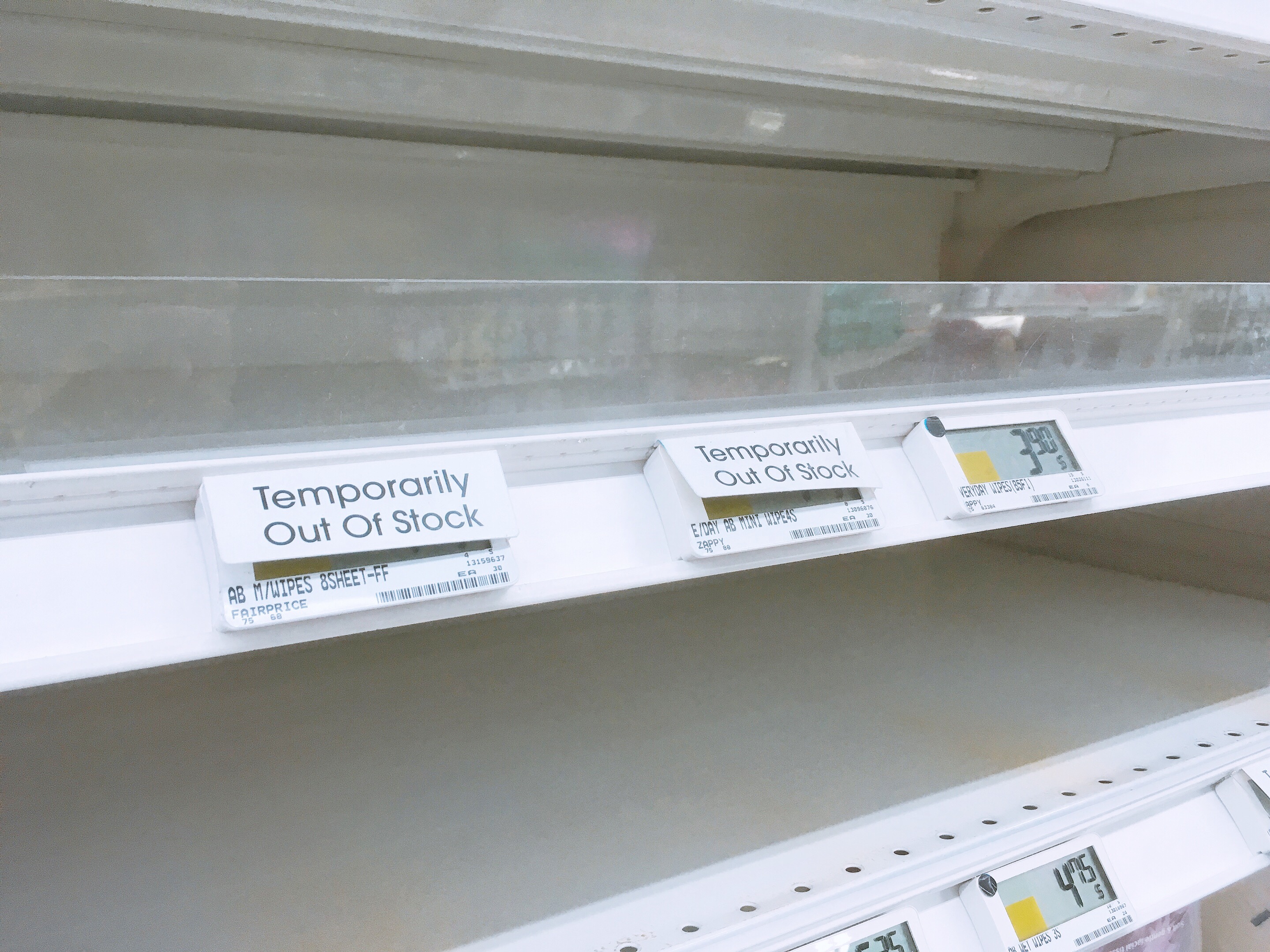
In our area, Day 1 of lockdown was all about panic buying, I have photos of empty shelves. We even bought serviettes as toilet paper! Since then we were told supermarket supplies would not be affected.
5 days later was a test run of this theory. Hand sanitiser and plastic gloves provided at the door plus a wipe-down of the trolley with anti-bac. The shelves were full, and the place itself devoid of people. We even had 4 different makes of overpriced toilet paper to choose from! What more could you ask for while in quarantine?
BUT, another 5 days later was a whole different story, I’d say shelves were almost half empty and no toilet paper of any kind. I really wish I could remember exactly what day and time it was “the day the shelves were full”. It might be the golden hour. Conclusion: Panic buying has stopped, but people are stocking up more than usual.
My husband just went down to the supermarket in our car, and our son in his (only the driver in a car). But they forgot about keeping 2 metres distance from each other while shopping, and got a stern telling off from a security guard.
At first we thought a supermarket visit might be a possibility for social supermarket gatherings. For instance, message your friends round the corner: “I’m setting off now, see ya down the toilet paper aisle in 5 mins.” NOPE, even standing at opposite ends of the aisle wouldn’t work either, besides, what else is there to shout to each other about except which series you’re watching on Netflix, and on a scale of 1 to 10 how insane you feel today.
Today’s report about what’s on the shelves was interesting: well stocked on food, but no toilet paper, are people resorting to eating it now? There’s plenty of bottled water here on the Costa, there always is and many people have filter taps like us. No problem with water pressure either, our fresh water comes from desalination plants out at sea, and medical supplies are not affected.
Have you and those around you done anything to prepare for the possibility that the novel coronavirus pandemic might get worse?
To be honest, with reference to the pandemic getting worse, there’s nothing we can do except donate to charity, adhere to quarantine rules and watch the news. There is no cheating the lockdown here, everyone knows how critical this situation is, so it’s a sit and wait situation for us. Meanwhile the coronavirus pandemic just gets worse in the cities. The number of cases continues to rise every day.
How has the COVID-19 pandemic affected your life and that of those around you?
Self-containment, social distancing, washing hands more often, cleaning surfaces with anti-bac more than usual. Most of the time is spent online every day. Oh, and I’m still writing my blog, focusing on satire helps! I couldn’t be bothered doing a workout though, those days are gone for now. Forget maintaining my abs, the need for entertainment is more important.
It’s now got to the stage whereby we know the only places at any level of risk are the supermarket or the chemist. Gas stations are ok, no-one is allowed in, there’s a kiosk where you pay, and if you need anything from inside, just say and the guy passes it to you. Thankfully the risk is minimal, but who knows if ultra early quarantine works? We’ve all been told to use debit cards, not coins.
What will you do if you or those who live with you develop symptoms of the virus? What do the authorities of Spain want you to do?
To be honest, we haven’t seriously discussed the possibility of any of us getting the virus, probably because it’s so far away. Naïve? Perhaps, but we know what to do, isolate (whoever) in one room. However, even if the symptoms were mild, I wouldn’t take any chances about severity, ring the emergency services ASAP.
The authorities have given us regional numbers to call and as previously stated a doctor comes to your house to test and assess (everyone).
There’s 3 of us living in our house, my husband and I both took early retirement, and our son is an estate agent working from home now. As you can imagine there isn’t much for him to do except keep in touch with clients who can’t leave their own country, and wouldn’t be allowed in here!
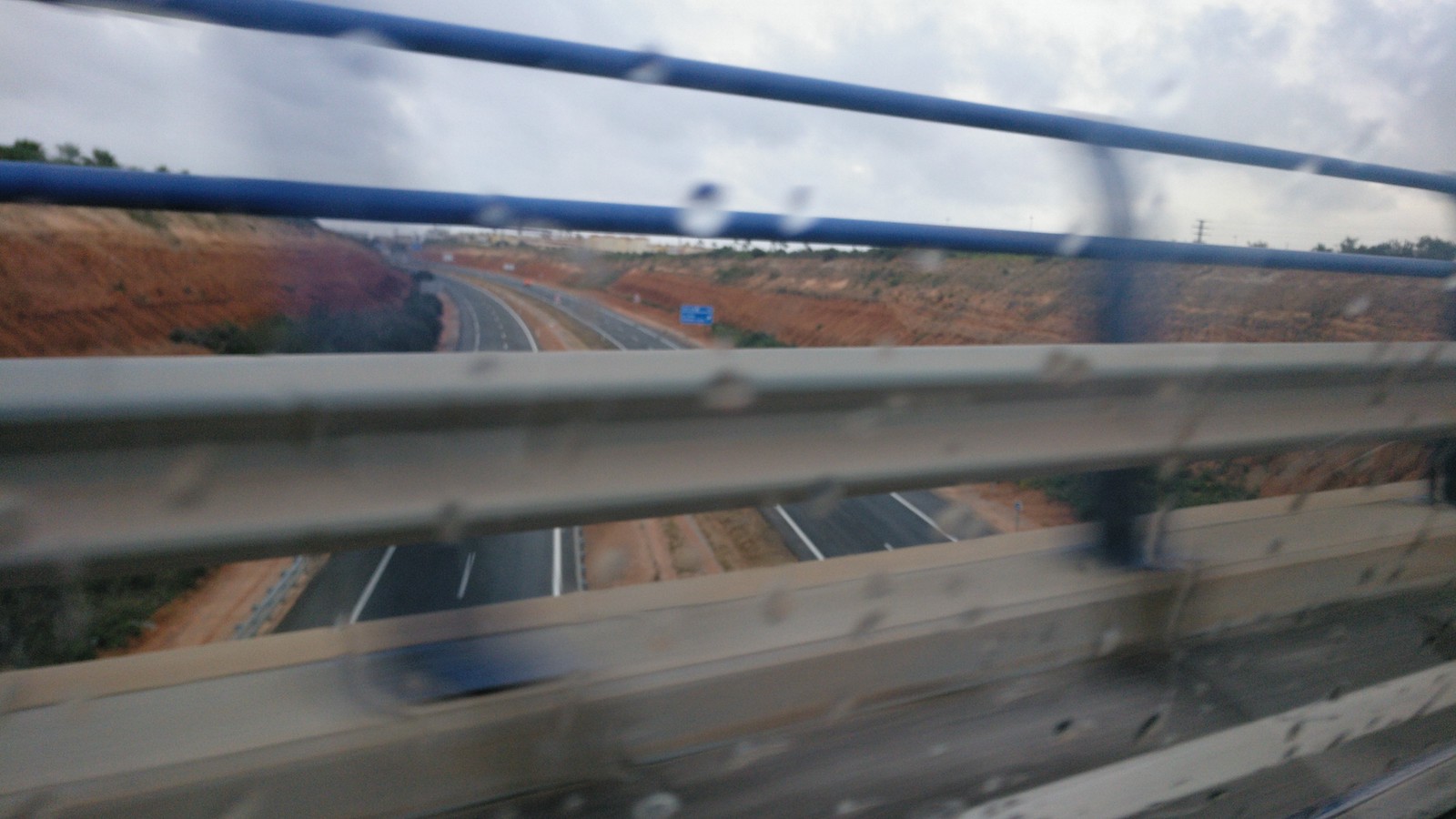
“Empty main roads in rain!”
If you did contract COVID-19, what do you think your odds of surviving it are and why do you think so?
If I contracted COVID-19 I´m guessing my odds would be fairly good. All 3 of us have taken vitamin C and Vitamin B (iron) in soluble form for years. We each have our own exercise routines, which admittedly have gone out the window for 16 days. None of us are obese or have any underlying health problems. The last time I had a cold was about 2 years ago.
I’ve heard people talk about starting to take vitamin C now, sadly it doesn’t work that way, in order for it to improve immunity a person has to have been taking it for years, every day and not in tablet form. How do I know all this? My grandmother was a chemist, and a pioneer of how vitamins and minerals can help the immune system in the 1930’s. Never as a cure for anything other than a basis of resistance and prevention if taken regularly.
When do you think this COVID-19 pandemic will end and why do you think so?
Dr Fauci is the leading expert of infectious diseases in the USA. I watched an interview of his today where he stated that this was the worst case scenario of any respiratory borne pandemic he has ever studied. One that easily spreads from one person to another with a high degree of fatality and morbidity. He called COVID-19 devastating. Even this leading health expert, the guy who’s advised several different presidents about infectious diseases, knows several outcomes. But not which one. He also said the virus is the clock and we can’t know when a turnaround will occur because it’s too unpredictable.
So basically my answer is this, if he doesn’t know, then neither do any of us.
What are the best and worst examples of humanity you’ve seen since the COVID-19 crisis broke out?
In Spain, the best examples are the doctors, nurses, specialists, police, paramedics who are willing to enter this war zone every day, work for many hours, put themselves at risk of infection, and continue to do so. Even though their own colleagues are contracting this virus in the thousands. 14% of COVID-19 cases, are now medical staff.
Retired doctors and nurses going back to work. Coffee shops providing food for emergency services. Seamstresses are making masks. Car manufacturers switching production lines from cars to ventilators. Plane manufacturers making medical equipment. Donated food bank collection points, usually at ex-restaurants, delivered by taxi drivers. Overstretched emergency services, paramedics, police, helping in any way they can. The army, responsible for turning hotels into field hospitals. An ice rink into a morgue. A conference centre into Europe’s biggest field hospital. Disinfecting empty train stations, airports, and transport of desperately needed equipment in army trucks.
All these brave heroes get a round of applause, a tribute for their services throughout Madrid and Barcelona every night at 8pm. People sing from their balconies and let their gratitude be heard. It started in Italy, and other EU countries now do the same.
There´s even a YouTube video where 3 police cars drive down a road in Spain with sirens blaring and lights flashing. Then they all get out and sing in the road while one of them plays a guitar to the people, for the people. (They were on a shift change so don’t judge.)
Truly heart warming, it brings tears to my eyes.
Unfortunately the worst I’ve seen is a video of drunken Brit yobs fighting with Spanish police officers in Benidorm. Apparently they tried to break into a (closed bar) after they’d worked their way through several bottles of god knows what from a liquor store first.
Why is it always the Brits? Truly heart breaking.
Which 3 items or people are most useful for you right now?
2 out of 3, my husband and son, which is all about companionship, not usage, caring for each other remains the same under any circumstances.
And there’s a number 4, keeping my sense of humour alive.
Lastly, what have you learned from this novel coronavirus outbreak that you didn’t know before?
What I’ve learned from the coronavirus is to remain positive, and stay safe while in quarantine. It’s also made me realise how precious FREEDOM is, and how under normal circumstances we take it all for granted.
Heather has no more goals for the future (“I don’t need goals anymore, I’ve been to so many countries in my life and experienced everything on the average bucket list.”) but you can find out what she gets up to in Spain on her blog, twobritsinspain.com or ask her more about the situation in Spain using the comment box below.
Tomorrow we speak with someone closer to the pandemic, who is living in a building with 3 infected residents. Follow the latest in our COVID-19 Diaries series here.
If you’re in a country that has been affected by the novel coronavirus and would like to share information about the situation where you’re at, do get in touch with us here.
Photographs courtesy and copyright of Heather Rowsell. Interviewer: Sy Sponsor or support the COVID-19 Diaries series here. If you found this article useful:
JT lives in an area in Hong Kong where several cases of COVID-19 were found over a short period of time and an apartment building was even evacuated after 4 people from 2 households were found to be infected. We asked him how he dealt with that and all the other changes COVID-19 brings.
Disclaimer: LUCK-IT will earn a tiny commission when you purchase any of the Amazon products on this page.
“I was very terrified and avoided going out to minimise risk of infection.”
Q: There were several cases found near your apartment, is that true?
A: Yes, a few cases were found in Tsing Yi within a week.(Villa Esplanada and Hong Mei House respectively). The cases in Hong Mei House were suspected to be infected by aerosol transmission. The government evacuated around a hundred people at midnight immediately.
[Interviewer Note: During aerosol transmission, the virus is suspended as very tiny droplets in the air, viable for around 30 minutes.]
How were you affected by the outbreak? And what do you think of aerosol transmission?
Since my home is quite close to the [Hong Mei House] building (a 10-minute walk away), I was very terrified and avoided going out to minimise risk of infection. I use disinfectant to sterilise the house every day. I think aerosol transmission is not too different from airborne transmission. The people in Hong Mei House were infected by the contaminated air droplets transmitted via ventilation pipes.
So some people got infected simply by staying at home?
The infected patients were living in same block. The government said the virus could have been transmitted via a vent pipe in the toilet. Possibly because one of the pipes was wrongly designed or too old.
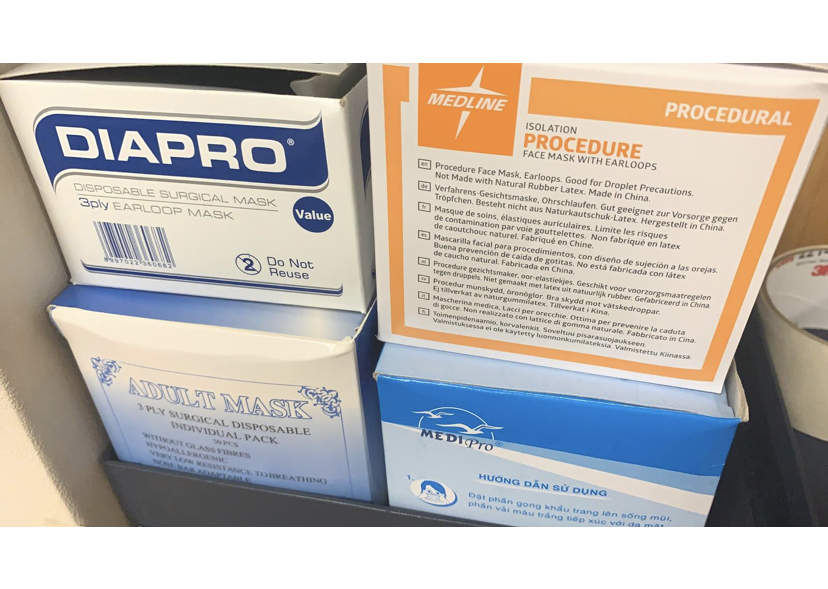
JT’s stash of masks.
If the virus keeps spreading in your area, what will you do to fight against it?
The people in my building said there was an infected case here. Terrified, I stocked up a lot of food supplies, disinfectant and masks (around 200 masks). I also stayed home for many days since I can work from home being a back office staff in a bank. However, it turned out to be a false positive case.
Do you enjoy working from home?
Not really. I have not been feeling very well. My legs have started to cramp recently, maybe because of the lack of exercise at home. I got diarrhoea three days ago and am still not feeling well.
I read from the newspaper that some of the staff in a bank were found not doing their jobs right—they went hiking when they were supposed to be working at home. Do you think working from home works?
Working from home makes me more efficient at this point. I don’t know about the others plus the people on the news are from another bank.
The residents of Hong Mei House have since been returned to their homes after all 101 of them tested negative for the virus. JT cannot imagine what life would be like next, other than knowing he would likely not be travelling. “I used to go several times per year…”
More interviews with people whose lives have been disrupted by COVID-19 coming up next week. Follow the latest in our COVID-19 Diaries series here.
If you’re in a country that has been affected by the novel coronavirus and would like to share information about the situation where you’re at, do get in touch with us here.
Photographs courtesy and copyright of JT. Interviewer: Kauai Sponsor or support the COVID-19 Diaries series here. If you found this article useful:
AG is a mother living in South Africa, 11,785km from China. Her child was recently diagnosed with ‘pneumonia’ but did not get tested for COVID-19. As she and her mother-in-law have also developed symptoms similar to that of the novel coronavirus, we asked her what she’s been doing to get her family feeling better.
Disclaimer: LUCK-IT will earn a tiny commission when you purchase any of the Amazon products on this page.
“This is not the flu!”
Q: When did you first hear about the COVID-19 novel coronavirus and what did you think of it then?
A: I first heard about it in January. I told my hubby in early Jan that we were going to have a heck of a thing on our hands soon. He wanted to know why I was worried about something on another continent. Now he’s all apologetic and I feel a little smug now since COVID-19 arrived in South Africa on 5 March.
It seems Africa is the least affected continent so far. How afraid of the coronavirus are you now?
The first 2 confirmed cases are quite far from where we are… about 1000km from where we stay. Thankfully I had bought enough masks and hand sanitisers quite a while ago. However, I am worried there will be an outbreak because many people have compromised immune systems due to HIV, AIDS and TB. (South Africa has the biggest HIV epidemic in the world, with 7.7 million people living with HIV. HIV prevalence among the general population is high at 20.4%.) Besides, one of my children caught the typical pneumonia and was on medication.
How old is your kid? Are schools closed in your city now?
One of my children (5 years old) was coughing badly about 2 weeks ago. I heard a ‘drowning’ sound in his chest. Rhonchi is what it is called. That’s when I took our child out of school. I am still wondering when is the time for parents to ask for school closures.
The kid was diagnosed with pneumonia, but was not tested for COVID-19. As treatment, we received oral antibiotics and were told to self-isolate. We haven’t travelled out of the country nor have we been in contact with anyone who travelled from anywhere as far as we know.
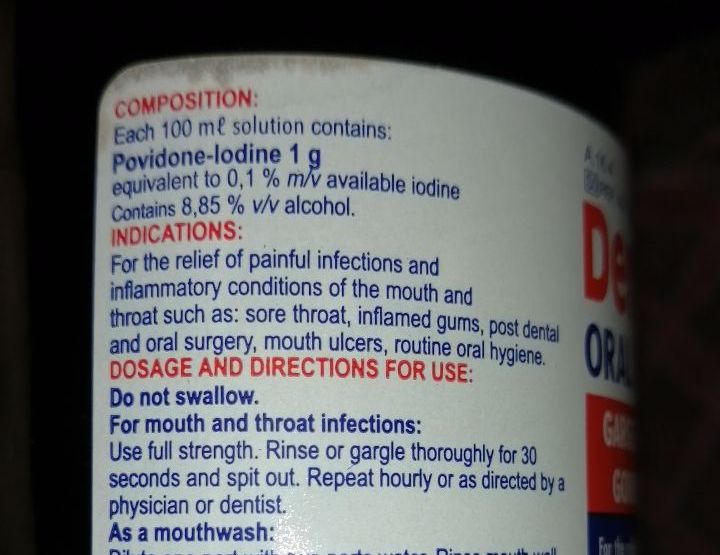
The iodine gargle AG uses.
Do you yourself have any symptoms such as fever and coughing?
I had a tight chest and a red throat last week. After using an iodine gargle and taking Lugol’s iodine in water for 3 days, my throat is perfect and chest 95% better now. I am very keen on more natural remedies that have been proven by science. Povidone iodine is safe for most people to use. However, my mum-in-law staying with us is also coughing.
[LUCK-IT Disclaimer: Always check with your doctor before attempting any of the above.]
How many cases are there in South Africa? What measures has the government of South Africa applied so far?
We now have 7 confirmed cases (as of 10 March) but no flights have been cancelled. People from China, Iran, Italy (Italy has been in lockdown) can come and go as they please. Honestly. The WHO [World Health Organisation] has been too slow in reacting and are actually encouraging our government to keep flights going. They say that canceling flights won’t do anything. People should rather quarantine themselves.
To me that makes no sense. Cancelling flights effectively quarantines the whole country from incoming infection. It must be taken seriously. Italy is in complete lockdown. China is in complete lockdown. This is not the flu!
How us your child? Is she still having fever and cough?
She is getting better, but I don’t think it is the antibiotics. Her chest was still very tight until late morning.
AG still doesn’t know if her child had contracted COVID-19 or not.
Tomorrow, we’ll speak with someone in Hong Kong who lives in a neighbourhood with numerous COVID-19 cases and even one building evacuation, to know how he’s been coping with that. Follow the latest in our COVID-19 Diaries series here.
If you’re in a country that has been affected by the novel coronavirus and would like to share information about the situation where you’re at, do get in touch with us here.
Photographs courtesy and copyright of AG. Interviewer: Kauai Sponsor or support the COVID-19 Diaries series here. If you found this article useful:
Ting is an immigrant from Asia who moved to New York City a few years ago. She tells us what it’s like living with the New York Governor’s Stay-At-Home order while the numbers of COVID-19 infected in New York—12,033km away from Wuhan, China—keeps growing.
Disclaimer: LUCK-IT will earn a tiny commission when you purchase any of the Amazon products on this page.
“The so-called New York lockdown is not exactly like the Wuhan lockdown (way less strict).”
Q: When did you first hear about the COVID-19 novel coronavirus and how did you respond at first?
A: Back in December 2019 or early Jan 2020. We did nothing at first because it seemed so far from us…
There are around 50K cases in New York at the moment. If things get worse, what will you do to protect yourself and your family from COVID-19?
We have basically been working from home in the past 2 weeks in accordance with the New York governor’s executive order and did not go out unless it was absolutely necessary (e.g. getting groceries once or twice a week). Our fridge is always full, there won’t be a problem if we are not able to refill food for 2 weeks. Whenever we have to leave our apartment, we wear a mask. I have stocked up 160 masks so I think it is fine.
The number of novel coronavirus infections in the United States is growing significantly (US’s 123,578 vs China’s 81,439 at the point of this interview), but Donald Trump wants to “reopen the economy by Easter”. Do you think he can make that happen? Will you leave the United States if an executive order to reopen things is invoked in April?
I think it is unrealistic. At least in New York City. But I am not leaving the States even if they try to reopen things to boost the economy in April.
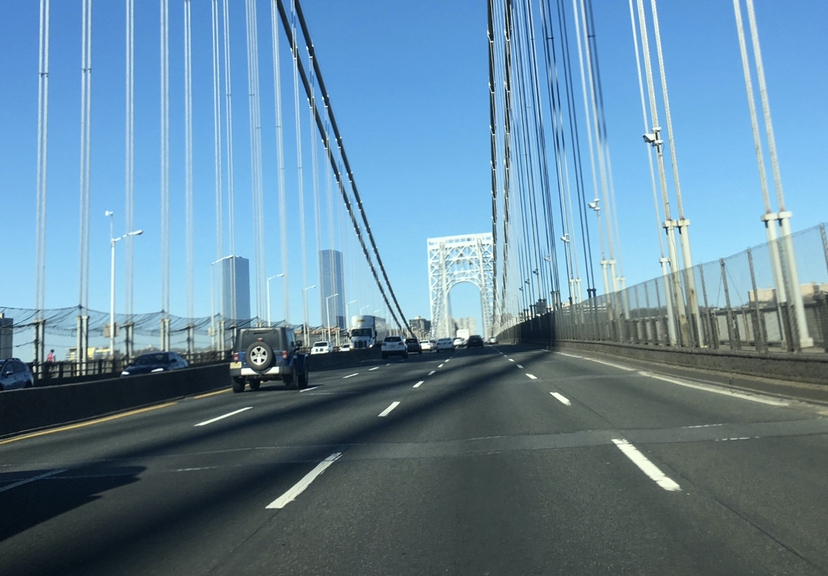
A less busy New York. People can go out when necessary.
The news said President Trump was considering an “enforceable quarantine” in New York. What did you prepare with regards to this?
I heard this but I simply ignored what he said as he is being bipolar every now and then, you never know what is in his mind.
Who do you trust more to save New York: Donald Trump or Andrew Cuomo? Do you think the current measures taken in New York State are good enough?
Cuomo for sure. All non-essential businesses need to close now(e.g. shopping malls, salons, gyms, cinemas), but public transport is still running. The so-called New York lockdown is not exactly like the Wuhan lockdown (way less strict). I think the current measures are ok but it seems more enforcement is needed.
The US government aims to provide free testing for COVID-19 but their plans have not yet included the cost of treatment. How do you feel about that?
Luckily I have insurance plans that cover me and my family…
Do you think discrimination against Asian peoples has been getting worse because of COVID-19? As an Asian living in New York City, do you think it safe at the moment?
I personally do not feel that and still feel safe at the moment, probably because I am living in a neighbourhood with a significant Asian population (>25%).
Tomorrow, we’ll chat with a mother in South Africa whose child has been diagnosed with pneumonia but cannot get tested for COVID-19. Follow the latest in our COVID-19 Diaries series here.
If you’re in a country that has been affected by the novel coronavirus and would like to share information about the situation where you’re at, do get in touch with us here.
Photographs courtesy and copyright of Ting. Interviewer: Kauai Sponsor or support the COVID-19 Diaries series here. If you found this article useful:
Naya is a university student in Jakarta, Indonesia, 4,166km away from Wuhan, China. She lives with her mom, dad and younger sister, and told us how the Indonesian government’s decision to reduce transportation routes to deal with the spread of the virus might have inadvertently caused new cases to form because of the long lines that resulted.
“My friend almost got harassed on the train and only one person helped. In the middle of this pandemic, there are still people out there trying to sexually harass someone and that is sad.”
Q: Hi Naya, thanks for speaking with us all the way from Indonesia! When did you first hear about the 2019-nCoV novel coronavirus and what did you think of it then?
A: I heard it first through news on social media. I saw videos of people in Wuhan, China collapsed on streets or simply lying there. I thought it shocking and worth noticing. But honestly, I thought that it would die down soon.
How concerned are you and the people of Indonesia now? How many are infected or dead because of the virus in Indonesia at the moment of this interview?
Currently, 369 people are positive and 32 people are dead. I am very concerned because the numbers are increasing fast. Mortality level here is very high, more than China and Italy. I can’t speak for all of the people in Indonesia, but some of us care and some of us think that this is the opportunity to go on a vacation.
“My food supplies! It’s not piling up because we can still order food online.”
Who were the first few coronavirus infected people in Indonesia and where did they contract COVID-19 from?
2 people, mother and daughter, first got infected when they interacted with a person from Japan. When that person went back to Malaysia, it turned out that he got the virus. That’s why the mother and daughter got checked to see if they got it.
How did most people in Indonesia contract COVID-19? Can you tell us about the biggest clusters and how those happened?
Biggest cluster is probably the long line of people waiting for the TransJakarta bus until [they spilled out onto] the streets. The government reduced transportation routes so many people piled up on certain lines. Over the past few days, influencers have helped charities and supplied hospitals but there are still people that go outside due to their jobs so I think that could also be the primary cause.
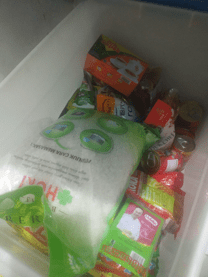
Another photo of Naya’s food stash.
Indonesian Transport Minister Budi Karya Sumadi has been infected with COVID-19. How do you think that happened?
I actually believe that this virus had been in Indonesia for a while. People know that they are positive only because of getting medical check-ups but here in Indonesia we have to go to the hospital IF we want to get checked up. It is not a MUST to go to the hospital. I don’t know for sure how he got COVID-19, maybe because he interacted with someone that is infected but both of them didn’t know.
What is the status of food, water and medical supplies in Indonesia right now? Are there any shortages? What is the plan for those shortages if so?
Fortunately, we still have all of the supplies. People can order food and vegetables through online apps so that is really helping us right now. Supermarkets limited certain things to prevent panic buying.
Have you and those around you done anything to prepare for the possibility that the novel coronavirus pandemic might get worse?
I don’t have a plan. All I’m doing right now is staying at home with my family. If it did happen, I don’t have anywhere else to go other than my home so I’ll try my best to stay inside and healthy.
How has the COVID-19 pandemic affected your life and that of those around you?
I have to do online classes because of COVID-19. I can’t have meetings with my organisation and my show got postponed until November. So it is really affecting my life right now. My friends are all disappointed and sad because we can’t hang out like we used to. My father has to work from home and do all of the meetings [at home]. The time schedule is the worst because there is no clear boundaries between work and break.
“My ‘working space’. Sometimes my father uses it for meetings. I usually just lie on my bed and do online classes.”
What will you do if you or those who live with you develop symptoms of the virus? What do the authorities of Indonesia want you to do?
If that occurs, we have to get them checked immediately. We should go to the referral hospital. Then, that person would have to isolate themselves while waiting for the test. If he is infected, an ambulance will pick him up and take him to the [other] hospital.
When do you think this COVID-19 pandemic will end and why do you think so?
Honestly, I have no idea. If people don’t take this seriously, then this pandemic will continue. I know they found the vaccine, but if people are still careless I don’t think it will end.
What are the best and worst examples of humanity you’ve seen since the COVID-19 crisis broke out?
The best one: Influencers in Indonesia dedicated some of their money to raise for charity to the hospital. They are also giving out safety suits to them.
The worst one? My friend almost got harassed on the train and only one person helped. In the middle of this pandemic, there are still people out there trying to sexually harass someone and that is sad.
Which 3 items or people are most useful for you right now?
They are my family, soap, and internet. ^-^
The last time Naya went out, she wore this. That was 3 days before this interview was done.
Where are you answering this Q&A from? Can you describe the situation in your neighborhood right now?
I’m answering this from my house, my room to be exact. My neighbourhood is a school zone yet right now it is very quiet. I don’t see people hanging out on the streets anymore.
Lastly, what have you learned from this novel coronavirus outbreak that you didn’t know before?
The proper steps to wash your hands. I know it’s a common thing, but I didn’t always do those steps before. This novel coronavirus actually made me a better person in terms of hygiene. I’m paying much more attention to small things like wearing a mask when you’re sick, and coughing or sneezing into the bend of your arm, etc.
Naya is presently trying her best to get through this semester via online classes. She hoped to be able to be a social researcher once finishing her degree in Sociology but is presently simply waiting to see. You can read more about her on her blog nightimewriter153211359.wordpress.com or ask her for updates on the situation in Indonesia using the comment box below.
We have more interviews with people in other parts of the world coming up next week. Follow the latest in our COVID-19 Diaries series here.
If you’re in a country that has been affected by the novel coronavirus and would like to share information about the situation where you’re at, do get in touch with us here.
Mark is from Thailand, a country 2,123km away from Wuhan, China. Although there are only 177 confirmed cases of COVID-19 in Thailand at the moment of this interview, he is already well-prepared for a serious outbreak… ready to survive even if the virus wipes out 90% of the population in his country.
“I just went out with the protective suit and the P100 filtered respirator and didn’t even really get funny looks.”
Q: How afraid of the novel coronavirus are you now? How did you prepare for the COVID-19 outbreak?
A: I am pretty scared because I think at least 50% [of the time] that I have it myself and I am scared to give to my family.
I bought a respirator mask, protective clothing, a lot of supplements such as Hydroxychloriquine, Ventolin, elderberry, vitamin C, vitamin D, NAC and ALCAR. I also bought antibiotics and a pulse oximeter. In addition, electrolyte powders too for diarrhoea; it saved my life one time. On top of that, I am growing veggies at home.
[Interviewer’s research: Hydroxychloriquine is a malaria turned autoimmune drug that has been said to be effective in treating COVID-19—and has been heavily promoted by President Trump of the USA despite medical experts warning that they don’t yet know how safe and effective it really is. Ventolin is for treating shortness of breath caused by breathing problems like asthma and chronic obstructive pulmonary disease. Elderberry is full of antioxidants. Vitamin C is another antioxidant that also has many other benefits including the prevention of scurvy. Vitamin D is essential for building strong bones and helps prevent rickets. NAC or N-Acetyl Cysteine is used by the body to build antioxidants. ALCAR or Acetyl-L-Carnitine is an amino acid that is also produced by the human body to generate energy. Antibiotics are used to treat some types of bacterial infection. A pulse oximeter is used to measure the amount of oxygen carried within your body.]
Wow! Where did you get your protective suit and respirator mask from?
I bought the suit on lazada.co.th, a Thailand local site. [It cost] US$100, everything is reusable. For the respirator filters, I bought 20 extra sets. 🙂 The air here is so bad, it is good to have this outside to breathe normally. I think they were $6 for a pair but now they are about $20.
Are you using the gear now or keeping them for later use?
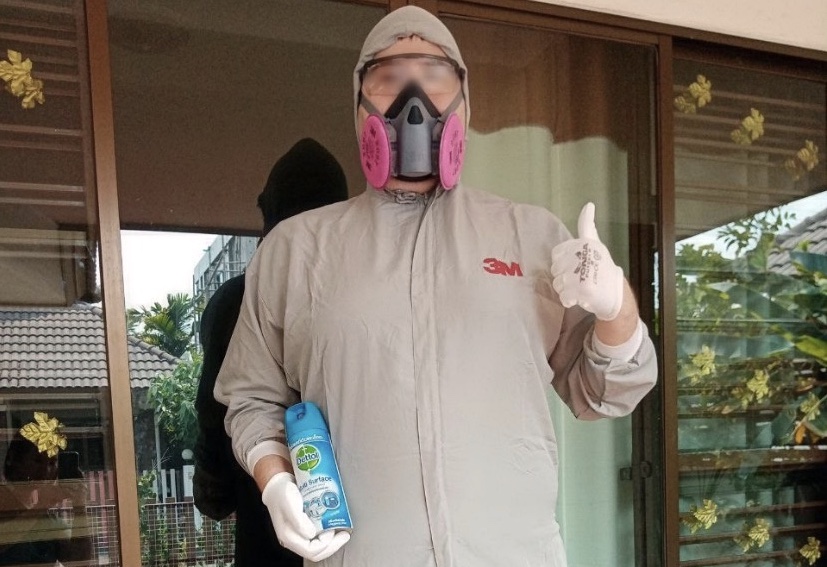
I wore these PPE (personal protective equipment) and respirator mask today. I just went out with the protective suit and the P100 filtered respirator [the respirator option that blocks the widest range of hazards] and didn’t even really get funny looks. Really, most people had masks on, maybe 75% of the people.
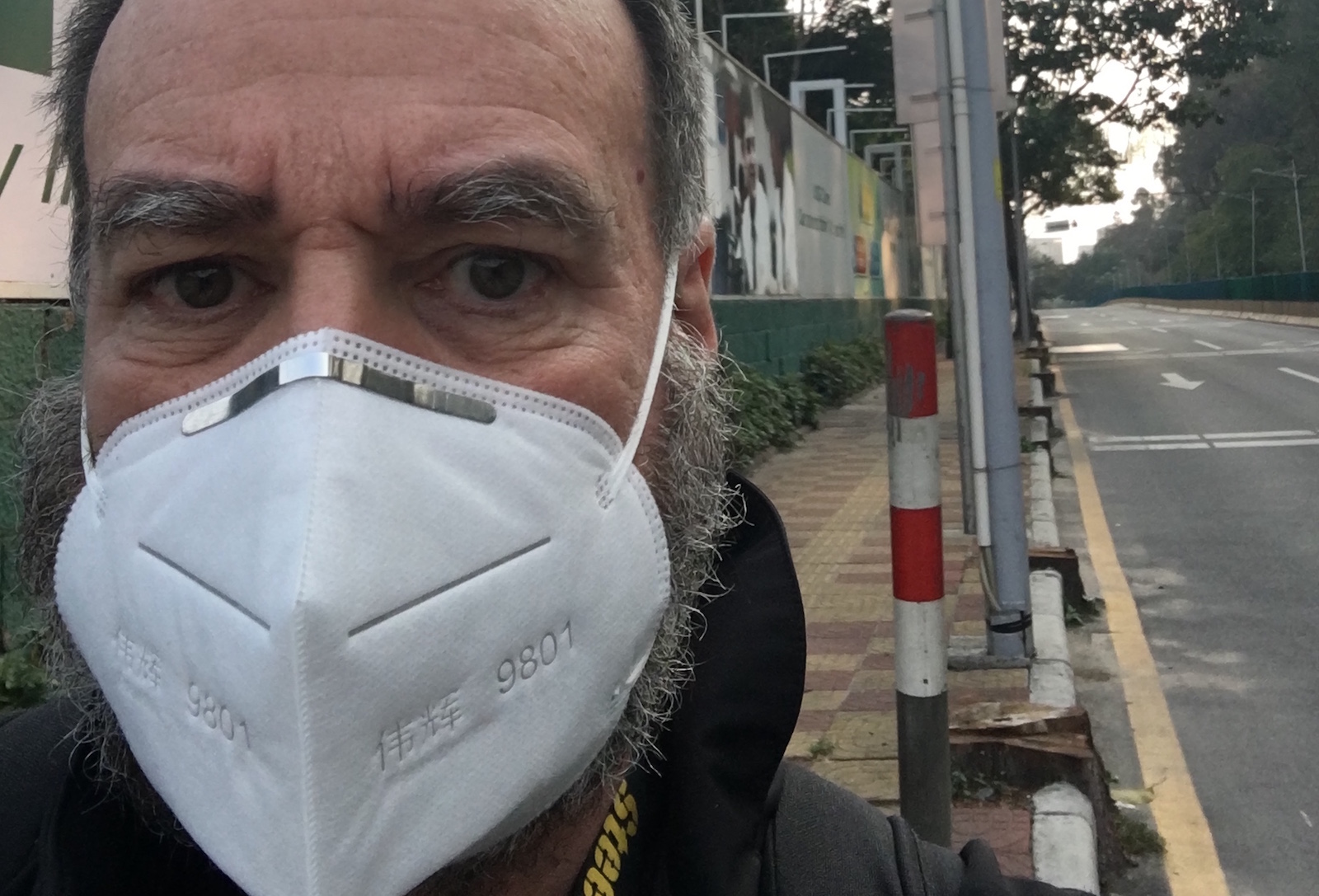
Mark in his protective suit with his P100 respirator.
What measures were implemented/are going to be implemented by the government of Thailand to deal with the COVID-19 virus?
They are fighting the virus in many ways. For example, temperature scans are everywhere, foreigners will have to download an app on their phone to track their movements on arrival.
How do you keep yourself from getting infected?
I’ve been already staying home now for a few weeks (but just out today with PPE), and will stay inside for a while.
Mark believes this novel coronavirus will change the world as we know it and likely not for the better. “Lots more authority and powers for those that have too much already.”
Tomorrow, we’ll chat with someone from the Lombardy region of Italy to find out what lockdown is like for one of its Milanese residents. Follow the latest in our COVID-19 Diaries series here.
If you’re in a country that has been affected by the novel coronavirus and would like to share information about the situation where you’re at, do get in touch with us here.
Photographs courtesy and copyright of Mark. Interviewer: Kauai Sponsor or support the COVID-19 Diaries series here. If you found this article useful:
Christine Yong, who we interviewed last year for tips on how to achieve the perfect score at the IB, is presently an AI researcher living in Ueno, Tokyo. We talked with her about the COVID-19 situation in Japan and found out a few interesting details about the crisis over there that we didn’t read about in global news.
“Management of the epidemic has been by Japanese bureaucrats not trained in epidemiology or medicine.”
Q: Hi Christine, thanks for coming back on to share updates on the coronavirus disease situation in Japan! When did you first hear about the 2019-nCoV novel coronavirus and what did you think of it then?
A: I heard about it on the news just before flying home to Singapore for Chinese New Year. I remember not thinking that I was at high risk of catching it at the time, as cases were only beginning to be reported in mainland China. I did however feel some sense of impending doom. Spreading of the virus seemed inevitable given the masses that would be travelling during the festive period. My family and friends were already advising me to wear a mask at the airport, keep a distance from those who were sick, and monitor myself carefully for flu symptoms.
How concerned are you now that Japan is presently one of the countries outside of China with the most number of infected? How concerned is the rest of Japan?
I am concerned enough to be wary of others around me who have flu symptoms, but I have not thus far felt the need to wear a mask in public or stock up on food at home.
As for the rest of Japan, there is a very palpable uptick in people donning surgical masks, but this is not particularly panic-inducing as wearing face masks is quite a normal sight in Japan. No panic-buying of food has yet occurred (Japanese usually already have stashes of food and emergency supplies at home, in case of an earthquake or tsunami). However, face masks are sold out everywhere, with both locals and tourists emptying out new stock immediately. More companies (mostly smaller, and/or younger ones) are also introducing remote work as a containment measure. A ramen shop in Ueno has even decided to turn away all foreign customers, although this is one of few extreme cases of discrimination against foreigners due to the coronavirus outbreak.
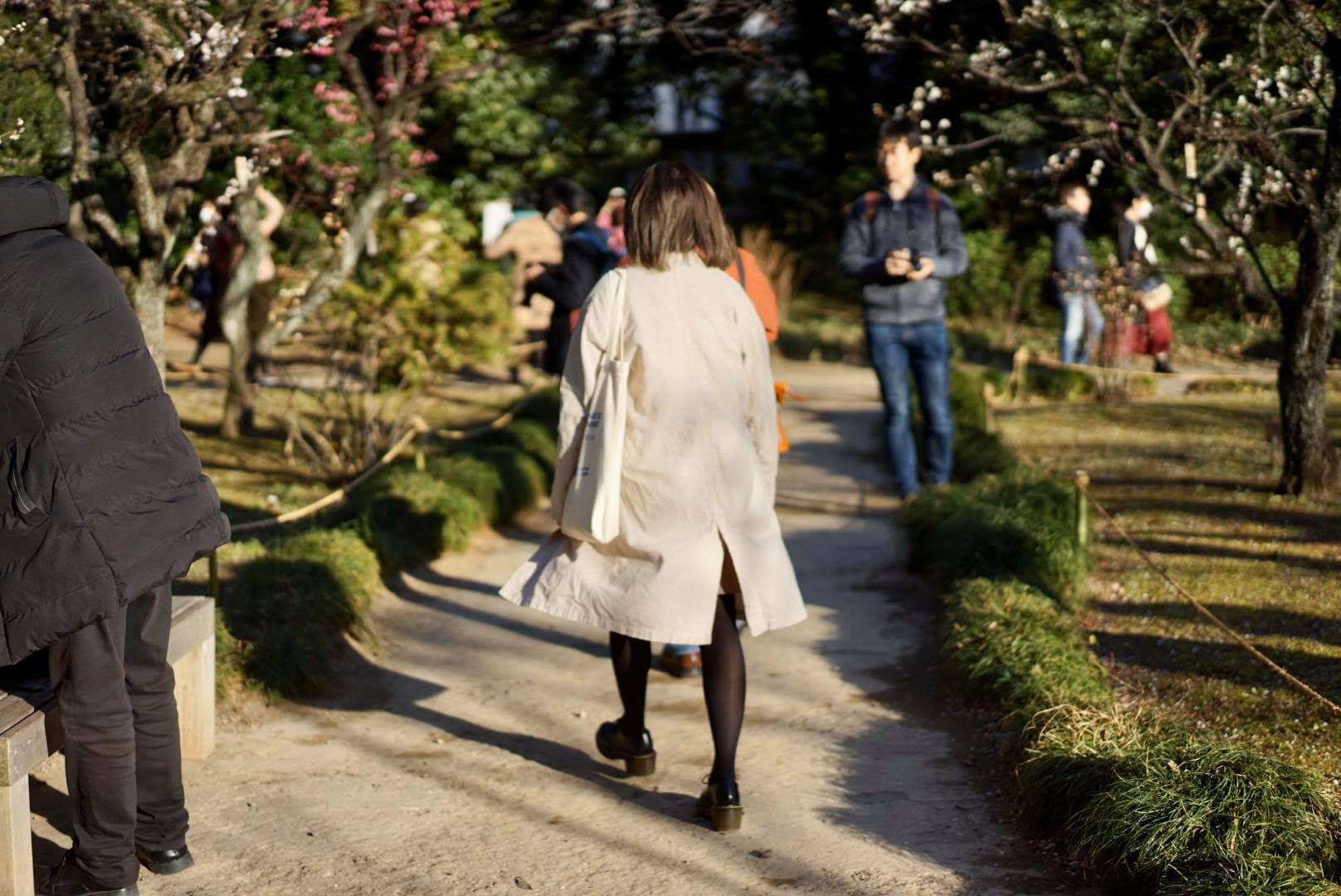
“Plum festival proceeding as usual in Yushima, Tokyo, after the coronavirus outbreak.”
Do you personally know people who’ve been infected with COVID-19? How did most of the cases in Japan get infected anyway? Are there any notable clusters other than the now infamous Diamond Princess cruise ship?
I do not personally know anyone who has been infected with COVID-19. So far, the Japanese Ministry of Health, Labour and Welfare has updated the public through press releases on the number and prefecture of known cases, but it is not clear if there are significant clusters other than the Diamond Princess cruise ship—they are distributed across prefectures, with a slight concentration in the Greater Tokyo Area.
Why do you choose to stay on in Tokyo regardless?
Despite some shortcomings in the government’s reporting and its implementation of countermeasures, people in Japan practice good hygiene and social awareness in general. I am not so alarmed as to leave Japan and my job here because of the epidemic.
What measures have the government of Japan imposed to keep the COVID-19 outbreak under control? What must you do and what are you no longer allowed to do?
The Ministry of Health, Labour and Welfare is publishing regular updates on the number of identified cases and guidance on how to maintain hygiene at home and at work. They have emphasised hand-washing, maintaining cough etiquette, and wearing masks when ill. People with cold symptoms or fever of 37.5°C or more for 4 days or more have been advised to contact consultation centres and/or their General Practitioner. Since the beginning of February, Japan has not been admitting anyone who has history of travelling to and from Hubei or Zhejiang, or has a Chinese passport officially issued from Hubei or Zhejiang. Finally, some events including those related to the Olympics have been scaled down or cancelled. Announcements and public advisories have been published mostly in only Japanese.
How effective do you think those measures have been?
Because the level of hygiene is good in Japan, people have simply ramped up attention to existing practices. As for containing the disease, it is not the measures’ effectiveness but the lack of certain measures or mishandling of the Princess Diamond quarantine situation that I found unsatisfactory. For example, it has been difficult to trace the spread of the virus throughout Japan for two reasons. First, for those on the Princess Diamond, quarantine and travel restriction measures after release have not lived up to infection control standards, as pointed out in a now removed video by Professor Iwata Kentaro of Kobe University Hospital. Second, entry restrictions were imposed for those associated with Hubei or Zhejiang in the 2 ways stated above, but the recently infected were people who had travel histories to other countries, namely Indonesia and Hawaii. This left many people vulnerable to unknowingly causing person-to-person infections.
What is the status of food, water and medical supplies like masks in stores in Japan right now? Has there been panic-buying or shortages?
Only masks have really been affected by shortages. New stocks are depleted immediately.
“Myself in the gear I put on when I go out. I’m not wearing a mask and neither are most others.”
Have you done anything to prepare for the possibility that the novel coronavirus epidemic might get worse? Have you stocked up or made special plans you can execute at a moment’s notice?
Not in particular.
Do you still go out? If so, what precautions do you take when, and before and after, going out?
Yes. I have not been taking any special precautions in my daily life other than wearing a mask when flying through airports, and avoiding those who appear to be ill.
How has the COVID-19 epidemic affected your life and that of those around you?
Only insofar as we are more aware of the need to keep hygiene standards high.
Has the government of Japan offered any aid or relief for those whose livelihoods have been affected by the outbreak?
A returnee contact centre has been set up for those who suspect they have the coronavirus. Other than this, the existing compulsory national insurance and public healthcare system have been responsible for providing treatment.
Christine, out and about Tokyo without a mask.
Is there anything you know about the situation within Japan that has not been mentioned, or has been misrepresented, by global news?
I believe that the following points have not been emphasised in global news:
1—Lack of proper quarantine measures on the Princess Diamond. 2—Those released from the ship were allowed to travel on public transport without further quarantine. 3—Management of the epidemic has been by Japanese bureaucrats not trained in epidemiology or medicine.
What will you do if you or those who live with you develop symptoms of the virus? What do the authorities of Japan want you to do?
Wear a mask, and consult the returnee contact centre and/or your General Practitioner.
Which 3 items or people are most useful for you right now?
Surgical masks, painkillers/anti-congestants, and news agencies.
Lastly, what have you learned from this novel coronavirus outbreak that you didn’t know before?
That despite Japan being a developed country with advanced research and medical capabilities, its epidemic response has not lived up to expectations. They have not matched measures implemented in other countries, especially with regards to contact tracing and quarantine measures.
Christine will be moving back to Singapore for work later this year. You can follow her discoveries in AI at christineyong.com or ask her for updates on the coronavirus situation in Japan using the comment box below.
More interviews with those affected by the novel coronavirus outbreak to come. Follow the latest in our COVID-19 Diaries series here.
If you’re in a country that has been affected by the novel coronavirus and would like to share information about the situation where you’re at, do get in touch with us here.
Photographs courtesy and copyright of Christine Yong. Interviewer: Sy Sponsor or support the COVID-19 Diaries series here. If you found this article useful:
Jack, from the U.S., is a 60-year-old high school teacher at an international school in Guangzhou, where he lives with his wife and daughter. He told us why he is glad he didn’t leave Guangzhou when the coronavirus outbreak began in Wuhan, 987km away, and how life around him has been like in the 3 weeks since forced quarantine measures began.
“You see a lot of people out in their pyjamas and lots of unwashed hair. I sometimes wonder if people are depressed. It’s been 3 weeks of this. Cabin fever takes on new meaning.”
Q: Hi Jack, thanks for connecting with us all the way from Guangzhou! When did you first hear about the 2019-nCoV / COVID-19 coronavirus and what did you think of it then?
A: I can’t remember exactly when, but I keep up with the news, so sometime early in January? When it first started appearing in the news.
How concerned are you now that Guangdong, within which Guangzhou is located, is one of the provinces outside of Hubei most affected by the virus? How many people do you personally know who’ve been infected with COVID-19?
I haven’t been concerned at all. Right now, there are just over 75,000 confirmed cases in China, but only 1,300 in Guangzhou. From what I understand there have been no new confirmed cases in Guangzhou for the past 4 days. Most of the cases are in Hubei Province which has just over 63,000.
When it first started and we knew we’d be closing the school—I teach high school in an international school—I was a little worried about how bad it would get with memories of SARS and the bird flu dancing in my head.
When it first started to get bad, the Chinese New Year holiday had just started. My wife and I had elected not to travel for the holiday, so we were planning to be in Guangzhou. I remember wondering if we should leave just in case. Now that the school is closed through 16 March and we’re teaching from home online, I’m glad we didn’t. It is just much harder and much more expensive to work from abroad than it is from home.
“Empty street and sidewalk at the height of the Chinese New Year celebration. Usually the street is packed with cars and the sidewalk with flower and orange tree vendors.”
Why do you choose to stay on in Guangzhou regardless?
The honest truth is that I didn’t think it would affect us much. I don’t know if unconsciously, I thought that it was a Chinese thing and wouldn’t affect us non-Chinese or whether I assumed it wasn’t going to spiral out of control. I know the being a Chinese thing is irrational, but you’d be surprised at how many exceptions are made for foreigners and you kinda get used to it.
How many cases are there in Guangzhou at the moment of this interview? How did most of the cases in Guangzhou get infected?
According to the John Hopkins visualisation site: 1,339. I assume most people were infected in Hubei and travelled here with it. I really don’t know.
What measures have the government of Guangzhou imposed to keep the COVID-19 outbreak under control? How effective do you think those measures have been?
The experts say that limiting travel and contact don’t really work. I assume that they’re right, but I’m not an expert, so I don’t know. Intuitively, it sounds right, but in practice many things don’t work out as well as you think they would. Here in Guangzhou, we are encouraged to stay home. Restaurants, schools, malls, and anywhere large groups of people would gather are closed. You could be fined for being on the street without a mask—again, the experts say the masks have almost no effect on limiting the spread except that they prevent you from touching your nose and mouth, which you do a surprising large amount.
No one can take public transportation without a mask. Apartment complexes are closed to visitors. No one who isn’t a resident is allowed in. Deliveries have to be met at the gate, and China depends on delivery nowadays. Police set up temperature check points for pedestrians and car passengers and public transportation passengers. Who knows what would happen if you had a temperature, but they check. I’ve had my temperature taken half a dozen times a day when I’ve been out. When you return to your apartment complex, they take your temperature.
The apartment complexes here are like villages, there are thousands of people living here—fifty twenty storey buildings together. So, they have small shops in on the first floor of many of them. When I’ve gone to the small grocery store here in the apartment complex, they take your temperature. The pharmacist won’t allow anyone in his shop, he comes to the door.
What is the status of food, water and medical supplies like masks in stores in Guangzhou right now? And how long do you think you and your family can last with the stock you have at home at the moment?
Masks are hard to come by. When you hear of masks available somewhere, you hurry on down to get them. Things seem to be easing up a bit, though. I guess manufacturers have put on enough to start meeting demand.
At the beginning of the lockdown-quarantine situation, the grocery store shelves got a bit bare. Now, they are better stocked. Necessities are available. Luxury items are hit and miss. Everyone drinks bottled water here. Usually it is delivered in large 18 litre jugs. But, deliveries stopped and the grocery stores couldn’t keep up with demand. We started re-filling bottles at the vending machines.
Do you still go out? If so, what precautions do you take when, and before and after, going out?
I’ve been out every few days. There are no real prohibitions about going out, not like there are in Wuhan. There just isn’t much to do out there. Things have started loosening up this week. For example, restaurants were allowed to reopen today (Saturday, 22 Feb).
I wear a mask if I leave the apartment. You’ll see some people wandering the apartment complex maskless, but the one time that I forgot, I was descended upon by passers by and reminded that I needed a mask. I assume that it was out of kindness because being a hapless foreigner, I might not have understood the rules.
In the apartment complex, you see a lot of people out in their pyjamas and lots of unwashed hair. I sometimes wonder if people are depressed. It’s been 3 weeks of this. Cabin fever takes on new meaning.
When I get home, I use hand sanitiser immediately and then wash my hands.
“On the street at 5:00 PM last Thursday, 19 February. Usually there is a rush hour traffic jam.”
How has the COVID-19 epidemic affected your job?
Most things are closed. Like I said, I teach high school. We’re closed through 16 Mar. We’ve been teaching online, which is a lot harder than in the class, especially since the increase in internet usage has affected connectivity. China blocks many teacher-friendly sites like YouTube, so using a VPN is a must to reach them. But, recently, China stepped up its vigilance on VPN usage, so that made teaching online that much harder.
Is there anything you know about the situation within China or Guangzhou that has not been mentioned, or has been misrepresented, by news agencies outside of China?
Like most things on the news, it’s not as bad as it sounds. It only makes the news if it’s bad. The boring day-to-day stuff doesn’t get shown. Honestly, most people have stayed home and made do.
“The delivery drivers setting up for deliveries just inside the gate to the apartment complex.”
What will you do if you or your family develop symptoms of the virus? How difficult is it to get a bed at a hospital in Guangzhou these days?
Every time you cough or have any soreness in your throat, you wonder whether this is it, but if we get sick, we’ll go to a clinic and hope for the best. Guangzhou is one of China’s major metropolitan areas. It has an official population of 13 million, but it sprawls all the way to Hong Kong. With just over 1300 infections, we are not taxed at all.
What will you do if the COVID-19 situation in Guangzhou takes a turn for the worse? Have you prepared in any way for the situation taking a turn for the worse?
We have a small stock of water and food. I guess we’ll leave if we’re able. I follow the advisories from the US and Canada. I’m American, my wife is Canadian, so we keep up with those. If they advise leaving, we’ll go.
What are the best and worst examples of humanity you’ve seen since the novel coronavirus crisis broke out?
There really hasn’t been a change that I could see. I took a DiDi (the Chinese equivalent of an Uber) the other day. I coughed behind my mask, and I thought the driver was going to throw me out. Otherwise, it has been no different than on most days. I met a woman at the door to our apartment building with 3 large packages and 1 on the ground. I opened the door and helped her in with her packages. I was trying to load an 18 litre water bottle into my little grocery trolly and kept catching it on the lip of the fabric. A woman hurried over to hold it open for me.
Which 3 items or people are most useful for you right now?
Just before the lockdown-quarantine started, we had a case of wine delivered. Thank god. Not that we’re big drinkers, but it has been nice not to worry about it. We play lots of board games, so it’s nice having them to occupy our time as well as the PS4 and computers. The apartment manager has been very supportive. He’s helped us get masks, for example. And, we’re pet-sitting for people who are away, and I’m happy having their birds, hamster, and turtles in the house. They are entertaining and add routine to the day.
Lastly, what have you learned from the COVID-19 outbreak that you didn’t know before?
The Internet and social media really have changed everything about our daily lives and how we interact.
You can see more of Jack’s thoughts at thepsyoflifeblog.com or chat with him about the situation in Guangzhou using the comment box below.
Tomorrow, we’ll talk with an expat, also from the Guangdong province, who elected to leave China when the COVID-19 outbreak first began, to find out what he thinks of that decision now. Follow the latest in our COVID-19 Diaries series here.
If you’re in a country that has been affected by the novel coronavirus and would like to share information about the situation where you’re at, do get in touch with us here.
Photographs courtesy and copyright of Jack. Interviewer: Sy Sponsor or support the COVID-19 Diaries series here. If you found this article useful:
Elizabethheartz, who we interviewed last year, is a half-Taiwanese Singaporean content creator who runs an online business and shuttles often between Singapore, Taiwan and Japan for collaborations. We asked her for updates on the coronavirus situation in Singapore, 3432km from Wuhan, and found out what she’s doing to keep her business and teenage daughter healthy in spite of it.
“If it’s fated to happen, so be it. No point over-thinking and over-reacting.”
Q: Hi Elizabeth, thanks for coming back on LUCK-IT to share updates on the coronavirus situation here in Singapore! When did you first hear about the 2019-nCoV coronavirus and what did you think of it then?
A: I read about articles on it online on FB [Facebook] when it was first announced. So many people were sharing it.
How concerned are you now? How many people do you personally know who’ve been affected by the coronavirus?
I have not known anyone personally that is a suspect/confirmed case. I seriously think that most people are over-reacting. The ratio of confirmed cases isn’t that alarming if you are to look at it. There are worse outbreaks happening around the world that are having thousands of deaths happening.
How many cases are there in Singapore at the moment of this interview? How concerned is Singapore at this point?
Currently as of 12 Feb, 1200h, there are 50 confirmed cases. 638 tested negative, 125 are pending tests and 15 have been discharged. It is sad to know that there are people who try to make a fortune out of the situation, and that there are also people who are spreading fake news or unreasonable hate/bitterness. News from overseas of empty supermarkets somehow led to locals to do the same the moment we reached the orange stage [of Singapore’s Disease Outbreak Response System Condition (DORSCON)—there are 4 stages, orange being the 3rd most severe of 4 conditions].
What is the status of food, water and medical supplies like masks in stores in Singapore right now? And how long do you think you can last with the stock you have at home at the moment?
Currently some household supplies, storage food and medical supplies are out of stock at the moment. Many people are trying to import in bulk from overseas. I have yet to stock up as I usually do it once a month. Currently I have enough stock to last me a month, and longer if I use them carefully. Food and water wise, there ARE an abundance of options available; we can always buy alternatives. Mainstream supermarkets may be out of stock, but hey, try other places and smaller grocery stores. They are available (except medical items)!
“Some shelves got swept out, but supermarkets got them replenished pretty fast in a couple of days and set a limit amount for each buyer.”
Do you still go out? If so, what precautions do you take when, and before and after, going out?
As a global content creator, yes, I do need to go out for collaborations and even travelling. As my health has been on a weaker side, my mom is very concerned and insists I wear a mask out if I’m going to places with more crowds. I’ll check that I have my sanitiser and anti-bacterial wet wipes (I always had them before the virus) with me, and bathe immediately when I reach home. I try to stay at home, as much as I can.
You are a mother, so how worried are you about your child contracting the virus within Singapore? Are you doing anything special to keep her safe?
I will always double check her sanitiser and anti-bacterial wet wipes for school, and always remind her to sleep early, drink more water, eat healthy and take her supplements to maintain her immune system. It is important to educate her well.
You are also a retailer, so how has your business been affected by the outbreak of the virus in Singapore?
Thankfully, I closed the pop up store in Dec, so I happen to be taking a break. As my business also runs online, it is pretty easy to operate online. Currently, there aren’t any cosplay events either, so nobody is in any rush to get any costumes.
“Orchard Road is really quiet on weekdays. I believe everyone is staying at home unless they really need to go out.”
Has your work schedule or conditions been affected by the coronavirus? If so, what has changed?
As someone who manages her own time, it did not affect much for me. I’ll just need to plan and schedule properly in advance and try to stay at home if possible.
What will you do if you develop the symptoms of the virus? What do the officials in Singapore recommend you do?
I’ll definitely go for a check up asap to avoid spreading it to others. It is better to be safe and responsible for everyone’s sake.
“Body temperature checks can be seen at various places.”
What will you do if the coronavirus situation in Singapore takes a turn for the worse?
I’ll heed advice that our government provides and stay calm, practice awareness and be vigilant about it. If it’s fated to happen, so be it. No point over-thinking and over-reacting.
“It is nice to know there are hand sanitisers available at check stations too. Keeping our hands clean is very important, especially at places where more people tend to be around.”
Which 3 items or people are most useful for you right now?
Currently its my sanitiser, mask and anti-bacterial wet wipes.
Lastly, what have you learned from this coronavirus outbreak that you didn’t know before?
I can totally understand the frustration of those who could not buy the supplies they need. However we should spread awareness, not irrational hate. Times like this, we HAVE to encourage and help one another to fight against it.
Elizabethheartz (above) also wants to say “Stay calm, healthy, spread awareness and be positive!”
Elizabethheartz is presently pursuing her goals of providing better for herself and her girl, as well as prioritising quality collaborations to give more value to her readers. You may spot her doing LIVE chats on her Facebook page or at Orchard Road (“Orchard is like my second home, I go there a lot due to collaborations and hanging out.”). You may also drop her messages or share your updates of the coronavirus situation in Singapore using the comment box below.
Tomorrow, we’ll chat with another self-employed person in Singapore—who has 2 babies, a wife, a flat and a car to support—about how he is going to cope with the poor economy caused by COVID-19. Follow the latest in our COVID-19 Diaries series here.
If you’re in China right now or have been affected by the novel coronavirus and would like to share information about the situation where you’re at, do get in touch with us here.
Photographs courtesy and copyright of Elizabethheartz. Interviewer: Sy Sponsor or support the COVID-19 Diaries series here. If you found this article useful:
Marta from Spain first travelled to China as a student and ended up living there for the next 13 years after finding employment, marrying a local and having a child. She presently lives in Suzhou, in the Jiangsu province of China, 609km away from Wuhan, and recently told us all about the restrictions she’s been living with since the novel coronavirus outbreak began.
“Residents have their temperature taken anytime they go in or out. The latest measure is that security staff check your car trunk when you drive in and out… in case you are hiding someone there!”
Q: Hi Marta, thanks for connecting with us all the way from Suzhou, China! When did you first hear about the 2019-nCoV coronavirus and what did you think of it then?
A: I don’t remember when exactly I heard of the new coronavirus for the first time but I guess it was at the end of December, when it was officially confirmed. I wasn’t very concerned and didn’t think much about it at that moment.
How concerned are you now? How many people do you personally know who’ve been afflicted with the coronavirus?
I am not very concerned. I think here in Suzhou the chances of being infected are quite low and, besides, in my family we are all in good health. Having said that, we are following the official recommendations and we only leave our apartment when we need to buy supplies. I don’t personally know anyone who has been afflicted with the coronavirus but there was one case in another building of my residential complex.
“Our current supplies of masks, alcohol and hand sanitiser.”
How many cases are there in Suzhou at the moment of this interview? How concerned is Suzhou at this point?
At this moment there are 77 confirmed cases in Suzhou, 13 of which have already been cured and discharged from hospital. There hasn’t been any confirmed coronavirus death in Suzhou. However, the city is trying its best to avoid more infections and people are staying home as recommended. Recreational venues like tourist attractions, museums, karaokes and some malls were closed at the beginning of the outbreak and haven’t opened yet. Other measures have also been implemented as the situation evolved. For example, now it is not allowed to enter public transportation or supermarkets without a mask. Most residential complexes don’t allow entrance to anyone who doesn’t live there, including delivery staff, and residents have their temperature taken anytime they go in or out. The latest measure is that security staff check your car trunk when you drive in and out… in case you are hiding someone there!
Why do you choose to remain in Suzhou regardless?
Because my life is here and also because, as I said above, I’m not very worried about the situation. Besides, I think I’m more likely to get infected on a plane!
Is there anything you know about the situation within China or in Suzhou that has not been mentioned, or has been misrepresented, by news agencies outside of China?
I feel international news are focusing on the negatives (which, obviously, are a lot) and are not even mentioning when there’s good news. I regularly read Spanish and British newspapers and in every article the infection and death figures are repeated several times, but the recovered figure is nowhere to be seen (it currently stands at over 3x the death figure). Based on what my friends abroad have asked me during the outbreak, international news are transmitting the message that the virus is lethal and everybody is dying and that store shelves are empty.
What is the status of food, water and medical supplies like masks in stores in Suzhou right now? And how long do you think you can last with the stock you have at home at the moment?
Masks and alcohol are often sold out in the pharmacy, but other times they are available and we were able to buy them. Other than that, I’ve been to the supermarket 3 times and it was always well stocked. I haven’t had any problem getting fresh produce. My pantry and freezer are still full of goodies that were sent by the companies my husband and I work at for Chinese New Year. Water is also not a problem, drinking water gallons are delivered as normal.
“The day the Wuhan lockdown was announced, we went to a restaurant to have dinner with some friends who were visiting. We all wore masks, also the restaurant staff.”
Do you still go out? If so, what precautions do you take when, and before and after, going out?
I go out when necessary, for example to buy food. I put on a mask and I pack a small bottle of hand sanitiser. When I’m outside, I try my best not to touch my face in case I touched something contaminated, or I apply hand sanitiser. When I return home, I throw away the mask, hang my coat on the balcony, wash my hands, and disinfect the door knobs that I touched before washing my hands. Then I wash my hands again.
When did you return to work? And what’s the plan in Suzhou for people who need a form of income to survive yet cannot go back to work?
I’ve been working for a week already. I always work from home but now everybody in my company is working from home too. I have no idea what the people that cannot go back to work will do but I do hope the government can provide them with some kind of subsidy. I did read that small businesses will not need to pay the rent for one month. I have a cleaning lady who comes once a week and even though she can’t come these days, I will pay her anyway because it’s not her fault and I don’t want her to have financial difficulties because of this.
What will you do if you develop the symptoms of the virus? What do the officials in Suzhou recommend you do?
The last time I had a fever was 15 years ago so I would be surprised if I got sick now! If I did, I would go directly to the hospital. Pharmacies are not currently allowed to sell fever and cough medicine because anyone with those symptoms has to go to the hospital immediately to be tested for the virus.
What will you do if the coronavirus situation in Suzhou takes a turn for the worse?
If the situation worsens noticeably, I might go back to my home country with my son for some time. But I hope it doesn’t get to that!
“Empty streets in Suzhou.”
Which 3 items or people are most useful for you right now?
I’ll just mention one: the Internet! It has allowed me to keep in touch with my family and friends, to follow the news and also to search for games and activities to entertain my child these days.
Lastly, what have you learned from this coronavirus outbreak that you didn’t know before?
I’ve been surprised to read about the racist attacks Chinese and Asian people in general have been suffering in Western countries since the outbreak started. What a sad thing to learn… that people only need an excuse to become bigots.
Another empty street in Suzhou.
Marta is presently focused on raising her child. You can read more about her adventures in China at martalivesinchina.wordpress.com or ask her for status updates on the coronavirus situation in Suzhou using the comment box below.
Next week onwards, we’ll have some interviews about the coronavirus situation in Singapore and other countries affected by the virus. Follow the latest in our 2019-nCoV Diaries series here.
If you’re in China right now or have been affected by the novel coronavirus and would like to share information about the situation where you’re at, do get in touch with us here.
Photographs courtesy and copyright of Marta. Interviewer: Sy Sponsor or support the 2019-nCov Diaries series here. If you found this article useful:
Liv from England moved to the Shunde District of Foshan, China to work as an English teacher in January 2020, and soon found herself caught up in the closures surrounding the coronavirus outbreak in Wuhan, 1029km away. She told us what it’s been like since then.
“The general attitude outside of China seems ridiculous to me. Worldwide media are in danger of causing mass panic, and there seems to be little to no comparison to everyday illnesses to put it all into context.”
Q: Hi Liv, thanks for connecting with us all the way from Shunde, China! When did you first hear about the 2019-nCoV coronavirus and what did you think of it then?
A: Hello and thanks for asking me to participate! I first heard about the coronavirus during the Spring Festival for Chinese New Year. The first couple of days of the holiday were great; I was able to get out and explore my new city. Then literally hours later, I saw a news headline pop up on my phone, and the next day everything that should’ve been open for the festival was closed and police were turning people away. I thought they were making a big deal out of nothing to be honest.
How concerned are you now? How many people do you personally know who’ve been afflicted with the coronavirus?
I am concerned, but in no way am I panicking about contracting the virus. I have read a lot about it and it is nowhere near as bad as the regular flu (which kills tens of thousands of people every year). I don’t know anyone who has it yet, but another teacher from my school flew back to the UK to get tested and lie low until it calms down.
“The day after the Chinese New Year festival, when everything was shut down by police. My local supermarket was bare.”
How many cases are there in Shunde at the moment of this interview? How concerned is Shunde at this point?
I don’t know at this point. A few days ago my boss gave us some statistics which said 49 people had contracted it in Foshan (Shunde is a district of Foshan) but all were mild cases. Everyone here is wary but trying to get on with it.
Why do you choose to remain in Shunde regardless?
I only moved here a month ago to start a teaching post, and I would hate to go home so soon after arriving. I have just settled into an apartment and started making friends, so I want to see how the next few weeks pan out and then re-address my decision if needs be.
Is there anything you know about the situation within China or in Shunde that has not been mentioned, or has been misrepresented, by news agencies outside of China?
Nothing specific springs to mind, but the general attitude outside of China seems ridiculous to me. Worldwide media are in danger of causing mass panic, and there seems to be little to no comparison to everyday illnesses (like the regular flu) to put it all into context.
Is there anything you know about the coronavirus that has not been mentioned in global news?
No, I’m afraid not.
What is the status of food, water and medical supplies like masks in stores in Shunde right now? And how long do you think you can last with the stock you have at home at the moment?
Everything is fine here. Initially the supermarket shelves were a bit bare but I think that was also down to it being New Year so everyone was on holiday. I’m able to go out and buy fresh produce every day.
Do you still go out? If so, what precautions do you take when, and before and after, going out?
I do, but not very much because very few places are open. I wear a mask to go to the supermarket, but I don’t bother with one when I go to the park as it is huge and green and there are rarely people around, so it’s nice to get some fresh air there.
When will you return to work? And what’s the plan in Shunde for people who need a form of income to survive yet cannot go back to work?
I return to work today! Monday 10th February. I am only training and working online though. Return to my office and classroom will be end of February/beginning of March, depending on the situation. I don’t know about anyone else, as I believe the Chinese government have stipulated that all businesses must phase back into work from today.
What will you do if you develop the symptoms of the virus? What do the officials in Shunde recommend you do?
Officially, I should go to the hospital straight away. To be honest, I would talk to my boss as she is a local and follow her advice. I would hope that I could recover from home by taking the usual flu medication and resting up, but I’ll cross that bridge if I come to it!
What will you do if the coronavirus situation in Shunde takes a turn for the worse?
If it gets really bad here then I will consider going home (UK) for a few weeks and then returning when the situation is better.
“The main road through Shunde right out the mall where I work. Usually this is busy with traffic, cyclists and people socialising or going to work. Now it is pretty empty most of the time.”
Which 3 items or people are most useful for you right now?
I don’t think these will be what you’re expecting me to say but 1—My book, I’d be going crazy in my apartment without something to do or read. 2—My family, they are being really supportive, sending me information daily and checking up on me. 3—My boss, she has hand delivered masks to me and rings me daily to update me on my work situation.
Lastly, what have you learned from this coronavirus outbreak that you didn’t know before?
I have learned that these things spread fast!! So it is a significant reminder to always be healthy, hygienic, and aware of your surroundings. I have also learned that life is too short to sit around doing nothing all day, so as soon as this is over I’m going to get out and explore and make the most of my time here in China!
Liv plans to be a fully qualified ESL (English Second Language) teacher by the end of this year, and wants to learn about nutrition and explore China’s history, landscape and culture while at it. You can find her on www.wheresliv.com and on Instagram @livedwardss, or ask her more about the coronavirus situation and being in China using the comment box below.
Tomorrow, we will interview an expat living in Suzhou, just 609km from Wuhan. Follow the latest in our 2019-nCoV Diaries series here.
If you’re in China right now or have been affected by the novel coronavirus and would like to share information about the situation where you’re at, do get in touch with us here.
Photographs courtesy and copyright of Liv. Interviewer: Sy Sponsor or support the 2019-nCov Diaries series here. If you found this article useful: